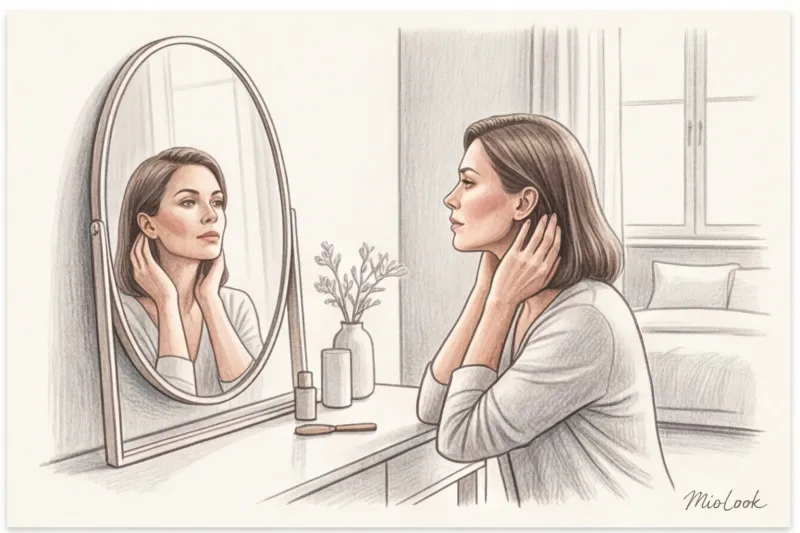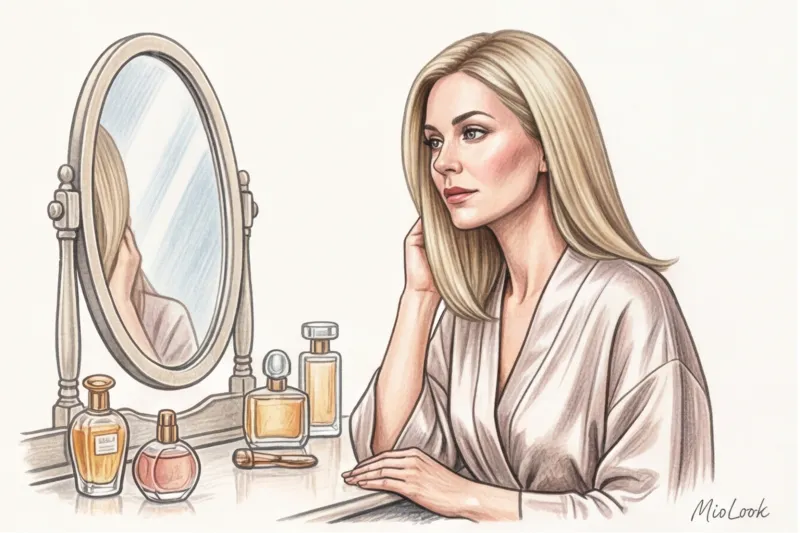
You know what statistic scares me most as a stylist? According to independent surveys, almost 80% of women over 35 continue to use the same color formula they chose at 25. We change our skincare routines, update our wardrobes, but stubbornly buy the same tube of color, genuinely not understanding why our faces look tired.
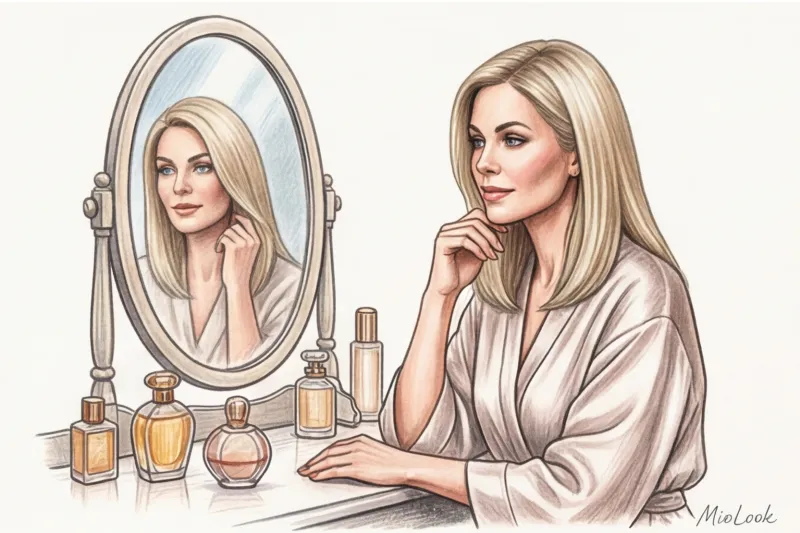
Let's be honest: that bold jet-black or icy platinum blonde that made you look like a femme fatale ten years ago is working against you today. And when clients ask me what hair color makes them look younger, they usually expect an answer along the lines of "just go two shades lighter." But it doesn't work that way.
The secret to anti-aging coloring lies not in concealing gray hair, but in the clever play of light and shadow. Color should act as a visual lift, especially if it supports the proper geometry of the hairstyle. We've covered how shape influences the perception of age in more detail in our The complete guide to anti-aging haircuts for women 35+ And today we're talking about color. Get ready to forget the old rules.
Lighter doesn't mean younger: the biggest coloristic mistake after 35
The most dangerous and widespread myth in the beauty industry is this: "To look younger, you need to go blonde." I've seen hundreds of women who, in pursuit of youth, ruthlessly stripped away their pigment, turning their hair into lifeless straw. The result? They didn't look younger. They looked tired.
Why does this happen? It's basic light physics. Cool, ash, and platinum shades absorb warm rays. If you have even the slightest signs of aging on your face—spider veins (rosacea), age spots, or dark circles under your eyes—an icy blonde will act like a magnifying glass. It will highlight any redness or grayness in your skin.
As we age, our appearance loses its natural contrast. Skin becomes paler, lips become less vibrant. Bleaching your hair completely erases your complexion. Aging skin desperately needs the warm, illuminating glow of hair—golden, peach, or caramel tones—to restore freshness.
What hair color makes you look younger: the anatomy of color lifting
If we're not completely bleaching our hair, what are we doing? We're using hair contouring. This is a technique that distributes color unevenly.
Let's remember gravitational ptosis—the natural drooping of facial tissues with age. Nasolabial folds, a sagging facial contour, drooping corners of the mouth. If you dye your hair a dense, monochromatic dark color (especially from root to tip), you create a harsh, dark frame around your face. This frame acts like a neon sign, aimed directly at your jowls and wrinkles.
Access to MioLook for €0.99 — one-time payment
A smart AI stylist will select the perfect look based on your contrasting appearance and new hair color.
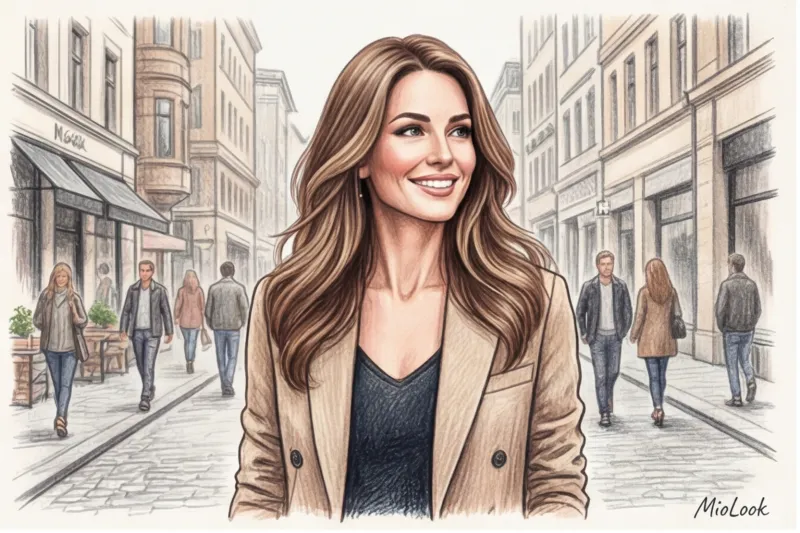
Get access — €0.99 onceContouring works differently. By leaving the roots slightly deeper and placing light highlights (the so-called money piece) at eye and cheekbone level, we create upward diagonal lines. This draws the other person's gaze upward—toward your eyes, rather than down toward your chin. This is what creates a visual lift.
My main Mediterranean rule that I instill in every client: your hair should look like you just spent a month on the Amalfi Coast They should catch the sun, even if you're sitting in an office under cold fluorescent lamps.
4 traitorous shades that mercilessly add age
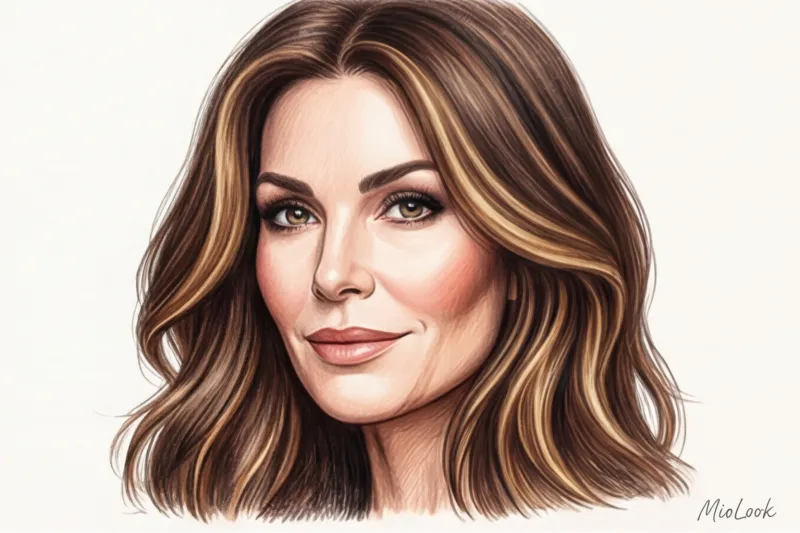
I'll never forget my client, Maria. She was 42, and for the past 10 years, she'd been faithfully dyeing her hair a mass-market shade called "Bluish Black." She came to me asking for a "fashionable haircut to hide her age." I refused to cut her hair until we washed out that gothic helmet. We transformed her hair into a multi-dimensional chocolate brown with cappuccino highlights. When we finished, Maria burst into tears—looking back at her from the mirror, she saw a woman seven years younger. Her complexion had gone from sallow to peachy.
Here are 4 shades you should ditch immediately:
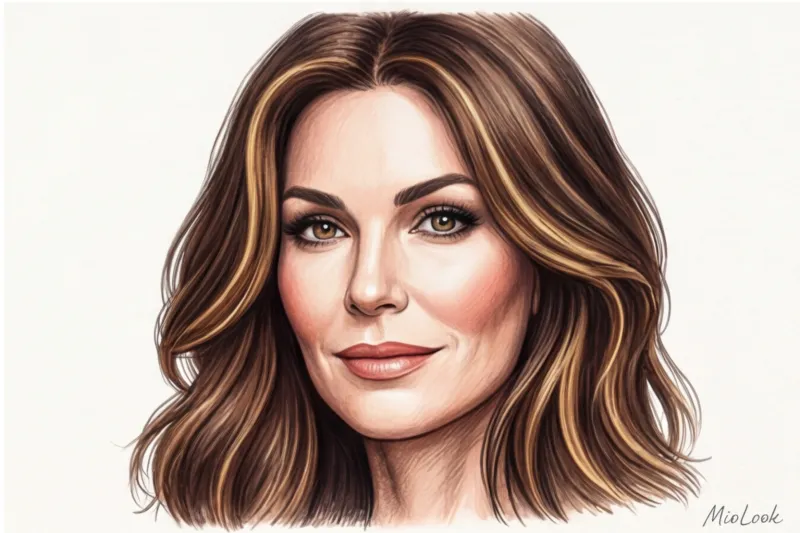
- Jet Black: Creates a wig-like effect. It accentuates even the slightest unevenness in the skin's texture, adds visual heft to the chin, and deepens the shadows under the eyes.
- Ash Blonde: It blends with aging skin tones and, let's face it, masterfully imitates gray hair. It only looks stylish on 20-year-old models.
- Plum and mahogany (burgundy tones): Casts a red tint. If you have rosacea, acne, or broken capillaries, a red undertone in your hair will make it look irritated.
- Deep matte blonde: This often happens when trying to "cover up gray hair to match your natural color." It takes away the face's vibrancy, making it look like a tired mouse.
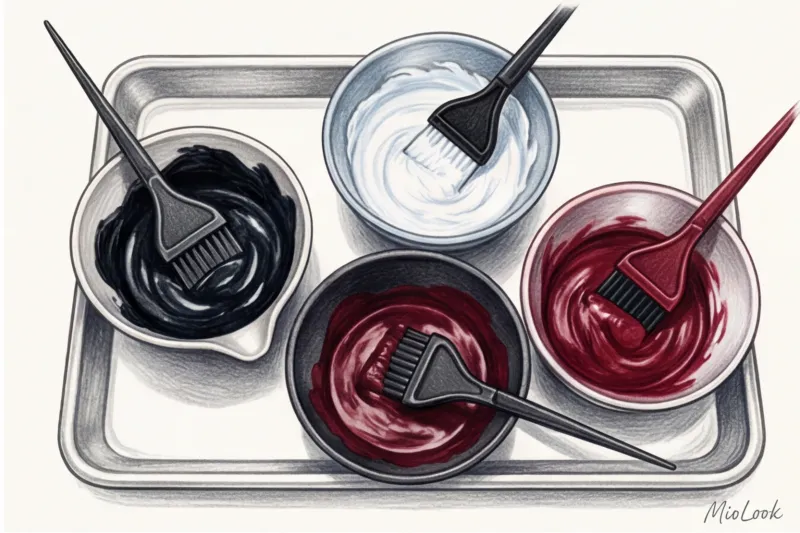
Palette of Youth: Shades That Work Like a Good Night's Sleep
The general rule of anti-aging coloristics is simple: choose shades 1-2 tones lighter than your natural color (the one you had in your youth), with a MANDATORY warm undertone.
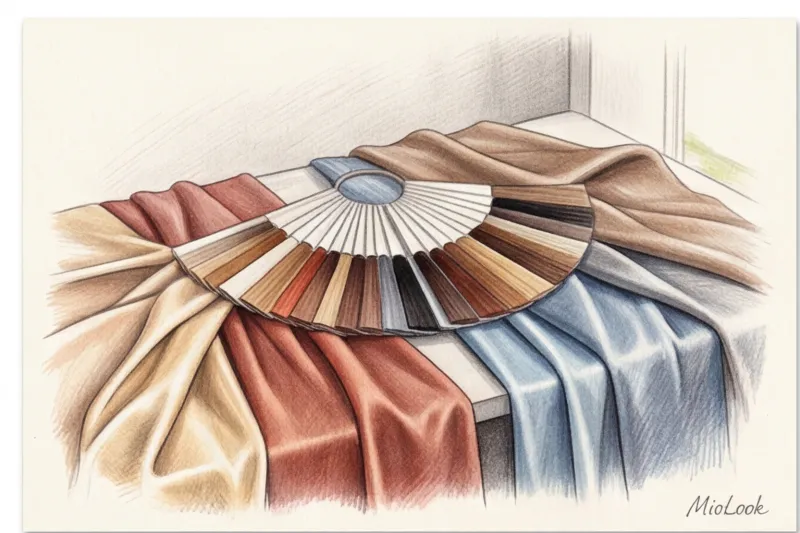
Swiss artist and color theorist Johannes Itten demonstrated back in the last century that the harmony of perception is based on warmth and coolness. As we age, our skin acquires a cooler, bluish, or earthy undertone due to changes in microcirculation. To compensate, we need warmth near the face. Finding the right color temperature is the foundation, which we also wrote about in the article about wardrobe according to color type.
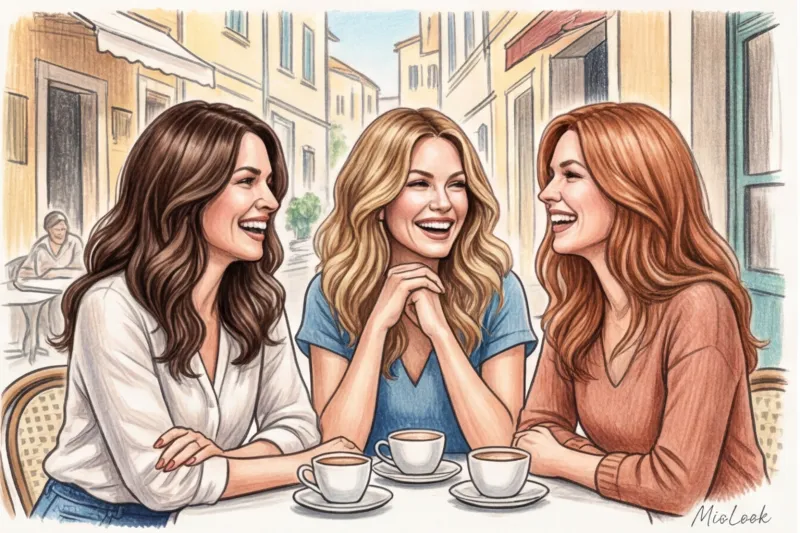
For brunettes: caramel, mocha and golden chestnut
Dark hair is luxurious, but it should be "delicious." Forget those boxy supermarket shades that lay down thickly. If your base is dark, ask your stylist to add warm highlights: caramel, copper, mocha, or roasted coffee tones. This will create a sun-kissed effect. The highlights shouldn't be too contrasting—the difference between your roots and the lighter strands should be no more than 2-3 tones.
For Blondes: Honey, Wheat, and Peach Blonde
Go from cool platinum to golden, beige, or sandy blonde. If you have very pale, porcelain skin, try strawberry blonde. This subtle pinkish-gold shade works like the perfect blush—it literally "turns on" the light within your skin.
For redheads: terracotta and soft copper
A bright, garish red after age 35 often cheapens your look and highlights pigmentation. Your comfort zone is complex, muted spice shades: cinnamon, terracotta, ginger, soft copper. These colors look expensive and prestigious.
Your perfect look starts here
Join thousands of users who look flawless every day. Try uploading your photo to MioLook and find a wardrobe to match your new hair color.
Get access — €0.99 onceDynamics instead of statics: coloring techniques that erase 5-7 years
Have you noticed that your hair gets thinner as you age? Dyeing your hair a single, solid shade (especially dark ones) visually steals that very volume we strive for. This happens because a smooth, single-color canvas lacks visual depth.
According to salon industry statistics, well-placed highlights create the illusion of 3D volume, visually increasing hair density by 30%. Which techniques work best?
- Balayage and shatush: A classic way to create definition. A smooth gradient of color from dark roots to light ends.
- AirTouch: The ideal technique for fine hair. The stylist blow-dries short hairs and lightens only the long ones. The result is incredibly soft blending without harsh streaks and gentle integration of the first gray hairs. But be careful: if your hair is severely broken or damaged, blow-drying it will only highlight its fragility. In this case, it's better to opt for classic highlighting.
- Babylights: Micro-highlighting with the finest strands mimics naturally bleached baby hairs on the face. Perfectly refreshes the look.
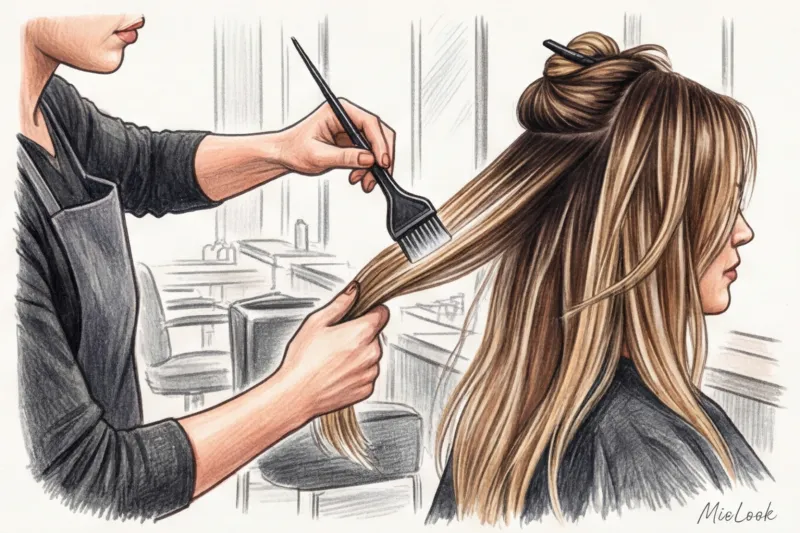
What to do with gray hair? A stylist's honest opinion.
Let's be clear: gray hair isn't a death sentence; it's simply hair deprived of melanin. However, the loss of pigment changes the hair's texture, making it coarser, more porous, and unruly.
Many women fall into a trap: as soon as gray hair appears, they begin obsessively dyeing their roots dark every 2-3 weeks. The problem is that if gray hair covers more than 60% of your head, dark dye will backfire. The white roots that grow out in two weeks will look like bald spots or receding hairlines against the dark background.
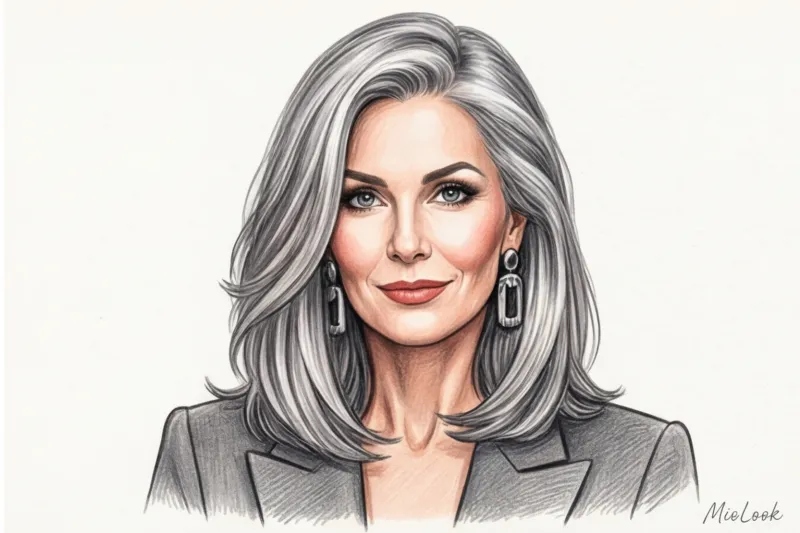
If you are tired of this race, consider Silver Balayage This is a technique that elegantly integrates your gray hair into your overall hairline using ash and graphite highlights. But there's a key "but"! Well-groomed gray hair requires a perfect haircut with precise geometry and a contrasting wardrobe. If you leave your gray hair and wear a shapeless gray sweater, you'll look like a grandmother. Gray hair calls for bold accents: red lipstick, an emerald jacket, and chunky glasses. It's a matter of status, not age.
Checklist: How to explain to your stylist which hair color makes you look younger
How many times have you left a salon in tears because "the stylist didn't understand me"? To avoid this, you need to speak the same language as your colorist. Save this checklist for your next salon visit:
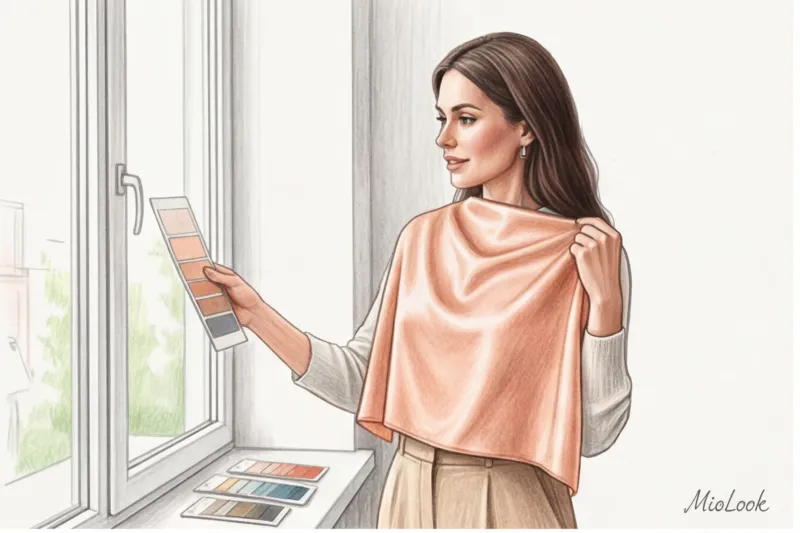
- Take the right photo. Show your stylist a photo of yourself in daylight, without foundation or makeup. They need to see your true skin tone, any rosacea, or pigmentation to determine the right color tone.
- Change the dictionary. Avoid the word "paint" (it encourages artists to use a dense, dull color). Use words like "toning," "creating relief," and "adding highlights."
- The rule of roots. Ask for your roots to be left a half-tone or a shade darker than your base length, even if you're blonde. This creates natural depth and visual volume at the roots.
- Glare control. Discuss the placement of the highlights clearly. Ask your stylist, "Put the lightest highlights at the cheekbones and eye level to visually lift the contours of my face."
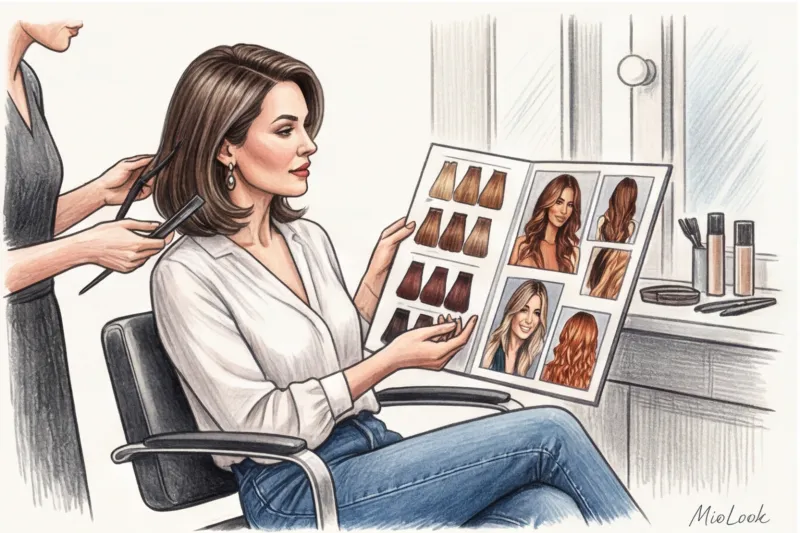
Stop thinking of coloring as just a way to hide gray hair. The right shade is the most powerful, safest, and fastest anti-aging treatment tool of all. Embrace the warm side, add highlights, and let your hair catch the sun again!
Ready for a transformation?
Upload your selfie to the MioLook app. Our AI assistant will help you choose the perfect makeup and outfit combination to complement your new, youthful hair color.
Get access — €0.99 once