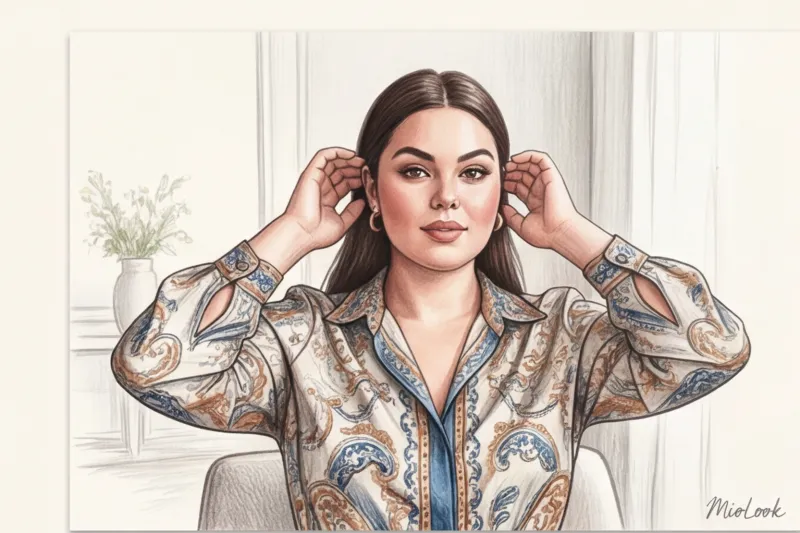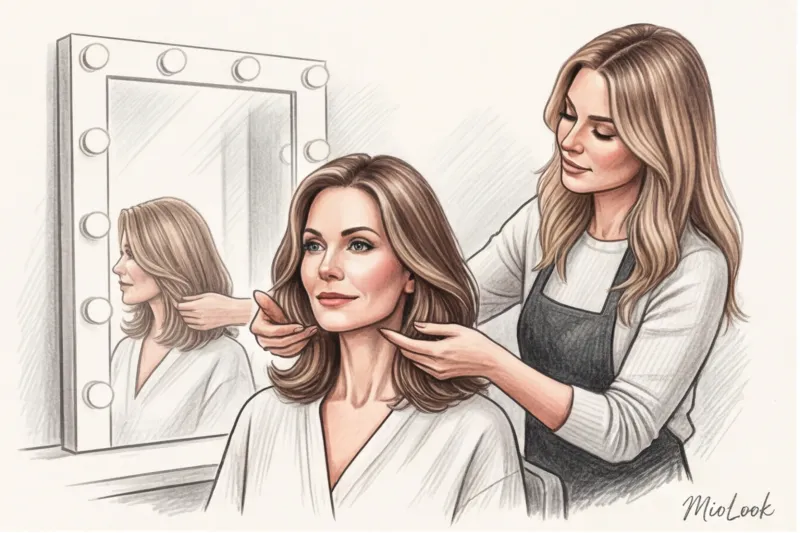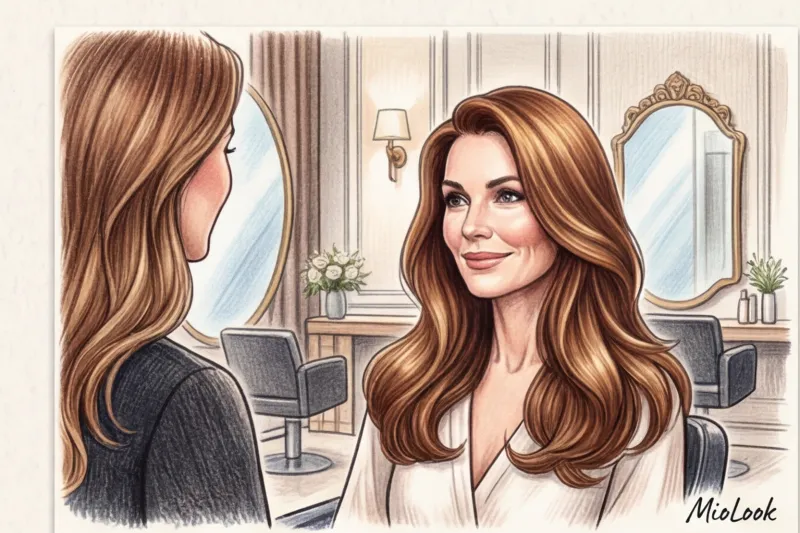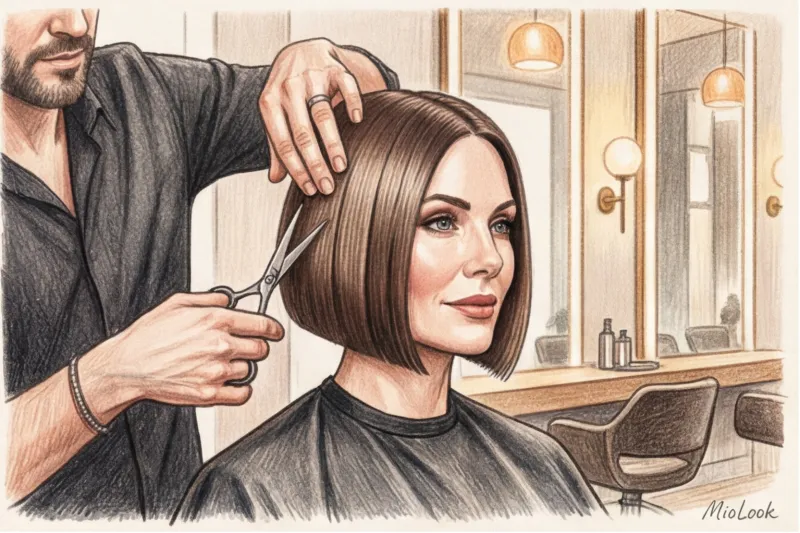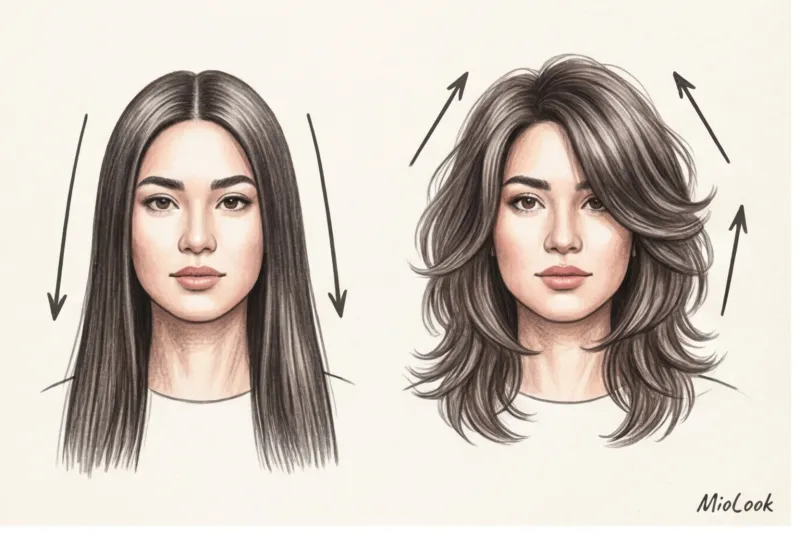
How many times have you heard this "universal" advice: "If you have a round face, just grow your hair long and straighten it to cover your cheeks"? As an image stylist and colorist with 12 years of experience, I can confidently say this is one of the most damaging beauty myths. What may have worked in your 20s becomes a complete disaster after 35. Sleek vertical strands along the face don't make you look slimmer—they act like neon signs, highlighting every age shadow, jowls, and nasolabial folds.
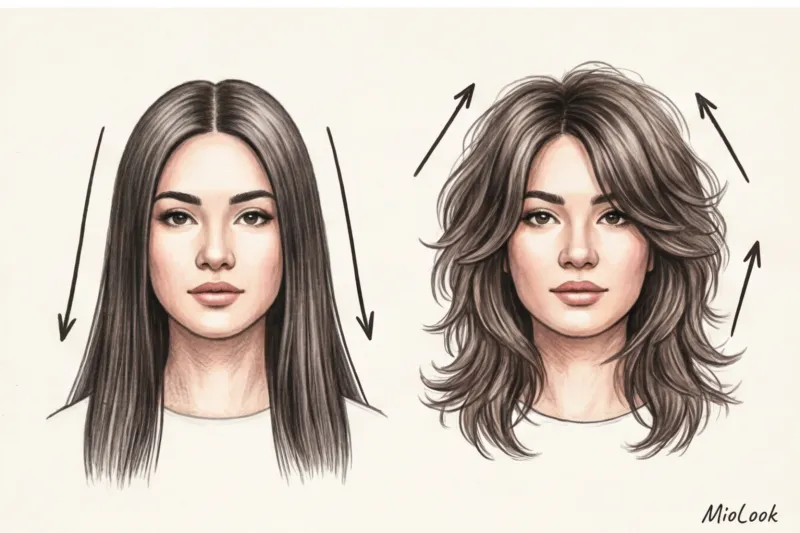
We talked about the basic principles of visual age correction in more detail in our The complete guide to anti-aging haircuts for women 35+ Today we will focus exclusively on the round face shape. The correct Anti-aging haircuts for a round face This isn't a story about masking cheeks, but about clever geometry, shifting focus, and creating a non-surgical lifting effect using scissors and texture.
Anatomy of Change: Why the Old Rules for Round Faces No Longer Work
To understand how a haircut can take 5-10 years off your face, you need to understand the physiology of aging. In youth, the face rests on the so-called "triangle of youth"—a wide base at the cheekbones that tapers toward the chin. With age, due to gravitational ptosis (sagging soft tissue), this triangle inverts. The lower third of the face becomes heavier, and the oval shape loses definition. And it's precisely on a round face that these changes become most noticeable, because the natural softness of the lines merges with age-related ptosis.
Moreover, the quality of your hair itself changes. According to the International Society of Hair Restoration Surgery (ISHRS, 2023), by age 40, women lose up to 15–20% of their natural hair density, and the hair shaft thins. A haircut that was luxuriously thick and cascading in your 20s now looks flat and dull, making your face look tired and puffy.
"We can't reverse gravity, but we can trick the eye. A properly constructed haircut creates upward diagonals that draw the viewer's eye upward—toward the temples and cheekbones—rather than downward toward the chin."
The main myth: "Hide your cheeks with straight hair."
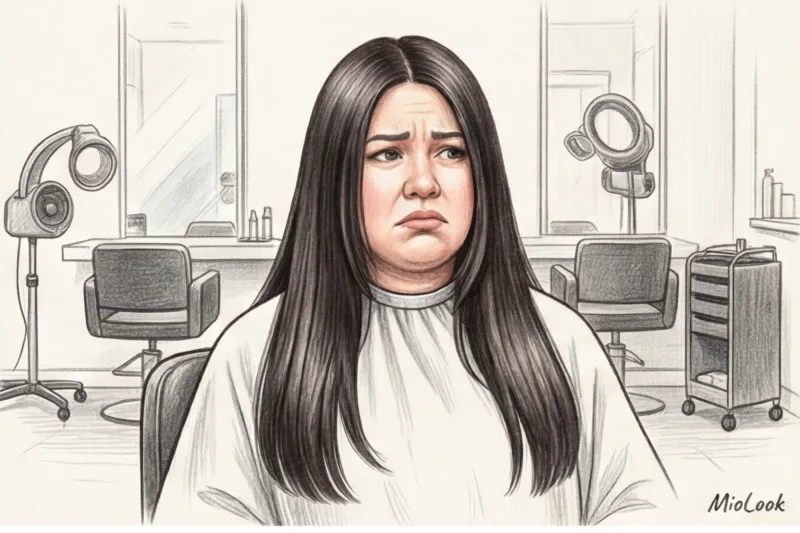
I had a client in my practice, Anna, 42. For 15 years, she had been fanatically straightening her dark hair with a flat iron, creating two perfectly straight "curtains" that covered the sides of her round face. She was convinced it made her face appear narrower. When I convinced her to cut her hair to her collarbone and add an asymmetrical texture, she cried in front of the mirror. It turned out that her straight hair had been visually pulling her face down all those years.
Why does this happen? Strict vertical parallels along the face create a frame. Our brain automatically compares the lines within this frame (drooping corners of the lips, nasolabial folds) with the perfectly straight hairline. Any sagging skin appears twice as striking against the perfectly straight hairline. Instead of hiding the face in a "box," we need to break the symmetry. Asymmetry weighs down the lower third of the face by 30% less than symmetrical, straight lines.
Access to MioLook for €0.99 — one-time payment
A smart AI stylist will select the perfect look and help you visualize a new haircut.
Get access — €0.99 onceTop 5 Best Haircuts: A Visual Lift in Action
Let's get down to specifics. I've selected five shapes that accomplish two things at once: they break up the "circle" and add that dynamic look to hair that's subconsciously associated with youth.
1. Asymmetrical bob with a side parting
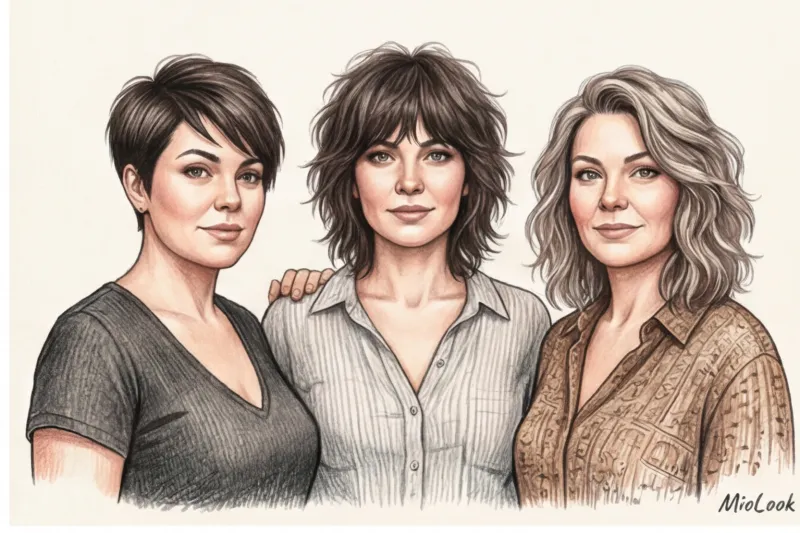
Asymmetry is a round face's best friend. When one side of the haircut is slightly longer than the other, the eye no longer perceives the face as a perfect circle. The oval shape is automatically elongated. The ideal length for this type of bob is just below the chin or at collarbone level. A side parting is crucial here: it creates an extra diagonal line across the forehead and adds volume at the roots, which is so lacking in a straight parting.
2. Textured Pixie Bob
Many women with round faces are terrified of short haircuts. And they're wrong! The pixie-bob (a hybrid of a short pixie and a classic bob) works by maximizing volume at the crown. Adding height to the top visually elongates the face vertically. The key is choppy, textured sides that subtly reveal the cheekbones, accentuating the facial contours.
3. Medium Length Air Shaggy
Shaggy is an ode to layering and movement. But there's a catch. For a round face, the layers should start at the top. strictly below the level of the cheekbones If a hairstylist cuts short layers at cheek level, we'll achieve a "dandelion" effect, which will make the face appear twice as wide. However, a well-chosen shag creates incredible casualness and lightness, erasing years from the face.
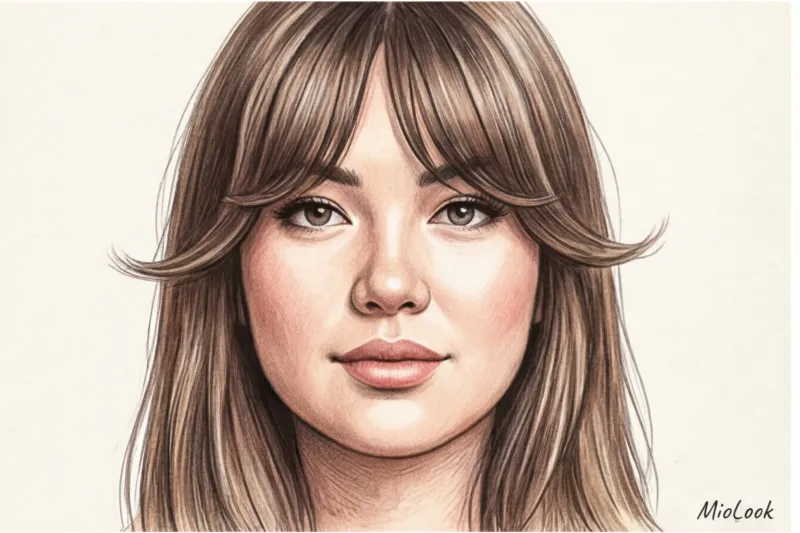
4. Cascade with extended curtain bangs
Forget the classic straight cascade from the 2000s, styled with a round brush. The modern cascade involves integrating an extended curtain fringe. It should end at the lips or chin and be styled on behalf of This creates those same ascending diagonals that I talked about above.
5. Long Bob with graduated ends
For those who aren't ready to give up their length, the long bob is the perfect compromise. We avoid a tight, straight cut (as it makes the jaw appear heavy and square). Thinning and subtle graduation at the ends lighten the silhouette.
Fair Limit: This technique won't work if you have very fine, sparse hair at the ends. Trimming the already sparse ends will create an untidy, "mousetail" effect. In this case, it's better to choose a shorter, dense bob with a slight asymmetry around the face.
Your perfect look starts here
Join thousands of users who look flawless every day with MioLook. Try new haircuts with the help of AI.
Get access — €0.99 onceBangs for a round face: rejuvenating or depressing?
Bangs are a powerful tool. They can hide wrinkles on the forehead and refresh the look, or they can turn a stylish woman into an overgrown schoolgirl.
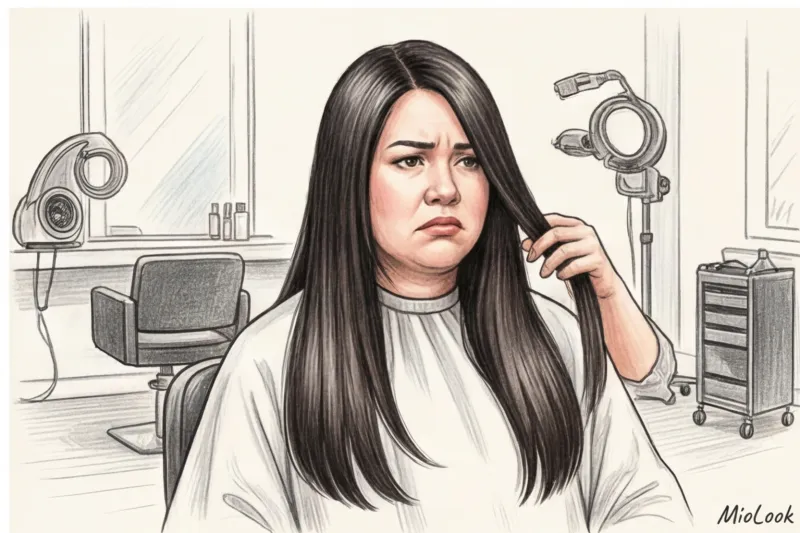
Absolute taboo: A thick, straight fringe from the crown, cut as if by a ruler. It literally "cuts off" the upper third of the face. What's left? That's right, a wide, flattened oval, consisting of the cheeks and chin. The face appears twice as wide.
What do we choose:
- Long oblique bangs: breaks the circle, takes the gaze diagonally.
- Rare French bangs: The forehead should be visible through it. This creates air.
- Curtain bangs: The ideal option is if its length reaches the cheekbones.
By the way, if you're unsure whether bangs will suit you, don't rush to grab the scissors. Upload your selfie to MioLook — the app will allow you to try out different bangs based on your proportions in just a few seconds.
Hair Highlighting and Contouring: Color as a Sculpting Tool
As a colorist, I constantly encounter the same mistake. Women over 40 often dye their hair one solid, dull dark color to completely cover their gray hair. The result is a monolithic "helmet" on their head. The dark color absorbs light, makes the skin look dull, highlights pigmentation and wrinkles, and... widens the face due to the sharp contrast between skin and hair.
The WGSN trend study (2024) confirms that dense, single-color coloring is rapidly losing its relevance, giving way to hair contouring. This is literally face makeup applied to the hair.
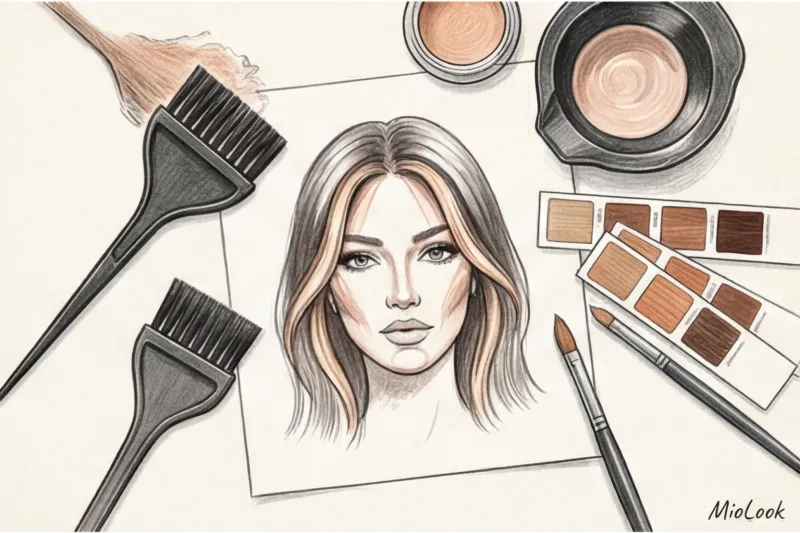
How does this work for a round face? We leave the roots and back of the head slightly deeper and darker, creating a visual shadow (the face appears narrower). And at the very edge of the face, we release light highlights—the so-called money pieces Light strands illuminate the skin, erase signs of fatigue, and distract from age-related changes in contour.
Checklist: How to Explain to Your Technician What You Want (and What to Avoid)
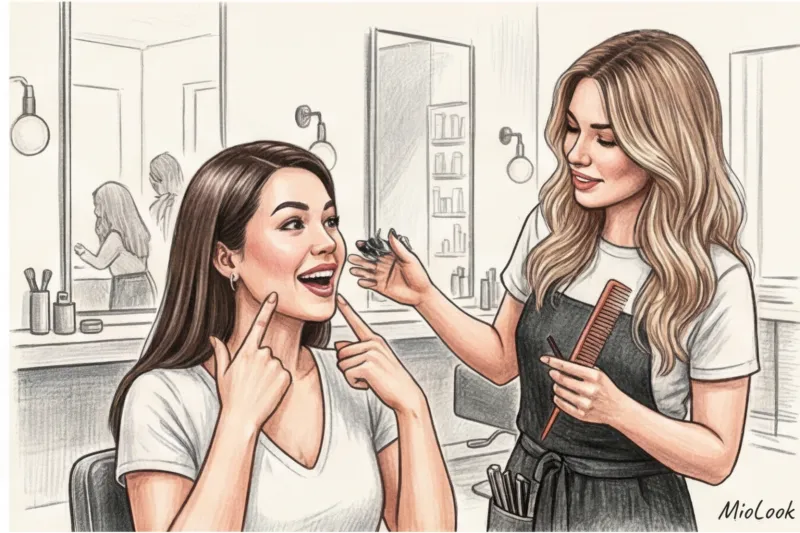
The hardest part is translating your wishes into the hairdresser's language. Please, forget the phrase "make me look like the star in this photo." Jennifer Aniston's hair texture is different from yours.
- Don't ask for a "ladder". Ask "textured layers that start below the cheekbones" The ladder near the face is a greeting from 2007, it simply frames a circle.
- Demand dry finishing. This is especially true if you have porous or curly hair. When your hair is wet, your stylist will see one length, but once it's dry, it will bounce back, and you risk getting unwanted volume right around your cheeks.
- Follow the cutting line. Ask your stylist to use point cutting (cutting with teeth) to ensure the ends are soft and integrated, rather than chopped off with an axe.
Age reveals lack of dynamism: anti-aging styling at home
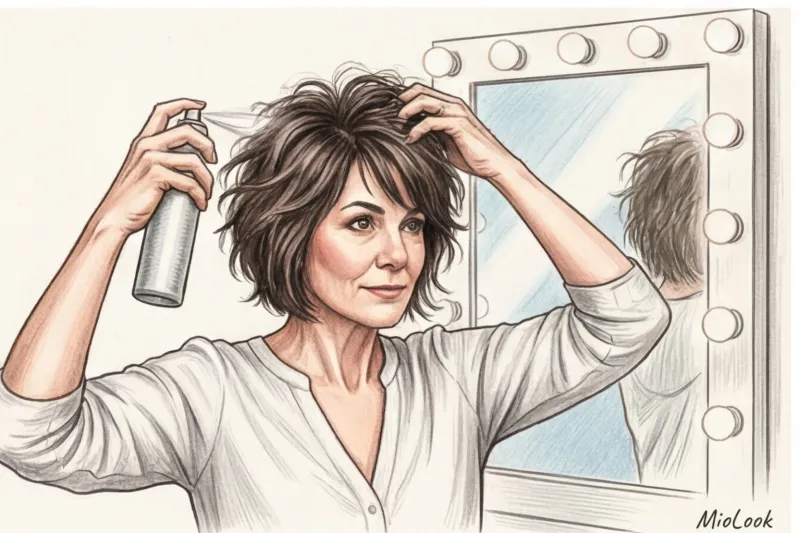
A perfect haircut is only 50% of success. The rest is styling. An aging hairstyle looks like this: hair stuck to the scalp, coated with strong-hold hairspray ("to keep it from blowing in the wind"), hair after hair. It screams age.
When I first tested salt sprays and texturizing powders on my older clients instead of traditional mousses and hairsprays, the results exceeded all expectations. Eight out of 10 women ditched hairspray forever. Why? The powder is applied to the roots and creates a framework that holds volume without clumping. If your hair has become limp by the end of the day, simply fluff it up at the roots with your hands.
Proper drying is also important. Avoid straightening your hair with a flat iron. Use a medium-diameter round brush to lift the roots and gently curl the ends. on behalf of This creates that very air flow in the hair.
Ready to get started?
Try the MioLook free plan—no commitments required. Shape your new style step by step with AI-guided suggestions.
Get access — €0.99 onceTo summarize, remember the main rule: a rejuvenating effect on a round face isn't achieved by hair length, which can be hidden behind it, but by clever geometry that reshapes the proportions. Air at the roots, asymmetry in the lines, and highlights near the face—these are your key tools. Don't be afraid to reveal your face; beware of awkward angles!