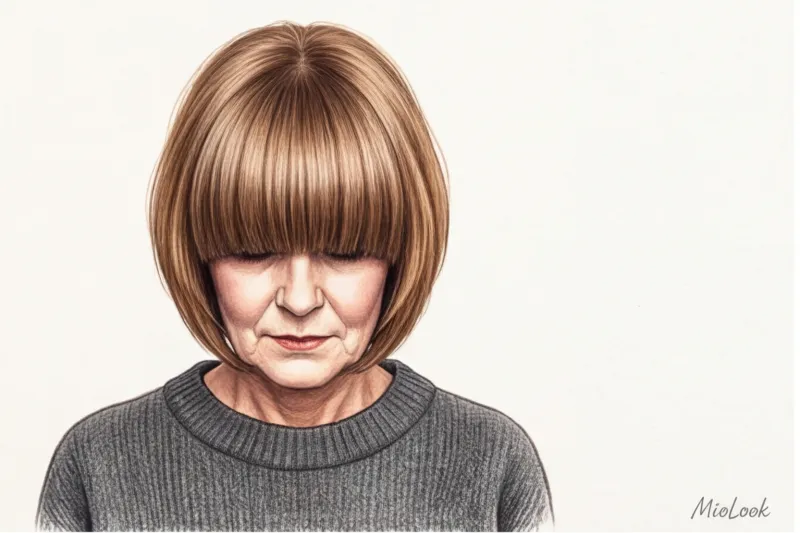
Every week, I have a client in my chair who insists on cutting her thick, straight bangs to "finally hide the wrinkles on her forehead." And every week, I pick up a comb, push the strands away from her face, and explain why this step will add at least five years to her age. Spoiler: bangs that make you look younger - this is not a myth, but it works according to the laws of architecture, and not flat camouflage.
Over 12 years of working as a stylist, I've learned the most important thing: trying to literally "cover up" age-related changes with hair always backfires. We covered the basic principles of working with shape and length in more detail in our guide. Anti-aging haircuts: rules for women 35+ Today, we'll focus on the most powerful, yet insidious, tool for visual lifting—the facial area.
The Illusion of Disguise: Why the Old Rules No Longer Work
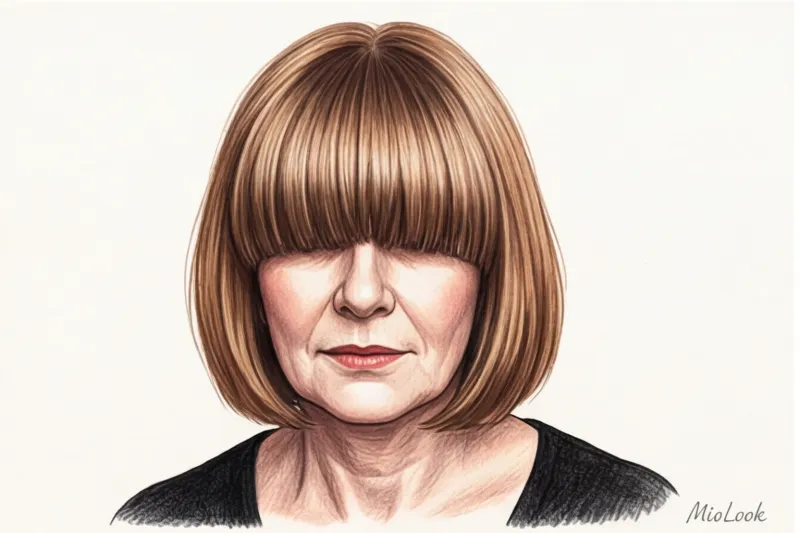
The biggest hairdressing myth is that straight, thick bangs will hide forehead wrinkles and make you look younger. In reality, they create a harsh horizontal line directly above the eyes. In optics and design, this is called the "visor" effect.
What's happening physically? A thick cut casts a real shadow on the orbital area. The eyes appear deeper-set, dark circles more contrasting, and the look chronically tired. But the most dangerous thing lies below.
"A hard horizontal fringe acts like a press: it visually 'presses' the lower third of the face. Our brain calculates proportions by comparison. By covering the upper third (the forehead), you automatically force the other person to look at the lower third. This is precisely where gravitational drooping manifests with age: jowls, nasolabial folds, and a sagging oval face."
Recently, Anna, a 44-year-old sales manager, came to see me. She'd been wearing a thick, blunt fringe for a year, trying to hide the frown line between her eyebrows. It ended up highlighting the shadows she'd begun to notice along her nasolabial folds. When we grew out the length, opened up her forehead, and added soft diagonals, Anna was surprised to notice how her face had become more lifted and the shadows under her eyes had become less noticeable.
The Architecture of Rejuvenation: How Bangs Change the Geometry of the Face
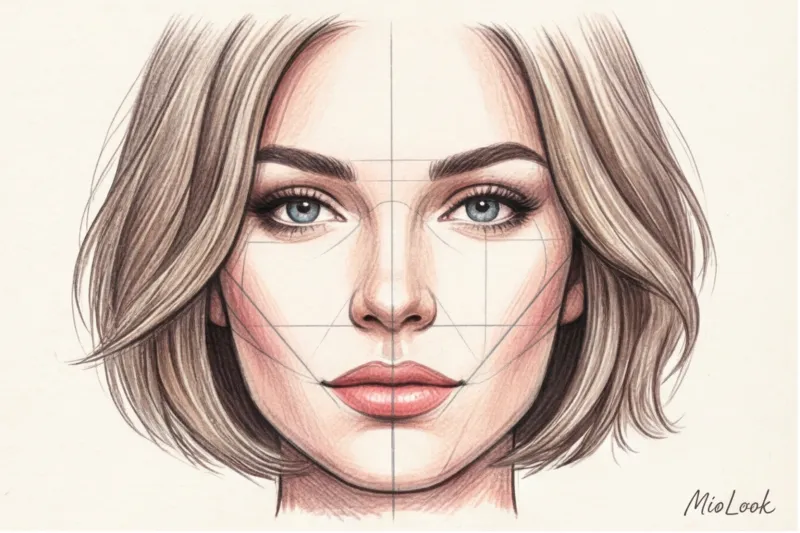
Instead of hiding imperfections, a clever haircut redirects the focus. In hairdressing, we often use the principle of the Müller-Lyer illusion. Lines radiating from the center to the periphery (like arrows pointing outward) visually widen and lift the subject.
The "Rising Diagonals" rule states that any line on the face should slope upward and outward. A well-placed diagonal haircut can visually "lift" the cheekbones by 1–1.5 centimeters. This draws attention away from the heavy jawline and brings it back to the eyes—the most expressive feature of the face.
Access to MioLook for €0.99 — one-time payment
A smart AI stylist will select the perfect look based on your individual facial proportions.
Get access — €0.99 onceThe problem of loss of density and hair "fabric"
Another reason to avoid monolithic hair removal is the quality of the hair itself. According to research in trichology (specifically, the Journal of Cosmetic Dermatology), after 40-45 years, women's hair density decreases by an average of 20-30%, and the diameter of the hair shaft itself thins.
Thick bangs start almost at the very crown. By cutting such a massive fringe, you literally "steal" precious volume from the rest of the hair. As a result, the bangs look heavy, and the temples and back of the head appear treacherously flat and sparse.
Bangs That Make You Look Younger: 4 Top Shapes for a Visual Lift
The choice of shape doesn't depend on seasonal TikTok trends, but solely on your anatomy and hair structure. Below are four options that truly work to refresh your look and turn heads.
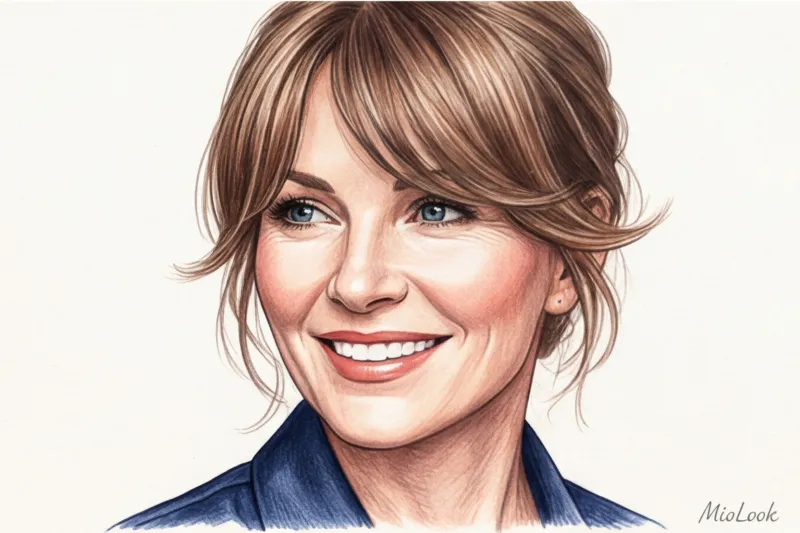
1. Curtain bangs: a versatile camouflage
The undisputed leader in anti-aging styling, it creates that soft frame that conceals crow's feet at the outer corners of the eyes and delicately camouflages forehead wrinkles, while leaving the center of the face open and bright.
The ideal proportions: the shortest part should end at the bridge of the nose, and the longest part should smoothly merge with the top of the cheekbones. This creates the "triangle of youth," the apex of which points downward, and the base accentuates high cheekbones.
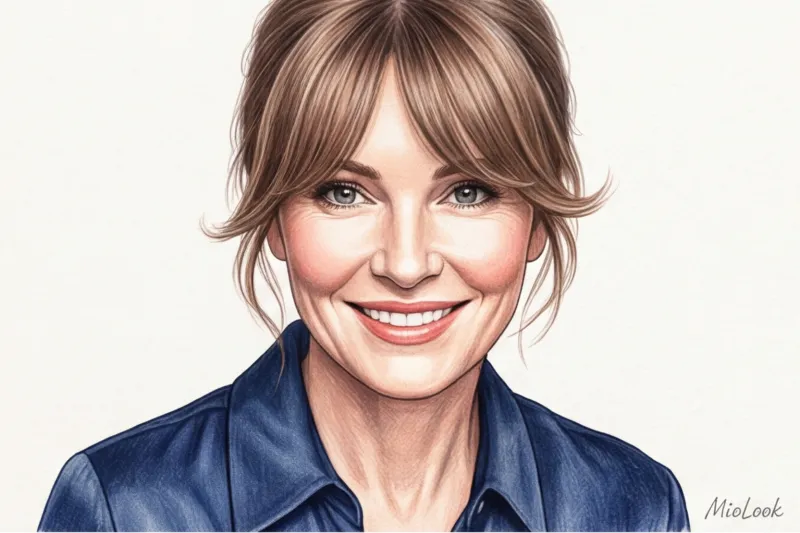
2. Torn (textured) bangs: dynamics and airiness
Solidity and static hair are always associated with age and conservatism. Airiness, movement, and casualness are associated with youth. Textured bangs with thinned ends (called feathers) blur the lines.
It's ideal for fine hair. The varying lengths of the strands create the illusion of volume where it's physically lacking. It's also a godsend for those who hate long morning styling sessions: the textured shape allows for a little flyaways.
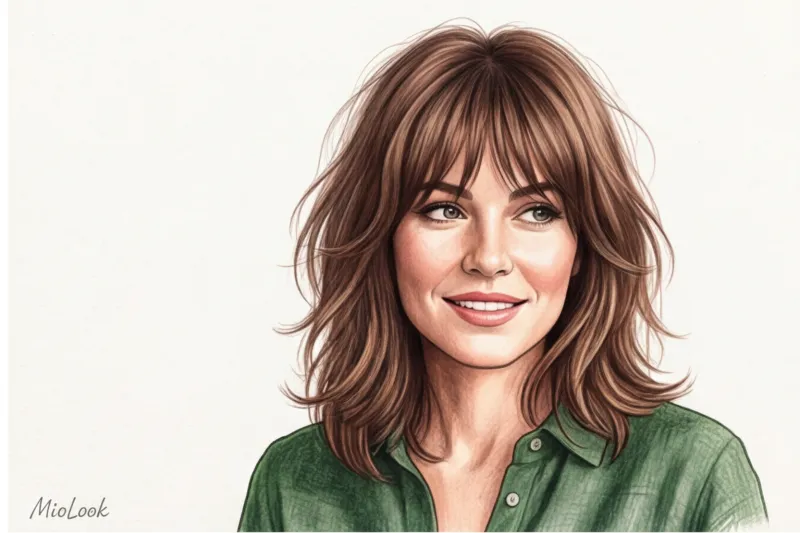
3. Asymmetrical elongated bangs
With age, the natural asymmetry of the face (which we all have) becomes more pronounced: one eyebrow droops slightly lower, and the nasolabial fold on one side becomes deeper. A center parting and a symmetrical haircut act as a ruler, highlighting these nuances.
A side parting and long bangs to one side break up this geometric shape. They create a powerful upward line that draws attention to itself. This is an excellent choice for round and square faces, as the diagonal line visually elongates the oval shape.
4. Soft Arch
If you're absolutely not ready to expose your forehead, choose an arched shape. It should barely touch your eyebrows in the center (and the cut should be thinned and translucent), and gradually lengthen at the sides toward your temples. Unlike straight bangs, an arched shape doesn't cut into your face, but gently curves around it, concealing age-related hollows at the temples.
Your perfect look starts here
Join thousands of users who look flawless every day. Let AI analyze your appearance.
Get access — €0.99 once"Canvas" quality: adapting the shape to your hair texture
Even the most perfectly geometric shape will fail if the stylist doesn't take your hair texture into account (that's the hairdressing science of materials). What works on thick Asian hair will be a disaster on porous Slavic hair.
Straight and glassy hair. They don't hold their shape well and tend to fall apart into untidy clumps. We strictly avoid blunt cuts here. The ideal technique is slicing (sliding cut). The stylist doesn't cut across the strand, but rather slides the scissors along the strand, thinning the ends. This allows the bangs to fall beautifully without a ton of hairspray.
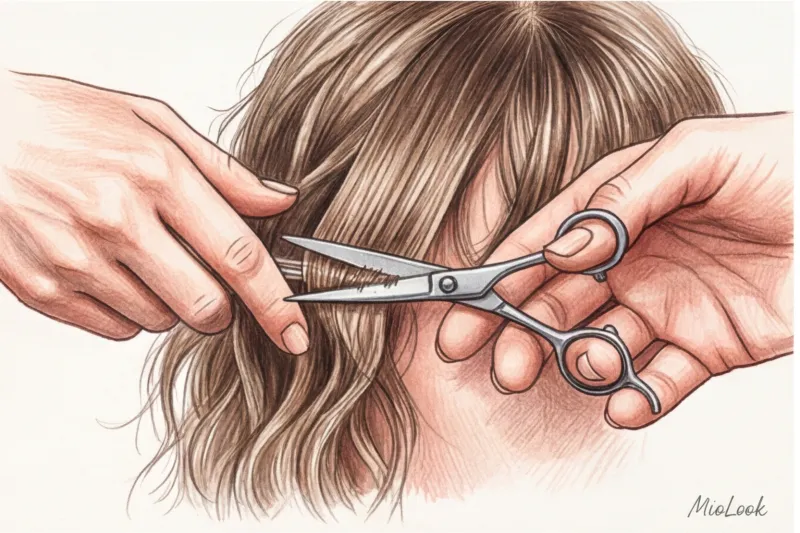
Curly and porous hair. A classic mistake made by inexperienced stylists is cutting curly bangs on wet hair, pulling the strands taut like a string. When the hair dries, the curls will "jump," and instead of a stylish curtain fringe, you'll end up with '80s-inspired micro-bangs. Curly hair should only be cut when dry, respecting the natural curl pattern. In this case, the bangs should be elongated and blended into the cascade.
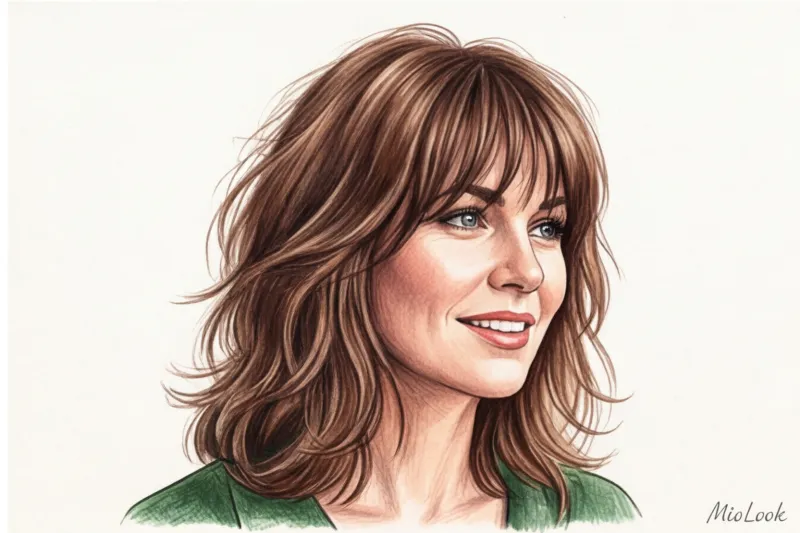
Thin and sparse hair. Avoid deep bangs from the crown. The secret to creating the illusion of thickness is creating a dense edge while maintaining a light overall volume. Avoid backcombing (they look old-fashioned). Volume is created by pulling the strands at the right angle during cutting.
Styling without weight: how to maintain a fresh-faced look
There's nothing more aging than a "monumental" fringe, tightly sealed with strong-hold hairspray. Hair should move when you turn your head. Static = age.
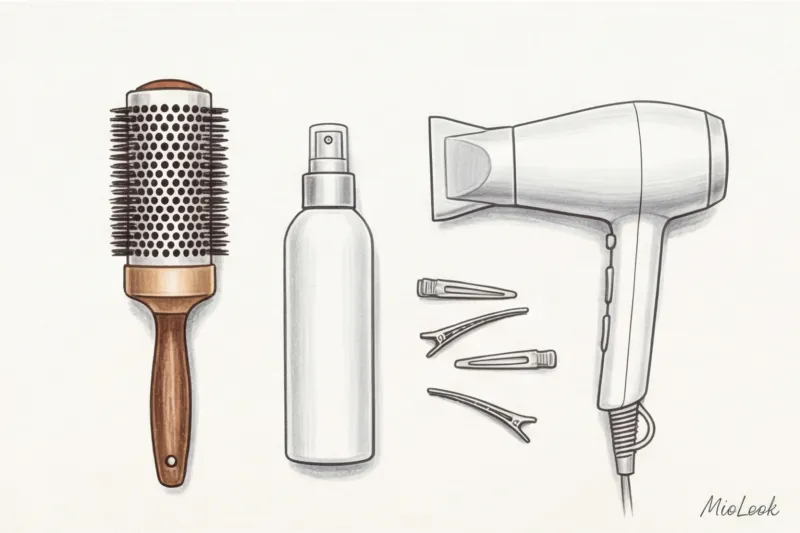
Modern minimalist styling requires just two things: a light heat protectant and a texturizing product. Forget heavy mousses. Use dry texturizing sprays (like Oribe Dry Texturizing Spray) or salt solutions. They make hair slightly more matte and dense, creating that perfect casual chic effect.
Brushing technique:
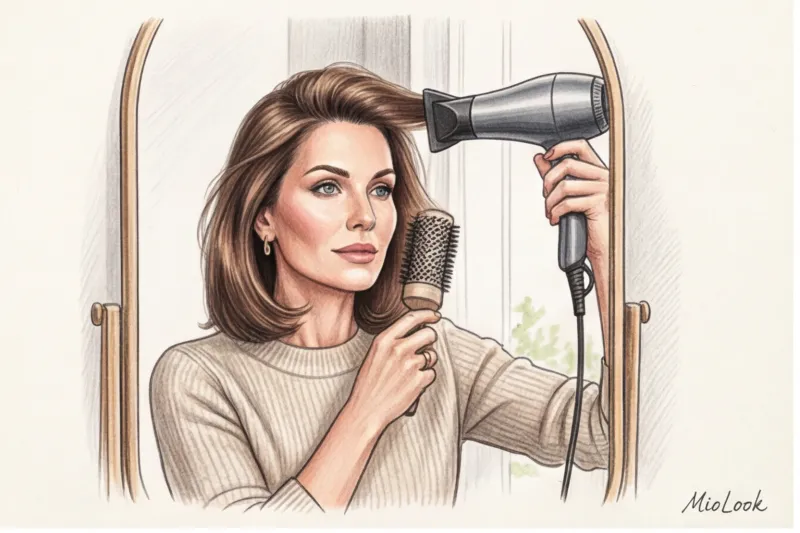
90% of women dry their bangs incorrectly—they curl a strand around a round brush and pull it downwards and inwards. This creates a "roll," which became obsolete twenty years ago.
Correct: Place the brush under the strand at the roots and pull the hair up and back , away from the face. When the strand cools and unravels, it will form a beautiful, flowing diagonal.
If you're wondering how to incorporate this easy hairstyle into a strict work dress code, I recommend checking out our article. Office Hairstyles: 10 Smart Everyday Styles , where we discuss the rules of corporate styling.
Checklist: How to Prepare for a Salon Visit
Changing facial areas is always stressful. To minimize the risk of disappointment, prepare in advance.
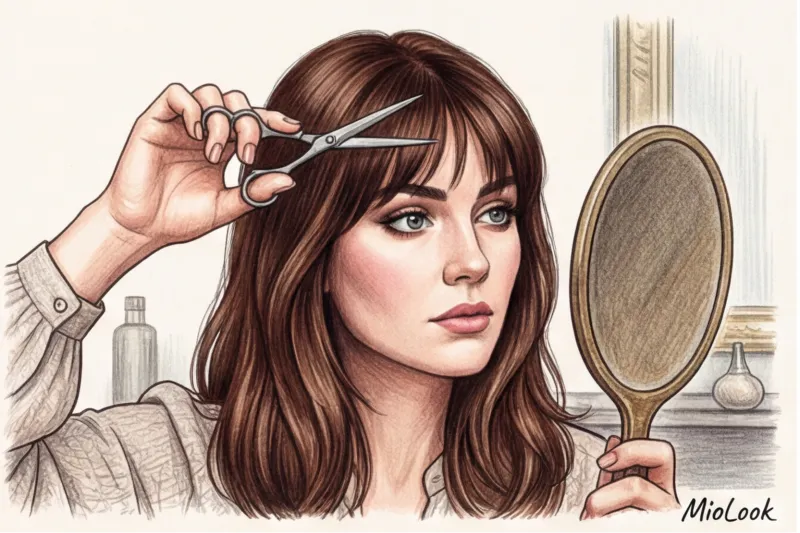
- Test in front of a mirror. Take two front strands, comb them over your face, and cross them at the bridge of your nose. Slightly part the ends to create a curtain shape. Consider where the strands should end to flatter your cheekbones.
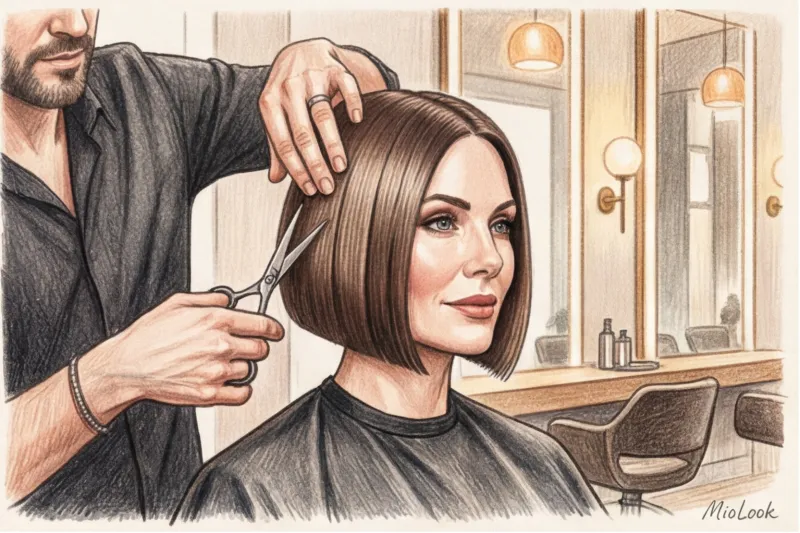
- Dictionary for the master. Don't say "give me bangs." Use terms like "soft graduation around the face," "textured edge without a straight cut," or "smoothly integrated bangs into the main length." Show references, but be sure to ask for them to be adapted to your hair type.
- Lifestyle factor. Self-honesty is the most important rule. Any shape shorter than chin-length requires styling. It takes 3-5 minutes every morning, but it's necessary. Furthermore, proper styling requires a salon touch-up every 4-6 weeks.
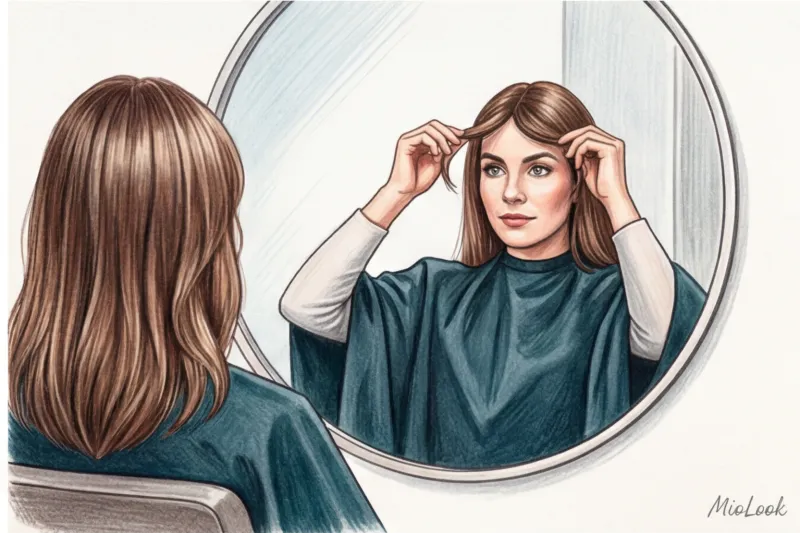
If you are unsure whether the new form will suit you, you can upload your photo to MioLook and try out different face-framing options before the stylist even picks up the scissors. It's a great way to see yourself from a different perspective without the slightest risk.
Bangs aren't a way to hide age or conceal wrinkles. They're an architectural tool that can highlight your best features, add sparkle to your gaze, and impart that elusive lightness to your look that others perceive as youth. Open up your face, don't be afraid of air in your hair, and remember: the right diagonal cut makes all the difference.