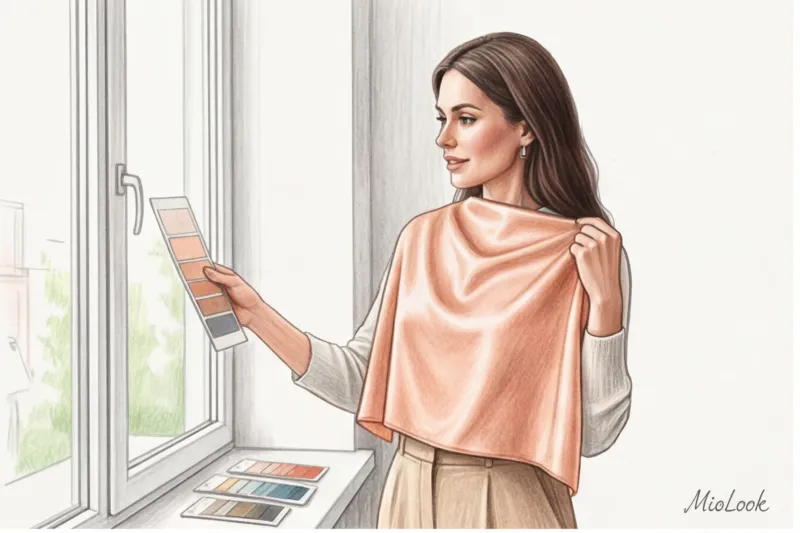
Anti-aging coloristics: the science behind how youthful colors work
In 12 years of working on film sets from Paris to New York, I've seen this trick hundreds of times. The model looks tired, the makeup artist frantically layers on concealer, but her face still appears flat on the monitor. Then the stylist swaps out the earthy gray top for a soft peach. Magic happens: the shadows under her eyes fade, her skin begins to glow. The model looks five years younger without a drop of makeup. It's not magic; it's strict physics. If you're looking for colors that make you look younger, you need to stop thinking in terms of "what's fashionable" and start thinking like a professional photographer.
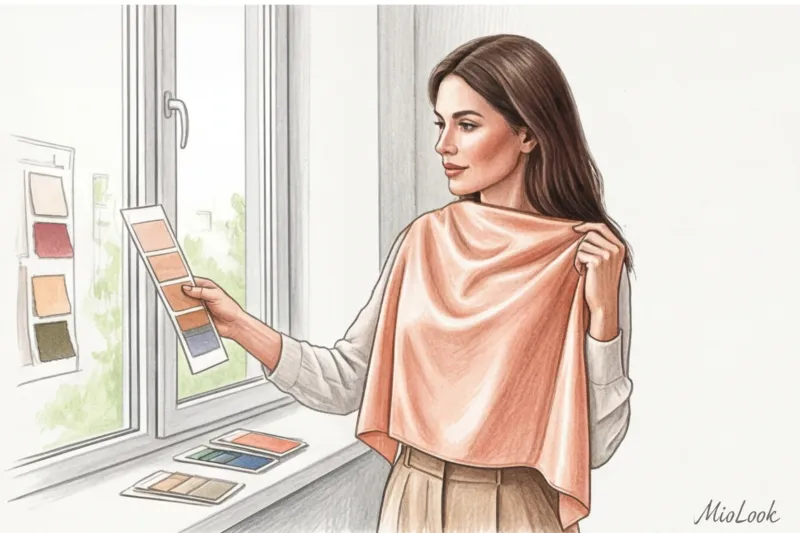
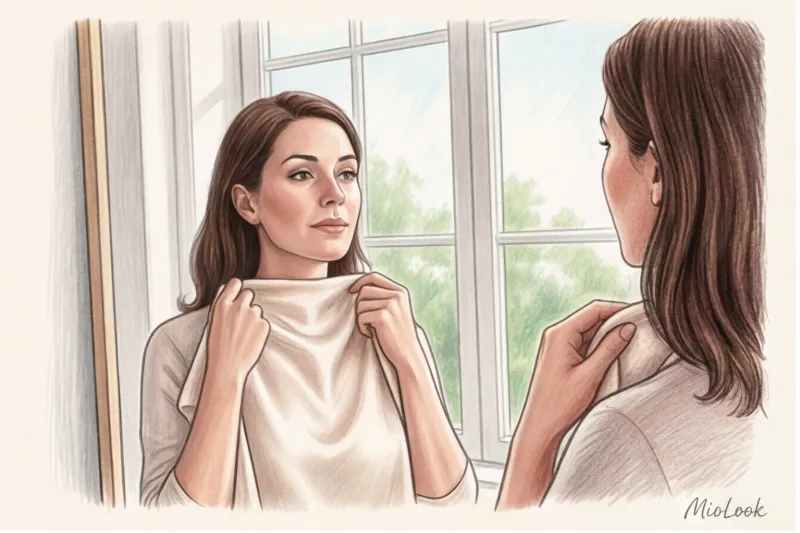
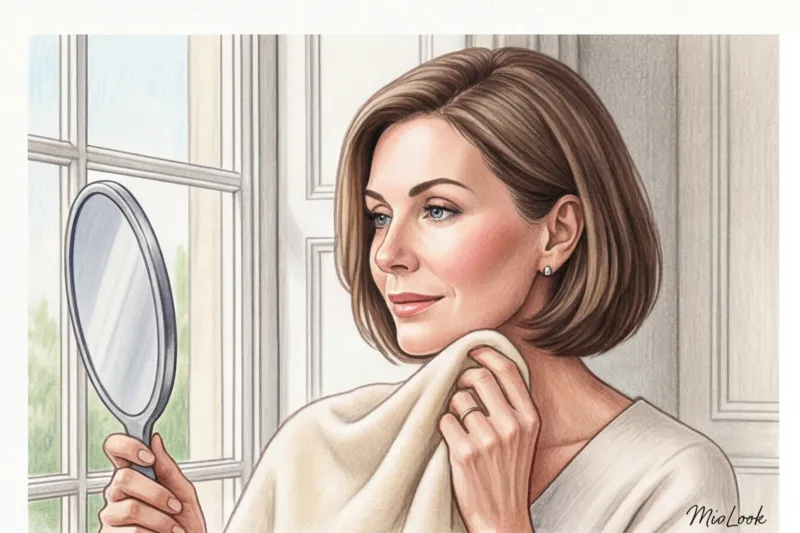
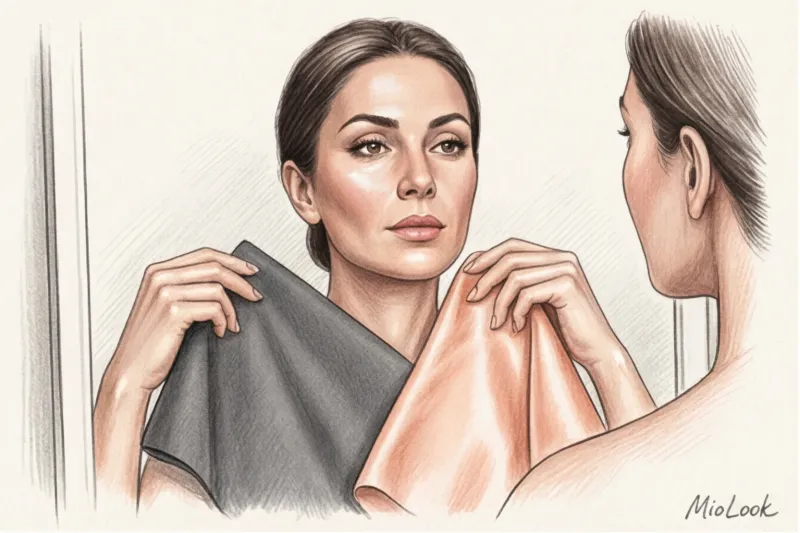
According to the laws of optics, any item worn in the portrait zone (closest to the face) acts as a photographic reflector. The fabric catches daylight or studio light and casts highlights directly onto your chin, cheeks, and neck. Professional photographers and makeup artists exploit this effect constantly: they know that a matte dark turtleneck absorbs light, outlining each nasolabial fold with harsh micro-shadows. A light silk blouse, on the other hand, acts like a ring light, bathing the face in a soft, diffused glow.
Why does this become critically important after age 35–40? It's physiological. Over time, our appearance loses its natural contrast. Melanin production decreases (hair and eyebrows become dull, and gray hair appears), blood microcirculation and hemoglobin levels change, causing the skin to lose its youthful glow and often acquire a grayish or sallow undertone. That inner radiance, known in the beauty industry as "glow," disappears. dewy skin At 20, even a mustard-colored sweater will elongate your face, but at 45, it will act as a magnifying glass for signs of sleep deprivation.
Anti-aging coloristics isn't about looking younger. It's about using the right reflected light to compensate for what skin naturally loses with age.
The most common mistake my clients make is blindly believing the rule: "To refresh your face, you just need to wear light colors." This is a dangerous myth. There is a huge difference between brightening And bleaching shades.
Whitening colors (pure icy white, neon lemon) drain the last vestiges of warmth from the face. They create too harsh a contrast, highlighting age spots and making the face look unhealthy. Highlighting shades (ecru, warm pearl, soft pink) contain a micro-dose of warm pigment that brings life back to the face. For this mechanism to work perfectly, it's essential to understand your natural base—I strongly recommend it before a wardrobe overhaul. determine skin undertone , for example, by making a quick white sheet test.
Color is your most accessible tool for visual lifting. If you want to automate this process, use the app MioLook We've built a portrait zone analysis feature that helps you immediately eliminate shades that "vampire" your appearance and create a capsule of reflective colors.
Top 5 Anti-Aging Shades: Colors That Make Women Look Younger and Refresh the Face
Have you ever wondered why a €300 cashmere sweater can sometimes make you look like you haven't slept in a week, while a simple €30 T-shirt suddenly makes your face look rested? The answer lies in the physics of color and its interaction with our skin in the so-called portrait zone—the area from the chest to the crown of the head. This is where color acts as a photographic reflector, casting either highlights that illuminate or shadows that deepen wrinkles.
Analyzing the Color Institute's annual reports Pantone Based on my many years of experience selecting palettes for clients over 40, I've developed a strict rule. The most effective anti-aging colors share two common characteristics: a medium lightness (not too dark and not too bleached) and a complex pigment composition. There are colors that work almost universally, serving as a lifesaver for any wardrobe. However, for maximum effect, even these flawless shades require subtle adjustments to your natural skin tone (warm, cool, or neutral). Let's explore the five essential coloristic tools that can visually shed a decade without injections or complex procedures.
Soft pink and peach: the "glow from within" effect
With age, blood microcirculation in the epidermal layers changes, causing the skin to acquire a grayish, sallow, or slightly olive undertone, suggesting fatigue. This is where the pink spectrum comes in—an absolute champion for restoring a rosy, healthy glow to the complexion. The pink pigment literally mimics the natural color of healthy capillaries visible through youthful skin.
However, there's a catch. Barbie pink or fuchsia can create too much of a contrast. Our choice is complex, muted variations. It's no coincidence that Pantone has named this color of the year 2024. Peach Fuzz (Peach Fluff) – the perfect balance between warmth and light. The peach shade has a phenomenal ability to neutralize blue and gray tones, creating a soft blur on the face.
"During one recent consultation, we completely removed the solid beige blouses from a 45-year-old client's business wardrobe, replacing them with silk tops in dusty rose and warm peach shades. Her colleagues assumed she'd had a facelift, although the secret was actually a change in the color temperature around her face."
Micro tip: How to choose your shade? If you have a cool (bluish) skin tone and ash-colored hair, opt for a cool, soft pink (the color of cherry blossoms). If your skin has golden pigmentation and your hair has copper or wheat highlights, your ideal anti-aging shade is peach or salmon.
Refreshing mint and sage: a noble alternative to green
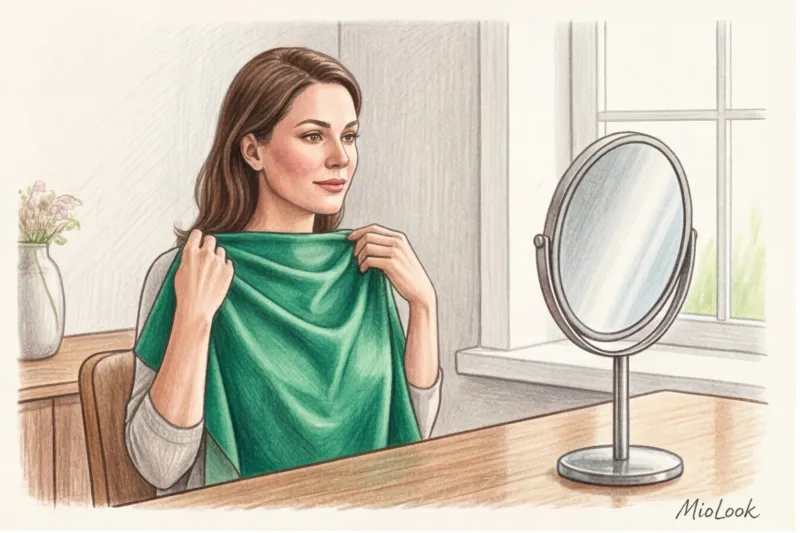
Green is one of the most tricky colors in the wardrobe. Shades of moss, khaki, or bottle glass often reflect yellow-green shadows onto the chin and neck, visually deepening the nasolabial folds and making the face look unhealthy. But as soon as we shift toward cool mint or muted sage, the color begins to work in our favor.
In optics, there's a concept called simultaneous contrast. Cool, slightly bleached green shades have a surprising side effect: they visually whiten the whites of the eyes and tooth enamel. This is critical for anti-aging coloristics, as with age, the whites of the eyes often lose their natural blueness, acquiring a yellowish tint. A refreshing mint shade acts as a color-correcting filter.
Neon green should be strictly avoided. Neon creates excessive visual vibration, which can make any pigmentation or redness on the skin appear more pronounced. Sage is a sophisticated, luxurious alternative. A basic trench coat or jacket in a sage shade (even a mass-market one costing around €80–120) always looks premium and adds a fresh touch without seeming childish.
Access to MioLook for €0.99 — one-time payment
A smart AI stylist will select the perfect rejuvenating colors for your appearance and help you create the perfect wardrobe.
Get access — €0.99 oncePearl gray and ecru instead of snow white
The most persistent myth is that "white is refreshing." Unfortunately, after age 35, this rule requires serious adjustment. Pure, stark white (the color of A4 office paper) reflects too much light. When you put on such a shirt, it acts like a harsh spotlight, highlighting every imperfection in contrast: the slightest yellowing of teeth, pigmentation, and the shadows around expression lines.
The Secret of Truly Elegant Women Who Master the Art old money , involves using complex white shades. Ecru (the color of unbleached silk), ivory, alabaster, or pearl gray—these are the magic colors that maintain a "clean and fresh" effect while softly harmonizing with the skin.
Pearl gray deserves a special mention. Unlike dense graphite, pearl contains a microscopic amount of pink or lilac pigment. It doesn't absorb light, but rather softly diffuses it. If you're planning to invest €150 to €300 in a quality cashmere sweater, choose pearl or ecru over dazzling white—it will be your best beauty item.
Azure and Sky Blue: How to Take Off 10 Years
From a color psychology perspective, the blue spectrum is inextricably linked with associations of clear skies, freshness, water, and morning coolness. Our perception automatically transfers these qualities to a person dressed in sky blue. But beyond psychology, there's powerful physics at work here.
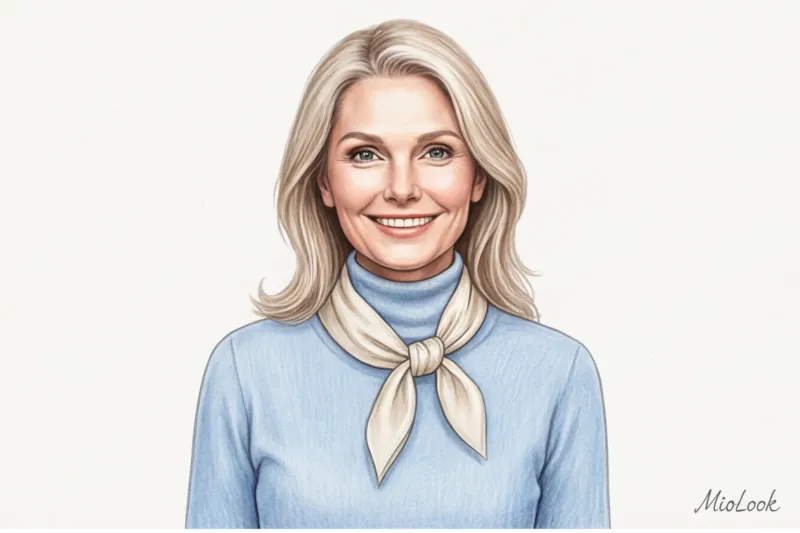
The main problem that adds years to your appearance in the morning is dark circles and overall puffiness. Blue-violet or brownish shadows under the eyes are neutralized with the right azure or sky-blue shade near the face. Light blue fabric reflects cool, clear light onto the chin and lower cheeks, erasing signs of sleep deprivation. If you're unsure which blue undertone is right for you, you can upload a photo of yourself to MioLook smart appearance analysis feature to try on shades virtually.
Micro tip: Wear a sky-blue cotton or viscose shirt on days when you manage to get less than six hours of sleep. This color works better than a double espresso and heavy concealer, visually opening up your eyes and making your face look more sculpted.
Noble lavender and lilac
Deep purple, eggplant, and plum are the heavyweights of color. They're luxurious yet unforgiving to age-related changes, casting heavy, dramatic shadows that make the look more severe and austere. Lavender and lilac are their saving grace.
These shades have a unique property: they are incredibly complimentary to gray hair. When a woman decides to stop dyeing her hair and allows the noble silver to shine through, warm tones (like mustard or terracotta) can make gray hair look untidy, like faded straw. Lavender, on the other hand, highlights the aristocratic coolness of skin tones and the crystal clarity of silver hair.
Lavender lends a delicate fragility to the appearance, yet it doesn't appear frivolous. A dusty lilac pantsuit or a lavender blouse under a tailored gray jacket conveys confidence and status, while simultaneously softening facial features, creating a more toned oval and a clearer gaze. The main rule: choose lavender in smooth textures (silk, satin, fine merino wool). In loose cotton or linen, this color can lose its luster and appear washed out.
Integrating these five rejuvenating shades into your portrait space is the quickest way to refresh your wardrobe. However, it's important to remember that color never works in a vacuum. Its effectiveness directly depends on how the fabric reflects or absorbs light.
The Biggest Myths About Anti-Aging Colors in Your Wardrobe (A Stylist's Perspective)
If I had a euro for every time I've heard someone say, "I don't wear black anymore because it makes me look older," I'd buy an apartment with a view of the Seine. The fashion industry is riddled with established, yet hopelessly outdated, color rules that have been passed down from one decade-old glossy magazine to the next. These dogmas don't just limit your choices—they literally prevent women from looking modern and dynamic.
Fashion has changed, fabric textures have evolved, and so has our approach to style. Blindly following the no-nos of the 2000s often leads to the opposite effect: trying to appear younger with the "right" shades, a woman unwittingly adds a decade to her age. Let's address two major color myths that it's time to banish from your styling practice.
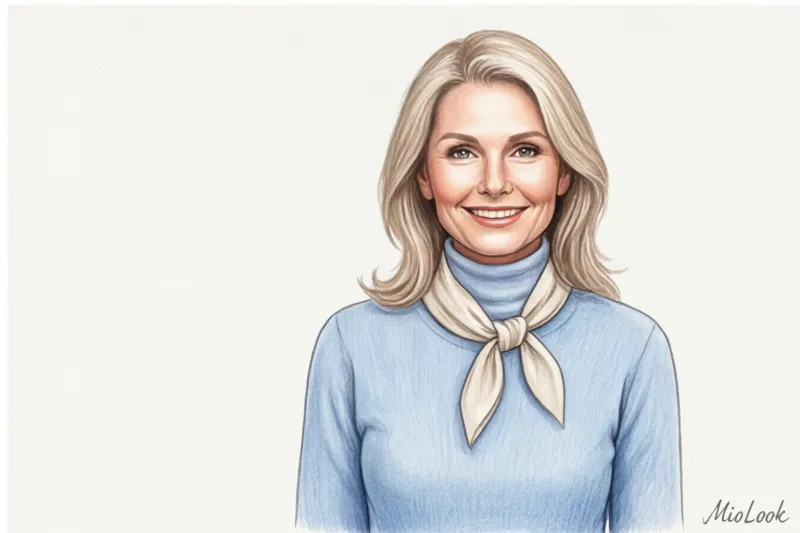
Myth 1: Black always makes you look older and highlights wrinkles.
This is perhaps the most persistent and, at the same time, the most destructive misconception. The truth is, it's not the pigment itself that ages. Black color ages only when it is matte and dull.
From a light physics perspective, dense matte textures—such as inexpensive cotton jersey, heavy wool, or sheenless viscose—act like black holes. They completely absorb light. If you wear a solid black turtleneck (even a premium cashmere one for €300), the fabric under your chin casts no reflections on your face. Instead, it highlights every micro-shadow: nasolabial folds, under-eye circles, and even the slightest hint of fatigue.
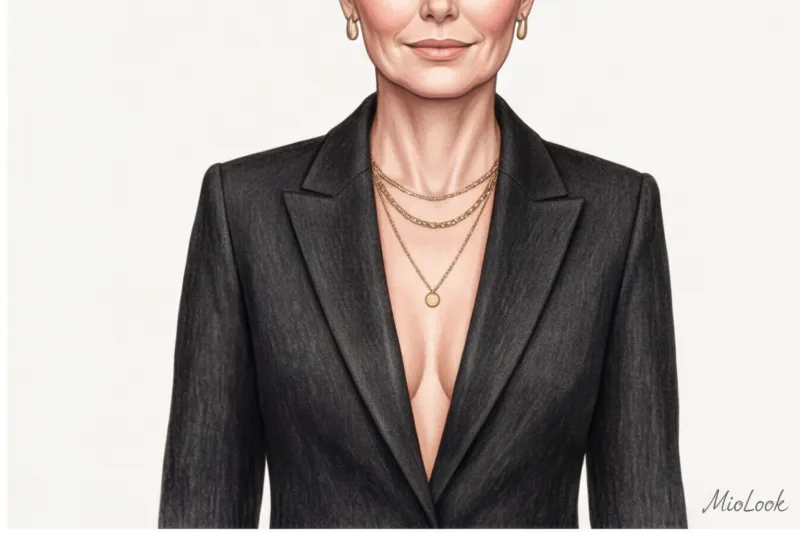
Take a look at the Saint Laurent or Tom Ford collections—their black never looks aged or mournful. The secret lies in clever styling. Here are three expert tips for wearing this color after 40 and looking chic:
- Choose deep necklines: A V- or U-shaped neckline creates a safe buffer zone. The skin itself acts as a light reflector. The further the dark fabric is from the chin, the fresher the face appears.
- Use transparent and shiny textures: Swap out a chunky sweater for a blouse made of silk chiffon, crepe de chine, or organza. The translucent material breaks up the monolithic color, making it light and breathable. The same applies to satin or leather - their slight sheen reflects light, creating a lifting effect.
- Add color with accessories: If you do end up wearing a high-necked black dress, save the day with a contrasting collar (for example, a white Chanel-style one) or a chunky pearl and light-colored metal necklace that will act as a reflector.
Myth 2: Only pale pastel colors suit older women.
The second extreme women often resort to in an attempt to "refresh" their complexion is a complete switch to pale pastels. Salespeople often push dusty pinks, bleached pistachios, or vague beige shades, promising a rejuvenating effect. In practice, however, this is a direct path to what stylists call the "pensioner look."
The danger of overly pale colors is that they lack sufficient pigmentation. As we age, our appearance naturally loses vibrancy: hair becomes lighter due to graying, and lip color and blush become less pronounced. When this reduced contrast is combined with equally colorless clothing, the face simply fades, creating a tired and unhealthy appearance.
The main law of modern coloristics is the importance of maintaining contrast levels You don't need bleached-out shades, but rich, pure ones, just a little softened. Instead of dusty lilac, which will blend with the grayish undertone of tired skin, choose deep lavender. Instead of faded peach, choose a refined salmon.
To see if you blend in with your clothes, take a selfie in natural daylight. You can upload these photos to the "smart wardrobe" feature in MioLook The app allows you to visualize your looks on a single screen—so you can immediately see which pastel pieces make you "invisible," and then add a contrasting accent, like a bright scarf or a structured jacket in a rich color.
Remember this simple rule: pastels only work to rejuvenate you when they serve as a backdrop for your eyes and skin, not when they blend into a single, washed-out blob. Your wardrobe should highlight your energy, not hide it behind a wall of safe but boring shades.
Fabric texture is more important than color: a secret that is not being told
Have you ever noticed what the heroines of big-budget television interviews and movie stars most often wear in portraits? It's almost never cozy cotton or thick wool. There's a strict professional rule for television shoots, rarely mentioned in glossy magazines: the texture of the material has an even more rejuvenating effect than the pigment itself.
Costume designers know very well that even perfectly chosen colors that make you look younger , will lose their power if the fabric texture is wrong. When studio lighting—or even standard office fluorescent lighting—is directed at you, the fabric of clothing in the portrait area begins to act as either a powerful light absorber or a photographic reflector. The same pearl gray shade will behave radically differently when embodied in fluffy knitwear or flowing satin.
Consider matte fabrics: wool, linen, heavy cotton, or tweed. They have a loose, rough surface. From an optical physics perspective, such materials actively absorb light rays. If you wear a matte sweater close to your face, the fabric won't reflect any light back onto your skin. Worse, it will cast harsh micro-shadows upward. The result? Suddenly visible nasolabial folds, visually deepened wrinkles, and an accentuated texture of tired skin. You can buy a luxurious cashmere turtleneck for €300, but due to its absorbent nature, it will flatten your face and add unnecessary shadows.
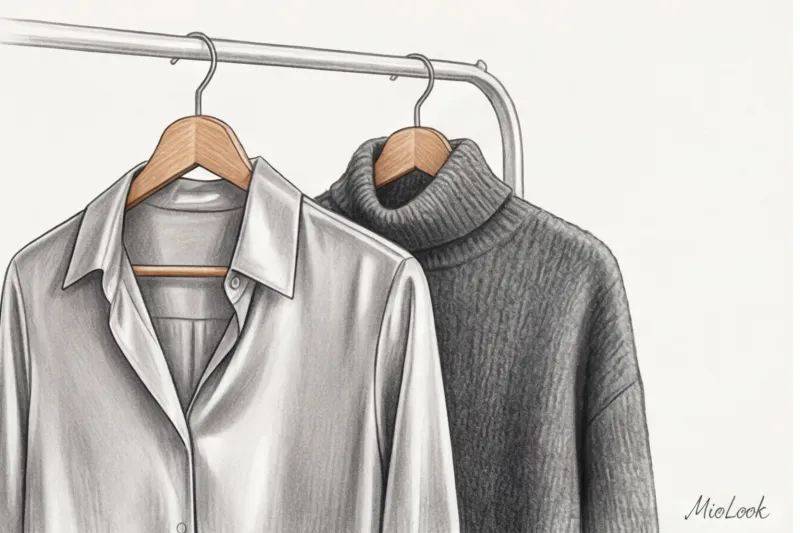
Smooth and satin fabrics create a completely different, truly magical effect. Natural silk, satin, high-quality viscose, and cupra have a glossy surface. In portrait mode, they work like a portable ring light, which beauty bloggers use for the perfect selfie.
The flowing texture reflects light from its surface, directing it in a soft, diffused stream directly onto your face from below. This delicate fill light physically smooths the skin's texture, visually blurs shadows under the eyes, and illuminates the whites of the eyes. Skin instantly appears firmer and more radiant.
Even the most flawless anti-aging shade loses half its effectiveness if applied to a dull texture. Smooth fabric is your personal reflector, always with you.
Of course, this doesn't mean you have to freeze in thin blouses in winter. The secret lies in smart layering: simply separate matte textures from your face. Wearing a thick wool jacket or cardigan? Add a silk top with a subtle satin sheen underneath. To easily navigate your closet and remember such combinations, I always recommend that clients digitize their items. Upload them to MioLook — it's convenient to sort your wardrobe and visually create outfits, ensuring that the "reflector" will always be located near the portrait area.
Access to MioLook for €0.99 — one-time payment
Start creating perfect images with the help of artificial intelligence
Get access — €0.99 onceDangerous Shades: Which Colors Add Age?
We often buy a stunning, complex shade, put it on, and suddenly hear a sympathetic question from a colleague: "Are you feeling well?" Unlike the palette of colors that make you look younger, there are "vampire shades." They act as anti-reflectors: they don't reflect light, but literally draw out the natural colors of the face, accentuating even the slightest signs of fatigue.
Earthy tones Dirty brown, mustard, and classic marsh are the absolute leaders of this anti-rating. The physics of the process are merciless: the pigments in these fabrics reflect onto the skin with a yellowish-green or grayish undertone. As a result, the face takes on a tired, unhealthy appearance, and nasolabial folds appear more pronounced.
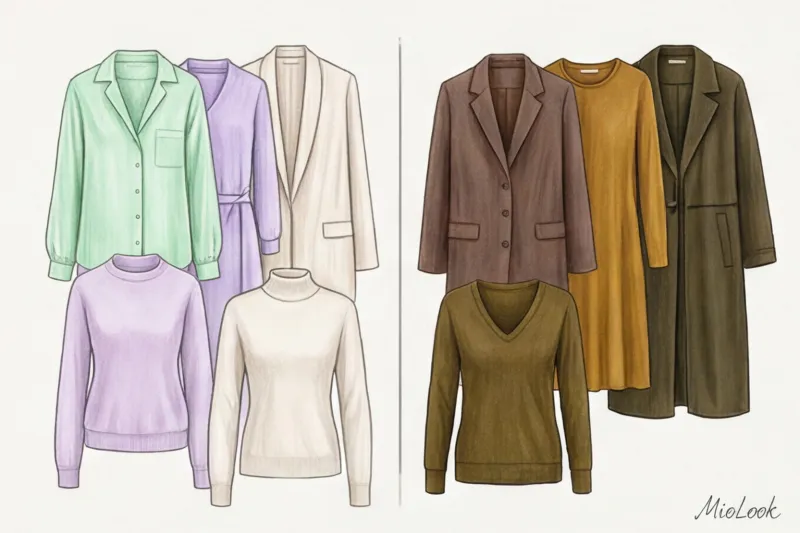
I had a particularly revealing case with a 42-year-old client, a top manager at an IT company. She adored the safari aesthetic and came to our meeting wearing a deep khaki silk blouse. Her skin appeared pale, with an earthy undertone. As soon as we swapped it for a similarly cut blouse in a cool sage shade, magic happened—her complexion instantly cleared up, and her eyes brightened. The difference in tone was only a couple of shades, but the effect was like being on a two-week vacation.
The second common trap is neon shades (Electric blue, acid yellow, aggressive fuchsia). Many women mistakenly believe that "bright colors are refreshing." In reality, neon creates too harsh and artificial a contrast with the natural pigments of our skin. Against the synthetic brightness of fabric, skin simply can't compete: it begins to appear dull, and any signs of age—whether fine lines, loss of tone, or pigmentation—come to the fore.
What to do with heavy dark colors , such as eggplant, burgundy, or deep navy? I'd never recommend completely abandoning them, as they are status markers. Eggplant and burgundy, when worn close to the neck, can cast crimson shadows on the jawline, visually weighing down the oval of the face. The secret to styling them is to draw them down to the lower part of the silhouette.
A chic pair of burgundy wool palazzo pants for €150 or a sleek navy midi skirt are the perfect base for elongating your height and camouflaging your curves. To automate this process and avoid wasting time thinking in the morning, I recommend loading your items into MioLook smart wardrobe There you can immediately sort the palette: leave refreshing shades for the top (portrait area) and safely group dark, saturated colors for skirts and trousers.
How to Integrate Rejuvenating Colors into a Business Wardrobe for 40+
When I was preparing the speakers' wardrobes for a European women's business forum, we faced a classic dilemma. Strict corporate dress codes demand visual authority, but traditional dark suits, under the harsh lighting of conference rooms, mercilessly highlight even the slightest signs of fatigue and age. The question arises: how to find a balance between the expert's elevated status and a fresh complexion?
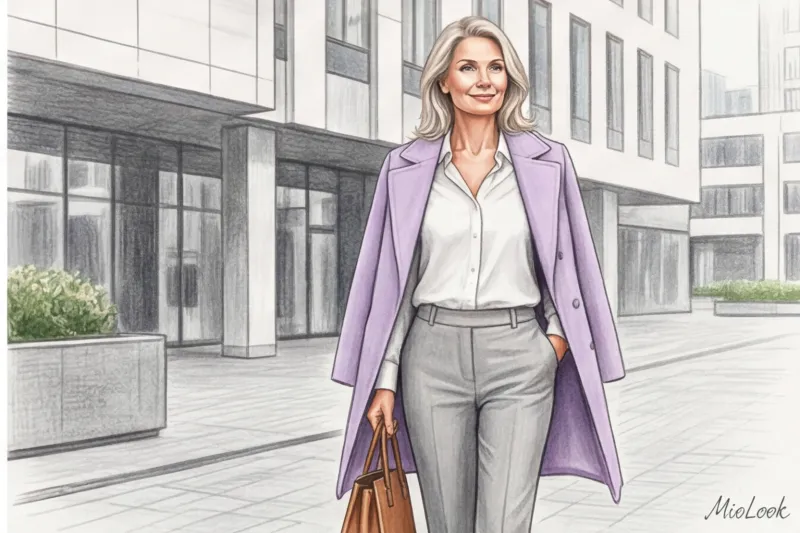
The biggest fear of most of my clients in leadership positions is looking childish. You'll agree, showing up to a board meeting in a candy-pink dress with ruffles is a serious risk to your professional reputation. The secret to integrating rejuvenating colors here lies in the strict architecture of the cut. Choose soft pink, lavender, or peach, but only in masculine silhouettes. A structured double-breasted jacket with a sharp shoulder line in a dusty rose shade will create the necessary highlighting effect, and its shape will maintain your distance and convey your determination.
For those who prefer a conservative approach, the 70/30 color rule works reliably. This is the basic wardrobe standard for successful female executives. The formula is simple: 70% of your silhouette is formed by status anchor colors (deep navy, cool graphite, dark chocolate), and the remaining 30% is given to a refreshing shade placed squarely in the portrait zone. This could be a pearl blouse made of thick silk, a sky-blue top under a tailored jacket, or an elegant scarf with sage accents. You're staying within the dress code, but your face gets that all-important reflective highlight. An important nuance: ensure the temperature of the refreshing accent color harmonizes with the base—a cool icy pink works well with graphite, and a warm peach with chocolate.
Your ideal image
it begins Here
Join thousands of users who look flawless every day with MioLook.
Get access — €0.99 onceThe pinnacle of corporate style is monochrome looks in light tones. An ecru pantsuit or a pearl-gray ensemble instantly conveys unconditional luxury and an old-money aesthetic. Such an outfit sends a clear subconscious message: this woman occupies a high-status position, is in control, and moves with comfort, which is why she can afford to wear easily soiled clothing.
Monochrome requires perfect execution. Light fabrics should be refractory, and trousers should show off the contours of underwear. The optimal choice is a dense wool blend (super 120s) or heavy silk.
Of course, a decent quality suit like this will cost between €400 and €900, but it's a direct investment in your personal brand. Creating such prestigious outfits without wasting precious time getting ready in the morning is easy. MioLook smart wardrobe I recommend creating and saving "70/30" combinations or light, monochrome capsules in the app once, so you can easily choose a ready-made look before an important meeting or negotiation that's guaranteed to boost your credibility.
Stylist's Checklist: How to Check Color Before Buying
Did you know that the lighting in 90% of fitting rooms in mass-market stores and even high-end boutiques is designed to highlight the texture of clothing, not to highlight your face? Halogen or LED lamps with a color temperature above 4000 Kelvin shine directly from above, creating harsh, unnatural shadows. That's why I never let my clients make the final decision about a €250 silk blouse or a basic jacket solely in front of the dressing room mirror.
When I personally accompany you on a shopping trip, whether in the Marais district of Paris or in the concept stores of Milan, I always use one foolproof algorithm. We call it chin test This is an incredibly simple yet ruthless filter that instantly reveals which youth-enhancing colors actually work for your appearance, and which are just pretending to be trendy on the hanger.
Step-by-step practical guide
- Find natural light. Take your chosen item and go to the window or the store exit. I often ask sales associates if I can take it out into the natural light—this is a perfectly normal practice for a discerning shopper. Artificial light distorts color rendering and hides the true undertone of the fabric.
- Prepare a "blank canvas". Ideally, you should test your portrait zone without heavy foundation. Makeup artificially evens out your skin tone, and you risk buying a shade that will make you look older when applied bare. If you're already wearing makeup, try to visually abstract away blush and contouring.
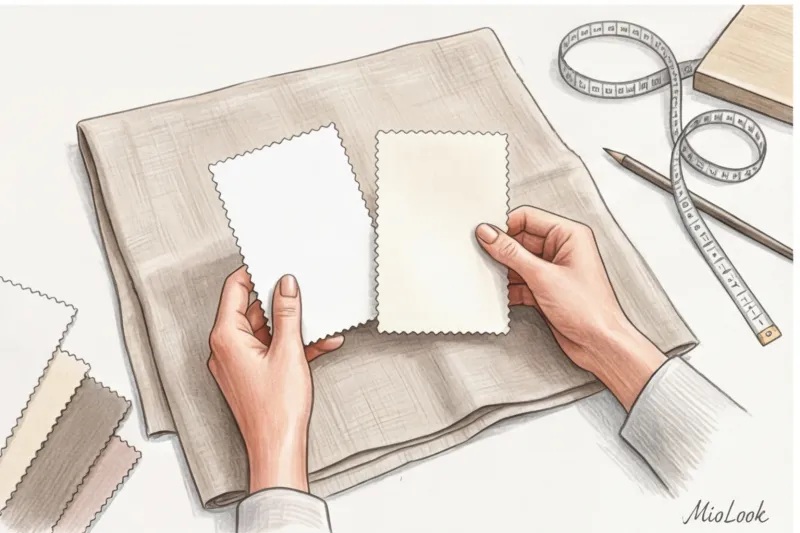
- Do the "chin test". Place the fabric firmly under your chin and neck. The fabric should act as a photographic reflector, directing light upward onto your face.
"In natural daylight, the fabric instantly reacts with your skin's pigment. It's pure physics of light, and no highlighter can fool you."
It's during this type of testing that the difference between basic and complex midtones becomes most apparent. You'll clearly see why we so carefully avoid flat colors.
What to look for: three age markers
Once the fabric is near your face, don't look at the item—look only at your reflection (a smartphone camera or a pocket mirror will do). Please note three strategic zones:
- Under eye area: The right, refreshing shade will work as a good concealer, smoothing out signs of fatigue. The wrong color (for example, mustard or dull gray) will instantly create bluish or earthy shadows.
- Nasolabial triangle: If you apply the wrong fabric, you'll notice how the nasolabial folds become visually deeper, darker, and more pronounced. The right color, on the other hand, will blur this relief.
- Eye color: Your perfect anti-aging color will literally make your irises "sparkle." The whites of your eyes will appear brighter, and your gaze will look clear and rested.
If you doubt your own eyeball assessment, take a selfie by the window with the fabric attached. After uploading these shots to MioLook , you'll be able to distance yourself from emotions and objectively compare how different items affect your portrait zone. You can also immediately assess whether that fresh mint-colored jumper will fit into your current wardrobe before taking it to the checkout.
Anti-aging color theory isn't a strict set of prohibitions, and certainly not a death sentence for your favorite deep colors. It's an elegant, almost scientific tool for managing your own reflection. Start small: next weekend, when choosing a new scarf or sweater within your budget (be it €30 or €300), simply conduct this one-minute test by the window. You'll be amazed at how quickly your eye learns to calibrate complementary shades, and how often people will ask if you just returned from a nice vacation.
Guide Chapters
Does gray make you look older? How to wear it and look younger
The myth that gray is a universal base color often leads to fashion mistakes after 30. Learn how to wear gray to enhance your status.
Dangerous Patterns: Prints That Age Women After 35
Heavy, granny-style patterns may look stylish on younger models, but after 35, they can be a detriment. Learn how to choose the right prints.
How pastel colors refresh your face and make you look 10 years younger
Crisp white can accentuate wrinkles, while softer shades can blur them. We'll show you how to wear light-colored clothing to look younger.
Is pink really a younger-looking color? How to choose the right shade
Pink is believed to visually rejuvenate the face, erasing signs of fatigue. We explain how this optical illusion works and how to find your perfect shade.
Does color type change with age: anti-aging palette
Are your favorite shades starting to make you look older and more tired? Let's figure out how to adapt your color palette after 40 for a fresher look.
Shades of white that refresh: how to choose yours?
The biggest style myth is that a crisp white shirt suits everyone. We'll tell you how to choose the perfect light shade to always look well-rested.
The Best Skin Tones for a Fresher Look: 10 Years Less Without Makeup
Clothing in the portrait zone acts as a physical reflector. Find out which shades can erase signs of fatigue and replace half your makeup bag.
Rejuvenating colors in clothing for women over 50
The secret to the perfect anti-aging wardrobe is pure physics. Discover how the right shades and textures can refresh your complexion without a drop of makeup.
Does black age you? How to wear dark colors after 40
Is it true that you should avoid dark clothing after 40? We'll tell you how to wear black so it doesn't accentuate your age, but adds style.
What colors make you look older: 7 shades that accentuate wrinkles
A basic black turtleneck can add up to 10 years to your age. We explore 7 dangerous wardrobe colors that mercilessly accentuate your age.