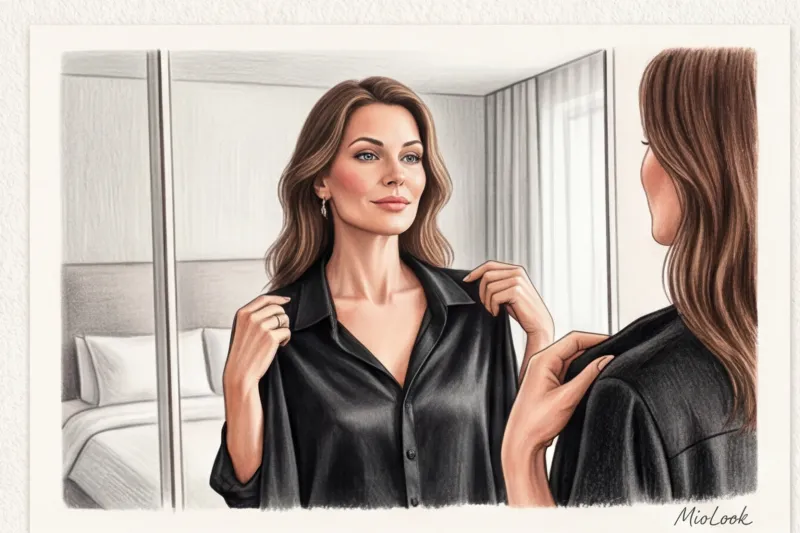
Is it true that black makes you look older? Debunking the main myth
At every other consultation, I hear the same phrase: "Olena, I was told you can't wear dark colors after 40. Do I really have to throw out half my wardrobe?" While sorting through our clients' closets, we constantly return to the question: does black actually age people, or have we simply forgotten how to work with it?
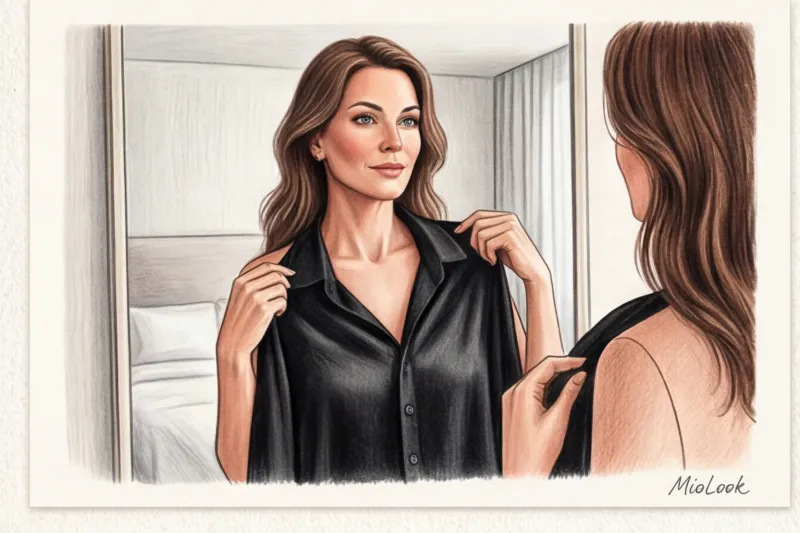
Spoiler: it's not the pigment itself that ages. It's the dull cut and cheap matte finish that does. To understand the mechanism, let's look at physiology and the laws of optics.
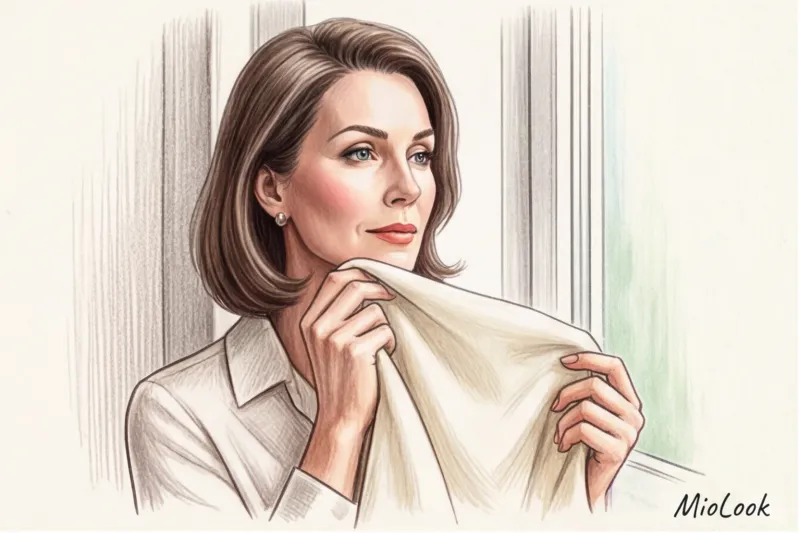
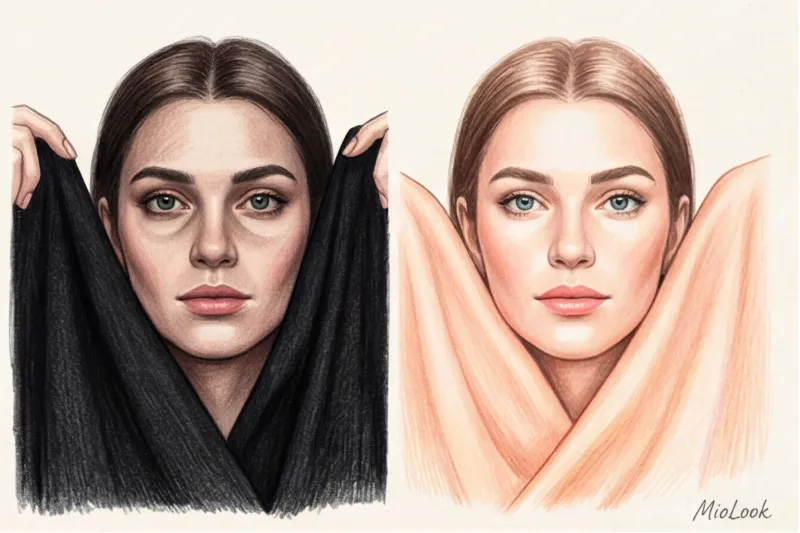
After 40, the natural contrast in our appearance decreases by an average of 20-30%. Hair loses its pigment saturation, skin tone changes, and lips become less vibrant. And when a harsh, light-absorbing black spot appears against this softened complexion, it acts as a merciless contrast filter. Nasolabial folds become more pronounced, and shadows appear under the eyes. We discussed this physiological process in more detail in our the complete guide to anti-aging coloristics.
However, as fashion historian Valerie Steele notes, black isn't a single constant. It has dozens of variations that behave differently depending on what they're applied to. In photography, there's the concept of a "reflector" and a "flag." White and glossy colors reflect light onto the model, while matte black (the flag) absorbs it, creating dramatic shadows. This law works exactly the same in clothing.
The Anatomy of Black: Why Texture Matters More Than Shade
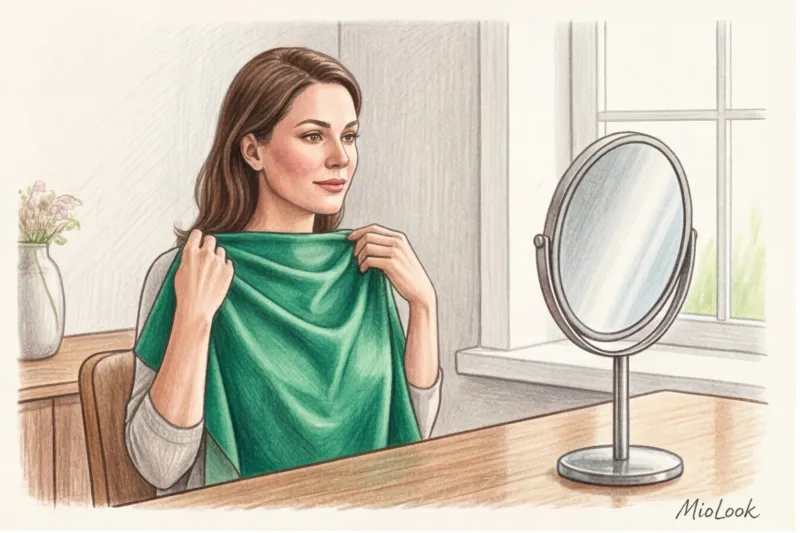
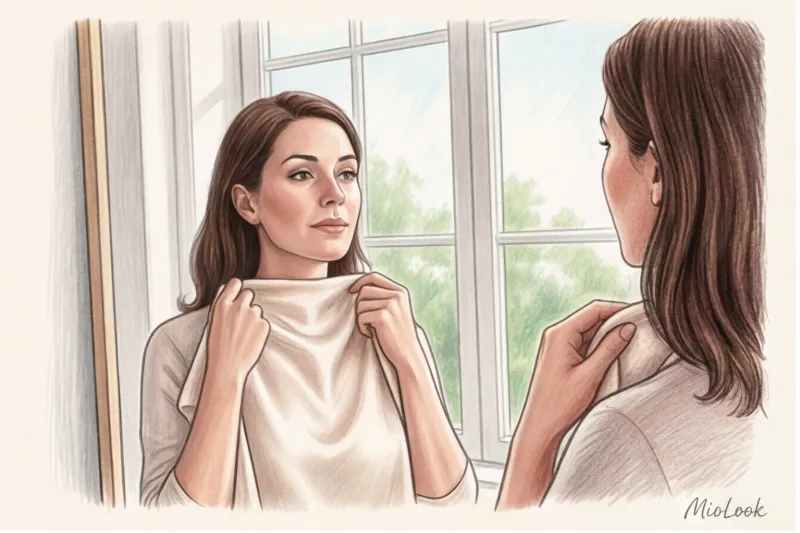
Over 14 years of practice, I've developed a golden rule that I demonstrate at my very first meeting with clients. I call it the "fabric test." We sit in front of a mirror in daylight, and I alternately place two pieces of black fabric on the woman's face. The first is a thick cotton piece from a mass-market store for €15. The second is natural silk, costing from €100 per meter.
The difference is dramatic. In the first case, the face looks tired and dull. In the second, the eyes light up, and the skin appears visibly firmer. Why does this happen?
Matte fabrics: the "black hole" effect
Cotton, thick suit wool, linen, and, worst of all, black fleece are the main enemies of a fresh complexion. The physics behind this process are simple: matte surfaces absorb up to 90% of incident light.
By wearing a matte turtleneck, you're literally stealing the light from your face. All the skin's micro-reliefs (wrinkles, pores, slight puffiness) are cast into shadow, creating a tired look that even a thick layer of concealer won't cover. It's precisely these kinds of things that have given rise to the stereotype that after a certain age, it's best to forget about dark skin.
Gloss and transparency: your best allies
If matte fabrics absorb light, then glossy and translucent ones reflect it back.
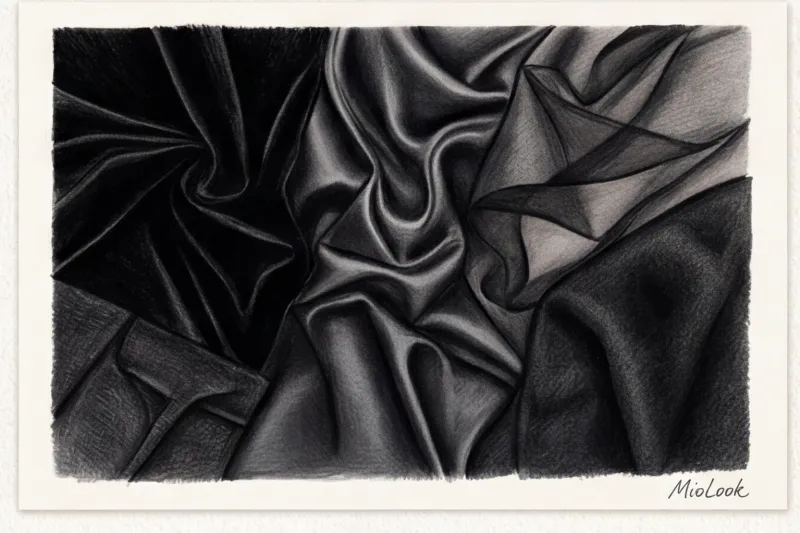
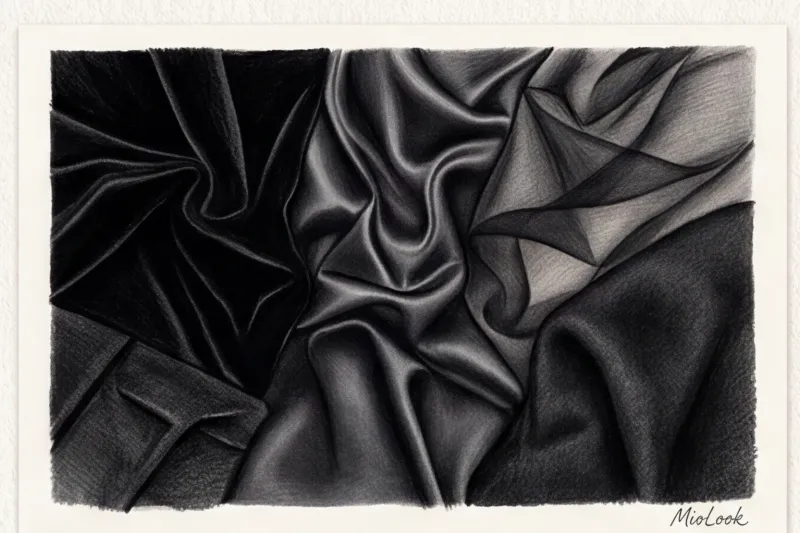
Silk, satin, smooth leather, organza, and chiffon are your tools for optical illusion. The subtle sheen of their textures makes black seem less flat and monolithic. It begins to sparkle, offsetting its own somberness. A silk blouse or lingerie-style top acts as a photographer's softbox, illuminating the chin and neck with a soft, diffused light.
Digitize your wardrobe
Stop guessing what to wear with a black silk skirt. Upload your items to the app, and the AI will curate dozens of stylish combinations based on textures.
Get access — €0.99 onceNeckline Geometry: How to Wear Dark Clothes Near Your Face
Let's be honest: does black age you if it's worn at the level of your pants or skirt? No. All the problems start in the so-called "portrait zone." And here the distance rule comes into play: the further a deep dark color is from your chin, the safer it is for your appearance.
I had a client, Marina, 43, a top manager at an IT company. She adored Steve Jobs's style: dozens of identical black cotton and cashmere turtlenecks. "This is my armor, Olena," she used to say. But this armor visually added seven years to her age, highlighting even the slightest traces of sleep deprivation. We stuck with black, as it's her comfort zone. We changed the geometry.
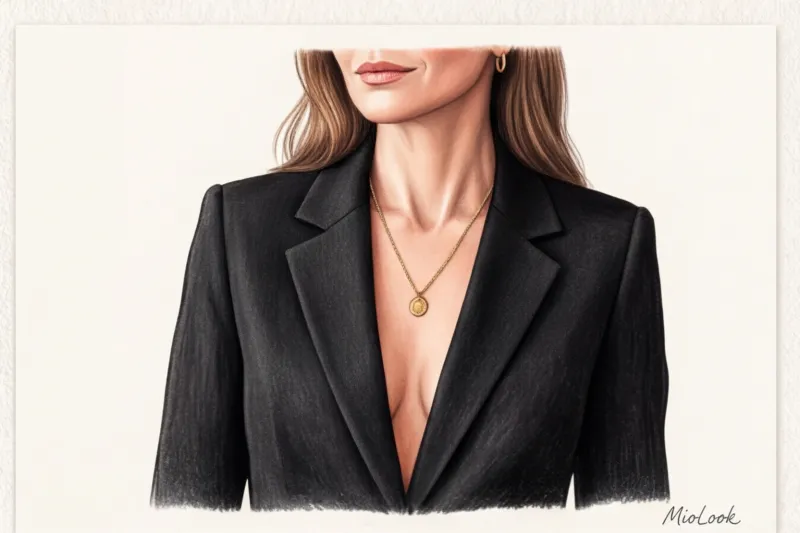
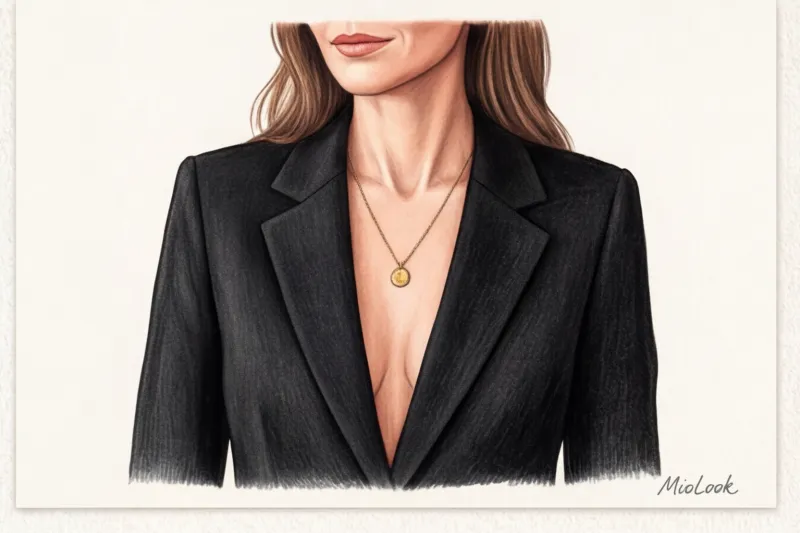
Turtlenecks gave way to black blazers worn over silk V-neck tops. What did that mean?
- There was some air: The exposed skin of his chest and neck acted as a buffer between the black fabric and his face.
- Vertical: The V-neckline visually lengthened the neck, making the silhouette more graceful.
- Shift of emphasis: The architectural cut of the lapels and exposed collarbones distracted attention from the signs of aging on the face.
Of course, there's a caveat to this rule: a plunging neckline is NOT suitable if the skin around the chest is severely toned or has visible sun damage. In such cases, I recommend a boat neckline—it gracefully reveals the collarbones while concealing problem areas.
Light Accents: What to Wear with Black After 40
There's a very dangerous myth: "Black bottoms, white top—that's a timeless classic that suits everyone." According to the Pantone Color Institute (2024), stark, contrasting combinations suit only 15% of women over 40 (primarily those with a winter color type, dark hair, and porcelain skin).
On everyone else, the black jacket and crisp white shirt look like a waiter's uniform or that of an old-school bank clerk. The harsh contrast cheapens the look and highlights all the skin imperfections.
What's the alternative? Soft, enveloping contrasts.
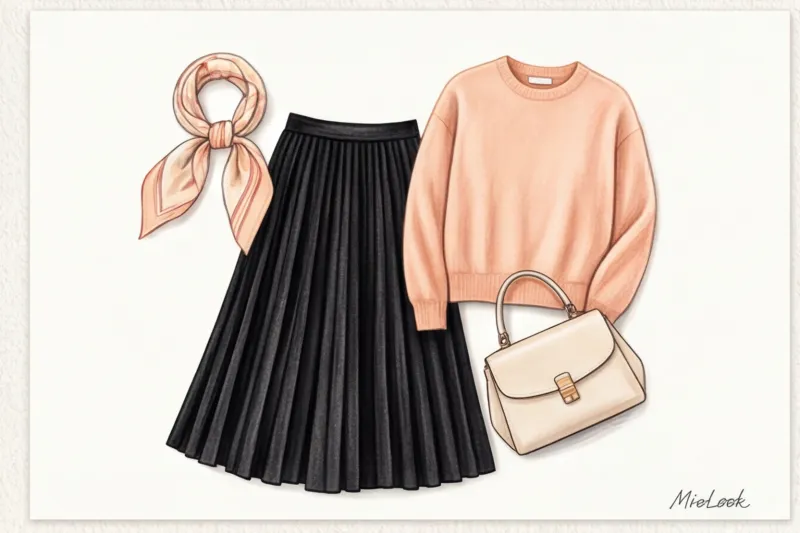
Replace snow-white with shades that actually make you look younger:
- Warm cream or champagne color (ideal for blouses and cashmere sweaters);
- Dusty rose or delicate peach (especially good in silk);
- Light taupe or pearl grey.
If you do wear dark clothing near your face, use accessories to highlight it. Large pearls (not the classic short strand that will add age, but a modern asymmetrical gather), chunky gold earrings, a light-colored silk scarf—all of this will reflect light from the black background directly onto your face.
Total Black and Alternative Darks: Expanding the Palette
Is it possible to wear an all-black outfit without looking like you're heading to a funeral procession? Absolutely. The secret lies in the rule of three textures.
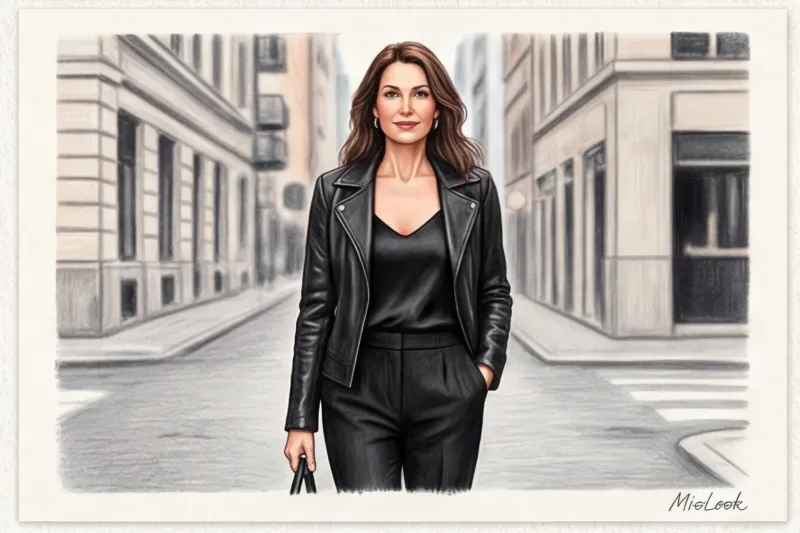
A monochrome look only looks expensive when there's something to catch the eye. Mix matte, shiny, and fluffy colors in one outfit. For example: black leather pants (shiny), a basic cashmere sweater (soft, from €150), and a structured thick wool coat. This will create depth.
But I have a pro trick for those who want to look as classy as possible. Lyst's 2023 consumer research found that premium brands (like The Row and Jil Sander) are increasingly replacing charcoal with so-called "deep darks."
Try the "new black":
- Midnight Navy: It's just as slimming as black, but it makes your complexion look 10 years fresher. My favorite trick is to pair a navy blue jacket with black trousers. This subtle difference in shades makes the outfit complex and intriguing.
- Graphite Gray: contrasts softer with leather, ideal for casual suits in the €100–€300 range.
- Dark chocolate: looks luxurious in leather and suede, especially on women with warm color types.
Tired of racking your brains in the morning?
Your perfect look starts here: Join thousands of users who look flawless every day with a smart wardrobe manager.
Get access — €0.99 onceStylist Checklist: An Audit of the Black Items in Your Wardrobe
To settle the question of whether black ages you once and for all, I suggest a quick closet audit. If you feel like The "smart wardrobe" feature in MioLook I could help you organize your things, take photos of your clothes as you sort through them.
We get rid of without mercy:
- Washed-out black t-shirts. If a black one has turned gray or acquired a whitish cast, it's trash. Such an item automatically makes your look sloppy.
- Sweaters with pilling. Black knitwear should be perfectly smooth.
- Cotton turtlenecks - save them for ski trips under a jacket.
Add to shopping list:
- A loose-fitting black silk or viscose blouse.
- A perfectly fitting tuxedo with satin or silk notched lapels.
- V-neck top with thin straps (as a base layer).
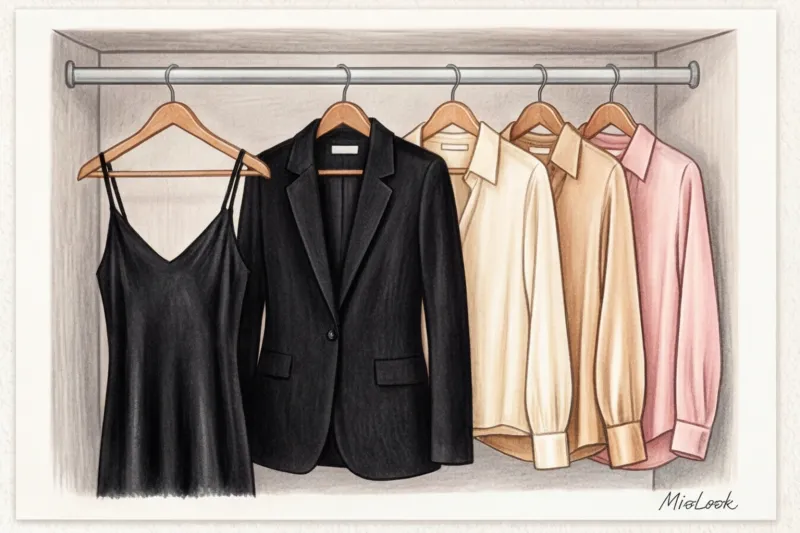
"Black isn't a shelter to hide from age or extra pounds. It's a canvas. And how you work with it determines the end result." — Olena Kovalenko
Don't be afraid of the numbers in your passport, and don't rush to wrap yourself in shapeless pastel robes just because someone told you "dark is off limits." Black doesn't age you. What does is a fear of experimentation, outdated cuts, and poor fabrics. Add a little shine to your wardrobe, expose your collarbones, mix textures—and you'll see how the most dramatic color in the palette becomes your greatest ally.