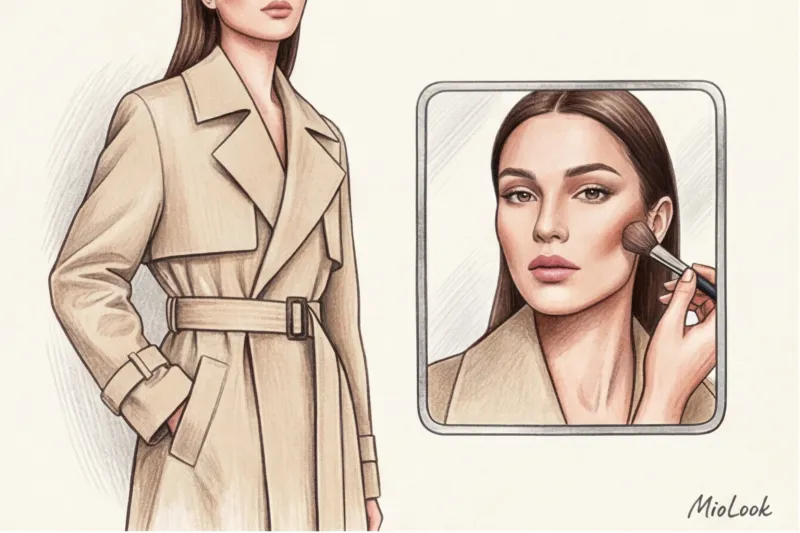
Image architecture: why it's important to understand how to combine makeup and clothing
Imagine backstage at Paris Fashion Week, twenty minutes before the show. The air is thick with tension, mingling the scents of expensive hairspray and strong espresso. In 12 years as a fashion journalist, I've learned one ironclad rule: the answer to a question, How to combine makeup and clothes , is hidden right here, on the other side of the catwalk. Backstage at Dior or Chanel shows, you'll never see makeup artists working separately from stylists. Makeup mood boards are always hung right next to the collection rails, right next to fabric swatches. Peter Philips, Dior's creative director of makeup, once told me: "We don't just paint faces, we dress them in textures." A makeup artist doesn't work in a vacuum—they create a logical continuation of the silhouette.
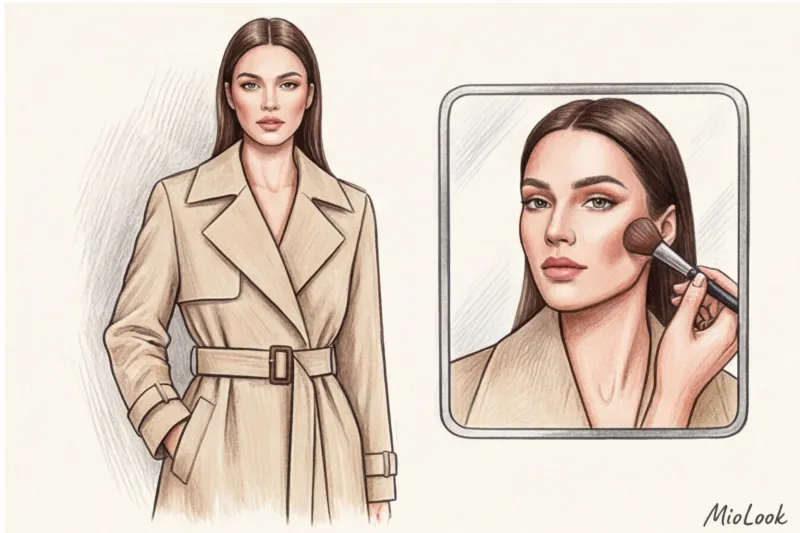
We tend to think of makeup as a routine way to conceal fatigue or highlight eye color. But in modern style, the face is your most important accessory, the architectural pinnacle of your entire look. If you're wearing a jacket with a sharp, accentuated shoulder line (in the spirit of archival Saint Laurent), then soft, casually blended lines on the face without a single focal point will make the look visually "loose." Conversely, graphic eyeliner can be too heavy on a relaxed cashmere sweater. Incidentally, it's precisely this architectural rigor that underlies the aesthetic we discussed in the article about Office Siren makeup.
The psychology of first impressions is ruthless: our brain detects visual dissonance in a split second. Imagine a flawless silk slip dress costing, say, around €800, which exudes fluidity and purity of line. Add heavy, intense contouring and matte lipstick, and a powerful visual clash ensues. People around you may be completely ignorant of beauty trends, but subconsciously they'll think, "Something's wrong here." Dissonance between the texture of the fabric and the finish of the foundation can devalue even the most expensive style.
Luxury brands always think in terms of a total look. When developing a collection, absolutely everything is considered: from the shape of a heel to the arch of a brow. Think back to Prada's shows: if the cut of a garment is futuristic and jagged, Miuccia Prada might demand that the models' eyebrows be bleached to erase the traditional geometry of the face and shift the focus to the coat collar. Giorgio Armani, on the other hand, traditionally chooses a dewy, radiant leather finish to softly complement the shimmer of its signature velvet and flowing silk.
This catwalk principle of absolute synchronicity can and should be applied to real life. Plan your weekly capsule wardrobe with a smart wardrobe. MioLook , I always visualize in advance what kind of beauty look will support specific items. This is especially critical when we discuss lifting makeup after 35 , where the right balance between a fresh complexion and elegant textures in clothing plays a decisive role in how modern and prestigious you look.
The Biggest Beauty Mistake: Why the "Tone-on-Tone" Rule Is Hopelessly Outdated
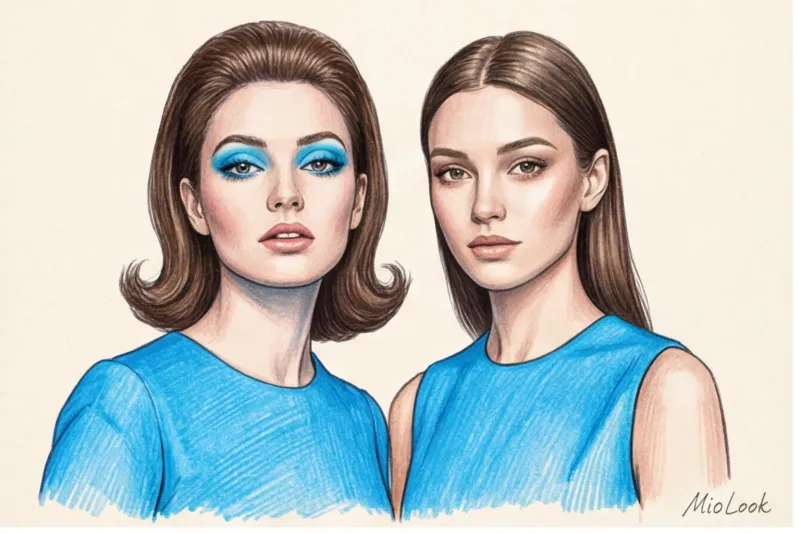
Open any red carpet gallery from the early 2000s. You'll see Christina Aguilera in a pink dress with bright pink blush and eyeshadow, or Paris Hilton, whose outfit literally blended with her frosty blue eye makeup. At the time, this approach seemed the height of style and sophistication. Today, when I analyze these looks for my lectures on fashion history, I always cite them as prime examples of what stylists call "prom syndrome."
What is this syndrome? It's a visual overkill. Many women still confess to me that they match their eyeshadow exactly to their blouse for fear of making a mistake—they think a single color will tie the whole look together. In reality, when you wear an emerald silk dress (say, costing €400 or more) and decide to complement it with green eyeshadow, it's stylistic suicide. Instead of harmony, we get a provincial and, most unpleasantly, aging effect. Directly duplicating the color looks like you're desperately trying to prove your perfection to others. And modern luxury is always about a subtle, barely perceptible carelessness.
In the "quiet luxury" aesthetic, which has completely reshaped our perception of beauty in recent years, the face is no longer an accessory that blindly mirrors one's wardrobe. The modern answer to the question of how to combine makeup and clothing is based on the principle of complementarity. This is a play on contrasts and the use of colors on opposite sides of Itten's color wheel.
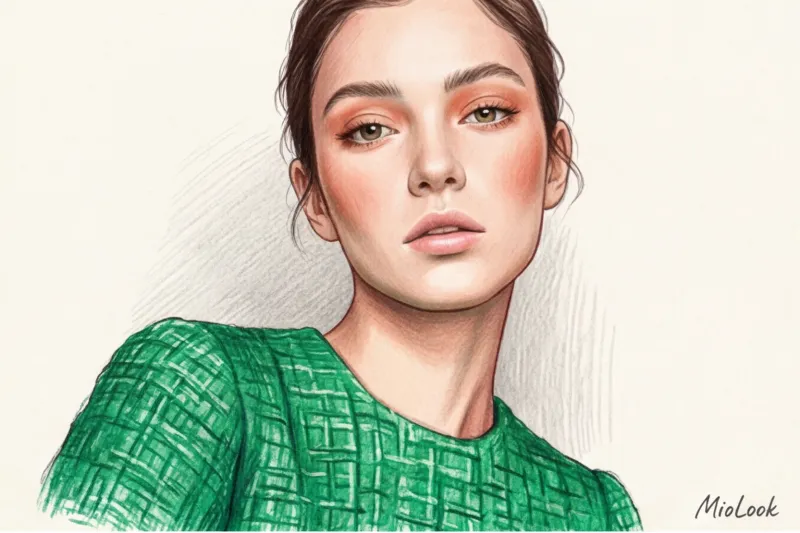
Let's return to the green dress. Instead of green eyeshadow, warm peach, terracotta, or dusty pink shades on the cheeks and lips are a better choice. This temperature contrast makes the color of the outfit appear deeper, and the skin glows with health, rather than appearing sickly green from the fabric's reflections. Let's look at another example: a tailored navy blue pantsuit. The 2000s rule would have dictated cool blue or steely smoky eyes. Modern styling suggests applying a warm coral tint to the lips or the apples of the cheeks. When combined in a single all-over look, these opposing shades create a vibrant vibrancy, creating a sophisticated, sophisticated look.
Access to MioLook for €0.99 — one-time payment
A smart AI stylist will select the perfect look and help digitize your wardrobe to create flawless combinations.
Get access — €0.99 onceThe Evolution of Runway Makeup: From the '80s to Today
To understand why we've abandoned the tone-on-tone rule forever, it's enough to consider how the philosophy of color in fashion has changed over the past forty years. In the 1980s, a time of power dressing and exaggerated shoulders, makeup was as much a form of social armor as clothing. Women wore neon fuchsia lips under fuchsia jackets (think of the characters in Dynasty), declaring their power through uncompromising, maximalist color.
The '90s brought grunge, with its morbid rejection of glamour, followed by the aughts, with their passion for artificial glitter and doll-like conformity. But the real tectonic shift occurred in the 2010s, when intellectual designers like Phoebe Philo (in her golden era at Céline) and The Row came to the forefront.
According to a large-scale study by the analytical agency WGSN (2023), the global trend for "no-makeup makeup" is inextricably linked to the increasing sophistication of clothing design itself. Today, garments have become architectural. When you wear a trench coat with a complex asymmetrical cut or a shirt with deconstructed elements, your face should serve as a calm, blank canvas. Overly colorful makeup will inevitably clash with the shape of the garment, ruining the geometric silhouette. This is why at the shows of Prada, Jil Sander, and Bottega Veneta, we see models with perfectly hydrated skin, structured brows, and a complete absence of visible color on the eyelids. The main rule of today is: complex cuts do not tolerate fuss on the face.
Color Theory in Total Look: Harmony Without Banality
Have you ever bought a luxurious camel-colored coat (say, a classic Max Mara model for €2,500), put it on, and suddenly found yourself looking tired and downright gray in the mirror? The problem isn't chronic sleep deprivation or poor fitting room lighting. It's the temperature.
The temperature of a look is the coloristic foundation that determines how to combine makeup and clothing. Warm wardrobe tones (like camel, terracotta, ochre, or mustard) absolutely cannot withstand cool makeup. If you're wearing a terracotta sweater, frosty pink blush or lipstick with a pronounced blue undertone will create the effect of a "separate face." This creates visual dissonance. Instead, choose peach, warm bronze, or caramel beauty products.
Practical advice from my experience: To harmonize my look, I always apply a touch of the same warm blush as my cheeks to my fixed eyelid. This visually "connects" my face with the warm collar of my clothing. Of course, it's important to consider your natural skin tone—we discussed how to determine your coloring in more detail in the article about 12 color types of appearance.
If temperature needs to be synchronized, then contrast can and should be boldly played with. This is where Johannes Itten's famous color theory comes into play for fashion stylists. In his book, "The Art of Color," Itten demonstrated the power of complementary contrasts—hues opposite each other on the color wheel. In 2023, internal research by the PANTONE Institute confirmed this principle for fashion retail: complementary color combinations hold the viewer's eye on average 40% longer.
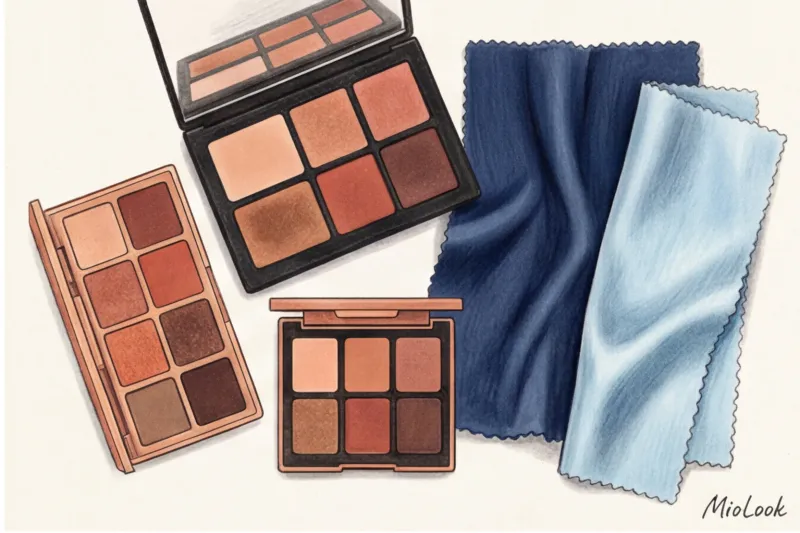
In the context of beauty styling, this works as an elegant color block between the portrait area and your outfit. Wearing a basic navy blue sweater? Add copper or warm orange-brown eyeshadow. Opting for an emerald dress? Try a ruby lipstick. This creates a complex dynamic that's free from provincial banality.
What if your wardrobe consists primarily of black, beige, and gray? Use lipstick as the only, uncompromising color accent in an otherwise neutral look. A tailored gray pantsuit (even a minimalist €150 version from COS) instantly becomes a statement look when paired with a matte fuchsia lipstick. But be careful: This trick is ideal for women with high-contrast skin tones. It can overpower delicate, soft features if bold lips aren't complemented by subtle, structured brows.
The third, and my favorite, scenario is a new level of monochrome. Forget boring copying, where the color of your blouse exactly matches your eyeshadow. Modern monochrome is built solely on the play of differences in saturation. A soft pink silk blouse looks incredibly aristocratic and expensive when paired with a deep, dark burgundy lipstick. You stay within the same color range (red), but you move the shades to the extremes of brightness (from light pastel to almost black wine). This creates optical volume.
To avoid getting lost in these color nuances early in the morning, my clients upload their everyday looks to MioLook With our smart wardrobe feature, we create capsule wardrobes in advance and attach a visual note with a matching makeup palette to each outfit. Trust me, this saves at least 15-20 minutes before leaving the house and permanently protects you from color mistakes.
Micro-conclusion: 3 color rules you can apply right now
- Synchronize temperature: For warm fabrics near your face, always choose warm blush and bronzer.
- Look for contrast according to Itten: The clash of blue (clothing) and copper (makeup) looks much more expensive than blue with blue.
- Stretch the monochrome: Pair pastel clothing with an extra-dark lipstick from the same color spectrum to create depth.
Texture Play: A Secret Level Only Stylists Know
Color is just the tip of the iceberg. The real magic begins where physics and optics come into play. Over the years of working on film sets, I've learned that most women (and, let's be honest, half of all aspiring stylists) ignore how fabric texture changes the overall appearance of their skin and makeup. Yet it's this nuance that distinguishes a simply beautiful look from a flawless one.
We rarely think about it, but clothing acts like a giant photographic reflector. The way a material absorbs or reflects light directly affects the microrelief of the face. Fabric can either illuminate the skin from within or mercilessly highlight signs of fatigue. The basic rule here is based on the balance of opposites: the texture of your makeup should compensate for the properties of the material your clothes are made of.
Once, during a commercial lookbook shoot in Milan, we almost ruined a key shot. The model was wearing a stunning blouse of thick, champagne-colored silk (incidentally, the piece cost around €600, so we had to make sure it looked perfect). The makeup artist, out of habit, gave her an ultra-fashionable "wet" look with a generous dose of liquid highlighter. Under the studio lights, the smooth silk and radiant skin clashed optically—on the monitor, the model's face looked downright sweaty, and the look lost all its cachet. I had to stop the process and salvage the situation with translucent powder. After a couple of strokes with a mattifying brush, the excess shine was gone, and the shot instantly looked expensive.
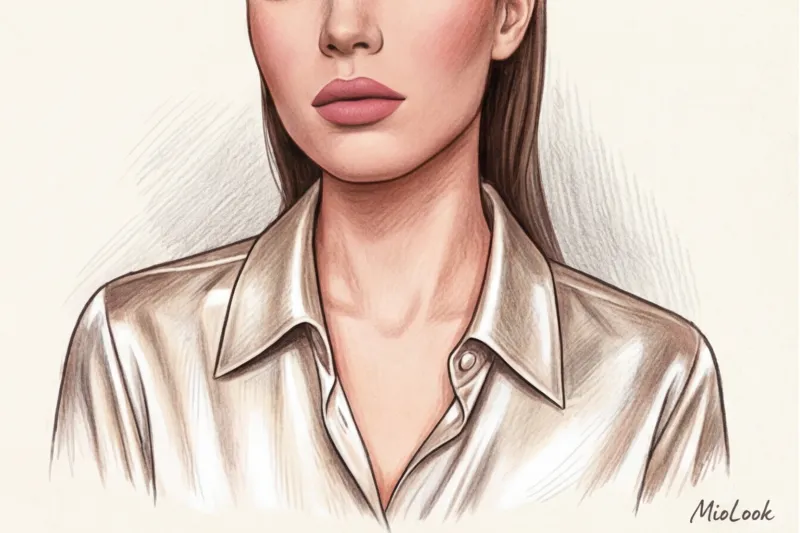
This brings us to the most important law: Light-reflecting textures require a matte or satin finish on the face Silk, satin, lurex, and sequins create powerful highlights on their own. Add glossy lips or a dewy finish to your cheekbones, and you risk creating a greasy effect. For a slip dress or sequin top, choose a velvety foundation, a light dusting of powder on the T-zone, and matte lipstick.
And the exact opposite story happens with matte, heavy materials. Light-absorbing fabrics desperately need to add radiance to the face. Heavy cashmere, classic tweed, corduroy, and velvet act as visual "black holes," drawing light away from the portrait area. Velvet, for example, can absorb up to 80% of the light directed at it. Wearing a heavy wool jacket and wearing matte makeup will give your face a dull, earthy tone and make you look flat.
To balance such an outfit, add some life to your face. Cream blush, a dewy lip gloss, or a drop of liquid highlighter on the cheekbones are ideal. Think back to the Chanel shows: their famous tweed suits are almost always accompanied by the models' freshest, most radiant skin—this isn't a coincidence, but a cool stylistic calculation that prevents the heavy fabric from overwhelming the face.
Stylist's Cheat Sheet: The Rule of Opposites
- Silk, satin, viscose, sequins = satin tone, powder, matte or velvet lipstick.
- Tweed, cashmere, velvet, boucle = shimmery base (dewy skin), creamy textures, glossy tint or lip gloss.
- Cotton, linen, smooth wool = neutral textures that allow for any beauty experiments.
Keeping these optical laws in mind while getting ready in the morning can be challenging. To automate this process, I recommend using smart tools. By digitizing your closet in MioLook , you can add your own texture tags to items. When creating a weekly capsule wardrobe, simply make a visual note: "Only cream highlighter and glitter for this velvet jacket." This systematic approach saves time in the morning and ensures that your all-over look will look harmonious in any lighting.
Try MioLook
for free
Start creating perfect images with the help of artificial intelligence
Get access — €0.99 onceStylistic vectors: how to combine makeup and clothing for different purposes
In 2011, Harvard biologist and psychologist Nancy Etcoff published a major study in the field of neuroaesthetics. The results were sobering: the contrast of women's makeup directly influences how others evaluate our competence, status, and trustworthiness. Clothing sets the social context, and the face either confirms it or completely undermines it. Therefore, the answer to the question of how to combine makeup and clothing lies not only in the successful selection of shades according to Itten's color wheel. It is, above all, a matter of subtle social navigation.
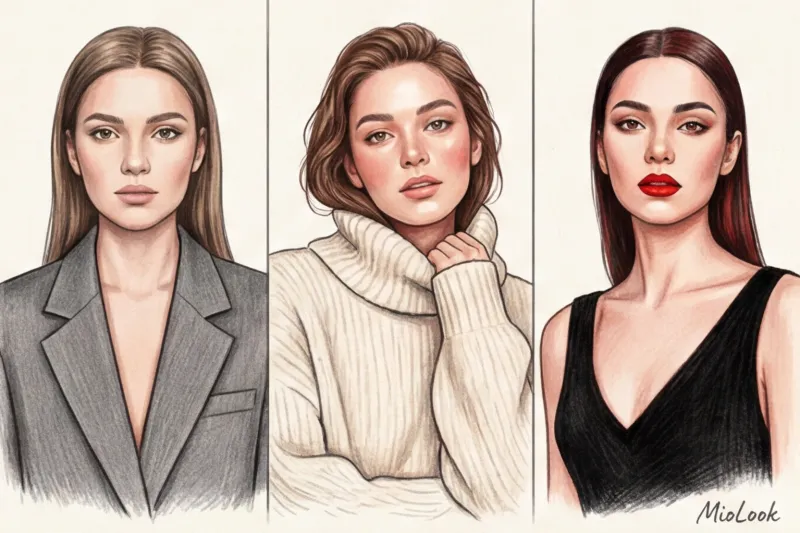
How can the same face be adapted to different contexts? A key skill of a stylish woman is the ability to change the "visual weight" of the face proportionally to the task at hand. Imagine wearing an impeccably structured jacket made of thick wool (for example, a classic from Jil Sander costing around €1,500). It conveys composure, intelligence, and discipline. But if you complement this intellectual minimalism with a bold evening smoky eye, the look instantly falls apart.
The rule of appropriateness is ruthless: heavy evening makeup undermines the business dress code, creating a semantic conflict. The mind of your interlocutor interprets a jacket as the message "I'm here on business," and dramatic, pigment-laden eyes as "I'm ready to party." This subconscious dissonance instantly undermines trust in the business environment. To avoid such mistakes, stylists divide beauty care into clear vectors.
Business wardrobe: status and restraint
A business dress code demands a face that's architectural, not decorative. When you wear a tailored suit with accentuated shoulders (be it Saint Laurent or a simple blazer from COS), your makeup should complement this geometry. An architectural approach reigns supreme here: the face needs structure, not makeup.
I once prepared the CEO of a large IT company for a shoot for a business publication. We chose a deep navy blue pantsuit. The client insisted on a classic red lipstick to "look confident," but I convinced her to go with a neutral, warm beige-peach palette. Why? Red lipstick paired with a sharp, masculine tailoring can sometimes veer from "modern leader" to "aggressive femme fatale." We opted for defined brows, structured cheekbones, and a matte finish.
Integration with the office capsule should be seamless. Three rules for architectural makeup for business:
- No obvious shimmer. Replace shimmery highlighters with satin bases. Office lighting (often cool fluorescent) makes glitter look oily on the face.
- Structured eyebrows. They replace eyeliner. A clearly defined yet softly defined arch gives the face a collected look, complementing the lapels of the jacket.
- Monochrome. Eyeshadow, blush, and lipstick in the same temperature range (like dusty rose or warm taupe) won't distract from the What you say.
To avoid wasting morning hours choosing shades, many stylists recommend digitizing your successful decisions. You can take a photo of your perfect business makeup look and attach it as a note to your office capsule collection. MioLook - this saves a huge amount of time before morning meetings.
Everyday casual: light and fresh
Casual style is the realm of knitwear, denim, oversized hoodies, and relaxed silhouettes. The key here is to not look like you've tried. Makeup should create the illusion of "I just had a good night's sleep and a glass of lemon water."
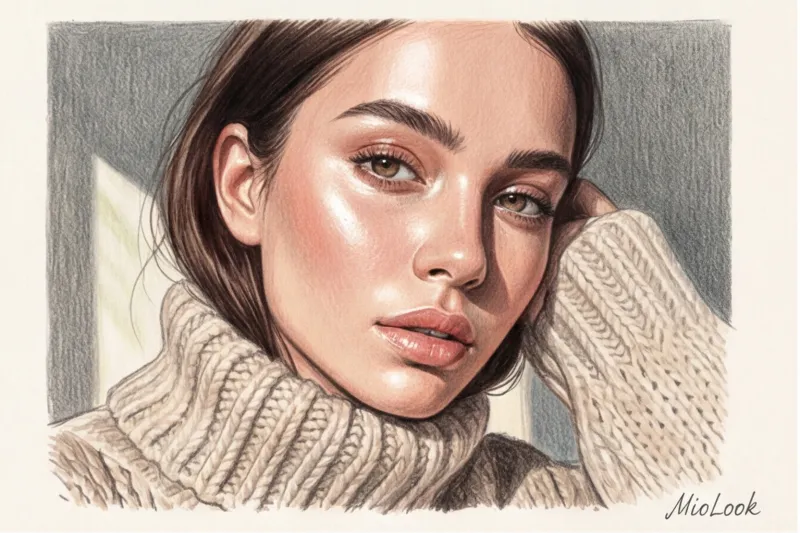
When you wear a chunky cashmere sweater (say, from Acne Studios for €450) and vintage Levi's, heavy foundation and complex blending of five eyeshadow shades look out of place. Knitwear, denim, and oversized fabrics call for lightness and freshness. This is where dewy skin finishes, creamy textures, and translucent finishes come into play.
Instead of powder blush, use cream blush, applying it not only to the apples of your cheeks but also to the bridge of your nose—this creates the effect of a face lightly touched by the sun or a touch of frost. A great trick: use the same translucent tint on your lips and cheeks. Forgo graphic black eyeliner in favor of a softly blended brown pencil along the lash line. The contrast between the rough texture of your denim jacket and your radiant, vibrant skin creates that dynamic look so beloved by street style photographers. Your face should breathe as freely as your body in oversized clothing.
Stage and Public Image: The Laws of Light
Public speaking, conferences, and the stage are all places where the laws of physics apply. My experience training speakers for international forums has taught me a key rule: stage lights can reduce the color saturation of your face by up to 50% and completely alter your perception of volume.
If you're speaking to an audience in a bright suit (fuchsia, emerald, or electric blue), you need a strict correlation between the brightness of the clothing and the density of the tone. Against the intense color of the fabric, a bare face will simply fade under the spotlights, turning into a pale blur.
It's important to understand the fundamental difference between stage makeup and evening makeup. An evening look is designed for the subdued, enveloping lighting of a restaurant—intricate shimmers, glitter, and a delicate glossy lip gloss are appropriate there. The stage, however, abhors shiny skin. Powerful, directional lighting will reveal even the slightest imperfections and transform the delicate glow of highlighter into the effect of a face sweating from nervousness.
For public appearances, use high-density foundation (definitely labeled HD—High Definition) and set it with matte powder. Contouring your cheekbones should be two to three shades darker than your normal skin tone, otherwise your face will appear flat in event photos.
And one more thing: if you're wearing a simple sheath dress, accentuate your lips with a long-lasting matte lipstick. It will prevent glare on the cameras and allow viewers in the back rows to clearly read your articulation.
Analyze your wardrobe
Upload your looks to the app to always know exactly what makeup goes with your clothes in different style situations.
Download MioLookThe One-Focus Theory: Balancing Your Face and Outfit
In styling, as in good architecture, there's a strict rule of weight distribution that I call the law of visual weight. Our brain can only fully focus on one active element at a time. If you try to make both the outfit and the makeup the main characters, they'll start to overpower each other, turning the look into a tedious visual noise.
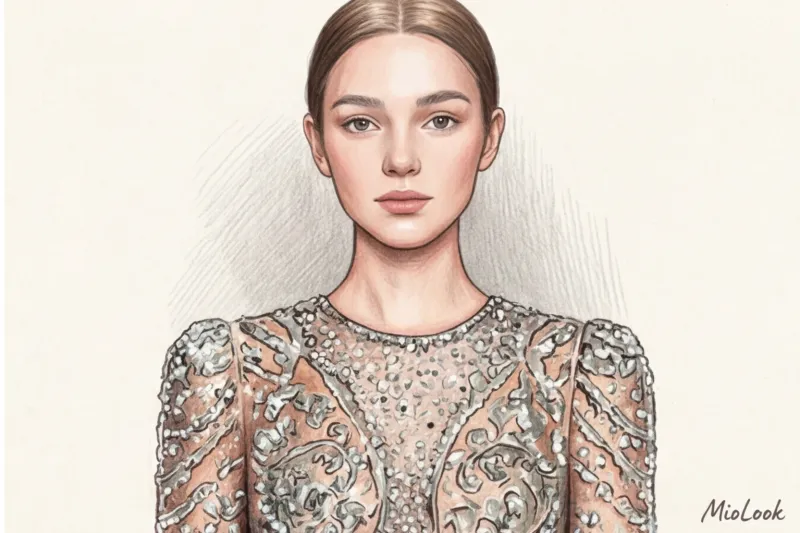
In practice, it works like this: if you've chosen a complex dress—for example, one with deep asymmetry, intricate draping, a bold leopard print, or a bright neon color (say, a high-concept silk outfit costing around €400–€600)—your face should be cast in shadow. The more complex the geometry and palette of your wardrobe, the more neutral your makeup should be. In this context, a clear brow gel, a lightweight hydrating tint, and clean, "bare" skin with a dewy finish are ideal.
The converse is also true: minimalism serves as a flawless canvas for beauty experimentation. A basic white menswear shirt made of thick cotton or a sleek black turtleneck (even a basic merino knit for €80) instantly changes its character when paired with graphic jet-black eyeliner or a classic red lipstick. Against a minimalist backdrop, accent makeup reads not as an attempt to dress up, but as a deliberate stylistic statement.
It is on this delicate balance that the famous concept of French chic is built - that very elusive Je ne sais quoi Watching Parisian street style models, I constantly notice this trick: deliberately casual makeup brilliantly compensates for the strict cut.
If a woman wears a structured, crisp blazer with pronounced shoulders, her lipstick will likely be gently tapped in place with her fingertips, lacking the perfect pencil outline. This controlled, unfinished look takes the edge off the otherwise impeccable suit and adds a lively touch.
But how can you avoid the "Christmas tree" effect, when an irresistible urge to put on everything you look good at once before an important event? I have a self-checking method that works. After getting ready, go to a mirror, close your eyes for three seconds, and then open them quickly. Where does your first glance fall? If it's frantically darting between the massive chandelier earrings, the thick smoky eyeshadow, and the sparkling sequins on your blouse, you've experienced visual overload. You'll have to ruthlessly tone down at least one element: remove the statement jewelry or tone down your lips, replacing your lipstick with a clear balm.
To develop this keen eye without the rush and stress of five minutes before going out, I recommend planning your looks in advance. By loading your things into MioLook smart wardrobe , you can tag them by their level of stylistic activity. The algorithm will help you create a database so that the app will suggest the most subdued complements to your accent skirt. This leaves you with the safe space to make your face the main focus.
Your ideal image begins Here
Join thousands of users who look flawless every day with MioLook.
Get access — €0.99 onceChecklist: How to Create a Harmonious Total Look in 15 Minutes
According to Mintel's 2023 Consumer Habits Study, 68% of women admit that the final result of their morning getup often feels haphazard. When the taxi is waiting at the door and there's exactly 15 minutes left, complex color schemes and the agony of choice are simply unacceptable. Over the years of styling shoots under tight deadlines, I've developed a quick method that never fails. This isn't an abstract theory, but a strict four-step algorithm.
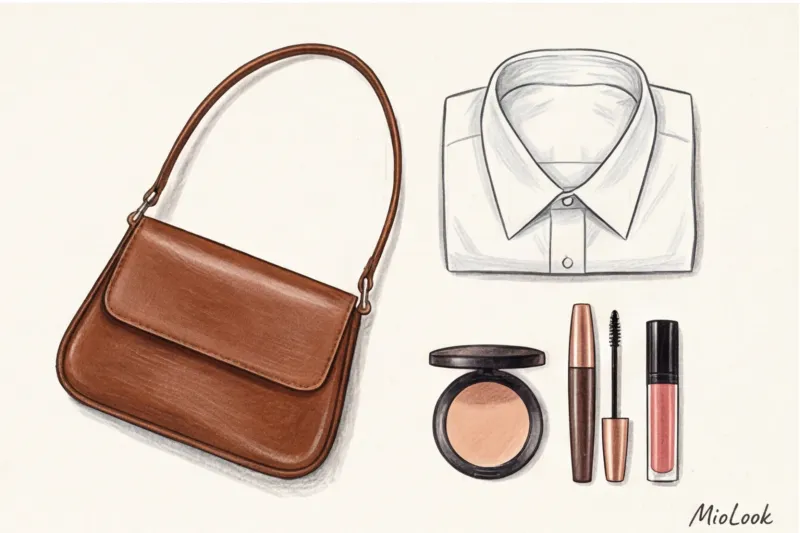
Step 1: Choosing a "main character" (outfit or face?)
You have exactly one minute to make a strategic decision. If you've pulled out a complex cut, bold print, or bold color (say, a €300 architectural fuchsia jacket), your face automatically switches to maintenance mode. A light foundation, defined brows, and lip balm will suffice. If your base today is a simple turtleneck and straight jeans, feel free to let makeup take center stage, opting for wine-colored lipstick or graphic eyeliner.
Step 2: Determine the temperature (warm/cold)
Take a quick look at your prepared items to determine their base undertone. Camel, khaki, mustard, and gold call for an exclusively warm palette on the face—peachy blush, bronzer, and warm caramel on the lips. Emerald, cobalt, silver, or crisp white dictate a cool tone. Mixing colors hastily (for example, warm brick eyeshadow under a cool gray dress) is the quickest way to a tired, visually heavy look.
Step 3: Synchronizing textures (matte/gloss)
Remember the color physics cheat sheet we discussed earlier. Wearing matte cashmere or light-absorbing, dense cotton? Be sure to add movement to your complexion with a delicate highlighter and a dewy finish. Opting for flowing viscose, silk, or sequined fabric? Immediately mattify your T-zone and use satin textures, otherwise your face will appear greasy against the shimmery fabric.
Step 4: Daylight Control
Artificial lighting in the bathroom is your biggest enemy when you're short on time. Warm lamps reduce the pigment intensity by almost 30%, tempting you to apply blush even more heavily. Before heading out the door, be sure to go to a window. Natural light will mercilessly but honestly show the unblended edges of contouring or the conflict between the color of the neck and the collar of the blouse.
To avoid wasting precious morning minutes, I strongly recommend moving the planning stage to the evening. MioLook app You can plan your outfit for tomorrow in advance and attach a short visual note to it—for example, a photo of a specific eyeshadow palette or lipstick tube. In the morning, all you have to do is recreate the finished plan, without having to make complicated styling decisions on the fly.
Image Transformation: Change Your Style by Updating Your Makeup
For years, glossy magazines have convinced us that an evening out requires a separate, rather expensive wardrobe. But let's be realistic. In the age of conscious consumption, buying an €800 silk evening dress for just one social event is a questionable investment. A stylist's true mastery lies elsewhere: the ability to change the DNA of an outfit using only cosmetics. How do you combine makeup and clothing so that the same piece works for you 24/7? I'll let you in on a secret: your face is your most powerful and, importantly, free accessory.
Daytime to Evening: The Evolution of an Office Suit in 5 Minutes
Let's consider a classic scenario. You're wearing a tailored, loose-fitting graphite pantsuit with a basic white T-shirt underneath. During the day, with a subtle nude tone and neatly groomed eyebrows, it's the perfect boardroom attire. But what if you have an exhibition opening or dinner at a restaurant at 7:00 PM, and there's no chance of getting home?
You don't need to change your clothes. All you need to do is swap your loafers for stilettos and completely recalibrate your beauty look. Simply add a drop of liquid highlighter to the high points of your cheekbones and collarbone (if you've taken off your T-shirt and put on a jacket over your bare skin), apply some dewy glitter to your eyelids, or thickly blend a black kohl along your lash line. Just five minutes in front of the bathroom mirror, and an office worker transforms into a street style heroine. That crisp, thick wool now acts as an expensive, understated canvas for your dramatic, radiant complexion.
Of course, I have to be honest: this trick has its limitations. It will only work with impeccably tailored pieces. If your suit has clearly become misshapen overnight or is made of cheap, shiny synthetics, drawing attention to your face with accent makeup is a bad idea; it will only highlight the unkempt base.
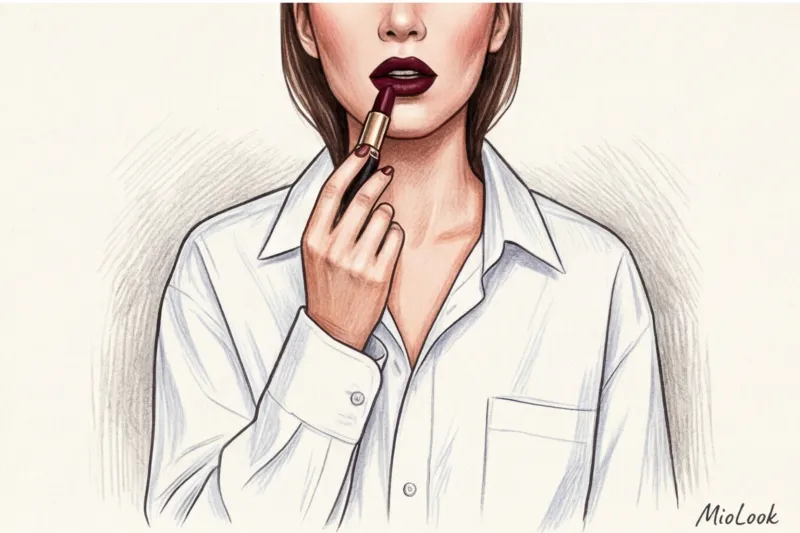
The Power of One Lipstick: A Wine Accent and a Beige Trench Coat
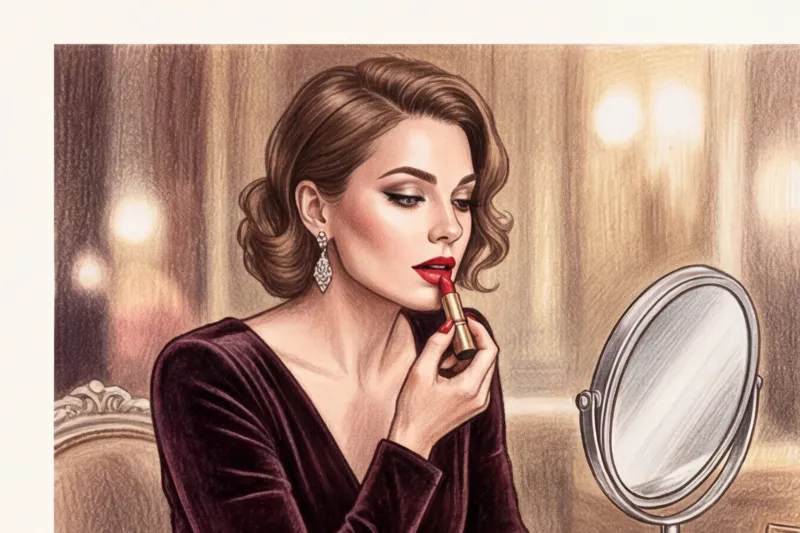
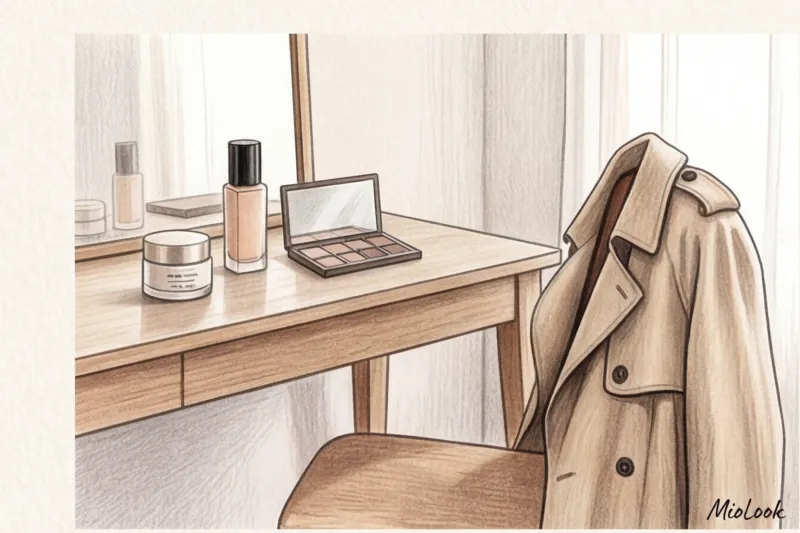
Let's talk about optical illusions. Take, perhaps, the most utilitarian item in the world—a classic beige double-breasted trench coat. With clear lip balm and a loose bun, it's the look of a student running out for her morning coffee. But try adding a thick, deep wine-colored lipstick—in the spirit of the iconic Rouge Noir, which Chanel made a global bestseller in 1994.
An instant stylistic alchemy occurs. The warm, neutral beige of the coat creates a sharp temperature contrast with the cool drama of the burgundy lips. The mood of the look shifts from casual relaxation to cinematic mystery. It's as if you've stepped straight out of a French film noir. It's a brilliant example of how a well-chosen pigment can completely transform the simplest basic item.
"During Milan and London Fashion Weeks, my schedule is packed to the minute. From 10 a.m. to 6 p.m., there are shows, and in the evenings, there are private brand parties. My personal life hack, which has been saving me for several seasons now, is that I always keep a minimalist "transformer set" in my bag."
This lifesaving kit includes cream blush (which I pat onto both the apples of my cheeks and lips with my fingers), a soft chocolate pencil for quickly blending eyeliner, and that very same wine-colored lipstick. I plan my morning wardrobe essentials in advance so that they can handle both roles. If you have trouble keeping such multi-layered combinations in mind, I sincerely recommend digitizing your looks. Download the basics to MioLook Create two different capsules based on one outfit: "day" and "evening," adding the desired lipstick shades to your visual notes. This saves a ton of nerves before important events.
Conclusion: Your Personal Beauty Algorithm
Masterfully juggling styles doesn't require innate talent or an unlimited credit card. It's pure logic and a little foresight. To wrap up our conversation, I want you to take home one simple algorithm that will forever change your approach to fundraising:
- Analyze the canvas. Before opening your makeup bag, look at the cut, texture, and color of your clothes. Are you looking at a complex asymmetrical piece for €400 or a basic white T-shirt for €20?
- Look for a counterbalance. If your clothes are loud (animal print, neon, lots of sequins), your face should be a whisper. If your outfit is simple and understated, feel free to let your makeup shine through.
- Use cosmetics as an accessory. Treat bright lipstick, colorful eyeliner, or a dewy glow the same way you would a statement earring or a vintage silk scarf. They shouldn't just be present on your face, but rather complement the overall look of your silhouette.
Next time you're standing in front of your open closet, desperately thinking you have absolutely nothing to wear, don't rush to buy a new blouse. It's quite possible your favorite everyday jacket just needs a bold new lipstick.
Guide Chapters
Perfect Makeup for a Tracksuit: Stylist Tips
Oversized hoodies and joggers can visually blur facial features. We'll explore the key rules of sporty-chic makeup to avoid a sloppy look.
Makeup texture and clothing fabric: how to combine
Makeup isn't just about color, it's also about the play of light. Learn how to match your makeup finish to the texture of your clothes to look flawless.
Grunge Makeup: Stylish and Expensive with a Leather Jacket
We'll explore how to wear a rebellious style, a leather jacket, and dark makeup without looking like a stereotypical teenager. We'll learn how to create an expensive and classy look.
Romantic Makeup: Tips and Mistakes
The more intricate and ornate the dress, the more natural the face should appear. We'll explore the main mistakes in pairing makeup and clothing in a romantic style.
Eyeshadow to match your clothes: anti-trends and rules
Matching your eyeshadow and dress shades has long been considered a style faux pas. We'll explain how to properly coordinate your eye makeup with your wardrobe.
Makeup for a Pink Dress: From Fuchsia to Powder
Pink acts as a reflector and can highlight fatigue. We'll explain how to create the perfect makeup look for a pink dress, following the principles of color theory.
Makeup for glasses: how to match the frames
Glasses alter facial proportions and cast shadows, so traditional makeup doesn't work with them. Learn how to apply makeup to any frame without making common mistakes.
How to Match Lipstick to Your Outfit: Tips from a Colorist
Lip makeup is the final architectural touch to your look. We'll explore color principles that will help you perfectly pair your lipstick with any outfit.
Makeup for a Sparkly Dress: How to Avoid Overpowering Your Look
A sequin dress requires a special approach to beauty. We'll explore common mistakes and learn how to create elegant makeup without the "sweaty face" effect.
Perfect Makeup for a White Dress: How to Avoid Looking Pale
White often highlights signs of fatigue and makes the face appear dull. We'll explore a colorist's tips for creating a fresh look with light-colored clothing.
Makeup for a Leopard Print Dress: How to Avoid Looking Vulgar
Afraid to wear animal print for fear of looking cheap? Learn how to pair makeup with a leopard print outfit and become a style icon.
Old Mane Makeup: A Beauty Look for a Basic Wardrobe
The secret to the "quiet luxury" aesthetic isn't the perfect beige eyeshadow, but the harmony of skin and fabric. We'll explore how to create an elegant beauty look.
Perfect Makeup for Everyday Wear: Casual Style
Basic clothing doesn't mean boring. Find out how the right makeup for jeans and a T-shirt can transform you into a street style icon.
Perfect Makeup for a Green Dress: Stylist Tips
Green is a noble yet treacherous color. Learn how to choose the right beauty look for a green dress, taking into account the shade and texture of the fabric.
Perfect Makeup for a Blue Dress: Stylist Tips
Learn how to choose the perfect makeup for a blue dress, considering not only the shade but also the texture of the fabric. Secrets to creating an elegant look from a professional stylist.
Perfect Makeup for a Black Dress: Stylist Tips
Black can make your face look tired. Learn how to choose the perfect makeup for a black outfit, taking into account the texture of the fabric and the shape of the neckline.
Office Makeup for a Business Suit: Etiquette Rules
Office makeup isn't just a modest nude; it's an architectural extension of your professional look. We explore common mistakes and rules of corporate beauty etiquette.
Makeup for a Red Dress: Ideas for Blondes and Brunettes
A red dress acts as a giant reflector. We'll explore common mistakes and share secrets for harmonious makeup for blondes and brunettes.