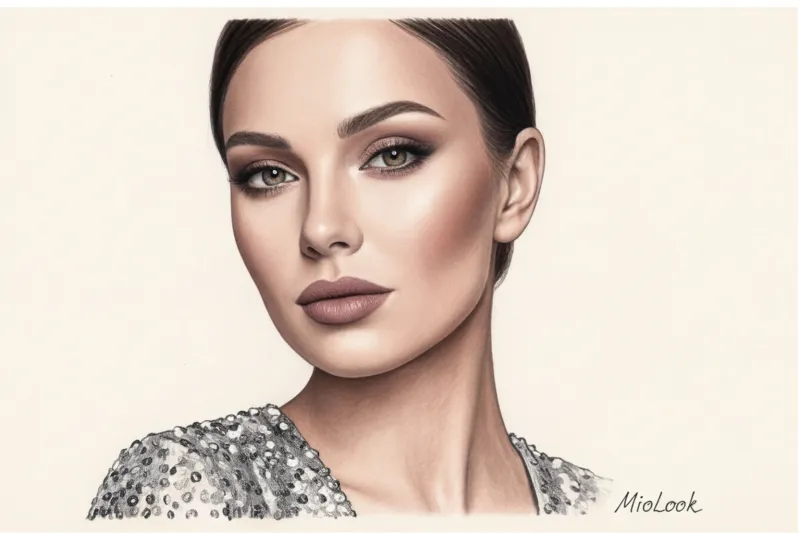
In 2019, backstage at one of the shows, I watched makeup artists prepare models for their walk in Paco Rabanne's iconic chainmail dresses. The head makeup artist strictly prohibited the use of glossy lip glosses and dewy highlighters. The reason wasn't the season's trends, but pure physics: when you're wearing several kilograms of reflective metal or plastic, a face with dewy makeup instantly looks sweaty under the spotlight, not radiant.
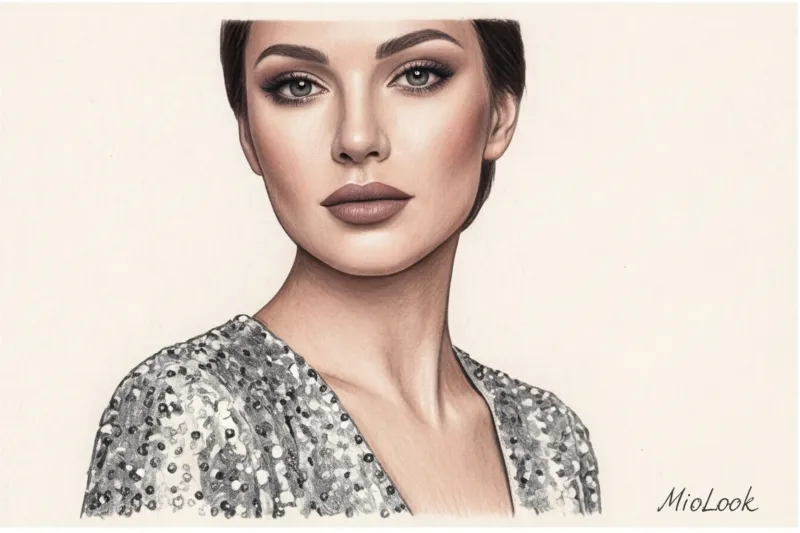
We talked in more detail about the basic rules of balance between clothing and beauty in our a complete guide to pairing makeup and clothing But today I want to explore the most complex aspect of eveningwear. When creating makeup for a sparkly dress, most women make the same mistake: they try to "calm down" the look with a completely bare face. As a textile expert and stylist, I'll show you why this popular advice is hopelessly outdated and how the properties of fabric directly dictate the architecture of your face.
Optics and texture: why makeup for a sparkly dress requires strict architecture
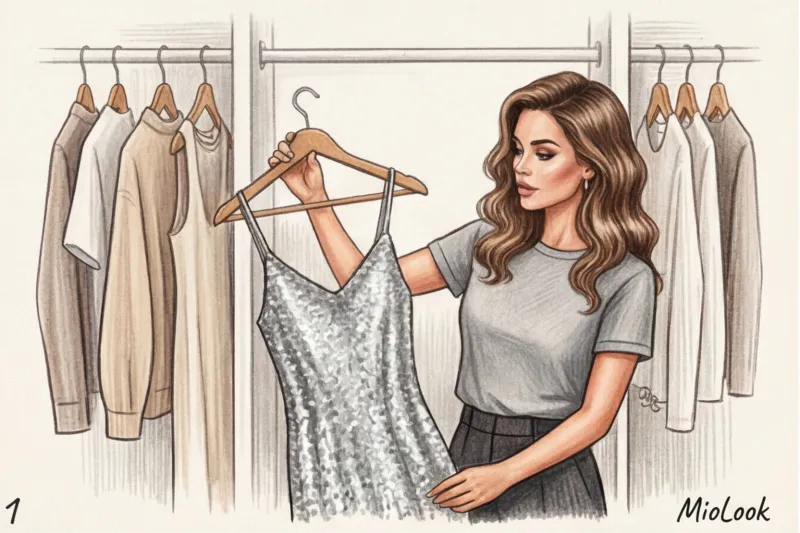
To understand how to apply makeup to look like sequins, you need to forget about makeup and remember your high school physics course. There's a concept called albedo—the reflectivity of light. Healthy human skin reflects approximately 15–20% of the light directed at it. But a dress fully embroidered with high-quality sequins has a reflectivity of up to 60–70%.
What does this mean in practice? Your dress acts like a giant photographic reflector, aimed directly at your face from the bottom up. It literally whitens your features, erasing natural shadows.
“We don’t just draw eyeliner or lips; we dress the face in textures that must either clash or agree with the clothes,” noted Peter Philips, creative director of Dior makeup.
If you wear a vibrant, shimmery dress and a light, translucent nude, you'll create a "washed-out face" effect. The dress's sheer visual weight will steal all the attention, making your face appear disproportionately washed-out. The face needs a clear, well-defined structure to withstand such a powerful source of glare.
Glitter temperature: micro-sequins, large flakes and lurex
The texture of the fabric tells us the technique of shading shadows and the density of lines.

- Flowing liquid metal (lurex, silk with metallized thread): The fabric flows, the highlights are soft and continuous. A soft, shaded smoky eye without graphic edges complements this dress perfectly.
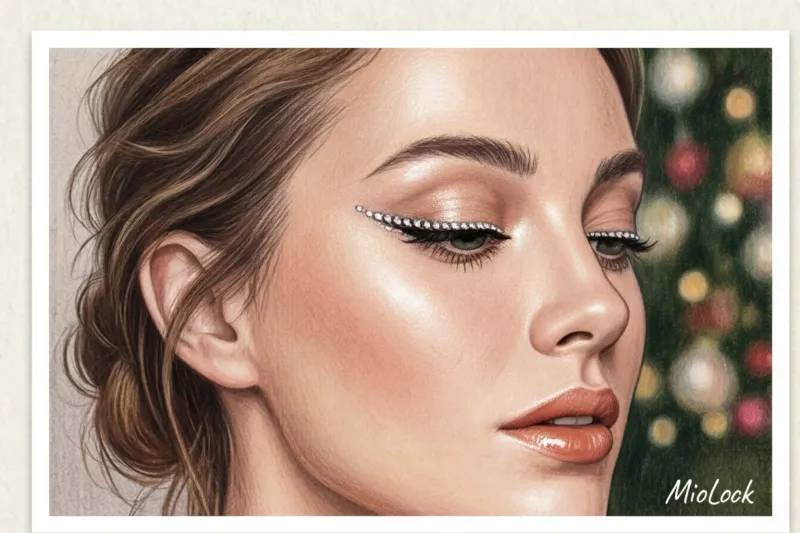
- Large hard sequins (3D texture): The highlights are sharp, discrete, and contrasting. This calls for a bold makeup look—a crisp, graphic liner and a perfectly defined lip contour.
Access to MioLook for €0.99 — one-time payment
A smart AI stylist will select the perfect look based on the texture of your clothes.
Get access — €0.99 onceThe main myth: "Eyes or lips—choose one or the other."
"If your dress is dramatic, highlight just one detail on your face!"—this advice has been circulating from magazine to magazine since the early 2000s. And it's fundamentally wrong when working with shiny fabrics. Imagine this: you're wearing a stunning, heavy sequin dress worth €800, looking gorgeous, but all you're wearing is mascara and clear balm. The human brain subconsciously interprets this dissonance as insecurity: as if you're wearing someone else's dress and are intimidated by it.
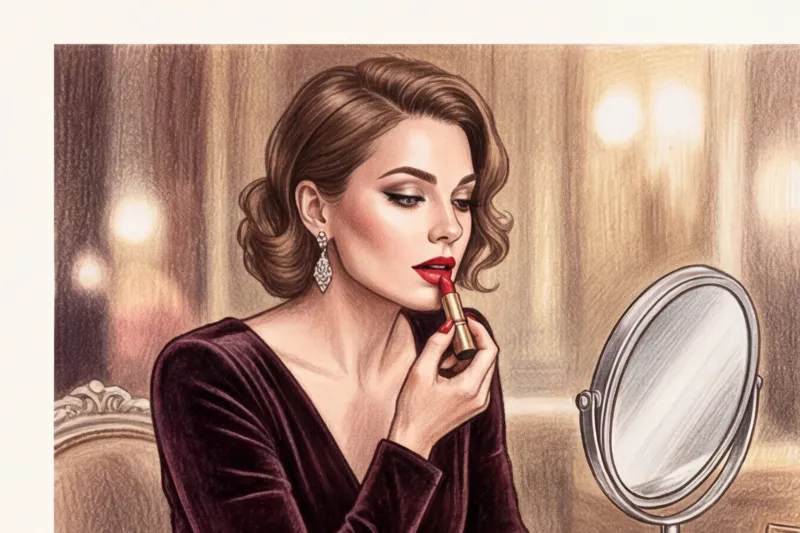
Against the 3D texture of sequins, the one-accent rule flattens the face. Both eyes and lips need to be highlighted, but do so through monochromatic schemes. For example, if you're going for a rich chocolate smoky eye, the lips shouldn't be sheer—opt for a thick matte lipstick in caramel or muted terracotta. The intensity is everywhere, but the color doesn't clash with itself.
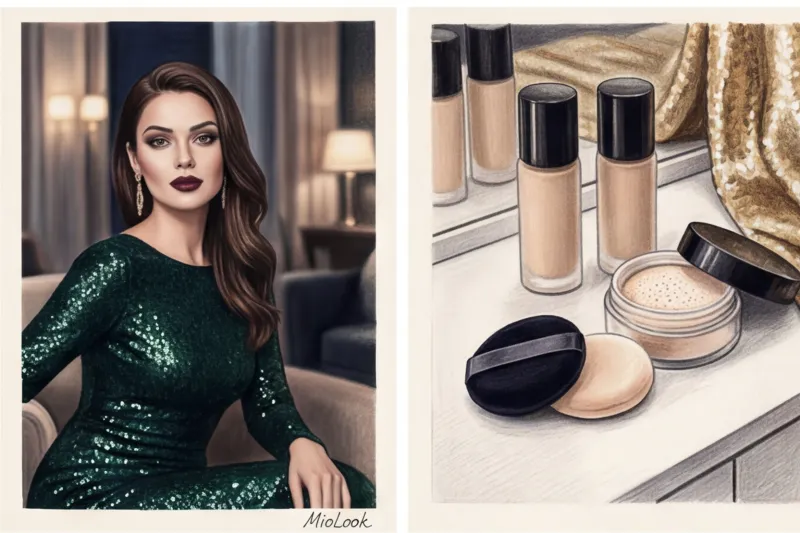
The visual anchor rule instead of the emphasis rule
Instead of flashing bright colors, create "visual anchors" on your face—elements that catch the eye. These could be:
- Architecturally constructed, thick, but styled eyebrows (they hold the frame of the face).
- Deep elaboration of the inter-eyelash space (even without active shadows, the look becomes heavy and magnetic).
- A clear lip outline, created with a pencil half a tone darker than the lipstick (creates volume without excess shine).
Preparing your skin: How to avoid the "oily shine" effect on shiny fabrics
A few years ago, I had a client who was getting ready for a corporate event in a stunning emerald sequin dress. She insisted on the then-ultra-fashionable "glass skin" look. In the dimly lit taxi, it looked beautiful. But as soon as she entered the brightly lit room, the flashes from the cameras reflected off both the dress and her cheeks. In the photos, she appeared to be hot and sweaty.
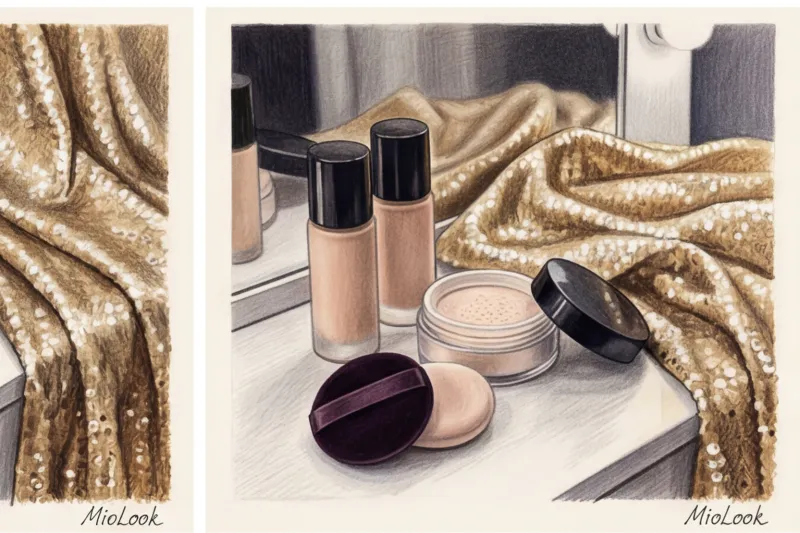
Makeup for a shimmery dress shouldn't be applied with dewy textures on large areas of the face. A satin finish is ideal. It looks vibrant, doesn't feel tight like a matte foundation, and doesn't create unwanted highlights.
As for highlighter, a counterintuitive rule applies. While we typically apply it to our cheekbones and the bridge of our nose, with a shimmery dress, these areas need to be mattified. We apply highlighter strictly to micro-zones: the inner corner of the eye (to open up the eyes) and the collarbone (if they're exposed) to tie the texture of the skin to the texture of the dress.
Color Scenarios: Matching Shades to Metal Colors
The color of your sequins dictates the temperature of your makeup bag. A wrong undertone can visually age your complexion or make it look unhealthy.
Silver sequins: Silver is an uncompromisingly cool color. The main danger here is warm, peachy blush or bronzer with a reddish tint. Against the silver, they will look like dirty spots. Use taupe shades for contouring, dusty pink blush, and lipsticks with cool, bluish undertones (like a classic cool red).

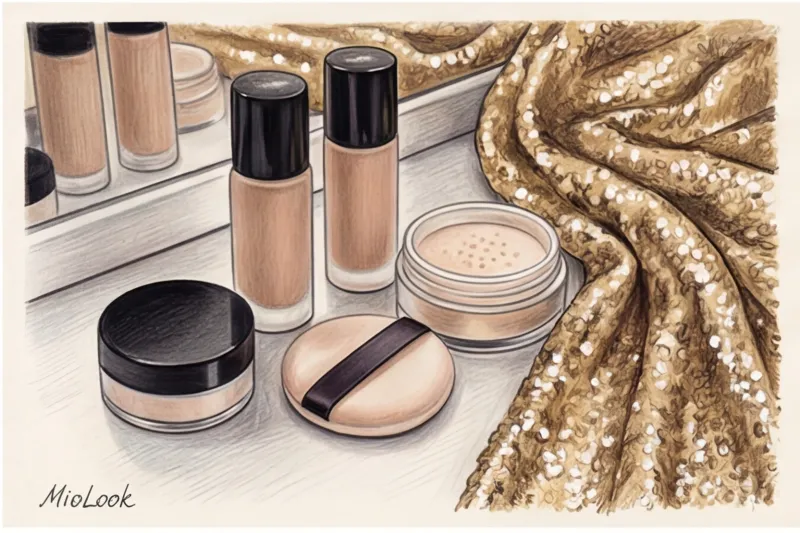
Golden Dress: Gold requires warmth. Sculpted gray is a no-no here—it will make the face look sallow. Your arsenal: warm bronzers, terracotta, peach, and golden-brown tones. If you're unsure how to pair the shades in your makeup bag with your new outfit, the smart wardrobe feature in MioLook allows you to visualize color combinations in advance and avoid unsuccessful experiments before going out.
Colored sequins (fuchsia, emerald, electric): The classic color wheel comes into play here. You can go with analogous colors (pink makeup with a fuchsia dress) or complementary contrasts (golden-copper eyeshadow with an emerald dress).
Your perfect look starts here
Join thousands of users who look flawless every day with MioLook. Check out the makeup and outfit combinations before you leave the house.
Get access — €0.99 onceA practical checklist: Makeup durability when wearing synthetic evening dresses
Now let's talk about something beauty bloggers tend to keep quiet about, but textile experts know all too well. According to industry reports (including recycled materials market research for 2024), over 90% of modern sequins—from mass-market items for €50 to premium ones for €1,500—are made from polyethylene terephthalate (PET plastic). They are often sewn onto a dense synthetic mesh.
This means your dress is completely airtight, creating a localized greenhouse effect. In a closed room, your body's surface temperature rises by 1–1.5 degrees. As a result, the sebaceous glands on your face begin working overtime, trying to cool your body. The foundation that stays on perfectly in the office will start to run off within an hour in a dress made of plastic flakes.
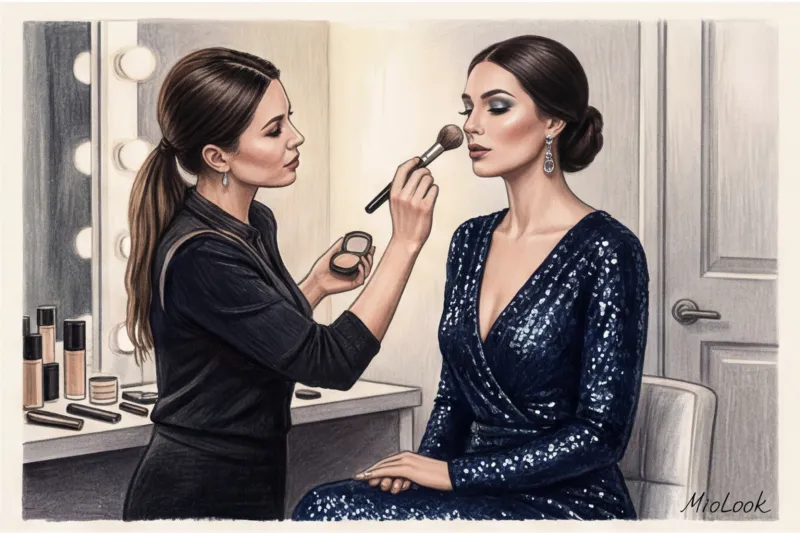
Therefore, makeup requires a reinforced, multi-layered hold. It's important to understand: this technique It doesn't work for daily use (it will dry out the skin), but for the evening in synthetics it is necessary:
- Step 1: Sebum-regulating primer for the T-zone only.
- Step 2: Foundation with a satin or semi-matte finish (apply with a damp sponge for a thin layer - the thicker the layer, the faster it will slide off with heat).
- Step 3: Translucent loose powder. Apply with a puff, not a brush, using tapping motions.
- Step 4: Setting spray applied over finished makeup. It creates a thin polymer film that will hold the pigment in place, despite rising body temperature.
Results: Three steps to a perfect balance of textures
When getting ready for a special occasion, approach makeup not as face paint, but as creating an architectural balance with your outfit. Consider the amount of highlights on fabric, opt for a refined matte or satin finish, and don't be afraid to create confident, defined lines (anchors) on your face that won't get lost in the shimmer.
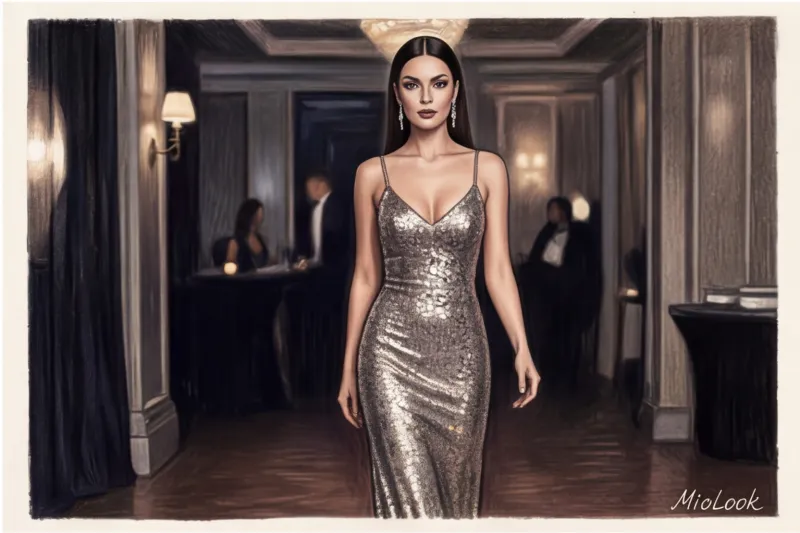
The secret to a luxurious evening look lies in contrasts: a vibrant fabric texture calls for a calm, yet dense and expressive complexion. And remember, sequins always make a statement. The most important rule: you shouldn't be the backdrop for a sparkly dress; the dress should highlight your confidence.