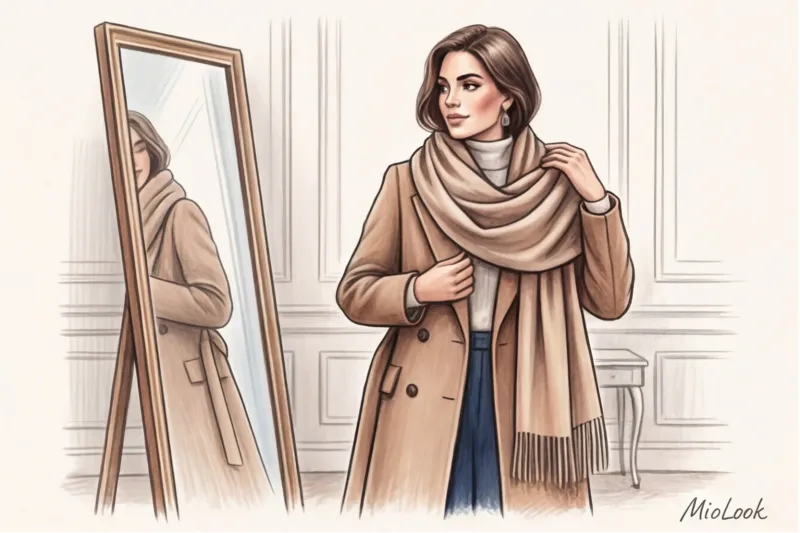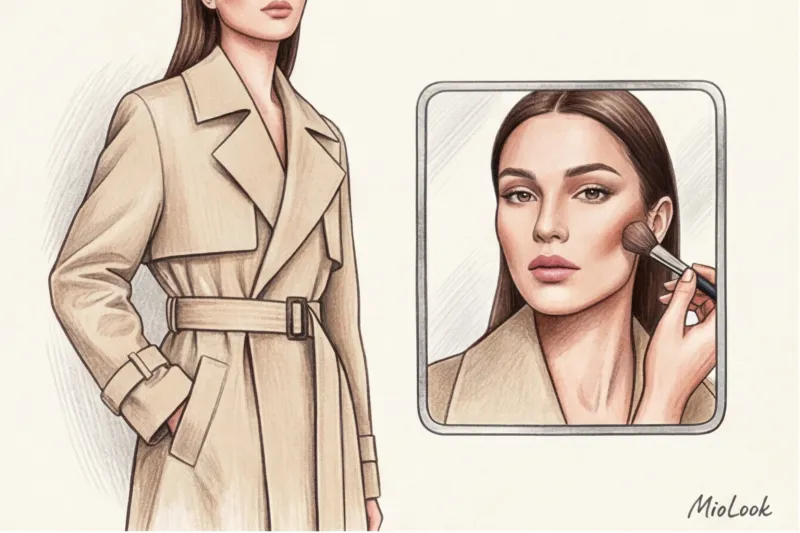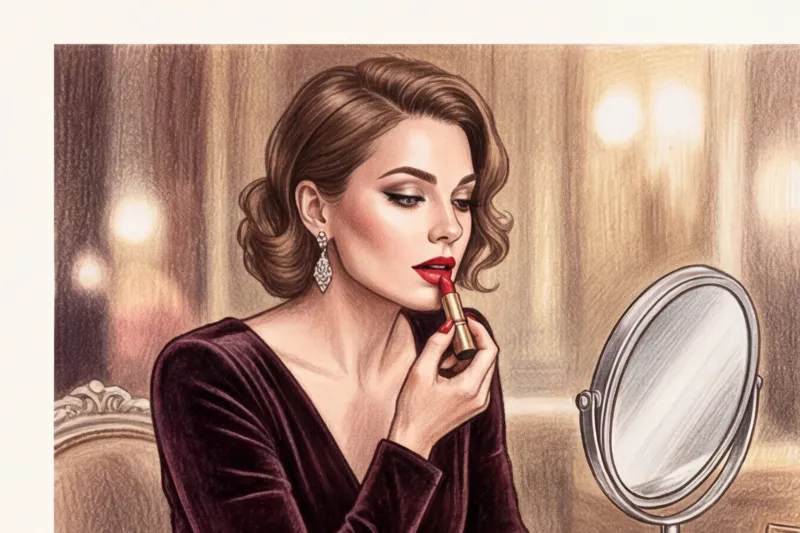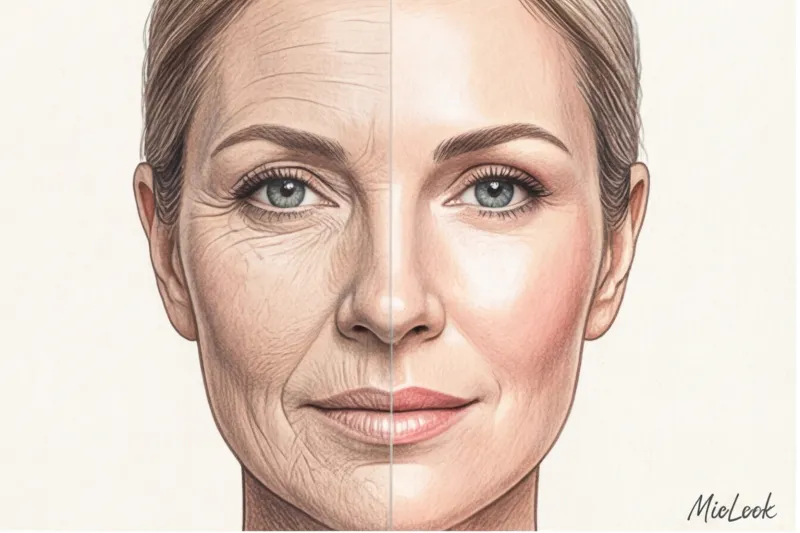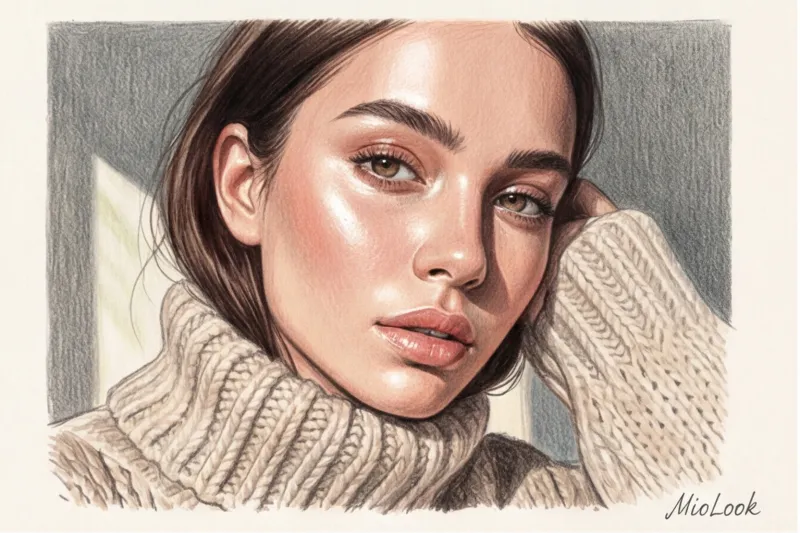
In 2014, I was lucky enough to be backstage at a Paris fashion show where legendary makeup artist Peter Philips was working. You know what struck me most? His mood board didn't feature eyeshadow palettes or reference photos of models' faces. Instead, it featured scraps of fabric from the new collection: flowing silk, stiff organza, and thick, textured tweed. It was then that I became convinced: makeup isn't just about color. It's about the architecture of light.
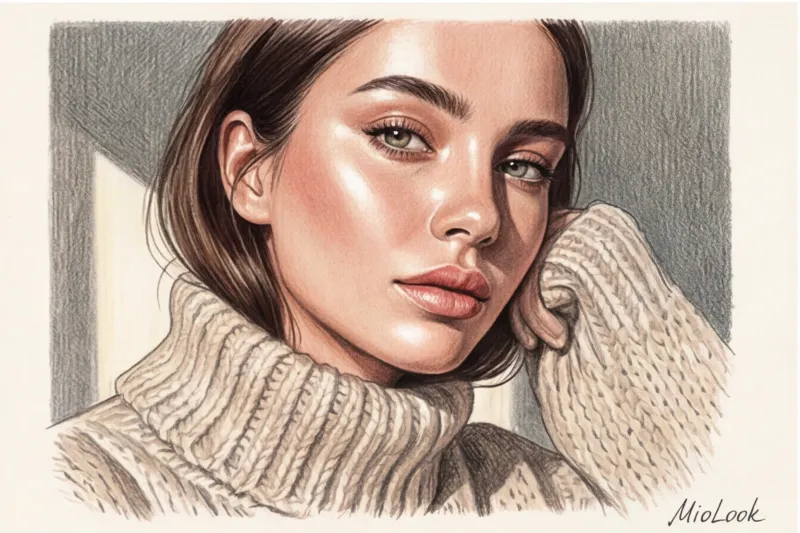
As a stylist with 14 years of experience, I see the same mistake every day. Girls spend hours matching their lipstick to their shoes, but completely ignore how makeup texture and clothing fabric interact with each other. And it is this physical law of light reflection that determines whether you look luxurious or like you haven't slept for three days. We discussed the basic principles of visual harmony in more detail in our a complete guide to pairing makeup and clothing , and today we'll talk about the highest level of skill - working with textures.
Light and form: why makeup texture and clothing fabric are more important than color matching
Our brain is an amazingly fast computer. According to neuroscientists, we detect visual dissonance in an image in just 0.2 seconds. When you put on an expensive silk blouse that actively reflects light, and your face is covered in a dull, matte layer of foundation, the brains of those around you register a glitch. Your face seems cut out of cardboard and glued to a dynamic, living body.
This is where the basic laws of optics come into play. According to a 2024 study by the WGSN trend bureau on the evolution of the beauty market, matte surfaces absorb up to 90% of the light that hits them. This means that if your clothing already absorbs light (for example, wool or velvet), and you duplicate this on your face, the look will be heavy and visually add years.
"The face is the main architectural element of your look. You can't consider it in isolation from what's on your shoulders. The skin should either support the fabric or create a deliberate contrast with it," says Pat McGrath, Masterclass 2023.
That's why I always ask my clients to come to fittings with the makeup finish they wear every day. Otherwise, we simply won't be able to adequately assess how the garment's contours (collar, lapels) complement their face.
Access to MioLook for €0.99 — one-time payment
A smart AI stylist will select the perfect look based on your individual characteristics and wardrobe.
Get access — €0.99 onceMatte skin: elegant depth or flat mask?
A matte finish is velvety, glare-free, and extremely understated. It's associated with calm and confidence. But if used incorrectly, it can turn the face into a flat, volume-deprived mask.
Works great here principle of similarity Matte leather reveals a phenomenal beauty when paired with materials that are naturally rich and soft. Whether you're wearing a luxurious suede jacket, cozy corduroy, or a thick cashmere sweater from Loro Piana, a velvety complexion will enhance the tactile experience.
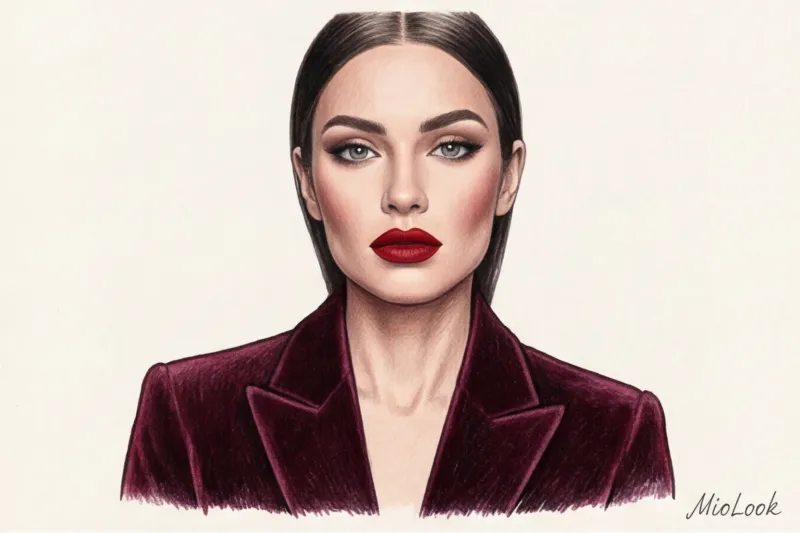
But matte makeup has another, superhero function - principle of balance In my experience, a matte finish has saved dozens of evening looks.
- When it works: When you wear a sequin-covered dress, a metallic lamé top, or patent leather pants, your body transforms into a disco ball. To ground your look and add a touch of class, keep your complexion calm and matte.
- Specifics: In such cases, I recommend abandoning even satin blush in favor of completely matte dry textures.
If you add a generous layer of highlighter to your cheekbones in addition to the sequins, your look will instantly become cheap and overloaded.
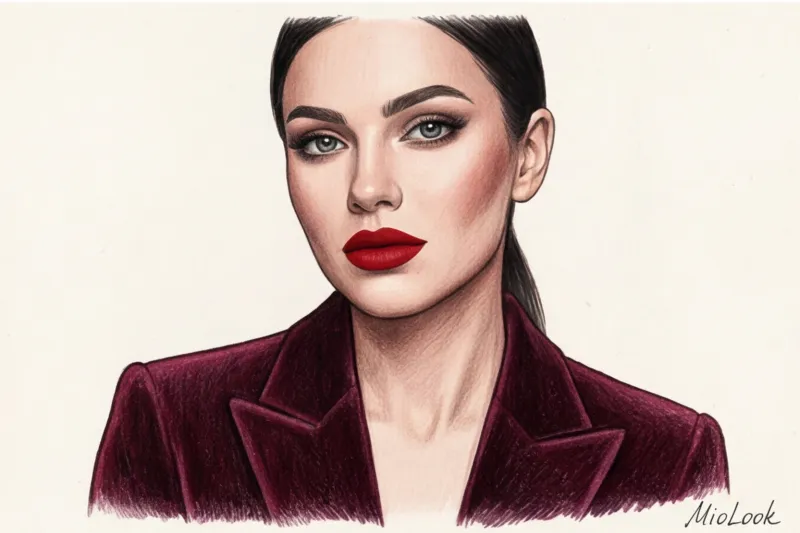
Radiant and Dewy Skin (Glass Skin): The Architecture of Light in the Image
The "glass" or dewy skin effect adds tremendous dynamism to any look. It's associated with health, youth, and energy. And this is where my favorite styling trick comes in—using dewy makeup to offset complex, rough fabrics.
One of my clients, top manager Elena, bought a stunning textured tweed suit for €850. But when she tried it on, she looked tired, as if the jacket had sucked all the life out of her. The problem wasn't the cut or the color. It was her favorite dense powder. Tweed is a loose, dry fabric that absorbs light. Combined with her dry complexion, it created a "mothball" effect. I simply took a damp beauty sponge, patted a drop of creamy highlighter onto her cheekbones, and added a touch of clear lip gloss. The moisture on her face instantly compensated for the dry fabric, and Elena looked ten years younger.
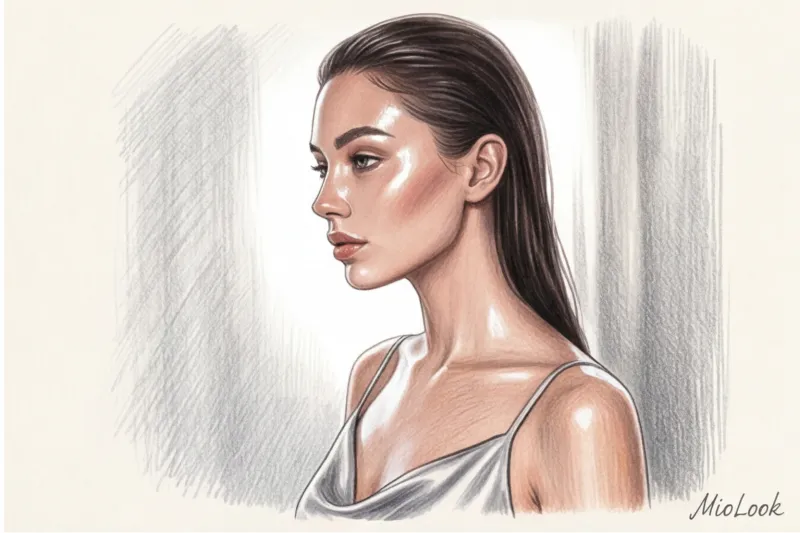
Coarse knits, linen, denim, and thick suiting wool—all these fabrics physically require a nearby light source. And that source should be your face.
When a wet finish does NOT work:
Be extremely careful when pairing damp Glass Skin with flowing satin or a smooth silk slip dress. A glossy fabric combined with a glossy face often creates not a "goddess" effect, but rather a feeling of being extremely hot and sweaty. In this case, the sheen of the fabric will compete with the glare on your face.
Your perfect look starts here
Join thousands of users who look flawless every day with MioLook. Upload your wardrobe and receive ready-made capsule collections.
Get access — €0.99 onceSatin finish: the golden mean and the main secret of business style
There's a cast-iron myth that I struggle with every season, unsuccessfully: "You should only go to the office with a matte complexion." This is an outdated rule from the 2000s, when corporate business dress code for women was unbearably conservative.
Today, a matte finish paired with thick office fabrics (wool, gabardine) looks less professional and more outdated. The industry has long since switched to a satin finish—the natural glow of well-groomed skin without obvious, oily highlights.
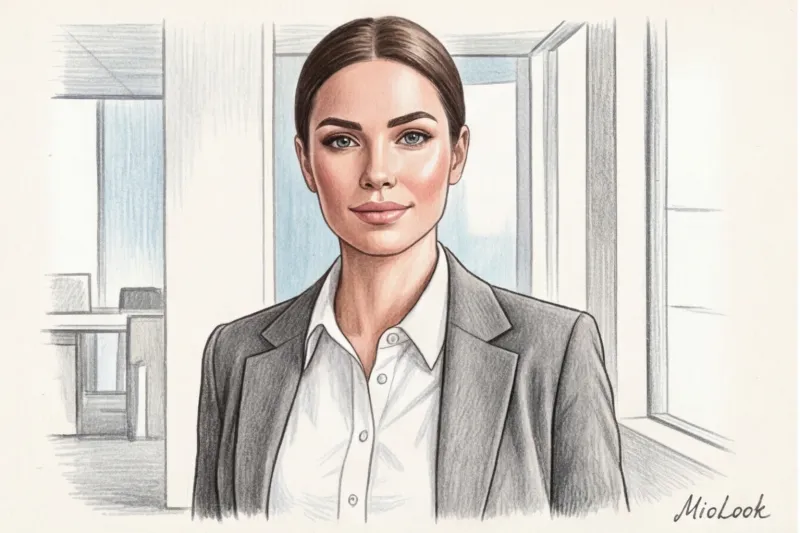
Satin tone is a status marker. It tells others, "I have excellent skincare, I get enough sleep, and I drink enough water." Architecturally, satin creates perfect match with the following fabrics:
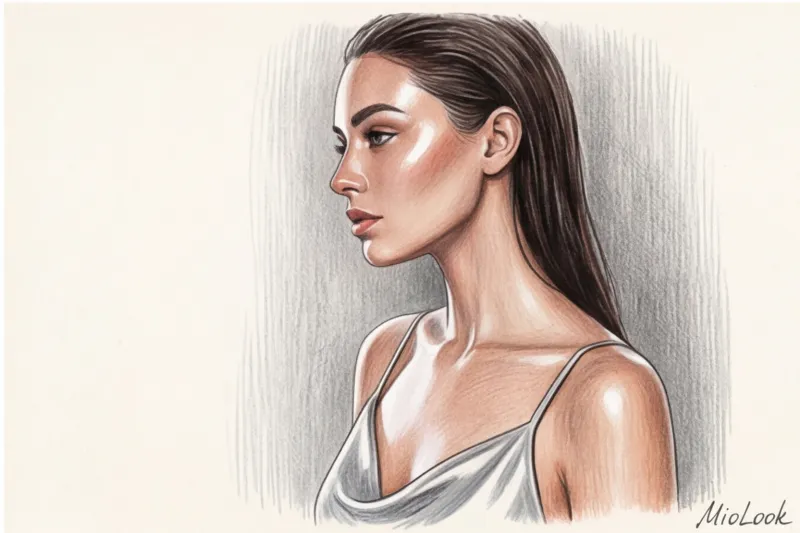
- Smooth cotton with a density of 180 g/m² (classic office shirts).
- Fine suit wool (virgin wool).
- High-quality viscose with the addition of 5% elastane.
If you want to create a trendy Office Siren makeup , it is the satin leather, seemingly illuminated from within, combined with the strict lines of the jacket that will create that very effect of restrained, yet powerful attractiveness.
Common mistakes: when makeup and clothes "compete" with each other
Over the years of sorting through wardrobes and makeup bags, I've identified three main mistakes that ruin even the most treasured look.
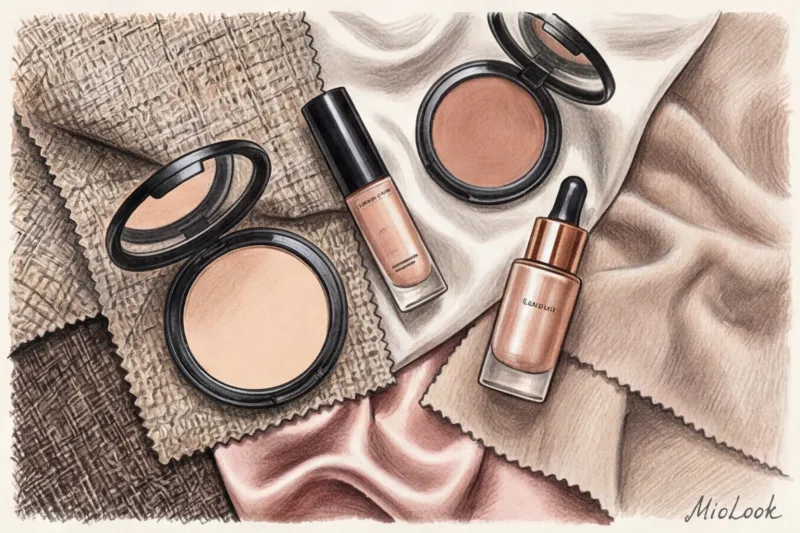
Mistake 1: The "Heavy Head" Effect
This occurs when you use a thick matte foundation and opaque powder with lightweight, translucent fabrics like chiffon, organza, or fine lace. The lightness of the fabric clashes with the heaviness of the makeup, making the face appear heavy.
Solution: Replace your heavy foundation with a light fluid or water-based BB cream.
Mistake 2: Emphasizing the cheapness of the texture
Heavy glow makeup (highlighter, dewy eyelids, lip gloss) will backfire if you're wearing cheap synthetics (for example, a high-street polyester top under €30). The wet shine will instantly reveal the fabric's unnatural, plasticky sheen.
Solution: Synthetics need to be “calmed down” exclusively with matte or semi-matte textures on the face.
Mistake 3: Powdery textures and techwear
Complex, blended smoky eyes with dry shadows and an abundance of powder look out of place against sporty or high-tech fabrics (nylon, raincoat, neoprene). Think of the aesthetic of Prada's nylon jackets—they call for a fresh, slightly dewy complexion without any visible dry textures.
Ready to get started?
Try the free plan—no commitments. Digitize your wardrobe and experiment with texture combinations in the app.
Get access — €0.99 onceA stylist's checklist: how to quickly pair makeup and fabric
To avoid racking your brains in front of the mirror every morning, I offer my clients a simple four-step system. By the way, when planning looks for the week ahead, MioLook smart wardrobe , you can make notes in advance about which tone finish you need for a specific capsule.
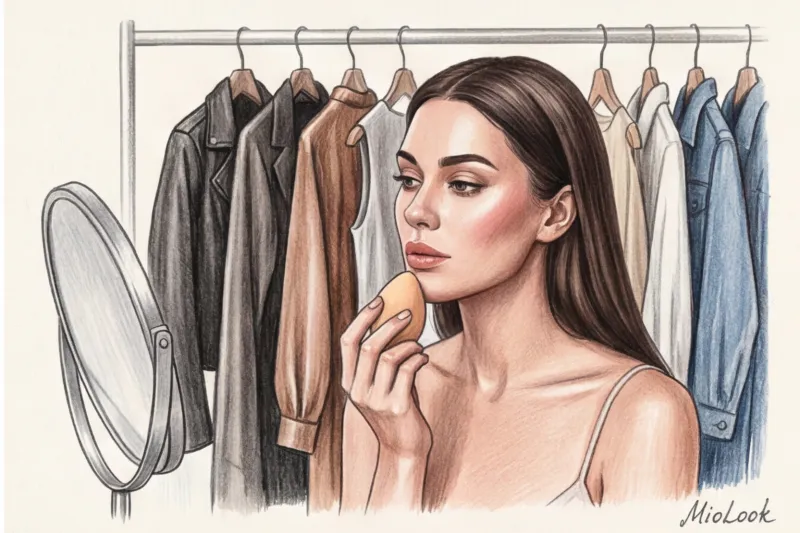
- Determine the dominant texture of the portrait area. Look at the collar, lapels, or shoulders of your clothing. Which fabric is closest to your face? Is it dry and loose (tweed), smooth and shiny (silk), or dense and matte (wool)?
- Ask yourself: Do I want to enhance texture or create contrast? If you're wearing a bold sequin shimmer, create contrast and mattify your complexion. If you're wearing a cozy suede jacket, enhance the texture and also use a matte finish.
- Choose a base (foundation/powder).
- Matte: to balance shine and support napped fabrics.
- Radiant (Glass Skin): to revive dry, rough and loose tissues.
- Satin: for high-status, smooth fabrics (cotton, fine wool) and business style.
- Balance your lips. Matte lipstick looks gorgeous with a silk blouse (it's all about contrast), and a dewy, clear lip gloss will save the day if you're wearing a chunky, chunky knit sweater.
Next time you're heading to an important meeting or date, try to think of your makeup not in isolation, but as a natural extension of your outfit. Once you start thinking of makeup as another "fabric" in your look, you'll notice that even basic jeans and a white T-shirt can look like a runway look if you add the right glow to your skin.