Backstage at the Prada show in Milan last season, I witnessed a curious scene. Models were preparing to walk the runway in heavy, textured wool coats in a complex mustard shade. Classic logic would have dictated that makeup artists use warm, autumnal tones on their eyelids. However, the legendary Pat McGrath did the exact opposite: she applied a dewy, almost icy silvery sheen to the girls' lids. This subtle dissonance, deliberately "ugly chic," made the look magnetic. It was then that I was once again convinced: the question of whether or not to choose eyeshadow to match your clothes , has a clear answer, and it will surprise you.
We discussed the basic principles of creating a complete outfit in more detail in our complete guide. How to Combine Makeup and Clothes: Style Secrets But today I want to delve into the most common beauty mistake I see on the streets and at social events. Spoiler: directly matching the shade of your dress on your eyelids is a stylistic throwback that not only simplifies your look but also visually ages you.
Trend evolution: why matching eyeshadow to your outfit has become bad form
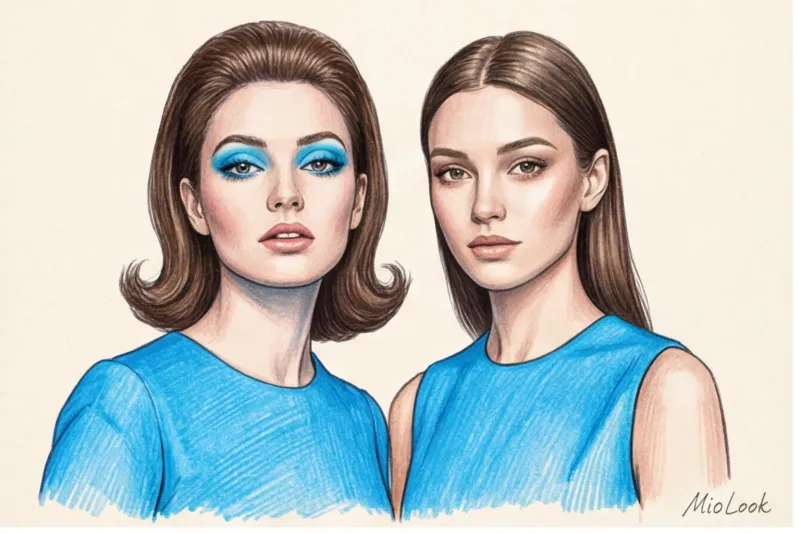
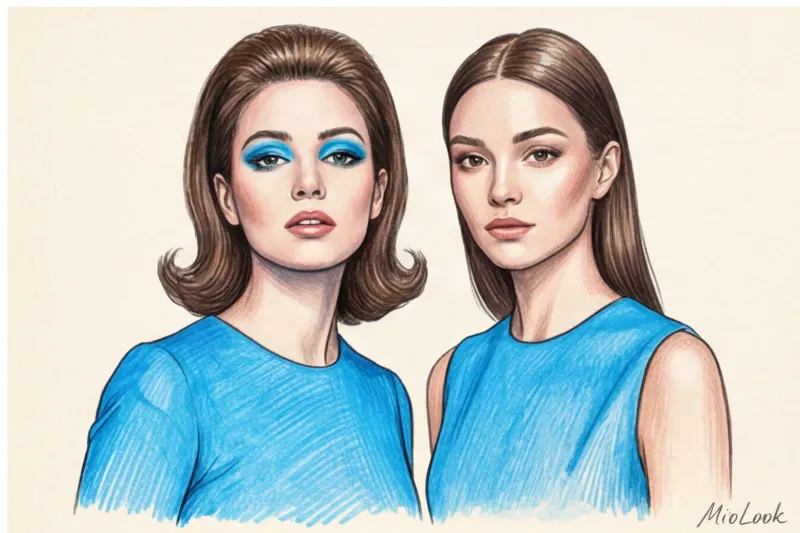
To understand modern fashion, you need to look in the rearview mirror. The "matchy-matchy" aesthetic (literally, excessive matching) hails from the 1980s. Think back to the glossy magazine archives: dense blue eyeshadow carefully blended under a blue denim jacket, and pink lipstick and matching eyelids were a must-have with a fuchsia blouse.
A paradigm shift occurred in the 2010s. The era of minimalism, led by Phoebe Philo at Celine, brought us the concept of "effortless chic." Modern fashion categorically does not tolerate excessive effort. According to the WGSN beauty trend reports (2024), interest in monochrome and heavy makeup has fallen by 42% in favor of light, glazed textures.
Trying to perfectly match your eyeshadow to your outfit doesn't make your look more polished these days. On the contrary, it betrays conservatism and a lack of self-confidence. When you try to control every color detail, your outfit starts to look like a theatrical costume rather than the clothing of a vibrant, modern woman.
Your perfect look starts here
Join thousands of users who look flawless every day with MioLook. The smart algorithm will take your palette into account and select the best combinations.
Get access — €0.99 onceThe main anti-trends: how not to combine makeup and wardrobe
I had a classic case in my practice. My client, Anna, a stunningly beautiful 42-year-old woman, was getting ready for a gala dinner in Paris. She had purchased a luxurious emerald silk slip dress (costing around €850). Wanting to look flawless, she booked an appointment with a makeup artist and asked for emerald eyeshadow "to match the dress."
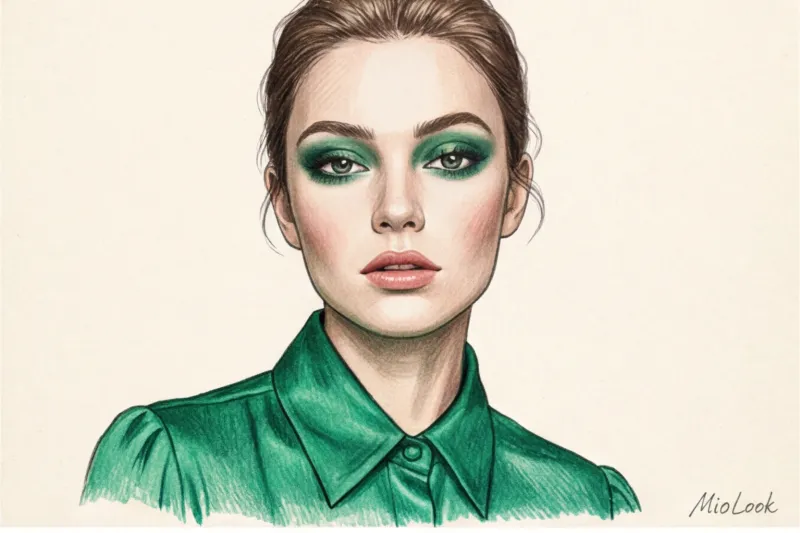
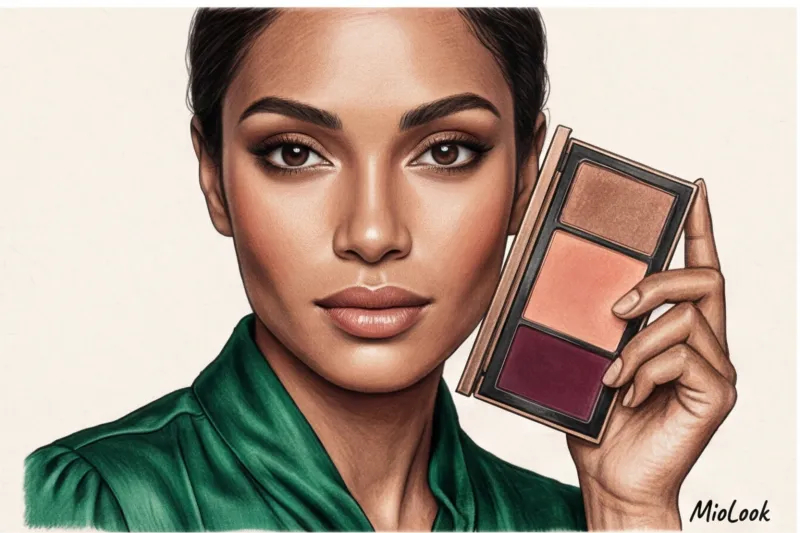
When we met for the final fitting, I gasped—but not with delight. The perfect match between the bright green of the dress and the dense green on her eyelids created a flat, lifeless look. The psychology of perception works like this: our brain instantly reads such straightforward duplication as old-fashioned. It visually cheapens even premium silk. We immediately washed out the green and replaced it with a warm bronze. Anna's face instantly brightened, and the dress sparkled with new colors.
The main taboos today:
- Blue dress + blue smoky eyes (looks like hello from the 2000s).
- Red suit + aggressive red eyeshadow (creates a sickly look).
- Using equally dense textures both in clothing and on the face.
How to match eyeshadow to your outfit: modern color theory schemes
If we don't duplicate the color, what should we do? Let's turn to the classics. The basic principles of Johannes Itten's color wheel work flawlessly in styling, as long as they're not applied head-on. The key is complementarity.
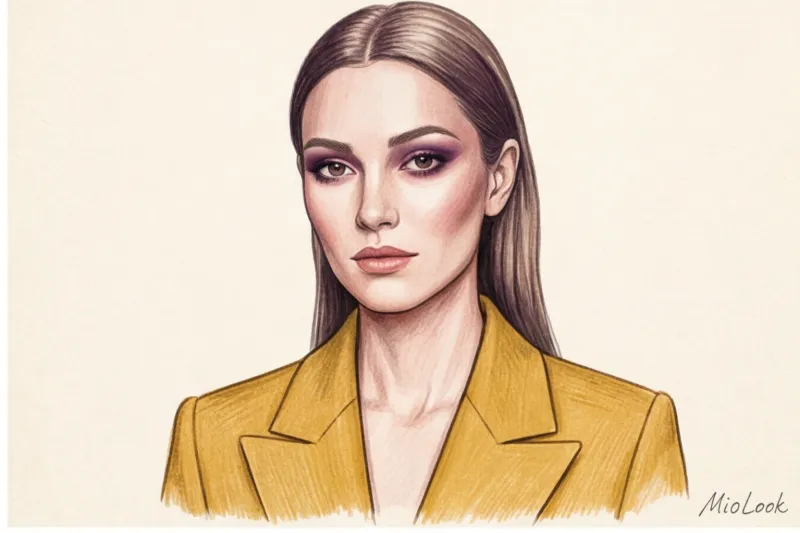
Instead of blending with your outfit, your makeup should enhance it by using contrasts. For example, if you're wearing a sophisticated mustard-yellow jacket, avoid gold or yellow eyeshadow. Opt for muted plum or dusty lilac shades. Purple is opposite yellow on the color wheel—this contrast will make your eyes pop and add depth to the jacket's color.
I recommend exploring your color palette. In the article 12 Color Types of Appearance: A Guide to Choosing a Palette It describes in detail which complementary shades will suit your contrast.
Temperature and Undertone: Hidden Harmony
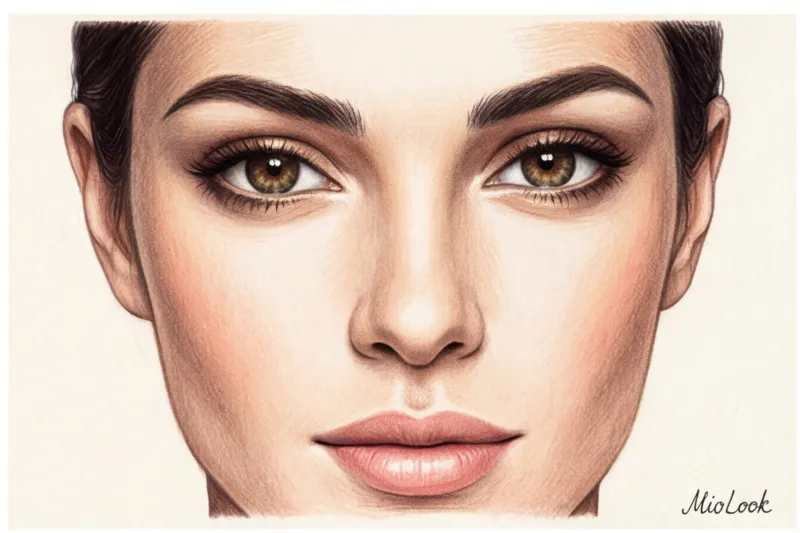
Color isn't just about pigment, it's also about temperature. My golden rule of temperature balance is: a warm outfit calls for a neutral or slightly cool undertone in makeup (and vice versa). If you're wearing a terracotta sweater (a very warm undertone), your skin may appear undesirably yellow. Balance this with a subtle, shimmering graphite or cool taupe on your lids.
Texture Play: The Secret of Runway Makeup Artists That Glossies Don't Cover
And now for the most valuable insight that will change your understanding of makeup. Over 12 years of working as a stylist, I've realized: texture is more important than color Peter Philips, Dior's creative director of makeup, brilliantly remarked in a 2023 interview: "Makeup is like clothing, only expressed in textures."
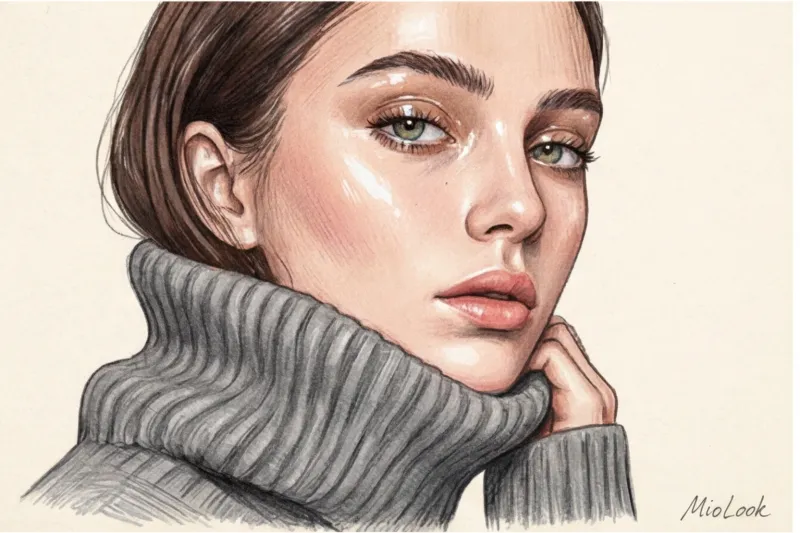
Instead of matching your eyeshadow to the color of your fabric, match your makeup finish to the texture of the material using the principle of contrast:
- Thick wool, tweed, drape: These materials absorb light and appear matte and heavy. If you wear matte eye makeup, your face will look flat. Add life with glossy eyes, shimmer, or creamy, shimmery eyeshadow.
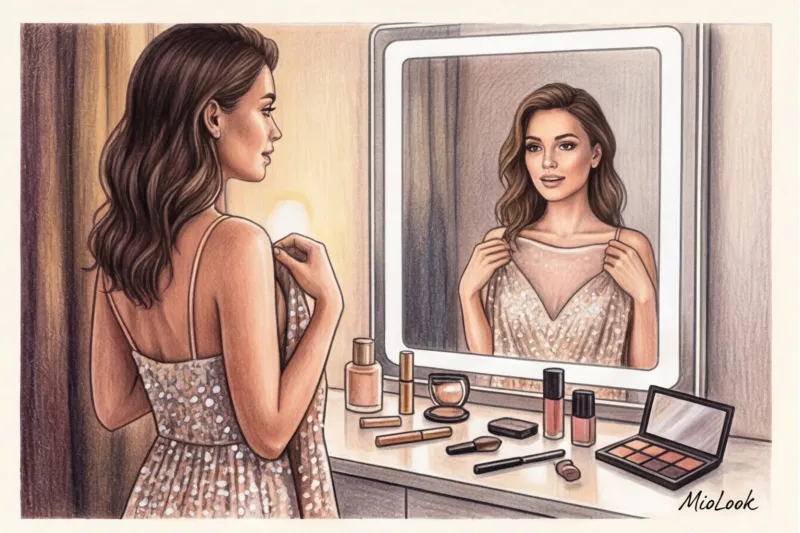
- Flowing satin, silk, sequins: The clothes already reflect maximum light and attract attention. Matte, velvety smoky eyes are ideal here. They will ground the look, making it elegant and luxurious.
By the way, if you are unsure which texture will suit your new dress, you can upload a photo of the outfit to MioLook The app's artificial intelligence analyzes not only shades but also textures of items, suggesting optimal stylistic solutions.
Access to MioLook for €0.99 — one-time payment
A smart AI stylist will create the perfect look for you. Wardrobe analysis, capsule collection, and makeup tips all in one app.
Get access — €0.99 onceWin-Win Combinations: A Cheat Sheet for Real Life
Theory is great, but what do you do at 8 a.m. on a Tuesday when you have exactly 15 minutes to get ready? Let's look at three common scenarios.
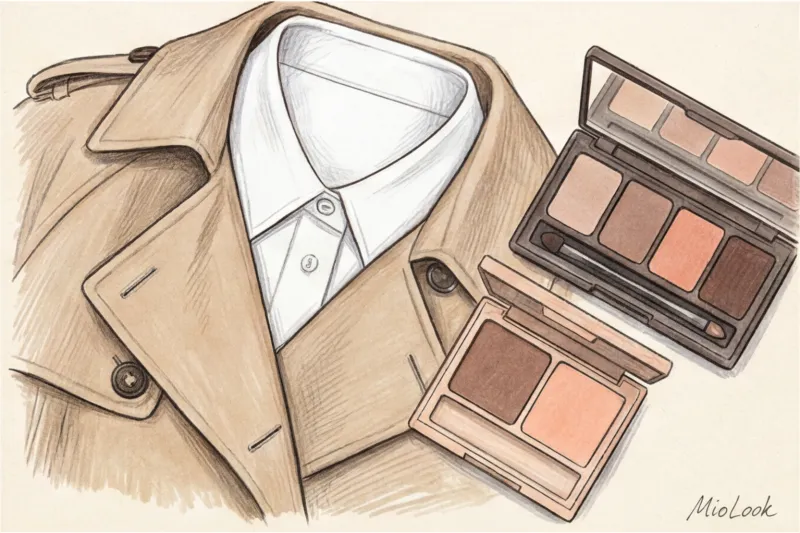
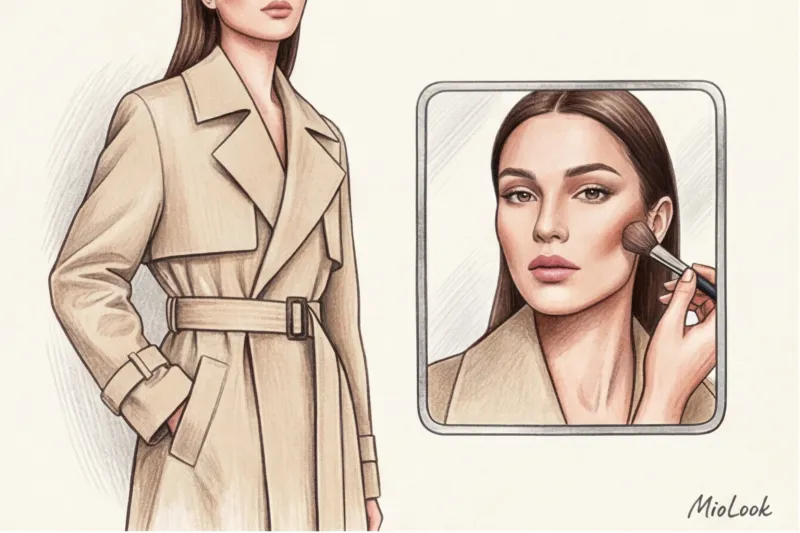
- Nude wardrobe (beige, camel, sand): The danger with such outfits is that they blend in with your own clothes. Avoid using eyeshadow that matches your trench coat! Add a cool taupe accent (gray-brown) or a rich, warm bronze to highlight your eyes.
- Bright outfit (color block): If you're wearing fuchsia and electric blue, your face should "rest." The rule here is simple: either "no-makeup makeup" or a single graphic element without color (for example, a black or brown winged eyeliner).
- Business suit: A gray or dark blue jacket requires subtlety. We discussed this in more detail in the materials Business Makeup: Rules, Instructions, and Common Mistakes And Business capsule wardrobe The ideal choice is a soft, shaded arrow and champagne-colored eyeshadow.
Exceptions to the Rule: When Eyeshadow Matching Your Clothes Works
My profession has taught me that there are no absolutes in styling. There are situations when a monochrome look, where the shadows match the color of the clothing, looks not just appropriate, but stunning. But this requires a certain amount of courage and technical know-how.
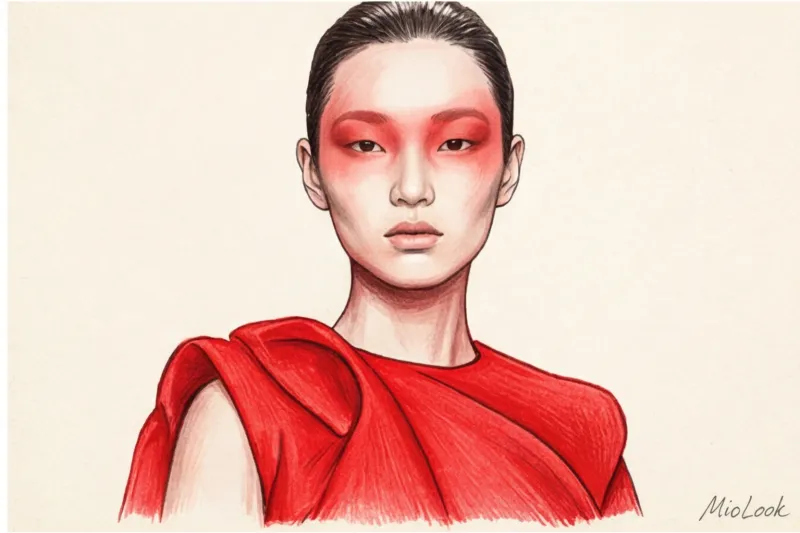
When it works:
- Sheer wash of color technique: Instead of using dense matte shadows, you're using translucent creamy textures (tints) that only lightly tint the eyelid, leaving the skin texture visible. A soft pink chiffon dress and a matching watercolor pink highlight on the eyelids will create the look of a nymph, not a '90s salesgirl.
- Avant-garde and catwalk exits: When "matchy-matchy" becomes a deliberate statement. This is often used by stars at the Met Gala, exaggerating the color to the max.
- Total Black and Total White: In black and white mono-looks, makeup takes on the role of the main (and only) pop of color. Here, colored eyeshadow (for example, emerald winged eyeliner with an all-black outfit) looks incredibly stylish.
Checklist: How to choose eyeshadow to match your outfit in 3 minutes
Standing in front of the mirror with a palette (a good basic palette usually costs between €40 and €90) and not sure where to start? Follow these 4 steps:
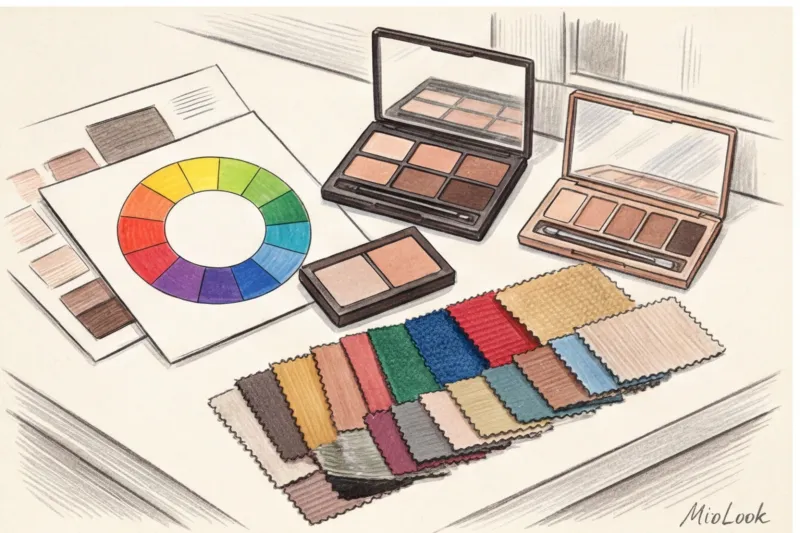
- Step 1: Assess the texture of the outfit. Shimmery? Make your eyelids matte. Matte fabric? Add a satin sheen or glossy finish to your eyes.
- Step 2: Determine the temperature contrast. Are your clothes overtly warm (orange, terracotta, gold)? Consider cool taupe, silver, or dusty rose.
- Step 3: Select a scheme. When in doubt, take a complementary (opposite) color according to the Itten circle, but in a muted version.
- Step 4: Test for "diligence". Look in the mirror. If you feel like you spent three hours getting ready, meticulously selecting every pigment to match your handbag and dress, lightly blend the eyeshadow with your finger for a more casual look. Perfection is out of fashion these days.
Ready to get started?
Stop racking your brain over combinations in front of the mirror. Try the MioLook free plan—no commitment, just pure style.
Get access — €0.99 onceStylist's Summary: Makeup as an Architectural Element of the Image
Makeup isn't a separate, self-contained part of the face. It's a full-fledged extension of the silhouette, geometry, and mood of your clothing. As we discussed in detail in the article. Architecture of the image , every detail should work towards the overall idea.
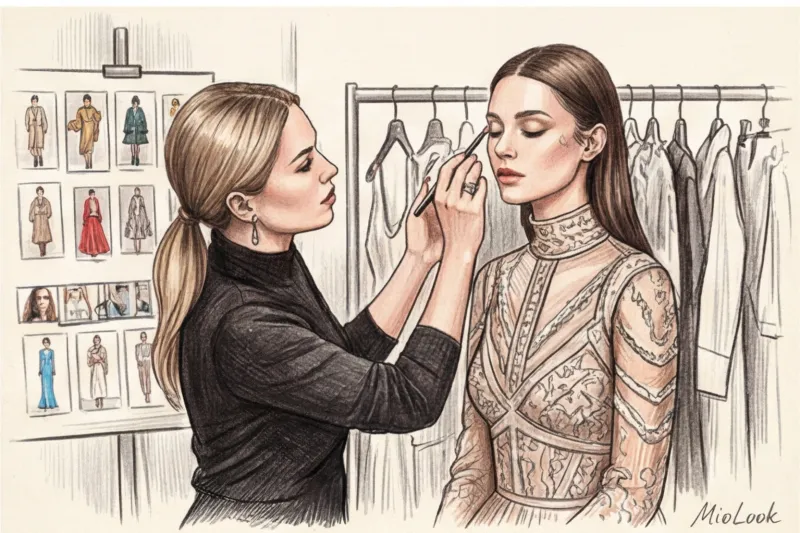
Breaking the habit of matching your eyeshadow tone-on-tone to your dress can feel awkward at first. Our brains thrive on simple, straightforward patterns. But once you start playing with textures and temperature contrasts, you'll notice how your reflection in the mirror changes dramatically. You'll make room for true style, airiness, and self-expression, leaving boring monochrome behind.