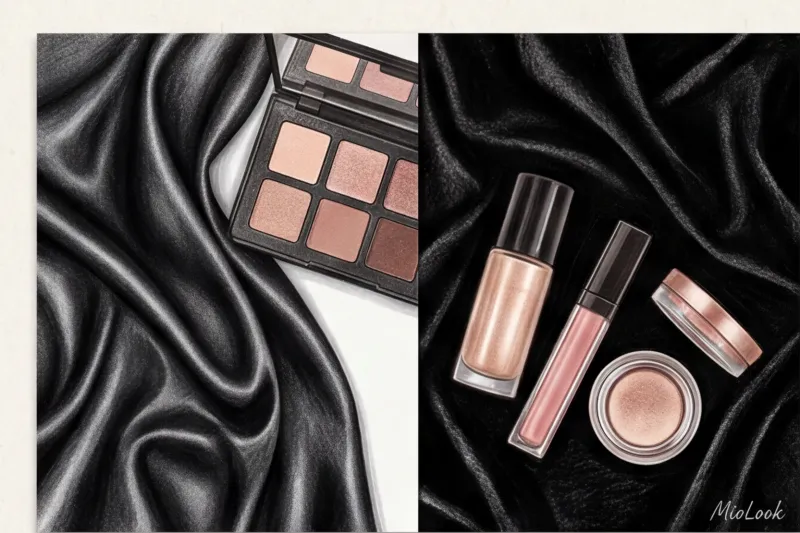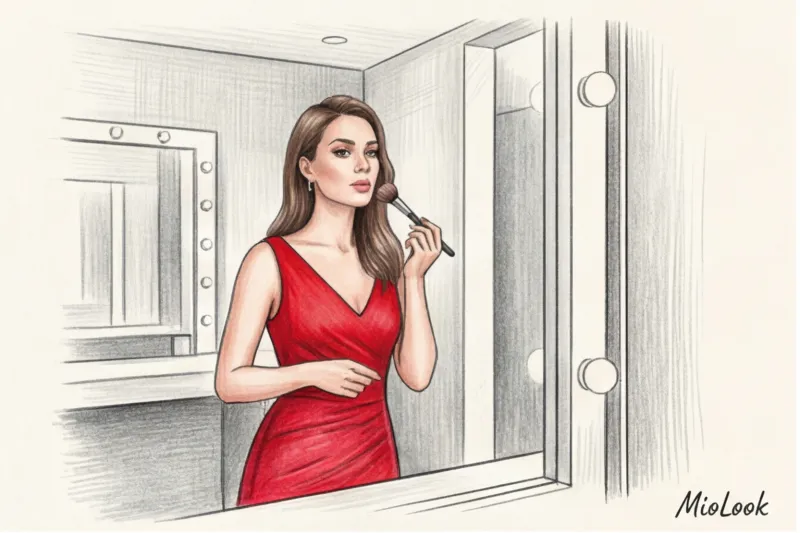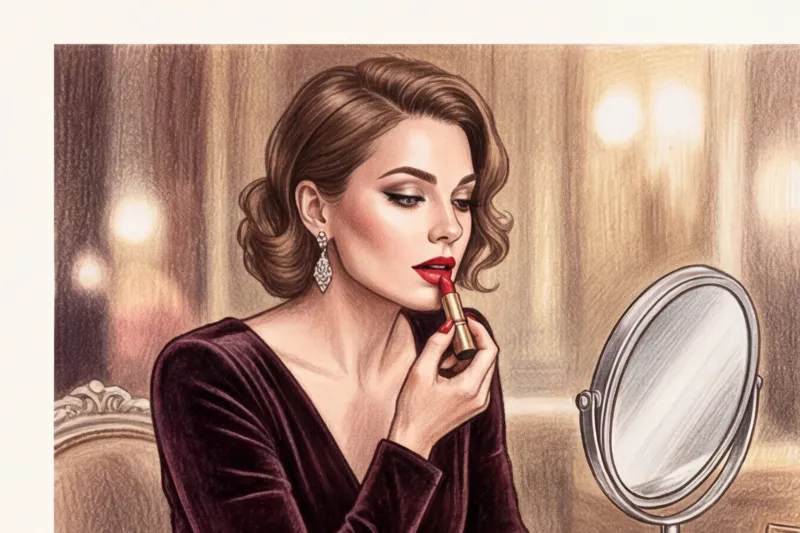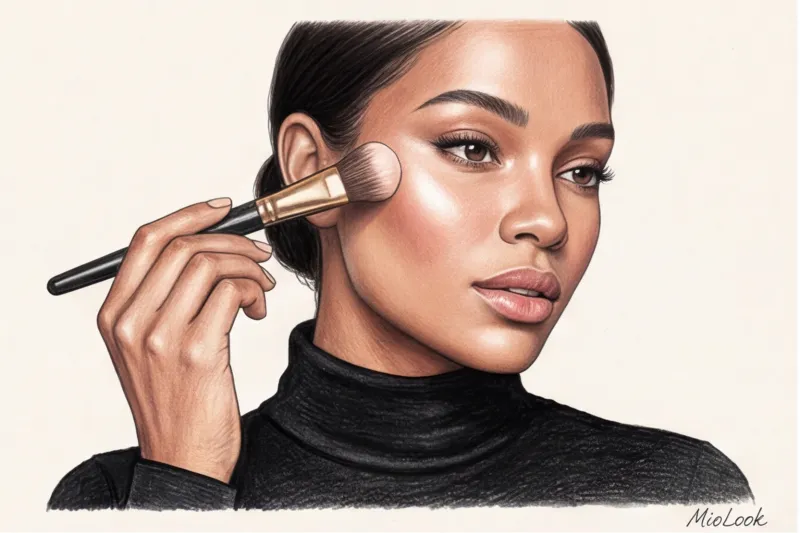
Black doesn't make your face look slimmer. On the contrary, it mercilessly drains all the color from it. Ever notice how a stunning dress in the fitting room suddenly makes you look tired and sleep-deprived, even though just five minutes ago you looked fresh in your regular white T-shirt? We covered the basic principles in more detail in our a complete guide to pairing makeup and clothing , but black is a whole different league.
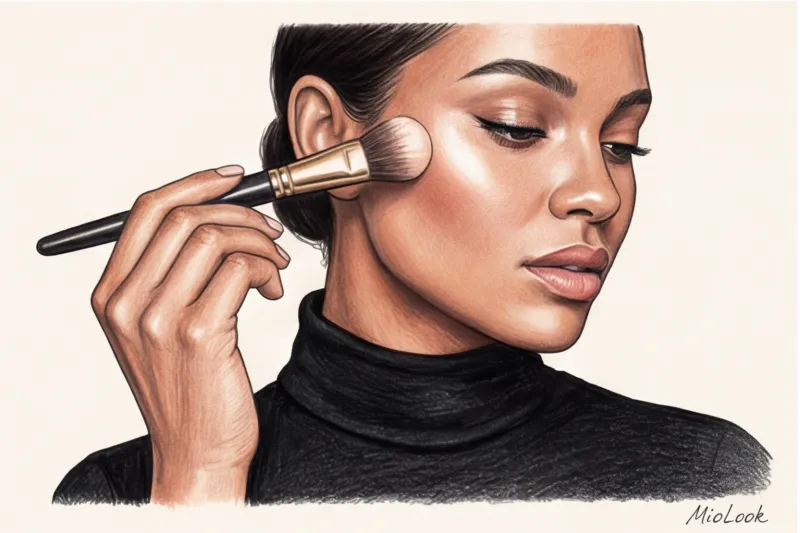
When choosing makeup for a black dress, 8 out of 10 of my clients initially think in terms of "I'll put on red lips" or "I'll do a smoky eye." As a personal stylist, I always ask them to stop. A black dress isn't a blank canvas. It's a complex architectural framework, where your makeup choice should be dictated not only by your mood, but primarily by the texture of the fabric and the geometry of the neckline.
The LBD Paradox: Why Perfect Makeup for a Black Dress Doesn't Start with Color
Let's turn to physics. According to research by the PANTONE Color Institute, deep black fabric can absorb up to 98% of light. What does this mean for your appearance? The fabric acts like a visual black hole: it doesn't reflect light onto your face (like white or pastel clothing does), highlighting the finest shadows under the eyes, nasolabial folds, and the slightest dullness of the skin.
That's why the most important rule I've learned over years of internships and fashion shoots is: makeup should compensate for the light that black clothing absorbs. No-makeup makeup paired with an all-black look often makes a woman look unhealthy. A subtle blush, a touch of bronzer around the edges of the face, and a light-reflecting primer are essential.
Makeup artists at top fashion houses never apply a thick matte foundation if a model walks the runway in black. Instead, they use primers with microscopic mica and liquid highlighters applied under Foundation. The face should become the architectural pinnacle of your silhouette—the main source of light in your look.
Texture is everything: how to match makeup with dress fabric
During Paris Fashion Week 2022, I observed Peter Philips's team at work backstage at the Dior show. One detail struck me: the makeup artists held scraps of dress fabric right next to mirrors, comparing product swatches with them. "We don't paint faces, we dress them in textures," they explained. This purely stylistic approach makes all the difference.
The texture of your clothing dictates the finish of your foundation and lipstick. Two ironclad rules apply here: the rule of similarity and the rule of precise contrast. A misstep of dissonance (for example, a face heavily matted with powder on a glossy silk dress) instantly cheapens the look, turning it into a disjointed collection of elements.
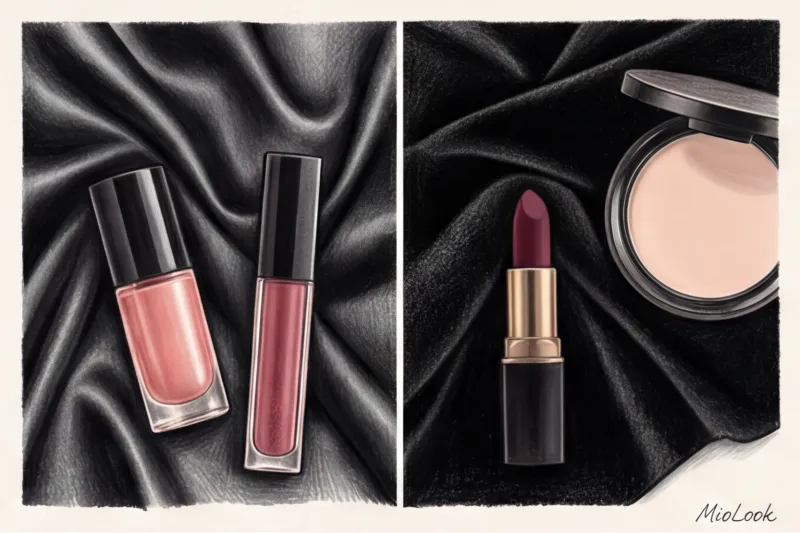
Makeup for black silk and satin
The fluidity and shine of silk fabric call for a dewy finish in makeup (the so-called dewy skin effect). If you're wearing a slip dress, your skin should also appear visibly "flowing."
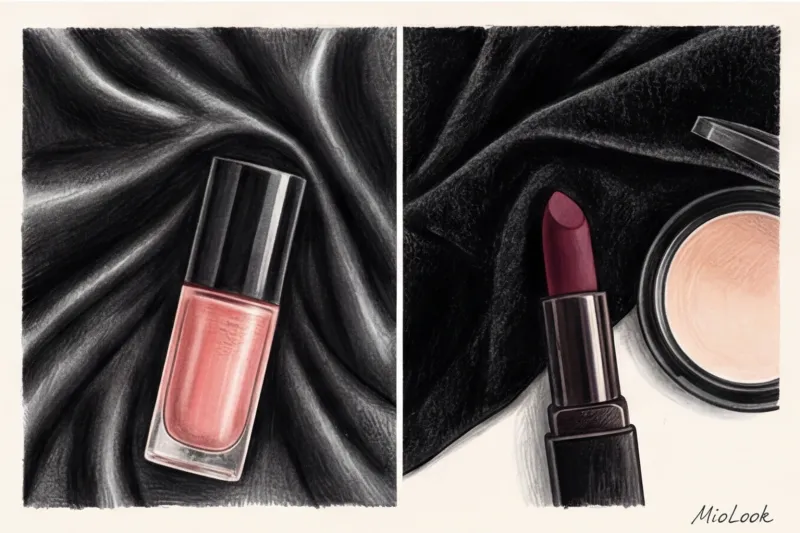
- What to use: Liquid or cream blush, highlighters without large glitter (wet highlight effect), transparent lip glosses or balm lipsticks.
- What to avoid: A dense, "dead-on" matte finish. Baked powders and long-lasting matte lipsticks will clash with the delicate silk and feel like a foreign, harsh mask.
What goes with velvet and thick crepe?
Heavy, luxurious fabrics absorb light differently—they create an aura of comfort and status. A dewy sheen on your face can make you look simply too hot. Velvet calls for velvety makeup.
The ideal solution is a soft-focus look. Use loose HD powders to blur pores. Matte lipsticks in deep shades look luxurious on the lips, from classic red to rich burgundy. For eyes, consider soft powder eyeshadows with a satin or matte finish, carefully blending the edges.
Access to MioLook for €0.99 — one-time payment
A smart AI stylist will select the perfect makeup and look based on the texture of your clothing.
Get access — €0.99 onceThe Holy Trinity: Classic Evening Makeup for a Black Dress
There are three foolproof formulas that have worked for decades. They've evolved since Audrey Hepburn's time, but their architectural essence remains unchanged. The choice depends on the context of the event and the contrast in your appearance.
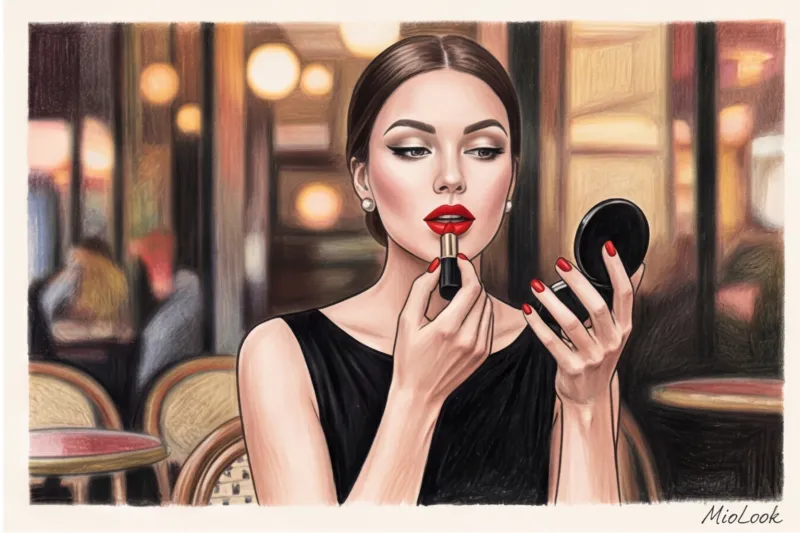
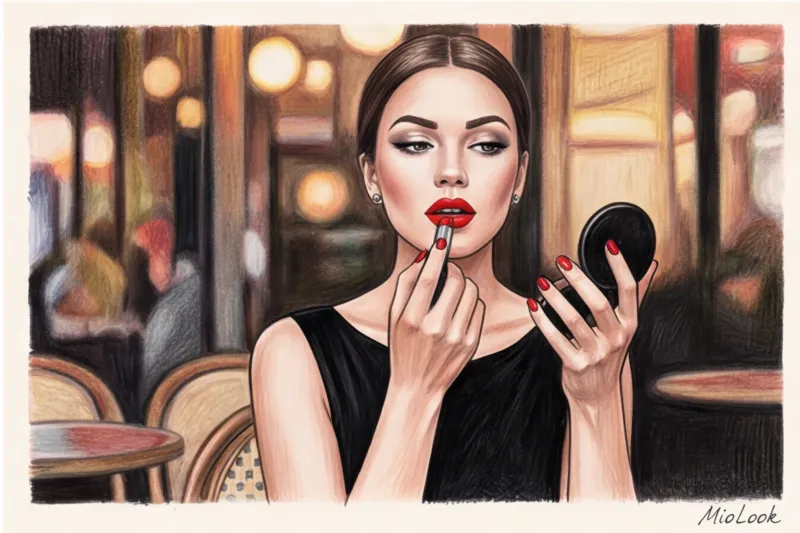
Parisian Chic: Red Lips + Minimalist Eyes
It's a classic, chosen by 70% of women. But the secret to Parisian chic lies in balance. If you're going for a bold red, your eyes should be practically bare. A lightly defined lash line with a brown pencil and one coat of mascara is enough.
The key here is to choose the right red. Cool complexions (those with a pinkish undertone) need shades with a blue base, which will also visually whiten teeth. Warm complexions will suit tomato and coral shades. And remember about eyebrows: with bright lips and clear eyes, it's the eyebrows that hold the face together. They should be well-groomed, brushed up with gel, but not overloaded with pigment.
Hollywood Standard: Smokey Eyes + Nude Lips
If red lipstick isn't your thing, shift the focus to the eyes. Modern expressive look The charcoal-black eyeshadow look is no longer created with jet-black eyeshadow. A black smoky eye with a black dress is a throwback to 2007, making the look heavy and the eyes appear small.
I always use coffee, bronze, or deep graphite shades on my clients. They create the right depth but leave a hint of airiness. Lips are then defined with the perfect nude. Important: the nude shouldn't be lighter than your skin tone, otherwise, against a black dress, you'll create a "dead lips" effect. Choose shades one shade darker than your natural lip color, with a subtle caramel or berry undertone.
Old Money Aesthetics: "Expensive" Shimmering Nude
An ideal option for daytime business dinners and formal sheath dresses, monochrome makeup involves using a single shade (peach or dusty pink) on the eyelids, apples of the cheeks, and lips. This creates an incredibly fresh look.
Here, the focus shifts to the ideal facial architecture without harsh contouring. We sculpt volume not with a gray sculptor, but with the play of light and shadow, using translucent bronzers. The face looks rested, luxurious, and prestigious.
Bright Accents and Trends: When to Break the Rules
Classic looks are beautiful, but sometimes you want something bold. Electric blue eyeliner, emerald smoky eyes, or neon accents in the inner corners of the eyes can make a brilliant statement. A black dress is the perfect backdrop for adopting runway trends like draping (accented blush on the cheekbones and temples, à la the '80s) or a scattering of rhinestones.
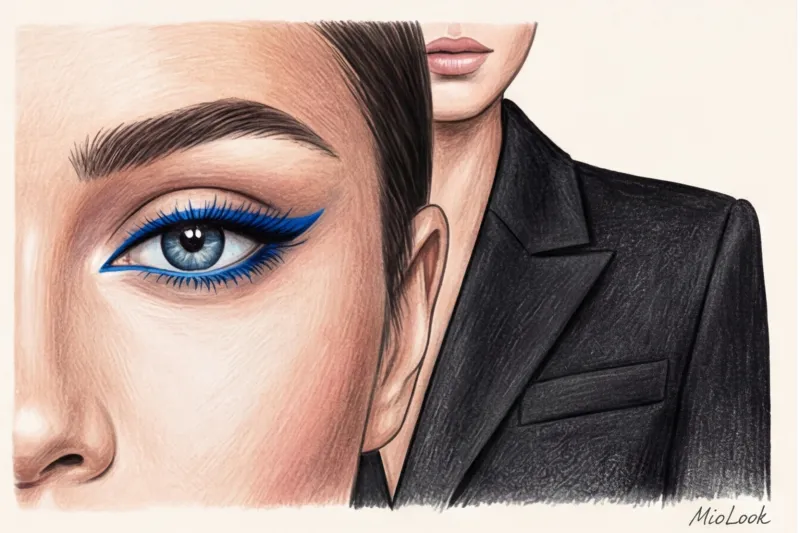
But there is one strict limitation that many people forget about: This only works when the cut of your black dress is as minimal as possible. A bold, creative makeup look requires a blank canvas.
If you're wearing a minimalist column dress or a strict jacket dress, go for neon eyeliner—it'll look like high fashion. But if your dress features lace, ruffles, intricate draping, a plunging neckline, and gold hardware, any creative facial expression will transform you into a provincial cabaret performer. A complex cut = subdued makeup. A simple cut = freedom to make bold accents.
Your perfect look starts here
Join thousands of users who look flawless every day with MioLook. Preview makeup and outfit pairings beforehand.
Get access — €0.99 onceArchitectural Mistakes: What Ruins a Black Dress Look
A case from my practice: a year ago, a client came to me to prepare for an important gala dinner. She bought a stunning silk slip dress for €800. The fabric was impeccable—flowing, thick silk. But when she came out to see me in her full look, the magic was gone. The reason was her heavy "Insta-makeup."
She used a harsh baking technique, a dense matte foundation, and graphic contouring. Against the thin, delicate silk, her face looked like a rough mask glued to her elegant body. This created a monstrous visual noise. Only makeup removal saved the situation: we washed off the dense foundation, applied a light fluid foundation, and added a touch of cream blush—and the dress took on a new meaning, and the client looked like a million bucks.
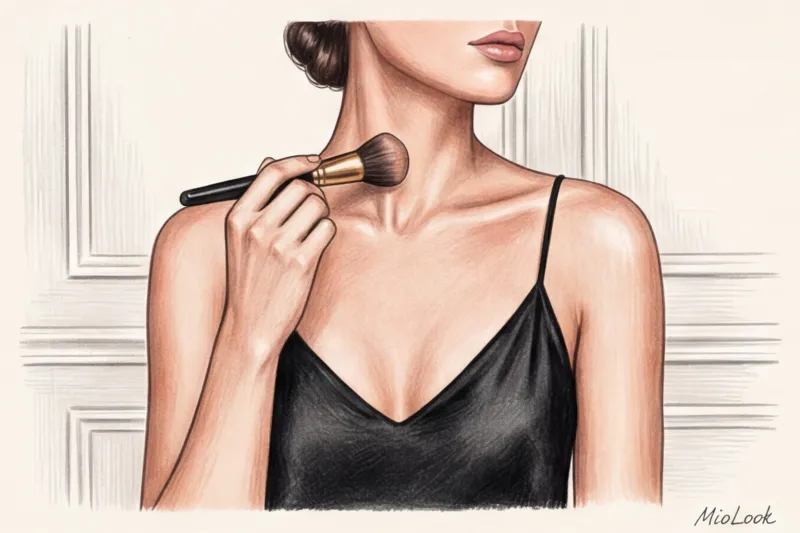
Another critical mistake is neglecting the décolleté. If your black dress has a deep neckline or is off-the-shoulder, your face shouldn't end at the jawline. The contrast between a toned face and a bare, reddened neck instantly ruins the illusion of a well-groomed complexion. Be sure to apply any remaining foundation to your neck and add a touch of liquid highlighter or bronzer to your collarbones. Your body should be as radiant as your face.
And finally, the "no blush" mistake. As I mentioned before, black drains color. If you create the perfect foundation and apply eyeliner, but forget about blush, you'll look like a cute ghost in flash photos. Blush is your best friend in all-black looks.
Stylist Checklist: Create a Look in 15 Minutes
To avoid guessing in front of the mirror, save this step-by-step guide. I use this algorithm to prepare my clients for red carpets and important corporate events.
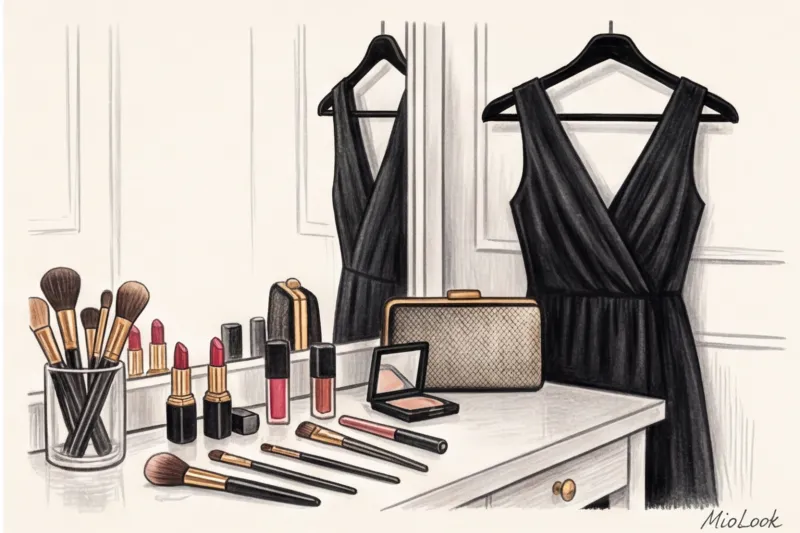
- Step 1: Evaluate the fabric and fit. Gloss or matte? Minimalism or complex draping? Answering these questions will help you understand whether you need a dewy finish and whether you can afford creative eyeliner.
- Step 2: Choose ONE focus. This rule remains unchanged. What's in the spotlight today? Red lips, expressive bronze smoky eyes, or flawless, radiant skin With a slight nude? Don't try to emphasize everything at once.
- Step 3: Synchronize your jewelry and makeup temperature. If you're wearing a chunky gold necklace, complement it with warm peach or gold highlights in your makeup. If you're choosing platinum or silver, keep your makeup cool (berry lips, a silver highlight in the inner corner of the eye).
- Step 4: Final touches for the body. Use a wide, fluffy brush with bronzer or shimmering powder to apply to exposed areas of the body: collarbones, shoulders, and décolleté.
A black dress is just an elegant frame. And the painting within that frame is your face. Don't hide behind the universal color black; use it as a tool to highlight your individuality. And remember: the most beautiful makeup is the one that complements not only the fabric but also your inner confidence.