

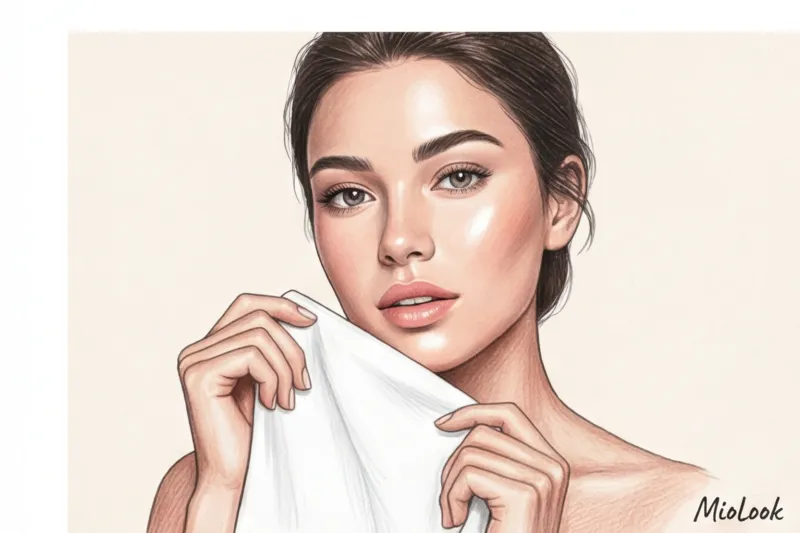
Surely this has happened to you: you put on a perfectly fitting heavy cotton shirt or a luxurious silk midi, walk up to the mirror, and... you don't recognize yourself. Your face looks tired, your skin has taken on a sallow tone, and the shadows under your eyes have suddenly doubled in depth. You instinctively reach for bronzer to "revive" your look, but all that comes out is a smudge.
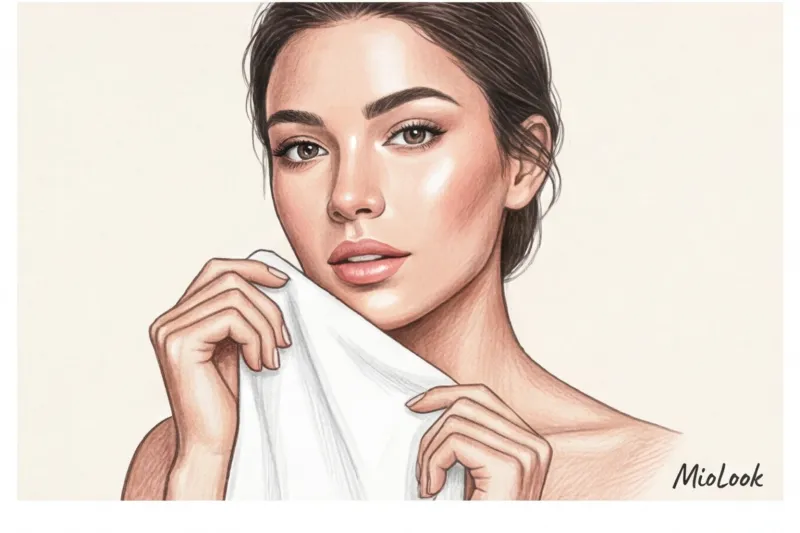
It's not that white doesn't suit you. It's a matter of physics. As a certified colorist and image consultant, I often see women avoiding light shades near their complexions. In fact, the correct makeup for a white dress or a blouse is built not on the number of layers of foundation, but on the skillful use of optical illusions. We discussed the architecture of the look in more detail in our a complete guide to pairing makeup and clothing , and today I'll share instructions on how to tame the most insidious and luxurious color in your wardrobe.
The Optical Illusion of White: Why It "Eats Up" Your Face
A crucial tool in portrait photography is the bounce board. It's a white screen that bounces light onto the model's face. Your white clothing does exactly the same thing. According to lighting principles, pure white has an LRV (Light Reflectance Value) of 80-90%. This means that almost all the light falling on your chest and shoulders is reflected directly onto your chin and the lower third of your face.
You'd think this would illuminate the skin? Yes, but there's a side effect. This harsh, reflected light "erases" the natural micro-contrasts of the face—your natural flush, lip contour, and cheekbones. The face becomes flat.
"The loss of natural contrast between skin and facial features visually ages a woman by an average of 5-7 years. Our brain subconsciously interprets high facial contrast as a sign of youth and health."
— from the findings of the Facial Contrast Study (2024, updated by Richard Russell)
When I worked backstage at cruise shows, where 80% of the wardrobe is traditionally white, we encountered this problem constantly. Young models with perfect skin looked gaunt against the crisp white linen suits. The secret to saving them lay not in a rich foundation, but in targeted restoration of facial architecture.
Makeup for a White Dress: The Key Rule of Contrast
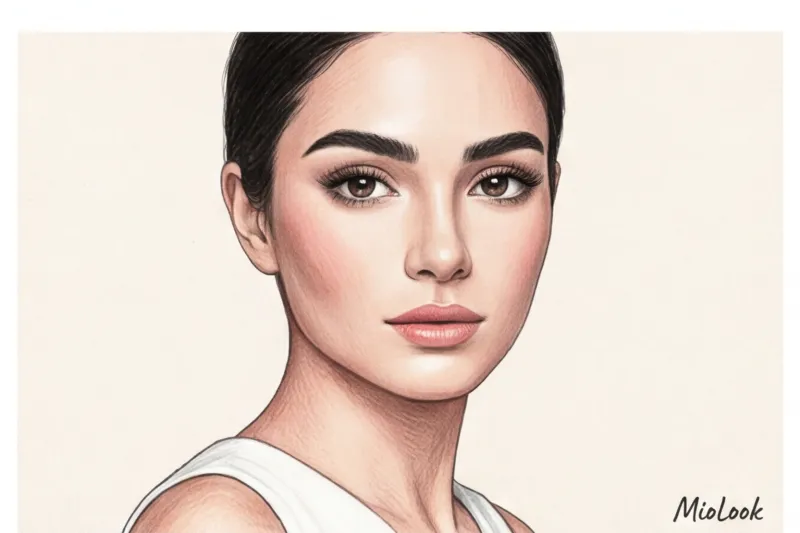
The worst thing you can do when wearing light-colored clothing is to apply makeup "as usual on the run." Casual makeup that looks great with a gray COS jumper or blue denim will simply disappear against a white canvas. Thinking ahead makeup for a white dress For an event, forget about war paint. Your goal is to meticulously restore what the white fabric has erased.
It's important to understand the difference in fabrics: optic white will require cooler, more contrasting makeup looks, while off-white or eggshell is more forgiving of warm, nude shades.
Eyebrows and eyelashes: facial architecture
Against a white background, the face loses its "frame." Therefore, eyebrows should be shaped a shade brighter and more graphic than you're used to. If you usually only use clear gel, today try a tinted tint or a thin pencil.
The second essential is the inter-lash line. No amount of voluminous eyeshadow will bring back the expressiveness of your eyes like a thin line of dark brown or graphite gel pencil blended right into the roots of your lashes. This visually thickens the lash line and brings your eyes back into your face.
Perfect tone: how to avoid the mask effect
Dull, matte skin paired with white clothing looks lifeless. Avoid full-coverage foundations. Instead of layering foundation, invest in color correction.
The white reflection underneath mercilessly emphasizes the dark circles and purple veins under the eyes. A regular light-colored concealer won't help here—it will make the bruises appear gray. Use a corrector with a pronounced peach or salmon undertone (a good product in this range will cost around €25–€45). Apply it sparingly to the inner corner of the eye, and you'll immediately see a fresher complexion.
Don't know what makeup to choose today?
MioLook's artificial intelligence will analyze your clothing and suggest ideal makeup options based on color and contrast.
The mistake almost everyone makes: bronzer instead of blush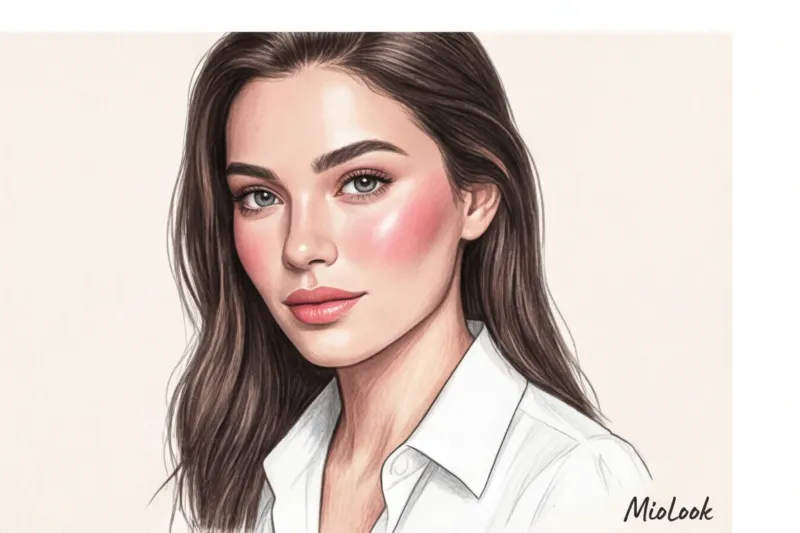
It's time to debunk the most popular myth of the summer season. Women's magazines have been telling us for years: "White accentuates your tan, so use more bronzer to avoid looking moth-eaten." This is a fatal mistake.
I had a client, Anna, who we were putting together for a minimalist photo shoot in a voluminous white Zara shirt. She was so afraid of looking pale that she generously applied terracotta bronzer to her cheekbones, forehead, and nose. In the preview photos, her face looked... dirty. Why? Because pure white is the epitome of purity, against which any artificial red or sallow pigment is perceived by the eye as a stain of dirt.
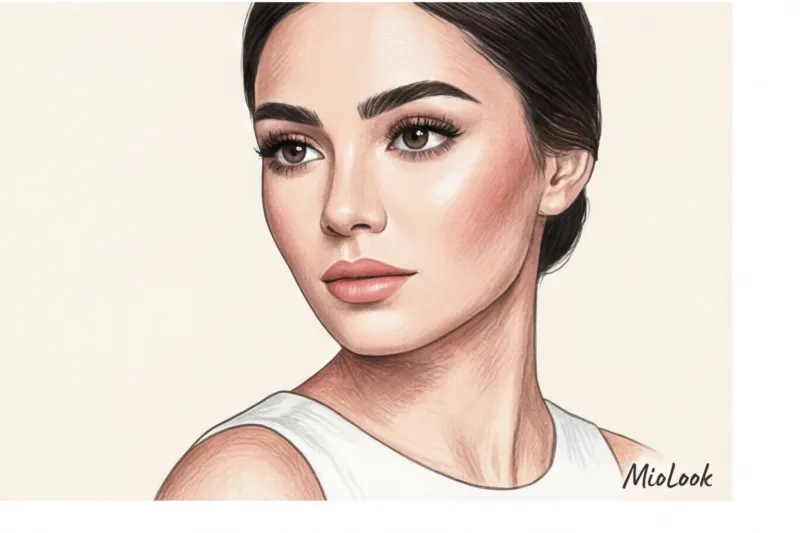
Instead of artificially darkening your skin, use blush. Cream blush in berry, cool pink, or fresh peach shades works 10 times better than any sculpting product. Apply it just above the apples of your cheeks, drawing it toward your temples – this will create a lifting effect and restore that lost freshness.
Color types and white: choosing the right makeup temperature
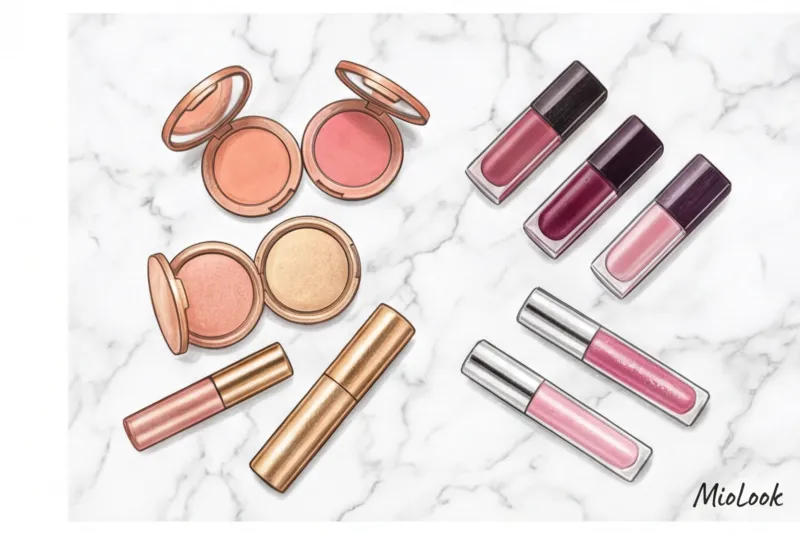
According to Johannes Itten's color theory and the law of simultaneous contrast, colors always influence each other. White is no exception. Depending on your natural skin tone, you need to "shift" the temperature of your makeup to balance your look.
Warm color types (Spring and Autumn)
If you have a warm undertone, golden hair, or freckles, pure medical white (optic white) is your worst enemy. It makes warm skin look sickly yellowish. If you do wear this color, try a warm palette: actively use peachy cream blush, golden highlighter (without large glitter), and lipsticks with warm coral or caramel undertones. This will offset the cool reflex from clothing.
Cool color types (Summer and Winter)
For cool-toned women, crisp white is incredibly flattering—it brightens the eyes and makes skin look porcelain. Your goal is to enhance this natural contrast. Put aside warm beige palettes. Your ideal choices: cool-pink blush, berry lip tints, and plum or cool taupe eyeshadow. They will create harmony with the icy undertones of white fabric.
Makeup depends on fabric: linen, silk or cotton
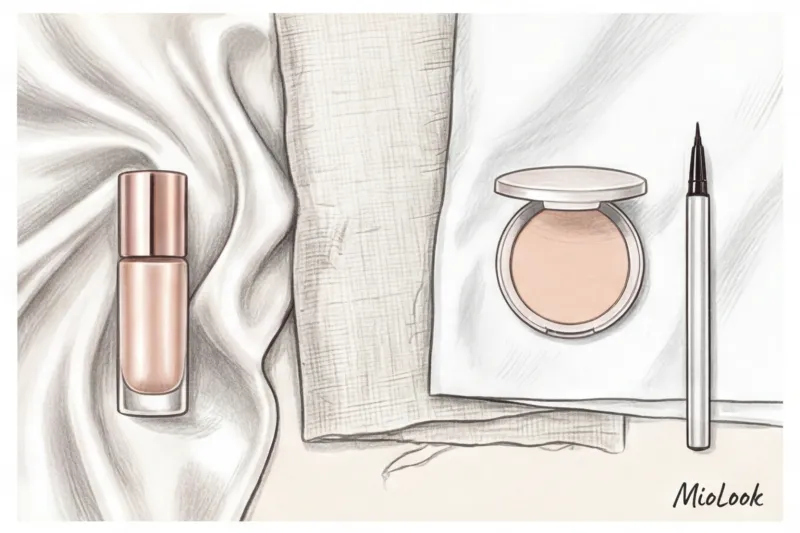
At MioLook, we often say: the brain processes the entire image. Dissonance arises when your makeup clashes with the texture of your clothing. Makeup should logically complement the fabric.
- Silk, satin and viscose (with shine): These flowing, shimmering fabrics require a similarly dewy, vibrant finish on the face. Use liquid highlighters, creamy textures, and shimmering lip glosses. A dull matte makeup looks heavy and dry against the backdrop of expensive silk.
- Linen, sewing and heavy cotton: Textured, matte and slightly rough materials of natural origin allow for a velvety, so-called raw A raw, natural skin finish. Light powder, matte or satin lipsticks, freckles, and slightly unkempt, fluffy brows are appropriate here.
- Rigid suiting fabric: If you're wearing a crisp white jacket (such as heavy crepe or wool), your makeup should match the graphic look. Add a sharp winged eyeliner or a perfectly contoured lip.
Honest comment: The trendy "glass skin" effect is completely unsuitable when paired with thick matte linen in 30-degree heat. It will look like you're simply sweating profusely. Always consider the finish of your makeup based on the appropriateness and the outside temperature.
Daytime vs. Evening Looks: From a White Shirt to a Floor-Length Dress
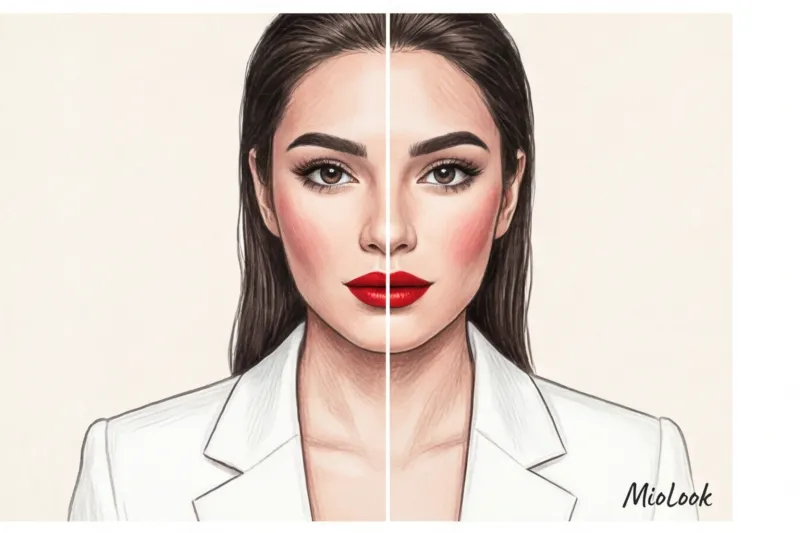
Makeup selection depends on the context. What's appropriate for casual Friday at an IT company might look dull at a gala dinner. Incidentally, we wrote about office etiquette in detail in the article about business makeup and common mistakes.
For a daytime look with a basic Uniqlo T-shirt or Massimo Dutti blouse, the key is grooming. A light BB cream, gel-set brows, curled lashes, and a tinted lip balm. Nothing else is needed.
Creating makeup for a white dress For an evening out, avoid classic black smoky eyes. When contrasted with a white outfit, thick black eyeshadow often creates an undesirable gothic effect (unless, of course, that's your original intention). The most foolproof, expensive, and elegant evening accessory to pair with a white dress is the perfect red lipstick. It steals the show, making the look complete and cinematic.
Stylist Checklist: 5 Steps to Perfect White Makeup
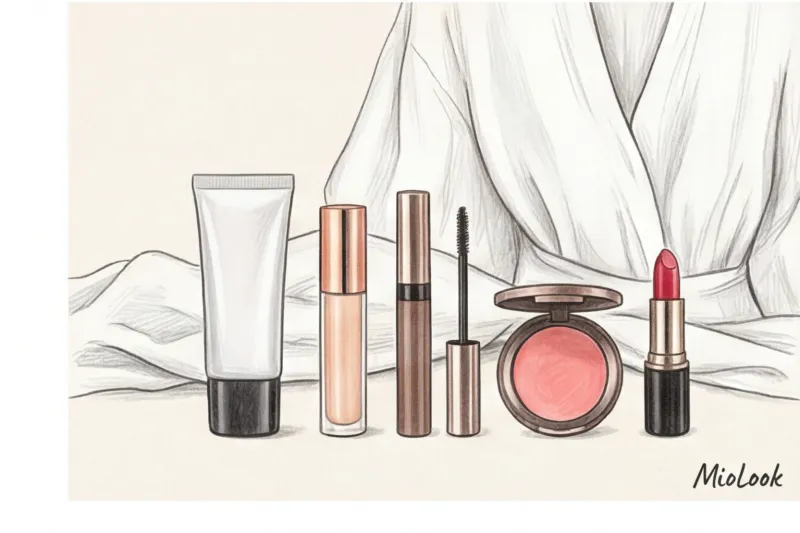
If you're running late and only have 10 minutes to get ready before heading out in white, check this checklist. Missing even one step can ruin the impression of even the most expensive outfit:
- Moisturizing and base. The skin should reflect light from within, and not lie like a dry mask.
- Overlapping color nuances. A must-do! Spot-contour bruises with peach concealer and redness around the sides of your nose.
- The return of architecture. Work on your eyebrows (a little brighter than usual) and fill in the space between your eyelashes.
- A drop of freshness. Put the bronzer aside. Apply a cool or peachy cream blush to the apples of your cheeks.
- Live lips. Avoid pale, lip-drying nudes ("foundation effect on the lips"). Use a berry tint, a translucent gloss, or a thick, bright lipstick.
Keep your whites and perfect makeup in one place.
The MioLook app will help you digitize your wardrobe and find the perfect beauty look for every item, saving you time in the morning.
Get access — €0.99 onceWhite doesn't make us look fat or pale—it just demands attention to detail. Stop hiding behind thick layers of dark powder. Restore your face's natural contrasts, add a touch of fresh blush, and your white clothes will be the perfect frame for your natural beauty.
Frequently Asked Questions
Your perfect vacation wardrobe
Pack your suitcase correctly – find out which vacation style suits you
About the author
Unlock MioLook
for €0.99
Start creating perfect outfits with artificial intelligence
Get access — €0.99 onceRelated Articles
How to Combine Makeup and Clothes: Style Secrets
In modern styling, your face is your most important accessory. Discover the secr...
Perfect Makeup for a Blue Dress: Stylist Tips
Learn how to choose the perfect makeup for a blue dress, considering not only th...
Makeup for a Red Dress: Ideas for Blondes and Brunettes
A red dress acts as a giant reflector. We'll explore common mistakes and share s...
Makeup texture and clothing fabric: how to combine
Makeup isn't just about color, it's also about the play of light. Learn how to m...