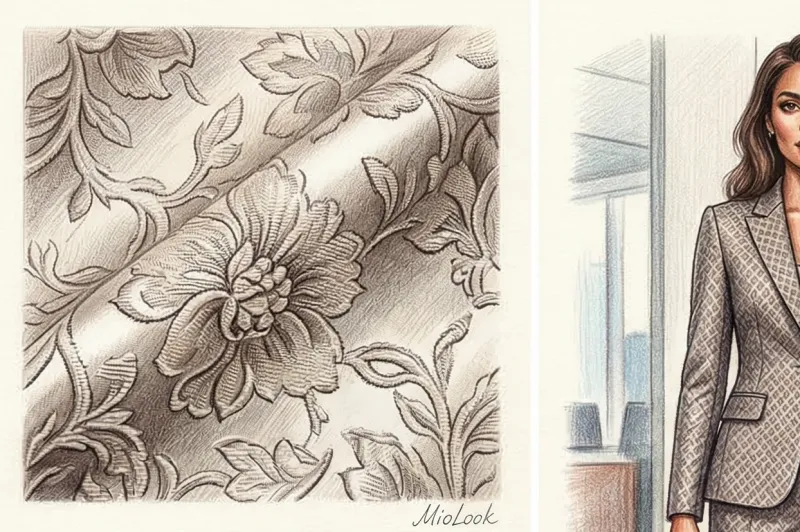
What is jacquard?
Jacquard Jacquard is a complex weaving technique in which the textured pattern is woven into the fabric itself, rather than painted on top. When understanding jacquard fabric, it's important to remember that it's not a specific fiber composition, but a specific weaving method.
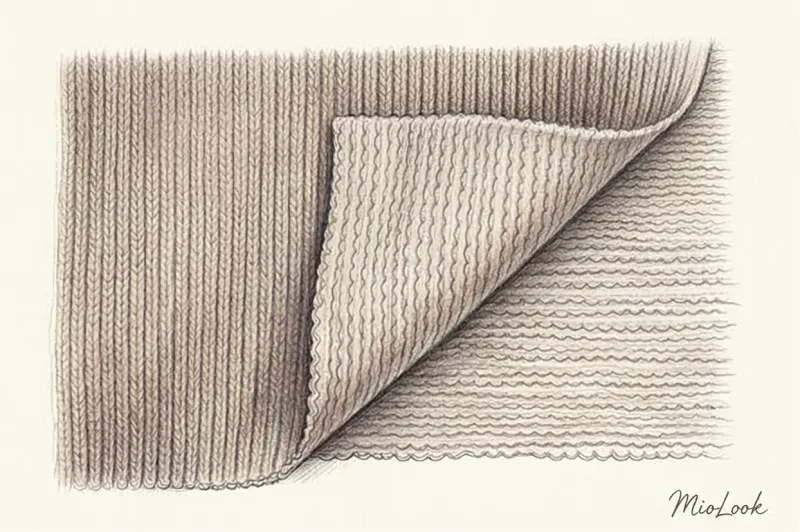
The technology was named after the French weaver Joseph-Marie Jacquard. In 1804, he invented a special punch-card machine that automated the creation of complex multicolored patterns. The main distinguishing features of jacquard fabrics are their high density, wear resistance, and pronounced relief. The pattern is often reversible: on the reverse side, the colors are inverted.
Any fibres can be used to produce jacquard: natural silk, cotton, wool, linen, as well as viscose and synthetic threads.
Main types
The characteristics of the material depend on the raw materials used. In the modern textile industry, several main types of jacquard are distinguished:
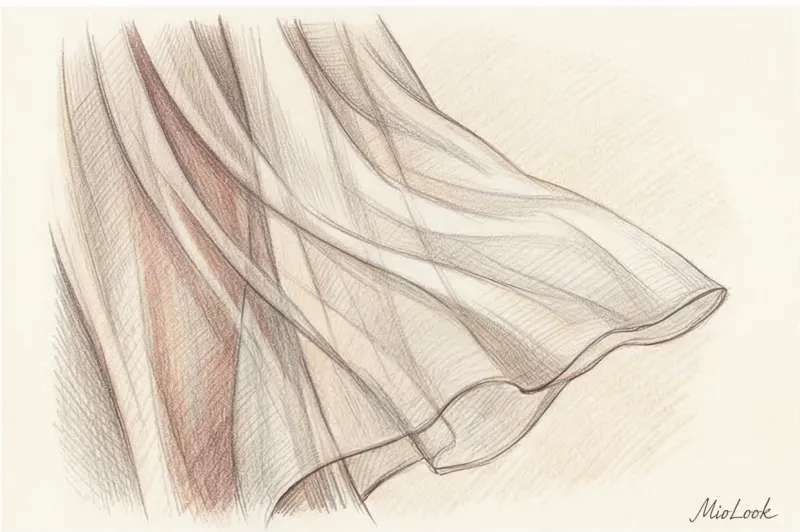
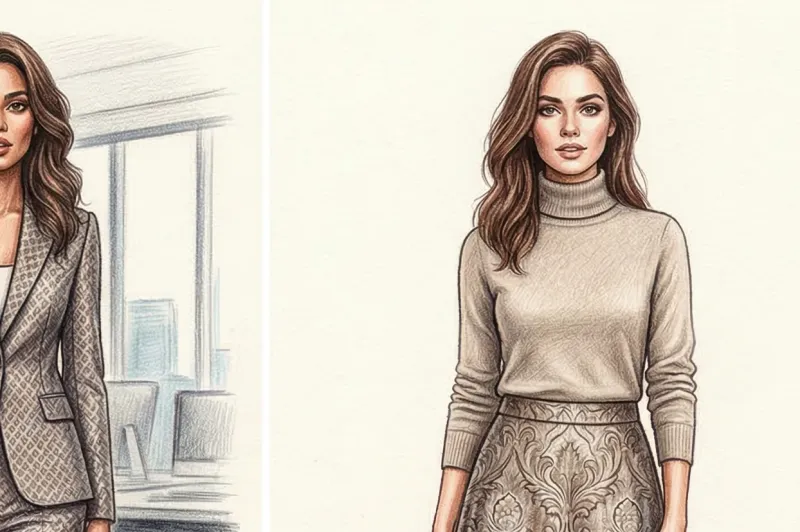
- Silk jacquard: A lightweight, flowing fabric with a delicate sheen. It's used for premium blouses, midi skirts, and lingerie-style dresses.
- Cotton jacquard: A breathable, shape-retaining material with a matte finish. It's used to create summer pantsuits, shirts, and thick sundresses.
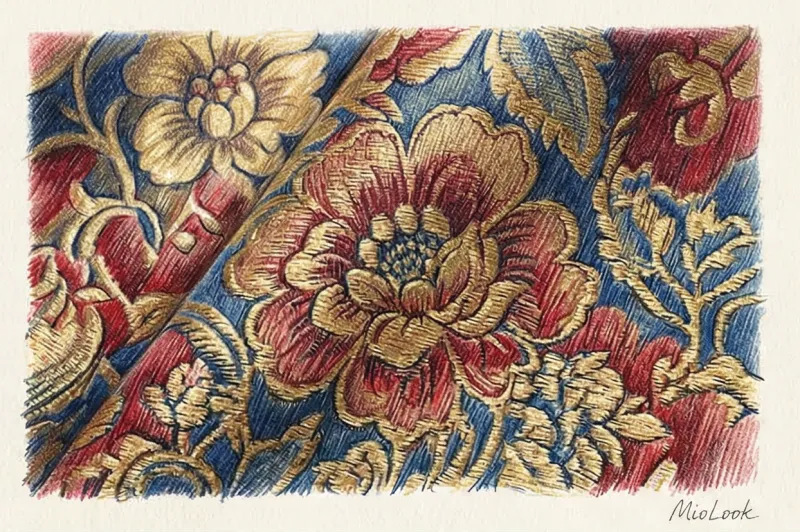
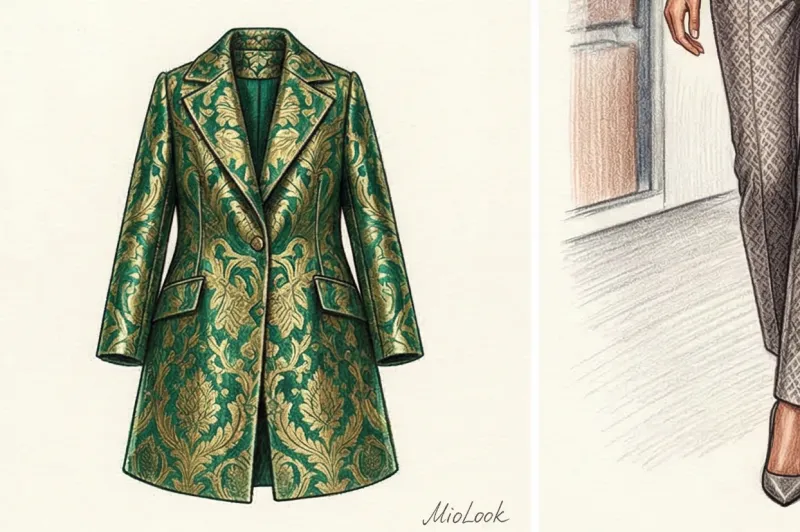
- Brocade: A heavy, shape-stable jacquard weave woven with metallic gold or silver threads. Traditionally used for evening wear, voluminous skirts, and statement jackets.
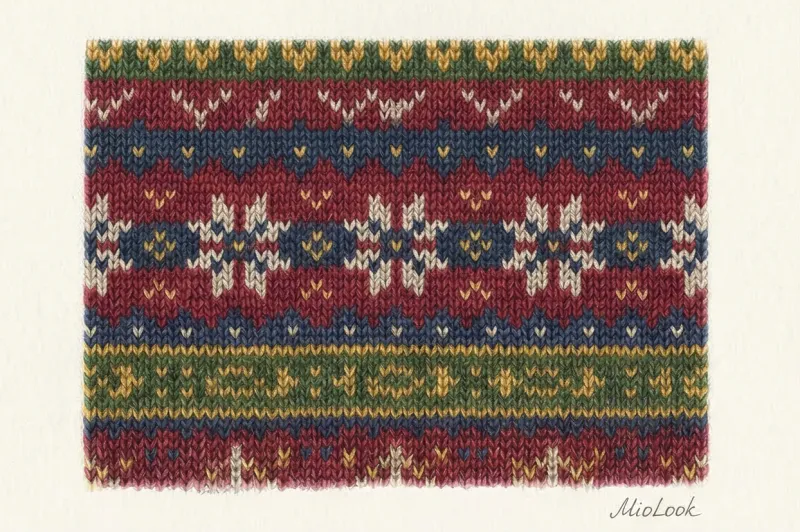
- Knitted jacquard: A stretchy knit fabric in which the pattern is formed by interlacing loops of different colors. It is used to make thick sweaters, cardigans, and winter dresses.
How to care
Jacquard care instructions depend directly on the fiber composition. Silk jacquard and brocade items require professional dry cleaning. Cotton and synthetic items can be hand-washed or machine-washed delicately at a temperature not exceeding 30°C (86°F), without vigorous wringing.
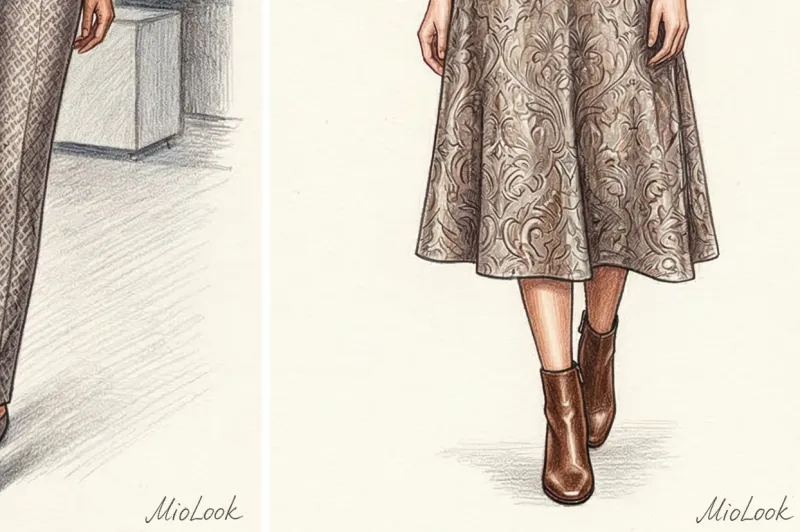
Jacquard items should not be tumble dried. They should be laid flat in the shade to prevent the heavy fabric from warping and the threads from fading in the sun.
Iron the fabric strictly from the reverse side at the lowest temperature appropriate to the material's composition. This preserves the textured pattern and prevents shiny marks from appearing on the front.