

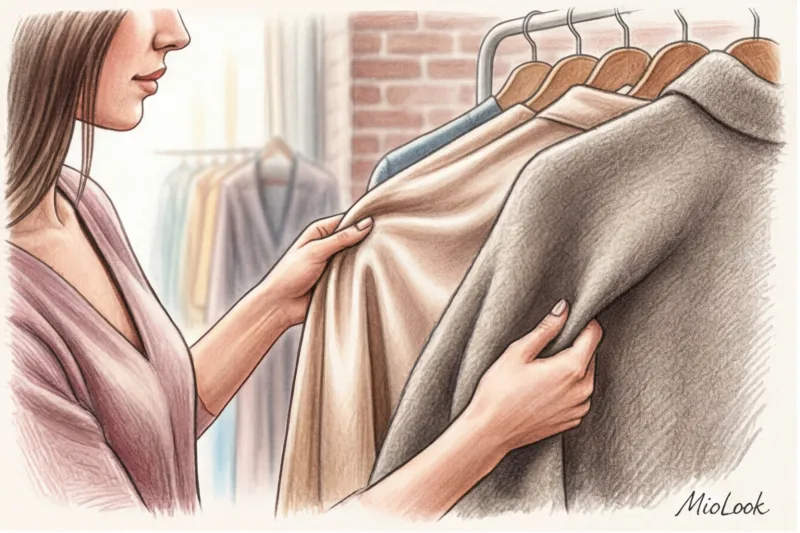
Fabric Types: Why Composition Decides Everything About Your Style
Have you ever noticed how a basic white shirt for €40 from a mass-market store sometimes fits perfectly and looks classy, while a designer piece for €400 cheapens the look and gathers into unsightly folds? The secret lies not in the magic of a famous logo, but in the small white tag securely sewn into the side seam. Studying types of fabrics , we get a real remote control over our own wardrobe. Over 12 years of working as an image consultant and colorist, I've developed an ironclad rule: brand is marketing, and ingredients are physics and reality.
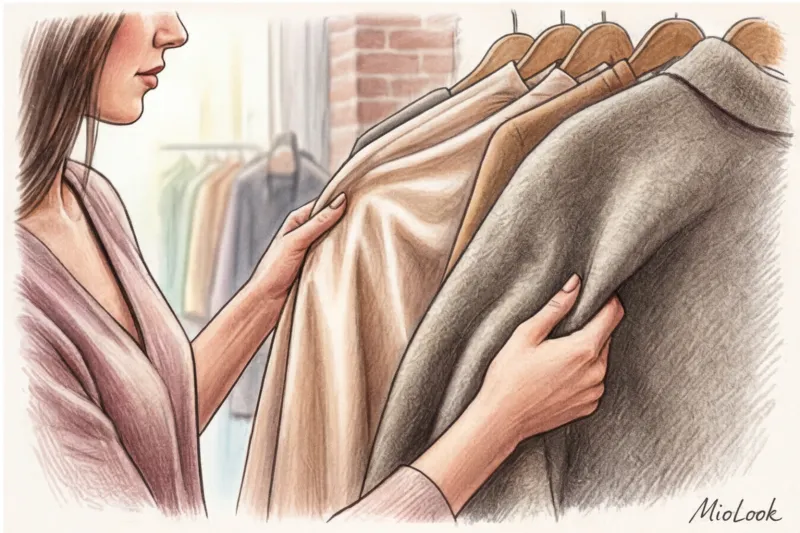
An introduction to textile literacy begins with the understanding that the label's composition should be the primary purchasing criterion. In my experience, 80% of unsuccessful purchases are not due to an ill-fitting style, as many women tend to believe, but to the wrong fabric chosen for the style.
"A pattern is just a blueprint of a building. Whether it will be a lightweight bungalow or a monumental skyscraper is determined solely by the fabric."
This is the main secret of stylists: the same pattern looks completely different in different materials. Imagine a classic double-breasted jacket. If we sew it from thick wool with added cashmere, it will create a strict, gathered silhouette that will visually elongate the figure. But if we sew the same model from thin viscose crepe, the jacket will lose its frame, the shoulder line will become soft, and the lapels will undulate, transforming the formal piece into a relaxed cardigan.
How exactly does a material control its silhouette? Three key physical properties come into play:
- Rigidity: Fabrics like organza, heavy denim, or starched cotton (poplin) hold architectural shapes perfectly. They're indispensable when you need to conceal figure flaws or create hypervolume (for example, trendy puff sleeves).
- Drapability: The ability of a fabric to form soft, heavy folds under its own weight. Dense silk or high-quality cupro will flow along the body without creating excess volume on the hips.
- Plastic: The material's ability to adapt to curves. High-density knitwear has ideal elasticity, hugging the figure without being too tight.
If you mix these two up, you'll end up with a stylistic disaster. A slip dress made of stiff taffeta will be too big and add a couple of sizes, while an architectural A-line skirt made of thin viscose will simply hang like a dull rag.
Natural vs. Synthetic: Debunking the Main Myths
There's a persistent, yet hopelessly outdated, stereotype: "natural is always good, and synthetics are absolutely evil." As an expert, I regularly encounter women who flatly refuse pants made with polyester, even if it only makes up 5% and is added solely for durability. Let's debunk these myths.
Let's start with the myth about the impeccable breathability of natural materials. Not all cotton is created equal. The finest cambric will indeed protect you from the heat, allowing your skin to breathe. But a dense cotton oxford or heavy denim at 30°C will create a greenhouse effect that no synthetic material could ever hope to achieve. Moreover, natural linen instantly absorbs moisture but takes a very long time to dry, which can be an unpleasant surprise in hot, humid climates.
The evolution of synthetics has taken a quantum leap in recent decades. Forget the "glass" blouses and squeaky dresses of the '90s that sparked with every movement and stuck to your tights. Modern high-tech fibers perform on a completely different level. Today, high-quality polyester wicks moisture better than cotton (which is why all professional sportswear is synthetic). And innovative fabrics like recycled nylon (like Econyl, used by Prada) can rival premium silk in terms of tactile feel.
The environmental aspect is another area of widespread misconception. What is truly more environmentally friendly in the long term? According to the Textile Exchange global report (2023), producing one standard cotton T-shirt requires approximately 2,700 liters of water. At the same time, a high-quality synthetic or blended item that will last you 7-10 years without losing its color or shape is far less harmful to the planet than a 100% natural but cheap long-sleeve T-shirt that will end up in a landfill after the third wash due to warped side seams.
To manage your wardrobe arsenal wisely and understand which materials work best for you, I recommend digitizing your looks. By adding your items to MioLook , you'll be able to not only collect capsules, but also analyze which fabrics most often become your favorite staples, and which ones hang in your closet for years because they wrinkle quickly or lose their shape.
Natural fabrics: an investment in comfort and status
When clients come to me with a request for an "old money" aesthetic, the first thing we do is conduct a ruthless review of the fabrics. You can buy a perfectly tailored garment, but if it's made from cheap materials, the magic will dissipate with the first touch. Natural fabrics are the foundation upon which an entire prestigious wardrobe is built. They are broadly divided into two categories: plant-based fibers (cotton, linen, hemp, nettle) and animal-based fibers (wool, silk, cashmere, alpaca).
How can you visually distinguish an expensive natural material from a mass-market one, even without touching it? The secret lies in the length of the original fiber. In the budget segment (for example, in a basic jumper for 20-30 euros), manufacturers use short fibers. At the micro level, they stick out in all directions, creating a light fuzz. This fuzz not only quickly turns into pilling but also absorbs light, making the garment's color appear flat and dull. Premium brands like Loro Piana or The Row purchase exclusively long-fiber materials. The surface of such fabric is perfectly smooth and delicately reflects light, making even the simplest beige or gray shade appear deep and multifaceted.
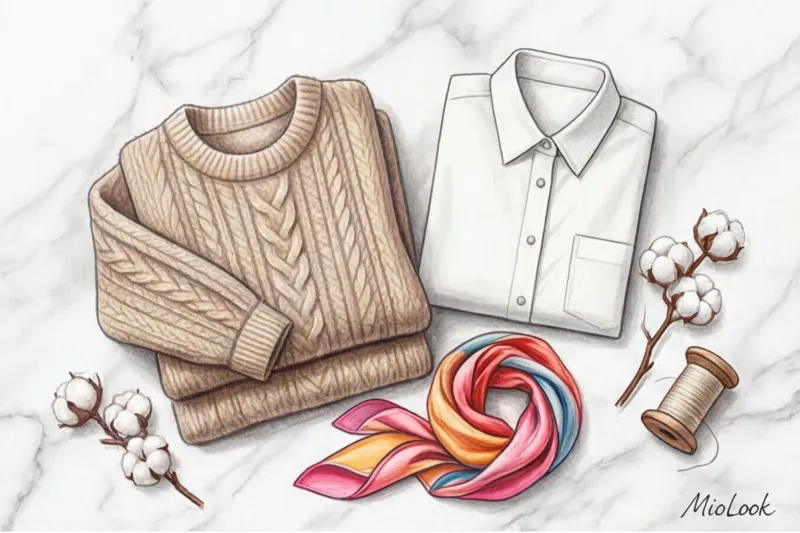
Cotton and linen: the base for the warm season
Not all cotton is created equal. If you're tired of t-shirts that fall apart at the seams after the first wash, it's time to start reading labels more carefully. Look for markings. Pima or Egyptian cotton This is the elite of the cotton world. Their fibers reach 4-5 centimeters in length (versus 1-2 cm in regular cotton), making the fabric incredibly durable, smooth, and resistant to deformation.
Deserves special attention mercerized cotton It's not a plant variety, but a processing technique. The threads are exposed to sodium hydroxide under high tension. It sounds like a chemistry lesson, but the result is stunning: the fiber changes its structure from a flat ribbon to a round tube. This fabric acquires a refined silky sheen, absorbs dye better (the colors are more vibrant), and, most importantly, shrinks virtually nothing.
Linen is often feared for its wrinkling properties. But in styling, there's a golden rule: "Linen should wrinkle expensively."
To achieve a "noble rumple" without looking like you slept in it, pay attention to the fabric's density. Thin, loose linen (less than 130 g/m²) will crumble into a fine, untidy mesh of wrinkles. Choose dense linen (180 g/m² and above)—it will form large, architectural folds that look like a designer's intention, not a sloppy mess.
Care secrets: Summer natural fabrics don't tolerate harsh treatment. Wash them at temperatures no higher than 30°C, avoid tumble drying (it destroys the cellulose fibers), and iron linen only when slightly damp at high temperatures. To avoid having to remember all these rules, I advise my clients to digitalize their closet. When adding a new item to your virtual wardrobe in MioLook Simply list the ingredients and care instructions in the product card—this will save more than one expensive shirt from accidental damage.
Wool, Cashmere, and Alpaca: Winter Wardrobe Architecture
When choosing a men's or women's business suit, you've probably noticed a tag with mysterious numbers on the sleeve: Super 100s, 120s, 150s What does this mean? It's an international index of wool fiber fineness (thickness), measured in microns. The higher the number, the finer, lighter, and silkier the thread.
- Super 100s – 120s: An ideal choice for everyday wear. The fabric is durable, holds creases well, and doesn't wrinkle easily.
- Super 150s and above: A luxurious, flowing fabric for formal wear. It feels like thick silk, but isn't suitable for everyday office wear—it's too delicate and wrinkles easily.
When it comes to cashmere The price of error is too high. During shopping sessions, I always conduct my own quick pilling test. Crumple the edge of the sweater in your palm and lightly rub the surface with a damp finger. If a thick fluff immediately rises, it's made of short fibers. Such a sweater will become covered in fluff after just a week of wear. High-quality cashmere is made from long fibers (34-36 mm), has a tight knit, and is almost completely fluff-free when new—it will only reveal its characteristic fluff after 2-3 regular washes.
Take control of your wardrobe
Tired of forgetting what you already own and buying duplicates? Try MioLook for free: Our smart AI stylist will help you digitize your closet and find the perfect combinations for every day.
Get access — €0.99 onceAlpaca and mohair Mohair is the main driver of textured trends in recent years. Its hollow pile makes garments seven times warmer than sheep's wool while being incredibly lightweight. The key to styling them is this: the voluminous, fluffy texture requires visual grounding. When wearing a voluminous mohair cardigan, pair it with smooth materials—a silk midi skirt or smooth leather trousers. The contrast in texture is what distinguishes a casual look from a professionally crafted one.
Silk: a royal texture and its vagaries
As a colorist, I love working with silk. Thanks to its triangular cross-section, silk thread acts like a prism, refracting light. Silk's smooth, satiny texture acts like a professional photographer's softbox: it illuminates the face from below, erasing signs of fatigue and giving the skin a healthy glow.
The gold standard in the industry is considered to be Mulberry silk Unlike wild silk, Mulberry threads are obtained from silkworms fed exclusively on mulberry leaves under controlled conditions. The result? A continuous thread up to 900 meters long from a single cocoon. The resulting fabric is flawlessly smooth, without knots or thickenings, with a pearly, rather than glassy, luster.
However, silk has its own severe limitations. Who should absolutely avoid shiny silk in the portrait area?
I had a telling case: a client, a top manager, bought a stunning emerald silk satin blouse for an important speech. But in the photos from the event, she looked haggard. Why? The glossy sheen of the fabric has the ability to mercilessly highlight any facial features. If you have noticeable skin imperfections—active acne, deep nasolabial folds, scars, or severe morning puffiness—the glossy silk will highlight them. In such cases, I always replace satin textures with matte silks: crepe de chine or silk chiffon. They retain the material's class but absorb light, creating a soft focus on the face.
Artificial fabrics: a technological compromise
According to McKinsey's reports on the state of the fashion industry, the premium segment is massively abandoning traditional silk in favor of materials made from recycled wood. And here we encounter a major terminological confusion, costing many women comfort and wasted money.
Let's separate the two concepts once and for all: artificial And synthetic Types of fabrics. Synthetics (polyester, acrylic, nylon) are made from petroleum byproducts—basically, plastic. Artificial fabrics, on the other hand, are created from a completely natural raw material—cellulose (from eucalyptus, pine, beech, or cotton scraps). Explaining the chemical process in simple terms: wood chips are dissolved into a thick syrup and then forced through a fine sieve. The solution hardens, turning into long, strong fibers.
This controlled production process explains why synthetic fabrics often outperform natural ones in terms of tactile feel. Nature creates cotton and linen with microscopic irregularities, while science allows us to create the perfect thread thickness and absolute smoothness. The result is a material that is cooler, more flowing, and softer against the skin. When planning your seasonal capsule wardrobe, I highly recommend adding items made from high-quality cellulose. MioLook virtual wardrobe — they will take on the maximum stylistic load thanks to their expensive texture and impeccable fit.
Viscose, cupro, tencel: a breathable alternative to silk
Viscose was the first in this family. As a certified colorist, I can say for sure: no other material can absorb pigment so deeply and vividly. An emerald or ruby color will always look richer on a viscose dress than on a cotton one, thanks to the subtle inner glow of the thread. Viscose drapes beautifully, creating a fluid, feminine silhouette.
But it has a serious drawback: when wet, viscose loses up to 50% of its strength. The fibers swell significantly in water, and if you wring a damp blouse too vigorously during the spin cycle, it will simply tear or become irreparably deformed. Furthermore, classic viscose is prone to significant shrinkage after the first wash.
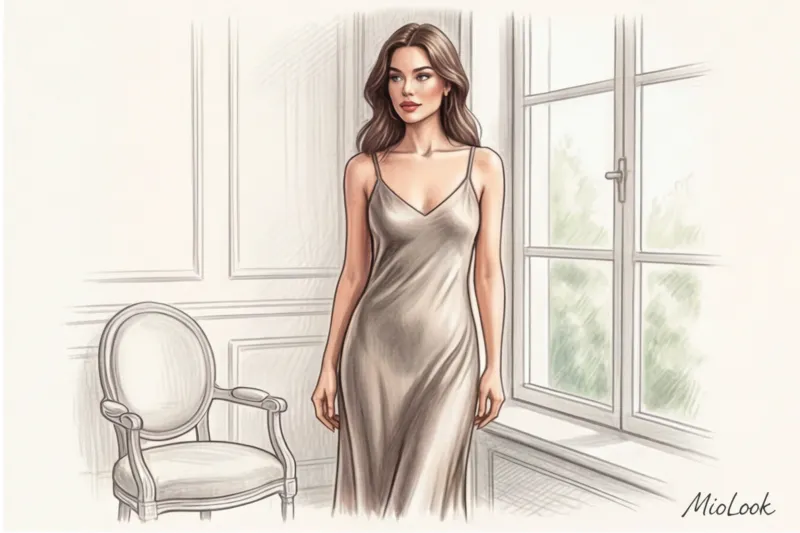
The evolution of technology has given us cupro — so-called "copper silk." It's made from the finest cotton fluff treated with a copper-ammonia solution. If you turn a high-status jacket from Max Mara, The Row, or Stella McCartney inside out and it costs over €1,000, you'll almost certainly see this on the tag. 100% cupro Why have premium brands switched to it, abandoning silk linings? Cupro is phenomenally breathable, completely static-free (goodbye, skirts clinging to tights!), and has a perfect glide. Wearing a jacket with this lining over a cotton shirt is a pure tactile pleasure; the fabric doesn't snag or tug at the sleeve.
Finally, the crowning achievement of technological progress is Tencel (aka Lyocell) This eco-friendly fabric of the future is made from eucalyptus wood in a closed-loop process: the organic solvent is reused over and over again, eliminating any release into the environment. Unlike fickle viscose, Tencel holds its shape perfectly, is virtually wrinkle-free, and has a light, elegant, peach-colored microfiber. Palazzo pants or trench coats made from dense lyocell look as classy as heavy matte silk, but are also easy to machine wash on a delicate cycle. If you're looking for a flowing dress that won't accentuate even the slightest imperfections, look for Tencel on the tag.
Synthetic fabrics: when are they really needed?
"There's no room for chemicals in my closet"—I hear this categorical phrase during almost every other wardrobe audit. And every time, I have to play devil's advocate. Modern fashion has demonized synthetics so much that many women are terrified of any non-plant-based additive on the label. However, when considering different types of fabrics, it's crucial to understand: petroleum (and most synthetic fibers are made from its derivatives) isn't always the enemy of your style.
Let's be pragmatic: in certain categories of clothing, high-quality synthetics are simply essential. Try swimming a 100-meter dash in a cotton swimsuit or running a marathon in a wool long sleeve top. For sports, we vitally need high-tech fibers that instantly wick away moisture without weighing us down. Outerwear requires membranes (remember the legendary Gore-Tex technology) that reliably protect against piercing winds and downpours. Modern swimsuits, shapewear, and down jackets wouldn't even exist in their current form without nylon and polyamide.
But as soon as synthetics enter a basic everyday wardrobe in the wrong format, they instantly and mercilessly cheapen the look. A thin polyester blouse becomes unsightly staticky, clings treacherously to tights, doesn't drape beautifully, and gives off a cheap, plasticky sheen. Moreover, there's a serious physiological catch. When preparing top managers and speakers for public speaking, I categorically forbid wearing pure synthetics. Why? A 2014 study by microbiologists from Ghent University proved that Micrococcus bacteria, responsible for the pungent and unpleasant odor of sweat, actively multiply on polyester fibers. They die on cotton or wool. Under hot stage lights or during a stressful interview, a polyester shirt will be your biggest and most unforgivable mistake.
Polyester and acrylic: how to distinguish cheap glitter from premium quality
Walk into any high-street store as the first cold weather sets in, and you'll see endless rows of fluffy, bulky sweaters priced at 30-40 euros. Check the tag: there's a 90% chance it'll say "100% acrylic." As a practicing stylist, I consider buying pure acrylic a waste of money. Acrylic is essentially foam plastic imitating wool yarn. It doesn't retain body heat at all, creating a greenhouse effect, and, worst of all, its short fibers break at the slightest friction. Such a sweater will become covered in untidy pilling after just three wears under outerwear.
With polyester, the story is far more complex and interesting. Today, the chemical industry is creating high-tech polyester (for example, microfiber or high-quality recycled polyester) that can deceive even the most experienced buyer visually and tactilely. It masterfully disguises itself as flowing crepe de chine, weightless chiffon, or dense matte silk. Mid-market brands like COS or Massimo Dutti often use it to create dresses with intricate architectural draping—natural silk simply wouldn't hold such a rigid shape.
To distinguish premium synthetics from cheap ones right in the fitting room, look at the density of the weave and how it reacts to light: high-quality material falls in heavy, elegant folds down, rather than sticking out like a bell, and never has a glassy, "doll-like" sheen.
Try MioLook
for free
Start creating perfect images with the help of artificial intelligence
Get access — €0.99 onceElastane and spandex: the secret to a perfect fit
Over the past few seasons, fashion influencers have been actively promoting a return to vintage 100% cotton denim. It sounds authentic and eco-friendly, but in practice, these jeans don't suit all body types. Stiff denim without a single gram of stretch looks great on straight-lined figures. But if you have a pronounced waist-to-hip difference, 100% cotton will stiffen up, creating an unsightly bubble at the waist and painfully digging into your stomach with every squat.
This is where elastane (also known as spandex or lycra) comes into play. These unique polyurethane fibers can stretch 5-8 times their original length and instantly return to their original shape. The golden rule for the perfect fit of basic jeans, heavy turtlenecks, or casual trousers is to have 2% to 5% elastane in the composition. This tiny amount doesn't cheapen the fabric's appearance, but ensures an anatomically correct fit, allows for free movement, and prevents stretching at the knees and elbows.
To understand exactly what percentage of elastane suits your particular figure and provides maximum comfort, I strongly recommend analyzing your closet. When adding items to MioLook , be sure to record their composition in the description. After just a couple of months of using a smart wardrobe, you'll clearly see patterns: which fabrics you wear with pleasure every day, and which pants hang on a hanger with the tag for years simply because they're impossible to breathe in after lunch.
Blended materials: the formula for the perfect item
At professional textile exhibitions like Paris's Première Vision, booths featuring 100% natural materials have long since given way to high-tech blends. Among my new clients, there's a common misconception: if the label doesn't say "pure cotton" or "pure wool," the manufacturer is trying to cut corners. In reality, a well-designed blend is the pinnacle of textile engineering, where the synergy of fibers allows for the best of both nature and science.
Natural fibers provide a premium texture, breathability, and warmth, while synthetic or artificial additives act as a hidden framework. They absorb physical strain, prevent elbows and knees from stretching, and dramatically reduce wrinkling. When sorting through wardrobes, I always give my girls specific formulas. When examining fabric types in the store, I recommend focusing on these proven formulas.
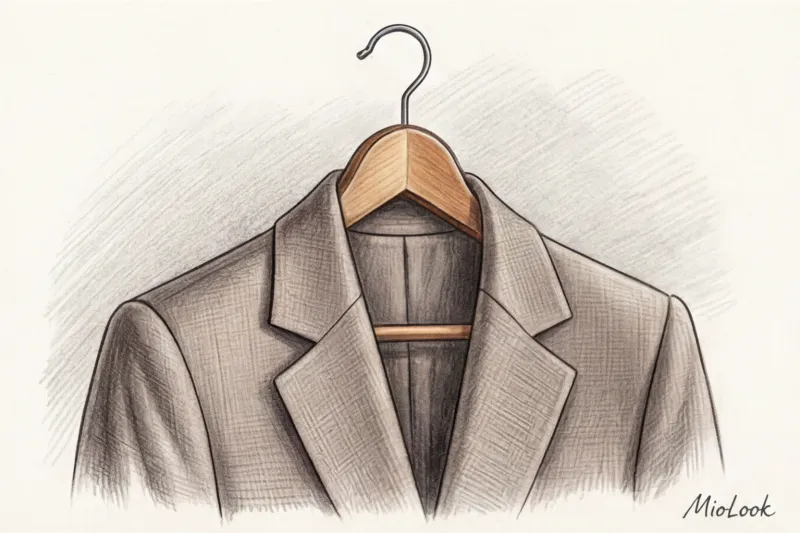
Recipe #1: A Classy and Indestructible Business Suit
If you're looking for a jacket and pants that you can wear for eight hours at the office, then drive to the car, and head out to dinner in the evening without looking like chewed-up paper, look for the classic triad: wool + silk + elastane.
The ideal ratio looks something like this: 70-80% fine wool (responsible for thermoregulation and density), 15-20% silk (provides that subtle, expensive sheen that we colorists call the "inner glow" of the material), and 2-5% elastane. The latter acts as a spring: it allows the fabric to stretch when you sit down and instantly returns to its original state when you stand up.
Recipe #2: A Basic T-Shirt That Won't Shrink After Washing
A 100% cotton T-shirt is great for sleeping, but in everyday active wear, it quickly loses its shape. The side seams curl, and the collar starts to billow after just three washes. My personal favorite for a basic T-shirt that flows beautifully over the body rather than being stiff: cotton + modal (or lyocell) + elastane.
Cotton (approximately 40-50%) provides hygroscopicity, modal (40-50%) adds incredible tactile softness and a slight cooling effect, and 5% elastane secures the neckline. A mid-range item like this will cost around €30-40, but will last three times longer than a cheaper, pure alternative.
To help you remember these proportions while shopping, I recommend using MioLook When digitizing your closet, add photos of the tags of items that fit you perfectly. This way, you'll quickly build a personal database of ideal compositions and stop wasting money on materials that don't fit you well.
Texture and Color: How Fabric Types Change Your Color Type
Many women spend years searching for "their perfect red," sifting through dozens of shades on the Pantone color wheel, completely overlooking the basic law of optics. Color doesn't exist separately from the surface it's applied to. When studying color theory, we first learn that texture controls color as much as the dye.
Let's conduct a thought experiment. That same classic carmine red (for example, the reference shade 19-1664 True Red) on smooth, flowing satin will look bold, bright, and visually a couple of shades lighter. But transfer the same pigment to dense cotton velvet, and the color instantly transforms into a deep, dramatic, almost wine-colored hue. The answer lies in physics: velvet, thanks to its nap, absorbs light rays. It makes any fabric with a similar texture appear visually darker and more saturated. Satin, on the other hand, acts like a mirror, reflecting light and adding a vibrant, sometimes even aggressive, brightness to the hue.
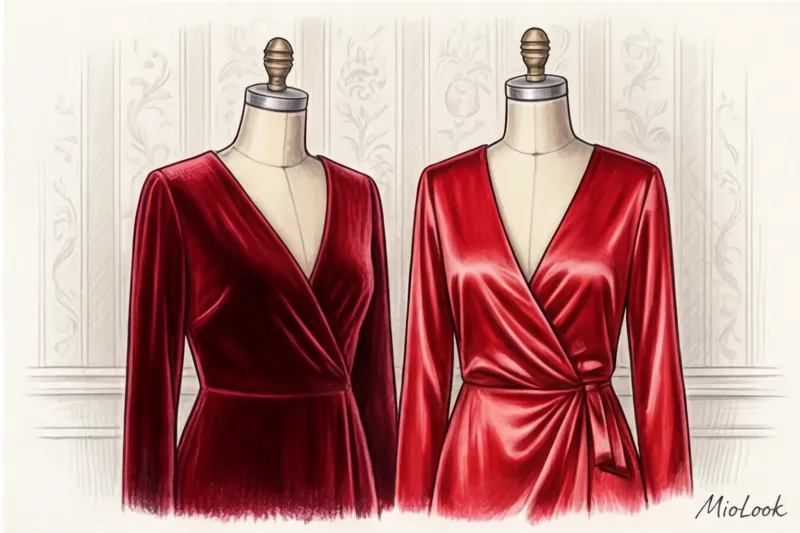
In my practice, I strictly divide wardrobe materials into two categories based on their degree of light reflection. matte include suit wool, soft suede, textured linen and heavy denim. glossy — natural and artificial silk, satin, smooth leather, and viscose with a satin weave. And this distinction is critical when it comes to the portrait area (from the bust line to the face).
This is where my favorite area of expertise as an image consultant begins. I often see clients spend 200-300 euros on luxurious silk blouses for important meetings, only to be disappointed when they look at the photos—their faces appear tired and haggard. The problem is that the harsh, reflected light from the glossy surface acts like a merciless magnifying glass. It highlights the nasolabial folds from below, accentuating even the slightest pigmentation, acne, and under-eye shadows. A shiny surface can visually "age" a face by five to seven years simply due to the way the light is refracted.
If you haven't had enough sleep, are recovering from an illness, or simply want to conceal the signs of aging, matte finishes are your savior.
A thick cashmere turtleneck, matte cotton shirt, or heavy crepe top act like a soft-focus filter on a professional camera. They gently diffuse light, visually evening out skin tone and smoothing out fine lines. Save glossy fabrics for the lower body: a silk midi skirt or smooth leather trousers will add dynamism to your look without clashing with your skin tone.
Three rules for combining textures from a colorist
- Balance rule: Never combine two glossy textures in the same casual outfit. A silk blouse calls for matte wool trousers, and a leather skirt for a calm cashmere or cotton top.
- Volume Management: Gloss visually widens, while matte finishes make you look smaller. If you want to draw attention away from wide hips, choose thick, matte fabrics (like wool gabardine) for them, and shift the subtle shine upward.
- Temperature contrast: Cool, shiny fabrics (silver satin, sequins) make pale skin look unhealthy. If you have a fair, cool complexion, warm up your face with matte, slightly fuzzy materials.
To avoid getting confused by these nuances when putting together looks, try digitizing your items. By uploading your wardrobe to MioLook , you can visually combine matte tops with glossy bottoms right on your smartphone screen, assessing the balance of textures in advance and without spending hours trying them on in front of a mirror.
Your ideal image
it begins Here
Join thousands of users who look flawless every day with MioLook.
A Dictionary of Textures: From Tweed to JacquardOne of the most common mistakes I see when sorting through my clients' online shopping carts is confusion between the raw material and the weave method. Let's take a quick refresher to clear this up once and for all. Cotton, silk, and wool—these are compound (what the thread is made of). But denim, chiffon, satin or gabardine are texture and type of weaving (how exactly these threads are intertwined).
Because of this terminological trap, women often search stores for "real denim," not realizing that denim is simply a dense twill weave, traditionally made from cotton. Or they buy a "chiffon dress" for 150 euros, expecting a luxurious coolness, only to receive a stuffy synthetic material. Why? Because chiffon is a translucent material that can be woven from both premium silk and cheap polyester. When considering fabrics while shopping, always distinguish between these two concepts.
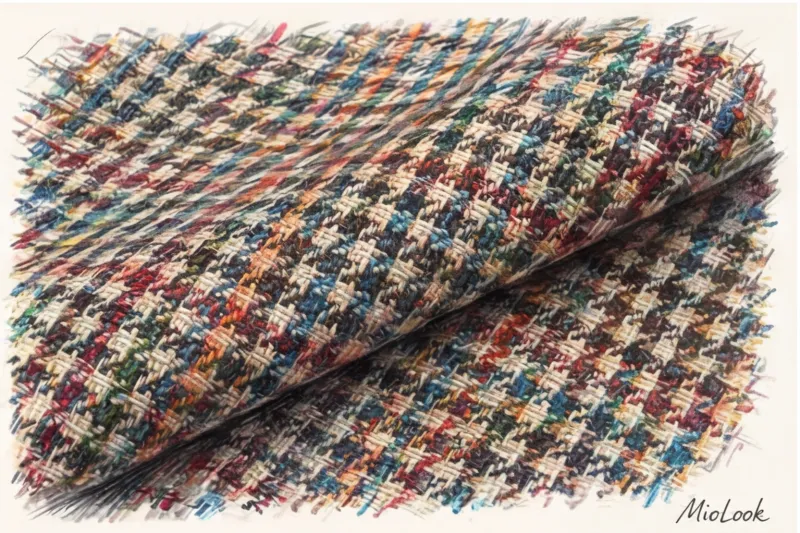
Let's move on to the status textures that shape the architecture of a business and smart-casual wardrobe:
- Gabardine: A brilliant invention by Thomas Burberry from the late 19th century, it features a distinctive fine diagonal rib. Thanks to its very tight weave, it holds its shape perfectly, repels moisture, and is virtually wrinkle-free. It's a benchmark choice for basic trench coats and crisp office suits.
- Tweed and boucle: Loose, knotty textures instantly add a touch of class to a look. However, they can add a few years to your age if worn conservatively. Modern styling calls for contrasts: tone down the pretentiousness of a tweed jacket with straight blue jeans and a basic white T-shirt.
- Jacquard: A fabric with a large woven (rather than printed) pattern. Jacquard trousers or a skirt are a powerful stylistic accent that requires a completely smooth, neutral background.
Velvet and corduroy deserve special attention. These complex, fleecy materials possess incredible light-absorbing properties, making any shade appear deeper and richer. However, they also carry a physical hazard: the dense pile inevitably adds bulk to the figure.
How can you incorporate them into the modern rhythm without looking like you're wearing a theatrical prop? Rule number one: avoid over-the-top looks. A velvet jacket looks luxurious when paired with smooth, flowing cupro (which we mentioned above) or rough, matte leather. And corduroy trousers call for a smooth, fine-knit cashmere turtleneck or a crisp poplin shirt.
Complex textures always require some air in the look. To assess in advance whether heavy corduroy clashes with loose bouclé, I strongly recommend putting together outfits in MioLook smart wardrobe features Visualization on a smartphone screen saves you from impulsive purchases of statement pieces that then hang on a hanger with the tags on for years simply because you couldn't find the right pairing.
Checklist: How to Inspect Fabrics in the Store Like a Pro Stylist
When I accompany clients shopping, they're often amazed at my speed. It takes me literally five seconds of physical contact with an item to make a decision: "Take it to the fitting room" or "Leave it on the hanger; it's a waste of 150 euros." The secret lies not in professional intuition, but in the honed, mechanical habit of testing fabrics before looking at the cut, brand, or price tag.
This basic quality audit will save you from impulse purchases that lose their shape after just one wash. Here's a step-by-step, four-step process I apply to every potential new wardrobe item.
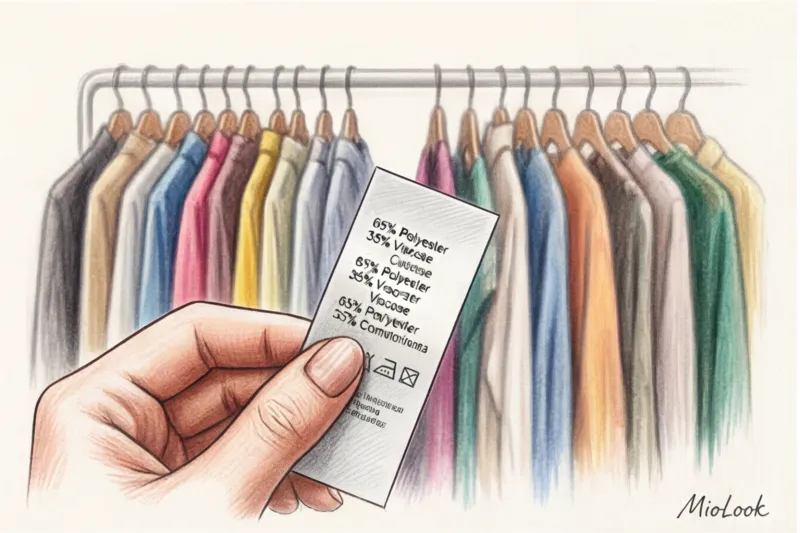
Reading Tags: What to Look for First
Many people only look for washing instructions on the label, but we're interested in the sewn-in tag in the side seam of the garment. Ingredients are always listed in descending order, from highest to lowest percentage. If the cardboard label says "Premium Silk Blend" in large print, don't get too excited. This marketing ploy often conceals 95% cheap polyester and only 5% silk, added purely for the sake of a catchy name.
My rule: if you're buying a basic item (a sweater, pants, or casual dress), look for at least 70-80% high-quality natural or synthetic fibers (wool, cotton, viscose, lyocell). Synthetics should act only as a frame, not a foundation.
Fist test
No one wants to look unkempt an hour after leaving the house. To test how the material will perform over time, pinch the hem of a shirt or the edge of a pant leg in your fist.
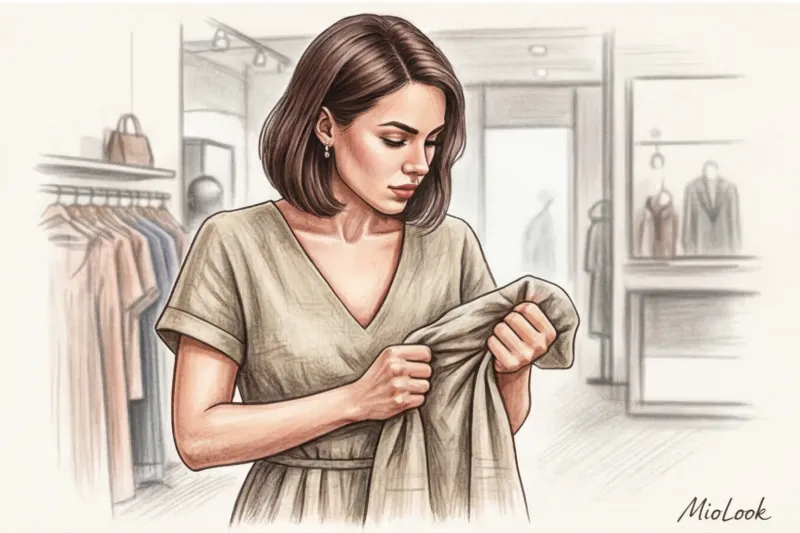
Hold the fabric firmly for exactly 10 seconds, then release. The warmth of your palm will act as a mini-iron. If the material straightens almost instantly or leaves only a slight, elegant wave, the item has passed the test. If the fabric forms a stiff, creased "accordion" with sharp angles, that's exactly what your pants will look like in the crotch and behind the knees after a morning drive.
Translucency test: assessing the density of the weave
Hold the item up to a bright studio light in the salesroom. This test mercilessly exposes manufacturers who skimp on raw materials. Naturally, we don't apply this method to intentionally translucent fabrics like chiffon or organza.
But if you look at a classic basic T-shirt, suiting fabric, or fall sweater and can clearly see the outline of your fingers through the weave, return it to the shelf. Loose knits and low thread counts guarantee that the garment will not only show through unsightly underwear, but will also become misshapen and warped at the seams after just one cycle in the washing machine.
Elasticity test: stretch and release
This step is crucial for knitwear, denim, and bodycon silhouettes. Grasp a small section of fabric (about 10 centimeters) with both hands, gently stretch it outward, and then release it quickly. High-quality fabric with the right structure and 2-5% elastane will instantly return to its original shape without any ripples.
If the fabric has "thought" itself, bubbled, and remained slightly stretched, rest assured that those jeans will hopelessly sag on your buttocks, and your turtleneck will stretch out at the elbows by the end of your first work day.
Researching materials is your personal, most reliable filter for unsuccessful purchases. When you start applying these four steps, half the selection at any store will simply cease to exist for you. You'll buy less often, but every item will work to enhance your status.
To finally take control of your style and understand which textures work best for your lifestyle, I highly recommend digitizing your closet. Upload your favorite and most problematic items to MioLook And be sure to indicate the fabric composition in the product card. After a couple of months of using the app, you'll clearly see your personalized analytics: for example, wool-blend pants have the lowest cost per wear, while 100% acrylic sweaters are just dead weight.
Ready to get started?
Try a free plan—no commitments or card required. Organize your closet today.
Get access — €0.99 onceGuide Chapters
Polyester: What is this fabric, its properties, and care instructions?
What is tweed: fabric description, types, and combination rules
Tencel (Lyocell): What is this fabric, its properties, and care
Chiffon: What is this fabric, types, properties, and care instructions?
Fleece: What is this material, the main types, and what to wear it with
What is footer: types, properties, and care of the material
What is elastane (spandex) in clothing: properties and care
Suede: What is this material, its features, and what to wear it with
Bouclé fabric: what it is, its composition and characteristics
What is corduroy: types of fabric and rules for combining
What is velvet: types of fabric and rules of combination
Merino wool: what is it, its properties, and care instructions
Jersey fabric: what it is, types of material, and care instructions
Satin: What is this fabric, its types, properties, and care instructions?
Acrylic: What is this fabric, its properties, and care instructions?
Organza: What is this fabric, its types, properties, and care
Jacquard: What is it, the main types, and care instructions
Velour: What is this fabric, its properties, and what to wear it with
Alpaca Fabric: What It Is, Types, Properties, and Care
Muslin: What is this fabric, its properties, types, and care instructions?
Crepe fabric: what it is, types, properties, and care instructions
What is nubuck: types, differences from suede, and care instructions
What is satin: types, properties, and fabric care
Membrane fabric: what it is, types and care instructions
Flannel: What is this fabric, its main types, and care instructions
What is modal: fabric properties, types, and care instructions
Mohair - what kind of material is it: types and care instructions
Angora: What is this fabric, its composition, and care instructions?
What Is Staple Fabric: Material Properties and Care Guide
Learn everything about staple fabric, from its cotton and viscose composition to its cooling properties and essential care instructions for summer garments.
What is tulle: properties, types, and styling rules
Poplin: What is this fabric, its properties, and care instructions?
Neoprene: What is this material and how to wear it?
What is guipure: its features, composition, and what to wear it with
What is gabardine: types, composition, and properties of the fabric
Drape: What is this fabric, its types, properties, and care instructions?
Batiste: What is it, its types, composition, and care instructions?
Taffeta: What is this fabric, types, properties, and care | Glossary
Cupra: What is this fabric, its properties, and care instructions?
Brocade: What is this fabric, its features, and styling rules?
Cashmere: What is this fabric, its properties, and care instructions?
What is eco-leather: properties, differences, and care instructions
Viscose: What is this fabric, types of material, and care instructions
Denim: What is this fabric, types of material, and what to wear it with
Frequently Asked Questions
What is your color type?
Find out your seasonal color type and choose clothes that highlight your natural beauty.
About the author
Unlock MioLook
for €0.99
Start creating perfect outfits with artificial intelligence
Get access — €0.99 onceRelated Articles
Wrinkle-Free Travel Clothes: No-Iron Fabrics
Forget about ironing while on vacation! Learn the secrets of choosing the perfec...
Which fabrics make you look fat: a guide to textures for a slimmer look
The same dress can be slimming or adding volume depending on the fabric. We'll e...
Types of Sweaters: How to Choose the Perfect Knitwear
Why do you look slim in one sweater and like a boxy wardrobe in another? We expl...
How to Combine Prints and Textures: Styling Secrets
An expensive item can look cheap due to the wrong surroundings. We're exploring ...