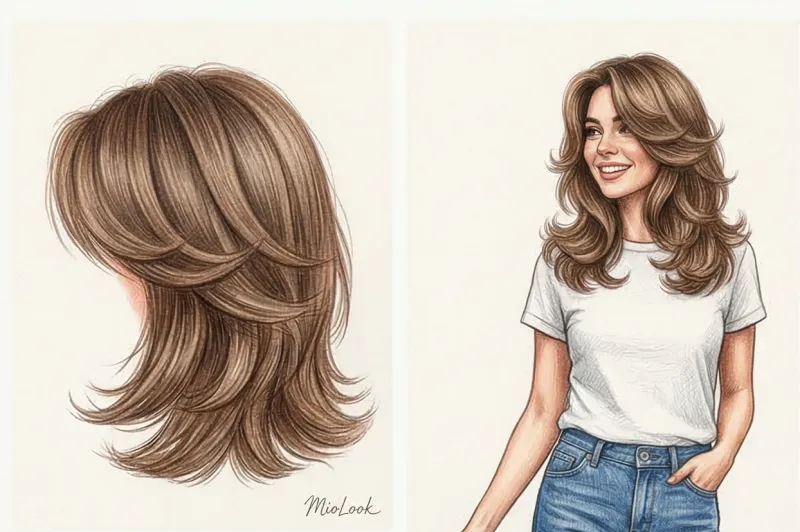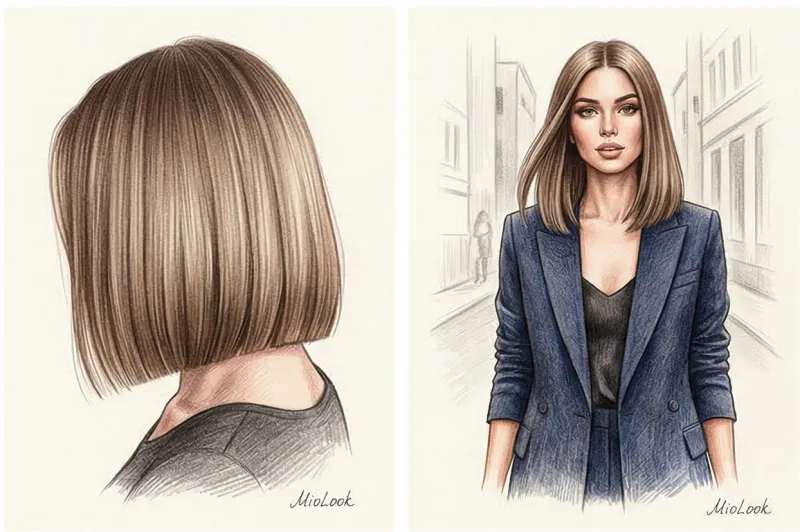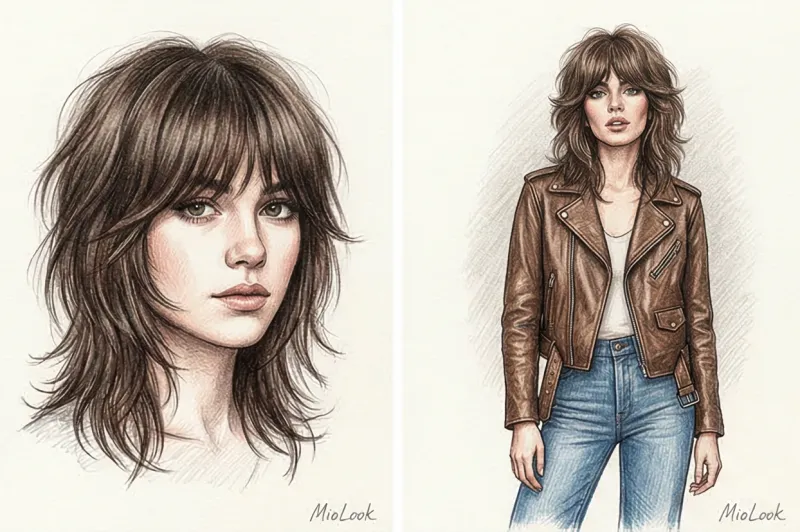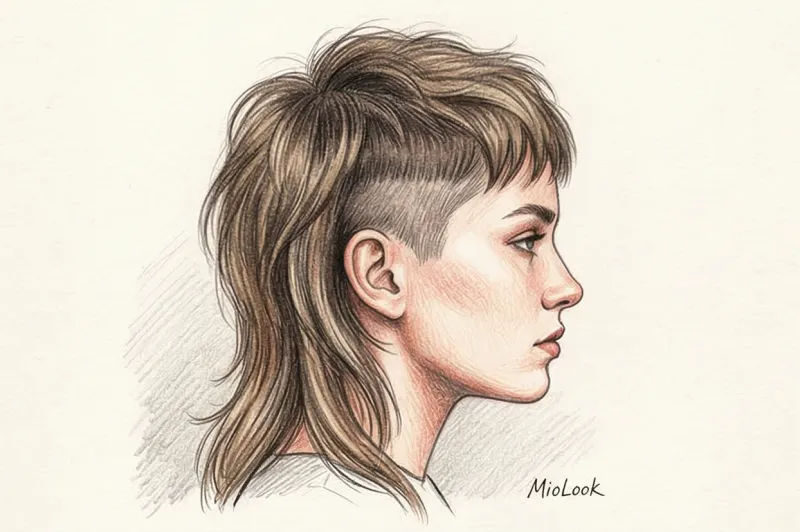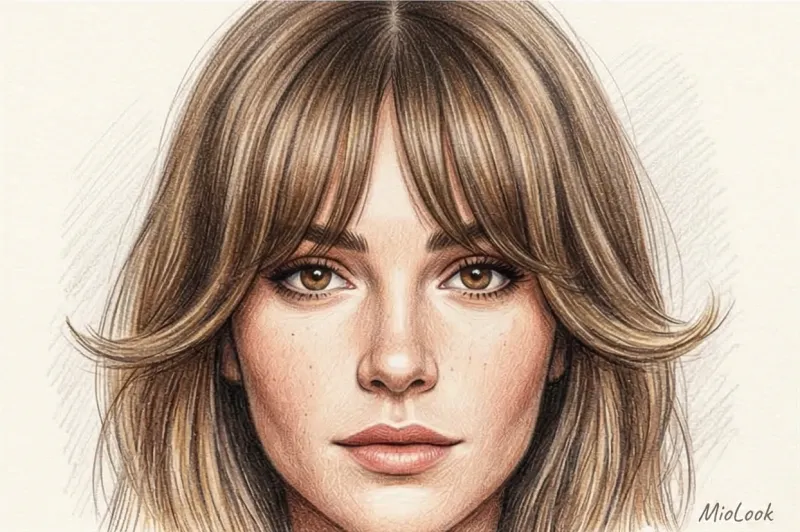
What is a curtain fringe?
Curtain bangs - This is a type of bangs, divided into two sides by a central or side parting, which smoothly frames the face, similar to drawn window curtains.
This style element became iconic in the 1960s and 1970s thanks to pop culture and film icons like Brigitte Bardot and Farrah Fawcett. The key design feature of the cut is its smooth length gradient. The center section, near the bridge of the nose or eyebrows, is cut shortest. As it moves toward the temples and cheekbones, it gradually lengthens, blending seamlessly with the rest of the hair.
Main types
The shape adapts to different types of appearance by changing the length and thickness of the cut.
- Classic. A medium-thickness cut with the longest strands reaching the cheekbones. Ideal for layered haircuts.
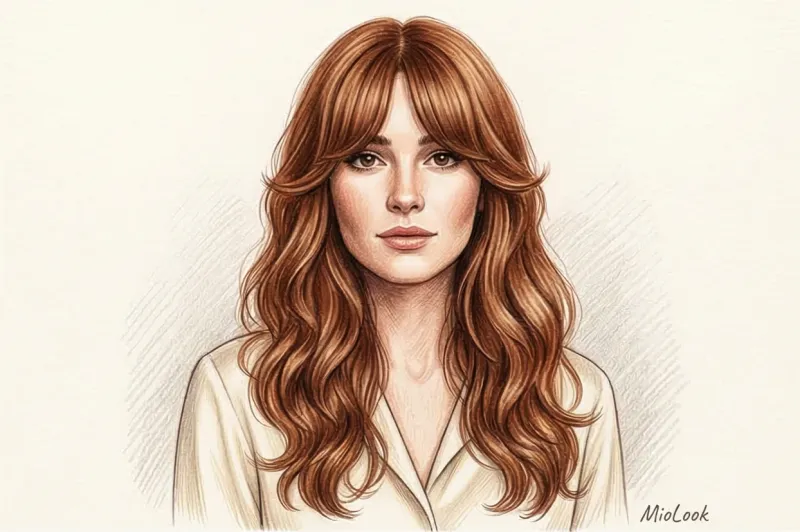
- Elongated. Starting at the cheekbones and flowing down to the chin or collarbone, it creates a subtle face-framing effect without the need for drastically shortening the strands at the forehead.
- Shortened (micro-curtain). The center strands end above the eyebrow line. It features a more graphic silhouette with a nod to retro aesthetics.
- Torn (textured). A sculpted fringe with very light ends. It looks airy and casual, perfect for fine or curly hair.
How to wear
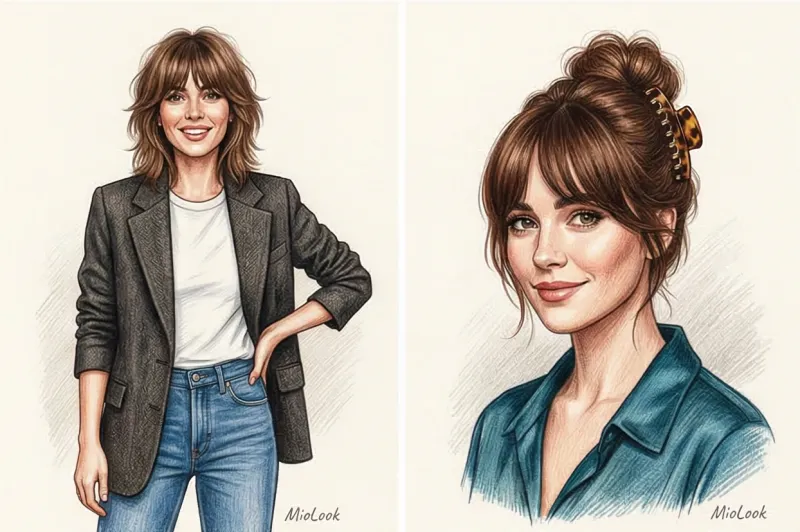
Basic styling is done with a round brush and a hair dryer. Strands are pulled away from the face to create root volume and a distinctive curl at the ends. An alternative method is to use large Velcro rollers on slightly damp hair.
This cut looks best with layered, textured haircuts like the cascade, shag, or mullet. It's also often paired with a long bob, adding movement and visual volume to the hairstyle.
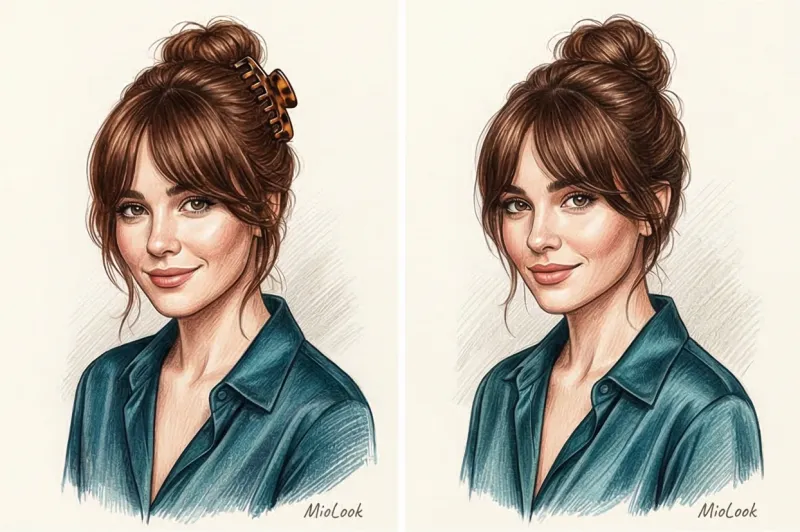
When integrated into updos—a ponytail, a messy bun, or secured with a hair clip—curtain bangs remain loose. The loose strands around the face soften the contours of the face and make a formal hairstyle appear more relaxed.