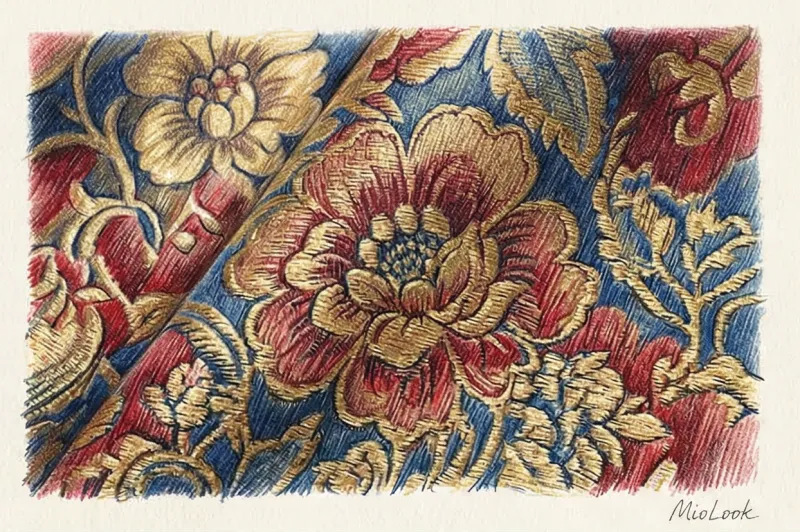
What is brocade?
Brocade — is a heavy, dense fabric with a pattern created by weaving in metallic threads.
Traditional brocade fabric has a silk base, which gives the material its characteristic luster and smoothness. Historically, the material was produced in ancient China and Byzantium. Due to the high cost of the precious metals—gold or silver—in the threads, it was used exclusively for royal and ecclesiastical vestments.
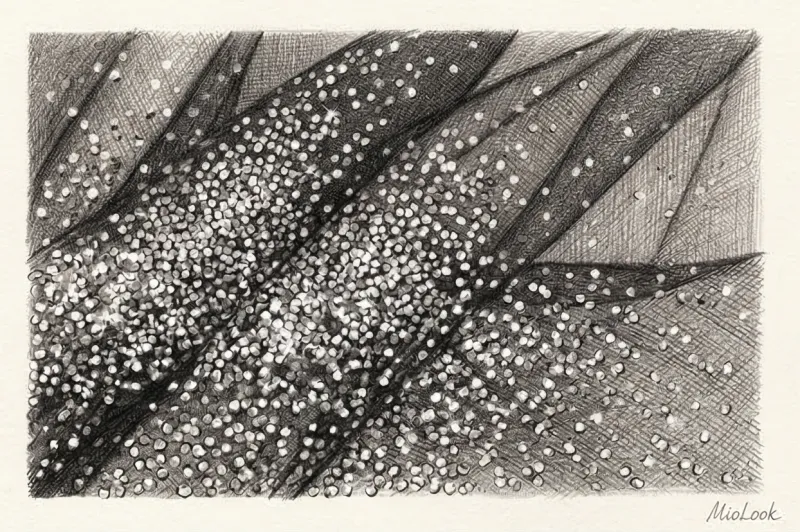
In modern textile production, precious metals have been replaced with lurex and metallized polymer threads. This has made the fabric accessible for everyday fashion and expanded its range of applications.
Distinctive features
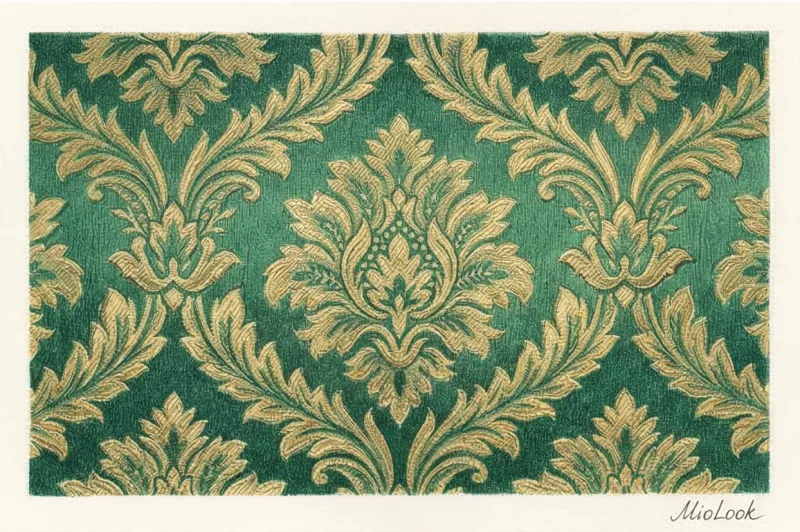
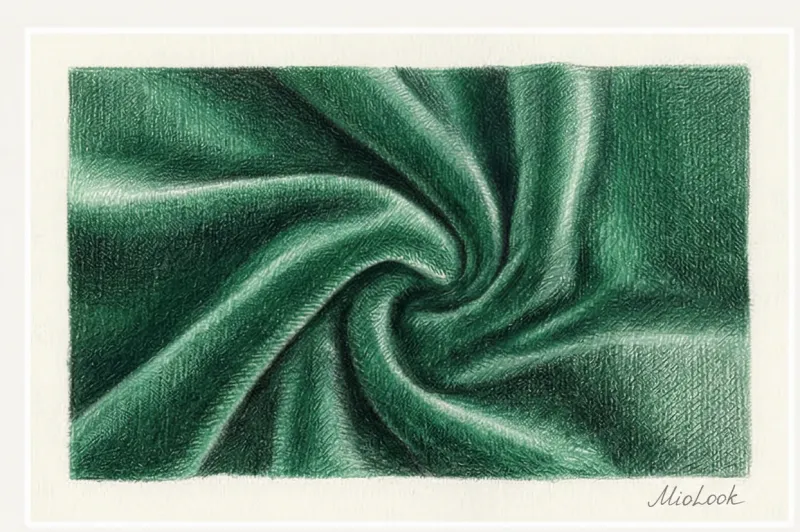
The main feature of this texture is a pronounced, raised jacquard pattern that protrudes above the smooth base surface. The material is highly rigid, holds its shape well, and forms large architectural folds without creating a flowing effect.
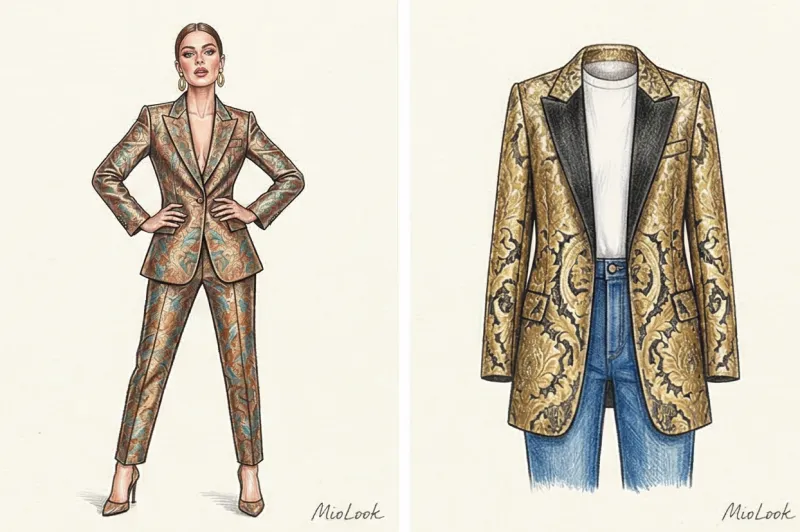
In addition to classic silk, viscose, cotton, or polyester are now used as the base for brocade. The inclusion of synthetic fibers reduces the weight of the finished product and significantly simplifies care.
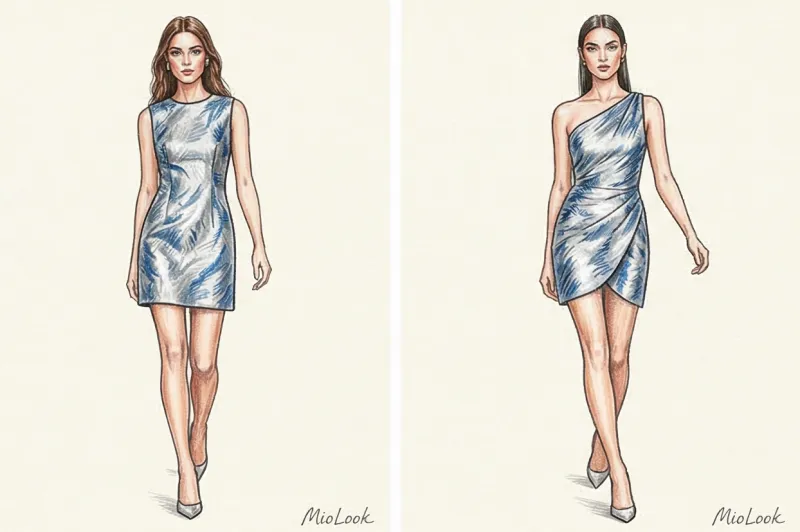
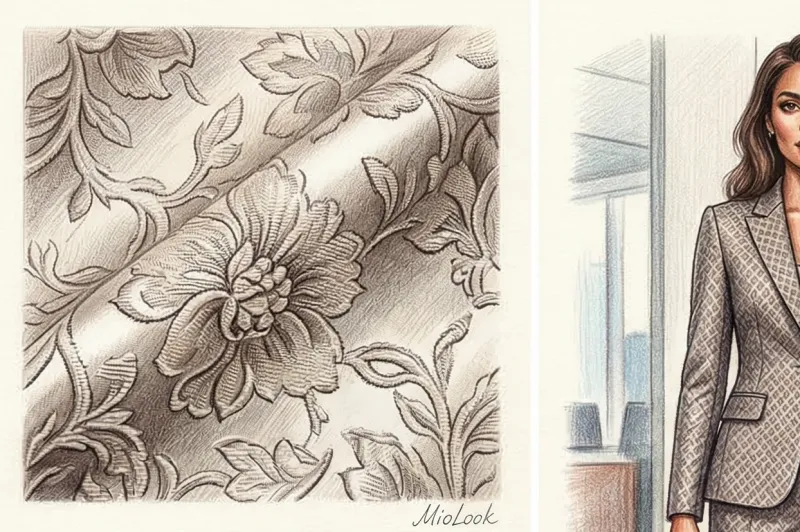
Visually, the fabric stands out with its reflective surface and metallic sheen. Traditional patterns include damask, intricate floral motifs, and strict geometric designs.
What to combine with
The main rule for styling brocade is the principle of contrasting textures. The vibrant sheen and complex textured pattern must be balanced with matte, base materials.
For everyday looks, a brocade jacket pairs harmoniously with a basic white cotton T-shirt and straight-leg blue jeans made of heavy denim. For business and evening capsule collections, pair a brocade pencil skirt with a smooth cashmere sweater or a matte silk blouse without embellishments.
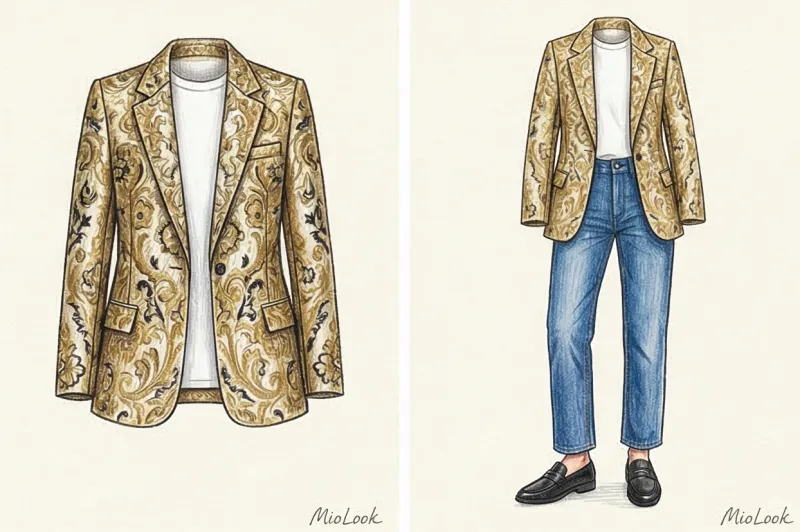
Since brocade is the main visual accent of the look, accessories should be subdued. The outfit should be complemented with minimalist shoes made of smooth matte leather, such as loafers or classic pumps, and simple jewelry without large stones.