Fashionable outerwear: a paradigm shift for the new season
Have you noticed how just a couple of years ago, social media feeds were filled with neon puffer jackets, jackets with loud logos, and vinyl raincoats, while today, most fashion influencers have switched to simple wool maxis and strict leather bombers? Fashionable outerwear is experiencing a powerful tectonic shift: we are finally tired of micro-trends that last exactly one season.

Over 14 years of working as a personal stylist, I've sorted through hundreds of wardrobes filled to the brim with spontaneous purchases. And you know what I see all the time? Items with complex, ultra-fashionable designs end up on the back shelves the fastest. Today, the era of "slow" fashion has arrived. According to the latest data from the analytical agency WGSN for 2024, demand for extravagant outerwear has fallen by 34%, while sales of high-quality basic silhouettes are breaking historical records. Shoppers are voting with their wallets: few are willing to spend €200-300 (let alone premium budgets) on a jacket that will be hopelessly outdated by next spring. Transition to conscious consumption of clothing has gone from being a fashionable term to becoming the new norm.
Speaking of macro trends this season, the most important one is the masterful balance between relaxed comfort and architectural rigor. Designers have finally figured out how to combine the coziness of oversized pieces with clear, structured lines. In practice, this looks like this: a coat can have a sharp, accentuated shoulder line (that very architecture that evokes power dressing), but at the same time, the loose fit of the garment itself allows you to effortlessly layer a thick, oversized sweater or jacket underneath. We no longer sacrifice comfort for a beautiful shape.
The endless race for new products has been replaced by the concept modern classics (modern classics). These are pieces that look relevant today, but I guarantee they won't lose their stylistic value in 5 years. A double-breasted wool maxi coat, a men's aviator jacket made of quality leather, or a minimalist trench coat. These are the kinds of pieces that make the perfect investment in your wardrobe. spring capsule or autumn basic wardrobe.
"Modern classics aren't the boring, skimpy silhouettes of the 2010s. They're clear shapes, but executed in contemporary volume and rich textures. How can you spot them in a store? The fewer complex hardware, contrasting zippers, and decorative stitching a garment has, the longer it will last in your wardrobe."
In pursuit of quality, some of my clients today are turning to upcycling for brands to remake vintage trench coats made of heavy gabardine to fit modern proportions. Before heading out shopping this season, I always recommend taking stock and digitizing your belongings. MioLook app When you can clearly see on your smartphone screen which sweaters, pants, and suits you already own, it becomes crystal clear which outerwear style will tie them together into a cohesive, stylish ensemble.
Coats that look expensive: current styles and textures
Let's be honest: a tag with a big name no longer guarantees a piece will look classy. Today, truly fashionable outerwear is defined not by a logo, but by the geometry of the cut and how the fabric behaves under pressure. Over the years, I've developed a simple rule: a coat that has a sense of airiness and a clear structure looks expensive.
If we break down contemporary collections into molecules, we see four key silhouettes that form the foundation. Straight cut with an accent shoulder line - this is a timeless classic that perfectly puts together relaxed looks (for example, with joggers and hoodies). Robe coat It remains the best solution for creating soft, enveloping lines—it forgives fluctuations in weight and looks luxurious when open. Cocoon , which we have come to love over the past five years, has not disappeared, but has become a little less exaggerated.
But the main news of the season is the triumphant return of the fitted silhouette. hourglass The hourglass shape is back on the runway thanks to collections from Prada and Alaïa. However, the modern waist is a radical departure from the skimpy styles of the 2000s: the waist is now accentuated in contrast to voluminous, graphic shoulders and a wide hem.
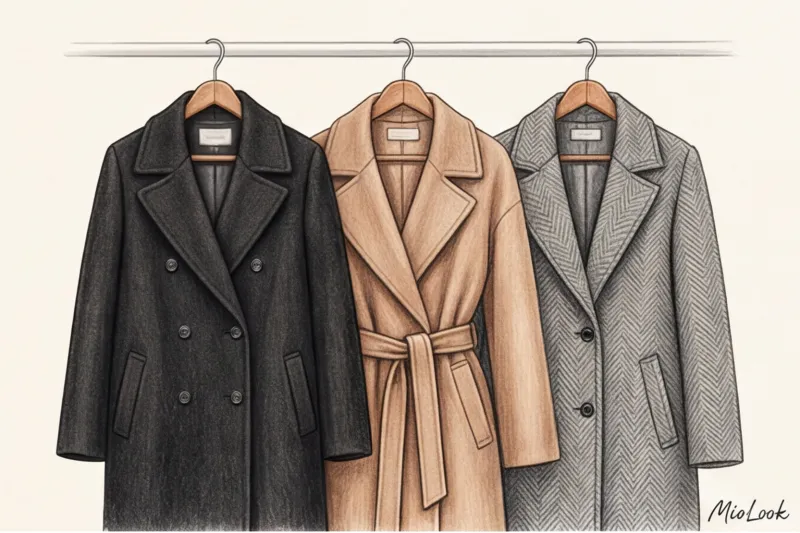
Whatever style you choose, the fit is determined by one critical element. I call it armhole rule A modern coat should fit loosely on the shoulders and in the armpit area.
"One of my clients bought a luxurious coat from an Italian brand for €1,200. It was a perfect camel, pure cashmere. But she wore it exactly twice all winter. The reason? The high, narrow armholes. Only a thin silk blouse fit under it. Whenever she put on a thick sweater, the sleeves dug into her armpits, and ugly creases appeared on her back. The coat simply hung in the closet."
To avoid this mistake, always try your coat on over the heaviest hoodie or jacket in your closet. If you can't comfortably lift your arms or hug your shoulders, it's not the right choice, even if the item looks perfect when held still.
Maxi and hyperoversized: how to wear them without looking smaller
According to the analytical agency WGSN, the maxi length will remain the dominant outerwear trend until at least 2026. A full-length coat looks incredibly cinematic, but many fear that such a length will eat into their height. The secret lies in the hemline.
The biggest mistake is choosing a coat whose hem cuts off the widest part of your calf. This visually shortens your figure. The correct maxi length should fall below mid-calf, leaving only 10-15 centimeters visible at the ankle. Pairing such a coat with heels or pointed-toe ankle boots will, on the contrary, elongate your silhouette.
When it comes to hyperoversized looks, the law of volume balance applies. If you're wearing a massive coat with wide lapels on top, the look needs to be grounded. You can go two ways:
- Contrast of proportions: Wear straight trousers or a skirt underneath, and be sure to show off the thin parts of your body - your wrists (by slightly pulling up the sleeves of your sweater) and ankles.
- Monolithicity: Pair an oversized coat with wide, matching palazzo shoes to create a unified color scheme. Just avoid round and chunky shoes, opting for sleek shapes to avoid looking boxy.
Not sure if maxi length is right for you?
Upload photos of your items to MioLook. Our AI stylist will analyze your proportions and show you which shoes and trousers will look best with your oversized coat.
Find a look in MioLookIngredients Matter: How to Read Labels
The texture of a fabric is noticeable to others in a split second. Even the most perfect cut will be ruined by the cheap sheen of polyester or the sudden appearance of pilling. To ensure your investment in a coat is worthwhile, you need to learn how to read the composition.
The foundation of a quality coat is sheep's wool. It holds its shape perfectly and provides warmth. Cashmere adds incredible softness and a classy sheen, but remember: 100% cashmere quickly wears out in areas of friction (like a bag strap). My personal favorite for winter capsules is alpaca. Alpaca fibers are hollow inside, making it almost 7 times warmer than regular wool, while also being water-repellent and virtually pilling-free.
When choosing, always focus on the 70/30 golden rule The ideal coat should contain between 70% and 80% natural fibers. The remaining 20–30% synthetics aren't the brand's attempt to save money, but a technological necessity.
A small percentage of polyamide or nylon acts as reinforcement: it prevents heavy wool fabric from stretching at the elbows and protects it from wear. However, if you see 50% or more polyester or acrylic on the tag, don't hesitate to return the item. A €150 mass-market coat made of 75% wool and 25% polyamide will last three times longer and keep you warmer than a €400 premium boutique coat with only 40% wool. The acrylic content will create a greenhouse effect: you'll sweat on the subway and instantly freeze in the wind.
Jackets: From cheeky aviators to workwear
Research by fashion platform Lyst for the last fall/winter season showed a sharp increase in searches for vintage-style leather jackets—more than 45%. These aren't just dry numbers; they reflect a profound shift in our everyday style. While a wool coat evokes classy elegance, jackets are taking on the role of stylistic balance.
Take a look at the evolution of the bomber jacket. We've completely moved on from nylon models reminiscent of American college uniforms or sports gear. Today, fashionable outerwear in this category embraces a minimalist aesthetic. Bombers in smooth matte leather, textured suede, or thick overcoat wool have become a fully fledged alternative to tailored jackets. The cut has also evolved: current styles tend toward sloping shoulders and subtle volume around the shoulder blades, making it easy to layer heavy cashmere sweaters underneath. Think of the latest collections from Prada or The Frankie Shop—clean lines, a lack of flashy hardware, and deep, refined hues.
A particular favorite in my styling practice (and a staple in most clients' wardrobes) are leather aviator jackets with shearling trim. Why have they cemented their status as a new staple? The answer lies in their impeccable play on contrasts.

An aviator jacket is a phenomenal way to tone down the formality of overly formal or overly feminine looks. Wear it over classic office trousers with pleats or a flowing silk slip dress, and the outfit instantly loses its overly formal feel, becoming relaxed yet visually sophisticated. Yes, a quality aviator jacket made of thick leather with genuine or high-tech eco-sheepskin requires a budget: in the mid-range segment, decent options start at €250, while premium brands offer models in the €600–€1,200 range. However, their 100% compatibility within a casual capsule wardrobe makes every coin worth the investment. By the way, don't rely solely on black—dark chocolate, wine, or aged graphite shades make a piece look significantly more expensive.
Chore jacket and utility style
Another phenomenon we're actively integrating into urban outfits is the triumphant return of the chore jacket and its utility aesthetic. Historically, this is the purely functional garment of British and French workers: windproof waxed cotton, large patch pockets for tools, and the signature corduroy collar that protects the neck from the piercing wind.
"Utility is no longer synonymous with sloppiness. The rough texture of waxed cotton serves as the perfect backdrop for delicate fabrics"—this is the principle I repeat to the girls at every wardrobe review.
Today, Barbour-inspired jackets (the so-called Heritage style) have become a sort of uniform for city dwellers. The secret to incorporating such a frankly utilitarian piece into the modern era is to avoid taking it literally. Never wear a work jacket with rugged trekking boots and checked flannel shirts, or you risk looking like a lumberjack. Its best companions are flowing midi skirts, elegant kitten heel ankle boots, or straight-leg light-wash jeans paired with fine cashmere.
If you're unsure whether waxed cotton will work with your current capsule, don't rush into buying. I always recommend uploading photos of your dresses and pants first. MioLook — the look-matching feature will help you virtually try on a work jacket with your other clothes and clearly show you whether the style puzzle fits together.
Down Jackets: How to Stop Looking Like a Caterpillar and Look Classy
When temperatures drop below freezing, many people feel discouraged: it seems they'll have to make a painful choice between warmth and elegance. Winter's biggest stylistic thorn is down jackets, which visually transform the figure into a multi-layered caterpillar. But let's explore how modern tailoring technologies have solved this problem.
The main hallmark of a hopelessly outdated model is dense horizontal quilting. This was technologically necessary ten years ago to prevent cheap down from settling. Modern insulation materials hold their shape perfectly on their own, so the need for "sausage quilting" has disappeared. Each horizontal line visually cuts the silhouette and adds unnecessary bulk. Today, high-status fashionable outerwear is built on solid shapes. Designers prefer completely smooth textures or large architectural quilting blocks (wide squares or sparse diagonals).

The second golden rule is to strictly avoid overly glossy materials. Shiny, thin raincoats almost always cheapen a look, evoking associations with sportswear from the early 2000s. Gloss only works in complex, avant-garde styling; in everyday wear, it mercilessly glares, highlighting even the slightest imperfections. Matte, slightly rough fabrics with added cotton or thick nylon with a soft-touch effect absorb light. It is this optical density that makes the item look noble.
Regarding proportions: how do you choose the right length if you're wearing wide palazzo pants or midi dresses? Forget mid-thigh-length puffer jackets—they break up the silhouette, creating a bulky bell shape. The ideal solution here is binary: either a cropped, voluminous jacket that falls strictly to the waist (to define the beginning of the leg line) or a full-length maxi jacket that covers at least 90% of the dress hem.
Here I'll share my signature life hack, which my clients and I always use in fitting rooms. I call it the "squat test." After putting on a down jacket, fasten all the buttons, squat down deeply, and then quickly raise your arms up. If the jacket rides up, tightens at the hips, or restricts your shoulders, leave it in the store. The right winter fit should allow freedom of movement; otherwise, in the cold, you'll feel like you're trapped in a shell.
Fill Power and Membranes: A Guide to Modern Insulation
Aesthetics are pointless if you're shivering at the bus stop. That's why we always check the inside label before paying at the checkout. The key indicator of natural down quality is its resilience, measured by the international Fill Power (FP) index.
Remember this simple rule: a rating below 600 FP is absolutely unsuitable for a full-blown winter. This is a mid-season product that will stop warming you at -5°C. For reliable urban comfort, look for ratings in the 650 to 800 FP range. These jackets are incredibly lightweight (literally weightless on your shoulders), but retain heat just as well as a heavy sheepskin coat.
Access to MioLook for €0.99 — one-time payment
Start creating your perfect looks with the help of artificial intelligence. Our smart wardrobe will help you choose the perfect down jacket length to complement your current winter outfits.
Get access — €0.99 onceHowever, natural down is far from a panacea. In humid climates, it falls far short of modern technologies. If your region experiences frequent wet snow and rain in winter (typical European winters), the natural down filling will inevitably absorb moisture, clump, and lose its insulating properties.
In this reality, I strongly recommend switching to modern, high-tech synthetic padding: Thinsulate or Primaloft. The fibers of these insulations were originally developed for the military and mountaineering industries. They don't absorb moisture, are easily machine-washable, and continue to keep you warm even when wet. A high-quality basic down jacket with a membrane and Primaloft fill will cost between €200 and €350 today, making it an exceptionally smart investment in your winter comfort.
A Stylist's Secret: Smart Layering as an Alternative to Heavy Clothing
Every November, I discourage my clients from buying polar expedition-rated down jackets for city life. It's a classic scenario: a woman is freezing in the piercing wind, goes to the store, and buys a jacket rated for -40°C for a mere €800. Then, wearing this impenetrable armor, she takes the subway or gets into a hot car and literally starts to boil. A city winter isn't like conquering Everest; it's a constant, sometimes drastic, fluctuation in temperature.
This is where the main misconception lies: we think that one huge, monolithic jacket provides the best warmth. In fact, physics works differently. A single layer of heavy clothing leaves too much free space underneath, which inevitably allows cold air to penetrate. Three thin layers, on the other hand, create reliable air pockets. It is the air trapped between the fibers of the fabric that is the best possible insulator.
In professional styling, as well as in high-tech outdoor sports, this is called the "onion" principle. The correct architecture of the look looks like this: the first layer is moisture-wicking thermal underwear (fine merino wool or high-quality synthetics), the second is a warm, dense knit (a chunky knit sweater or a fleece track jacket), and the third is a membrane that protects against wind and sleet. This is the ideal solution for those who constantly shuttle between the street, public transportation, and the office. Feeling hot? Simply unzip the top layer or remove the middle layer. You're always in control of your microclimate.
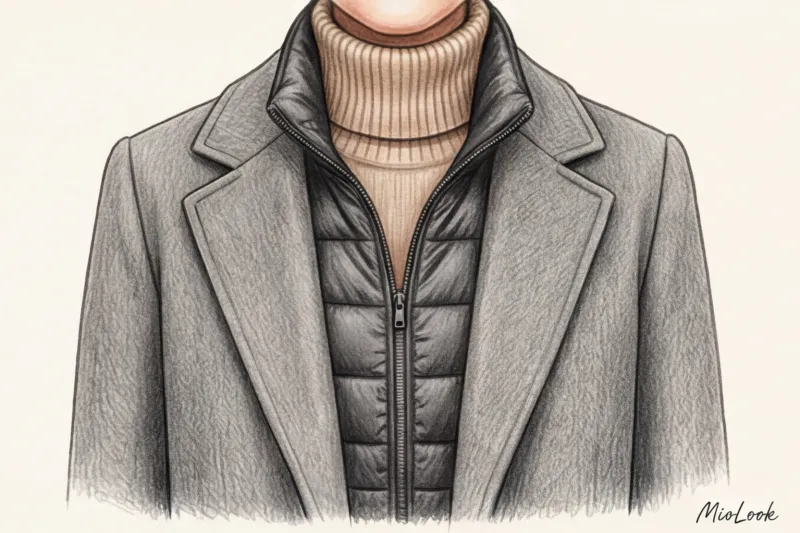
The most elegant way to apply this principle in the city is to layer ultra-thin down jackets and quilted vests under your favorite fall coat. Yes, that same straight-cut wool coat you usually tuck away in a sheath when it's freezing can be worn comfortably until deep freeze.
The key rule here: choose inner layers exclusively in matte textures and refined neutral shades (deep graphite, taupe, dark chocolate). The glossy sheen of nylon peeking out from beneath expensive wool will instantly cheapen the look. A high-quality inner layer will cost around €50–€90, but the investment is well worth it. Pay attention to the neckline—ideally, it should be V-shaped to perfectly match the coat's lapel and avoid creating visual noise in the portrait area.
Assembling such a multi-layered ensemble can be challenging when you're not used to it, especially if you've previously only worn items solo. To avoid buying unnecessary items, I strongly recommend digitizing your warmer items in advance. Upload photos of sweaters, vests, and outerwear to the "smart wardrobe" feature in MioLook The app will help you visually test different layer combinations on your smartphone screen, so you can clearly see whether you need an additional insulating layer or whether your capsule is already fully prepared for the cold.
How to choose the right outerwear style for your body type and height
I often see the same scene in the fitting room: a woman puts on a trendy, ultra-fashionable coat, only to see in the mirror how it literally "eats" her or makes her look bulky. At such moments, many people start blaming themselves and their measurements. But the problem isn't you at all, but the geometry of the cut, which clashes with your natural curves.
Over the years of practicing and analyzing the actual body architecture of hundreds of women, I've come to a strict rule: it's time to abandon the outdated "fruit" classification once and for all. Dividing bodies into "apples" and "pears" is not only frustrating but also useless when choosing outerwear. Today, professional stylists use figure vector analysis—we look for the balance of linearity (sharp angles, straight, hard lines) and roundness (soft curves, smooth transitions).
If your body type tends toward linearity, a straight-cut coat with a stiff, set-in shoulder is ideal—it will accentuate your natural grace. However, trying to dress such a figure in a soft, dropped-shoulder coat will create a hunched silhouette. Women with a more rounded figure, on the other hand, should opt for soft fabrics, flexible draping, raglan styles, and belted styles.
The devil is in the details: pocket placement, lapel width, and collar shape. These are your primary tools for optically correcting your proportions. For example, large patch pockets with flaps positioned exactly at hip level will visually add an extra 5-7 centimeters of volume to this area. If you don't want to emphasize your lower half, choose styles exclusively with diagonal or vertical welt pockets. The same goes for lapels: their width should be proportionate to your facial features and bust size. Narrow "English" collars on a fuller figure will create an imbalance, making the torso appear even bulkier, while oversized, exaggerated lapels on a petite woman will look comical.
Before investing €150 to €400 in a quality wool coat, I strongly recommend putting together a rough look. Take a photo of the coat you like and upload it to MioLook To see how a particular lapel length and shape will work with your usual trousers, skirts, and ankle boots, consider this. Often, it's the awkward hem-to-shoe fit that throws off proportions.
Nuances for Petite and Plus-Size
The most common fear of my petite clients (up to 160 cm tall) is getting lost in today's fashionable sizes. "Oversized maxi dresses will make me look even shorter"—this is the belief I hear every fall. In fact, the sleek maxi length perfectly elongates the silhouette, working as a single vertical line if you maintain two stylistic focal points.
First, create a monochromatic column of color under your outerwear (for example, a black turtleneck and black straight-leg trousers under a graphite coat). Second, use the "show off subtle areas" technique. Slightly tug or roll up the sleeves of a voluminous jacket to reveal slender wrists, or choose a hem length that leaves your ankles visible. The eye perceives the scale of your figure precisely by these delicate exposed points, and you no longer "drown" in heavy fabric.
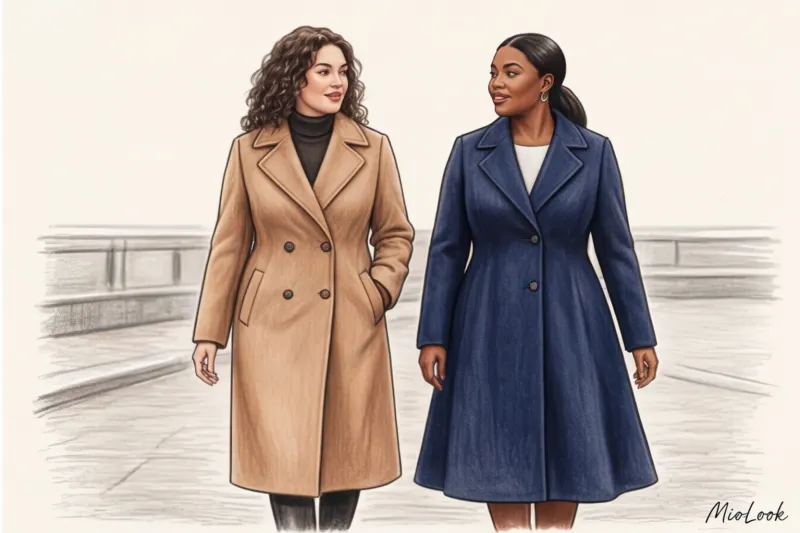
For plus-size women (size 48 and up), the main pitfall lies in texture. I recommend categorically avoiding glossy, shiny down jackets. Any shine acts as a reflector, optically expanding the surface and adding at least one extra size. Your best investments are completely matte fabrics and structured coats made of thick wool that hold their shape well.
Unlike shapeless, soft "cocoons," a well-designed robe coat defines the shoulders, and the wrap creates a diagonal line across the torso. In styling, this is the most powerful optical illusion, creating a beautiful waist and elongating the silhouette without clinging to the hips.
Your ideal image begins Here
Join thousands of users who look flawless every day with MioLook.
Get access — €0.99 onceInvesting Wisely: A Stylist's Pre-Purchase Checklist
When accompanying my clients on shopping trips, we often reach the fitting room with a pile of beautiful items, and suddenly a moment of doubt sets in: "Is this really worth the money?" To protect our budget from emotional and downright wasteful spending, I give them a strict, practical checklist. If the jacket or coat we've chosen doesn't pass even one of the three filters, we leave it in the store without the slightest regret.
The first step is some sobering math. We use the formula Cost-per-wear (CPW) To calculate the actual cost of an item, divide the checkout price by the expected number of wears. Let's compare. A basic wool coat for €350, which you'll wear 60 times per season for three years, will cost you approximately €1.90 per wear. Meanwhile, an extravagant neon down jacket for €120, which you'll wear maybe five times depending on your mood, costs €24 per wear. You'll agree that the "expensive" coat actually turns out to be a much better deal.
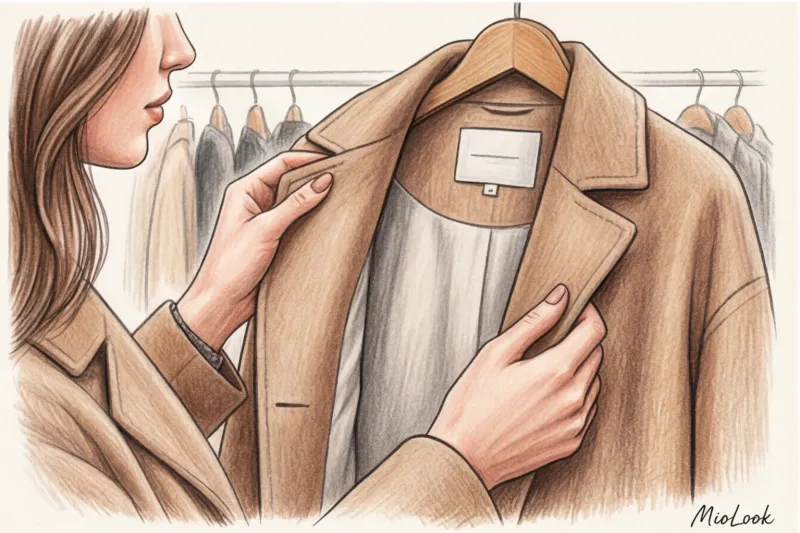
The second stage of inspection is assessing hidden quality. The true quality of a product is revealed by its reverse side. I always ask customers to carefully examine the lining. Smooth, seemingly dense polyester in outerwear is a real heat trap. Wearing such a garment, you'll sweat profusely on public transport, freeze in the icy wind, and your hair and knitwear will become mercilessly staticky. Look for viscose, cupro, or acetate on the inside tag—these materials "breathe" and provide the right microclimate. Also, test the hardware: zippers should slide smoothly, and high-quality buttons should always be sewn on a special thread "shank" to prevent the dense fabric from deforming when fastened.
The third and final filter is rule of three images Right before paying, ask yourself a specific question: "Which three outfits from my current closet will I wear this with tomorrow morning?" The key word is "current." If you need to buy the right scarf, different boots, and matching pants to make a new jacket work, it's not an investment, it's a financial drain.
To avoid having to keep your entire wardrobe in your head and guessing at the checkout, I recommend using image selection function in MioLook Right while you're shopping. Simply open the digitized database of your sweaters, jeans, and dresses and mentally connect them with a potential new purchase. If the three pieces of the puzzle fit instantly and seamlessly, feel free to pull out the map.
Conclusion: Your Outerwear Update Plan
When the first serious cold weather arrives, the most damaging thing to your budget and personal style is to panic and buy "anything warm" at a spontaneous sale. I've seen the consequences of such impulsive decisions hundreds of times: the hallway is cluttered with clothes, the closet is bursting, and there's absolutely nothing to wear in -15 degrees. As we've discussed in detail, the current fashionable outerwear finally overcame the conflict between aesthetics and utilitarianism.
Today, the perfect coat or jacket is an uncompromising blend of high technology (from climate-resistant membranes to hydrophobic treatments), premium-quality raw materials, and an architecturally precise, sleek cut. We no longer accept the cold for the sake of a beautiful silhouette, just as we refuse to look shapeless for the sake of staying warm.
But before you set out to find your perfect maxi coat or structured bomber jacket, as a stylist, I insist on one essential step: stop and conduct a ruthless audit of your current wardrobe. Take a couple of hours this weekend, take out all your fall and winter clothes from their covers, and give them a thorough inspection:
- Layer Test: Put on your bulkiest sweater under your jacket. Are there any discomfort in the armholes? Can you comfortably clasp your arms in front of you?
- Physical condition assessment: Is the wool pilled, has the down jacket filling lost volume after dry cleaning, are the fittings in good condition?
- Stylistic flexibility: Does this color and length go with at least three different outfits of your everyday clothes and basic shoes?
"What doesn't pass muster gets recycled, donated, or resold. Don't keep items that take up closet space and your confidence."
Last season, my client Elena and I had just such a look-through. It turned out she had four thin, outdated jackets hanging on her closet, with a combined cost of over €800. They offered absolutely no warmth and were visually unflattering. We sold them on a resale platform and used the proceeds to invest in a single, luxurious double-breasted coat made of a thick wool blend and a technical down jacket of the right length. Her winter looks instantly became "expensive and effortless."
To make your shopping experience as precise as possible, don't rely on your imagination while standing at the mall's shopping rails. Transform your wardrobe into a digital format. Once you've digitized your favorite sweaters, skirts, and pants, be sure to take advantage of the app's virtual try-on features. MioLook to select the ideal style of new outerwear.
Right on your smartphone screen, you can visually see how a voluminous aviator jacket will look with your wide-leg jeans, or check whether the hem of your favorite midi dress will stick out awkwardly under a cropped jacket. It's an intelligent approach that protects you from a mistake costing several hundred euros and saves you hours of tedious fittings.
Building a functional outerwear collection is a marathon, not a sprint. You don't need to buy every trend at once. Start with a basic that will cover 80% of your daily needs. Find your textures, read the ingredients carefully, and remember: the perfect piece is one that makes you feel protected and confident from the very first moment. May your winter be not only cozy but also impeccably stylish!
Guide Chapters
A thin down jacket under a coat: the secrets of layering
Think the thicker the sweater, the warmer it is? We'll debunk the myths and explain how to pair outerwear for perfect warmth and style.
What to wear with a women's bomber jacket: from sporty to casual chic
The classic bomber jacket is no longer just a sportswear item. We explore current silhouettes and learn how to create stylish everyday looks.
Basic Outerwear Wardrobe: How to Put Together a Capsule
How many jackets and coats does a modern woman really need? We break down the math behind style and assemble a functional outerwear capsule for years to come.
What to wear with a women's leather jacket: stylist tips
The era of skinny jackets is over. Learn how to choose the perfect biker jacket and what to pair it with this season to create a luxurious and modern look.
Tips for wearing a women's quilted jacket
How to wear a quilted jacket without looking like you're heading to the dacha? We'll explore the secrets of luxurious styling from a personal shopper.
What to wear with a faux fur coat: stylist tips
A modern faux fur coat is a sophisticated and stylish wardrobe staple. Learn how to style faux fur for a luxurious and modern look.
How to match a hat to a coat: combination rules
A cheap hat can ruin even the most expensive coat. We'll explore a method for balancing textures and volumes to create a flawless winter look.
How to Wear a Long Coat: Stylish Everyday Looks
A long wool coat is the most practical investment of the season. We'll tell you how to incorporate the maxi length into your wardrobe and create comfortable looks for the city.
Outerwear for plus-size women: slimming styles
Forget shapeless hoodies! Learn how the right cut and fabric selection can help you find the perfect outerwear for your plus-size figure.
How to Choose a Coat for Short Women: The Best Styles
Is it true that maxi dresses are unsuitable for those under 160 cm tall? We discussed with a personal stylist which outerwear styles are ideal for petite figures.
How to Choose a Basic Coat: Fabric, Cut, and Length
Buying outerwear is an architectural challenge. We'll show you how to find the perfect coat for your actual closet, not just a Pinterest board.
How to choose a women's winter down jacket: stylist tips
A heavy jacket doesn't guarantee protection from the cold. Learn the secrets of choosing the perfect down jacket: we'll explore the best fillers and trending styles.
What shoes to wear with a down jacket: stylist's advice
Winter style is almost never about the jacket itself. We learn to shape our bodies with well-chosen footwear.
How to Wear a Beige Trench Coat: Modern Looks and Silhouettes
A beige coat isn't a tame staple, but a mathematically refined addition to a modern wardrobe. We explore trending styles and stylish combinations.
What to wear with a women's aviator sheepskin coat: stylist tips
How to wear a voluminous aviator shearling coat without looking bulky? We explore the secrets of the perfect cut and stylish winter combinations from an image consultant.