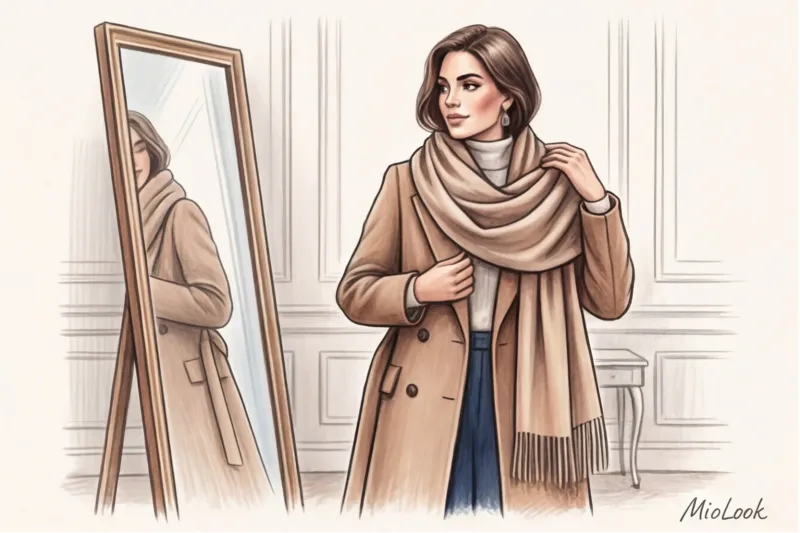
One of my clients, Anna, came to me for a consultation last winter in utter despair. She'd bought a huge, thick jacket weighing almost two kilograms at a popular high-street store, but she was still freezing to the bone while waiting for a taxi. When we replaced this heavy "armor" with a lightweight 400-gram down jacket, she couldn't believe her sensations—for the first time, she felt truly warm in the cold. In my 12 years as a stylist, I regularly see women fall victim to the same optical illusion: we confuse a garment's weight with its ability to keep us warm. When we think about... How to choose a women's down jacket for winter , most customers look only at the color and style, forgetting that modern outerwear is about engineering and the physics of heat transfer.
We've covered the evolution of silhouettes and why fashion is moving away from oversized silhouettes in more detail in our complete guide. Fashionable outerwear: current styles and trends Today, I propose exploring the anatomy of warmth. We'll combine architectural tailoring with modern insulation technologies, so you can stop wasting money on things that don't keep you warm once and for all.
The Weight Myth: Why a Heavy Down Jacket Won't Protect You from the Cold
Let's dispel the biggest stereotype: a jacket's weight has no correlation to its thermal insulation. If a mass-market down jacket for €60 feels heavy on your shoulders, it's likely made of cheap, compressed synthetic padding on the inside and thick, low-quality polyester on the outside. It's not the material itself that keeps us warm. It's the air it traps that keeps us warm.
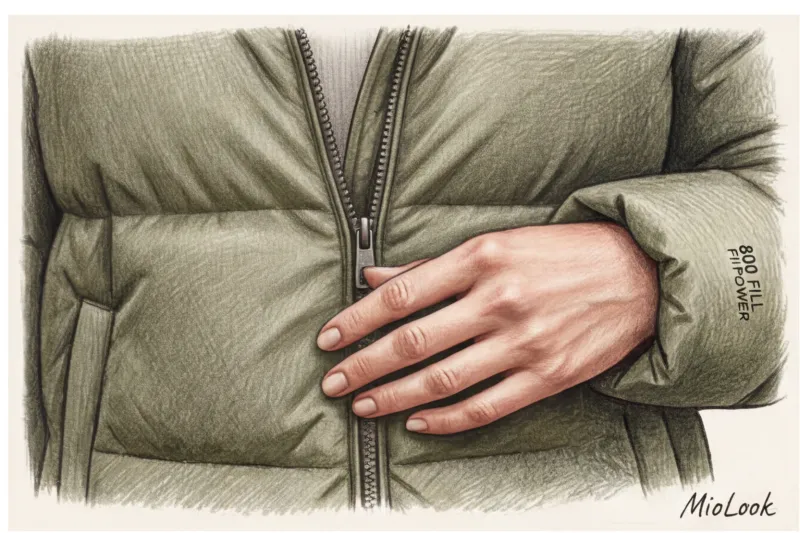
This is where the main indicator of quality comes into play, which is kept silent by sales consultants of basic brands - Fill Power (FP) This is the fill power index of down, which indicates how much volume in cubic inches one ounce of insulation occupies.
- FP 500–550: Basic urban level. Suitable for mild winters and running from the car to the office (down to -5°C).
- FP 600–700: An excellent choice for cold urban winters (down to -15°C). Optimal price-quality ratio.
- FP 800 and above Premium gear for extreme cold. This jacket is virtually weightless yet will keep you warm even at -30°C.
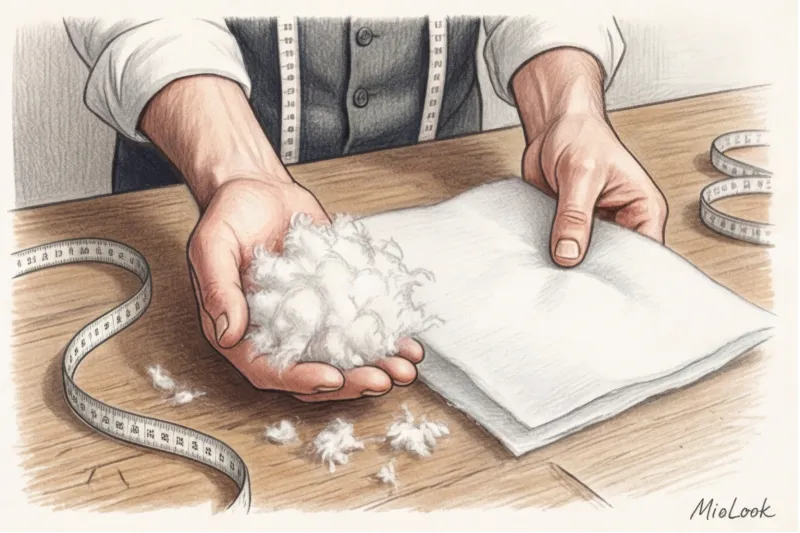
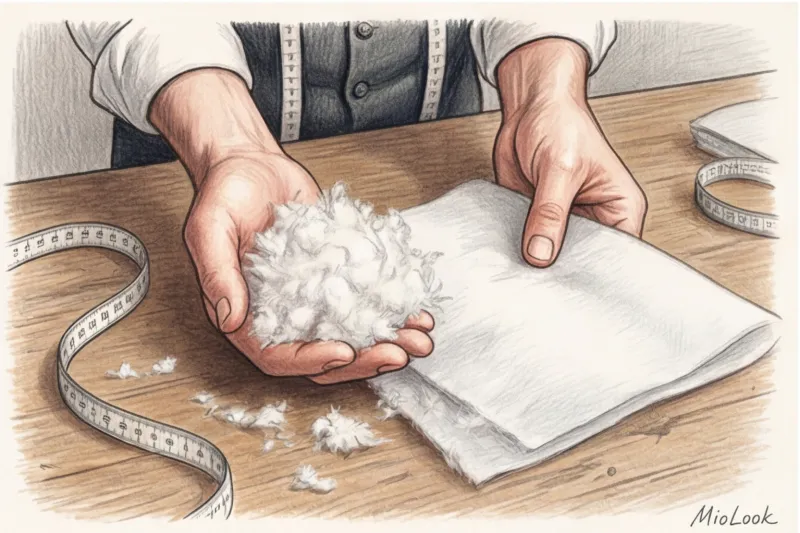
Research by the Hohenstein Institute, which studies the thermal comfort of clothing, proves that a heavy, one-piece jacket without proper air circulation causes the body to sweat while traveling. Moisture accumulates under the clothing, and as soon as you step out into the cold, you instantly freeze. That's why high-quality air inside the jacket is more important than kilograms of synthetic material.
Natural down or new generation eco-alternatives?
For a long time, it was believed that nothing warmer than goose down existed. But this natural filler has a critical drawback: its performance in humid conditions. If you live in a climate where sleet alternates with freezing rain, down can play a nasty trick on you. When wet, natural down loses up to 70% of its volume and, accordingly, loses its warmth, turning into clumps of clumped together.
This is why high-tech synthetics (PrimaLoft, Thinsulate, Sorona bio-down) are often more expensive and valued today. For example, PrimaLoft fibers retain 96% of their warmth even when completely wet. This also addresses the ethical issue. If you still prefer natural down, look for the abbreviation on the label. RDS (Responsible Down Standard) According to Textile Exchange, this certification ensures that the birds are not cruelly treated and that the down is sustainably harvested.
Access to MioLook for €0.99 — one-time payment
A smart AI stylist will select the perfect look based on your winter wardrobe and suggest what's missing.
Get access — €0.99 onceHow to choose a women's winter down jacket: read the label like a technologist
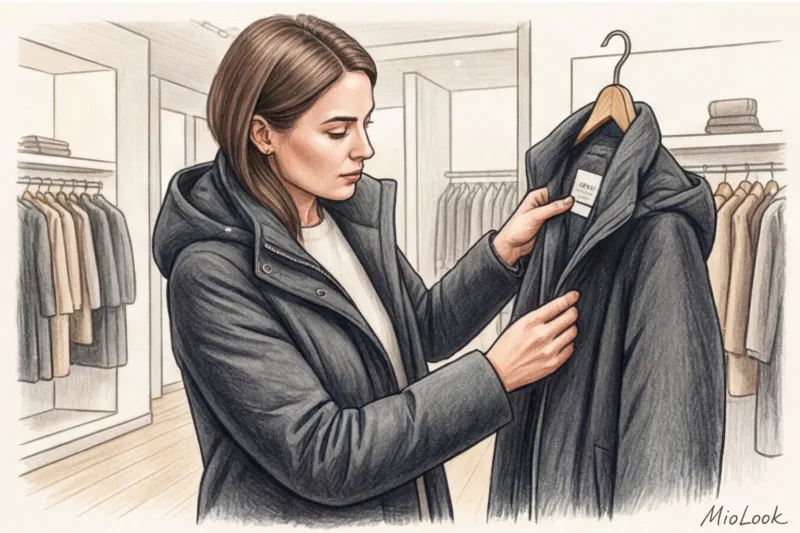
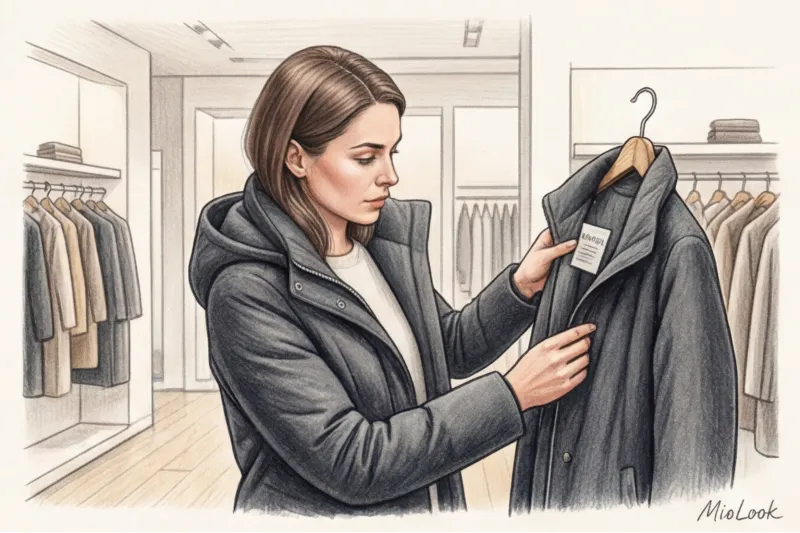
Buying outerwear in the €200–€500 range is an investment. And to get the most out of it, you need to learn to read the inner sewn-in labels. Forget the advertising slogans on the cardboard tag; the truth is hidden in the side seam of the lining.
1. Down/Feather ratio. If you see 70/30, feel free to hang the jacket back on the rack. For a true winter, the minimum is 80/20 (80% down, 20% feathers). The ideal, status-conscious figure is 90/10. Feathers are essential as a kind of framework to keep the down from bunching up, but too much makes the jacket feel cold and prickly.
2. Outer fabric and membrane. Smooth, shiny polyester tears and gets wet easily. Look for a weave. ripstop (fabric with a fine, barely noticeable checkered pattern) – it stops tears. But the most important thing is waterproofness. A 3000 mm rating will only withstand a light drizzle. For protection against dense wet snow and piercing wind, look for a membrane with a rating of at least 10000 mm and a DWR (Durable Water Repellent) coating. Drops should roll off the jacket like mercury.
3. Secret lining layer. Do you know why a cheap down jacket feels like a greenhouse? It's because of the 100% polyester lining. Premium brands use viscose, cupro, or blended high-tech breathable fabrics. They wick moisture away from the body, maintaining an ideal microclimate.
The Architecture of Cut: From Micro-Trends to the Concept of Modern Classics
WGSN's 2024 analysis shows a sharp decline in demand for extravagant outerwear—down 34% compared to previous seasons. We're tired of neon colors, exaggerated puff collars, and asymmetrical hems. The Modern Classics concept has taken over—clean lines, refined textures, and architectural cuts.

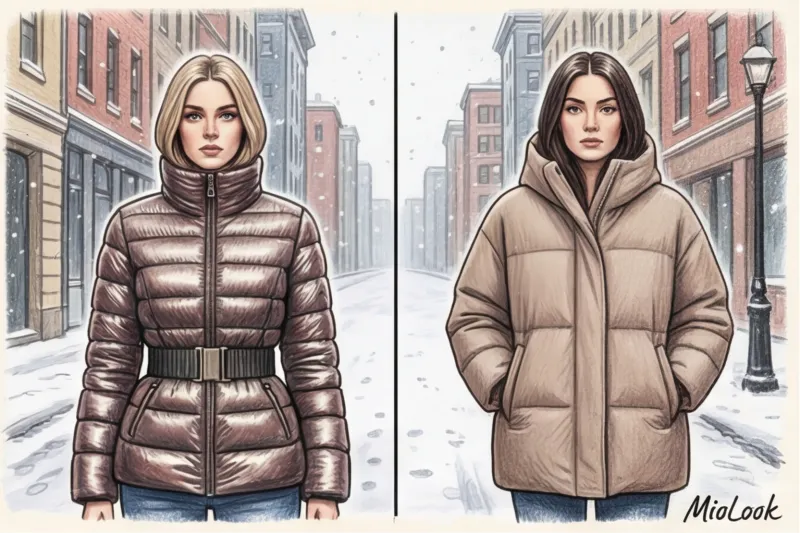
Pay attention to the stitching. Close horizontal stitching (the so-called "caterpillar") is a relic of the past. Firstly, it visually cuts and widens the figure. Secondly, every open seam is a "cold bridge" through which heat escapes. High-end brands today use baffle technology or seamless heat sealing. From the outside, the jacket looks completely smooth and minimalist, and all the down packets are securely hidden inside. This not only looks expensive but also completely eliminates down migration.
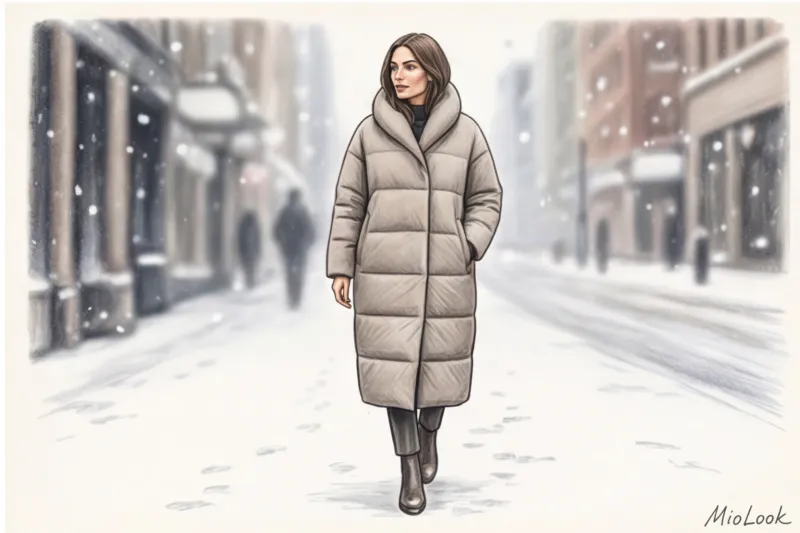
By choosing a basic silhouette with a strong shoulder line but relaxed body volume, you are investing in long-term capsule wardrobe If you divide the cost of a quality €400 down jacket by 5 years of regular wear, the Cost Per Wear (CPU) will be lower than that of a cheap one-season jacket that will lose its appearance after the first wash. I wrote more about this math in the article about correct calculation of Cost Per Wear.
Your ideal image begins Here
Join thousands of users who look flawless every day with MioLook. Digitize your wardrobe and create stylish combinations.
Get access — €0.99 onceIntegrating a down jacket into your business and casual wardrobe
The down jacket has long ceased to be exclusively a piece of sportswear. Today, it is a fully-fledged element of urban chic that can and should be worn over winter office wear. But for this you need to take into account three nuances.
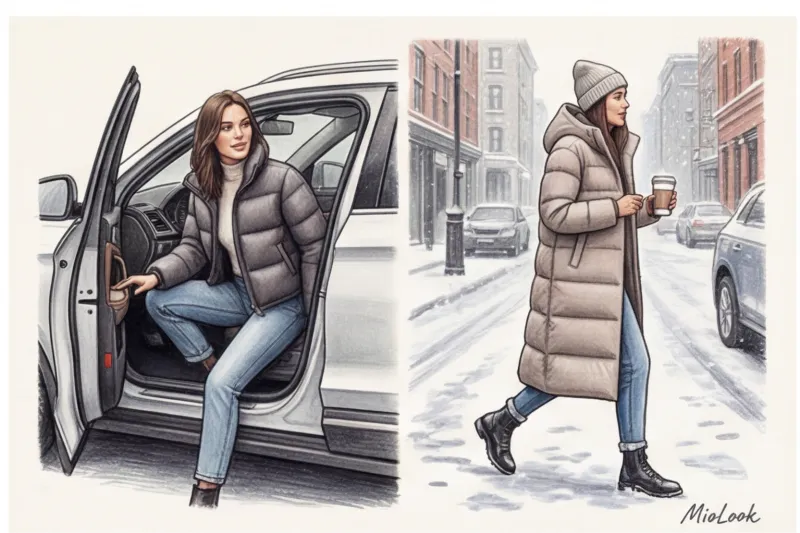
Length. Short, thigh-length jackets are only practical if you're constantly driving. The most versatile length is midi (to mid-calf). It completely covers skirts, makes it easy to wear light dresses in winter, and looks chic with wide-leg suit pants, creating an elongated, rectangular silhouette.
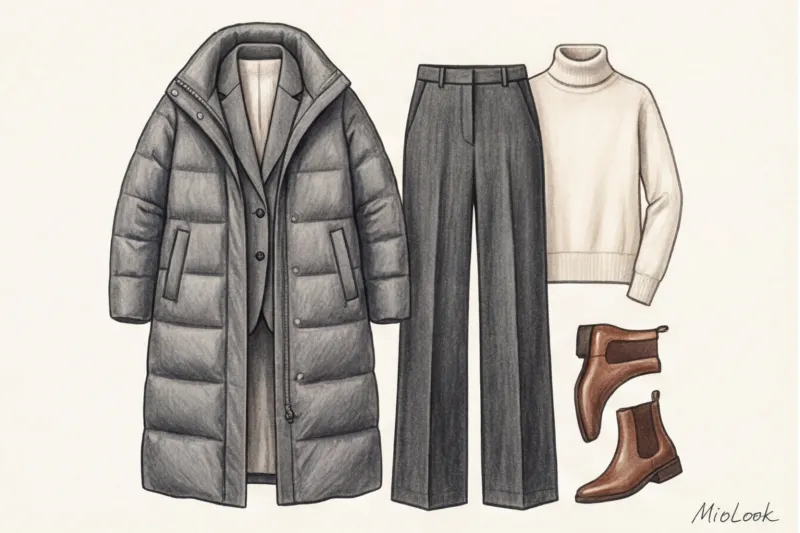
Armhole. For a down jacket to complement a formal suit, it should have dropped shoulders and wide (deep) armholes. The jacket shouldn't bunch up inside. If the sleeves of your jacket are bursting at the seams when you put on a jacket underneath, you've chosen the wrong cut.
Texture and color. Matte fabrics always look more prestigious than glossy oilcloth surfaces. As for color, I strongly recommend avoiding overly black, which can make a look flat and gloomy in winter. Opt for deep, natural shades: dark graphite, bitter chocolate, khaki, and deep navy. They're just as versatile, but look much more refined.
Tactile Styling Checklist: 2-Minute In-Store Checkup
Many of my clients are surprised when I start vigorously wrinkling the sleeves of their jackets during shopping trips. This is my signature testing method, which I call the Squeeze Test. You can use this tactile checklist today.
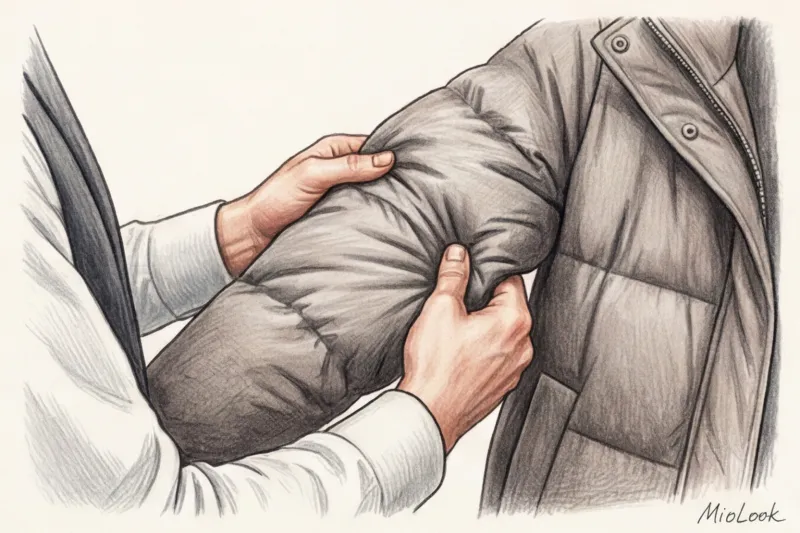
- Squeeze test. Firmly gather the sleeve or hem of your down jacket into a fist, squeeze it hard, and then release it quickly. A high-quality down jacket with high fill power will absorb air and regain its shape in 2-3 seconds. If the fabric remains wrinkled and flat, the insulation inside is dead, and the jacket won't keep you warm.
- Migration test. Lightly pinch the seams with two fingers. If there's dust on your fingers, small lint, or sharp feathers piercing the fabric, leave the item in the store. After a month of wear, it will start to "bleed" like your favorite black cashmere sweaters.
- Checking the fittings. For midi and maxi lengths, a two-way zipper with a bottom pull is crucial. Without it, you won't be able to comfortably get into a car or climb tall stairs without tearing the bottom seam.
- Hidden comfort. Place your hands in your pockets. A good down jacket will have a soft fleece lining—this will protect your hands if you forgot your gloves. Also, check for hidden knit cuffs in the sleeves to block out icy wind.
Mindful Care: How to Extend the Life of Your Winter Jacket
Buying a quality item is only half the battle. Proper care is what separates a conscious consumer from a fast-fashion victim. And herein lies the most counterintuitive insight: for most down jackets, dry cleaning is more damaging than home washing.
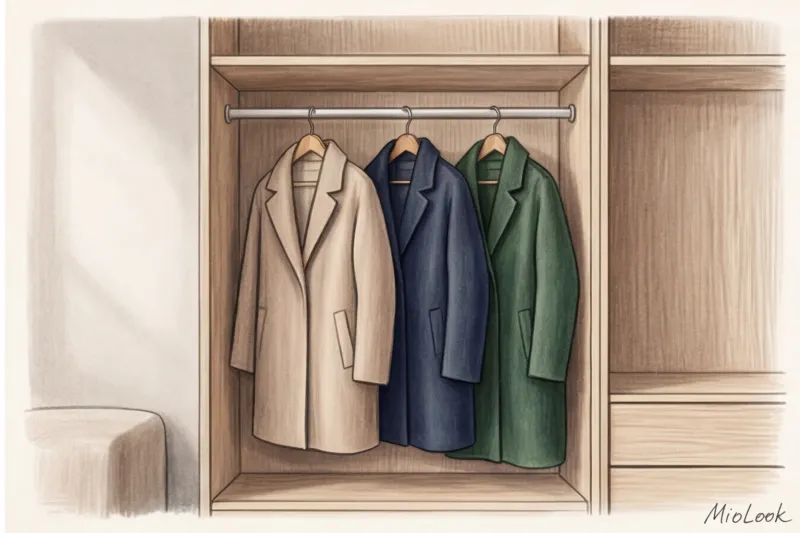
Harsh chemical solvents strip the natural oils from natural down. This causes the feathers to become brittle, break, and fall off the jacket. However, there is a fair exception: This rule does NOT apply to jackets with complex composite materials, genuine leather inserts, or a wool outer layer—these should never be washed at home.
If the label says machine washable, follow these three golden rules:
- No laundry detergents—only special liquid detergents for down or membrane fabrics. Powder clogs the membrane's pores, preventing it from breathing.
- Use 3-4 clean tennis balls in the drum during washing and drying. They will constantly fluff the down, preventing it from clumping together.
- Dry your jacket only horizontally on a drying rack, away from radiators. Every few hours, approach and manually break up any clumps of down.
And most importantly, never store a down jacket in a vacuum bag during the summer! By removing the air, you break down the insulation's structure. After six months under pressure, even premium down with an FP 800 will never regain its original volume.
Ready to get started?
Try the free plan in the MioLook app—no commitments. Store photos of your items and plan seasonal capsules with just one click.
Get access — €0.99 onceInstead of buying a new, mediocre jacket every November that will be out of style by February, opt for technology and an architectural cut. A well-chosen high-tech down jacket isn't just clothing; it's your personal climate control system for the next 5-7 years.