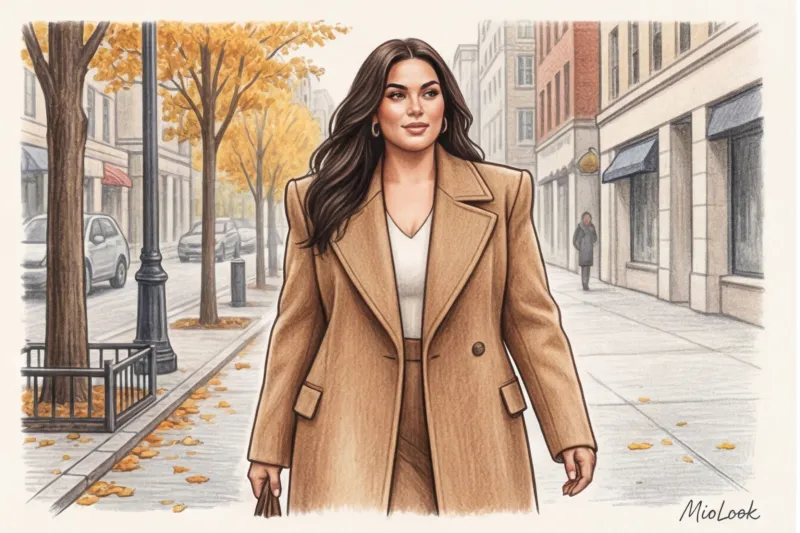
"Wear all black, buy a size up, and don't draw attention to yourself"—if I had a euro for every time I heard this bad advice, I'd already have a villa on Lake Como. Hi, I'm Sophia Müller. In 12 years of working as a personal stylist and fabric expert, I've learned that nothing ruins a plus-size figure more than trying to "hide" in it. Today, we'll talk about how to choose the perfect outerwear for plus size women Forget shapeless, crisp polyester robes. We'll be using an engineering approach: tailored cuts, precise textile density, and innovative insulation.
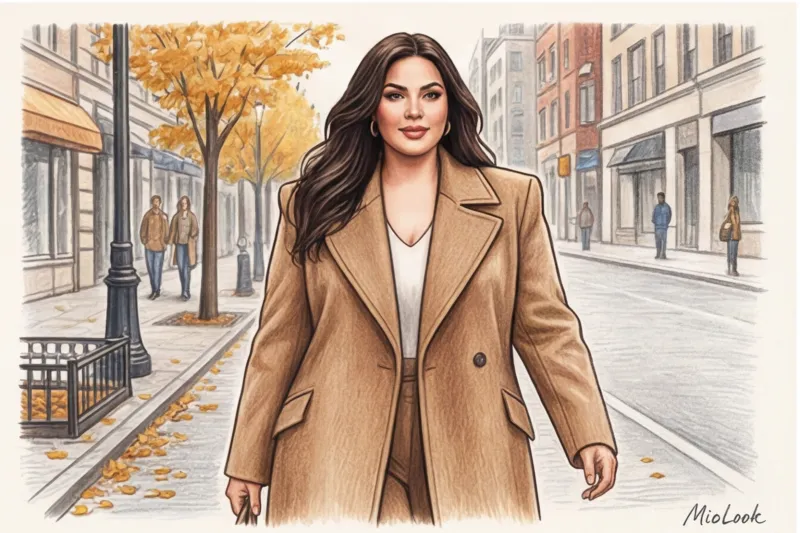
We've covered more about global design changes and the move away from hypervolumes in our comprehensive guide: Fashionable outerwear: current styles and trends.
Paradigm Shift: Why Cut Architecture Matters More Than Color
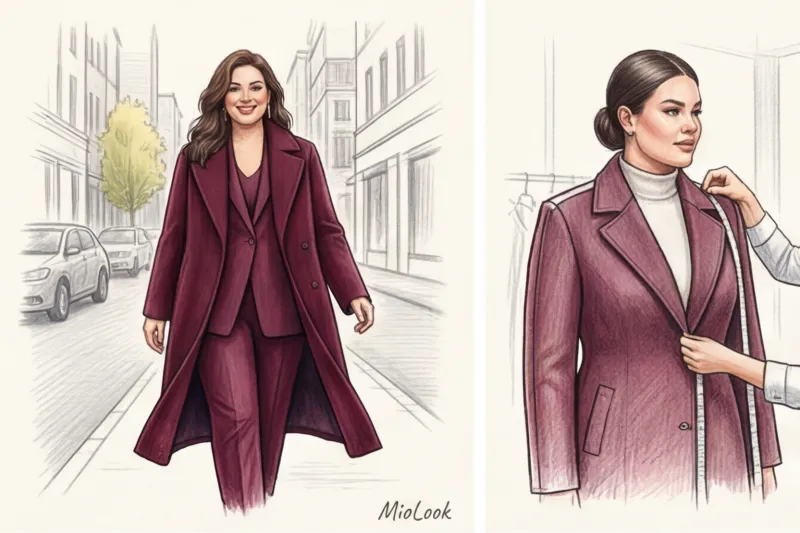
According to a 2024 report from the analytical agency WGSN, demand for extravagant outerwear, including neon oversized down jackets, fell by 34%. They were replaced by modern classics — modern classic silhouettes. For plus-size figures, this is the best news in the last decade. The concept of power dressing is making a comeback, and it's the rigid shape of clothing that best "pulls" the silhouette together.
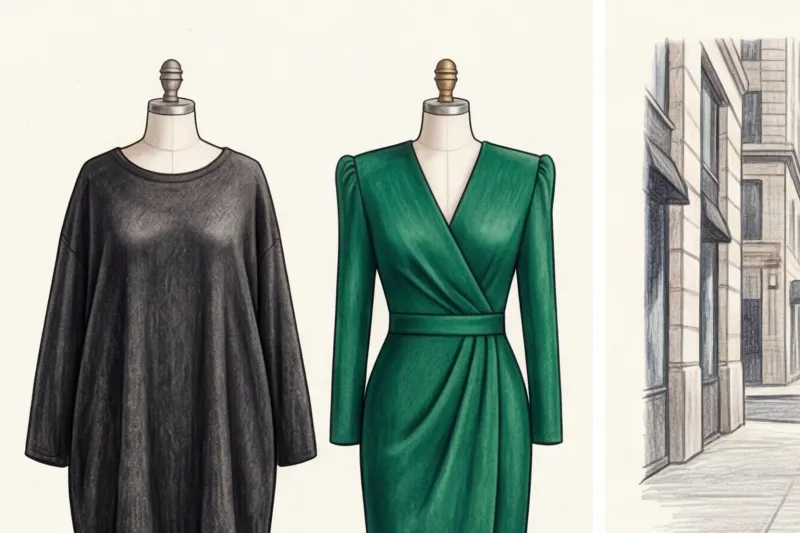
Let's debunk the main myth of style: black is slimming. Black is slimming only if the fabric is dense. Thin, loose black fabric (cheap knitwear or thin raincoat fabric) acts like a treacherous magnifying glass, highlighting every unevenness and fold. A light coat made of dense fabric will create a much sharper and slimmer silhouette than a black windbreaker from a mass-market store.
"Structure is the corset of outerwear. When a coat has a defined shoulder line and a tight lapel, your silhouette adapts to this geometry, not the other way around."
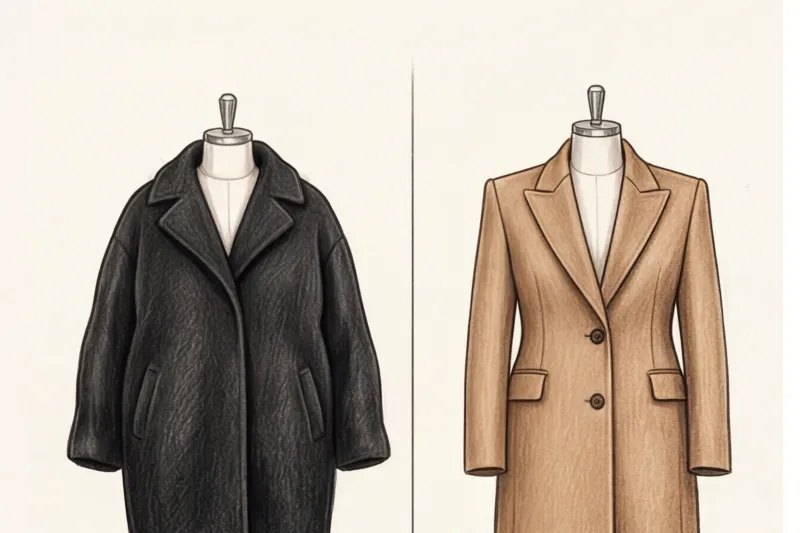
I had a telling case in my practice. My client Elena (size 54) was used to wearing thin, black cardigans in the fall. In the fitting room, I offered her a structured, double-breasted camel coat with a rigid shoulder band. When she looked in the mirror, she couldn't believe her eyes: she'd visually dropped two sizes. The coat created a smooth frame, within which her body seemed more fragile. Oversized clothing is possible and appropriate, but the secret is to ensure the volume is supported by a rigid, architectural framework of the shoulders, otherwise you risk becoming a shapeless cloud.
Materials and Textures: A Textile Expert's View
As someone who studies the properties of fibers in detail, I often see how the wrong texture can ruin a great fit. Plus-size women should strictly avoid bouclé, shaggy alpaca, and shiny vinyl. Bouclé and long shaggy fabrics visually expand the body due to the light and shadow created by the loose texture, while glossy vinyl highlights prominent points, adding unnecessary volume.
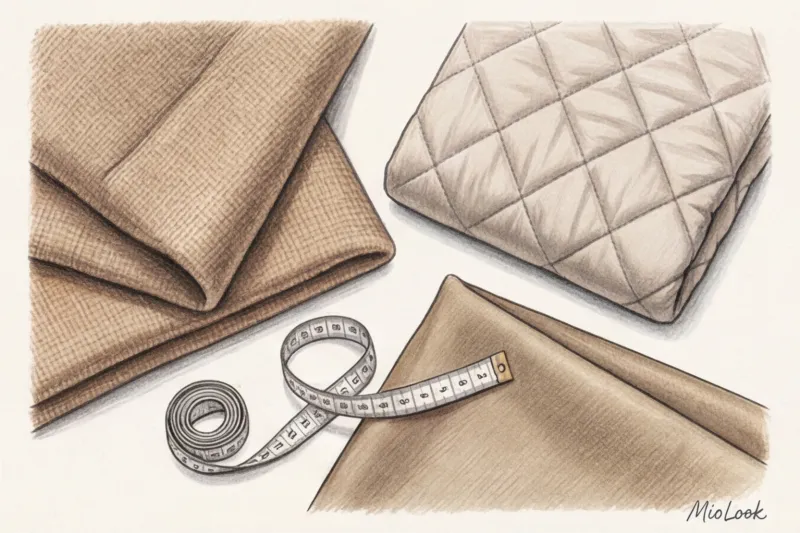
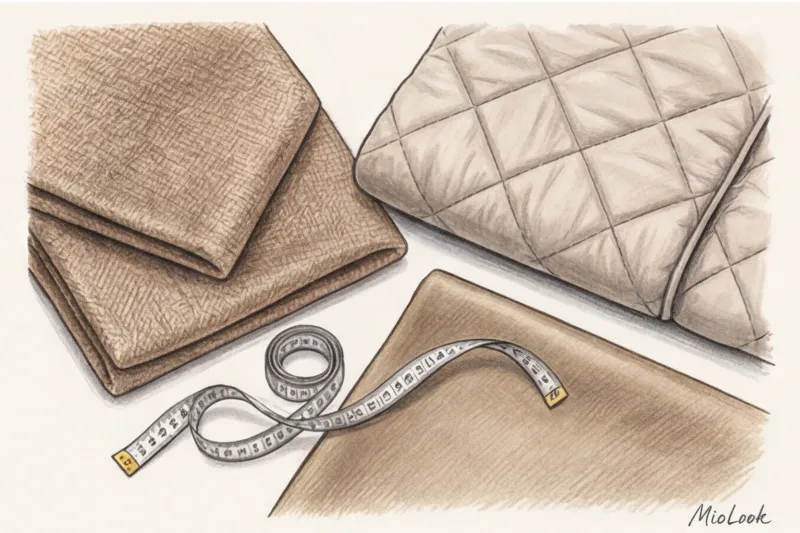
What to look for on labels? Fabrics first double-faced (double-weave). These are materials where two layers of fabric are woven together with an invisible thread. They are incredibly dense (often unlined), hold their shape perfectly, and don't bunch up on the stomach or hips. The ideal composition is 80-90% wool and 10-20% nylon or polyamide. Yes, pure wool sounds more refined, but it's the synthetic thread that ensures durability and maintains the architectural shape.
What to do in winter? The problem with winter outerwear for plus-size women has always been insulation. Standard thick synthetic padding turns any figure into a snowman. Fortunately, technology has advanced. Look for items made with next-generation eco-friendly materials (for example, DuPont Sorona bio-down, Thinsulate, or premium Isosoft). They are three times thinner than regular synthetic padding, but thanks to the microstructure of the fibers that trap air, they provide excellent warmth at temperatures down to -15°C. You get the warmth of a winter down jacket in the thickness of an autumn coat.
Access to MioLook for €0.99 — one-time payment
A smart AI stylist will select the perfect look based on your proportions and preferences.
Get access — €0.99 onceOuterwear for Plus Size Women: 4 Slimming Styles for the Ages
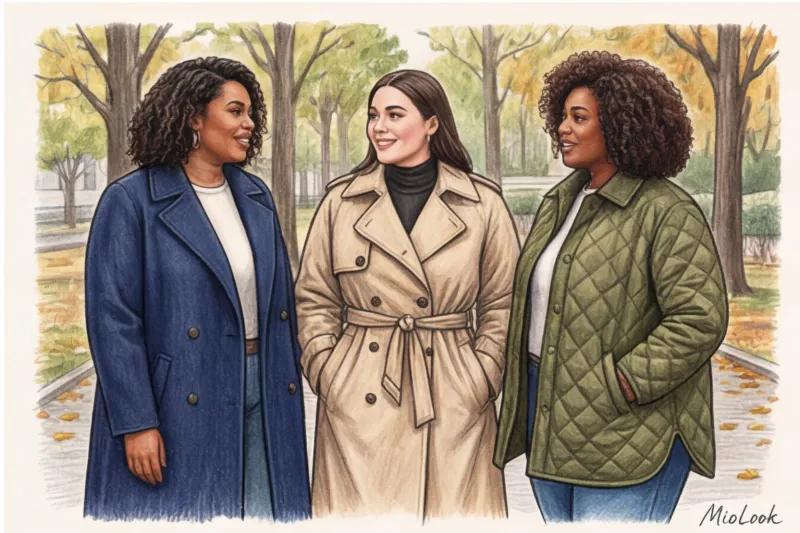
Slow fashion teaches us to invest in pieces that won't go out of style in six months. Here are four trendy outerwear styles for plus-size women that emphasize proportions.
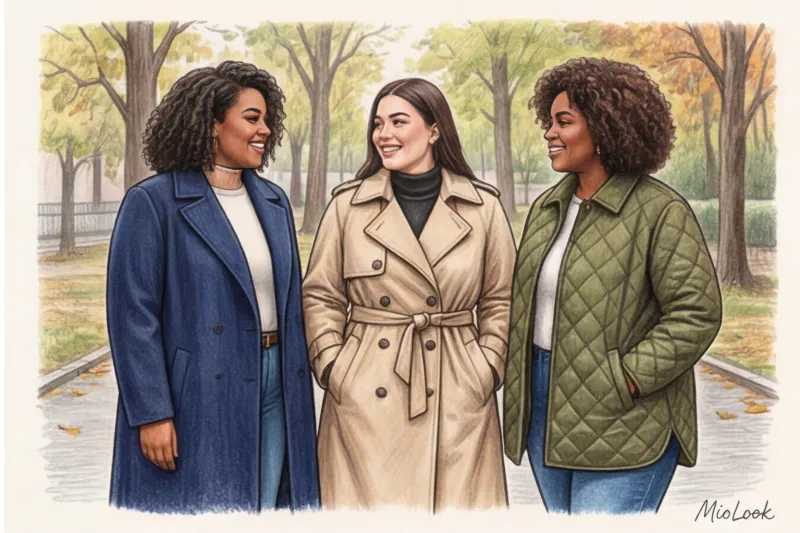
Style 1: Cocoon coat with a slight taper towards the bottom
Ideal for pear- and apple-shaped figures, the rounded silhouette at the midsection camouflages the fullness of the stomach and hips, while the tapered hem accentuates the most graceful part of the legs—the ankles. The key rule: it should fit loosely, not be pulled tightly around the hips.
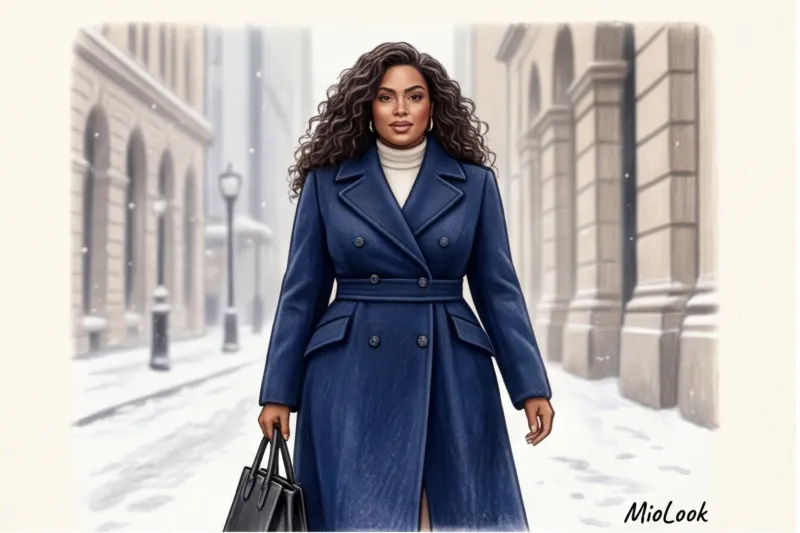
Style 2: Straight double-breasted midi coat
Two vertical lines of buttons create an optical illusion: the eye moves from top to bottom, visually elongating the height and narrowing the waist. The optimal length is a hand's breadth below the knee or mid-calf. This is a versatile staple.
Style 3: Structured Trench Coat in Heavyweight Gabardine
Thin, viscose trench coats are a thing of the past in 2015. Heavyweight cotton gabardine (250 g/m² and up) reigns supreme today. It shapes the waist without creating a tight, cinched look. If you use a belt, don't fasten it with a buckle; tie it in a loose knot. Read our article for more information on how to accentuate your waist. How to choose a belt for your body type: stylist tips.
Style 4: Quilted jacket with small diamond stitching
Horizontal quilting, especially wide ones (from 10 cm), cuts the figure into blocks and widens it. For a casual option, look for jackets with fine diamond or diagonal quilting. Diagonal lines always create dynamism and elongate the silhouette.
The devil is in the details: how fittings and seams change proportions
You can buy a coat in the perfect color and luxurious fabric, but if the details are out of proportion to your figure, the magic will disappear. In style, there's a strict law of proportion: the larger the figure, the larger the details should be.
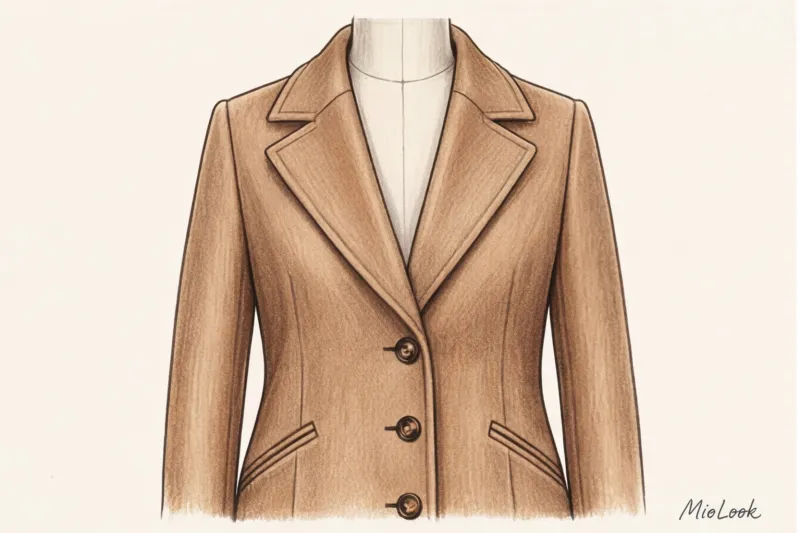
Lapel width: Narrow stand-up collars or lapels 4-5 cm wide look short on a size 50+ figure and make the head, chest, and shoulders appear larger by contrast. The optimal lapel width for plus-size dresses is 8 to 12 cm. They create a deep V-neck, elongating the neck and balancing the bust.
Pocket locations: Avoid patch pockets placed right at the widest part of your hips. Instead, opt for diagonal welt pockets. They don't add bulk and create the right diagonal lines.
Armhole and sleeve: A classic high armhole often pinches the armpits and restricts full arms. A client of mine once complained that she couldn't drive in her new, expensive coat—the sleeves simply blocked her shoulder movement. The solution? Look for a semi-raglan or a slightly dropped shoulder (but the shoulder itself should remain rigid with a shoulder pad). This will give her the necessary freedom.
Pay attention to the hardware. Shiny gold buttons create unnecessary highlights (especially if they're positioned at midriff level). Matte hardware (tortoiseshell plastic, horn, or matte metal) is not only a sign of an expensive item but also a way to avoid unnecessary glare. To make the look even more cohesive, consider How to choose a bag for plus-size women , as the size and position of accessories work in conjunction with outerwear.
Your perfect look starts here
Join thousands of users who look flawless every day with MioLook. Digitize your wardrobe!
Get access — €0.99 oncePre-purchase checklist: quality and fit test
The slow fashion philosophy states: it's better to buy one perfect item than three compromises. When in a store, perform four essential tests.
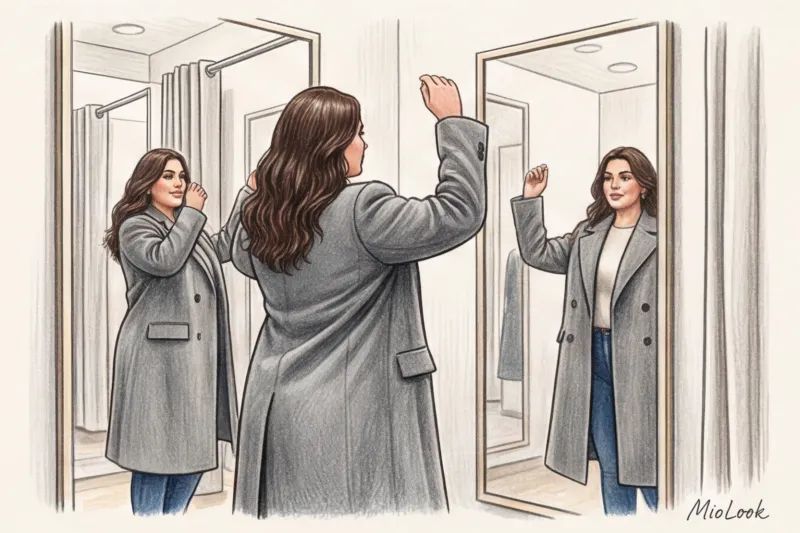
- The Hug Test: Put on your coat, button it up, and hug your shoulders. If the fabric at your back is so tight that the seams are bursting, it's too tight around the shoulders, even if it fits perfectly on your hips. (Note: This test may not work for inverted triangle shapes with very narrow hips—you'll need to look for A-line silhouettes.)
- Stock check: A thick wool sweater should fit comfortably under your fall/winter outerwear. Trying on a coat over a thin T-shirt is a fatal mistake.
- Crease test: Squeeze the hem or sleeve in your fist for 10 seconds, then release. If the fabric remains wrinkled, the garment will lose its presentable appearance after a week of wear.
- Inspection of the lining: Look inside. A cheap, rustling polyester lining creates a greenhouse effect. Look for viscose or cupro. Also, a high-quality lining should have a slight fold at the hem to prevent it from pulling on the main fabric as you walk.
Wardrobe Investment: A Conscious Choice for Your Comfort
Let's be honest: good outerwear doesn't come cheap. A quality coat made of a thick wool blend will cost you between €150 and €350. But if you divide that by the number of days you'll wear it over four to five seasons, the cost per wear turns out to be a pittance.
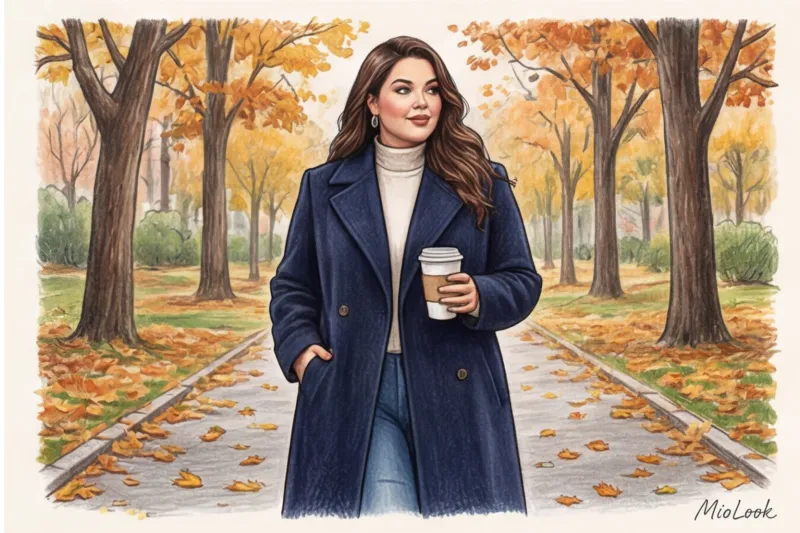
Shape, high-density fabric, and minimalist details are far more important than fleeting trends. Avoid buying clothes that only make you stand gracefully with your stomach sucked in. Outerwear for plus-size women should be a cozy yet structured protective shell, not a straitjacket. Outerwear sets the tone for the entire look, creating that first impression that can never be made twice.
The main takeaway I want you to take with you is: stop looking for things that will "hide" you. Look for things that will will form Build your silhouette like a skilled architect, and you'll be surprised how much your reflection in the mirror changes.