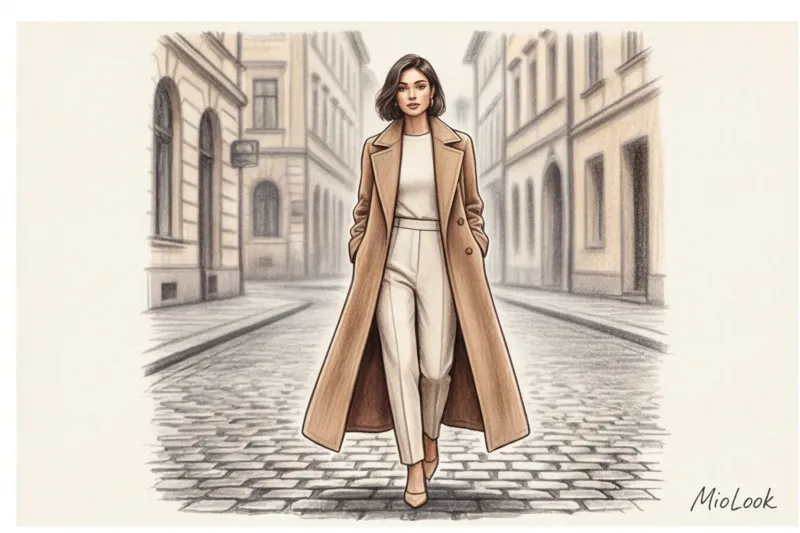
You know what style rule I hate most? "If you're under 160 cm tall, forget about long outerwear forever." In 12 years of working as a personal stylist and wardrobe investment consultant, I've heard this phrase hundreds of times. And every time, I want to send whoever came up with it to clothing design classes.
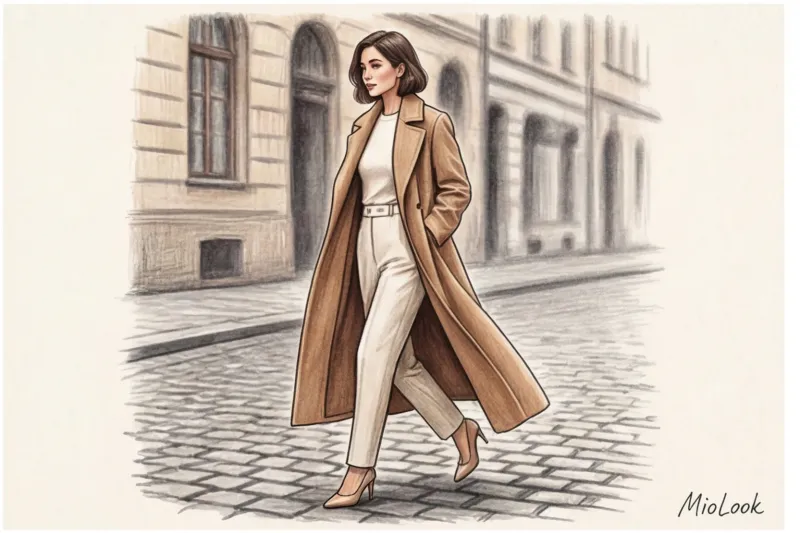
The truth is that coats for short girls It doesn't have to be a skimpy half-coat that barely covers the hips. The problem isn't the hem length, but the poor cut. We discussed in more detail how fit affects the overall perception of a silhouette in our a complete guide to current outerwear styles Spoiler: proportions decide absolutely everything.
Today, we won't be discussing abstract trends. I invite you to look at outerwear through the eyes of an Italian tailor. We'll explore why shortening a standard coat at a tailor's will never make it perfect, where to look when trying it on, and when buying luxurious cashmere is completely worth it.
Paradigm Shift: Why the Perfect Coat for Short Women Is an Investment in Architecture
According to the analytical agency WGSN (2024), demand for hypertrophied, shapeless oversized clothing has fallen by 34% over the past year. It is being replaced by aesthetics. modern classics - structured, architectural silhouettes that require an impeccable fit.
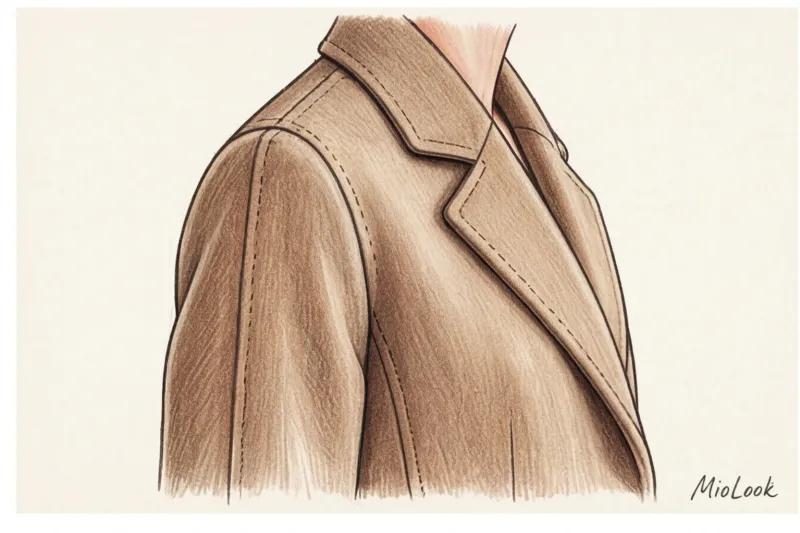
And here's where petite women run into the main pitfall of mass-market shopping. How does a typical purchase work? You buy a standard style, but one or two sizes smaller (for example, an XS instead of your average size), hoping it will "fit." This is a fatal mistake.
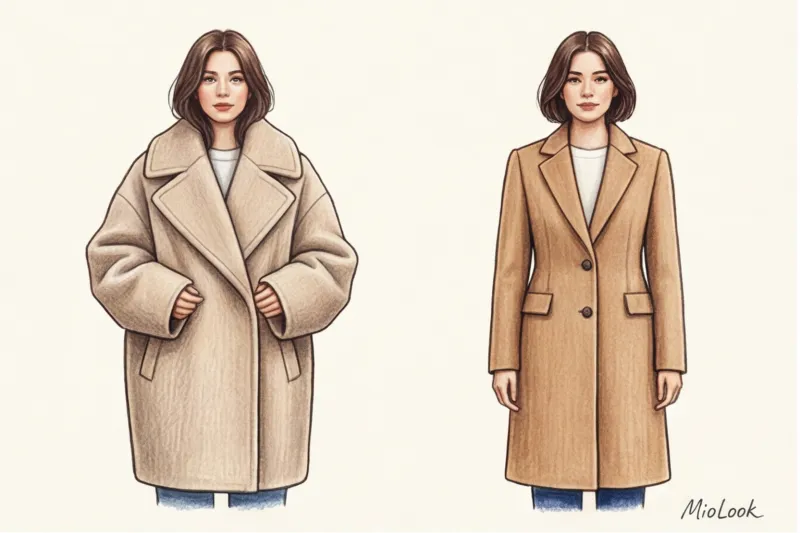
Size XS differs from M in chest and hip measurements, but the patterns growth They remain the same—they're designed for a woman 170–175 cm tall. The end result is bust darts that have slipped down to the waist, a waistline that's stuck on the hips, and armholes that hang loosely around the ribs. That's why I often find "oversized" items in my clients' wardrobes that have been hanging with the tags on for years—you intuitively sense something's wrong, but you can't quite put your finger on it.
Premium brands and specialized Petite lines completely redesign the pattern. They don't just cut off 10 cm from the bottom; they raise the pocket line, reduce the armhole depth, and narrow the lapels.
If you're tired of buying things that don't flatter you, I recommend digitizing your successful purchases. Upload photos of perfectly fitting items to MioLook , and a smart algorithm will help you find similar proportions when planning new looks.
Your perfect look starts here
Join thousands of users who look flawless every day with MioLook. Artificial intelligence will analyze your wardrobe and suggest stylish combinations.
Get access — €0.99 onceBusting the myth: Why a maxi coat doesn't steal height, but adds it
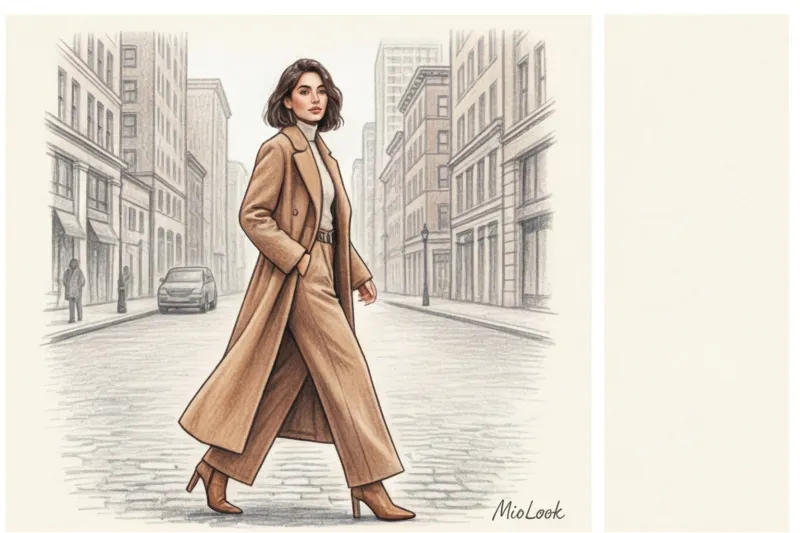
Let's dispel the most ingrained myth. It's commonly believed that a long coat "pins" a petite woman down. In practice, it works just the opposite, as long as the principle of a continuous vertical color line is followed.
One of my regular clients, financial director Elena (156 cm tall), avoided long coats for 10 years, believing they would make her look plump. We found her a high-waisted, single-breasted camel-colored coat. When she wore it open over an off-white pantsuit, it visually added at least 5-7 cm to her height. Why did it work?
- Single line: A long coat creates two clear vertical lines (the sides of the coat), along which the interlocutor's gaze slides from top to bottom without encountering any obstacles.
- Critical length: The ideal maxi skirt for petite women is 110–115 cm at the back. A standard 125+ cm will really drag along the floor, while 115 cm will reveal a graceful ankle.
- Monochrome Secret: Wearing a cohesive outfit (like a black turtleneck and full-length black trousers) underneath an open coat creates a stretching effect.
Danger Zone: Knee-length and mid-calf
But be extremely careful with knee-length coats. They're the worst enemy of short women. A coat that ends right at the kneecap cuts the figure in half, creating the so-called "stump effect."
I have to be honest: the midi length (to mid-calf) also doesn't work for everyone. This is the very limitation that stylists often gloss over. If you wear a midi coat with a contrasting skirt and light-colored shoes, you'll get three horizontal stripes that mercilessly chop off your height. You can only wear a midi if the color of your tights and shoes matches perfectly.
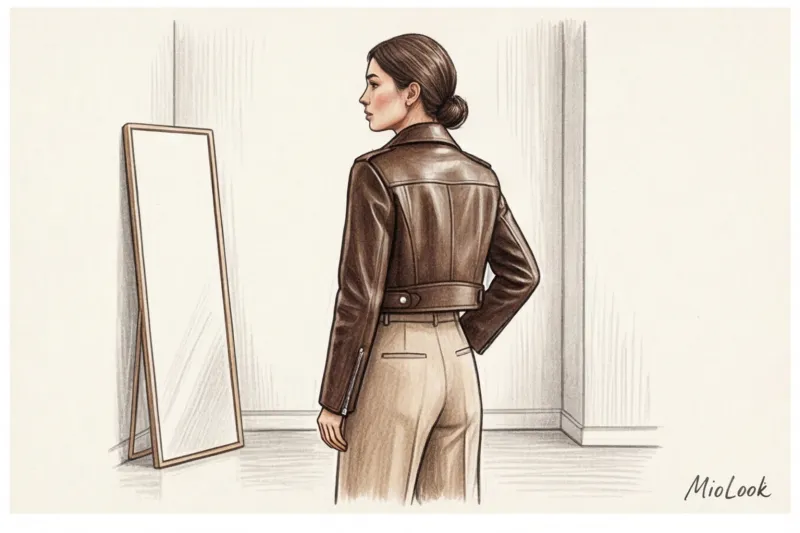
The Anatomy of a Perfect Cut: 4 Details That Are More Important Than Length
When you pay €500 or €1,500 for outerwear, you're not just paying for the fabric. You're buying millimeters, precisely calibrated by designers. Here's what to look for when trying it on:
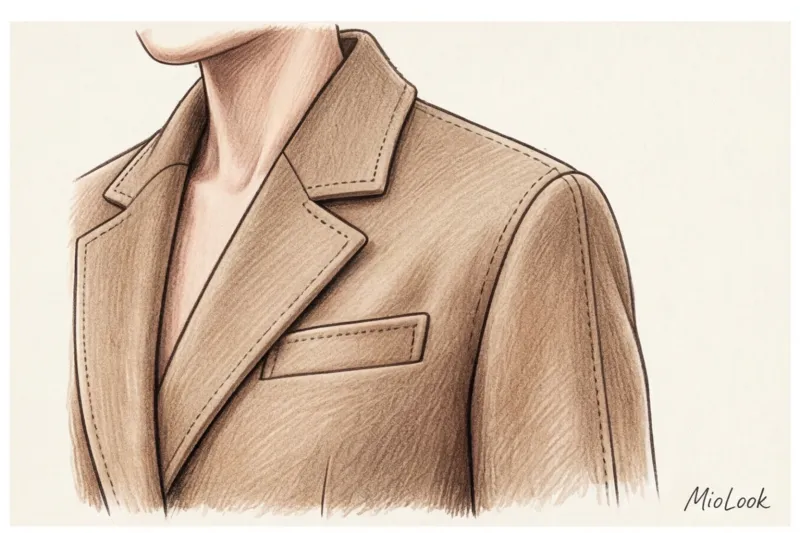
- Lapel size: Wide English collars visually broaden the chest and ground the figure. Look for narrow lapels (no wider than 7-8 cm) or a neat stand-up collar.
- Shoulder line and high armhole: The popular drop shoulder makes a petite figure appear boxy. You'll want a set-in sleeve with a high, neat armhole. This elevates the entire silhouette.
- Pocket locations: Absolutely avoid large patch pockets near the hips—they'll add bulk where it's not needed. Look for welted pockets positioned 3-4 cm above your natural waistline.
- Splines: A deep back vent (at least 40 cm) adds movement and visual lightness to the coat. A closed hem always creates a chunky look.
Access to MioLook for €0.99 — one-time payment
A smart AI stylist will find the perfect look for your body type and height. Find out which styles are right for you in just a few clicks.
Get access — €0.99 onceJackets and cropped coats for short girls: the mathematics of proportions
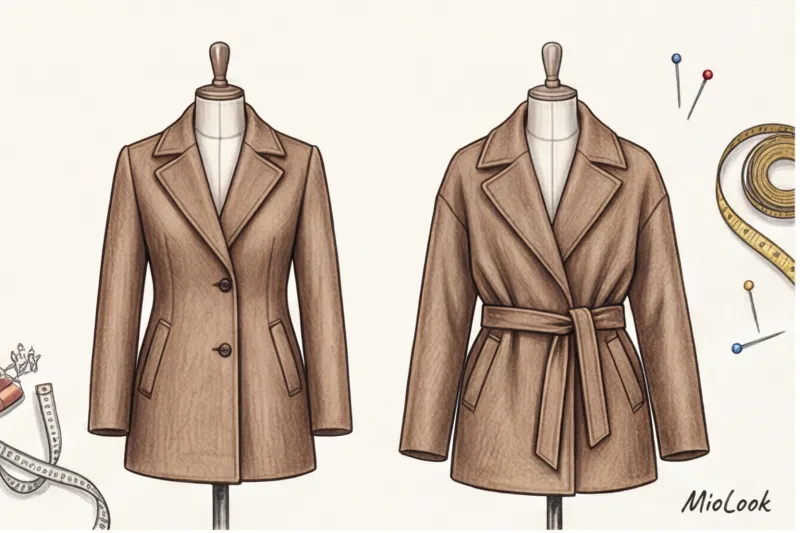
When it comes to jackets, the Golden Ratio comes into play. In fashion design, it's defined as the ratio of 1/3 to 2/3. This means your jacket should visually occupy one-third of your body, and your legs (trousers or skirt) two-thirds.
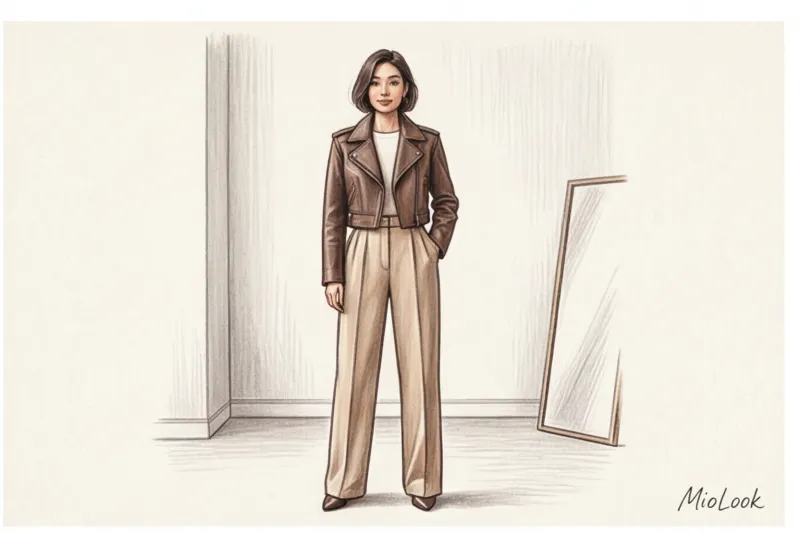
The main rule I always repeat to my clients is that the hem of the garment creates the widest visual horizontal line. Where the jacket ends is where the eye is drawn. Therefore, the ideal length for petite women is right at the waistline or just below, to the hip bones.
When choosing a leather bomber jacket or a classy biker jacket, avoid unnecessary details. Numerous zippers, rivets, and belts on a petite figure can make you look like you're wearing motorcycle armor. A modern alternative to lightweight down jackets are thick wool shackets—they hold their shape and keep you warm, without making you feel like a ball.
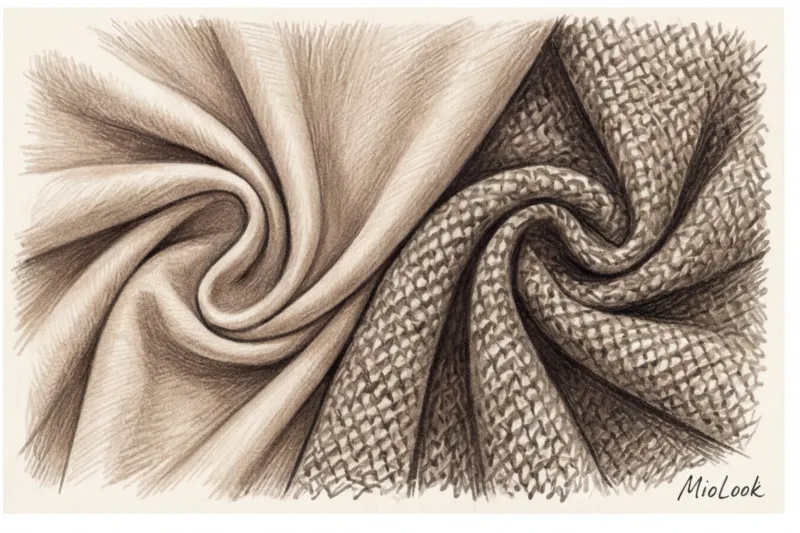
Texture Decides: Why Petites Should Invest in Cashmere
Once, during an internship in Milan, a master at Sartoria (a traditional tailoring shop) showed me two pieces of fabric: a stiff British tweed and the finest Italian double-faced cashmere from Loro Piana. The difference in thickness was three times greater, yet they were equally warm.
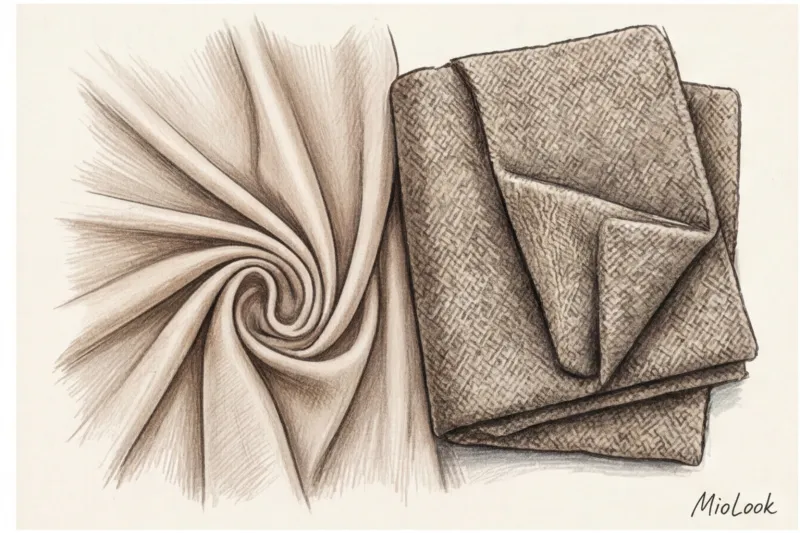
Stiff, heavy fabrics (thick drape, coarse tweed, bouclé) physically "eat up" a petite figure. You don't walk in them; you carry them. For petite women, the technique double-faced (double-layer wool or cashmere, sewn with an invisible seam without lining) is a real lifesaver. This fabric has incredible flexibility, softly clings to the shoulders and flows along the body without creating unnecessary bulk.
Yes, a high-quality coat made from this fabric in the premium segment will cost between €800 and €1,500, and you can find options starting from €400 during sales at niche brands. But believe me, dividing that amount by the number of days you'll feel like a queen, the cost-per-wear will be a pittance.
The same applies to jackets: matte surfaces absorb light and look more refined, while glossy nylon with a sheen visually adds weight and volume.
Pre-purchase checklist: what can be adjusted and what can't
I rarely find a coat that fits a petite-sized woman right off the hanger. Don't be afraid to take it to a tailor, but you should clearly understand which alterations are worth paying for and when the item should be left in the store.
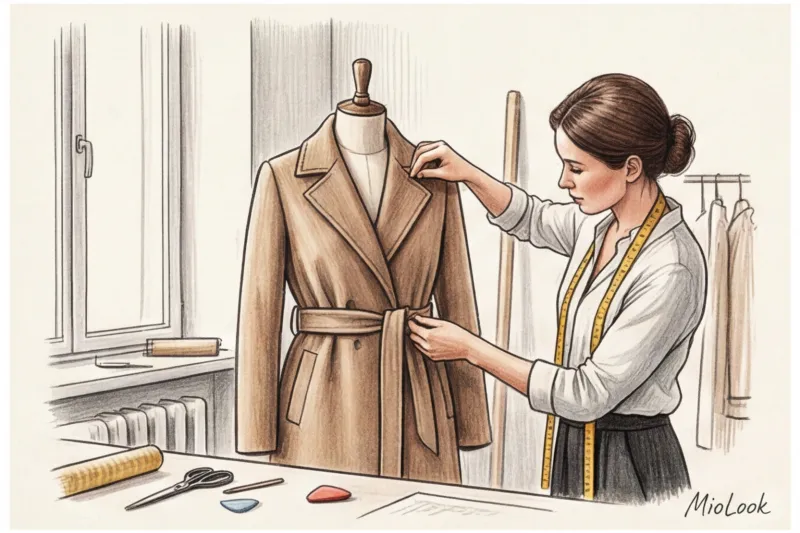
- Sleeve length (Always adjustable): Coat sleeves shouldn't reach halfway down your palm—that looks too small. Shorten the sleeve so that when you bend your arm, 1-1.5 cm of the cuff of your sweater or shirt is visible. This subtle adjustment creates the illusion of longer arms. A good tailor in Europe will cost you around €25-€40 to do this.
- Belt loops (must be re-sewn): On almost every mass-market or mid-priced coat, the belt will hang at your hips. Carefully undo the belt loops and move them to your natural waist.
- Shoulder girdle (Do not touch at all): If the shoulder line is out of place, the armhole is tight, and the collar is bulging at the back, don't buy it. It's virtually impossible to effectively alter the shoulder design; it will cost more than the garment itself, and the result will be disappointing.
Summary: A smart wardrobe without compromise
Buying outerwear isn't just about filling a void in your closet. It's your calling card for the next six months, an investment in your daily comfort and personal status. Being short isn't a flaw that needs to be concealed; it's simply a reason to be more discerning about the design of your clothes.
Don't compromise on fit. It's better to have one perfect basic coat in a luxurious fabric, tailored to the millimeter, than five trendy pieces that distort your proportions. Choose quality, pay attention to the lines, and you'll see how the right cut transforms not only your silhouette but also your gait.