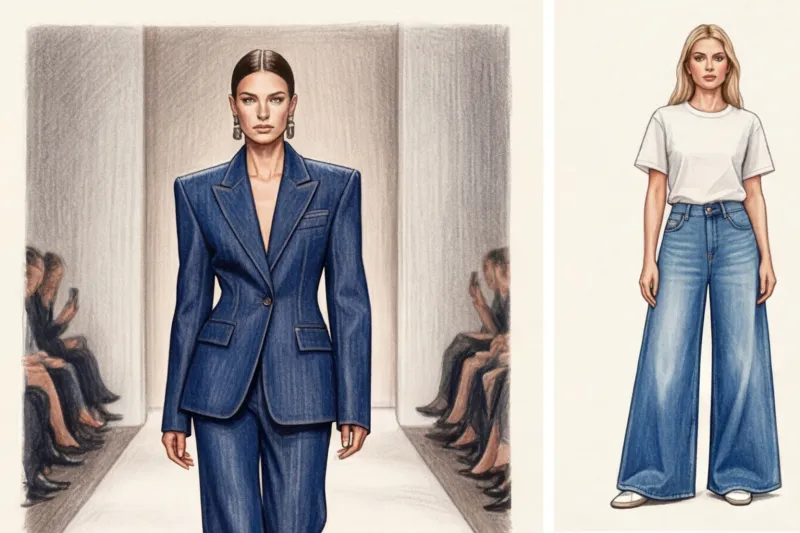
The Evolution of Denim: From Street Style to Smart Fashion
Remember the Bottega Veneta Spring/Summer 2023 show, when Kate Moss walked the runway in seemingly basic baggy jeans and a flannel shirt? The trick was that she wasn't wearing a single ounce of cotton—it was the finest nubuck leather, printed with a denim texture in 12 layers. This brilliant optical illusion (trompe l'oeil) by Mathieu Blasi was a turning point for me. It proved: today fashionable jeans trends dictate a completely new paradigm. Denim has finally ceased to be a utilitarian "weekend" garment and has become a fully-fledged object of intellectual design.
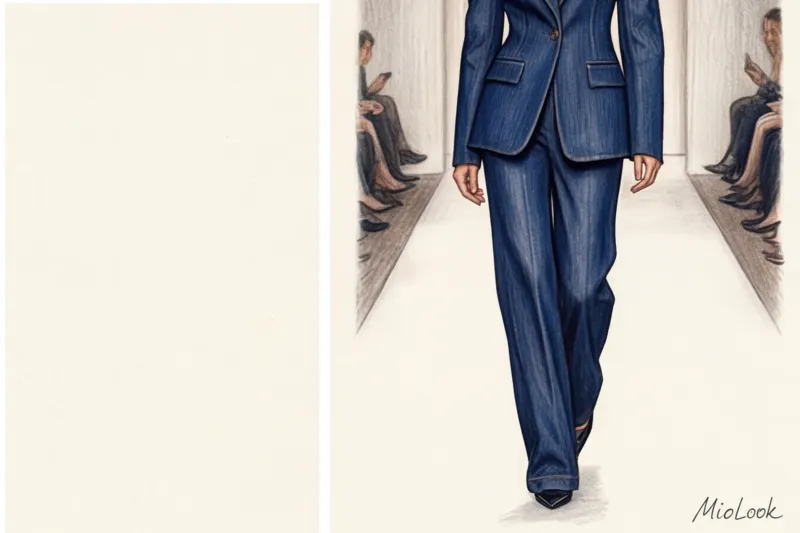
Over the past five years, covering fashion weeks from Paris to New York, I've witnessed a striking transformation in the status of this fabric. Whereas a denim jacket on the runway once seemed a bold challenge to the establishment, today Valentino is crafting embroidered evening dresses from denim, and Schiaparelli is crafting complex, architectural silhouettes from it. Designers have realized the key: stiff denim holds its shape beautifully, allowing for sculpted peplums, voluminous shoulders, and precise geometric lines, working with it on par with couture brocade.
The main catalyst for this evolution was the global trend toward "quiet luxury." Forget chaotic abrasions, abundant embellishments, and frivolous holes at the knees. The new standard for a prestigious wardrobe is raw indigo. A deep, rich navy blue without a hint of artificial distressing or factory washing looks expensive and noble. Moreover, solid dark denim creates a continuous vertical line, visually elongating the silhouette. It is precisely these simple styles that fit perfectly into the aesthetic. office siren and evolving strict dress code.
At the same time, we're experiencing a tectonic shift—a transition from fast fashion to slow fashion. We no longer need those ephemeral jeans with 5% elastane that stretch hopelessly after the first wash. Today, the industry is once again embracing authentic, rigid 100% cotton with a minimum weight of 13-14 ounces. Yes, high-quality selvedge denim jeans (in the €150-€350 price range) can be a bit of a pain at first.
"One of my clients complained that her new raw denim straight-leg jeans felt too cardboard-like. I asked her to give them a try and wear them for at least two weeks. The result? The fabric stretched across her body, memorized her anatomy, and formed unique creases. Now they're the perfect pair, fitting like a second skin, something you can't find in a mass-market store."
This process of taming tough cotton isn't an inconvenience, but an investment in your personal style. If you're ready to take your wardrobe to the next level, start by investing in a pair of high-quality straight or wide-leg denim with no fraying. And to skillfully incorporate such an architectural piece into your everyday life, try MioLook smart wardrobe The app will help you digitize your purchases and, in just a few minutes, compile dozens of fresh looks with jackets and shoes already hanging in your closet.
The Essential Jeans: Trends, Silhouettes, and the Right Fit
When working with a new client, I always ask them to forget about the size on the label. In the world of denim, there are only two parameters that truly determine whether a garment will become your second skin: rise (landing height) and inseam (inseam length). Analyzing this year's fashionable jeans trends, it becomes absolutely clear: leading designers have shifted their focus from childish embellishments to pure geometric cuts. Today, the right pair works like a mathematical formula—it elongates the silhouette, visually narrows the waist, and corrects proportions without dieting or going to the gym.
Let me explain the mechanics. A high-rise rise (10.5 to 12 inches) visually shifts the center of the figure upward, automatically adding a few centimeters of length to the legs. But if you choose a shorter inseam (less than 28 inches for an average height), you'll have a counterproductive effect—the silhouette will visually "cut" at the widest part of the calf. That's why this season's trends are so ruthless about half-measures: they demand either maximum length or architecturally precise volumes.
Wide-leg & Baggy: Volume Architecture
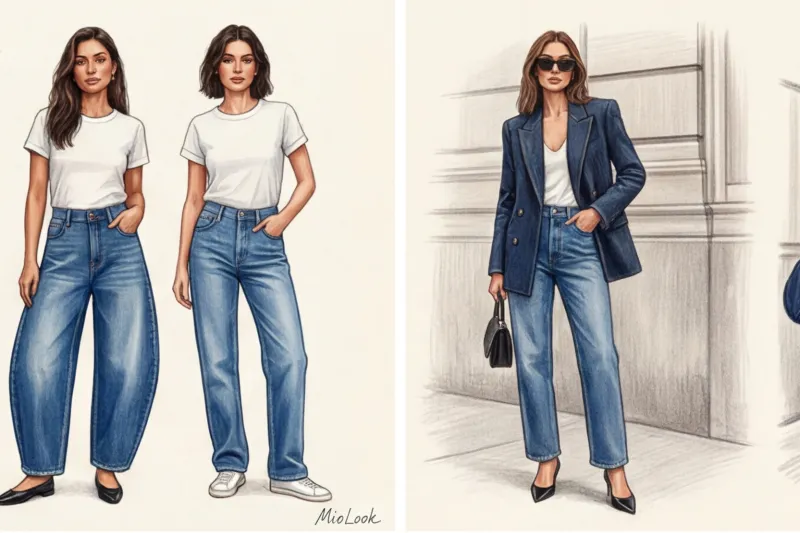
Oversize comes in many different forms. It's one thing to wear stretched-out jeans bought three sizes too big (that's just sloppy), and quite another to invest in a well-balanced, architecturally-designed fit. The right styles wide-leg They are cut in such a way that they fit tightly, almost like a corset, around the waist and the highest point of the pelvis, and the expansion of the leg begins strictly from the hip line, descending downwards in a straight line.
To create a luxurious, flowing look, the fabric must hold its shape. Budget-friendly soft jeans will sag into a shapeless mass, so look for a sturdy denim that's at least 12-14 ounces (oz). It's important to maintain a strict balance: a super-wide bottom requires absolute discipline at the top. Compact merino wool turtlenecks, square-neck bodysuits, or fitted suit vests are your best allies in creating an hourglass figure.
As for the ideal length (inseam), for wide-leg She doesn't tolerate compromises. Jeans should either be a millimeter short of the floor, creating the effect puddle pants (literally, trousers that gather into a puddle at the feet), or form a single, smooth break at the instep. Cropped, wide-leg jeans (culottes) mercilessly cut down on height and add heaviness to the bottom—let's finally leave this silhouette in the last decade.
Barrel leg jeans: the most controversial and stylish silhouette
According to Lyst's H1 2024 analytics report, searches for "barrel leg jeans" have skyrocketed by 150%. Personally, I think this cut (also known as horseshoe The "horseshoe jeans" (or "horseshoe jeans") are the boldest and most intelligent styling exercise of the last few years. Industry insiders have embraced them for their rejection of traditional notions of "sexiness" in favor of a sculptural, almost avant-garde shape.
The cut anatomy here is unique: exaggerated volume is created by a curved outer seam and special darts at the knees, after which the leg tapers sharply toward the ankle. The silhouette resembles the letter "O" or a barrel.
I'll be completely honest with you: this cut doesn't work for everyone. If you have a pronounced pear shape and are looking to minimize your hips, a horseshoe cut will do the exact opposite, adding visual weight to your lower third. However, for rectangle or inverted triangle figures, this is a brilliant way to create the illusion of feminine curves where none naturally exist.
How to wear this complex silhouette? To balance the exaggerated volume of the legs, you need to expose and highlight the most graceful part of the leg. Pointed-toe slingbacks, ankle-hugging ankle boots, or kitten-heel mules will do the job perfectly. For the top, choose a structured cropped box jacket that hits just below the waist.
Not sure which jeans silhouette is right for you?
Upload your measurements to MioLook: a smart AI stylist will analyze your figure and select the perfect styles that balance your proportions.
Get access — €0.99 onceThe 90s Straight Cut and Skinny Rehab
If I were asked to keep only one pair of jeans in my wardrobe for the rest of my life, I would choose classic ones without hesitation. straight-leg A straight fit is an unshakable foundation. In the €100 to €250 price range, you can find the perfect straight-leg jeans in heavy cotton (inspired by vintage Levi's 501s) that will become a blank canvas for any outfit. They never go out of style, visually elongate the legs, and are equally at home with sneakers and stiletto pumps. We've covered more about incorporating these basics in our the complete guide to a smart wardrobe.
But the most counterintuitive insight of this season is something else: skinnies are back We've been burying skinny jeans for so long and so persistently that many missed their triumphant return in the collections of Miu Miu, Saint Laurent, and Khaite. However, there's a crucial "but" that makes the difference between a trendy look and a hopeless anti-trend.
The new skinny jeans have nothing in common with the jeggings of the 2010s. We're ditching the thin stretch fabric (which contained up to 5% spandex), the rips at the knees, and the cheap bleached stains. The current take on skinny jeans is structured cigarette jeans. They're made from dense, stiff denim (a maximum of 1-2% elastane is allowed solely for a comfortable fit), feature a high waist, and a deep, even color with no fraying.
The secret to their complementary appeal lies in the fact that the right modern skinny jeans don't cling to the calf like a second skin. They leave literally a centimeter of air between the fabric and the leg at the bottom. This micro-gap creates the illusion of fragility, making the legs appear slimmer and the overall look more put-together and luxurious. Pair them with thigh-high, jockey-style tube boots or chunky, masculine loafers to play up the contrast in volume.
Denim jackets and shirts: new proportions for tops
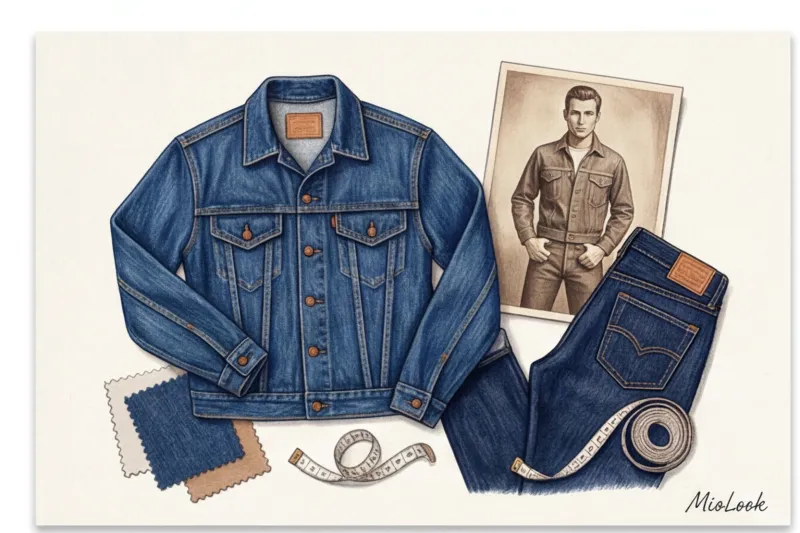
For many years, the term “denim jacket” was synonymous with a classic silhouette. trucker — the very same Type III cut with its characteristic V-shaped chest seams and short base. However, today, on the catwalks and streets of fashion capitals, we are witnessing a radical shift in proportions. The worker's jacket has confidently come to the forefront — chore jacket.
Inspired by traditional French workwear, it offers a completely different geometry: a straight cut, an elongated silhouette below the hip, a classic turn-down collar, and three or four roomy patch pockets. What's its main advantage? Unlike the short "trucker," which often visually cuts the figure at the waist or waistband, chore jacket Creates an elongated vertical line. A high-quality work jacket made of heavyweight Japanese denim will cost between €150 and €300, but in terms of wardrobe functionality, it's a flawless investment for decades to come.
Another powerful trend that has firmly established itself in the collections of brands like Alexander McQueen and Schiaparelli is denim tailoring. Designers have stopped viewing denim solely as a casual weekend material and have begun working with it according to the principles of classic tailoring.
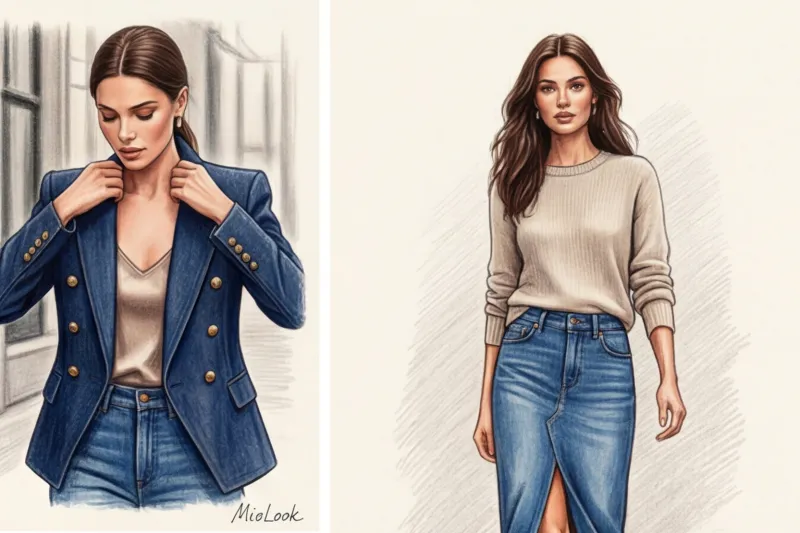
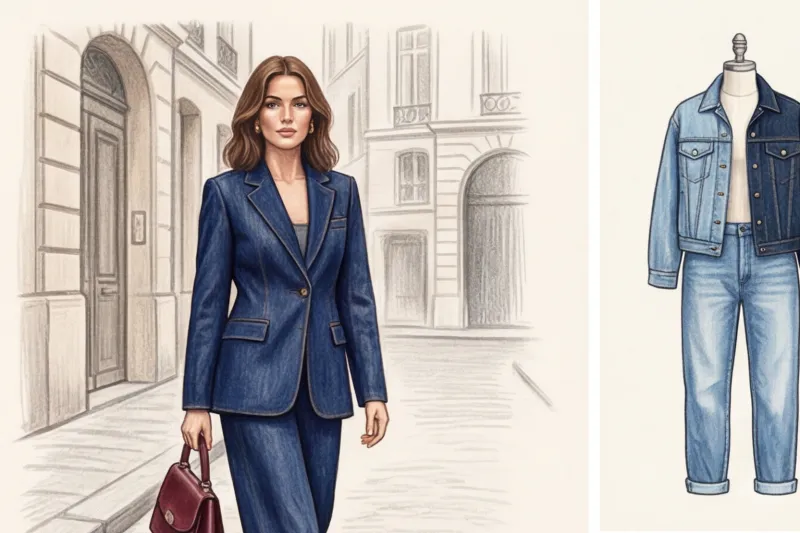
Denim jackets and blazers are now cut with darts, accented shoulder pads, and a crisp English collar. Thanks to its phenomenal stiffness, raw denim holds its shape perfectly, creating a crisp shoulder line and shaping the silhouette as effectively as a fine wool suit.
My favorite styling trick, which I constantly use on fashion shoots and always recommend to my clients during the cold season, is integrating a denim shirt as an architectural midlayer. Forget thin, fitted chambray blouses. We need a structured denim shirt of at least 8-10 ounces. The formula for perfect layering is as follows: a basic cashmere turtleneck, a denim shirt on top (leaving the top three buttons undone to reveal the turtleneck), and a voluminous wool coat for the final layer. The heavy cotton creates the necessary airiness and provides a stunning textured contrast between the shaggy wool and the smooth knit.
Of course, no discussion of denim tops would be complete without mentioning the "Canadian tuxedo" (all-denim). To ensure this look is elegant and doesn't evoke the comical red carpet looks of the early 2000s, it's crucial to adhere to strict rules of combination.
"The secret to high-end all-denim lies in the purity of color. The fewer artificial abrasions and gradients on the fabric, the more refined the look. Smooth, solid indigo is your best ally," notes fashion historian Valerie Steele.
There are exactly two approaches that are trendy today. The first is a completely monochrome match (for example, unwashed dark denim on both sides), which visually works like an elegant jumpsuit. The second is a radical contrast: crisp white jeans and a deep black jacket. Trying to combine two classic blue pieces that differ by just a half-tone is a surefire way to look sloppy.
To avoid mistakes when putting together such outfits, I always recommend taking photos of your items in natural light in advance and uploading them to MioLook app Its intelligent algorithm allows you to create virtual images and visually evaluate how well denim textures and shades work, even before you try them on.
Denim skirts and dresses: from maxi to A-line
While exploring fashion house archives, I often find myself reflecting on how gracefully fashion recycles its own past. Today's obsession with denim maxis isn't simply a blind imitation of the 1990s grunge aesthetic, when Marc Jacobs shocked a conservative public with his scandalous collection for Perry Ellis. Today, we see a completely different, more refined and "grown-up" interpretation of the rebellious silhouette.
The denim maxi skirt has achieved a real triumph, becoming a fully-fledged and, for many, more comfortable alternative to traditional trousers. The main architectural element here is the deep slit. Models with a slit at the front ( front-slit ) serve a crucial visual function: they elongate the silhouette vertically and lighten the heavy texture of the fabric as it moves. This allows you to elegantly display your shoes without looking too confined in denim. A back slit is a more conservative, but no less striking option, perfectly fitting into the framework of modern business smart casual.
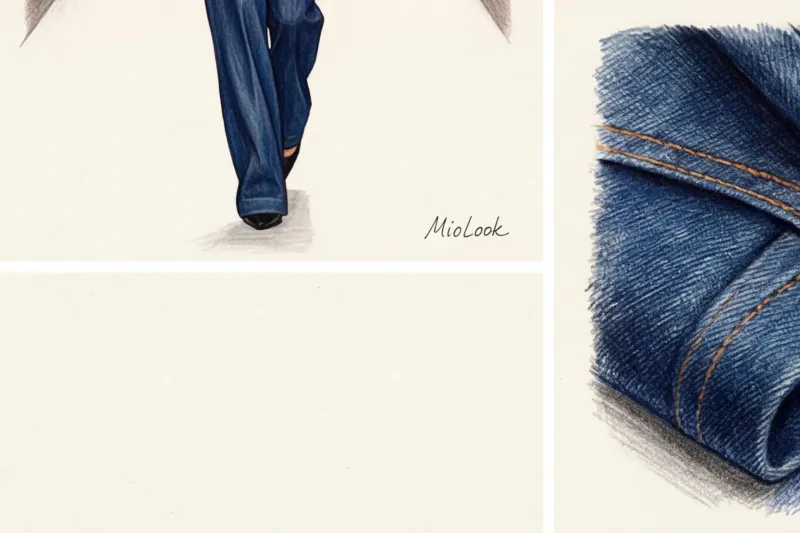
If the radical maxi length doesn't fit into your lifestyle yet, consider the midi length. A-line silhouette This cut is literally imbued with the bohemian spirit of Dior's 1970s collections and has a phenomenal shaping effect. Geometrically, the gently flared hem perfectly balances proportions: it delicately conceals the hips while simultaneously making the waist appear more delicate.
The key mistake when styling such models is choosing the wrong footwear, which creates unnecessary horizontal lines that cut off the height. An A-line silhouette requires a clear structure at the bottom: I highly recommend pairing such skirts with smooth leather tube boots, the shaft of which extends right up to the hem, or with chunky loafers worn over thick cotton socks.
Try MioLook
for free
Start creating perfect images with the help of artificial intelligence
Get access — €0.99 onceDenim dresses deserve a separate analytical analysis. They've finally left the category of utilitarian weekend wear and have become statement pieces. For an everyday capsule wardrobe, a classic straight-cut shirtdress is an excellent investment (in the €150-€300 range for a high-quality, thick fabric). Simply add an accent leather belt to pull together the look in a jiffy.
But the real breakthrough this season is corseted evening dresses. Thanks to the natural stiffness of the fabric, these dresses work like a true sculptor, providing support without the need for complex undergarments.
In their 2024 Evening Fashion Trends report, analysts at the WGSN Institute highlighted a key detail: evening denim has completely eschewed familiar accoutrements like copper rivets or contrasting orange stitching. Deep monochrome indigo with hidden seams looks as formal and classy as thick silk.
When styling this corset dress for an event, pair it with minimalist sandals with thin straps and sculptural jewelry in smooth yellow metal. The contrast of rough work fabric and delicate accessories is precisely the kind of sophisticated styling touch that unmistakably marks a fashion connoisseur.
The Anatomy of Quality: How to Choose Expensive-Looking Denim
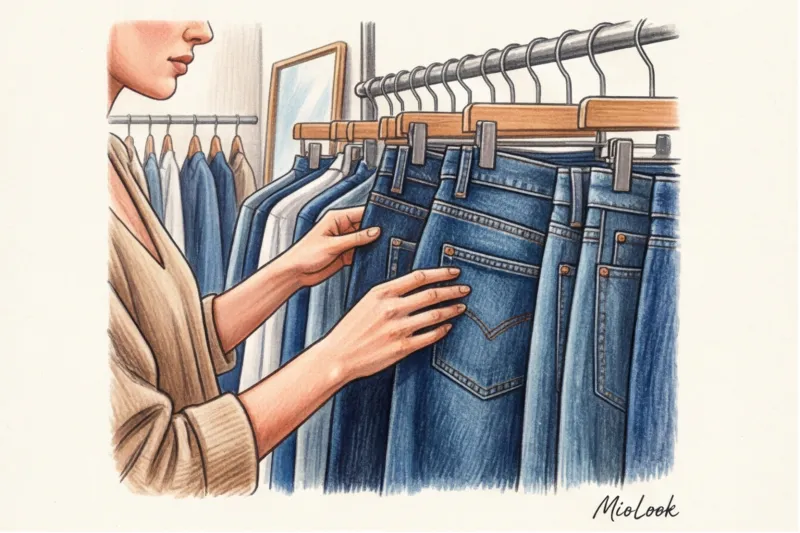
On the sidelines of the Première Vision trade show in Paris, where the world's leading fabric manufacturers gather annually, I learned one hard and fast rule: the price tag in a boutique rarely correlates with the actual quality of the denim. You can pay €400 for a flashy logo and end up with something that'll lose its shape within a month, or you can find an absolute masterpiece for €90 if you learn to "read" jeans like a professional buyer.
Forget stretchy leggings masquerading as jeans. True silhouette architecture is built on the right fabric weight. Industry standards measure this in ounces per square yard (oz). The vast majority of mass-market brands produce collections from 9-10 oz fabric—it's too light, quickly stretches out at the knees, and doesn't hold its shape at all. Your ideal jeans should weigh at least 12–14 oz Yes, they'll feel stiff as cardboard for the first few days, but it's precisely this density that creates that luxurious, sculpted fit that smooths out any figure flaws. Incidentally, the archival vintage styles sought after by collectors today were made from heavyweight cotton.
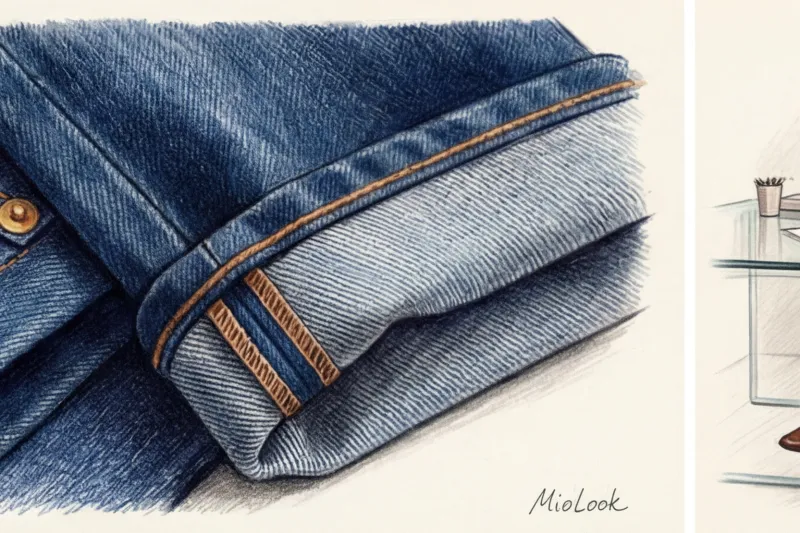
My main advice when shopping: before going into the fitting room, turn the item inside out. Look chain stitch On the trouser leg hem, this intricate interlocking stitch, visually reminiscent of chain links, is not only historically accurate but also prevents the leg from twisting after numerous washes. Pay attention to the hardware: brands that cut corners use thin, shiny nickel, while premium brands always opt for heavy copper or aged brass. Rivets should pierce the fabric, securely fastening the pockets. Another status marker is the patch on the waistband. On a quality item, it's made of genuine, thick leather or dense jacron, which develops a noble patina over time, rather than flimsy, glossy cardboard.
Finally, let's talk about washes. In their 2024 Consumer Preferences Report, McKinsey analysts noted a global shift away from elaborate distressing toward visual minimalism. If your goal is to achieve a high-status look, choose dark, raw denim in a deep indigo shade. Gradient bleached areas on the hips and faux "mustache" at the crotch visually fragment the silhouette, add unnecessary bulk, and ruthlessly cheapen the look. Raw indigo, on the other hand, works like a perfectly smooth canvas. It elongates the figure, looks appropriate even in a strict office setting, and ages individually, forming natural creases unique to your anatomy.
When investing in a pair of high-quality raw denim jeans, it's important to understand how they fit into your current wardrobe. Before you punch in the receipt at the checkout, I always recommend adding a photo of the item to your app profile. MioLook Smart wardrobe tools will help you assess in advance whether you have the right structured shoes and jackets to balance out that textured, heavy fabric, avoiding impulse purchases that will then sit on the shelf for years.
Denim in a Business Wardrobe: Blurring the Dress Code Boundaries
According to the Society for Human Resource Management (SHRM)'s 2024 Global Report, over 70% of international corporations have permanently enshrined the smart-casual format in their bylaws. However, senior managers regularly approach me with the same pain point: "How can I wear comfortable denim to the office while still maintaining a respectable and professional appearance?" The answer lies in a paradigm shift—we must stop perceiving denim as a casual weekend staple and start treating it like a premium wool suit.
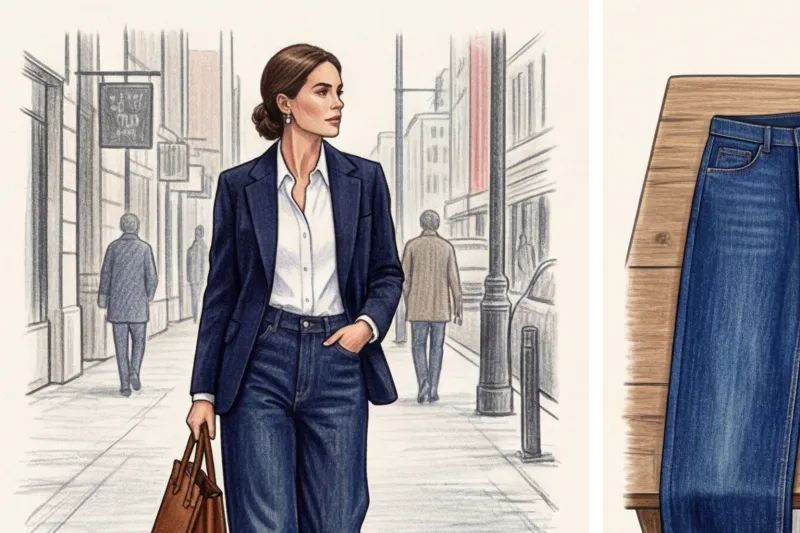
Not all styles are acceptable within the business casual and smart casual dress codes. The only legitimate choice is straight-leg or moderately wide-leg, full-length jeans in deep, solid shades. These should be dark raw indigo or charcoal black. Any fraying, bleached thighs (whiskering), or ripped hems will instantly detract from the look's status. Even when researching current jeans trends, for the office, choose only stiff cotton, which holds its shape just as well as classic pleated trousers.
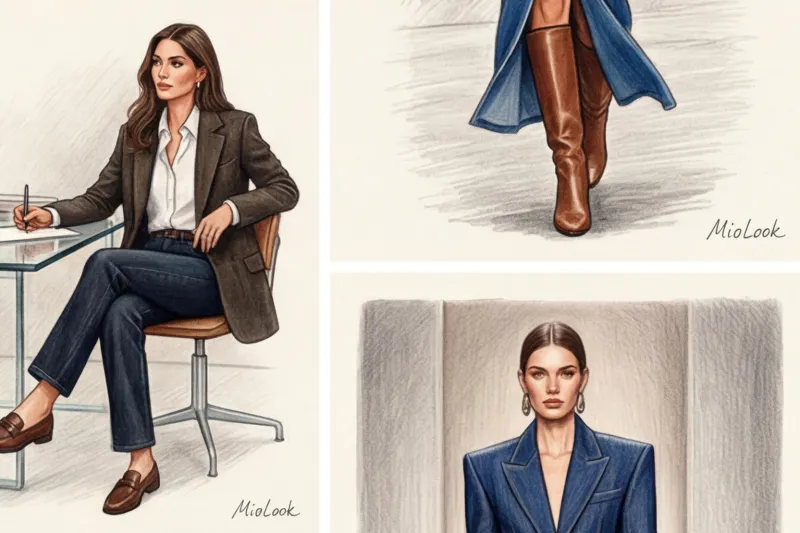
Integrating denim into everyday office wear isn't limited to trousers. If you want to demonstrate a high level of stylistic acumen, consider denim tailoring. A structured denim blazer with a crisp shoulder line, English collar, and darts is a great investment (well-tailored models in this segment typically cost between €150 and €350). Unlike a shapeless, oversized jacket, such a jacket exudes poise. The same goes for skirts: a denim midi pencil skirt or an architectural A-line skirt in thick, dark denim are the perfect yet fun alternative to traditional office fabrics, without breaking the chain of command.
The key to a flawless business look with denim is the law of contrasting textures. To counteract the fabric's workwear, utilitarian nature, it should be surrounded by distinctly elegant and formal elements. Tuck a flowing silk blouse into thick jeans: the matte surface of the cotton will stunningly highlight the silk's delicate sheen. Add a thin cashmere jumper. And most importantly, complete the look with a highly structured bag. Soft shoppers, sacks, and hobo bags are strictly prohibited here. Choose a rigid tote with sharp angles or a leather briefcase. It is this geometric, formality of accessories that brings the outfit together.
When putting together a corporate capsule collection, I strongly recommend digitizing your formal pieces—jackets, silk shirts, classic pumps—in an app. MioLook This will allow you to visually combine them with potential denim purchases and accurately determine whether the texture contrast works before you make a purchase.
Your perfect look starts here
Join thousands of users who look flawless every day with MioLook. Smart wardrobe management on your smartphone.
Get access — €0.99 onceChecklist: Integrating Fashionable Denim Trends into a Capsule Collection
In my wardrobe architecture workshops, I regularly encounter "denim paralysis": girls have dozens of pairs of trousers, but in the morning they always reach for the same ones. Theoretical knowledge about what's currently fashionable jeans trends , are useless without a clear system. Let's turn theory into a practical algorithm for creating a smart wardrobe.
Step 1: Ruthless Audit
Before integrating anything new, we must clear the space of visual noise. It's time to permanently ditch jeggings with extreme elastane, styles with contrasting bleached "mustache" on the thighs, and mid-rise skinnies that mercilessly distort the proportions of the legs. If you use the virtual wardrobe feature in MioLook , simply archive these outdated pieces so they don't distract. Keep only the denim that holds its shape reliably.
Step 2: Invest in the Perfect Base
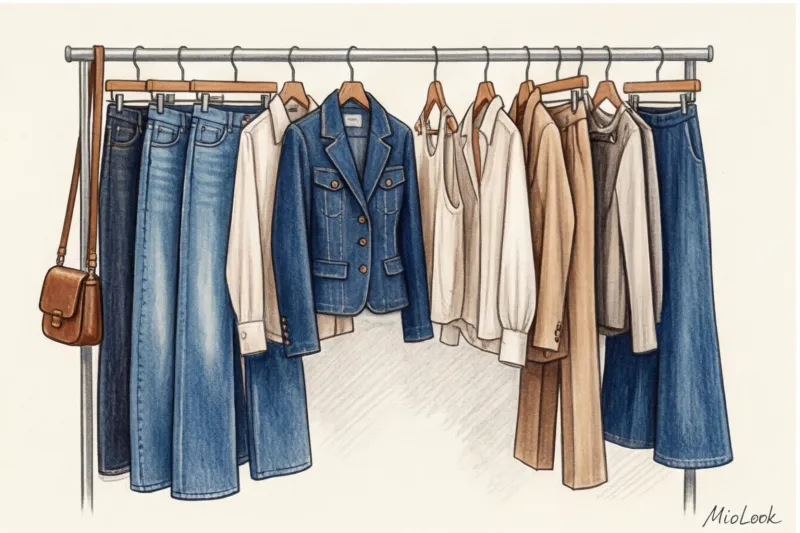
Any capsule collection is built on a solid foundation. You need at least one impeccable basic piece—classic straight or wide-leg jeans made of heavy cotton. In my experience, in the €120–€180 range, you can find excellent raw indigo options that will last for years. This basic fit should be designed by an architect: without any baggy knees or excess groin.
Step 3: Add a trendy item
Only when the basics are assembled do we introduce trendy elements. The golden rule of styling is: for every three basic pieces in a capsule wardrobe, there should be one accent piece. Incorporate a denim maxi skirt with a deep front slit or architectural barrel leg jeans into your wardrobe. These pieces will become style catalysts, giving your usual cashmere sweaters and tailored blazers a completely new feel.
Step 4: Shoe Architecture
Even the perfect pair of jeans can be ruined by improperly styled hems. In 2024, New York stylist Allison Bornstein popularized the "Wrong Shoe Theory," calling for playing with contrasts. However, complex denim silhouettes still require adherence to basic geometry:
- Wide-leg: They need a chunky base to visually ground the wide cut. Opt for loafers with a thick, chunky sole or suede sneakers with a retro aesthetic.
- Barrel leg jeans: Since they add volume at the hips, a subtle visual anchor is essential at the bottom. Pointed-toe ankle boots, Mary Janes, or dainty kitten heels are ideal.
- Straight cut: The versatile silhouette complements shoes with a crisp, square toe in the spirit of '90s minimalism or classic Chelsea boots with a shaft that extends right up to the pant leg.
Each of these steps is aimed not at mindlessly consuming trends, but at creating a functional wardrobe that works for you every day.
The Art of Care: How to Maintain the Color and Shape of Premium Jeans
In 2014, Levi's CEO Chip Bergh publicly announced that he hadn't washed his favorite jeans in over a year. This statement sparked a media frenzy and gave rise to the fashion industry's most enduring myth: that expensive denim shouldn't be washed, but rather frozen to kill bacteria and eliminate odor.
Let's get this straight. As a fashion journalist, I've discussed this issue repeatedly with technologists at factories in Okayama, Japan—the world capital of premium denim. The freezer doesn't work. It doesn't kill bacteria, it just puts them into cryo-dormant mode.
A 2011 study by microbiologist Rachel McQueen of the University of Alberta clearly demonstrated that as soon as the fabric warms up again from your body heat, the microorganisms reactivate. Moreover, skin particles and sebum don't disappear—they remain embedded in the fabric structure and slowly break down the cotton fibers from the inside, making the jeans brittle and prone to ripping.
The Anatomy of Delicate Washing
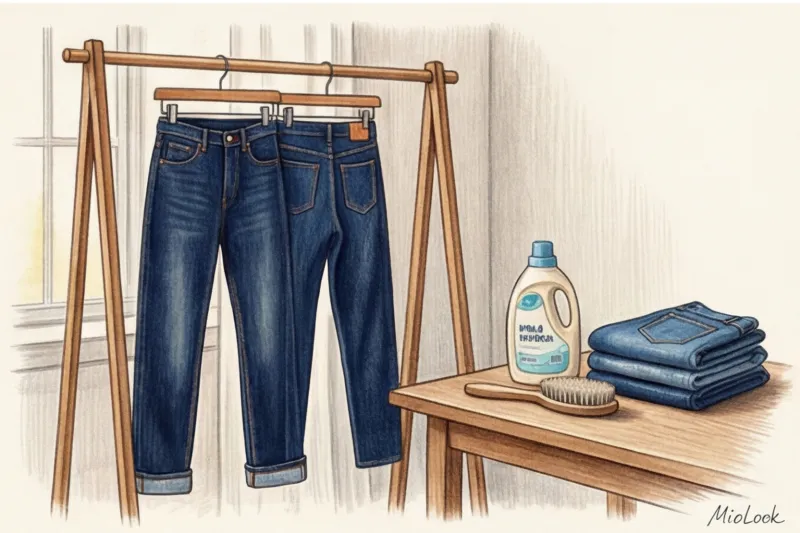
Washing denim is essential; the only question is how to do it without leaching the precious pigment. Indigo is a surface dye; it doesn't penetrate the core of the cotton thread. If you've invested in a quality pair costing €200–€300, your goal is to minimize friction and temperature shock.
- Turning inside out: This is an absolutely non-negotiable rule before loading the laundry into the drum. It protects the front side from developing whitish, spiderweb-like creases that cheapen the look of the garment.
- Cold water: Wash at 20–30°C. Use only liquid detergents for dark fabrics. Washing powder contains microabrasive particles that act like sandpaper on indigo.
- Refusing to use a tumble dryer: Thermal exposure is the main enemy of jeans. High temperatures destroy elastane (if present) and deform the geometry of pure cotton.
The Philosophy of Raw Denim: How to Create a "Second Skin"
Unwashed raw denim requires special attention. The point of buying these stiff jeans is to create a unique fraying pattern over time (in the industry, they're called "honeycombs" under the knees and "whiskers" in the groin area) that will reflect your unique anatomy.
To properly "break in" raw denim and fix these creases, Japanese purists recommend wearing the garment regularly for 3-6 months before exposing it to water for the first time. This initial immersion (preferably in a cool bath rather than in a washing machine) will remove the technical starch, allowing the fabric to shrink naturally and permanently set the resulting 3D pattern.
Remembering how many times you've worn a particular pair can be difficult. I prefer digital precision: I add a new item to the catalog. smart wardrobe in the MioLook app I simply mark each wear. As soon as the counter reaches 30–40 wears for regular cotton or 90 for raw denim, I schedule a delicate wash.
Tracking fashionable jeans trends each season, I never tire of repeating: even the most cutting-edge architectural cut will lose its meaning if the fabric deforms due to careless care. True style is not only about the silhouettes you choose, but also about the respect you have for your clothes. Find the perfect pair, care for them properly, and they will last for years to come, only becoming more beautiful with each wear.
Guide Chapters
How to wash jeans properly to preserve their color
Premium denim requires special care, just like expensive wool suiting. We'll break down the key care tips for jeans to ensure they don't get ruined after washing.
Fashionable Denim Dresses: The Best Alternatives to Jeans
Denim isn't just about classic trousers. Learn how to style denim dresses, shirts, and overalls in both casual and formal looks.
How to wear gray jeans: styling colored denim
Blue denim is a staple, but it's time to think beyond the wardrobe staples. Learn how to style gray, white, and colored jeans.
How to wear women's cargo jeans: elegant looks
Wide-leg denim is no longer just a teenage trend. We'll show you how to elegantly incorporate baggy and cargo jeans into a grown-up woman's wardrobe.
What Jeans to Wear at 40: Stylist Tips
Think you'll have to give up denim as you age? Find out how the right jeans can help you shape your figure and look stylish after 40.
What to wear with flared jeans: tips and shoe selection
Debunking denim stereotypes. Learn how to choose the right flared jeans for your body type and what shoes to pair them with for a stylish look.
What to wear with straight jeans: capsule ideas
Straight-leg jeans are a mathematically perfect wardrobe staple. Learn how to break free from clichés and make denim the architectural framework of your wardrobe.
Ideal jeans for plus size women: shaping styles
Stop hiding your figure behind stretched-out jeggings. We'll show you how thick denim and the right fit can help create the perfect plus-size silhouette.
How to Create a Stylish Total Denim Look: Stylist Tips
Secrets to creating a stylish monochrome denim look from a seasoned stylist. Learn how to transform everyday denim into an elegant look.
Fashionable denim jackets: from oversized to cropped
The denim jacket is no longer just a weekend staple. Find out how structured denim is replacing classic blazers in your wardrobe.
What Shoes Go With Jeans: A Stylish Cheat Sheet
The problem with a perfect denim look often lies in the improper construction of the hem. Learn how to choose shoes for any pair of jeans based on the principles of geometry and style.
How to Choose Jeans for Your Body Type: A Stylist's Guide
Tired of trying on dozens of pairs without success? Discover how denim architecture and technical details help you find the perfect jeans for any body type.