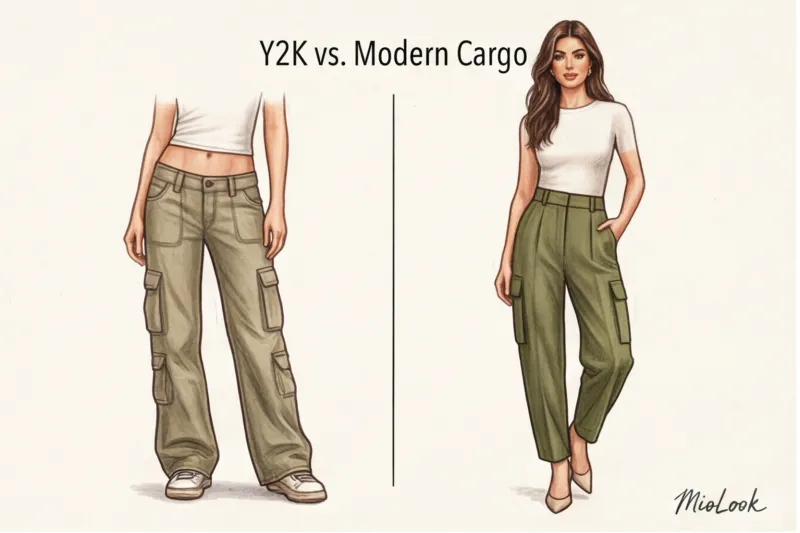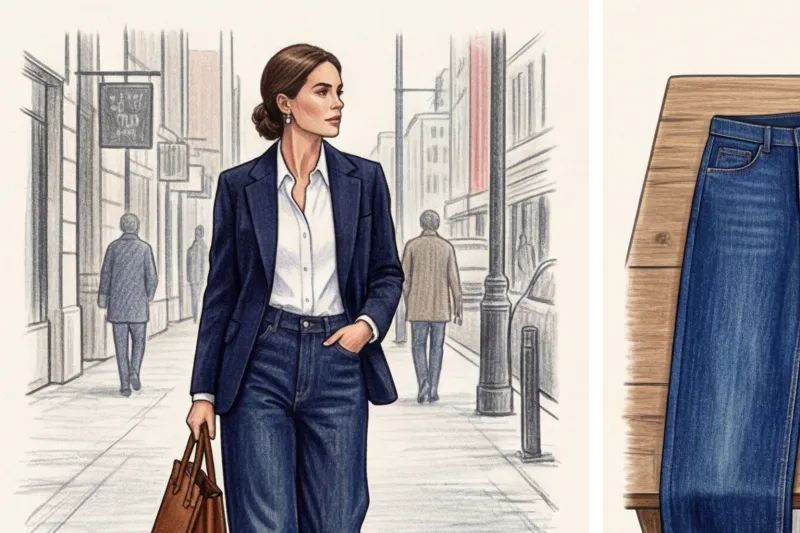
Clients often come to me with the same request: "Sofia, I want to wear wide-leg jeans, but I'm afraid I'll look like a teenage skater stuck in the early 2000s." We're used to thinking of oversized denim as exclusively a street style staple, with sneakers and oversized hoodies. But the architecture of fashion has changed. Today, the question of What to wear with women's cargo jeans or classic baggies, is decided in the plane of elegance, and not teenage rebellion.
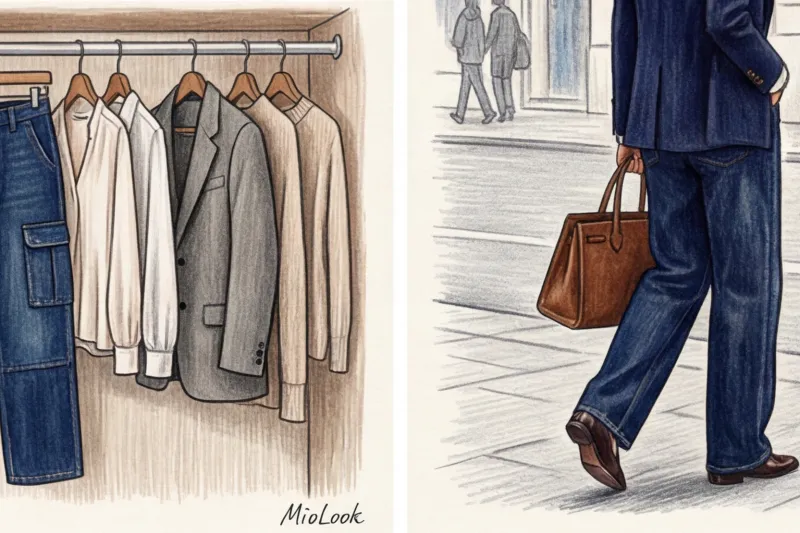
We discussed the origins of this global shift in more detail in our The complete guide to denim trends , but here I want to focus on practice. As a stylist and textile researcher, I assert: baggy jeans can and should become part of your "smart" adult wardrobe. The secret lies not in styling per se, but in the mathematics of cut, contrasting textures, and, most importantly, the right fabric weight.
The Evolution of Relaxed Denim: From Streetwear to Smart Wardrobe
Denim has undergone a colossal transformation. From utilitarian workwear, it has become a canvas for creating complex, sculptural silhouettes. The global demand for "quiet luxury" has forced designers to rethink comfort: we are no longer willing to sacrifice status for comfort, nor comfort for status.
Remember the Bottega Veneta Spring/Summer 2023 show, where Mathieu Blasi demonstrated an optical illusion trompe l'œil — pants that looked like distressed jeans were actually finely printed leather. This moment cemented denim's new status: it's now a high-fashion material. To embrace this trend, the first thing I recommend is ditching the faux-wash finish in favor of a refined raw indigo denim. A deep, solid blue instantly elevates a garment from relaxed to smart-casual, even if you're buying jeans in the €80–€150 price range.
Volume architecture: what is the technical difference between baggy and cargo?
Before integrating these models into your closet, let's understand their anatomy. Errors in terminology often lead to purchasing mistakes.
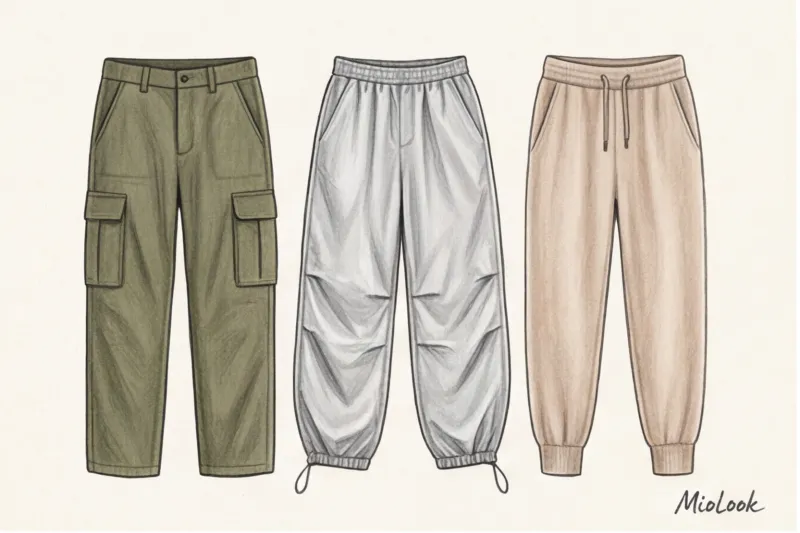
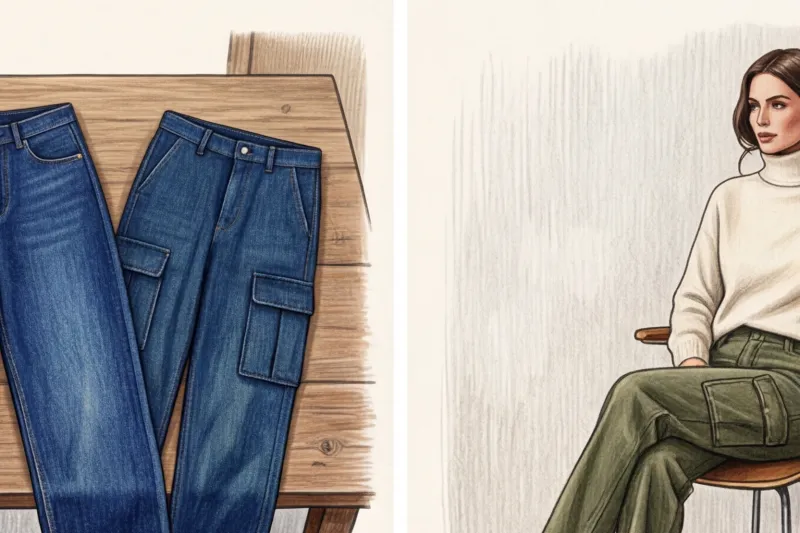
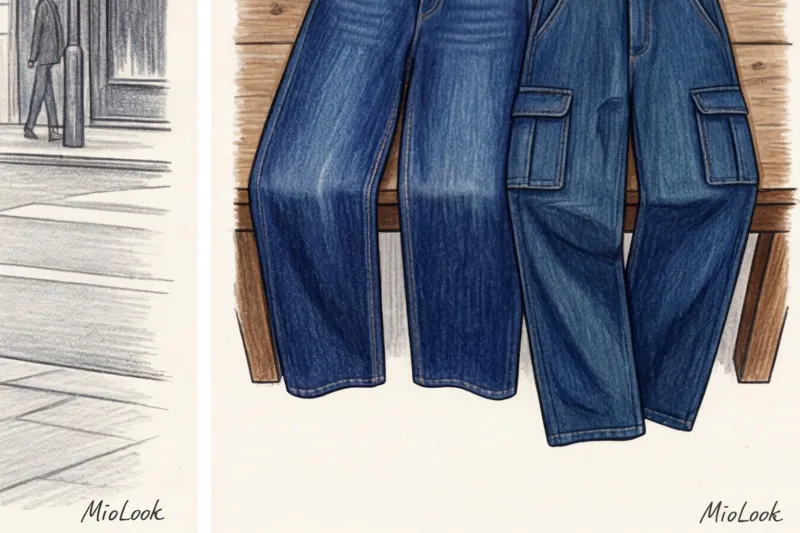
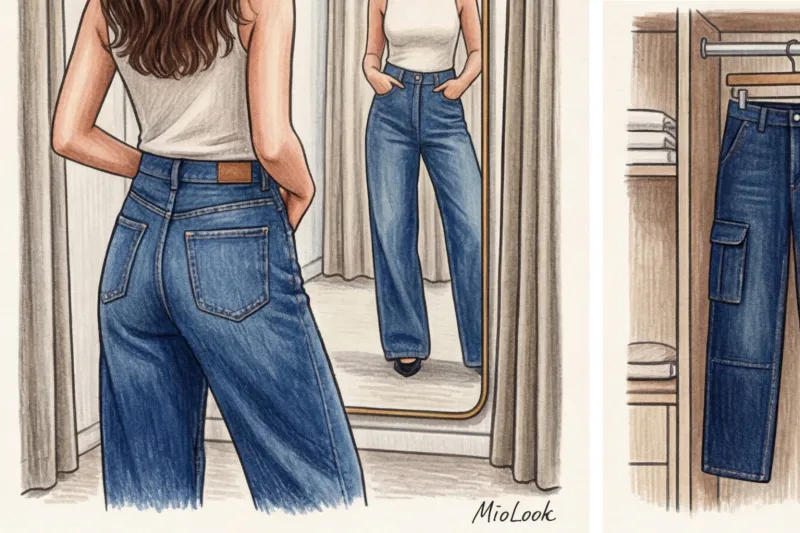
- Baggy They are built around cascading volume. They feature a classic or slightly dropped waistline and evenly wide legs. Their purpose is to create a clean A-line silhouette.
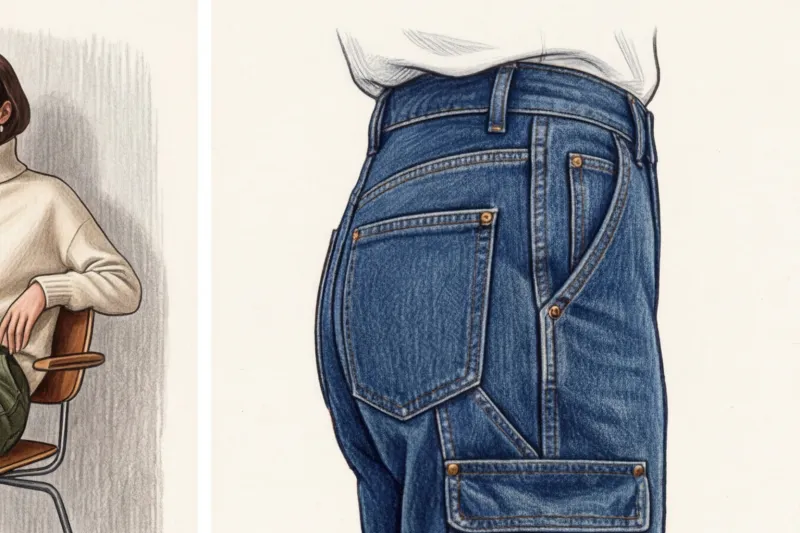
- Cargo — is a utilitarian cut. Their DNA calls for patch pockets, tool loops, reinforced structural seams, and flaps. They break up the straight silhouette, adding a rugged edge.
But the biggest difference between a cheap item and a high-end one is the fabric weight. Thin denim (9-10 ounces) creates a terrible "pajama effect"—the fabric sags, bunches up in untidy folds at the knees, and cheapens the look.
"In my practice, we literally saved a 35-year-old lawyer client's wardrobe by simply removing her thin, hanging cargo pants. We replaced them with a pair of 13.5 oz (ounce) stiff selvedge denim. The stiff fabric created the perfect architectural space above the shoes, visually elongating the silhouette and bringing the look together."
Your perfect look starts here
Join thousands of users who look flawless every day with MioLook. Our intelligent AI stylist will analyze your features and suggest the best combinations.
Get access — €0.99 onceHow to Wear Women's Cargo Jeans: Adult Styling Rules
The key to working with voluminous bottoms is contrast. If you pair a voluminous hoodie and chunky sneakers with wide cargo pants, you'll end up with a stereotypical Y2K look. Utility bottoms require a sophisticated, put-together top.
For my clients, I have developed a cast-iron styling formula: Rough denim + noble texture + pointed toe This is how we incorporate cargo into aesthetics. Office Siren or female Corpcore.
A play of textures: cashmere, silk and leather
Rigid denim loves to be paired with delicate materials. Try pairing dark blue cargo pants with a translucent silk blouse or suede shirt This technique works by clashing contexts: rough workwear meets evening aesthetics.
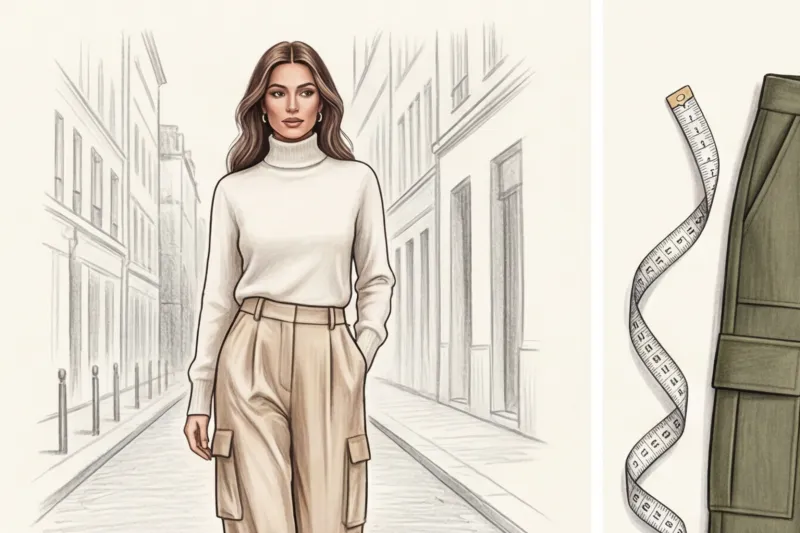
In winter, a thin cashmere turtleneck (an investment of €100 to €250 will pay for itself in hundreds of outings) and a structured wool jacket with a crisp shoulder line are the perfect partner. The jacket gathers the relaxed hem, preventing the silhouette from spreading out. Don't forget the leather belt—it's not just a functional detail, but a visual anchor that defines the waist.
Shoes that change everything
Shoes are the switch that changes the mood of your baggy.
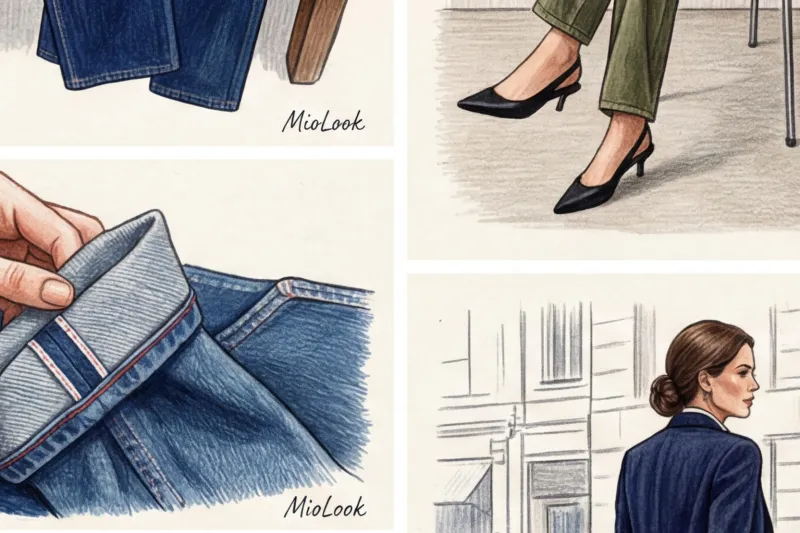
- Kitten heels and slingbacks: An instant boost of elegance. The pointed toe peeking out from under the wide leg makes the leg appear endless.
- Rough boots: To avoid the "construction worker" look, ditch the laces in favor of simple Chelsea boots with a chunky yet smooth sole.
- Loafers: Paired with chunky ribbed socks, they provide a great nod to preppy style while balancing out the edgy cut of the jeans.
The Anatomy of the Perfect Cargo: How Pockets Change Your Body's Proportions
Let's be honest: cargo jeans aren't for everyone. This is their main limitation, which mass-market brands prefer to keep quiet about.
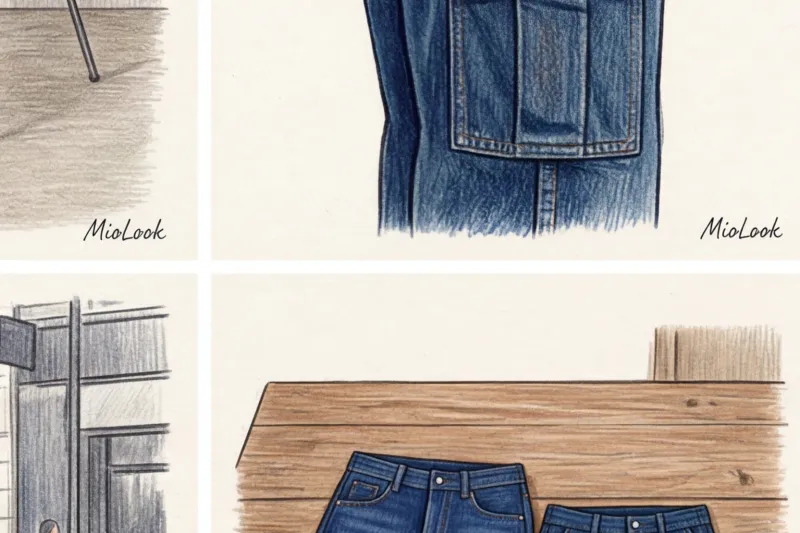
An insider rule of geometry: anything that adds volume at the sides will visually widen you. If you have a pronounced pear-shaped figure (wide hips), classic cargo pants with large patch pockets and flaps at the level of the breeches will add 5-7 kilograms to your visual weight.
But that doesn't mean the trend is off-limits. Look for styles with flat side pockets (without any creases) and positioned closer to the front of the thigh. Another consideration is the height of the pockets. Pockets positioned below mid-thigh (closer to the knee) dramatically shorten your legs. Your ideal style should have vertical seams along the leg—they act as guides, elongating your height.
Access to MioLook for €0.99 — one-time payment
A smart AI stylist will select the perfect look for your body type, taking into account complex cuts and textures.
Get access — €0.99 onceSustainable Choice: How to Identify Quality Denim
As a sustainable fashion expert, I urge you to read labels. The production of classic denim is one of the dirtiest processes in the industry. According to reports from the Italian factory Candiani (2023), the introduction of eco-friendly dyes based on natural indigo and plant-based rubber reduces water consumption by 75%.
What to look for in the composition? The ideal scenario is 100% cotton (preferably with a percentage of recycled content) or a cotton blend with lyocell/Tencel™. Over 12 years of working with eco-friendly brands, I've learned to distinguish premium Tencel from cheap viscose with my eyes closed: the former is cool to the touch, heavy, and has a refined matte sheen, while the latter quickly becomes pilled and wears thin.
Be sure to turn your jeans inside out at the store. Quality checklist:
- Cleanliness of internal seams (no protruding overlock threads).
- Copper or brass fittings (cheap shiny metal will peel off after the third wash).
- The presence of a selvedge on the side seam is a marker of denim woven on traditional shuttle looms. These jeans last 40% longer than models made with elastane.
The 'One Size Bigger' Myth: Why Baggies Require a Precise Fit
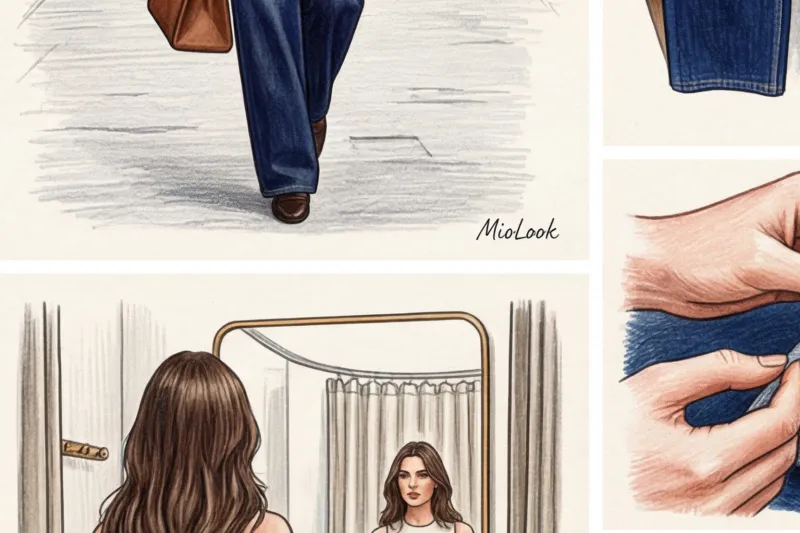
The most counterintuitive discovery my clients make in the fitting room: you can't just go two sizes bigger on straight jeans to get the trendy "relaxed" effect.
Oversized is a cut, not a size. If you buy jeans in size L when you're a size S, they'll just hang loosely around your butt, creating a disastrous "diaper effect," and your waist will bulge out at your back.
Proper baggy pants have a strictly mathematical fit. They should fit snugly around the waist and upper thighs, just like your favorite skinny jeans. Volume is factored exclusively into the leg pattern, starting from the hipline and down. Pay attention to the yoke (the V-shaped seam at the back under the waistband)—the deeper it is, the more flattering and rounder your butt will look, even in the loosest denim.
Practical checklist: incorporating chunky denim into a basic capsule wardrobe
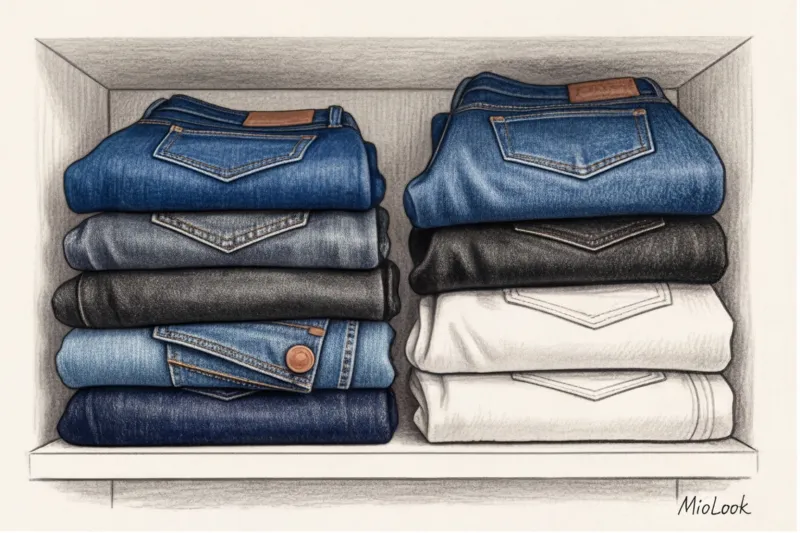
To prevent your new cargo or baggy pants from becoming dead weight, conduct a mini-audit. Can you name three items in your closet right now that you'd wear them with? If it's a white heavy cotton shirt, a black fitted jacket, and a silk top, bingo, the purchase is worth it.
Length is a special focus. A wide leg of stiff denim should form a beautiful, soft break above the instep. It shouldn't drag on the pavement (that's impractical and unsustainable) and shouldn't end above the ankle (that would throw off the proportions).
And finally, care. Wash stiff denim as little as possible. Turn it inside out, use a delicate cycle (no higher than 30°C) and a liquid detergent for dark fabrics. Avoid fabric softener, as it destroys the structure of the dense cotton, making it loose.
Oversized denim isn't a passing trend, but a new classic that gives us freedom of movement without sacrificing elegance. By learning to work with fabric density and texture contrasts, you'll make baggy denim the most functional style tool.