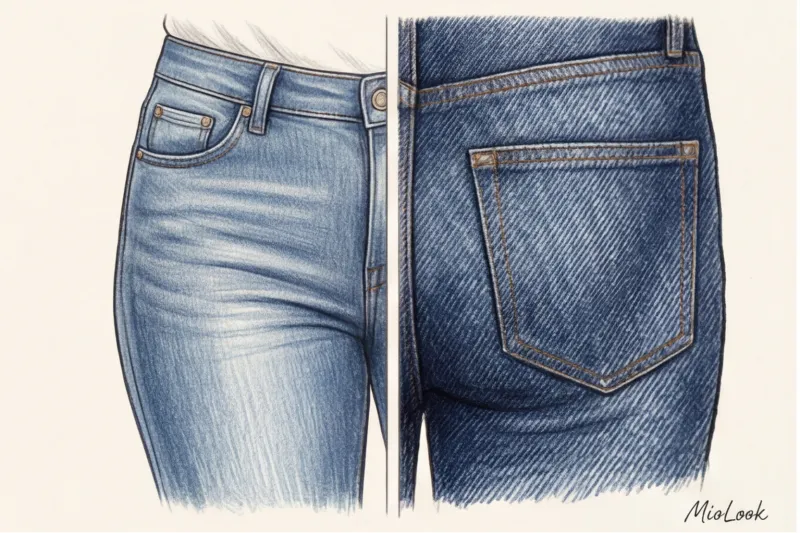
Have you ever noticed that 90% of advice for plus-size figures boils down to the dull and outdated formula: "hide behind black and choose fabrics that stretch in all directions"? As a fashion journalist and stylist, I've been observing this destructive trend for years. We're persistently sold the idea that comfort equals shapelessness. But when it comes to denim, this approach turns into a fashion disaster.
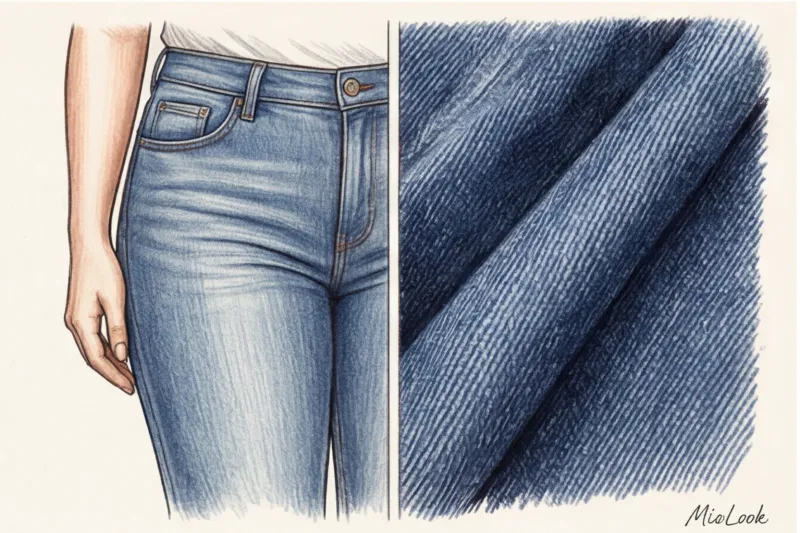
The ideal jeans for plus-size women aren't those that stretch endlessly and disguise themselves as leggings. They're an architectural, dense material that functions as a smart frame. We've already covered the evolution of this material in more detail in our a complete guide to the most fashionable jeans , but today we'll delve into the complex geometry of fit for curvy figures.
Architecture vs. Skinny: Why Stretch Jeans Are a Major Mistake for Plus Size Women
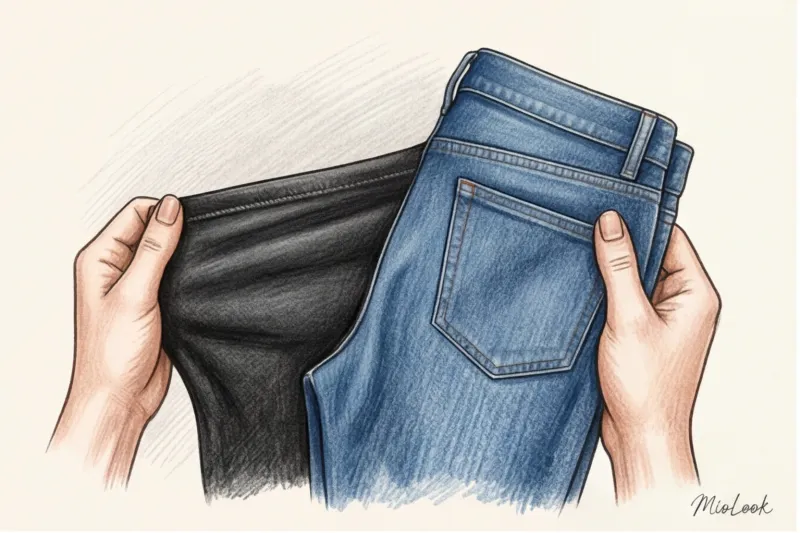
Let's be honest: hyper-stretchy jeggings are the main enemy of the plus-size figure. A common myth holds that plus-size women need extremely stretchy jeans with a high polyester or elastane content (often over 5%). In reality, thin stretch fabric insidiously highlights every unevenness of the skin, deprives the figure of its support structure, and creates a loose, shapeless silhouette.
"Rigid denim works like a couture corset. It doesn't adapt to your curves—it forces your silhouette to adapt to its strict lines"—I always emphasize this principle in my style workshops.
A few years ago, I had a telling experience at a fitting before a Paris show. A model, a generous size 52, showed up wearing thin skinny jeans that she felt "comfortable" in. When I suggested she change into a pair of classic raw denim straight-leg jeans, she resisted, insisting they would make her look wider. The result left her gasping: the thick fabric cinched her hips, smoothed out her midriff, and made her look two sizes slimmer. A fabric that holds its shape takes control of the silhouette.
The Anatomy of a Perfect Fit: The Mathematics of Cutting Before You Go to the Fitting Room
Finding the perfect pair doesn't start in the fitting room, but with studying the label. Modern denim production technologies have clear density standards, measured in ounces per square yard (oz).
To model a plus-size figure, you need a measurement in the range 11–14 oz Anything under 10 oz is considered thin summer denim (or chambray), which is physically incapable of providing support. According to the WGSN global study (2024) on the evolution of denim, leading premium brands are returning en masse to heavy cotton precisely because of its sculpting properties.
The ideal composition formula you should be looking for is: 98–99% cotton and only 1–2% elastane This minimal percentage of elastane is needed solely to ensure a comfortable fit, but at the same time, the jeans don't lose their original shape by evening.
Access to MioLook for €0.99 — one-time payment
A smart AI stylist will select the perfect look based on your proportions and preferences.
Get access — €0.99 onceThe magic of the yoke and pocket placement
The "golden ratio" rule in jeans design is hidden in the details of the back. The yoke—the seam between the waistband and the back pockets—is responsible for the buttock-lifting effect. For plus-size women, a V-shaped yoke, with an angle approaching 45 degrees, is ideal. The deeper this "V" is, the rounder and firmer the buttocks appear.
Pockets are visual magnets. They should never be too small (this will create the illusion of larger hips by contrast) or too far apart (this will visually widen the pelvis).
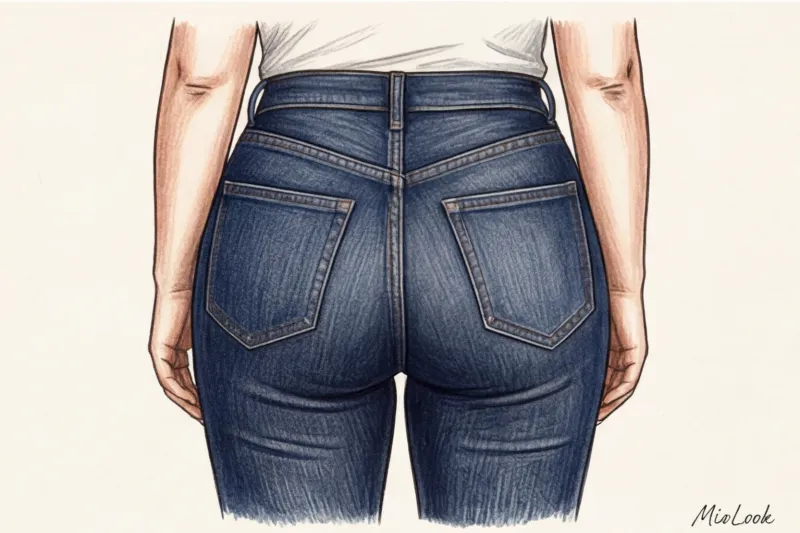
As for the landing height, there is an important limitation. When does the high waist rule NOT work? If you have a pronounced, full, apple-shaped belly, a trendy high-rise style will only accentuate it, hugging it like a ball. Your "sweet spot" is a confident mid-rise, just below the navel, which will cut through the volume and create the right proportions.
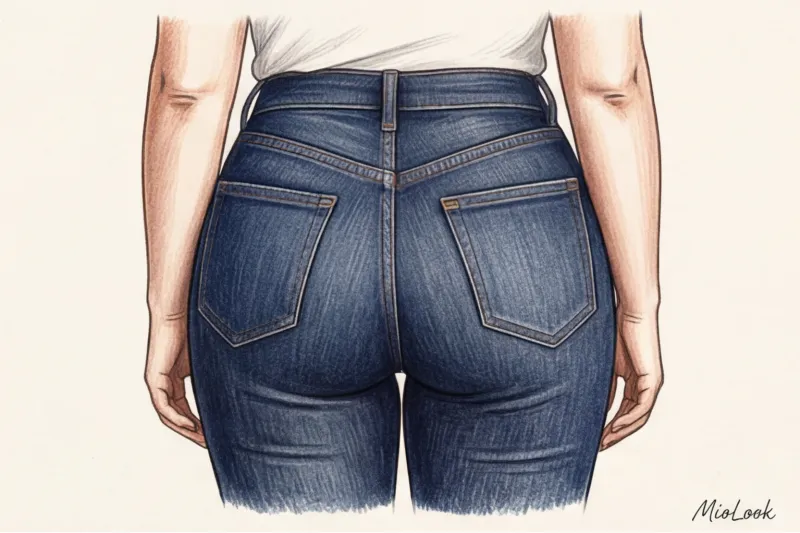
Top 4 Jean Styles That Perfectly Flatter a Plus-Size Figure
The days when plus-size women were advised to wear only dark skinny jeans and tunics are, fortunately, over. Today, we embrace the aesthetics of "quiet luxury" and runway trends that are perfectly adapted to real women. A well-chosen pant leg width can dramatically alter the perception of size.
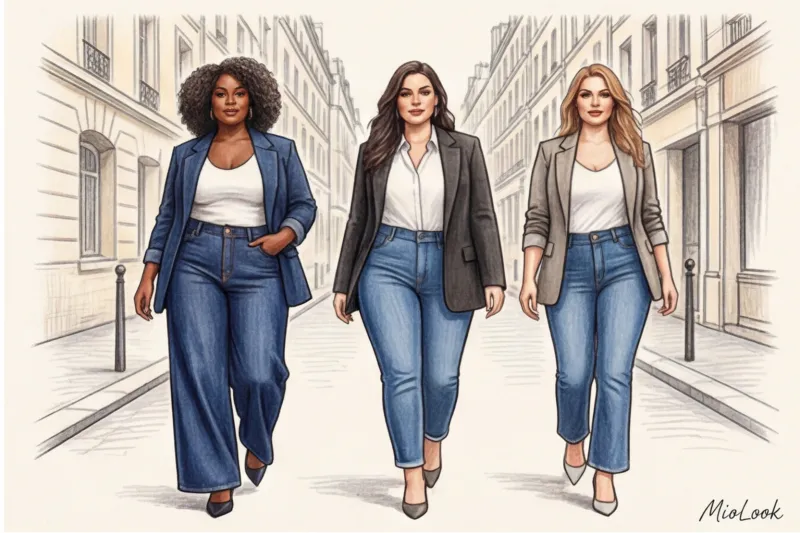
Straight Cut Jeans: The New Basic Standard
Straight-leg jeans are an absolute must-have. Unlike skinnies, which taper to the ankle and create an inverted triangle shape, a straight leg balances out heavy hips. The vertical leg extends from the widest part of the thigh down, creating a slender column. The optimal length is to the ankle bone or to the floor if worn with heels.
Wide-leg jeans and the phenomenon of status volume
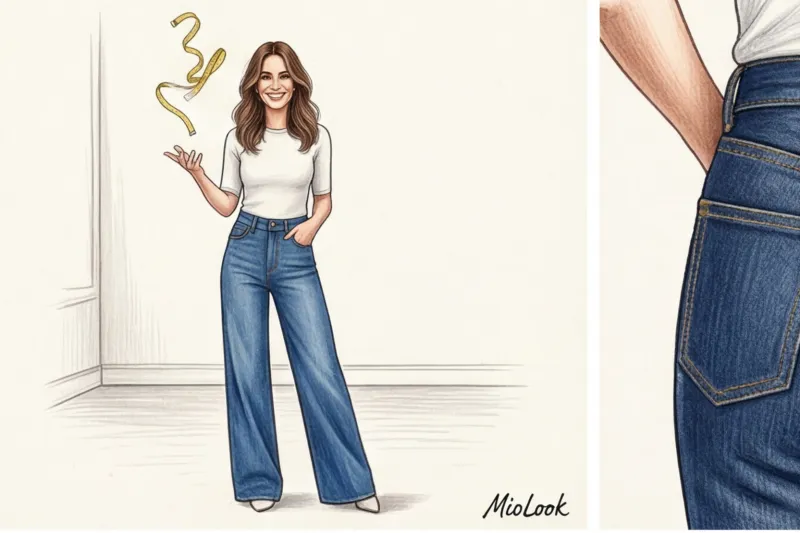
Wide-leg jeans are often a daunting choice for plus-size women, as they fear looking boxy. The secret lies in the fit. Wide-leg jeans should fit perfectly at the waist and upper thighs. The fullness should start lower. Take a look at Bottega Veneta's collections: their flowing yet sturdy denim creates a truly classy silhouette. In the mass-market segment (for example, at COS or Massimo Dutti), similar styles can be found in the €80–€120 range.
Bootcut and Flare: Hourglass Architecture
A flared knee is a genius mathematical trick. The flare at the bottom automatically balances out wider hips at the top, creating the optical illusion of a narrow waist (the hourglass effect). To enhance the "endless legs" effect, pair these jeans with pointed-toe shoes, the tip of which barely peeks out from under the pant leg.
Barrel Models: How to Tame a Challenging Trend
Architectural barrel jeans, which have an A-line silhouette, may seem dangerous for plus-size women, but this isn't the case. They're ideal for women with inverted triangle or rectangle body shapes, as they create an artificial curve in the hips. The main rule is that the jeans should end just above the ankle (the narrowest part of the leg) to shift the emphasis from overall width to a graceful detail.
Color and Texture: Why Raw Denim Is a Better Investment
Forget about faux thigh wear, rhinestones, embroidery, and bold gradients. Any lightening effect on fabric works like a highlighter in makeup—it visually enlarges and brings the area closer. If you have a thigh wear mid-thigh, it will make your thigh appear fuller.
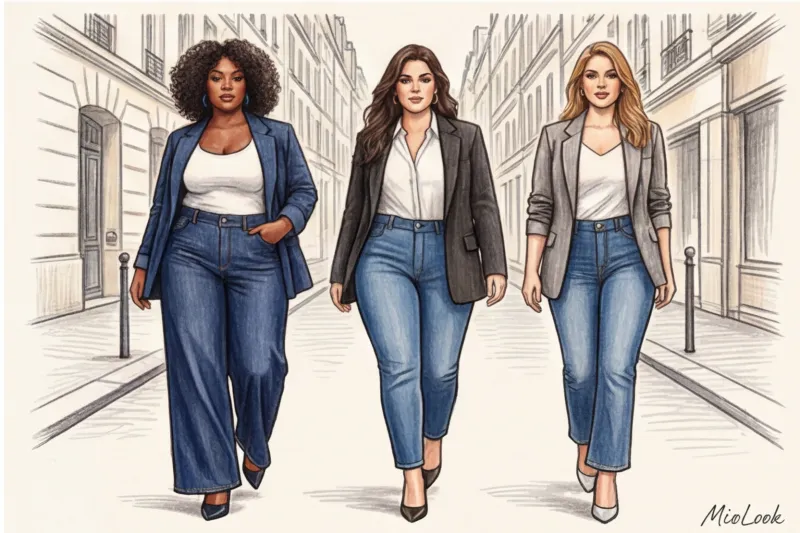
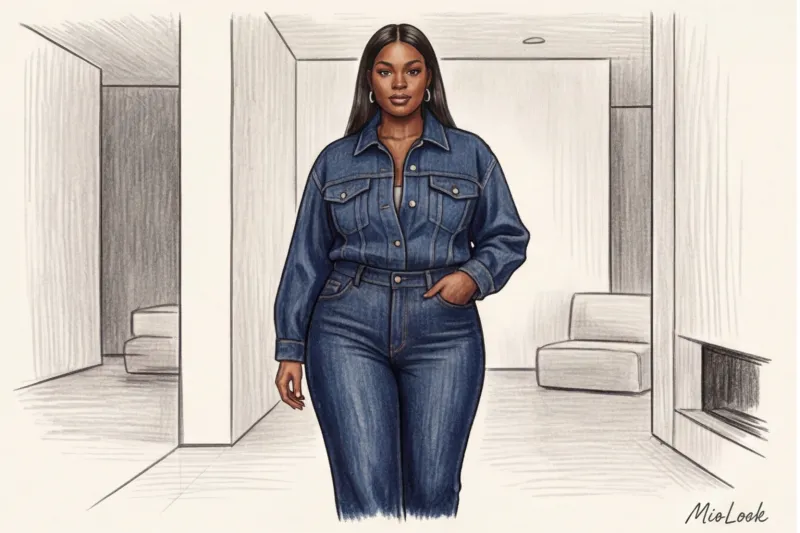
The best tool for creating a stately vertical line is raw denim in a deep, uniform dark indigo shade. The smooth, uninterrupted dark surface elongates the figure. The PANTONE Color Institute regularly includes deep indigo shades in its primary color palette, emphasizing their timeless relevance.
Moreover, the crisp dark denim instantly elevates the look to the status quo. It's not associated with relaxed weekend wear, but fits perfectly with the current office siren aesthetic—strict and intellectual, yet with a subtle hint of sensuality.
Your perfect look starts here
Join thousands of users who look flawless every day with intelligent wardrobe selection.
Get access — €0.99 onceStylish Looks: Jeans for Plus Size Women in the Office Wardrobe
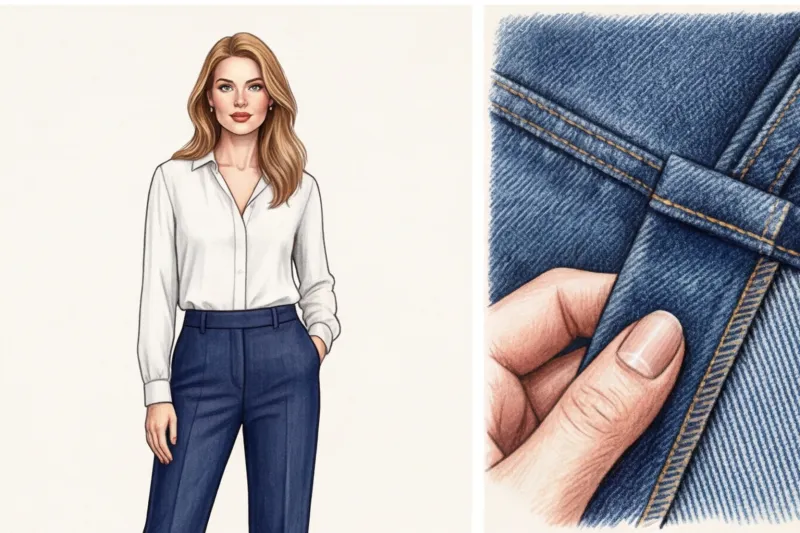
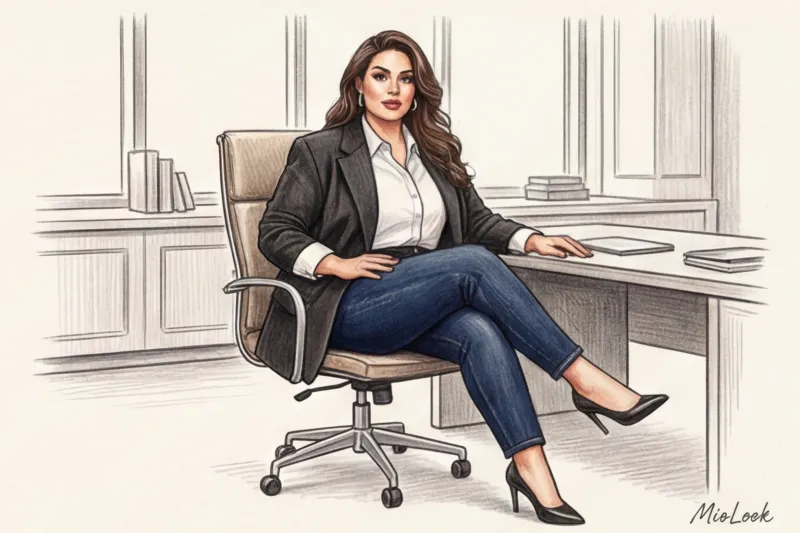
Integrating the right jeans into smart casual and business casual looks is the art of contrasting volumes. A deep, dark color and a lack of embellishment make straight-leg jeans a legit choice for casual Fridays or creative offices.
Use the rule of contrasting textures. If you're wearing thick, matte denim underneath, add a flowing silk or viscose blouse on top, then layer a crisp, structured, menswear-inspired jacket over it. The jacket should cover the widest part of your hips. This creates a layered effect that obscures the actual volume of your body.
As for footwear, avoid round toes that cut off your feet. Pointed-toe pumps (even with a kitten heel) or structured loafers with a stiff sole will complete the look. If you're unsure how a particular pair of jeans will fit into your work wardrobe, I recommend using virtual try-on feature in the MioLook app - this saves hours of time searching for the perfect combinations.
Stylist's Checklist: 5 Signs Your Jeans Fit Perfectly
Over 12 years as a stylist, I've conducted hundreds of fittings and developed a foolproof formula for the perfect fit. How do you know if jeans are tailored to your measurements?
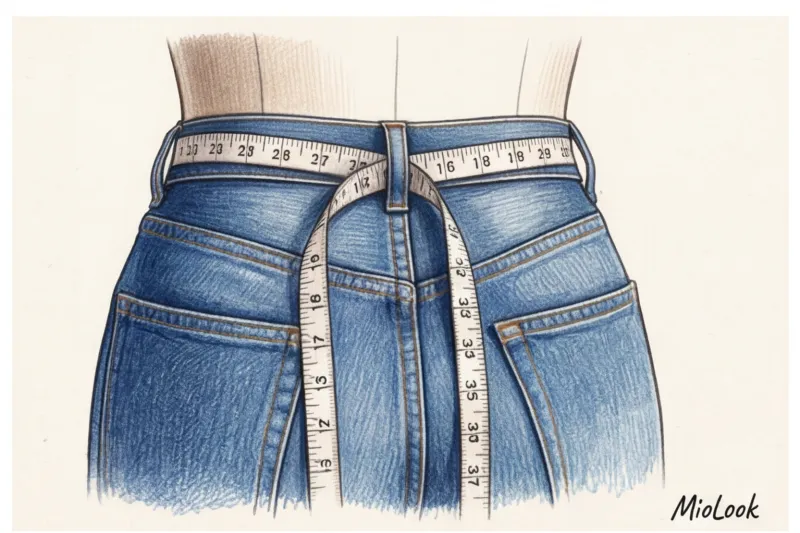
- Two-finger test: The waistband at the back shouldn't hang loose (called a gap). If you can fit more than two fingers between your waist and the jeans, the fit isn't right; look for a brand with a larger difference between your waist and hips.
- Absence of "whiskers" in the groin area: If the fabric gathers in radial folds from the crotch to the hips, the jeans are too small for you, even if you were able to button them.
- Ideal seam vertical: Side seams should be centered exactly down the leg. If the seam twists forward, the fabric is cut incorrectly and will visually crook the legs.
- Pocket centering: The back pockets should be positioned exactly in the center of the fullest part of the buttocks. Any lower will create a sagging effect.
- Sit test (dynamic testing): You can sit comfortably on a chair without your jeans slipping down your back, revealing your underwear, and without your belt digging into your stomach painfully.
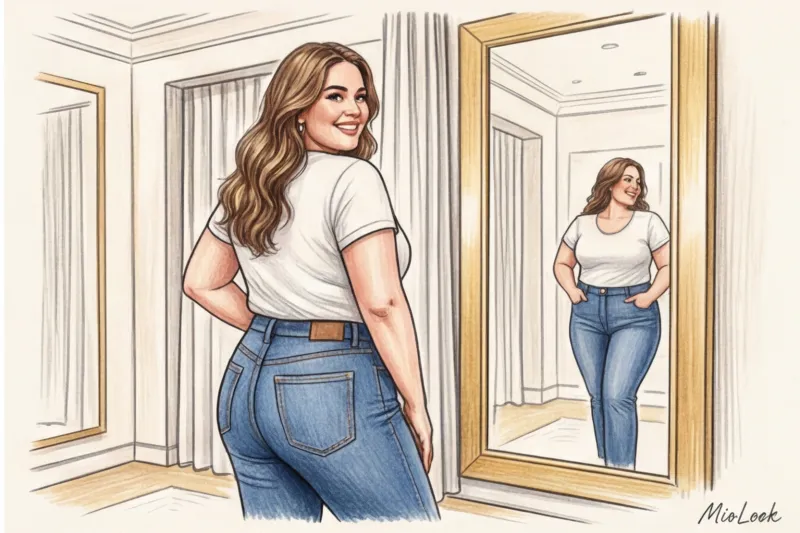
Denim isn't meant to cocoon your body, but to create the lines you want to see in the mirror. Focus on density, eschew the cheap sheen of elastane, and you'll see how well-cut jeans become your personal superpower, giving you confidence with every step.