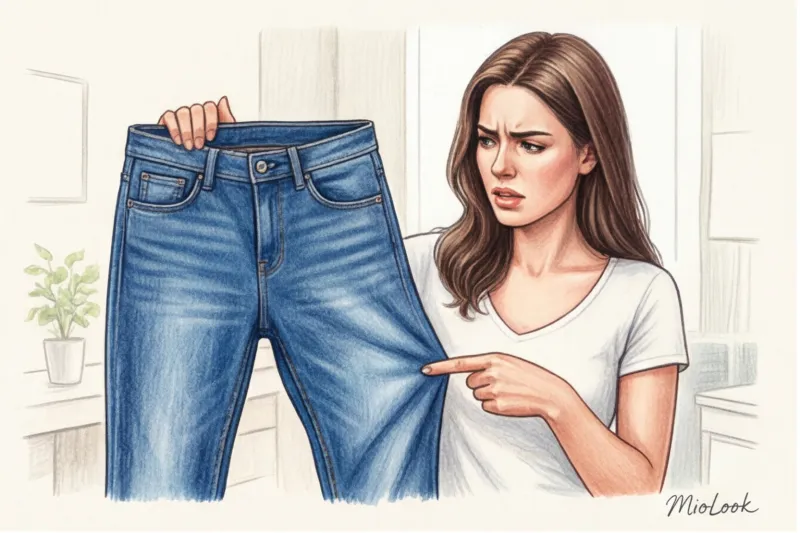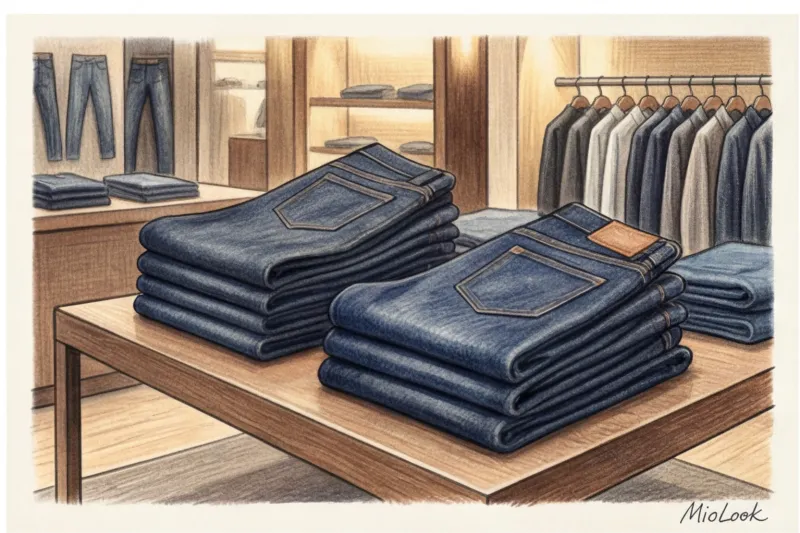
Last month, my client brought me a pair of The Row jeans for €900. Or rather, what was left of them. The perfectly tailored, rigid selvedge denim, which initially fit her like an architectural sculpture, was reduced to a shapeless rag after one "careful" trip to a regular dry cleaner with harsh solvents.
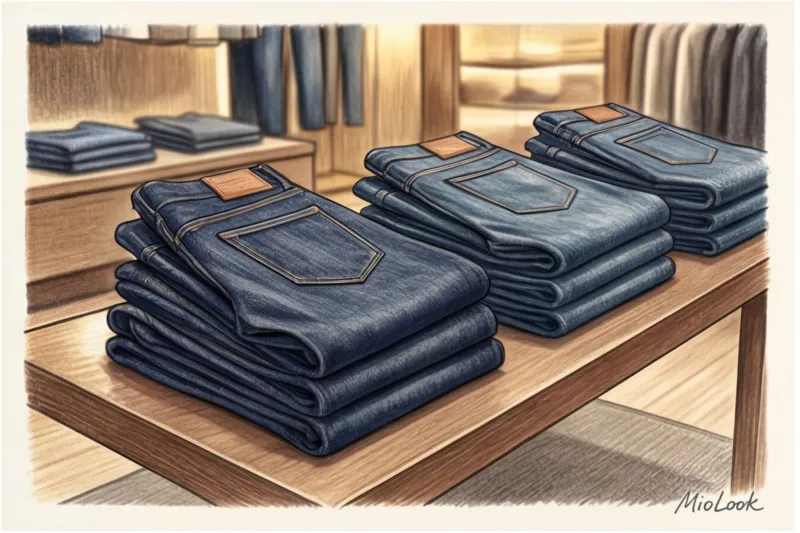
We're used to treating jeans as a utilitarian, consumable item. Throw them in the washing machine with the rest of your clothes, dry them on a hot radiator, put them on, and off you go. But if you're investing in a quality base, denim should be treated like premium wool suiting. Today, we'll take a closer look. How to wash jeans properly , so they retain their deep indigo color and the designer's intended fit for years to come. We've shared more details about which silhouettes are worthy of your investment today in our A complete guide to the top fashionable jeans and denim trends.
Smart Denim: Why Care Rules Have Changed
Beginning with the legendary Bottega Veneta show (SS23 collection), where the illusion of ordinary jeans was created from the finest nappa leather, the industry firmly established denim as a "quiet luxury." The Californian miners' work uniform became a sophisticated wardrobe staple.
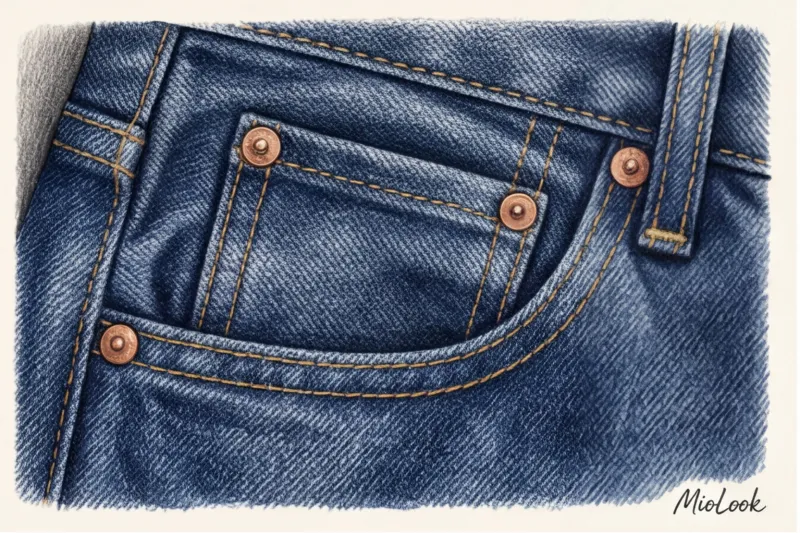
Raw indigo—a dense, unwashed cotton of a deep, inky blue—has become the ultimate status symbol. Unlike soft, mass-market styles, these jeans maintain an architectural silhouette. Rather than clinging to the body, they create a flattering shape around it, concealing figure nuances and elongating the figure. However, this sculptural effect can be destroyed in just one wash cycle at 60°C.
Tissue Anatomy: How Composition Dictates Care Strategy
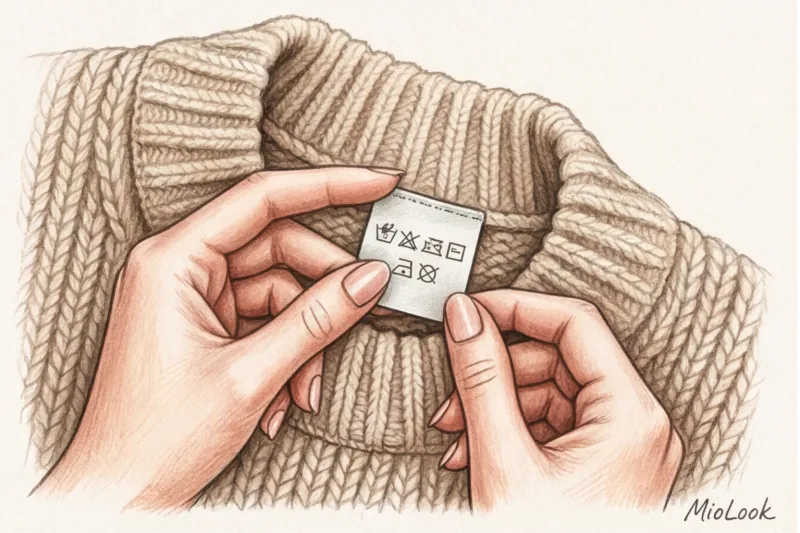
Before sorting your laundry, check the label. Japanese mills like Kuroki Mill and Kaihara, where premium denim is still woven on vintage shuttle looms (hence the famous selvedge), produce fabrics that require literally couture care.
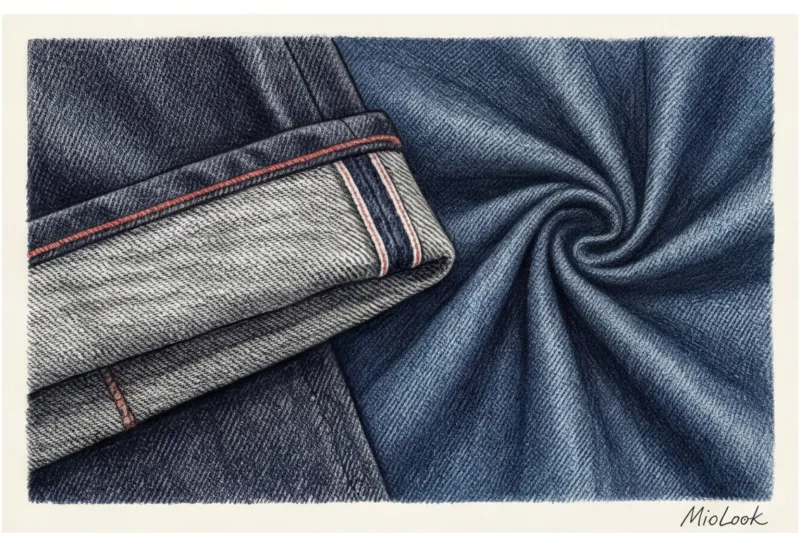
100% dense cotton (Raw & Selvedge)
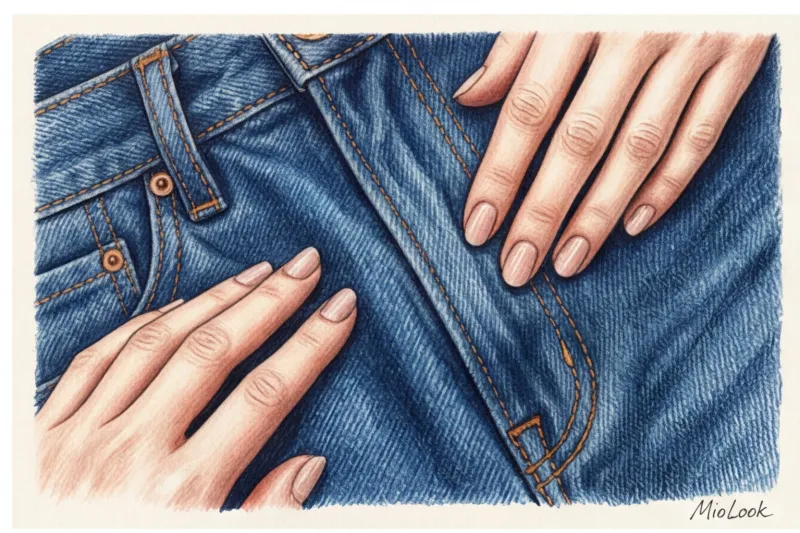
Rigid cotton has a unique "memory." During the first few weeks of wear, it creases precisely along your body's contours: at the knees, in the groin, and under the buttocks. This creates so-called "honeycombs" and "whiskers." Infrequent washings are helpful for maintaining this unique pattern.
However, completely eliminating water is a fatal mistake. According to research by the Textile Institute, microparticles of street dust and sebum penetrate between the threads and act as an abrasive. When rubbed (for example, between the thighs), this dirt literally cuts the cotton fibers from the inside. Not washing reduces the lifespan of 100% cotton by 40%—that's why your favorite vintage Levi's are wearing out in the most sensitive areas.
Premium denim with elastane
Modern brands often add 1% to 3% elastane, even to expensive models, for comfort. Elastane is a synthetic spring, and this spring is extremely sensitive to temperature shocks.
Water temperatures above 40°C destroy up to 30% of elastane fibers in a single wash. Have you ever noticed how your perfectly fitting skinny jeans suddenly start to bunch up in unsightly "bubbles" at the knees? It's not the fabric that's stretched; it's the elastane fibers that have burst from washing in hot water or drying on a radiator. They're impossible to restore.
Access to MioLook for €0.99 — one-time payment
A smart AI stylist will select the perfect look based on your wardrobe and suggest what to wear with your favorite jeans.
Get access — €0.99 onceThe Freezer Myth and the "Don't Wash" Rule: Debunking Stereotypes
Everyone has heard the famous phrase of former Levi's CEO Chip Bergh: "Never wash your jeans, just put them in the freezer." This is one of the most persistent and destructive myths in the history of fashion.
Let's turn to biology. The freezing temperatures in a typical household freezer (around -18°C) don't kill the bacteria that cause body odor. It merely puts them into suspended animation. As soon as you put on your jeans and the fabric warms up to 36.6°C from your body heat, the bacteria "awaken" and continue to multiply. Furthermore, freezing doesn't remove the sebum and street grime that destroy the fibers.
"My personal experiment in restoring vintage Levi's 501s showed that gentle washing with the right surfactants doesn't wash away the garment's historical value, but rather saves it from disintegration. Dirt is a much greater enemy of fabric than water," Julia Rossi.
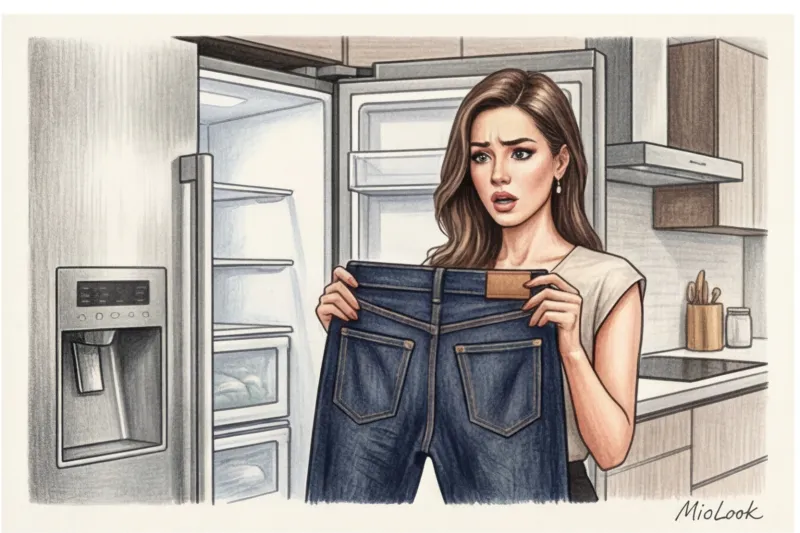
Chip Bergh's words were a classic marketing ploy to draw attention to the brand's water-saving initiative, taken out of context. Jeans need to be washed, the only question is how.
How to Wash Jeans Properly: A Step-by-Step Ritual for Statement Items
To reduce the cost-per-wear of an investment piece, make caring for it a strict ritual. By the way, these rules are just as important as understanding How to wash underwear from delicate fabrics.
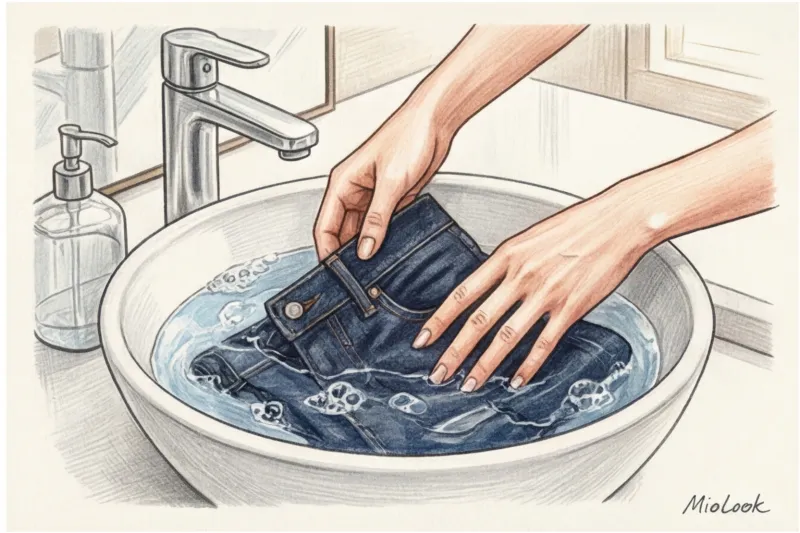
- Always turn inside out. Before placing an item in the drum or basin, turn it inside out and zip and button it. This protects the front side from mechanical friction against the drum and prevents the formation of whitish creases.
- Strict temperature control. 30°C is the gold standard. Cold water protects indigo from fading and preserves the integrity of elastane.
- Down with dry powders. This is a critical step. Undissolved granules of dry powder act as a scrub on the dye, leaving micro-scratches. Premium denim loses up to 15% of its dye during the first wash with a harsh detergent! Use only liquid detergents for dark fabrics, and ideally, a gel detergent for silk or cashmere. These have a neutral pH. Avoid bleaches or chlorine-based stain removers.
- Minimum speed. If using a washing machine, select the "hand wash" or "delicate" cycle. Spin at a maximum of 400 rpm. For heavy selvedge (14 ounces and over), it's best to turn off the spin cycle completely and let the water drain.
Note: If your jeans are new and very dark, add half a cup of white vinegar to the water during the first wash. This will act as a color fixative and help seal the indigo into the fibers.
Your perfect look starts here
Join thousands of users who look flawless every day with MioLook. Digitize your wardrobe in just a few clicks.
Get access — €0.99 onceDrying as an art: preserving the architectural silhouette
Tumble drying is the number one killer of denim. The thermal shock causes unpredictable shrinkage and completely destroys the elastane. Forget about it forever.
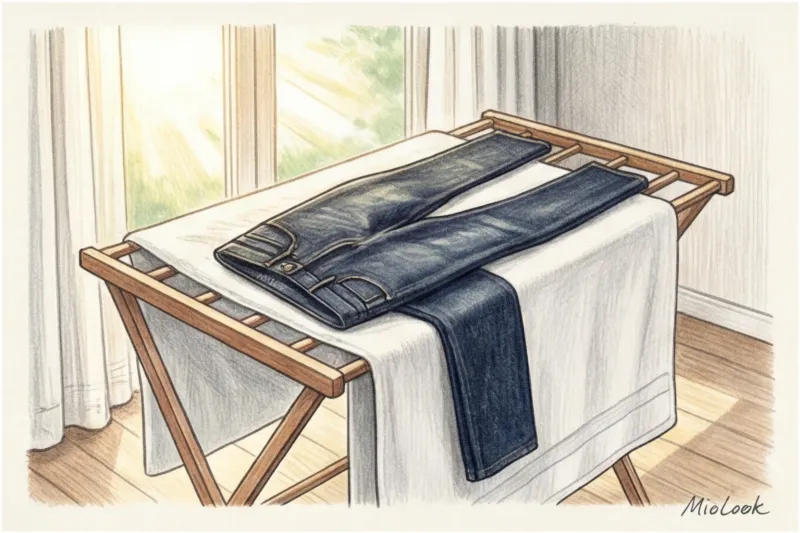
I often work backstage at couture shows, and the stylists have their own insider trick. When the denim is still damp, we gently stretch it with our hands in strategic places—at the waistband, calves, and thighs. The fabric is flexible when wet, so you can shape it to the perfect fit before it dries.
How to dry:
- Heavy items (mom jeans, 100% cotton tubes) are best dried horizontally on a white towel.
- If you hang it, do so only by the waistband using special trouser clips (be sure to use a cotton cloth to avoid leaving dents from the teeth) or by throwing it over the thick bar of a wooden hanger.
- Never hang jeans over a thin clothesline - this will leave a crease that will need to be steamed out.
- Dry in the shade. Direct sunlight will burn out the natural indigo dye in patches.
An Engineering Approach to Storage: Hangers, Hooks, or Shelves?
Organizing a denim area in a dressing room is an art form in itself. Digitizing clients' wardrobes through MioLook , I always pay attention to how things are physically stored.
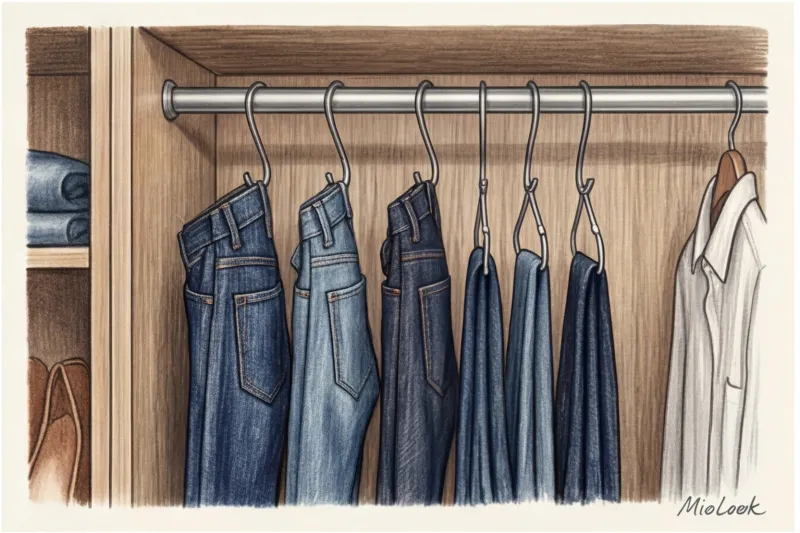
The Marie Kondo method of folding (in tight rolls) is great for saving space, but it's absolutely not suitable for stiff, premium denim—it creates unnecessary creases that then stick out unattractively when you walk.
The Pro's Choice: S-Hooks.
In high-end boutiques, jeans are often hung by the back or side belt loop on a metal S-shaped hook. This allows the garment to stretch under its own weight, allowing the fabric to "breathe," and allowing you to immediately see the cut and color of each pair.
When it does NOT work: If your jeans are made of thin summer cotton with a high percentage of elastane or lyocell, the belt loop may stretch. In this case, use the classic folding technique: fold the jeans in half along the seam, then fold them two or three times (depending on the depth of the belt loop), avoiding excessive pressure.
Never store denim in plastic bags—the fabric needs to be aired out, otherwise it will develop a musty smell.
SOS instructions: how to restore shape and refresh color
What should you do if your jeans have lost some of their shape, but it's too early to wash them? A good rule of thumb is to wear them 10-15 times between washes. If they've stretched out at the knees in between washes, use spot treatment: lightly spray the stretched areas with clean water and dry with warm (not hot!) air from a hairdryer. This will shrink the cotton fibers back into shape.
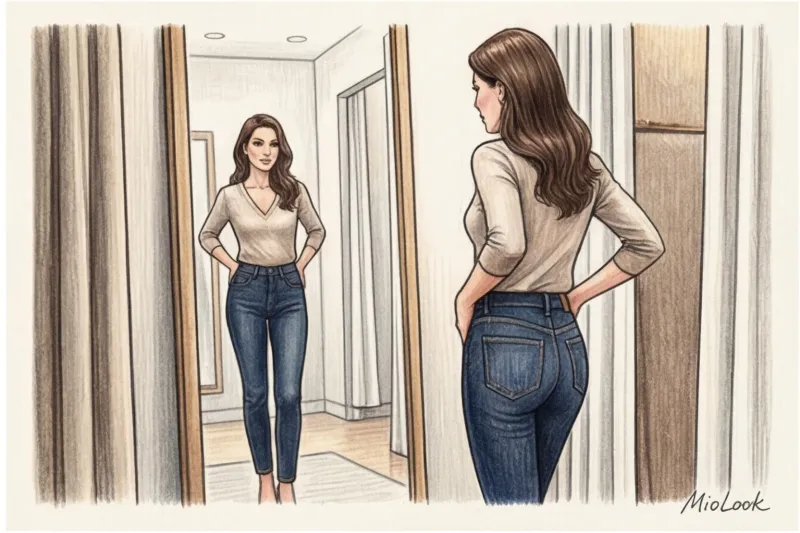
To freshen items and remove unwanted odors (such as smoke or perfume), I use a homemade spray that we always keep in our trunks at Fashion Week. Mix 50 ml of rubbing alcohol (or high-quality vodka), 150 ml of distilled water, and 2-3 drops of lavender or cedarwood essential oil. The alcohol evaporates instantly, killing bacteria on the surface, and the light scent refreshes the fabric.
However, it's best to avoid professional dry cleaning. Perchloroethylene (a standard solvent) has an unpredictable effect on the adhesive in patches and can ruin the vintage finish. If your jeans are stained with machine oil or wine, look for eco-cleaning (wet cleaning) that uses delicate detergents.
Ready to get started?
Try the MioLook free plan—no commitments required. Upload your jeans and let AI create looks for you every day.
Get access — €0.99 onceChecklist: 5 Golden Rules for Caring for Investment Denim
Buying the perfect pair, whether it's vintage Levi's for €250 or a conceptual cut from The Row, is only half the battle. The longevity of your investment depends on your daily routine.
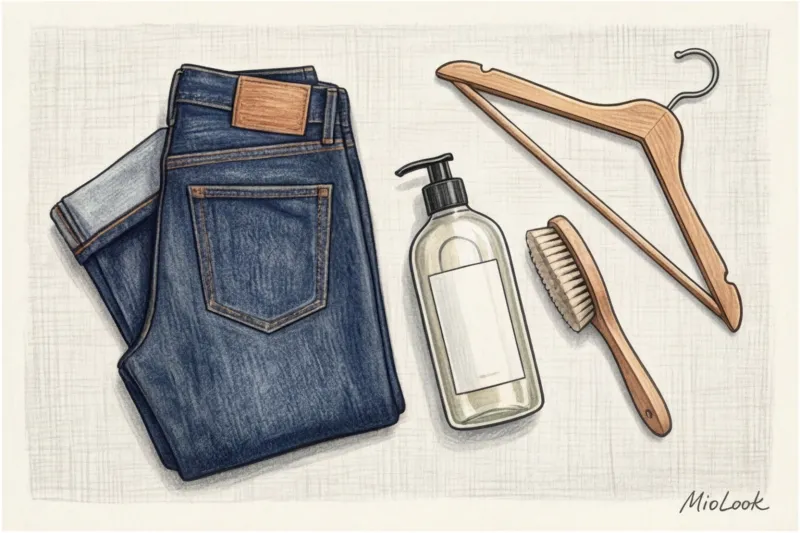
- Wash inside out at 30°C. Cold water is the key to maintaining color and elasticity.
- Liquid products only. Forget about powders, they scratch the dye. No bleaches.
- Natural drying. No radiators or tumble dryers. Dry flat or hang by the belt.
- Breathable storage. S-shaped hooks for belt loops or free display on a shelf.
- Adequate frequency. Wash your jeans every 10-15 wears. Don't go to extremes with a "year-long abstinence" from washing, but don't throw them in the washing machine after just one day at the office.
Treat denim with respect, and it will respond with a perfect fit that will only become more refined over the years, highlighting your individuality.