Stylish Maternity Clothes: Why Old Rules and Slouchy Suits No Longer Work
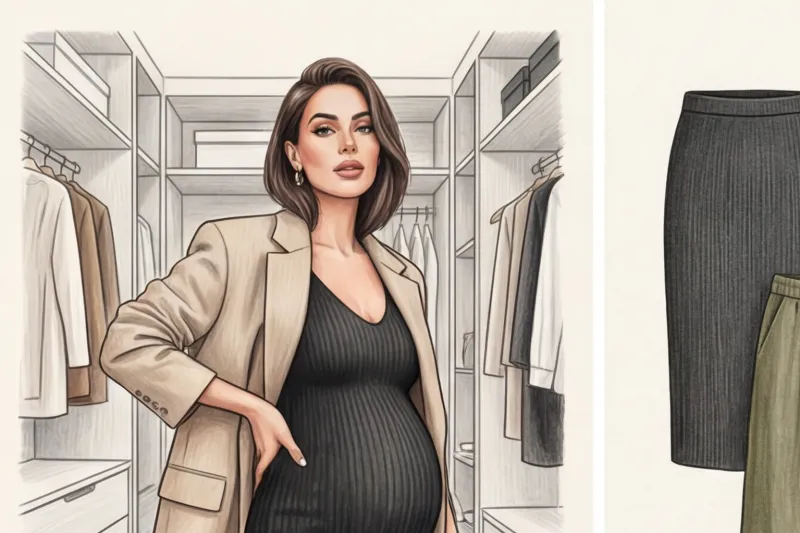
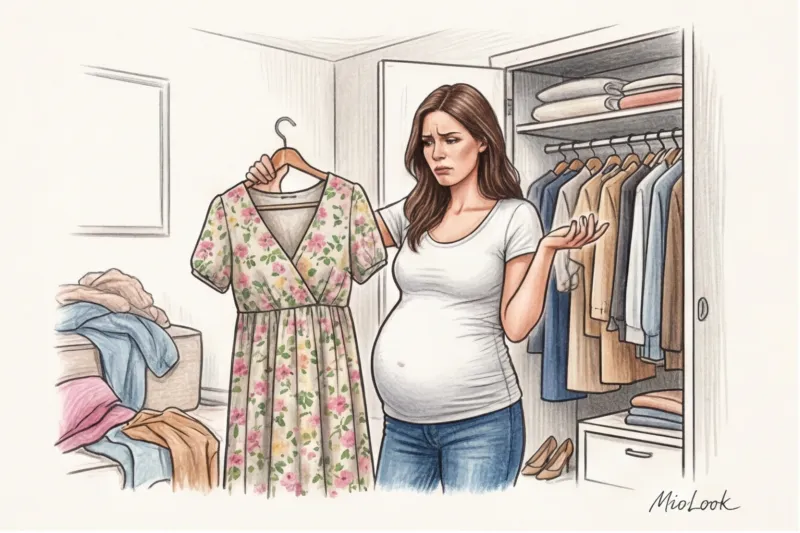
"Darina, I manage a department of 50 people, and in these wide-waisted jeans and a floral blouse, I feel like a childish schoolgirl." That phrase sparked my deep interest in styling for expectant mothers. Expert clients constantly come to me with the same pain: their professional status, authority, and established aesthetics are literally shattered by the specialized departments of mass-market stores. Let's be honest: Stylish maternity clothes — unfortunately, this is more of an exception on the shelves of shopping centers. But I am absolutely certain: pregnancy is no reason to put personal style on hold and hide in shapeless robes.
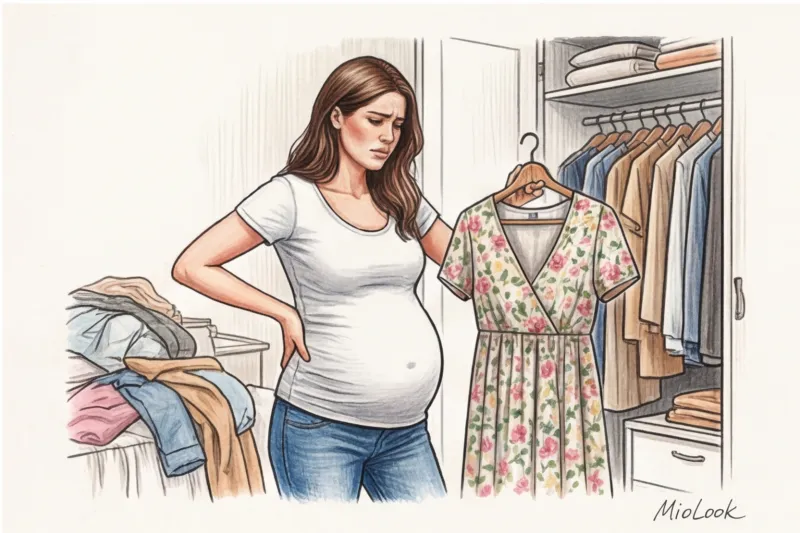
Why do specialized maternity lines so often disappoint? Over the years as an image consultant, I've analyzed dozens of collections and understood the main problem. Most manufacturers view this period as "temporary," meaning they ruthlessly cut corners on production. This results in cheap, squeaky polyester fabrics, childish prints (polka dots, bows, footprints), and downright poor cuts that deprive the figure of any architectural structure. It's simply impossible to look classy in such clothes.
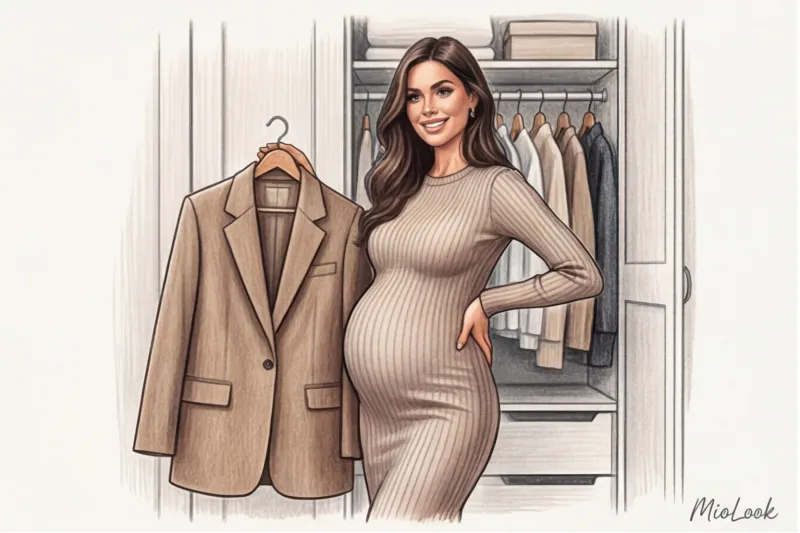
My approach is completely different - it's a concept adaptive wardrobe According to WGSN Institute analytics and my personal experience, a modern woman can easily use up to 70% of her usual clothes throughout her pregnancy. Your favorite oversized jackets, relaxed trench coats, slip dresses (which, by the way, are a genius help when you don't know What should a woman wear to a business dinner after work? ) and men's shirts aren't going anywhere. You just need to change the way you style them. I always recommend uploading your current pieces to MioLook and look at your closet from a new perspective before heading to a specialty store.
This is where the smart investment rule and indicator come into play. Cost per wear (cost per exit) Buying a full wardrobe for 5-6 months isn't cost-effective. Consider the math: you buy a specially designed dress with gathers at the stomach for €150 and wear it maybe 10 times. The cost of each wear is €15. Now consider a high-quality, basic, chunky knit suit for €200, which you'll wear both early pregnancy and a year after giving birth (at least 100 times). The price drops to €2! A temporary figure isn't an excuse to buy things that won't last. Invest in the right textures and cuts that will last for years.
Body architecture: how proportions change and how to balance them
Our perception of our figure is subject to strict laws of optics. As a stylist, I work with body architecture daily and see how the physics of tailoring dramatically alters proportions. During pregnancy, the center of gravity shifts forward, and all visual weight is inevitably concentrated in the abdomen and chest. This even alters posture: to compensate for the weight, a woman often leans back. If you ignore this transformation and dress according to old patterns, your figure will begin to appear bulky and squat.
The most damaging mistake I see is creating contrasting horizontal lines under the belly. I call this the "cut equator" effect. Imagine a classic situation: a cropped sweatshirt or contrasting T-shirt ends just below the protruding point of the belly, meeting with pants of a different color. This line optically "cuts" the silhouette.
The human eye is lazy: it reads the width of the most prominent horizontal line and projects it onto your entire silhouette. As a stylist, I see how such an incorrect top length instantly and visually adds 10 kg, making your figure look boxy.
To ensure your maternity clothes are truly stylish, we need to manage these lines. Tops should either end significantly below the fullest part of the belly (long shirts) or blend in color with the bottoms to avoid creating sharp lines.
Silhouettes by Trimester: From Concealment to Accent
Each stage of pregnancy requires its own geometric strategy. What works in week ten will look ridiculous in week thirty.
1st trimester: This is the period of "transitional" figure development. The body is already changing, but the belly isn't yet obvious; it looks more like a slight puffiness. The main goal here is not to cling tightly, but to softly camouflage it. A semi-fitted cut and fabrics that hold their shape well come to the rescue. Flimsy, thin viscose will treacherously highlight the slightest changes in contour, while dense cotton, linen with blends, or shape-resistant denim will create a rigid frame. This technique works great during this period. French tuck — a shirt hem casually tucked in at the front. It defines the waist, but the fabric falls softly.
II and III trimesters: A time of paradoxes. Many women instinctively try to hide behind enormous parachute dresses. But right now, fitted knitwear works a hundred times better than baggy pieces! Why? When you wear a baggy dress, the fabric falls in a straight line from the most prominent point (the bust or stomach) vertically downwards. The viewer unconsciously interprets the empty space beneath the fabric as your actual volume, creating the effect of a monolithic "pedestal."
A thick knitted noodle dress, on the other hand, clings to the stomach, accentuating its shape while revealing the graceful figure beneath. When choosing knitwear, pay attention to the knit density. We look for a stretchy material (for example, a viscose-nylon blend). Good mid-range models cost between €70 and €120, but they act as a lightweight shaping frame, bringing the figure together.
If you still prefer an A-line silhouette or empire waist dresses (cut just below the bust), follow one golden rule: leave the thinnest parts of your body exposed. Roll up your sleeves to show off your wrists, choose a neckline that reveals your collarbones, and a length that shows off your ankles. This will give the eye the right reference points for assessing your true measurements.
Optimize your wardrobe
Try MioLook for free: Our smart AI stylist will create the perfect look based on your new proportions and help you avoid silhouette mistakes.
Get access — €0.99 onceThe Rule of Verticals: The Main Secret to Slimness
How to counteract the shift in visual weight when you're already in late pregnancy? Use the rule of verticals. This is the most powerful optical tool for elongating the silhouette, forcing the eye to move from top to bottom, rather than left to right.
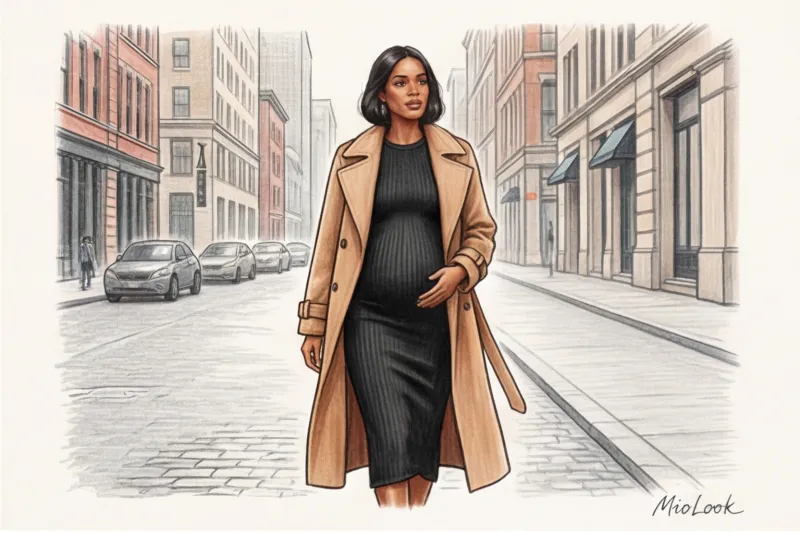
The method involves creating two long parallel lines that literally "cut off" the sides. Simply throw a second layer of clothing over a basic dress or T-shirt with jeans and leave it unbuttoned. This could be:
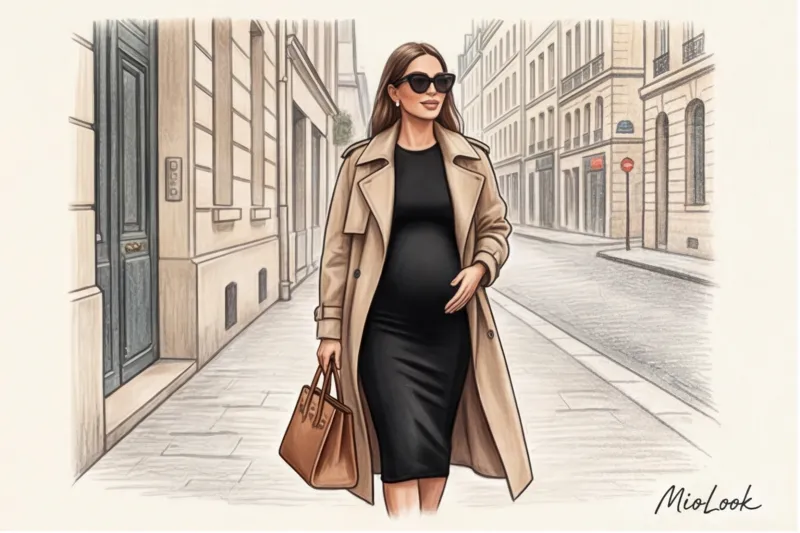
- Midi length trench coat: Ending at the thinnest part of the shin, it creates a dynamic internal vertical.
- Long jacket: It's important that it has a clear shoulder line (to compensate for the abdominal volume) and doesn't end at the widest part of the hips. Ideally, it should reach mid-thigh.
- Thick cardigan: An exceptionally smooth knit, without voluminous braids that would only add textured weight.
A second, equally effective way to elongate your silhouette is with monochromatic looks. By putting together an outfit in a single color or very similar shades, you create a continuous color column. The absence of color blocks ensures that the eye won't stumble at the boundaries of items.
Details are no less important in the architecture of your look. Accessories can easily create the right lines. Wear long scarves casually draped around your neck with the ends hanging loosely. Long chains with chunky V-shaped pendants that end above the stomach are a great choice. Even small details like creases on loose trousers or a center vertical seam on a skirt can elongate your proportions.
A Capsule Wardrobe for Expectant Mothers: A Smart Investment
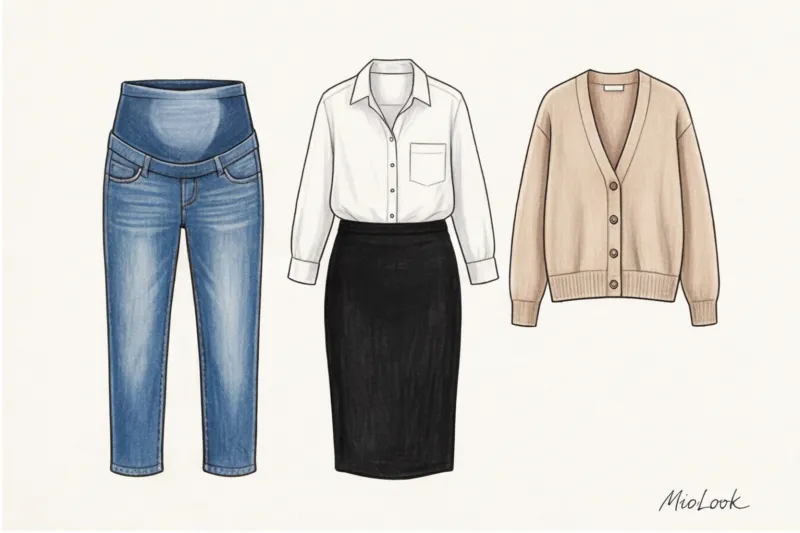
The math behind creating the perfect nine-month wardrobe is incredibly simple. You don't need thirty new items of dubious quality, bought in a panic. According to statistics from the analytical agency WGSN (2023), women buy 40% more clothes during this period than they actually wear. A strict strategy will help you avoid unnecessary spending and morning chaos: the core of a capsule wardrobe consists of 12-15 items that mix and match seamlessly. Your core might look like this: a pair of perfect bottoms, four basic long-sleeved tops, two dresses, two shirts, and a pair of structured tops.
What's really worth investing in? First, high-quality, non-wired bras. Hormonal changes and changing waist sizes require maximum comfort, so budget between €40–€80 for a reliable, seamless bra with a wide support line. Second, specialized bottoms. Buy one pair of thick black leggings (not see-through!) and high-quality jeans with an elasticated tummy tuck. Note: the style is what matters. under The stomach, rather than a high-waisted knit stocking. The low elastic insert allows for the French tuck (a partially tucked-in top), which helps restore the correct proportions to the silhouette.
Many of my clients complain that maternity departments sell outright anti-trend clothing, while they need stylish, modern, and basic maternity clothes. The solution lies outside maternity brands. Look for thick, stretchy ribbed knits in regular collections (like COS, Arket, or Massimo Dutti). A knit midi dress of the right thickness will stretch with your figure and will last well after giving birth. Just avoid flimsy viscose, which will visually highlight even the slightest imperfections.
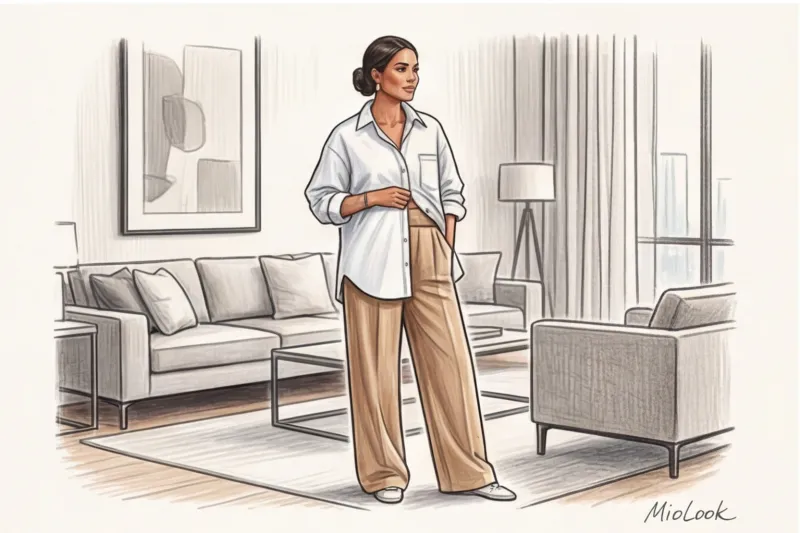
And now for an insider tip: the men's department is your ultimate stylistic savior. If you're looking for the right oversized look that won't turn you into a shapeless cloud, go for men's pieces. When shopping with us, we always buy men's shirts made of thick cotton Oxford. Unlike women's oversized styles, which are often made of thin, flowing fabric, a men's shirt holds its shape impeccably, creating that all-important vertical line with its open front. The same goes for basic hoodies and jackets with a man's shoulder—they create a structured cocoon within which a woman's silhouette appears more fragile.
To avoid getting confused with the combinations of these 15 elements, I strongly recommend digitizing your capsule. Upload items to MioLook — and the app will automatically generate dozens of looks from your mini-wardrobe. On days when fatigue makes it impossible to think about texture combinations, the smart algorithm will simply produce a ready-made visual solution: a men's shirt, leggings, loafers, and the perfect statement bag.
Business Style: How to Maintain Status in the Office
Study Journal of Applied Psychology (2022) confirms that how we dress directly impacts how our professional competence is perceived by colleagues and management. But what do you do when protocol demands rigid lines, while your body dictates absolute comfort? Adapting a strict dress code (formal and smart casual) to changing proportions is one of the most delicate tasks in my practice.
Last year, we put together a capsule collection for a lawyer client of mine. She was seven months pregnant, had a busy schedule, and faced a series of crucial court appearances where she needed to appear as authoritative and convincing as possible. This case perfectly illustrates how to maintain her professional status when classic suits no longer fit at the waist. My main rule in such cases: maternity clothes are stylish and office-appropriate as long as they hold their shape.
Classic suit trousers made of stiff wool quickly become an instrument of torture, as the waistband inevitably cuts into your stomach. Their ideal replacement is heavy-weight knitwear. Important: it shouldn't be a thin, flimsy melange that's see-through, but a heavy, springy viscose with added nylon that doesn't stretch out at the knees. To prevent the look from slipping into a cozy, cozy feel, we apply the "hard shell" rule: layer a structured, oversized jacket with a defined shoulder line over the soft knitwear. The contrast between the relaxed base and the masculine cut of the jacket instantly brings you back into focus. Investing in a quality jacket will cost around €150-€250, but it's worth every penny, as you'll continue to wear it after maternity leave.
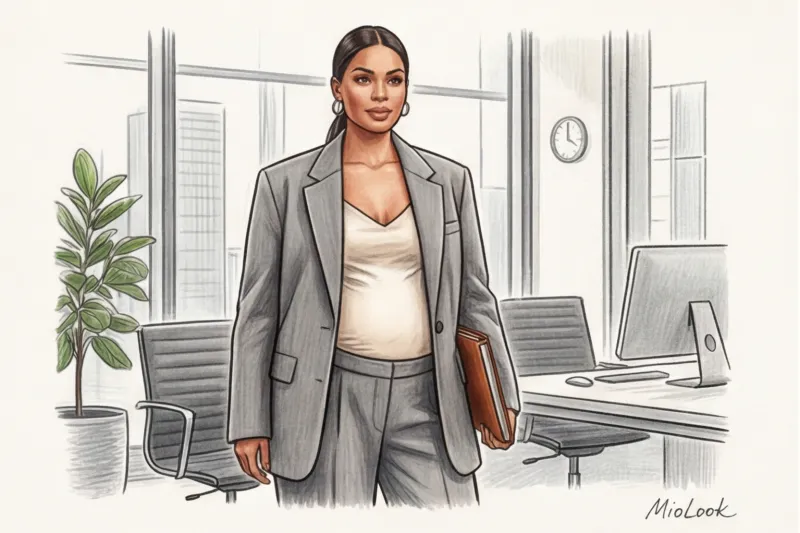
If dresses are your choice, absolutely avoid shapeless knitted "tubes." Sheath dresses with the right darts are your best corporate friend. Authoritative analytical materials on business style (for example, in detailed analyses of the evolution of office fashion from Vogue Business ) It's often emphasized that the cut's architecture sets the tone for a workwear look. Look for dresses with constructed seams and darts under the bust and at the back. This geometry creates the desired volume in the front but maintains a snug fit around the shoulders and shoulder blades, preventing your figure from becoming a monolithic rectangle.
How can you look expensive and authoritative, even if you're physically wearing very comfortable, almost pajama-like clothes? The secret lies in monochrome and accessories. A look maintained in a single, deep shade (navy, dark chocolate, graphite) always looks more prestigious than disparate color blocking. Be sure to pay attention to the details: replace the basic plastic buttons on your jacket with metal or horn ones, and add a geometric, rigid bag. These elements act as psychological markers of high status.
Try MioLook
for free
Start creating perfect business images with the help of artificial intelligence
Get access — €0.99 onceOffice Shoes: Stylish and Safe Alternatives to Heels
A particular pain point in the corporate wardrobe of expectant mothers is footwear. Swelling in the second and especially third trimesters is an inevitable physiological reality. By the evening, feet can increase by a full size, and trying to squeeze them into tight pumps is not only painful but also dangerous for blood vessels. That's why I always recommend that clients buy closed-toe work shoes a half size larger than their usual size.
Ditching stilettos doesn't necessarily mean switching to shapeless, round-toed ballet flats. Oxfords, loafers, and mules are a wonderful, classy alternative to pumps. Stiff, molded leather, a classic toe box, and a small, stable heel (1-2 cm) perfectly maintain the formality of the look. A pair of high-quality leather loafers in the €120-€180 price range will achieve a business-like look just as well as classic high heels, while providing essential arch support.
If your office dress code allows for liberties within the framework smart casual , you can confidently incorporate sneakers into your business attire. But strict rules of integration apply here: absolute minimalism, smooth matte leather, and a strict monochrome. No running silhouettes, chunky ugly-shoe-style soles, mesh, or colorful logos. Pure, basic white sneakers pair perfectly with that same crisp knit suit and structured jacket, creating the image of a dynamic, modern professional who values herself and her body.
Color and Hormones: How a Palette Saves Your Face
Have you ever noticed how the same jumper makes you look rested one day, but the next it highlights every shadow under your eyes? In color theory, this is called the "reflex effect." The laws of physics are unbreakable: any fabric in the portrait area acts as a screen, reflecting its pigment back onto your face. During pregnancy, this law of optics can become either your greatest ally or your merciless critic.
According to the American Academy of Dermatology (2023), up to 70% of women experience chloasma (the "mask of pregnancy"), and due to a 50% increase in blood volume, the spider veins become much more visible. Your skin literally changes its undertone: pronounced hormonal rosacea, pigmentation, or, conversely, a translucent, porcelain pallor appear. It is precisely because of these biochemical processes that your usual color type temporarily shifts.
As a result, shades that once made you look brighter can suddenly start to make you look older. Why does this happen? Pigmentation reduces the natural contrast of the face. While you previously easily pulled out a graphic black color around your face, now it can cast harsh gray shadows on your chin, highlighting even the slightest unevenness in tone.
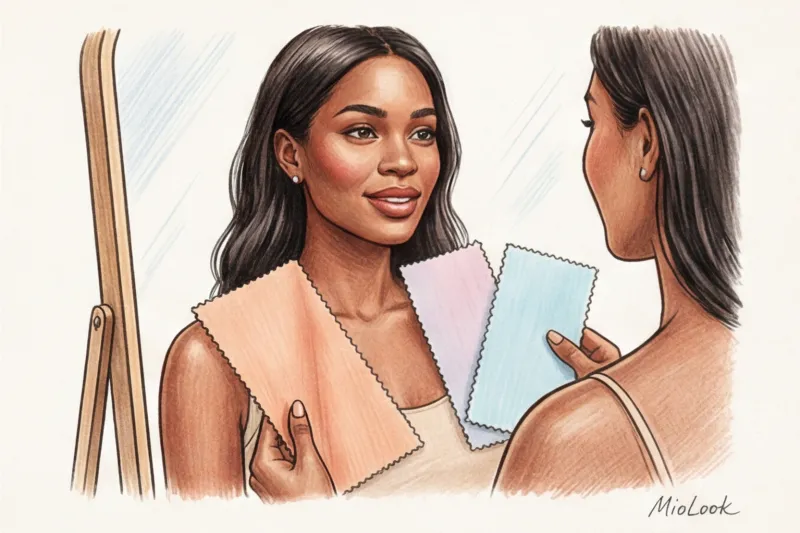
Let's look at the most common coloring issue for pregnant women: redness. The main mistake women make when trying to hide rosacea is wearing a green top. In makeup, green concealer does indeed cover up red pigment locally. But in wardrobe, the laws apply. simultaneous contrast Johannes Itten: pure spectral green on the face visually will strengthen red spots on your cheeks, making them glow even brighter. Similarly, pure red will cast a crimson reflection right onto your cheekbones.
To neutralize redness, remove spectral red and green tones from the portrait area. Replace them with complex, slightly dusty, cool shades: blue-gray, denim, asphalt, or deep wine. They will calm the skin tone and draw attention to themselves.
The ideal tool for creating a fresh-faced effect without a gram of makeup is using light, natural reflectors. Light shades act like a photographer's softbox, gently illuminating the face from below and erasing signs of fatigue. However, pure white (the color of printer paper) often looks too harsh against a discolored skin tone and can only highlight pigmentation.
Soft, creamy tones are your lifesaver. Stylish and functional maternity clothing starts with the right base around the face. As a colorist, I recommend focusing on the following shades:
- Off-white and ecru: The colors of undyed wool and silk. A quality long-sleeved T-shirt or jumper in an ecru shade (decent basic models made of thick cotton or merino wool usually range from €80–€150) will do more to enhance your fresh look than a thick layer of foundation.
- Pearl Gray: An ideal, classy alternative to black for business looks that doesn't create harsh shadows in the nasolabial folds.
- Warm beige and caramel: They perfectly conceal pigment spots, as they are of the same color temperature, visually smoothing out the tone transitions on the face.
If you're unsure how new light shades will fit into your existing closet, I recommend digitizing your items. Upload them to MioLook — The look creation feature will help you quickly check whether a new ecru top will go with your favorite jackets and cardigans, saving you from impulsive and unnecessary purchases.
Fabrics and textures: what to look for when choosing
In textile engineering, there's a rule: the fit of a garment is determined not only by the correct darts, but also by the fabric's fall. As your figure changes week after week, the texture of the material plays a major role in shaping your silhouette. The first thing to avoid during pregnancy is stiff, shape-defying fabrics. Stiff linen, dense taffeta, or starched poplin don't adapt to the body's new curves. Instead, they become rigid, settling into rough creases and creating an undesirable tent-like effect. A smart choice is fluid, draping fabrics (modal, cupro, soft viscose) that flow gently along the silhouette and adapt to your volume.
Here we encounter the most common myth: the belief that expectant mothers should only wear 100% natural materials. This is a dangerous misconception. A garment made of 100% cotton or pure wool will inevitably become misshapen on a growing belly, stretching out permanently and losing its original shape by the middle of the first day of wear. Blended fabrics are your best ally. For maternity clothes to be stylish, durable, and comfortable, synthetic fibers are essential for structural memory.
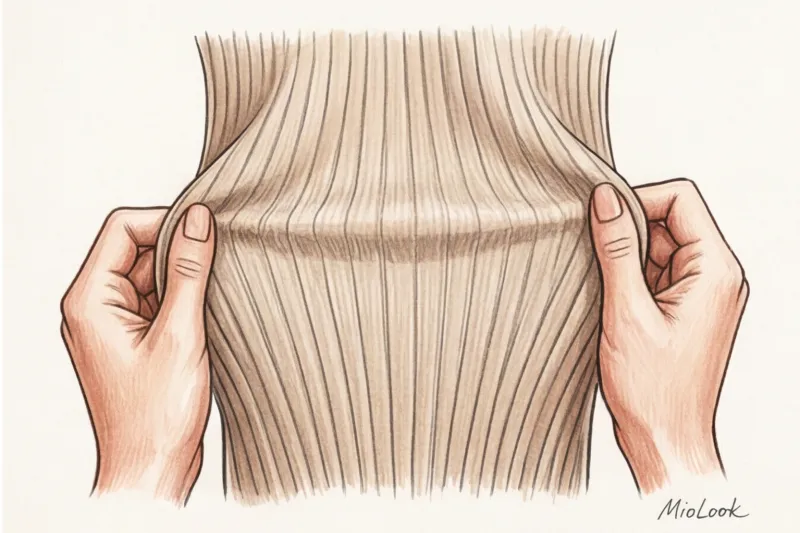
I always ask my clients to check the label before purchasing. The ideal composition of a "smart" knit dress, one you can wear both in your sixth month and a year after giving birth, looks something like this: 70% viscose (for breathability and softness), 20% nylon or polyamide (for anti-pilling thread reinforcement) and 10% elastane (for stretch and shape return) This rigorous mathematics ensures that the garment will work for you, rather than stretch out into shapeless bubbles.
A 2023 report from the WGSN research agency confirms that the premium maternity clothing segment has completely switched to high-tech blended fibers, as pure organic fibers are physically incapable of providing the necessary degree of compression and support.
Ribbed knitwear (also known as "noodles") deserves special attention. This ingenious texture is created by the vertical lines it creates, but only if you know how to distinguish "high-end" ribbed knitwear from "cheap" knitwear. Cheap knitwear has a low knit density and a loose texture: the slightest tension on the stomach causes it to become treacherously see-through, revealing the seams of underwear and the texture of the skin. High-end knitwear is heavy, elastic, and has a clearly defined texture. It acts like a soft corset, delicately cinching the figure without applying unnecessary pressure.
Your ideal image
it begins Here
Join thousands of users who look flawless every day with MioLook.
Get access — €0.99 onceFinally, be extremely careful with shiny textures. Silk, satin, satin, and lurex-blend fabrics are highly reflective. According to the harsh laws of physics, they act like a spherical mirror: bright highlights on curved parts of the body visually and optically increase the actual volume by at least 1.5 times. If you need to add a touch of elegance or sparkle to your look, opt for matte fabrics in deep shades with a delicate, subtle glow, or limit yourself to silk accessories (scarves, ribbons), relegating them to the portrait area.
Checklist: 5 Common Wardrobe Mistakes for Pregnant Women
When sorting through the closets of young mothers after maternity leave, I repeatedly encounter the same "stylist traumas." Trying to quickly fill a few months' worth of needs often leads to panic buying, which then sits as dead weight for years. Right now, we'll explore the main pitfalls I constantly "cure" in my consultations and discover how to avoid them.
Mistake 1: Buying things "just in case"
The most expensive illusion is buying a dress that fits perfectly right now, completely ignoring physiological factors. By mid-term, it's not just your belly that changes: the rising diaphragm causes your rib cage to expand, and your bust size can easily increase by 1-2 cup sizes. When buying a basic knit dress for €80-150 in your third month, look for a cut that allows for some elasticity around the ribs and armholes. Otherwise, by the seventh month, you'll simply be unable to breathe in it.
Mistake 2: Too many small floral prints
A small pattern (that same ditsy floral) on a large area of stretched fabric creates a classic "curtain" effect. Remember the physics of color: the larger the figure, the cleaner and more distinct the lines should be. If you're not ready to give up prints, choose large abstracts, wide geometric stripes, or color blocking. They act as architectural axes, while a small floral on a rounded belly transforms the silhouette into a shapeless blur.
Mistake 3: Shoes without arch support
Switching to completely flat canvas ballet flats is a surefire way to lower back pain and worsening swelling. During this period, the arch of the foot experiences tremendous pressure. Podiatrists strictly prohibit completely flat shoes during pregnancy. You need an architectural last: structured loafers with a micro heel (2-3 cm), retro-style sneakers with a shock-absorbing sole, or Chelsea boots with good ankle support.
Mistake 4: Ignoring Accessories
When basics are kept minimal (like wearing simple leggings and an oversized shirt), accessories can carry 90% of the style weight. A crisp leather tote bag, statement horn-rimmed sunglasses, or statement earrings instantly elevate a look from "I just got off the couch" to conscious street style. To avoid the hassle in the morning, load up your favorite bags and jewelry in MioLook smart wardrobe function — the application will automatically generate stylish combinations with your base.
Mistake 5: Giving up your style DNA for the sake of “comfort”
Pregnancy doesn't erase your personality. If you've been an intellectual minimalist for five years, you don't need to suddenly switch to childish hoodies with teddy bears just because you're expecting.
Yours Stylish maternity clothes As long as it reflects your personality. If you love grunge, feel free to pair it with men's-style leather jackets and chunky boots. A classic style lover? Chunky knit two-piece suits and structured coats are your saviors. Comfort is a requirement for the cut and fabric composition, not a reason to compromise your visual aesthetic.
Summary: Your style changes with you.
Changing your wardrobe during pregnancy often causes women to experience what's known as "style paralysis." Fashion psychologists (Fashion Psychology Institute) note that body transformations occur faster than our perceptions can adapt. This leads to the reflexive desire to hide in a huge gray sack and simply wait it out. But as a personal style expert, I offer a completely different perspective.
In fact, Pregnancy is a time to experiment with shapes and volumes If you have previously avoided complex architectural cutting in the spirit of Jil Sander or hypervolumes from Balenciaga If you were afraid of visually losing your waist, now you have complete carte blanche. A de-emphasized waist becomes your legitimate comfort zone. Oversized jackets with exaggerated shoulders, asymmetrical hems, and multi-layered, flowing drapes—what might have seemed "too avant-garde" on a familiar figure suddenly sound incredibly organic, expensive, and classy with these new proportions.
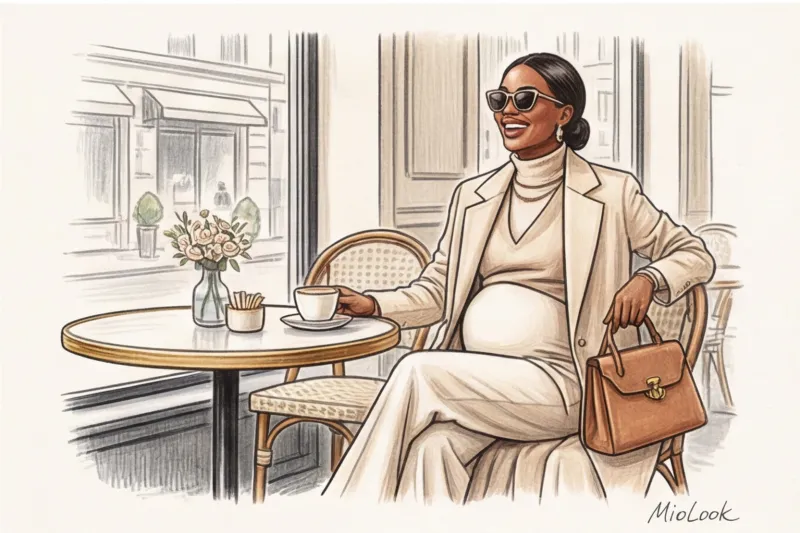
Let's compile our knowledge into a single, working system. In reality, stylish and functional maternity clothing is built on just three pillars. Quick summary: Invest in a base, use verticals, work with color First, gather a quality foundation: good denim with a soft, supportive insert (don't skimp on it; cheap elastane will quickly stretch out at the knees) and a thick, structured knit. Secondly, don't forget the rule of verticals: unbuttoned double-breasted trench coats, long, thick cardigans, and creases on trousers elongate the silhouette more effectively than any optical illusion. Thirdly, work with your palette: properly selected light and refreshing shades near the face work like a good salon treatment, leveling out pigmentation and signs of sleep deprivation.
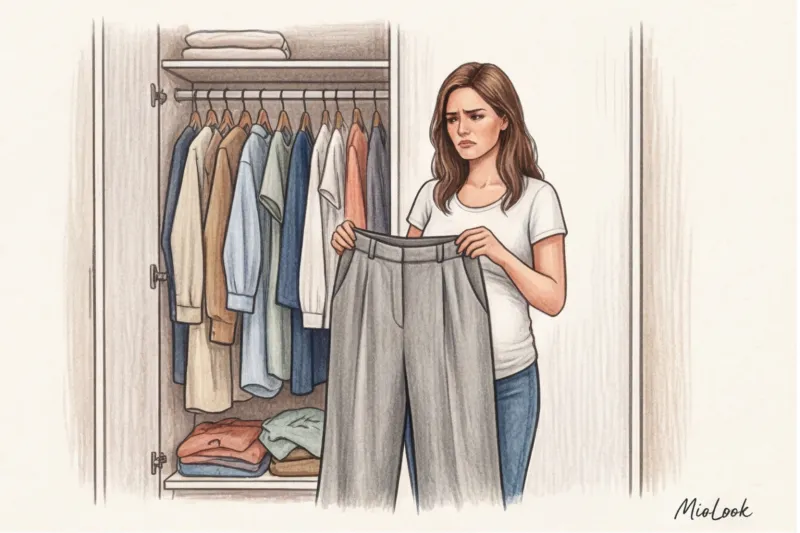
However, before you go out and update your closet with a budget of, say, €200-€400 for new items, I urge you to take one step. Go through your current wardrobe before buying new items. Conduct a thorough audit: remove from the depths of your closet absolutely all boyfriend shirts, slip dresses (which now look chic over T-shirts), knit two-piece suits, and menswear-inspired blazers. In my experience, up to 70% of your usual wardrobe can be used up until the ninth month if you learn to style them differently.
To avoid having to keep these combinations in your head and the morning panic of “I have nothing to wear,” digitize the suitable items through wardrobe management tool in the MioLook app When your current items are stored on your smartphone, you stop buying unnecessary duplicates and focus only on those specific purchases that are truly needed to complete your capsule.
One of my clients said something wonderful in her eighth month: "You know, it wasn't until I stopped trying to squeeze myself into my pre-pregnancy jeans and allowed myself to try new silhouettes that I started getting compliments from people on the street." Your personal style doesn't stop just because two lines appear on the pregnancy test. It transforms, matures, and takes on new, stunning facets. Allow yourself to be beautiful and confident right now, without putting your life on hold for some mythical "postpartum" moment.
Ready to get started?
Try a free plan—no commitment—and organize your perfect wardrobe today.
Get access — €0.99 onceGuide Chapters
Comfortable Shoes During Pregnancy: Style and Health
How to maintain elegance without sacrificing your health while expecting a baby? We explore the rules for choosing stylish and comfortable maternity shoes.
Stylish evening dress for pregnant women for a special occasion
Pregnancy isn't a reason to sacrifice elegance. Learn how to create a stunning holiday look without losing your personal style.
The Best Looks for a Maternity Photo Shoot: Stylish Ideas
How to prepare for a photo shoot and maintain your style behind meters of tulle? We're exploring the best maternity outfits with a personal stylist.
How to Choose a Maternity Swimsuit: Stylist's Advice
Forget about shapeless maternity wear! We'll show you how to use the adaptive wardrobe concept to find a luxurious swimsuit for your pregnancy.
Maternity lingerie: beauty and comfort
Pregnancy isn't a reason to give up beautiful and sexy lingerie. Learn how to choose aesthetically pleasing sets that will give you confidence and comfort.
Winter Maternity Clothes: A Stylish and Warm Wardrobe
How to stay stylish and warm during pregnancy? We explore the principles of a smart, adaptive wardrobe and choose the best winter pieces.
Summer Maternity Clothes: Stylish Looks for the Hot Weather
Forget uncomfortable bandages and synthetic materials. Discover how the "adaptive luxury" concept can help you create a stylish and breathable wardrobe for expectant mothers this hot summer.
Stylist Tips: How to Wear Regular Clothes While Pregnant
A personal stylist explains how to adapt 70% of your usual wardrobe for pregnancy. Maintain your unique style without breaking the bank.
How to Choose Maternity Jeans: A Fit Guide
Pregnancy isn't a reason to give up style and wear shapeless knitwear. We'll show you how to find the perfect pair of jeans while maintaining a classy look.
Maternity Office Wear: How to Maintain Your Prestige
Specialized maternity wear often undermines a professional image and makes one appear childish. Learn how to put together a stylish work wardrobe without sacrificing your authority.
How to hide your belly in early pregnancy without oversized clothes
Forget about shapeless clothes that only reveal your pregnancy. Learn how to elegantly conceal your pregnancy with the right cut and color theory.
Maternity and Nursing Clothes: Stylish 2-in-1 Items
Motherhood isn't a reason to give up style and wear shapeless clothes. Learn how to choose functional, two-in-one clothing while maintaining your personal brand.
Maternity Capsule Wardrobe: A Minimal Collection
How to dress during pregnancy without losing your style? Learn how to put together a functional capsule wardrobe without buying maternity clothes.