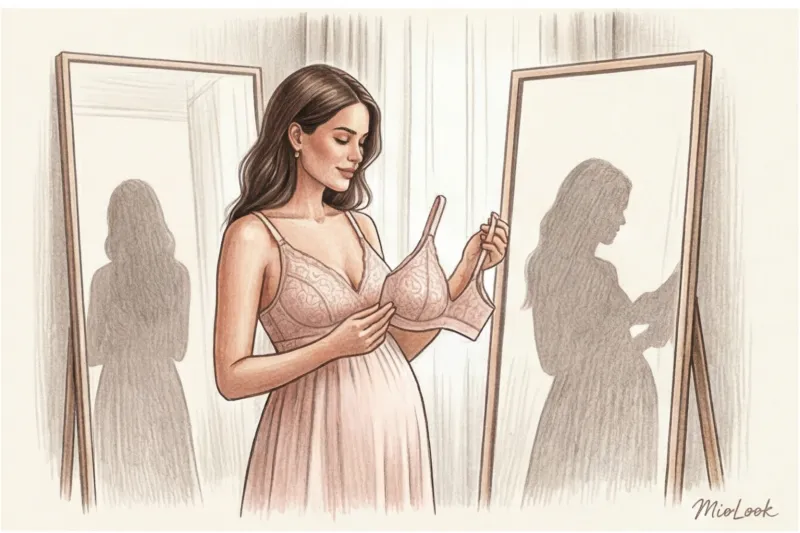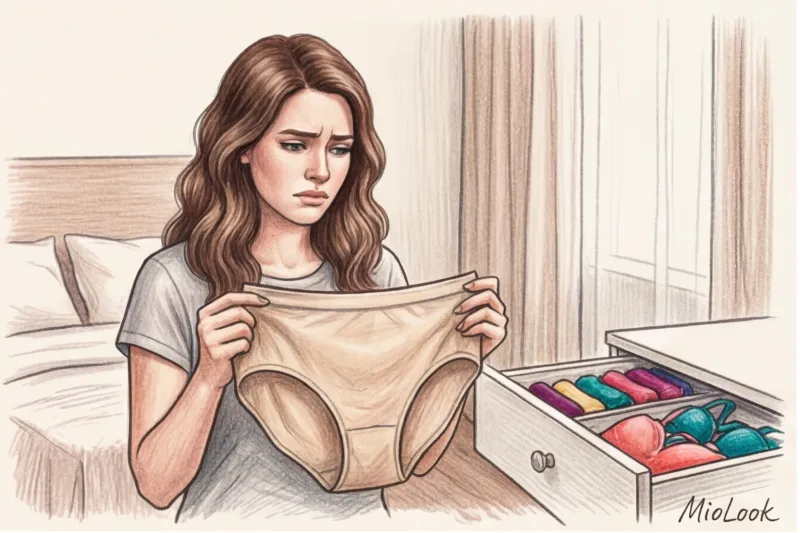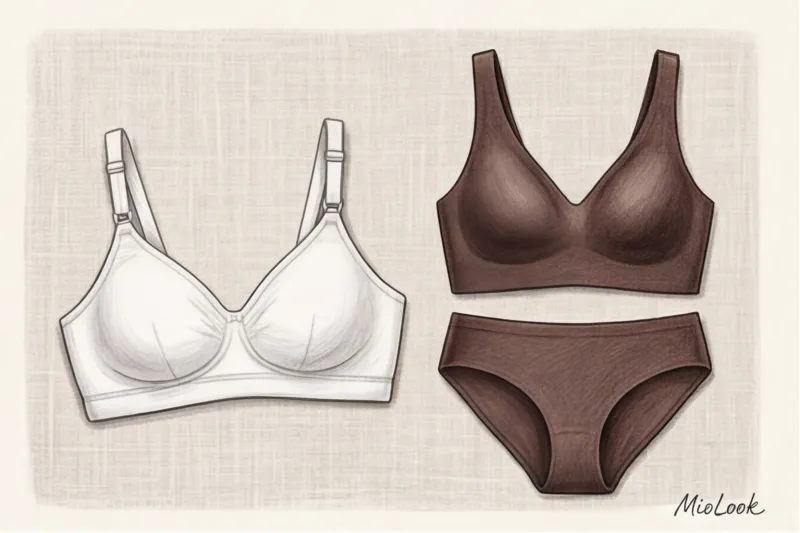
Recently, a client of mine—a tough-as-nails executive and incredibly self-confident woman—literally burst into tears in the fitting room. It wasn't a hormonal surge that caused it, but her reflection in the mirror. A routine shopping trip turned into a disaster because standard maternity underwear made her feel, quote, "like some polka-dotted dairy farm, not like a woman."
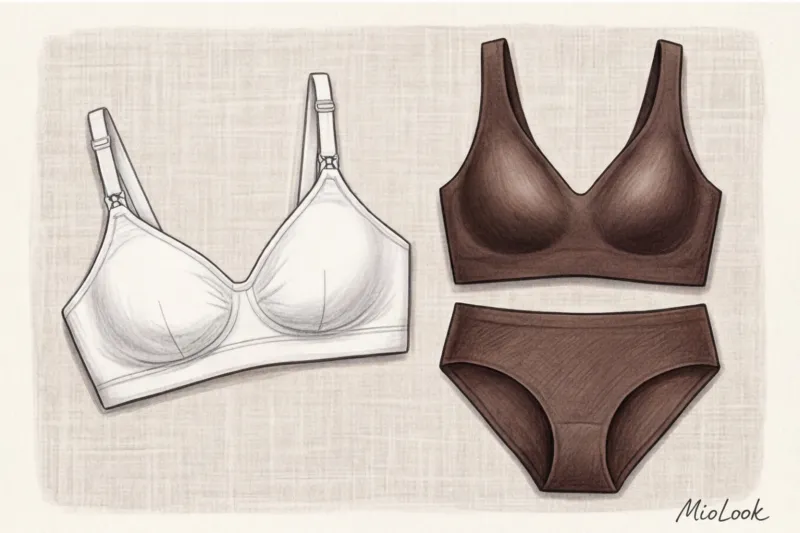
This situation repeats itself year after year with dozens of my clients. For some reason, the industry has decided that as soon as a woman sees two lines on the test, she's obligated to abandon aesthetics, change into shapeless, squeaky cotton with bows, and forget about sexuality. But let's be honest: your style doesn't go away during maternity leave. And overpaying for ugly clothes just because they have a "maternity" tag is a crime against your budget and self-esteem. We've shared more about how to create a harmonious foundation for these nine months without spending extra in our The complete guide to stylish maternity clothes.
In this article, I'll show you how to put together a lingerie wardrobe that will support not only your changing figure but also your self-confidence.
The Hidden Tax: Why Specialized Maternity Underwear Often Disappoints
Are you familiar with the term "pink tax"? The fashion industry has its equivalent: the "maternity tax." As soon as a brand adds the word "maternity" to the packaging of a basic top, its price skyrockets by 30-50%, while its quality paradoxically plummets.
In my experience, eight out of 10 women complain that bras from specialized maternity departments in mass-market stores lose their shape after the first wash, and the lace starts to irritate their skin. Why? Because brands skimp on materials, replacing expensive microfiber with cheap polyester (often for just €15–20 in bulk), disguising this with childish designs and ruffles.
"You don't have to buy from the maternity section to feel comfortable. The best alternative is premium, basic lines from regular brands."
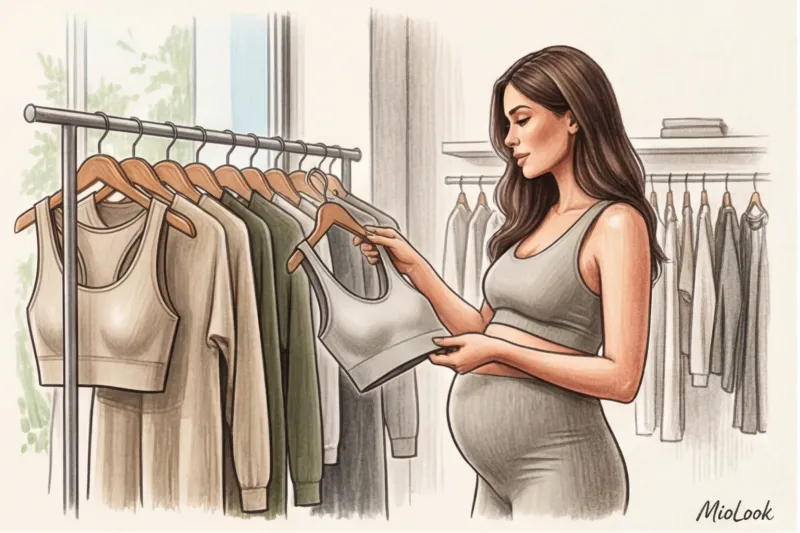
My main insight as a stylist: for the first two trimesters, you don't need specialized brands at all. Seamless lines from Intimissimi, Oysho, COS, or Uniqlo do a much better job. They're made from high-quality polyamide with 15-20% elastane. This material stretches with your body, maintains the shape of your bust, and looks expensive. You can buy a top for €25-35 at a regular store, a size or two larger than your standard size, and it will serve you faithfully until the very end.
Access to MioLook for €0.99 — one-time payment
A smart AI stylist will select the perfect look based on your individual measurements and your new wardrobe.
Get access — €0.99 onceAnatomy of Changes: How to Choose Maternity Underwear Without Mistaking Your Size
According to the London Bra Fitting Academy's certification programs, over 70% of women wear the wrong bra size during pregnancy. The main mistake lies in a lack of understanding of how the body changes.
Most women focus on their cup size. But the physics of the process are as follows: to make room for the growing baby, your internal organs shift upward and your rib cage expands. Over the course of nine months, your underbust measurement can increase by 5-7 centimeters. That's a huge difference in the fit of your bra band!
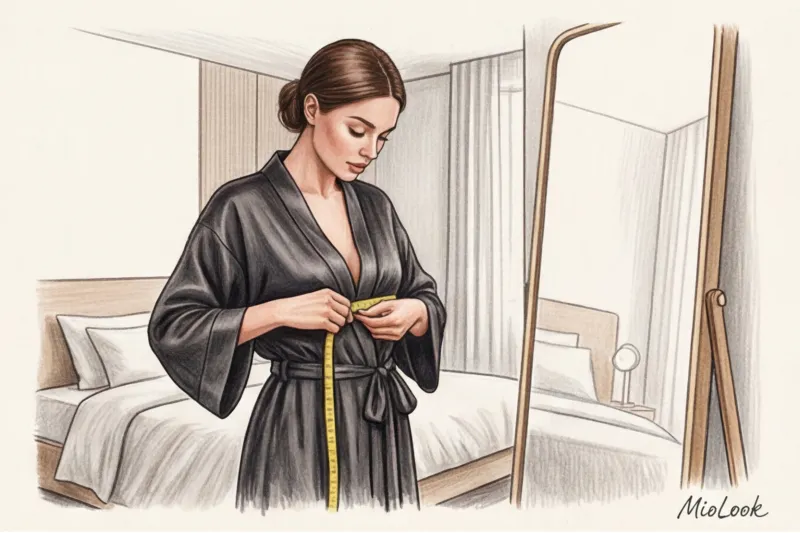
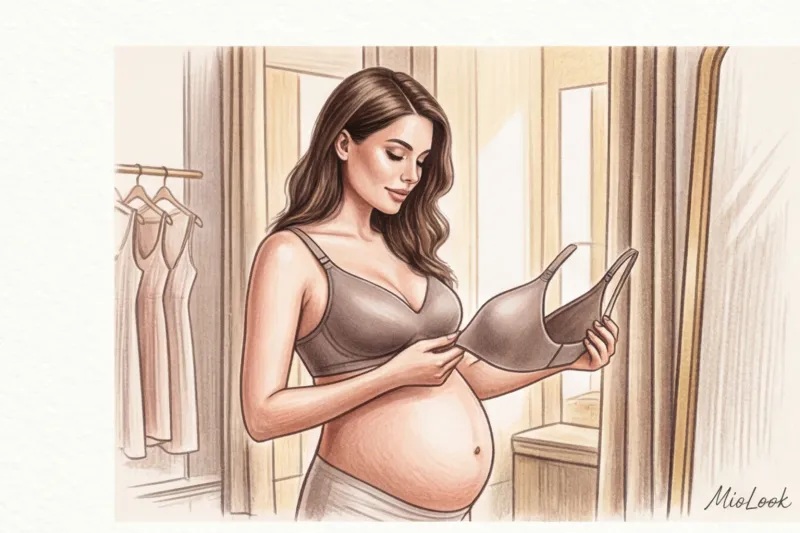
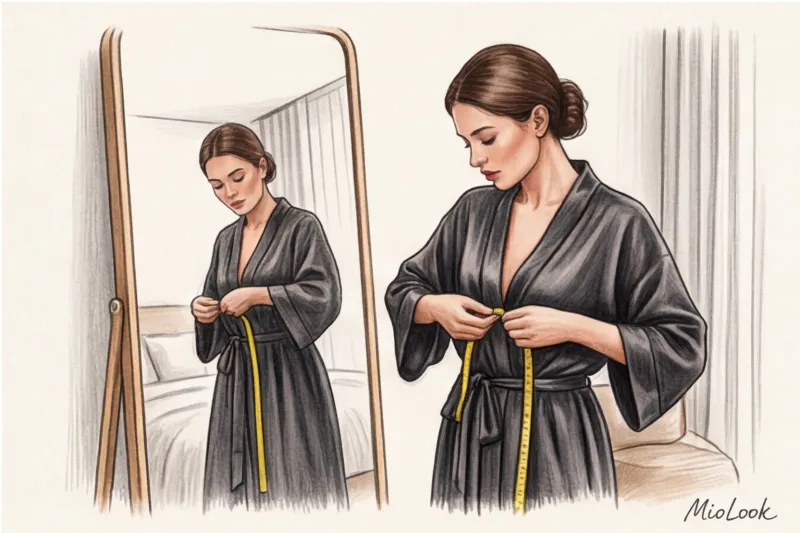
The rule for ideal fitting during this period: the bra band should be fastened on the tightest hook (or the middle one), not the loosest one, as we usually do. Why? Because your ribcage will expand, and you'll need extra length for the coming months. Buying bras "for growth" three sizes too big deprives your breasts of support. The band slips down onto your shoulder blades, putting all the weight on the straps, and by evening, you'll have a hellish neck pain.
The biggest mistake when buying a bra in the first trimester
The most counterintuitive thing you can do is go to the store at 10 weeks and buy a nursing bra with removable cups. Firstly, you have no idea what size your breasts will be by the time you give birth. Secondly, nursing bras often have a soft, unstructured shape. During the period of active growth (the first trimester), breasts need reliable, architectural support, not a soft, cloth-like garment that simply covers the nipples.
Basic Wardrobe: What Maternity Underwear Do You Really Need?
You don't need ten different sets. A well-designed capsule wardrobe is a minimum of items with maximum efficiency. The foundation of this wardrobe is the proper distribution of roles between items.
There's a myth that pregnant women should absolutely not wear underwire bras. This is only partially true. You shouldn't wear a rigid metal frame, which will dig into your expanding ribcage and block lymph flow. However, modern brands (like Chantelle or Triumph) have long since switched to flexible silicone underwire (flexi-wire) and 3D molding. If you have larger breasts (D-cup and above), a sports bra will simply flatten them, creating a "mono-breast" effect and chafing. You need flexible styles with a soft yet firm frame.
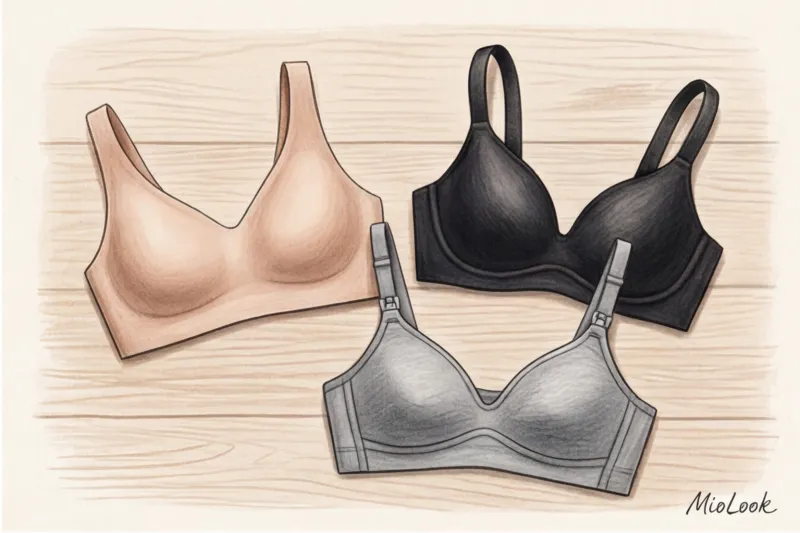
And now my favorite stylist secret that will save you tens of euros.
You DON'T need those special "maternity panties"—those giant parachutes that stretch all the way up to your ribs. Firstly, they're unbearably hot in the summer. Secondly, they look incredibly unsexy. Thirdly, they cost between €20 and €40 a pair. Instead, buy high-quality seamless microfiber briefs (or Brazilian briefs) from a regular store, just go 1-2 sizes up from your current size. The laser-cut edges prevent them from digging into your skin and ensure a perfect fit. under the belly It's aesthetically pleasing, comfortable, and you can wear it comfortably after giving birth.
New generation bandages and support garments
If you work in an office with a strict dress code, you're familiar with the problem: a support belt shows through the fabric of your suit pants or silk dress, ruining your silhouette. Fortunately, the market has advanced. Instead of harsh medical belts with Velcro fastenings, today we have supportive, seamless shorts (similar to cycling shorts). They gently support the stomach and thighs without restricting blood flow, and are completely invisible even under thin cashmere or viscose.
Your perfect look starts here
Join thousands of users who look flawless every day with MioLook by digitizing their wardrobe.
Get access — €0.99 onceAesthetics and Sexuality: How to Avoid Becoming a "Patient"
The psychology of style works flawlessly: what you wear underneath directly influences your posture and gaze. It's impossible to feel like a negotiating queen if you're wearing a faded, washed-out bra with a daisy-print pattern.
Returning to the executive client from the beginning of the article, we completely replaced her lingerie wardrobe. According to trend forecasting agency WGSN (2024), the maternity intimates segment is rapidly moving away from stereotypical pastel colors. We put together a capsule collection in shades of dark chocolate, emerald, deep mocha, and classic black. These colors instantly remove the air of "medical necessity" and return the items to the status of premium lingerie.
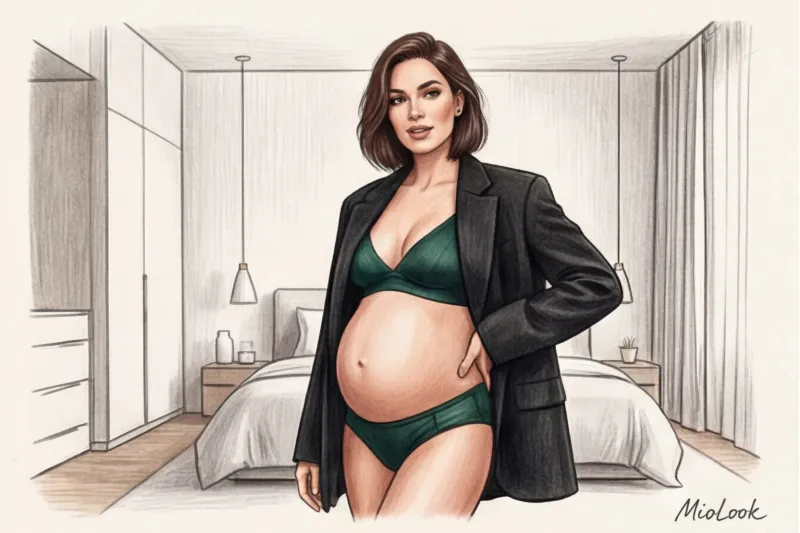
Fabrics matter too. Matte microfiber looks expensive. Smooth silk with added elastane (for nightgowns and robes) offers an incredible tactile feel. If you want lace, choose thick, stretchy lace without a cheap sheen. This rule, by the way, applies to everyone, not just expectant mothers.
Investing Smart: A Trimester-by-Trimester Shopping Checklist
To avoid buying unnecessary things out of impulse, act strategically. Here's an optimal plan for investing in comfort, where every item earns its price.
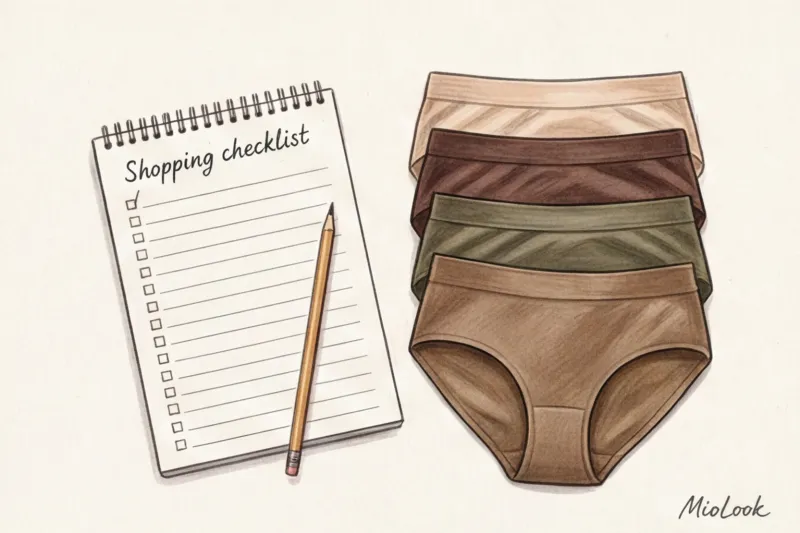
- First trimester (1-13 weeks): Breasts become extremely sensitive. We buy 2-3 seamless elastic bralettes (without underwire) from regular stores. Budget: €15–30 each. Briefs in a larger size – 5-7.
- Second trimester (14-27 weeks): Significant weight gain and chest expansion begin. We introduce two bras into the capsule with reinforced back support, wide straps, and a U-shaped back (to prevent the band from sliding up). Budget: €40–€70 for a quality model.
- Third trimester (from 28 weeks): Only now are we buying specialized underwear for pregnant and nursing mothers. You'll need 2-3 high-quality nursing bras with convenient magnetic or plastic clips (make sure you can easily unclip them with one hand). Bravado and Anita have excellent models. Budget: €50-€80.
Limitation: This checklist doesn't work if you're having multiple pregnancies or experiencing sudden weight fluctuations (more than 4 kg per month). In such cases, you'll need to adjust your bra size and bra fitter every 6 weeks.
Caring for elastic fabrics: making your underwear last longer
Not even the most expensive maternity underwear (€100 and up) can withstand harsh washing. The main enemies of elastic materials are hot water and fabric softeners.
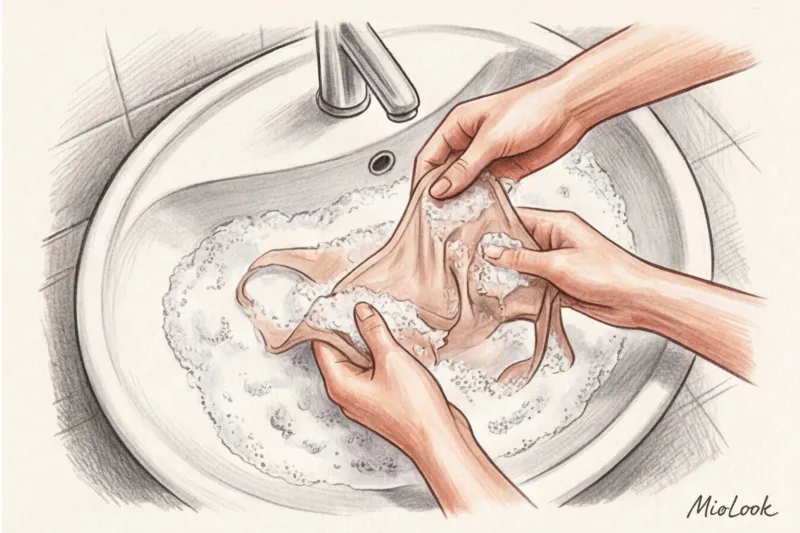
Elastane and spandex are polymer fibers. When you add a softener (conditioner), it coats these fibers with a chemical film. This causes the elastane to lose its ability to shrink back. This means your bra or supportive top simply falls apart and turns into a rag within 3-4 washes.
Golden rules of washing:
- Cool water only (max 30°C).
- Use liquid gels for delicate fabrics (they wash out better than powders).
- Never dry bras on a hot radiator or in a tumble dryer—the heat literally melts the silicone underwire and elastane.
Stylist's Summary: Your Comfortable and Beautiful Period
Nine months isn't a pause in your life where you have to "tolerate" discomfort and poor appearance. This is a time when your body works harder than ever, and it deserves the highest quality, most beautiful, and most thoughtful packaging.
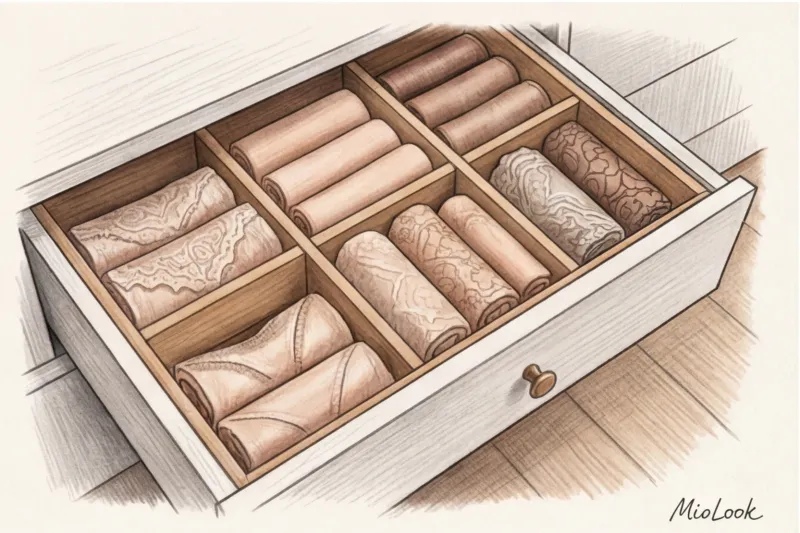
Remember: the fit of a basic jacket, dress, or favorite turtleneck depends 80% on the underwear underneath. Open your underwear drawer today. Put away anything that pinches, pricks, or makes you sad. Keep only those pieces that hug your body.
And to avoid racking your brains over how to fit new shapes into your usual style, try MioLook By digitizing your wardrobe in the app, you can use the AI stylist to find stunning combinations from what you already own, integrating new lingerie essentials into stylish, high-status looks effortlessly.