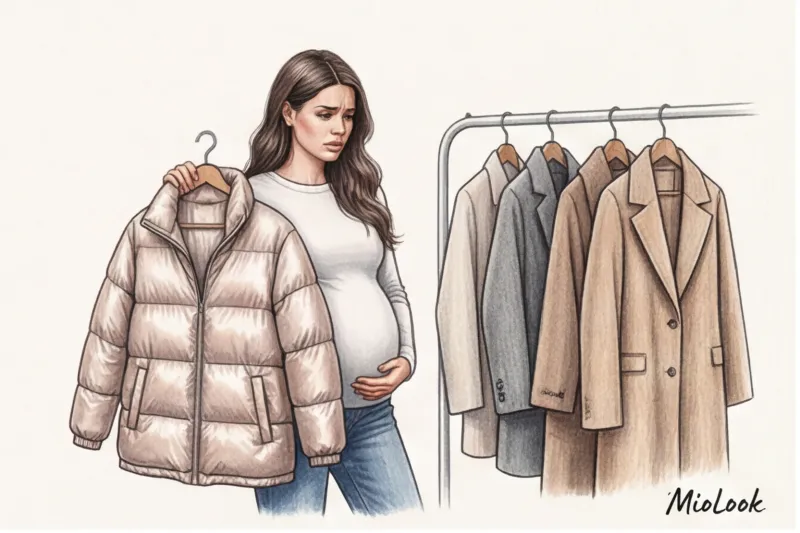
Remember the moment you first realized your favorite winter coat no longer fit your belly? I'm sure your first thought was that you'd have to buy that shapeless puffer jacket with the elastic waistband that makes you look like a bell. Let's be honest: maternity winter clothes have historically been associated with a compromise between style and warmth. But as a stylist and fabric expert, I insist: you don't need to buy a disposable wardrobe made of cheap polyester to survive the cold.
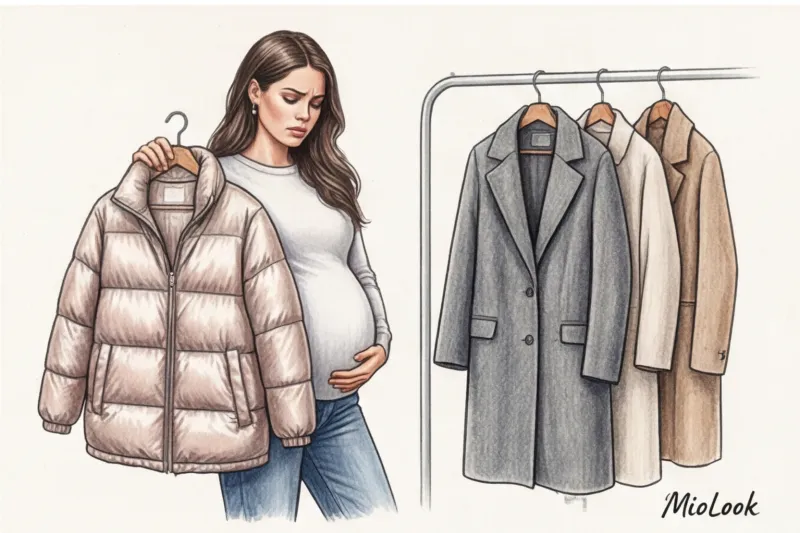
It's much smarter to invest in an adaptive wardrobe—items that will serve you before, during, and after pregnancy. We've already covered the basic principles of this approach in more detail in our The complete guide to a stylish wardrobe for expectant mothers Today, we'll focus specifically on the winter season: how to use menswear cuts, premium fabrics, and smart accessories to maintain your status and stay warm.
Why specialized winter maternity clothes are a style and financial trap
When you walk into the maternity section of any mass-market brand, you're confronted with the harsh economics of the fashion industry. Brands know you'll only wear the item for three to four months. To maintain profit margins, manufacturers skimp on ingredients.
According to statistics, over 80% of affordable winter outerwear for pregnant women is made with 100% low-quality polyester insulation. What are the risks for expectant mothers?
- "Greenhouse effect": Pregnant women physiologically have a faster metabolism and increased sweating. Cheap synthetic padding and acrylic don't breathe. You go outside, sweat, and then the slightest draft leads to hypothermia. Indoors, however, such a jacket becomes unbearably hot.
- Loss of silhouette architecture: Drawstrings under the bust, A-line silhouettes, and shiny raincoats instantly cheapen the look. These styles distort proportions, visually adding 10 kilograms where there aren't any.
"The adaptive fashion trend, according to the latest WGSN report, is radically changing the approach to maternity clothing. The focus is shifting from buying items for one season to cleverly transforming your current wardrobe."
Your task is to wear up to 70% of your usual winter clothes, skillfully complementing them with adaptive elements.
The Three-Layer Rule: Smart Thermoregulation Instead of Bulky Sweaters
The secret to warmth lies not in the thickness of the sweater, but in physics: the air between thin layers of clothing is the best insulator. To avoid the "cabbage" effect and maintain a graceful silhouette, choose the right fabrics.
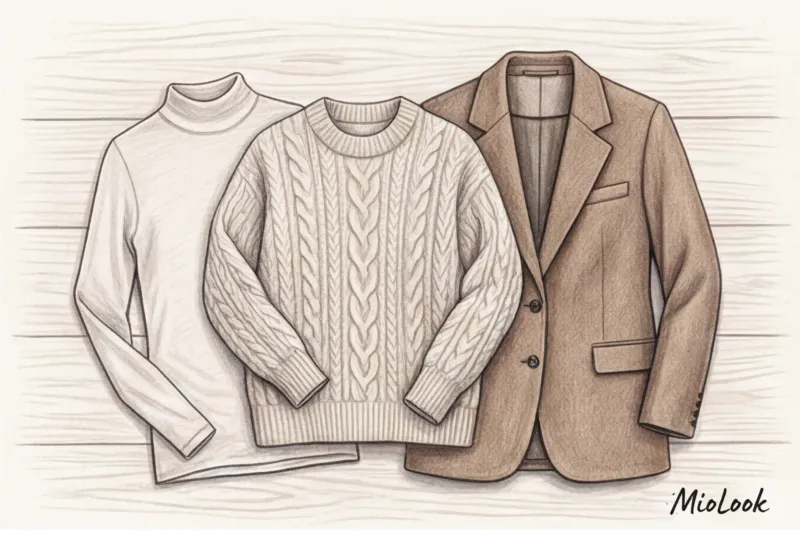
Base Layer: Thermal Underwear That Actually Works
During the winter, completely avoid cotton T-shirts as a base layer. Cotton retains moisture and takes a long time to dry—if you sweat on the subway, you'll instantly freeze outside.
An ideal investment (in the €50–€100 range) are long sleeves and leggings made from blended fabrics: for example, 70% merino wool and 30% silk. Silk is incredibly soft on the sensitive skin of the abdomen, and merino wicks away moisture. Also consider sheer tights with added cashmere (at least 15%) and a special anatomical U-shaped gusset that doesn't put pressure on the pelvis.
Middle Layer: Investing in Cashmere and Alpaca
Forget acrylic. According to research from Textile Exchange, alpaca fiber is seven times warmer than sheep's wool. The secret lies in the fact that alpaca hair is hollow inside, creating an ideal microclimate by adjusting to your body temperature.
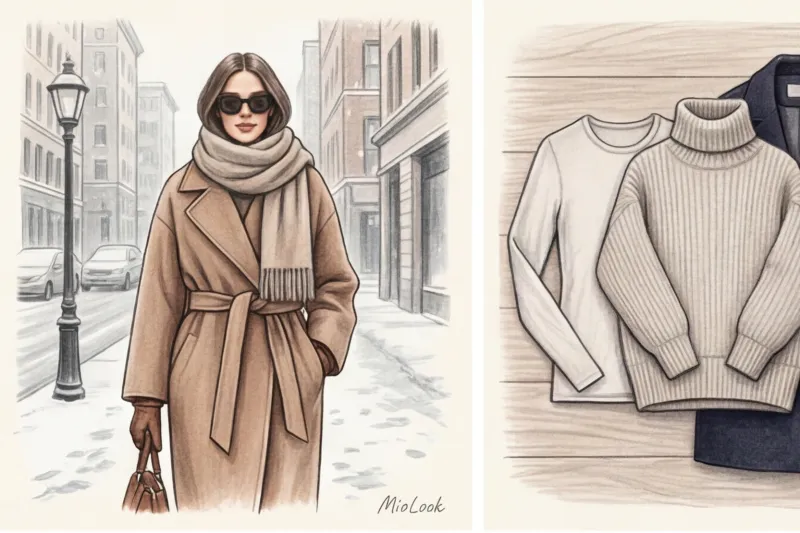
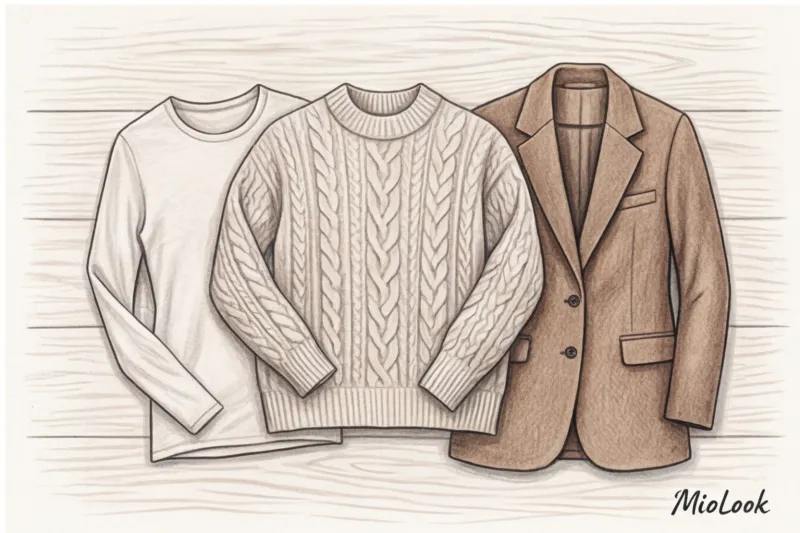
Instead of buying maternity sweaters with gathered sides, head to the men's department. Chunky-knit men's cashmere sweaters and cardigans (in sizes M or L) are perfect for a pregnant figure. They have a straight cut, drape beautifully, and you can wear them as a stylish oversized piece after giving birth.
Access to MioLook for €0.99 — one-time payment
A smart AI stylist will analyze your items and suggest how to create stylish, layered looks from what you already own.
Get access — €0.99 onceOuterwear: How to Avoid Buying a One-Season Down Jacket
A specialized winter jacket is the worst investment. I had a telling case: a client, the head of the IT department, came to me. She had to commute to the office until her eighth month, and she was horrified at the thought of wearing a shapeless, €200 "puffy balloon" over her formal suits.
What did we do? We used her favorite double-breasted camel coat from Max Mara. We bought a high-quality coat extender for €60 with a zipper. She simply attached it to the coat's lapels. The color matched perfectly, the silhouette remained elongated and clean, and the budget was saved.

What else works great:
- Wrap coats and ponchos made of thick wool: You simply tie the belt just above your stomach.
- Men's aviator shearling coats: Due to the cut, they do not fit tightly at the bottom, but they keep the chest and back warm.
- Oversized duvets: The same ones you buy from regular brands (like COS or Massimo Dutti), but one size bigger.
Fair Limit: The life hack with expander inserts does NOT work with leather jackets, coats with complex asymmetrical fastenings, and buttoned jackets (a central zipper is required).
"Bottoms" that don't squeeze: stylish trousers and knitwear
The search for the perfect winter pants for pregnant women often ends with polyamide leggings that are so uncomfortable outside. The solution is knitted suits made of thick merino wool or heavy cotton.
Choose a ribbed knit. The vertical stripes of the ribbed knit visually elongate the legs, offsetting the volume in the upper body.
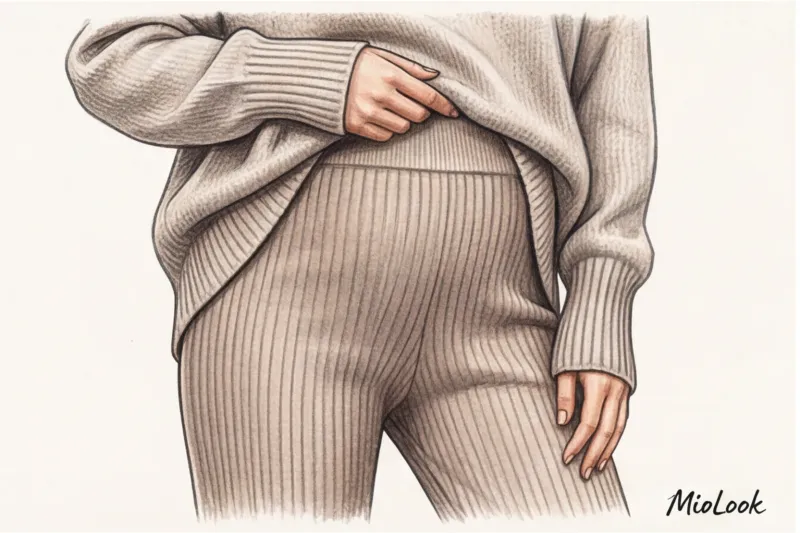
For winter, an over-bump fit (stretched over the entire belly) is much more practical than an under-bump fit (elasticated under the belly). A thick knit over-bump panel acts as an additional thermal layer and a lightweight support belt. If you're not ready to part with your favorite business wool trousers, use an elastic belly band: the trousers remain unzipped, and a thick waistband closes this area, holding them in place on your hips.
Winter Shoes for Expectant Mothers: Safety, Warmth, and Style
From the sixth month, the center of gravity shifts, and joints become more flexible due to the hormone relaxin. This is coupled with the inevitable evening swelling of the feet. Shoes during this period should not only be warm, but also safe.
One of my clients slipped in a pair of popular UGG boots while just leaving her apartment building. The reason? Classic models have flat EVA foam soles, which stiffen in the cold and slide like skis, and the soft heel counter doesn't provide ankle support.
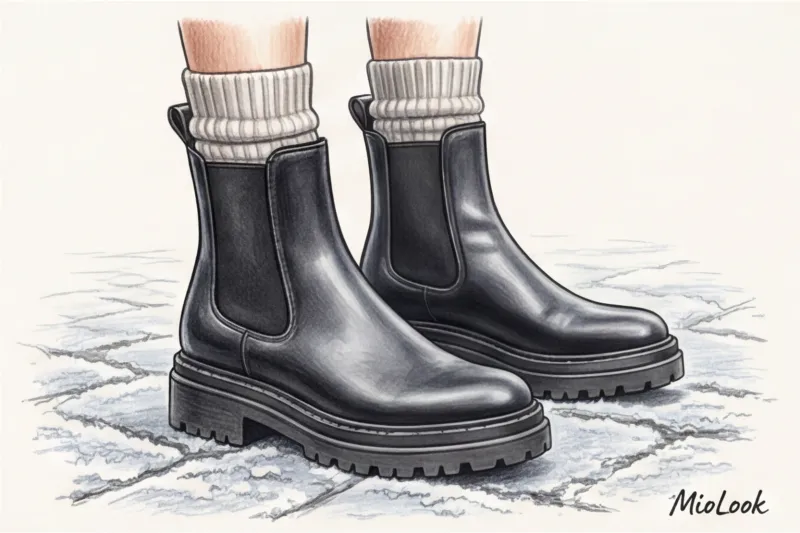
What to look out for:
- Sole material: Look for the abbreviation TPE (thermoplastic elastomer) or deep tread polyurethane (tractor sole).
- Model: Chelsea boots with wide elastic inserts mean you won't have to bend over to lace them. Choose a width half a size larger than your usual.
- For the office: If you have a strict dress code, insulated loafers with a sheepskin lining, paired with thick tights, will be your salvation.
Your perfect look starts here
Join thousands of users who look flawless every day with MioLook. Our AI will select safe and stylish shoes to complement your wardrobe.
Get access — €0.99 onceStatement Winter Looks for Work and the City: Style Formulas
To avoid wasting my morning thinking, I collect for my clients in the MioLook app Ready-made formulas. Here are two foolproof winter combinations that look like they cost €1,000, even when put together from basic pieces.
Formula 1: Business Minimalism
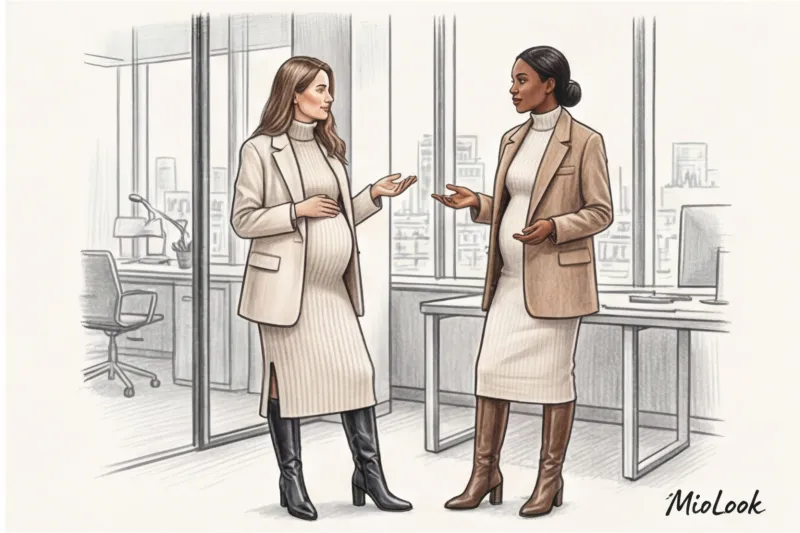
Knitted midi dress + structured oversized jacket + thick tights + tube boots.
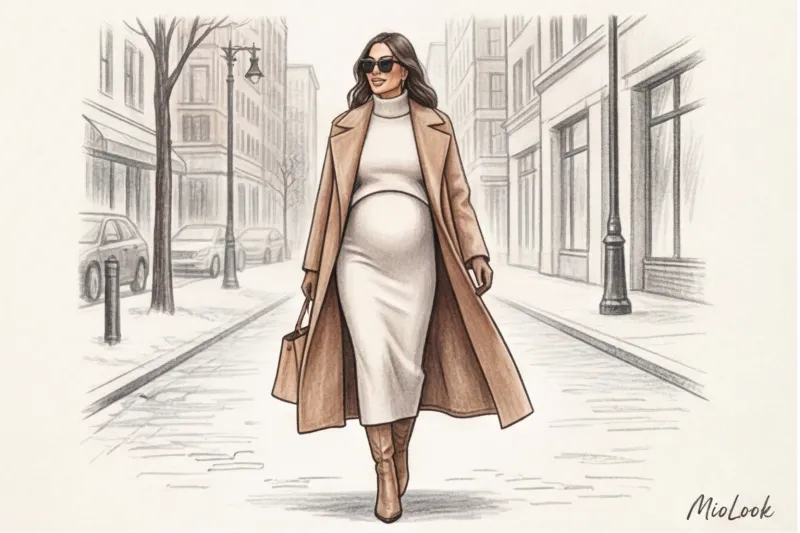
A voluminous jacket with sharp shoulders, draped over a fitted knit dress, creates crisp vertical lines. You don't hide your belly, but frame it with a clean, streamlined silhouette. Wide-legged tube boots address swollen calves.
Formula 2: Casual Chic for Weekends
Leggings with stirrups + long men's shirt + cashmere turtleneck sweater + sheepskin coat.
Stitches will keep your leggings from riding up under your boots. A thick cotton shirt (worn untucked), with the sweater collar peeking out, creates just the right amount of layering. Use voluminous, contrasting scarves to draw the focus to your portrait area.
Checklist: Assembling a Smart Capsule in MioLook
Pregnancy is a chance to experiment with textures, not hide in dark robes. To avoid impulse purchases, take inventory.
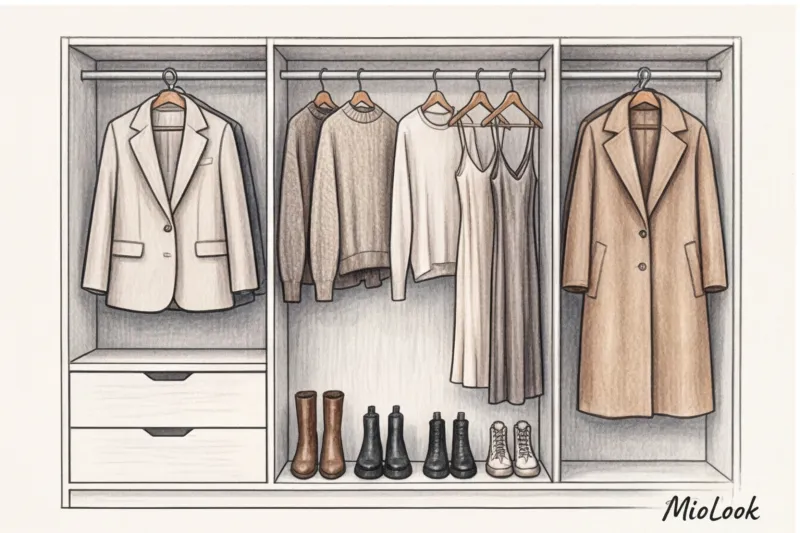
Get out all your oversized shirts, loose cardigans, slip dresses (they can be worn over turtlenecks), and men's sweaters. Upload photos of them to MioLook app Artificial intelligence will analyze your wardrobe and show you which items from your pre-pregnancy wardrobe will work well together, taking into account your new silhouette. All you'll need to do is purchase a few smart accessories—for example, a coat insert and high-quality thermal underwear.
Remember the most important rule of adaptive style: buy quality, well-cut items, not maternity clothes. This is the only way your winter wardrobe will last when this wonderful, yet short, period comes to an end.