Dual-Purpose Architecture: Why Maternity and Nursing Clothing Shouldn't Be a Compromise
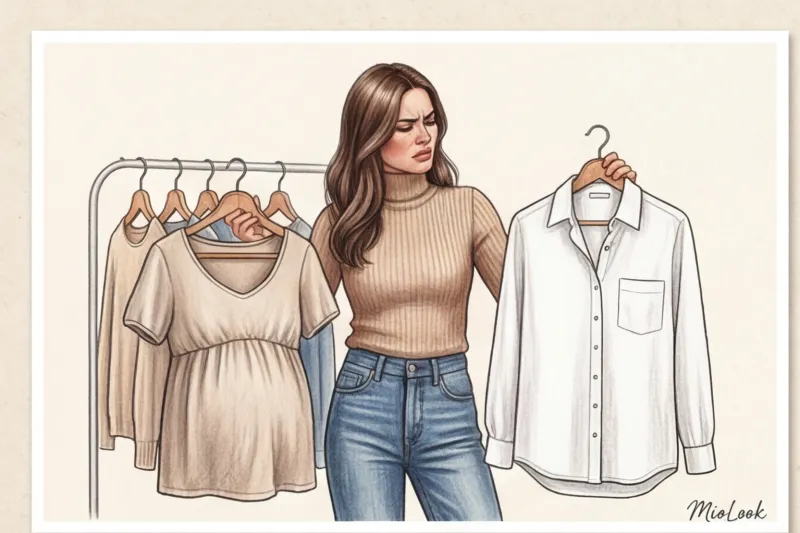
Anna, the CFO of a large IT company, came to see me. Her request was: "Camilla, I'm giving birth in a month, and in two months I have to hold board meetings. I plan to nurse during breaks, but I absolutely don't want to look like I escaped from the playground." This is a common pain point: as soon as a woman transitions to motherhood, the mass-market industry somehow decides that her style should suddenly become infantile and her silhouettes shapeless.
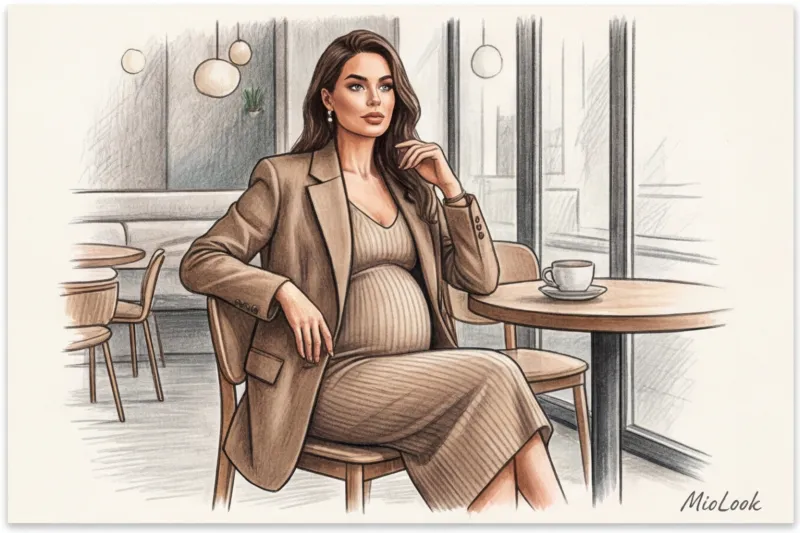
In fact, clothes for pregnant and nursing women doesn't have to be a compromise between convenience and aesthetics. We've already discussed the architecture of such images in more detail in our The complete guide to a stylish wardrobe for expectant mothers , but today I want to dig deeper. We'll talk about 2-in-1 items that maintain your professional status and personal brand.
According to WGSN's 2024 analytical report, the adaptive fashion segment grew by 28%. This means the concept of a wardrobe is changing. Smart clothing is now designed to grow with you, provide discreet access for breastfeeding, and remain relevant even years after maternity leave.
The industry's biggest myth: why you should abandon specialized "feeding" tops
Let me say something many stylists tactfully keep quiet about: the classic nursing top with a horizontal flap under the bust is the worst thing you can do to a woman's figure proportions. This is my personal crusade against the "mommy" mass market.
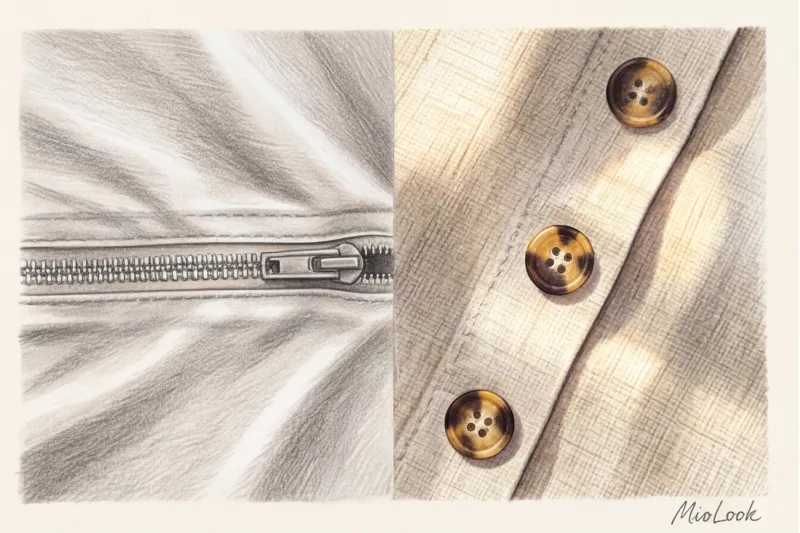
In terms of visual illusions, any horizontal line cuts into the silhouette. A horizontal seam or hidden zipper right across the bustline visually lowers the bust, adds volume where it's meant to be hidden, and instantly cheapens the look. Furthermore, such specialized garments are made of thin, low-quality viscose or polyester. With daily washing (which is inevitable during lactation), the fabric becomes pilled and loses its shape within a couple of weeks.
The psychological aspect is no less important here. Over 10 years of work, I've noticed a clear pattern: what we wear dictates how we feel. By wearing specialized knitwear with an overtly "utilitarian" design, a woman subconsciously relegates her expertise and sexuality to the background.
Your perfect look starts here
Join thousands of users who look flawless every day with MioLook. Digitize your wardrobe and create stylish capsule collections.
Get access — €0.99 onceSmart Cut: 5 2-in-1 Clothing Styles That Look Classy
Instead of buying items labeled "maternity" that will end up in the trash within a year, I recommend investing in architectural styles. These are premium alternatives that elegantly solve functional problems and will stay in your closet forever.
Wrap Dress: The Legacy of Diane von Furstenberg
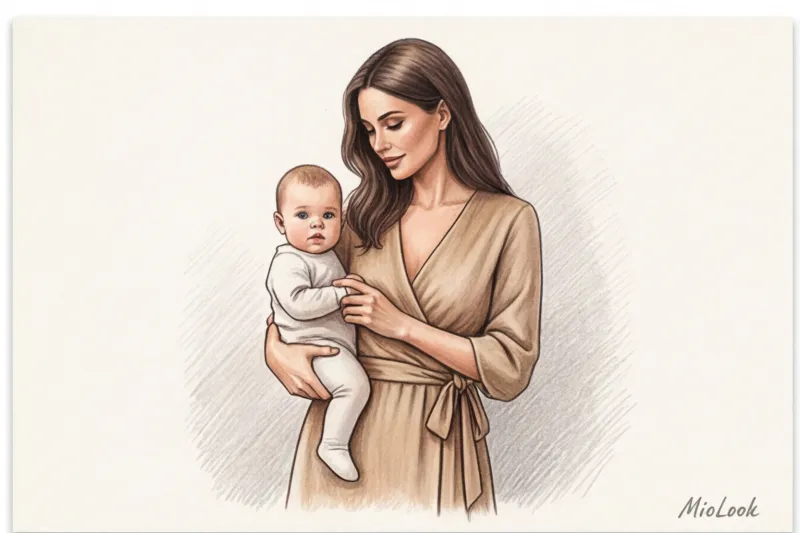
In 1974, Diane von Furstenberg revolutionized the world by creating the classic wrap dress (wrap dress). Today, this is an absolute must-have for an adaptive wardrobe. The genius of this cut is that it adapts to any changes in waist size down to the millimeter.
You don't need hidden zippers—a V-neck and soft wrap provide instant access for nursing without sacrificing elegance. Choose thick, flowing silk, cupro, or high-quality viscose. A good wrap dress from brands like COS or Massimo Dutti ranges from €90 to €150, but it's worth every penny.
The men's shirt and the principle of layering
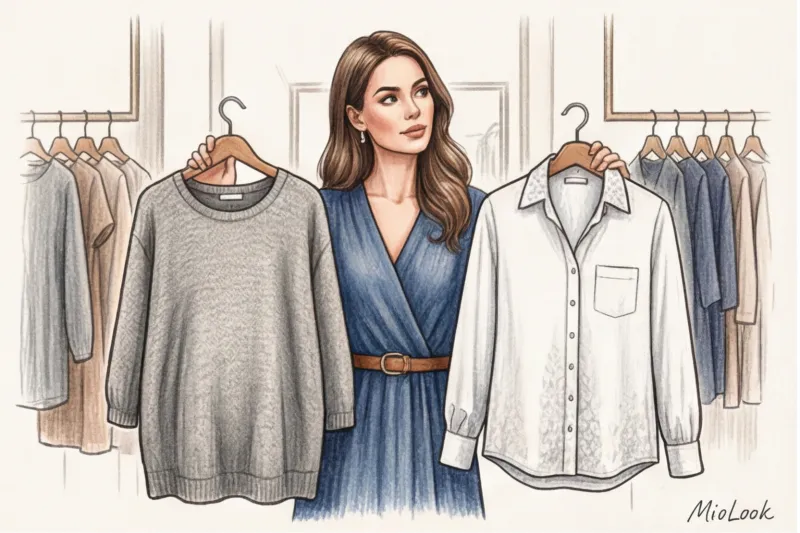
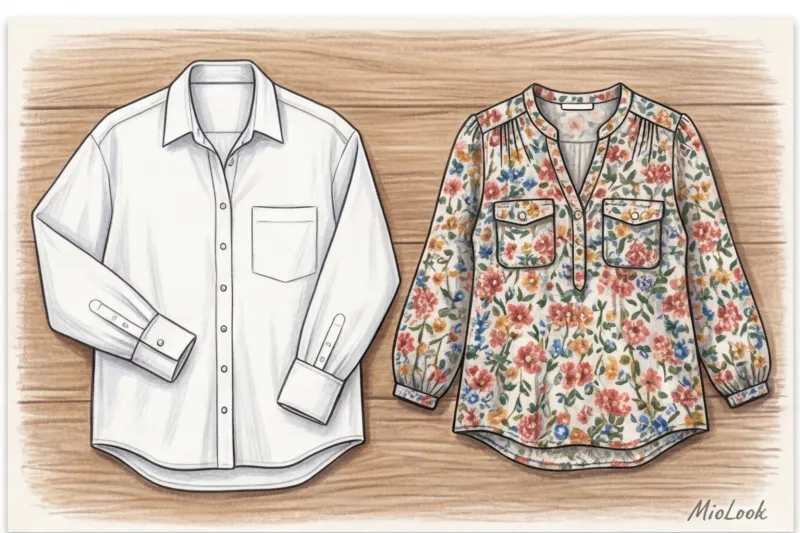
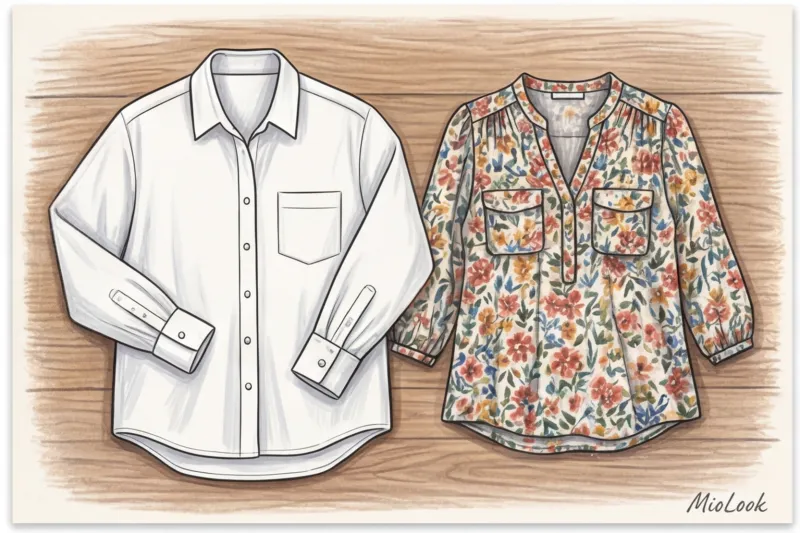
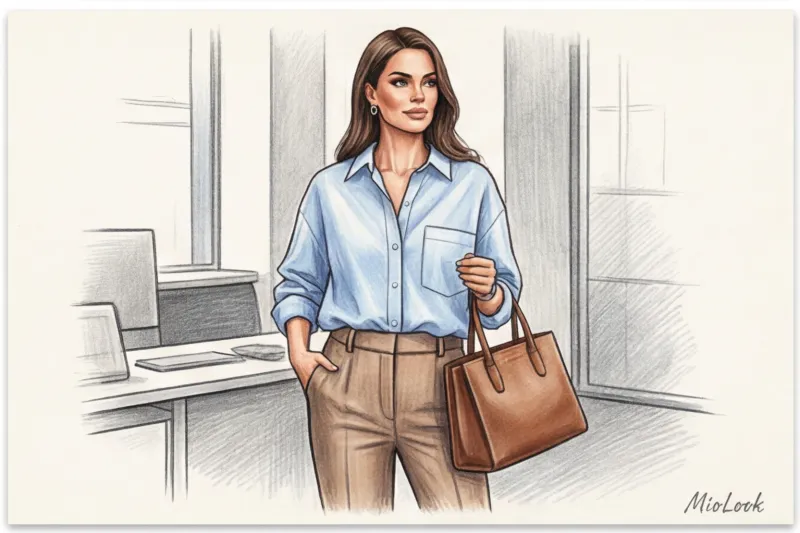
A classic oversized shirt made of heavy cotton (look for a weight of 180 g/m² or higher) is the canvas for a smart mom wardrobe. The key to styling it lies in layering.
"The best trick for nursing: wear a stretchy, ribbed tank top with a low neckline under an unbuttoned men's shirt. The shirt creates vertical structure and conceals bulk, and the tank top can be easily pulled down for nursing."
Within the framework of a business dress code, this approach looks impeccable: casually rolled sleeves, a raised collar, and a strict cotton texture convey composure and confidence.
Knitwear with a Secret: Architectural Drapery
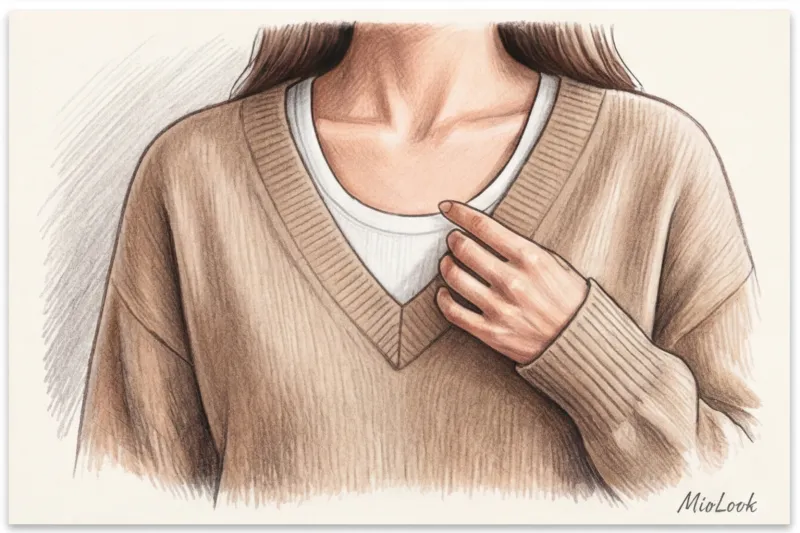
Forget shapeless sweatshirts. Our top picks are cardigans and sweaters with deep V-necks and button-downs. When personally testing premium knitwear for clients, I always look for items with concealed zippers hidden in vertical seams or architectural darts.
These designs are often found in Scandinavian minimalist brands. The vertical dart visually elongates the silhouette, and the concealed zipper makes feeding as delicate as possible. This is the pinnacle of tailoring, where functionality doesn't compromise design.
Materials Matter: A Fabric Checklist for an Adaptive Wardrobe
During lactation, demands on fabrics increase exponentially. Hormonal levels change, so hygroscopicity, thermoregulation, and hypoallergenicity become paramount. But from a style perspective, we're interested in another critical parameter: stretch-recovery (the ability of a fabric to return to its original shape after stretching).
- Elastane contains: To prevent the neckline of your T-shirt or dress from becoming a stretched-out frill after your first feeding, look for a fabric that contains between 3% and 5% elastane.
- Anti-stain texture: Let's be realistic—stains from milk or spit-up are inevitable. Plain, smooth silk will treacherously highlight any drop. Your savior is prints (geometric, abstract), ribbed fabric, heavy denim, or textured melange knits.
- Modal and lyocell: These modern materials breathe better than cotton, have a noble matte sheen and are incredibly pleasant to the body.
Budget knitwear for €15–€20 made from 100% cotton without added stretch will stretch out around the chest after three days. It's better to buy two tops made from thick modal for €40–€50, which will last for years.
Try MioLook
A smart AI stylist will create the perfect look for you. Save time in the mornings with ready-made capsules at your fingertips.
Get access — €0.99 onceBusiness Dress Code 2 in 1: How to Maintain an Expert Image
Returning to Anna's story: we needed to integrate functional pieces into a strict business casual look. How do you conduct a board meeting when you need constant access to your breasts? The answer lies in a structured top layer.
Long, menswear-inspired jackets with sharp shoulders are like armor. They instantly pull together an outfit, even when worn with a simple, stretchy, button-up nursing top underneath. But there is an important limitation here: This technique does NOT work if you're replacing a structured jacket with a soft, fine-knit cardigan. Soft on soft in a business setting creates a "loungewear" effect.
Draw attention away from functional elements of your clothing with statement accessories. A rugged leather tote bag, a chunky masculine watch, a silk scarf, or large geometric earrings create focal points around your face and wrists. No one will even think to analyze the cut of your top if you're wearing an impeccably tailored €250 jacket and the right accessories.
Wardrobe Math: Calculating Cost Per Wear
Let's turn on analytics and do the math. Cost Per Wear (CPW) — the cost per entry. This is my favorite tool for sobering up clients accustomed to impulsively buying mass-market products.
Scenario A: You buy a "pregnancy" capsule of 10 average-quality items, followed by a "nursing" capsule of 10 items. The average bill will be around €500. You'll wear these items maybe 20-30 times each, after which they'll be thrown in the trash or on the back shelf because their design is outdated or outdated. The CPW will be around €1.50-2.00 per outing, but you'll look mediocre the entire time.
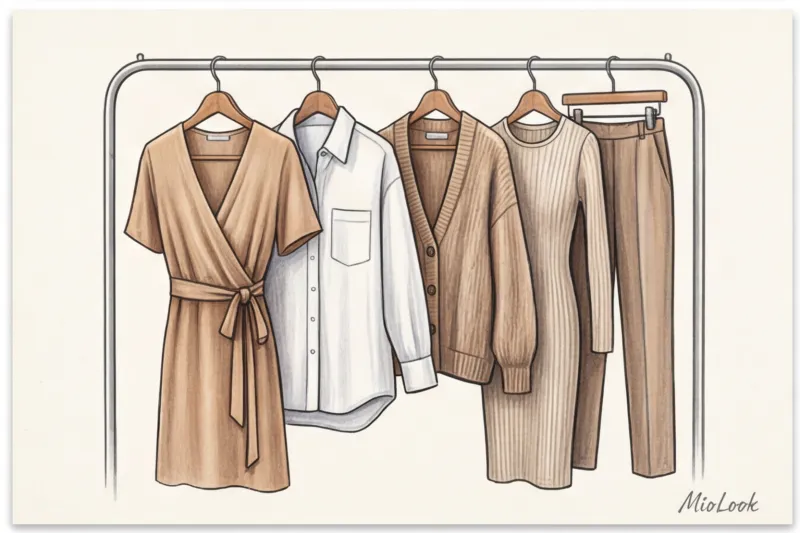
Scenario B: You buy five premium 2-in-1 pieces (a wrap dress, a cashmere cardigan, two oversized shirts, and the perfect trousers with an adaptive waistband). The budget is around €700–€800. But the trick is, you'll continue wearing them three years after you've finished breastfeeding. With 150+ wears, the CPW drops to a mere €0.90, while your image remains on point. The 2-in-1 concept saves up to 40% of your budget in the long run and declutters your closet in an eco-friendly way.
Ready to get started?
Try the free plan—no commitments. Create your smart wardrobe in minutes.
Get access — €0.99 onceIntegration with MioLook: Assembling a Smart Maternity Capsule
Before you go shopping, take stock of your current wardrobe. The statistics we gather during styling sessions reveal something astonishing: up to 70% of your regular wardrobe (especially shirts, oversized sweaters, and shirt dresses) are ideal for breastfeeding. You just need to combine them correctly.
To avoid wasting precious morning minutes when your child demands your attention, digitize your things using the “smart wardrobe” function in MioLook Artificial intelligence will help you create ready-made capsules from what you already have and suggest which 2-in-1 architectural pieces you need to complete your look.
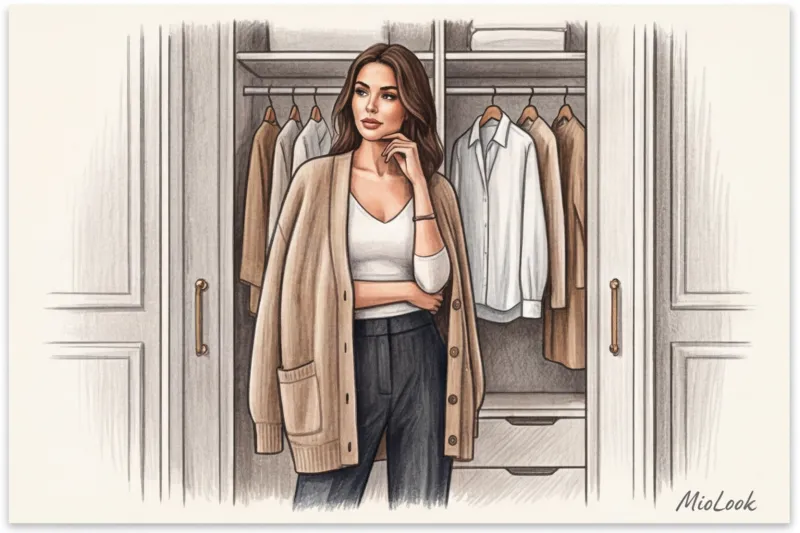
Motherhood is a time of tremendous physical and emotional transformation. But that's certainly no reason to put your style on hold. Opt for architectural cuts, avoid cheap styles with horizontal zippers across the chest, and remember: clothes should serve your needs without sacrificing your individuality.