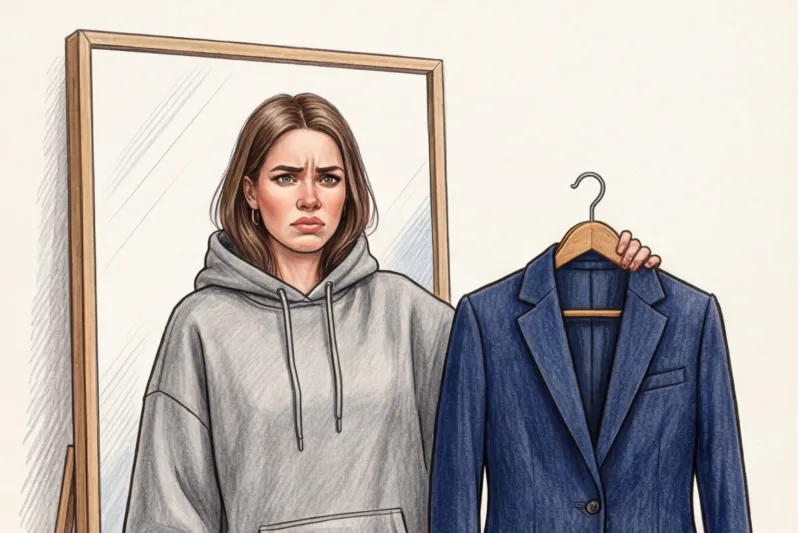
Clients often come to me with the same secret goal: "Darina, I'm eight weeks pregnant, I have a board meeting soon, and I don't want anyone to guess." When trying to figure out how to hide a bump early on, most women make one fatal mistake: they panic buy shapeless hoodies and empire-waist dresses.
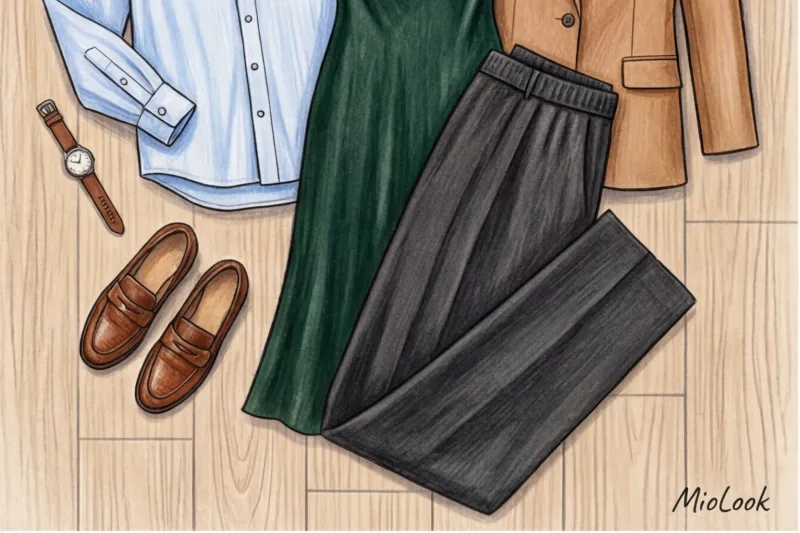
Trust me, from 12 years of experience: nothing betrays your pregnancy more than a sudden change from an elegant, fitted silhouette to a tank cover. Colleagues notice not the changes in your figure (which are still difficult to discern objectively at 8-12 weeks), but the dramatic shifts in your style. To maintain the status quo and feel confident, we need architectural tailoring, the laws of optical illusions, and proper color theory. We've covered more about adapting basic pieces in our The complete guide to stylish maternity clothes.
Why the usual advice on "how to hide your belly in early pregnancy" no longer works
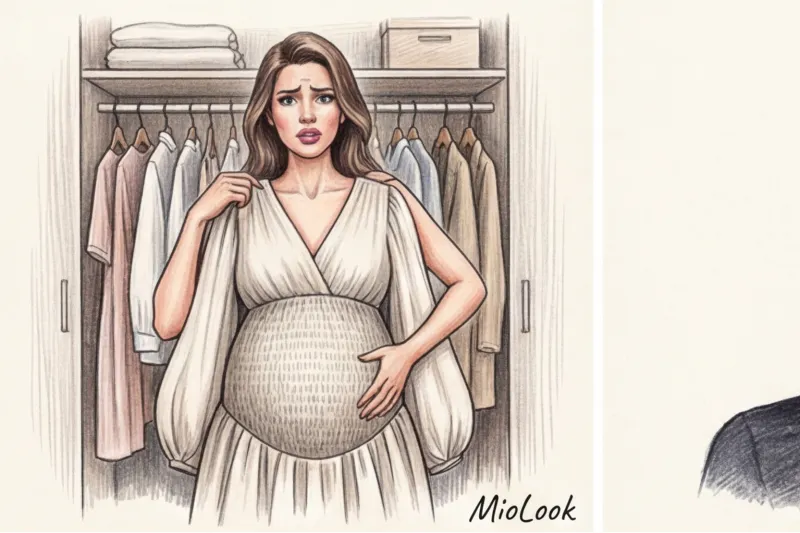
The internet is full of advice: "Wear a loose dress," "Buy a tunic." Last year, my client, a corporate lawyer accustomed to formal three-piece suits and pencil skirts, read enough of these forums and showed up to the office in a flowing A-line dress. The result? Questions poured in on her very first day at the water cooler. She wasn't quite there yet, but Gestalt psychology kicked in: the human brain instantly interprets a sharp change in a familiar visual pattern as a signal that something has happened.
Your main goal during the first few months is to continue being yourself. You should conceal any changes in your figure strictly within the confines of your usual silhouette. If you've been wearing jackets, continue wearing them, just change the way you style them and the cut. This is called the "adaptive wardrobe" concept, where we don't buy special clothing but instead wisely utilize the resources of everyday items.
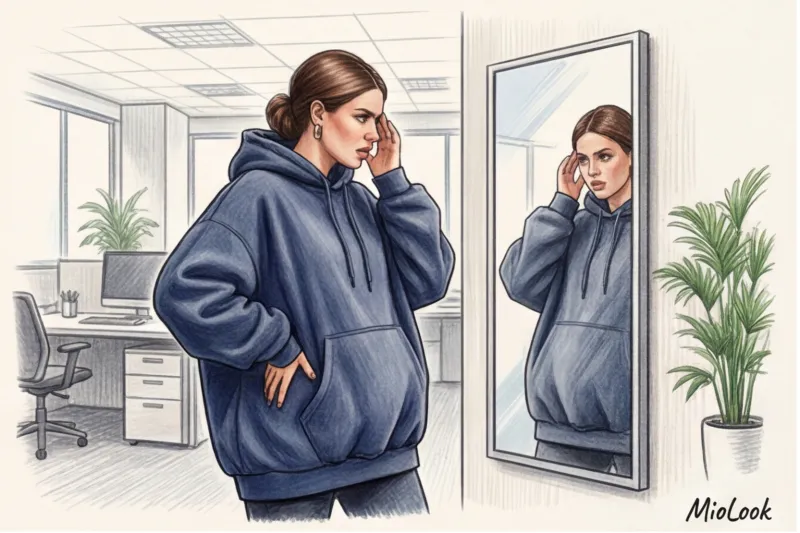
The Oversized Trap: Why Your Hoodies Give You Away
There's a huge difference between a well-thought-out, stylish oversize and simply wearing clothes three sizes too big. The biggest wardrobe scam is thin, bulky knitwear. Overly baggy sweaters made of soft viscose or thin cotton cling to the body when you walk, in gusts of wind, or simply when you sit down at the table, treacherously emphasizing the very contours you're trying to hide. Instead of concealing bulk, a thin robe creates a "taut parachute" effect.
Access to MioLook for €0.99 — one-time payment
A smart AI stylist will select the perfect look from your clothes, taking into account changes in your figure.
Get access — €0.99 onceCutting Architecture: 3 Key Rules of Illusion
The secret isn't in hiding the body under meters of fabric, but in making the clothes hold their own shape. The basic laws of visual figure correction and architectural tailoring apply here.
- Hard textures instead of soft ones. Avoid fine cashmere in favor of dense cotton (180 g/m² and above), suiting wool, and faux leather. Dense fabric creates a framework between the body and the surrounding environment. The garment should stand on its own.
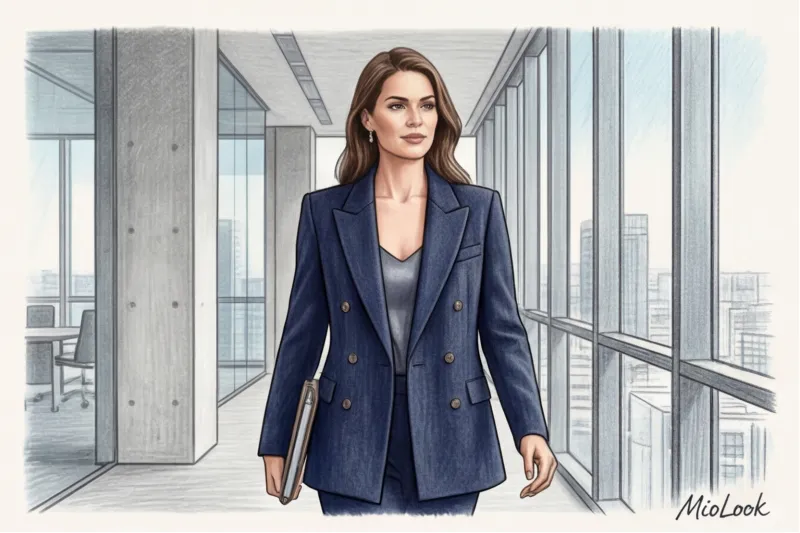
- Artificial verticals. The design features the well-known Müller-Lyer optical illusion: two lines of the same length appear different due to the arrows framing them. In clothing, an unbuttoned jacket, a long vest, or an open coat create two sharp vertical lines on the sides of the torso, visually cutting off volume. The optimal length of such a jacket is 5–7 cm below the widest part of the hips.
- Focus on the shoulder girdle. To make your waist appear narrower (or to make any changes less noticeable), visually broaden your shoulders. Wear jackets with shoulder pads—they create a perfect V-shaped silhouette, which is subconsciously associated with tonedness.
The Magic of Layering in Your Office Wardrobe
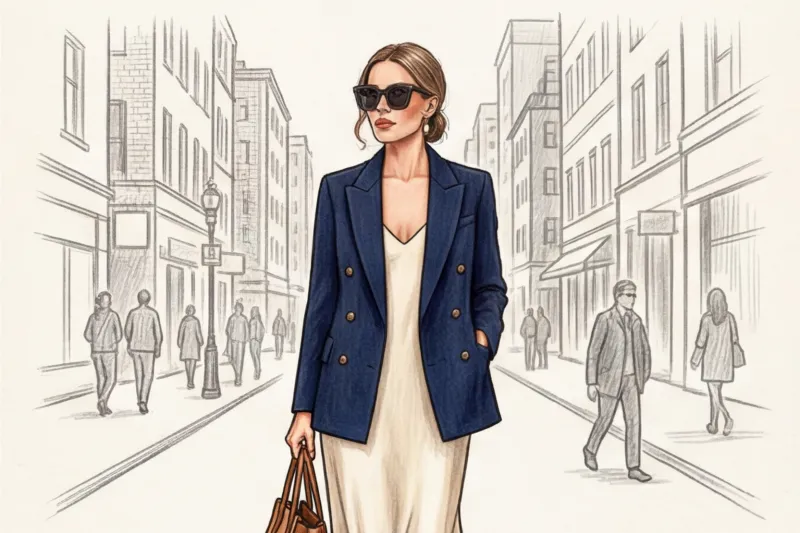
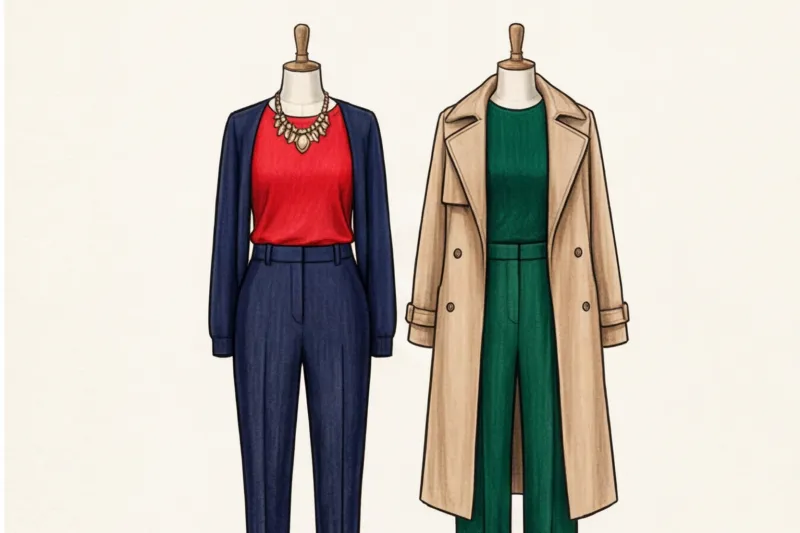
My favorite trick for business dress codes is creating an "internal column of color." Wear a basic T-shirt and trousers in the same shade (for example, deep chocolate brown), then layer a contrasting, heavy shirt or a structured, open-fronted, sand-colored jacket over the top. The observer's eye only notices the narrow internal band of color, ignoring the actual volume on the sides.
Color Strategies: Draw Attention Away from the Waist
As a certified colorist, I often challenge the "black is slimming" myth. Ladies, black is only slimming if you're standing against a black wall! In a bright office or on the street, a black bodycon dress acts as a highlighter, outlining your silhouette with a bold, contrasting outline.
Instead of total black, use smart color schemes:
- Color blocking. Dresses with dark contrasting side panels are a brilliant invention. They literally "erase" extra inches from the waist.
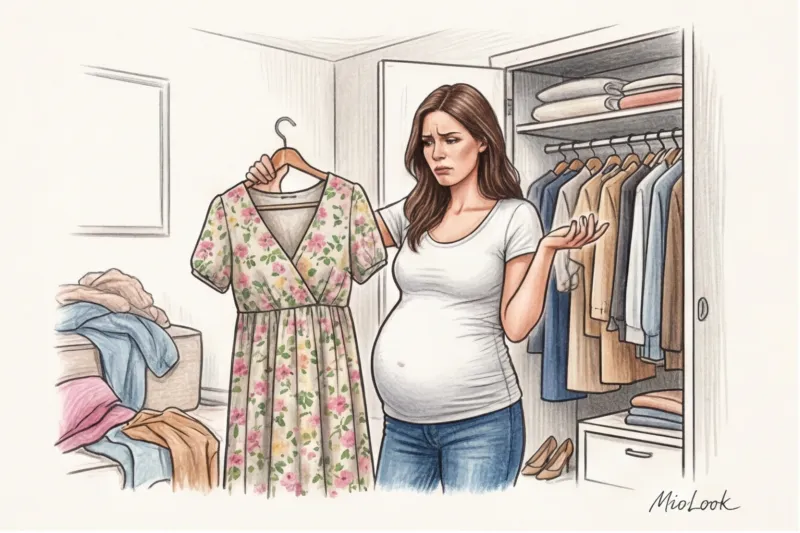
- Smart prints. Forget about tiny florals. In early pregnancy, they look childish and somehow emphasize curves. Your choice is medium-sized geometrics, abstract designs, or asymmetrical diagonal prints that break up the shape and confuse the eye.
- Bright accents near the face. Add a pop of color to your portrait. A deep emerald scarf, a burgundy polo collar, or a bold lipstick are guaranteed to draw the viewer's gaze upward. People will look at your eyes, not your waist.
Your perfect look starts here
Join thousands of users who look flawless every day and collect smart capsules with MioLook.
Get access — €0.99 onceAdaptive wardrobe: what items will save you in the first months
According to WGSN's 2024 data, the adaptive fashion trend is breaking records. And that's great news: you no longer have to shop in maternity departments (which are often plagued by poor fit and outdated designs). Statistics we collected from users MioLook smart wardrobe , shows: 70% of things from a regular closet can be worn for up to 5-6 months.
Here are three investments that will pay off (and stay with you after maternity leave):
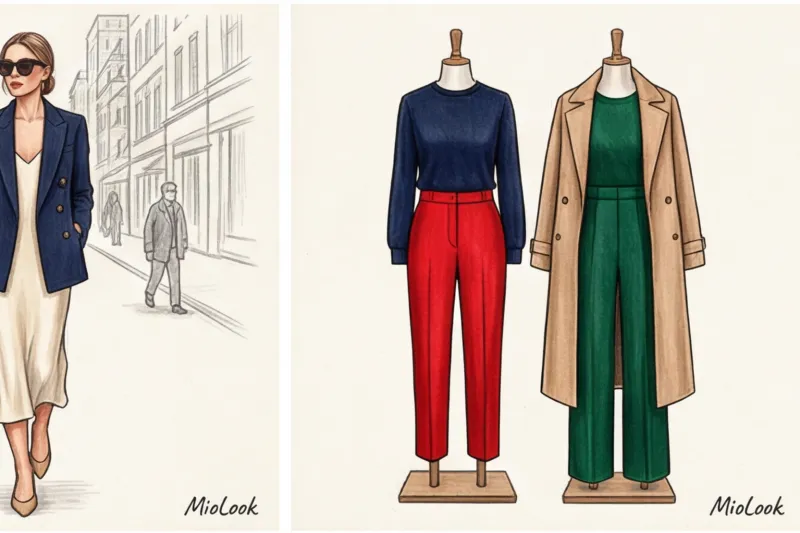
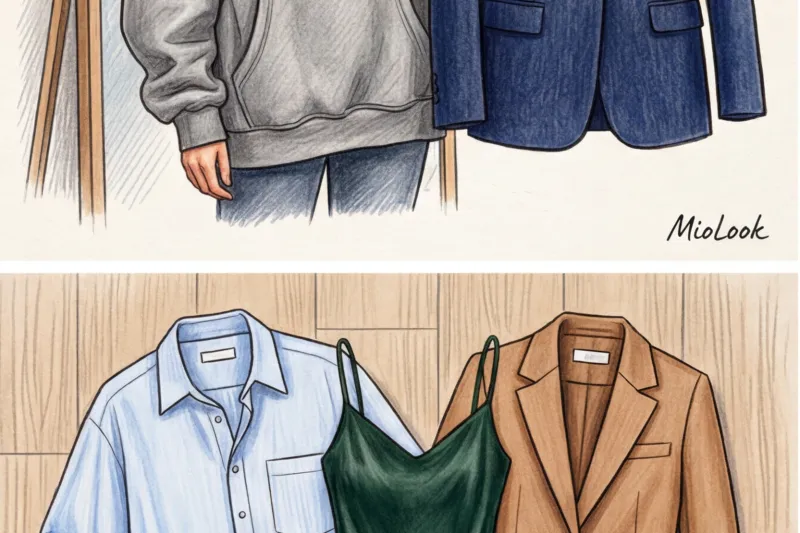
- Bias cut slip dress. Unlike a straight cut, a fabric cut on the bias gently hugs the figure without digging in. Thick silk doesn't create excess shine and makes an ideal base for jackets. A budget option made from high-quality viscose will cost €40–€80, while premium silk starts at €150.
- Men's shirts. Forget about fitted women's blouses. A men's or oversized shirt made of thick poplin will provide the necessary volume. Use the French tuck technique: tuck the shirt in at the front on one side only, leaving it loose at the back. This creates a beautiful diagonal drape right across the stomach.
- Palazzo trousers with hidden elastic. Many brands (for example, COS, Massimo Dutti) are now producing tailored trousers with a discreet elastic waistband at the back, while the front remains classic. This looks a hundred times more classy than maternity bandage trousers.
Investing in Accessories: Managing Your Eyes
Accessories are your control panel for attracting attention. Statement earrings, statement chain necklaces, and vintage brooches on a jacket lapel create a powerful focal point. However, what you should temporarily avoid are wide, contrasting belts at the waist. They act as a target, drawing the eye precisely where you don't want it.
What to definitely avoid: anti-trends of camouflage
No matter how much you love these things, it’s best to put them away in the far corner of your closet for the first 3-4 months:
- Fitted ribbed knit. The "noodle" structure stretches along the curves, and the stripes become wider. This visually increases the volume by 1.5 times.
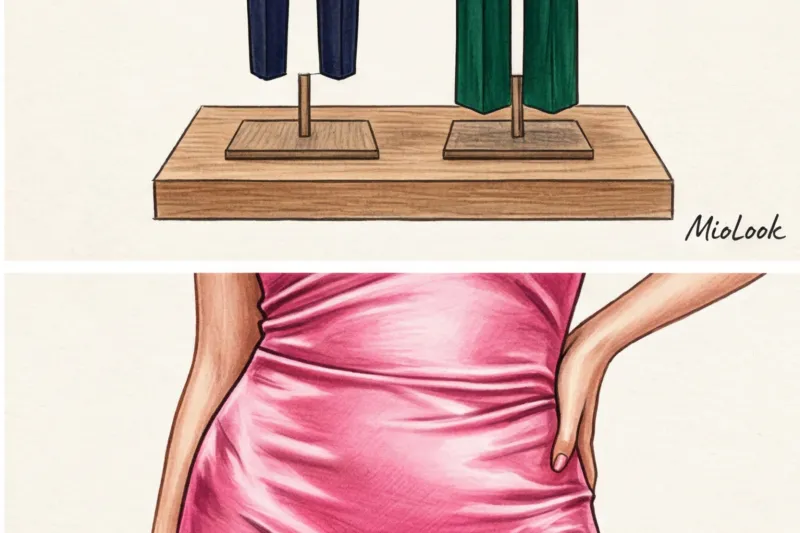
- Satin and shiny fabrics in the waist area. Any fabric that reflects light (silk, satin, sequins) acts like a magnifying glass, highlighting the body's microrelief and the slightest folds.
- Low-rise trousers. They cut the silhouette in the most unfortunate place, and due to a slight increase in the belly, they will constantly slip down and cause discomfort.
To be fair, I'll add one important exception: the "hide your waist with a structured top" rule doesn't work for everyone. If you have an inverted triangle body shape (broad shoulders and very narrow hips), completely avoiding accentuation at the waist will make you look square. In this case, it's best to choose semi-fitted dresses with diagonal draping under the bust.
Stylist Checklist: Putting Together the Perfect Cover-Up Look
Let's distill all this theory into a simple morning routine. Spend 15 minutes, and you'll feel confident all day long:
- Base: We put on smooth, seamless underwear that does not pinch the skin anywhere.
- Bottom layer: Choose a loose, but not baggy, straight-cut dress or a pair of palazzo pants and a loose-fitting top (in the same color to create a "column").
- Top layer: We're throwing on a structured jacket with defined shoulders. We're leaving it unbuttoned!
- Focus: Add large earrings, glasses with stylish frames, or bright lipstick.
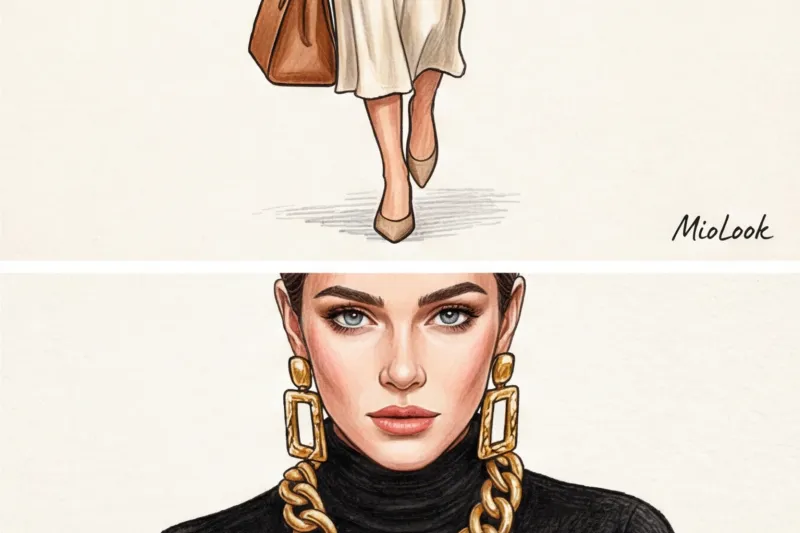
Remember the most important thing: clothes shouldn't become your armor or a source of stress. By using the principles of cut and color architecture, you can not only elegantly conceal the early stages of pregnancy but also maintain your established professional status. Your style remains with you; only the technical tools you use to create it change.