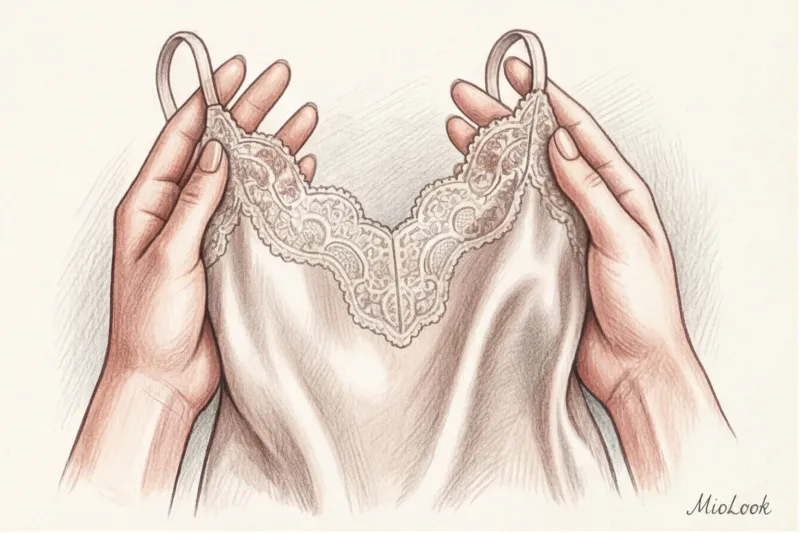
I remember one of my new clients nearly crying during a wardrobe review. She was holding a perfect pearl-toned silk slip skirt from Massimo Dutti, bought for 120 euros. Or rather, it had once been pearly and flowing. After one home wash, the fabric had become rough, matte, and covered in a whitish fuzz, becoming indistinguishable from a cheap 10-euro synthetic. She had washed it with regular colored laundry detergent.
I often say: buying an expensive item is only 20% of the success. The other 80% is how you care for it. I view delicate fabrics not just as clothing, but as a financial investment in the status of your wardrobe. Let's do the math. Cost Per Wear (cost per wear). If a silk blouse costs $150, and thanks to proper care, you wear it 50 times, each wear costs you $3. But if you ruin it by improper washing the second time, the cost is $75. Agree, the difference is colossal.
I wrote in more detail about the philosophy of a conscious attitude towards wardrobe and calculations of the return on investment of things in our the complete clothing care guide Today, we'll be focusing exclusively on silk. I'll debunk popular internet myths and explain, from a chemical perspective, how to wash silk so it retains its pristine shine for years.
The Anatomy of Luxury: Why Natural Silk Requires a Special Approach
To understand how to care for the fabric, you need to understand its composition. Chemically, natural silk is a protein fiber composed of fibroin (the fiber's base) and sericin (silk glue). Its structure is incredibly similar to human hair. That's why the harsh alkaline environment of common washing powders is as destructive to it as cheap bleach is to your hair—it becomes porous, dry, and brittle.
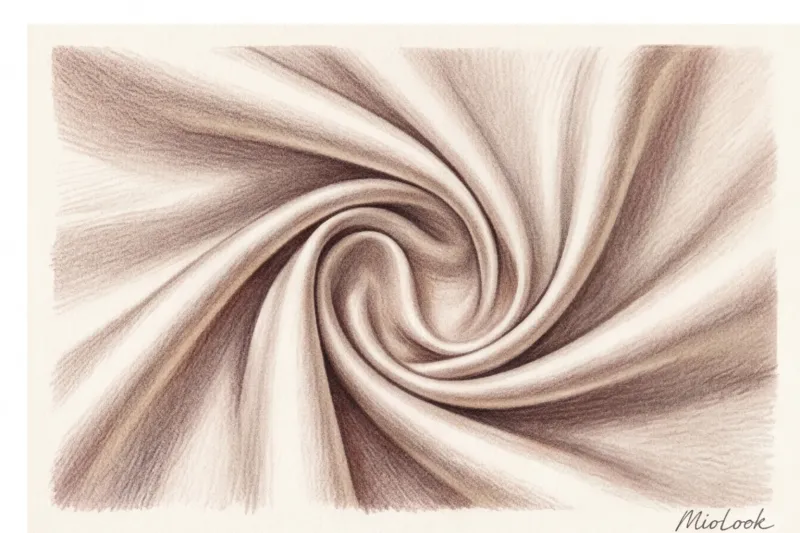
Have you ever noticed why silk has such a lustrous sheen? It's all about physics. The cross-section of a silk thread is shaped like a triangular prism. This geometry perfectly refracts light. When we subject the fabric to friction, twisting, or exposure to harsh chemicals, these microscopic "prisms" break. The fabric becomes dull.
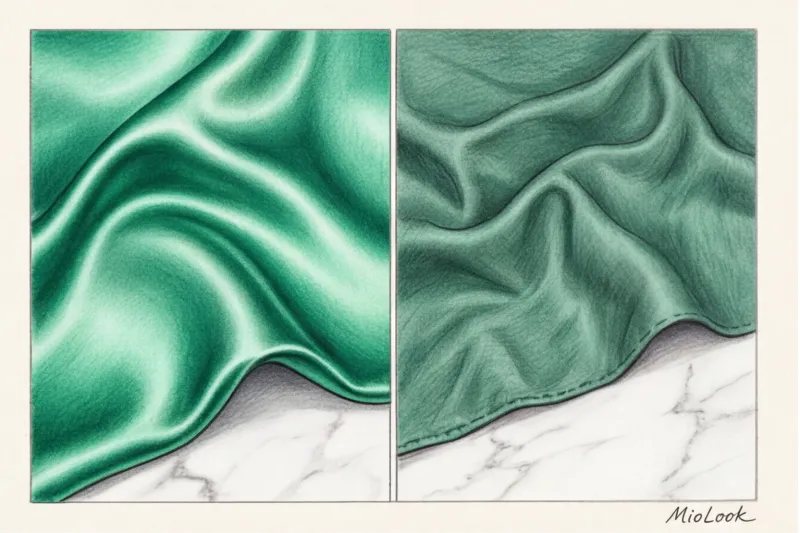
Washed-out silk is the enemy of your personal style. As a colorist, I often see how loss of luster ruins a client's complexion. A pure, deep emerald color on damaged silk becomes dusty and flat, giving the complexion a sallow appearance. By protecting the fiber, you protect your appearance.
Care Myths: Why Dry Cleaning and Baby Shampoo Are Not the Solution
The industry is rife with harmful advice, passed around on women's forums year after year. Let's examine the most dangerous ones.
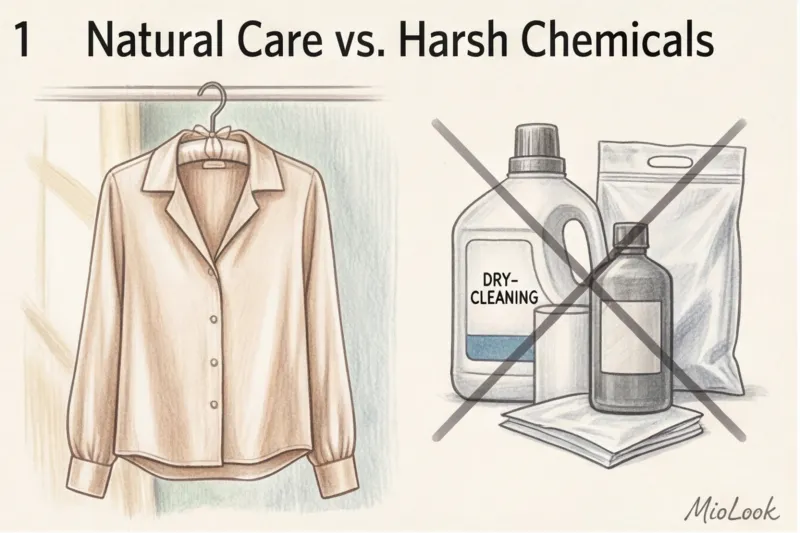
- Myth 1: “Silk should only be dry cleaned.” This is a great way to quickly age an item. According to ISO labeling standards, dry cleaning involves the use of perchloroethylene or hydrocarbon solvents. Yes, they remove dirt, but with regular use, these chemicals weaken the protein fiber. In my personal experience, basic silk tops that I hand-wash last 4-5 years in my closet. Those that I regularly dry-cleaned lose their elasticity after just one season.
- Myth 2: “Baby shampoo is a better alternative to powder.” This is my "favorite" myth, and it's incredibly dangerous. Why is it recommended? Because "tear-free" shampoos are very gentle. But they're gentle on children's eyes, which have a pH of about 7.0 (neutral). Silk, however, like our hair, requires a slightly acidic environment (pH 4.5-5.5). In a neutral, and especially alkaline, environment, the protein swells. Baby shampoo leaves a microscopic residue on silk, which causes the fabric to become hopelessly dull.
- Myth 3: “You can wash in cold water with any liquid detergent.” Absolutely not. Most modern gels (even for delicate fabrics, unless they're labeled "Silk & Wool") contain enzymes. Specifically, proteases—enzymes designed to break down protein stains (like blood, sweat, or food). The problem is that proteases can't distinguish between the protein in the stain and the protein in the silk itself. They literally "eat" your blouse during the wash.

Your perfect look starts here
Join thousands of users who look flawless every day with MioLook. Digitize your wardrobe and create capsule collections in one click.
Get access — €0.99 onceHow to Hand Wash Silk: A Stylist's Step-by-Step Guide
If you're looking for an answer to the question of how to safely wash silk, hand washing is the only absolute guarantee that the item will last for years. The entire process will take no more than 10 minutes.
Preparation and selection of the product
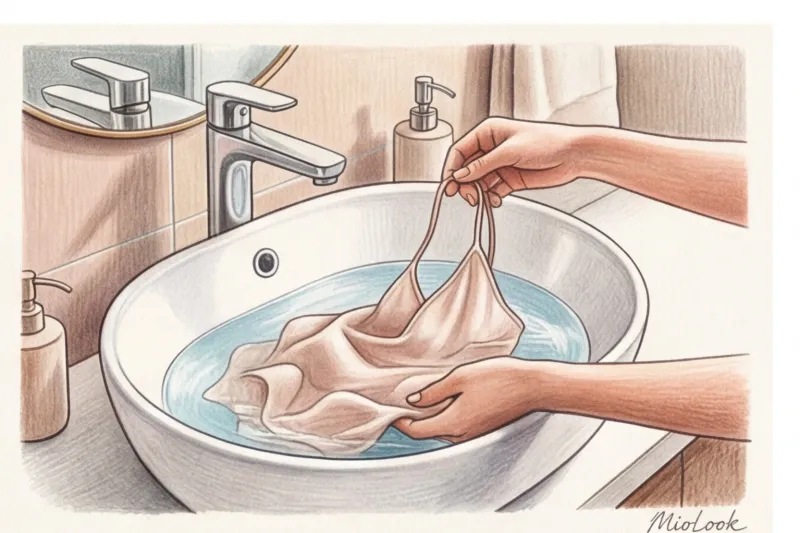
You will need a liquid product with strict markings. For silk and wool It's enzyme-free and has the right acidic pH. Fill a clean basin with water. A good rule of thumb is to keep the water temperature below 30°C (86°F). Test with your elbow—the water should feel slightly cool, not warm.
"A secret life hack stylists use on film sets: add one tablespoon of white distilled vinegar to the final rinse water. The acetic acid instantly neutralizes detergent residue, seals the protein fiber scales, and restores silk's "expensive" satin shine."
Washing and rinsing technique
Silk is incredibly fragile when wet (it loses up to 20% of its strength). So forget about the classic "rubbing" motion. Use the technique gentle squeezing (light compression).
- Immerse the item in a soapy solution.
- Gently press the fabric with your palms, forcing the water through the fibers. Avoid rubbing fabric against fabric!
- Keep an eye on the time. Silk shouldn't be left in water for longer than 5 minutes. It's not something you can just soak and then go have a coffee with.
- Drain the soapy water and rinse the item twice. Important: the rinse water must be exactly the same temperature (30°C). A sudden temperature change (for example, washing in warm water and rinsing in ice water) causes shock shrinkage of silk.
Can you wash silk in a washing machine?
As a practicing stylist, I understand perfectly well that the modern woman doesn't have time to wash her entire wardrobe by hand. So my frank answer is: yes, you can machine wash silk. but with strict reservations.
Firstly, only certain types of weave can withstand machine washing: dense crepe de chine, stretch satin (with added elastane), or blended fabrics (silk and viscose). If you have the finest chiffon, airy organza, or delicate habottai silk, hand wash only.
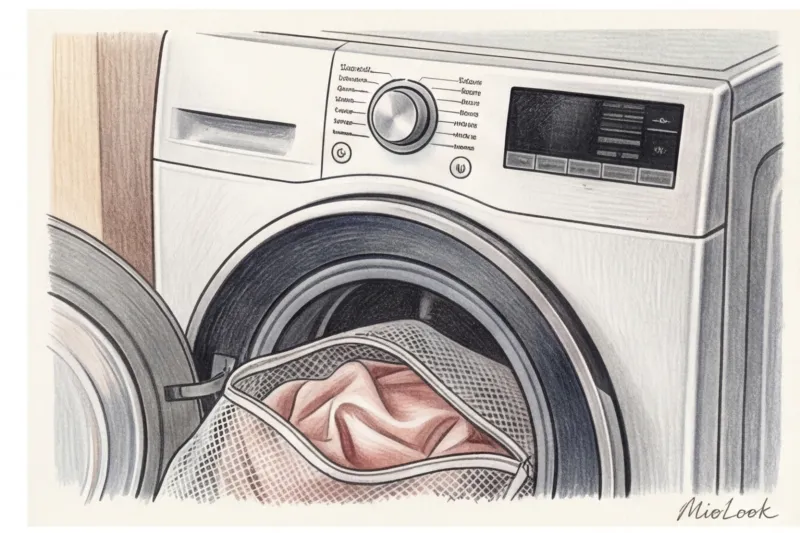
Secondly, you need the right laundry bag. And here's where the biggest mistake lies: the bag must be exactly the right size for the folded item. If you put a blouse in a huge bag, it will flap around inside, creating friction that's deadly for wet silk. The item should fit snugly, but not bunched up.
Returning to the story of the ruined Massimo Dutti skirt, the client placed the silk in the drum along with a heavy cotton T-shirt. The different density and weight of the fabrics in the drum meant that the heavy, wet cotton acted like sandpaper on the delicate silk.
Machine settings:
- Only the "Silk" or "Delicate Wash" cycle.
- Temperature: Cold or 30°C.
- Spin: turn off completely (0 rpm) or set to the absolute minimum (up to 400 rpm).
Access to MioLook for €0.99 — one-time payment
A smart AI stylist will create the perfect look based on your silk capsule and suggest how to pair complex textures.
Get access — €0.99 onceDrying without deformation: maintaining the cut's geometry
The worst thing you can do to a wet silk garment is wring it out. This will inevitably cause the side seams to become distorted, and the garment will never fit perfectly again.
Use the "roll" technique used by professional tailors:
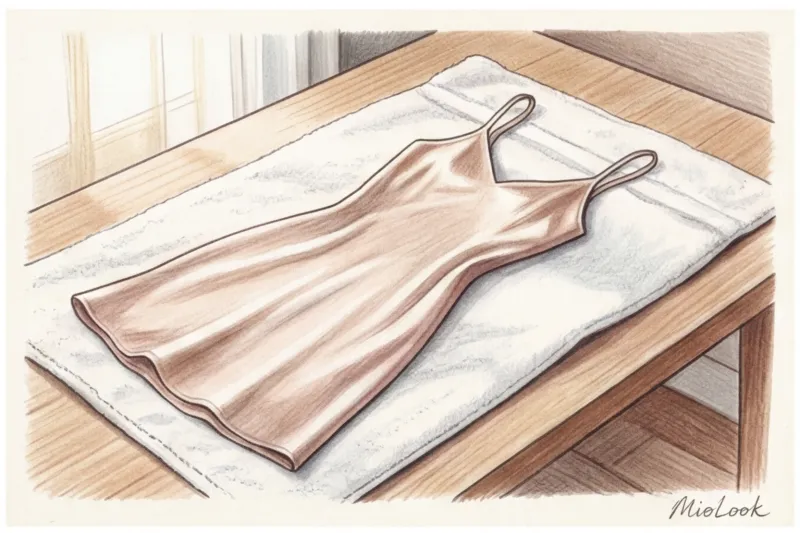
- Lay out a clean, thick terry towel (preferably white to avoid staining) on a flat surface.
- Place a wet silk item on it, smoothing out all the folds.
- Roll the towel together with the item into a tight roll.
- Gently press the resulting "roll" with your palms. The terry cloth will absorb 80% of the excess moisture in a few seconds.
Unfold the towel and place the silk on a dry horizontal surface or on a special sweater drying rack. Never dry silk in direct sunlight. According to WGSN research, UV light not only burns the pigment but also destroys the peptide bonds in fibroin, causing the fabric to become brittle and potentially fall apart at the seams. Radiators and heated towel rails are also absolutely prohibited.
Perfect Ironing: How to Restore a Matte Shine Without Burning the Fabric
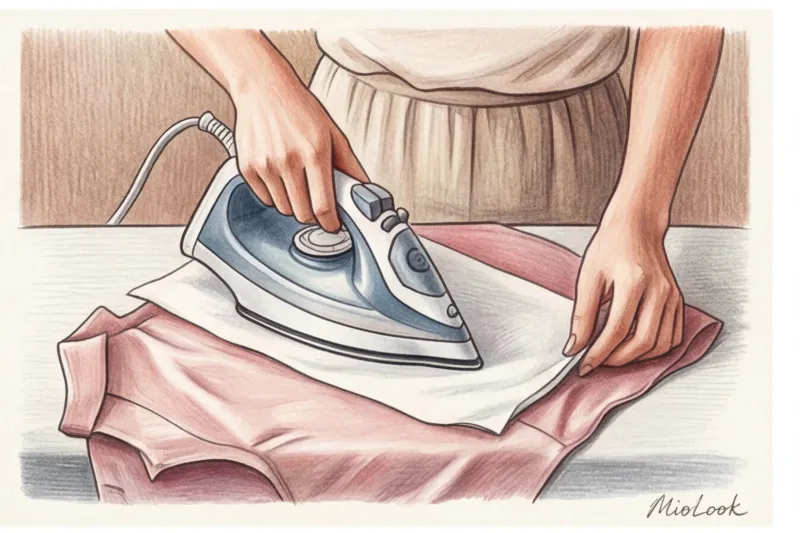
The main secret to working with silk: iron it while it's slightly damp. If you overdry the blouse, it will be almost impossible to remove creases without damaging the structure.
The iron settings should be minimal (Silk mode or one dot - about 110-150°C). Iron strictly from the wrong side Why? Contact with the hot soleplate of an iron can leave a shiny, glossy finish that looks extremely cheap.
A common mistake is using the active steam function or spraying stubborn creases with a spray bottle. Drops of water will immediately leave clear, defined marks on natural silk, requiring repeated washing. If the fabric is already too dry, use an ironing pad (a thin, slightly damp white cotton cloth) between the iron and the silk.
A high-quality handheld steamer is a great alternative for intricate designs with ruffles or drapes. However, keep the nozzle 10-15 cm away from the fabric to prevent accidental drops of boiling water from splashing onto the material.
Emergency Remedy: Sweat, Makeup, and Deodorant Stains on Silk
Treating stains on protein fibers requires pinpoint precision. What works on cotton will ruin silk.
Sweat stains. Sweat is a potent mixture of salts and acids. If you've sweated in a silk blouse (which often happens during important presentations or job interviews), you need to act quickly. Over time, salt literally corrodes the dye pigment, leaving yellow marks. The main rule: don't rub the wet stain with a napkin! Gently blot it. At home, before washing, you can apply a solution of equal parts water and white vinegar to your underarms for 3-5 minutes.
Fat, foundation or sauce. Imagine a drop of olive oil spilling on your silk top at a business dinner. Never wash the spot with water in the restaurant restroom—you'll end up with a huge water ring. Lightly blot the oil with a dry paper towel. When you get home, generously sprinkle the stain with talcum powder, baby powder, or cornstarch. Let it sit for 10-12 hours. The powder will absorb the oil from the fibers, after which the item can be gently hand washed.
Ready to get started?
Organize your wardrobe like a professional stylist. Try a free plan in the MioLook app—no commitment.
Get access — €0.99 onceChecklist: 5 Golden Rules for the Longevity of Your Silk Capsule
To ensure your fashion essentials are worth every penny and always look like you just picked them up from the boutique, follow these 5 ironclad rules:
- No enzymes: Use only liquid products labeled “For silk” and with an acidic pH (less than 7).
- Cold control: The water temperature during washing and rinsing is strictly up to 30°C.
- The 5-Minute Rule: Wash quickly, using gentle squeezing movements, without rubbing or wringing.
- Horizontal drying: We remove moisture through a towel roll and dry away from the sun and radiators.
- Wet ironing: Iron from the inside out, without spraying, while the item is not completely dry.

Silk does not forgive carelessness, but generously rewards care with a perfect fit and noble shine. And to avoid racking your brains over what to wear with your impeccably groomed silk items, I recommend digitizing them in an app MioLook Artificial intelligence will help you create stylish capsule wardrobes for every day, taking into account fabric textures and your personal style.