Royal Dress Style: More Than Just Conservatism
When clients come to me asking for a high-status business wardrobe, nine out of ten are sure they'll have to wear boring gray sheath dresses and forget about trends forever. And when I say royal style in clothing Their imaginations conjure up either a Disney princess in full crinolines or a buttoned-up lady in pearls. Let's bust that myth right away.
The modern royal wardrobe has nothing in common with fairy tales. It's the height of sophistication. power dressing — the art of dressing for influence and impression management. For queens, princesses, and duchesses, clothing has never been simply fashion or a banal means of self-expression. It is a working tool that addresses specific geopolitical and social challenges.
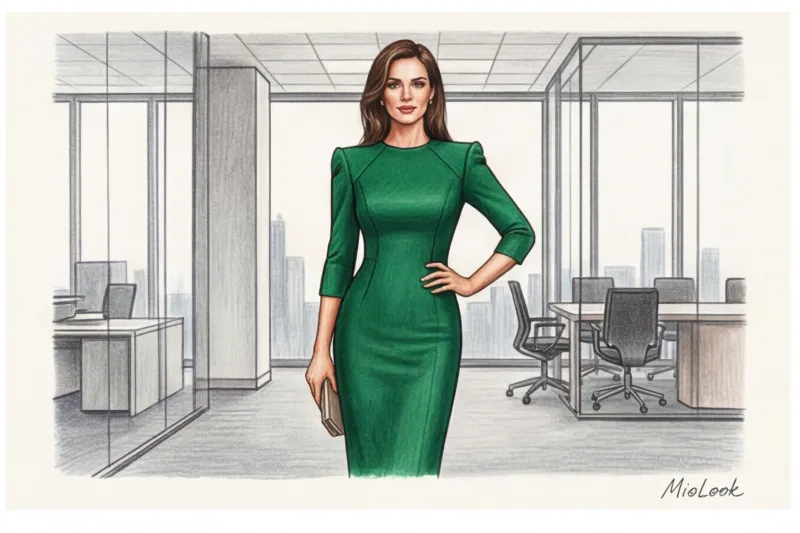
As a stylist and analyst with a background in design, I love analyzing the official appearances of royals. Over the years, I've become convinced that their looks are never accidental. The choice of color, texture, and even the tiniest detail always carries a coded diplomatic message. Consider the famous brooch Queen Elizabeth II wore to her meeting with Donald Trump in 2018—a modest vintage piece given to her by Barack Obama. Or the fact that Kate Middleton always chooses the colors of the host country's national flag during official tours. This isn't just formal politeness; it's subtle visual diplomacy that wins over the recipient even before the first word is spoken.
But why do these conservative techniques work so reliably for us in everyday life? The answer lies in the psychology of perception and the theory of visual weight. A strict yet elegant silhouette generates a subconscious respect in the audience. Our brain evolutionarily interprets rigid, structured lines (for example, the crisp shoulder line of an English jacket) as a sign of stability, inner support, and authority. Meanwhile, soft, shapeless fabrics made from fine knits are associated with relaxation, homeliness, and sometimes even vulnerability.
"When you wear a perfectly cut garment, others automatically perceive your words with greater weight. You convey your competence through the geometry of your outfit."
And herein lies the main secret: you don't need a Buckingham Palace budget to look classy. A perfectly tailored jacket made of a dense wool blend for €150 will always look more regal than a shapeless designer cardigan for €1,500 that won't hold its shape. It's not a question of the price tag, but of understanding the laws of composition.
If you feel that your current business image does not reflect your professional caliber, I recommend exploring, How to find your clothing style , based on the architecture of your own figure. And to quickly test new strict silhouettes and understand how they combine with your base, try uploading them to MioLook Smart wardrobe algorithms will clearly show which combinations create that structured, "expensive" look, and where the silhouette lacks rigidity.
The Anatomy of a Royal Wardrobe: 7 Unspoken Rules
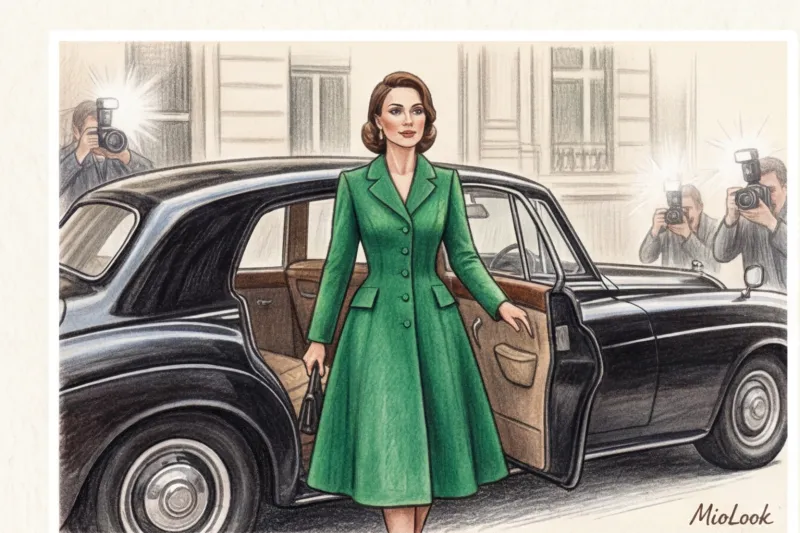
Have you ever noticed photographs of royals exiting a car or descending an airplane? Not a single telltale wrinkle in the skirt, not a single crooked seam. The secret to this visual magic lies not in innate grace, but in the rigorous physics of materials and anatomically precise cuts. True royal style in clothing It starts long before the choice of accessories - it is born on the cutting table.
The foundation of a royal wardrobe is made up of fabrics that are physically incapable of looking sloppy. Forget fine linen or loose viscose for formal occasions. Materials with the highest yarn counts come into play: stiff, textured tweed, dense suiting wool (such as crepe or gabardine), and heavy silk weighing over 40 momme. These fabrics have a natural "shape memory." They won't wrinkle, even if you spend two hours sitting at a formal reception. If you ever decide to invest in a tailored jacket like this, be prepared: a meter of high-quality, shape-retaining European wool will cost between €120 and €250, but this investment will pay for itself with decades of impeccable wear.
"Expensive fabric is only half the battle. If a garment clings to you like a second skin, it instantly loses its status potential, turning from armor into vulnerability."
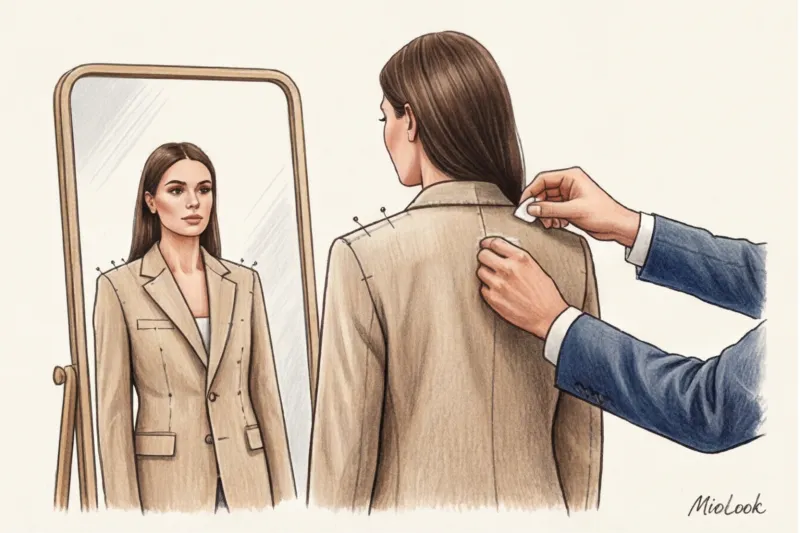
This is where the second constant comes into play: impeccable fit. Recently, during a fitting for a classic sheath dress, one of my clients insistently asked for fabric in the side seams: "Let's make it tight to emphasize the waist!" I had to stop the process and explain the main rule tailors use to create an "expensive" fit: two-finger rule.
There should be enough room between your body and your clothing—especially at the waist, hips, and armholes—for two fingers placed together. Clothing that bulges at the seams and bunches up horizontally with the slightest movement subconsciously conveys fussiness, discomfort, and a desire to appear slimmer than you are. Air (free space) between your body and the garment, on the other hand, creates that very status silhouette: you control your clothing, rather than it restricting you.
Silhouette and Length Rule: Why Midi is Power
In the hierarchy of skirt and dress lengths, the midi (just below the knee or mid-calf) firmly holds the crown. Mini is associated with youth, playfulness, and rebellion (remember Princess Diana's famous "revenge dress," which defied protocol). Maxi is an eveningwear, often impractical affair, requiring a certain theatricality. But the midi length is pure, concentrated power.
It allows you to move freely, sit down, and bend over without losing your dignity or revealing too much. However, from a geometric perspective, midi is the most tricky length. If chosen incorrectly, it mercilessly cuts off your height and turns your figure into a squat rectangle.
How do you find your perfect length? Forget the universal advice from fashion magazines; you need to understand your body math. Stand in front of a mirror in the shoes you plan to wear and find the narrowest part of your leg below the knee. For most women, this is either the area just below the kneecap or the graceful part of the ankle (the so-called Italian length). The hem should end strictly at this narrow point Never cut your skirt at the widest part of your calf—this will instantly make your bottom appear heavier and add 5–7 extra pounds to the perception of others.
Color as a diplomatic weapon
As a certified colorist, I can spend hours analyzing royal appearances—it's a veritable textbook on how to command a crowd's attention. The color in a royal dress code is never chosen to reflect the mood. It's always a diplomatic message.
A striking example is the late Elizabeth II's wardrobe phenomenon. Her neon lemon, fuchsia, and lime green coats often puzzled the public. But this wasn't eccentricity, but rather strict color blocking with a utilitarian purpose: the monarch had to be visible from afar, even in a crowd of 100,000. People were meant to say: "I saw the queen!" Neon worked as a beacon.
Princess of Wales, Kate Middleton, uses a different approach—she favors all-over monochrome looks. Optically, a look that's kept to a single color (from hat to pumps) elongates the silhouette into a single, continuous vertical line. This adds height, a stately presence, and looks incredibly modern, counteracting the overly conservative styles.
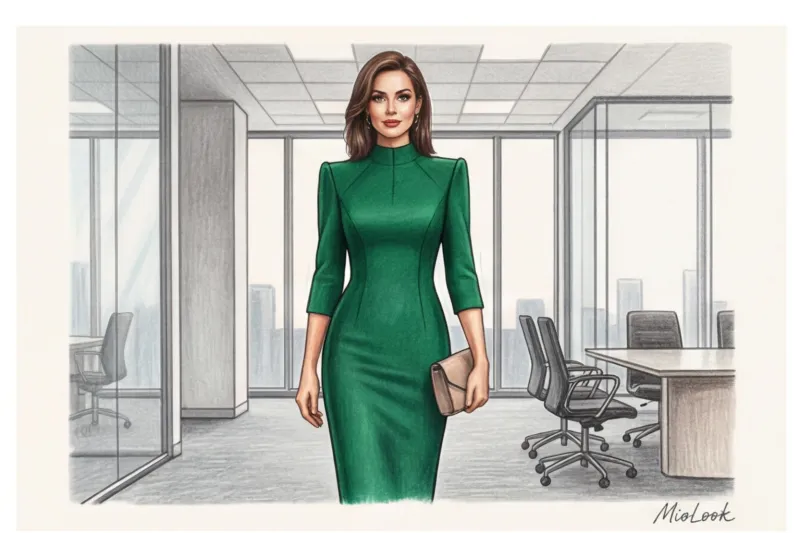
The theory of status colors deserves special attention. Why are deep sapphire, emerald, and burgundy shades chosen for the most important meetings? The secret lies in their physical properties. These colors have low lightness but high pigment saturation. They visually absorb light, creating a sense of density and weight. Psychologically, the brain associates deep emerald or ruby with stability, historical heritage, and steadfastness. By wearing a burgundy suit, you silently declare to your audience, "My position is firm, and my words carry weight."
The architecture of cutting and hidden tricks of tailors
The devil, as they say, is always on the inside. To ensure a flawless look doesn't fall apart in a gust of wind, tailors resort to tricks rarely mentioned in mass-market brands.
The most famous and ingenious secret life hack of monarchs is lead weights sewn into the hems of skirts and coats. Stuart Parvin, one of the British royal family's favorite couturiers, has repeatedly admitted that he uses ordinary round weights for heavy curtains for this purpose. They cost literally €5-15 per pack at any fabric store, but they make lightweight silk or wool fall vertically, defying the aerodynamics of runways.
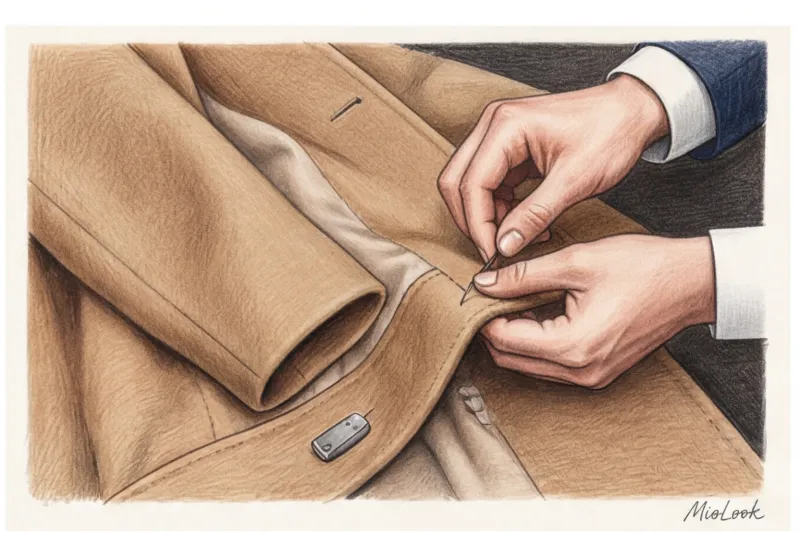
Another technique I highly recommend to all clients working with a strict dress code is to use built-in underwear and bodysuits instead of classic blouses. You know the feeling: you tucked a perfectly shaped silk shirt into a pencil skirt, but the moment you raise your arm or sit down in a chair, the fabric bulges out, creating untidy, bubble-like folds at your waist?
Royals can't afford to constantly tug and adjust their clothes. Therefore, most of their "blouses" are actually bodysuits with a secure hem. And in some couture dresses, the corset portion of the lingerie is sewn into the side seams of the bodice. This creates a monolithic, architectural framework that maintains its shape no matter how long the formal event lasts.
Access to MioLook for €0.99 — one-time payment
A smart AI stylist will help you create a wardrobe with a flawless fit and select stylish color combinations for every day.
Get access — €0.99 onceStyle Icons: How Different Monarchs Interpret Dress Code
In 2023, analysts at the respected trend bureau WGSN published an interesting observation: the strict formal wardrobe has finally ceased to be perceived as a faceless uniform. Why? Because modern royals have learned to masterfully weave the theory of personal brand archetypes into it. Looking at a British princess or the Queen of Spain, we see completely different royal styles in clothing, although formally both women play by the same basic rules.
As an image consultant, before beginning a wardrobe review, I often ask clients to identify their dominant archetype. The royal dress code provides the perfect, crystal-clear foundation for exploring three key roles: "Ruler" , Aesthete And "A nice guy" The pure "Ruler" conveys unyielding distance and total control through rigid textures. But modern leaders rarely use this archetype in a vacuum.
The secret to adaptation lies in your natural appearance and life goals:
- If your goal is to win over your team, create an atmosphere of trust, or soften a strict appearance (sharp features, high contrast), choose the "Great Guy" strategy. Soften the silhouette and mix luxury with accessible, affordable brands.
- If you're a senior executive who needs to push boundaries and communicate innovation (especially if you have soft, rounded features), embrace the Aesthete's boldness combined with the structure of its cut.
Kate Middleton: Affordable Luxury and Conscious Consumption
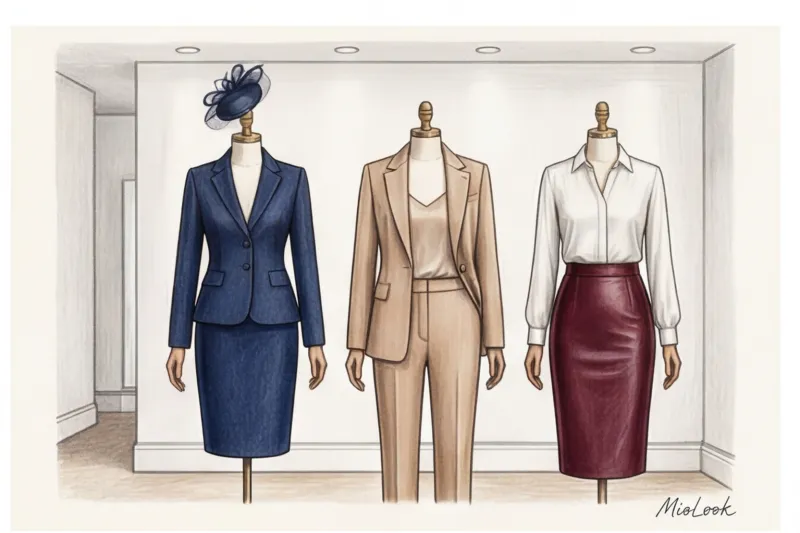
The Princess of Wales masterfully balances her status as a future queen with her "one of the girls" image. Her main stylistic superpower is the seamless integration of mass-market pieces (Zara, Mango, Massimo Dutti) with high-end luxury like Alexander McQueen or Catherine Walker. You'll agree, when the wife of the heir to the throne wears a textured tweed jacket from Zara for €60, complete with family diamonds, it evokes immense affection. It's a subtle psychological move: the integration of accessible pieces makes her look earthy and modern.
Kate also makes extensive use of vintage, proving that archival pieces from the '80s and '90s look incredibly modern when paired with modern, geometric shoes. But the main lesson we should learn from her is art. rewearing (conscious repetition of images).
Fashion publication statistics show that the princess wears the same items to official events on average four to five times. She might appear in a sumptuous evening gown at the BAFTAs, and then wear the same one two years later, but with a re-tailored bodice, a different shoulder line, or a contrasting belt. The same basic sheath coat looks completely different in her interpretation, thanks to a different hat, gloves, and brooch.
You don't need a personal tailor to practice this mindful approach. I always recommend digitizing your clothes. By uploading your database to MioLook smart wardrobe , you'll be able to visually create dozens of new combinations with that same jacket or dress you thought was "disposable." This saves money and develops your stylistic eye.
Queen Letizia: Bold Smart-Casual for Modern Leaders
While the British crown is a tribute to tradition, Spain's Queen Letizia embodies the "Aesthete" archetype with a subtle yet measured dose of rebellion. She clearly demonstrates how to incorporate royal rules into the wardrobe of a creative director or PR executive without becoming a boring functionary.
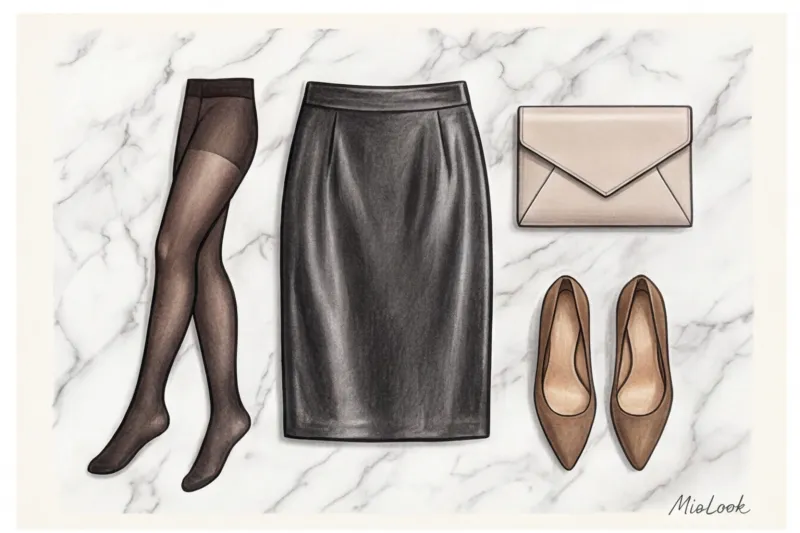
Letizia is a master at breaking outdated protocol dogmas. She was the first European monarch to regularly wear wide culottes to official receptions and legitimized leather textures. Her famous appearances in leather pencil skirts by Hugo Boss (especially in deep burgundy and black) became a textbook example of power dressing for a new generation.
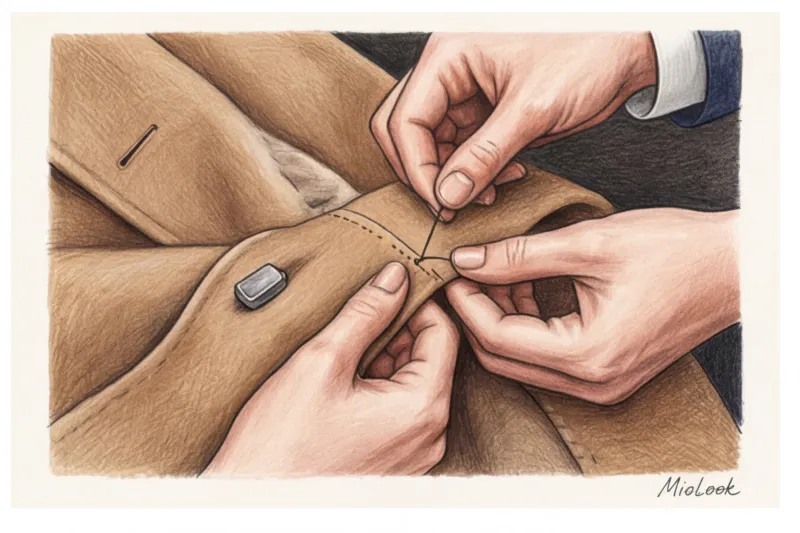
How does she maintain the perfect balance between strict protocol and cutting-edge fashion trends? The answer lies in the "rule of compensation." If Letizia chooses a provocative texture (smooth leather) or bares her shoulders at an evening event, she compensates with a hyper-conservative cut and a complete absence of flashy embellishments.
Her style is a godsend for women with a dramatic personality. If you're planning to update your business attire and your budget is, say, €500-€800, don't waste your money on a dozen mediocre pieces. Invest in one impeccably tailored pantsuit in a rich shade (fuchsia, carmine, emerald) and a high-quality midi-length faux leather skirt. Against the backdrop of all-white office beige, such pieces will attract attention while maintaining your undeniable authority.
Outdated royal dress code myths we should stop believing
Have you ever noticed that whenever the topic of court etiquette comes up, your imagination helpfully conjures up images of a lady in a pillbox hat, a halter dress, and the obligatory beige tights? This is the main obstacle preventing modern women from incorporating elements of royal elegance into their everyday wardrobe. In 2024, the British Vogue published a comprehensive analysis of royal appearances over the past decade, proving that protocol is much more flexible than we're used to thinking. Right now, we'll debunk three major stereotypes that are long overdue for retirement.
Myth 1: "Black is only for mourning."
Technically, members of royal families are indeed required to carry a black suit on any official trip, in case of a sudden declaration of mourning. But this rule has long ceased to represent a strict taboo on this color during peacetime. In my wardrobe analysis practice, I often encounter clients' fear of all-black—they claim it makes them look older or too gloomy.
But let's look at the evening wear. Remember the luxurious black velvet Alexander McQueen gown (estimated at €4,000) that the Princess of Wales wore at the Sun Military Awards, or the impeccable architectural black gowns worn by Princess Charlene of Monaco.
Stylist's secret: Black creates a sense of status when you choose the right texture. Smooth matte crepe, heavy, dense velvet, or silk with a delicate sheen create that graphic silhouette that others subconsciously perceive as absolute power and confidence.
Myth 2: "Only nude tights are required."
How many tabloid controversies have been sparked by Meghan Markle's legs! Queen Elizabeth II is believed to have strictly demanded that the women of her family wear only sheer, flesh-colored tights. However, the Duchess of Sussex herself has repeatedly broken this rule, choosing semi-sheer, dark options for official outings, while Princess Anne—one of the most conservative figures in the British royal family—has paired thick black tights with her wool military coats for decades.
Of course, this life hack isn't suitable for a summer tea party at Buckingham Palace—it's an objective limitation of the strict formal dress code. But for our office winter, glossy nude 15-denier tights are a true fashion anachronism. Replace them with matte graphite or black 40-60 denier tights. They not only visually slim your legs but also bring the whole look together.
Myth 3: “No jeans or trousers”
Just five years ago, consulting clients would often tell me, "I can't wear trousers to a meeting; it's not respectable enough. Even princesses only wear dresses." Today, this attitude is crumbling. The evolution of dress codes has led to modern pantsuits becoming a full-fledged staple of royal wardrobes.
"Today, a perfectly tailored two-piece trouser suit is the new female armor. Monarchs choose it to close the distance between themselves and their audiences and emphasize their work agenda, rather than simply its decorative function," notes fashion historian Rosie Harte in her book "The Royal Wardrobe" (2024).
And yes, jeans are allowed too! The secret lies in their cut. Proper, "royal" denim is a deep dark blue with no fraying or holes, a mid- or high-waist, and a straight, tube-cut. Paired with a thin cashmere turtleneck and a structured jacket (a decent mid-market staple will cost you between €150 and €250), these jeans look supremely aristocratic and appropriate for most casual occasions.
Access to MioLook for €0.99 — one-time payment
Start creating perfect looks with the help of artificial intelligence and assemble your capsule wardrobe in royal style.
Get access — €0.99 onceWardrobe Investments: Essentials for a Statement Look
Behind the scenes at London's famed Savile Row ateliers, where suits for the British aristocracy have been crafted for decades, there's an unspoken professional rule: the fabric speaks louder than the silhouette, and the silhouette speaks louder than the brand. When we try to integrate authenticity royal style in clothing In your daily life, the most common mistake is chasing recognizable labels instead of investing in the right textures.
The texture of a material determines how a garment performs: whether it gathers in telltale creases at the elbow, how it reflects light from camera flashes (or office fluorescent lighting), and how long it holds its original shape. A statement label on the lining of a €1,500 loose polyester jacket won't save the look if the fabric looks cheap. Meanwhile, a no-name suit made from the right material for €250 can create the illusion of high society.
The secret to a classy wardrobe lies in the twist index of the yarn. For suits and basic dresses, I strongly recommend looking for Super 120S or 130S wool on the tags.
What does this number mean? Wool with a 120S index is woven from incredibly fine but tightly twisted fibers. It has unique properties: it's virtually wrinkle-free, has a refined matte sheen, and is capable of "self-healing." If you spend the entire day in an airplane seat or at a meeting and then hang such a suit on a hanger in a slightly humid room, by morning there will be no trace of wrinkles. This is the secret that keeps royals looking impeccable even after hours of touring.
Sheath coat and architectural jacket
The foundation of a royal capsule wardrobe is pieces that define clear silhouette boundaries. Our brain subconsciously associates geometry with order, control, and power. That's why a key element of a prestigious look is an architectural jacket with a sharp, accentuated shoulder line.
A firm shoulder acts as a visual marker of support and confidence. Whether you're gesturing, signing documents, or simply walking down the hallway, the shoulder seam should remain solid. To achieve this effect on a budget of under €300, look for garments with high-quality horsehair linings (inner padding), rather than those lined with cheap interlining that will bubble after the first dry cleaning.
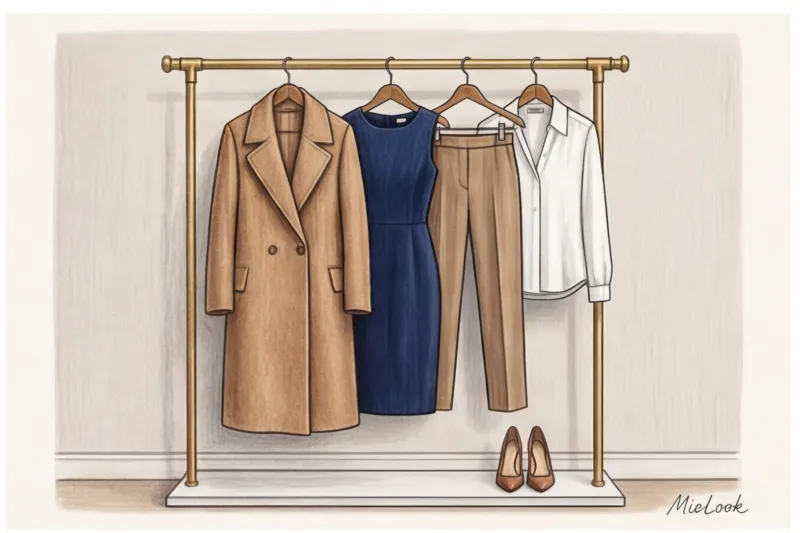
Another brilliant investment, inspired by the Princess of Wales, is the coatdress. It's a hybrid wardrobe item, tailored from thick wool or crepe, and worn as a standalone piece. A coatdress solves several problems in a transitional wardrobe:
- Removes the issue of layering: You don't have to think about how the hem of your dress will match the edge of your outerwear.
- Ideal for formal events: At outdoor events or in cool halls, you don't look like you forgot to take off your outerwear.
- Forms a monolithic silhouette: The vertical color visually elongates the height and makes you look slimmer.
Status Accessories: Quiet Luxury Without Logos
Details are where many women stumble when trying to create an expensive look. Royal protocol eschews flashy lettering, monograms emblazoned across the bag, or extravagant hardware. Here, "quiet luxury" reigns supreme, where the owner's status is conveyed through the proportions and quality of the leather.
Let's start with shoes. The only acceptable option for creating royal elegance is classic pumps with a well-defined shape. Hidden platforms at the toe should be strictly avoided (this technique harks back to the club fashion of the 2000s and instantly cheapens the look). The ideal pump has a thin sole, an elegantly cut vamp (which doesn't reveal the base of the toes), and a stiletto heel or a stable block heel of 7-9 cm. Excellent options made of genuine suede or matte leather can be found in the price range of €120 to €250.
Bags in the royal wardrobe serve not only a utilitarian but also a behavioral function. Note: monarchs almost always choose structured bags with short top-handles. There are two compelling reasons for this:
- Architectural: A rigid bag that holds its shape even when empty looks put together and businesslike, unlike shapeless soft hobo bags.
- Body language control: A bag held in your hands (or in the crook of your elbow) physically occupies your hands. This is an elegant life hack that prevents awkward gestures, fidgeting with your clothes, and helps you maintain impeccable posture.
By the way, to avoid getting confused by their accessories and to calculate the cost-per-wear correctly, many of my clients use smart tools. After loading basic pumps, a sheath coat, and a structured bag into MioLook wardrobe app , you can visually design dozens of stylish outfits without having to rummage through your closet every morning. This is especially convenient for planning business capsule wardrobes for the week ahead.
How to incorporate regal style into a modern business wardrobe
Translating palace etiquette into the realities of modern corporate spaces is a challenge. For top managers, lawyers, and industry experts, directly copying and pasting Kate Middleton's images won't work: you risk looking like you've escaped from the set of a historical drama. However, it's precisely this royal style in clothing has a unique ability to convey calm authority and competence. The trick is to borrow principles, not literal details.
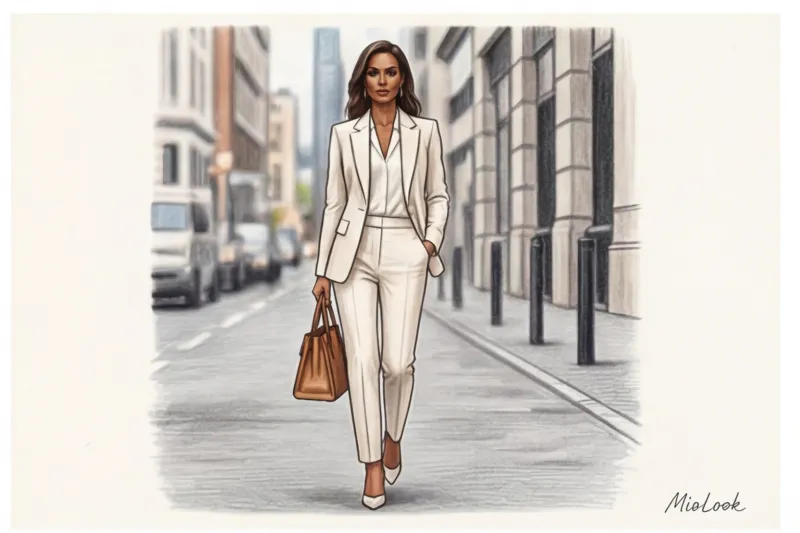
Last year, a product director from a large IT company approached me. Their office had virtually no dress code: hoodies, sneakers, and relaxed oversized clothing were considered the absolute norm. But the client was preparing to speak to the board of directors and conduct a series of pitches to a pool of new investors. She needed to look authoritative and sophisticated without looking out of place in a formal two-piece suit. We found an elegant compromise by incorporating elements of the royal wardrobe in targeted ways. Instead of a classic, stiff jacket, we chose a structured cardigan coat made of thick cashmere in a deep sapphire hue (this basic investment cost approximately €350). The silhouette remained soft enough for a casual environment, but the elegant color, the complete absence of visible hardware, and the precise midi length did their job—the look instantly conveyed status and confidence.
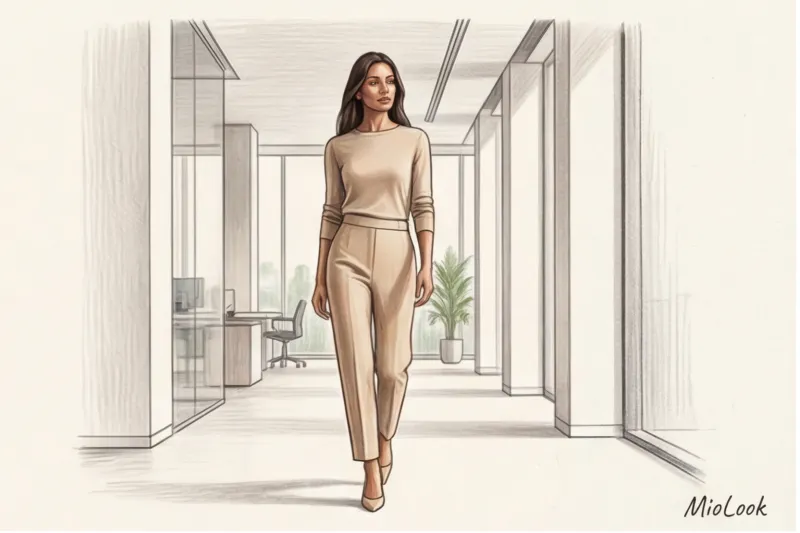
The key rule for integrating palace aesthetics into a corporate environment is the 80/20 principle. To avoid looking too "dressy" or theatrical in a casual office, 80% of your look should consist of modern business pieces with a clean, utilitarian cut, while the remaining 20% should be devoted to royal-inspired styling. For example, you could wear standard, wide, pleated palazzo pants but complement them with an ascot collar blouse made of heavy, matte silk. Or choose a completely understated office sheath dress but create a completely monochrome look, with shoes, a belt, and even a document folder perfectly matching the dress's fabric.
A crucial stage of adaptation is the intelligent replacement of overtly retrograde attributes with their modern business equivalents. Palace protocol is built on the distance created by accessories. In real life, we transform them as follows:
- We replace caps and fascias with architectural styling. A sleek low bun, a flawless brushed look, or a graphic bob work to frame the face, creating the same collected effect as a sophisticated headpiece.
- We transform kid gloves into a flawless manicure. Well-groomed hands with a translucent nude polish (remember the famous Essie Ballet Slippers polish, so beloved by Elizabeth II) speak louder of attention to detail than massive rings.
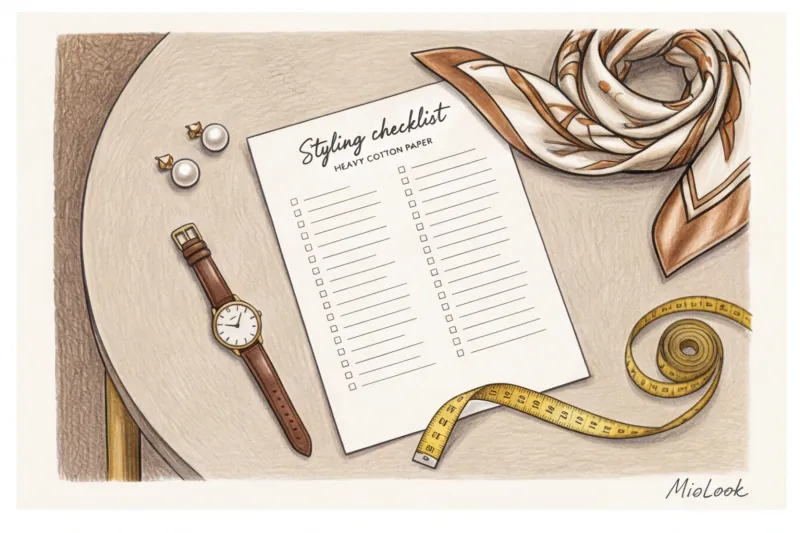
- We are replacing large brooches with status-conscious simplicity. Smooth metal spherical earrings, a classic watch on a leather strap, or a delicate strand of baroque pearls. No cheap plastic or jingling bracelets—only silence and geometry.
Your ideal image begins Here
Join thousands of users who look flawless every day with MioLook. Plan capsules and create iconic looks in one click.
Get access — €0.99 onceThis smart approach allows you to manage the impression without saying a single word. You retain the functionality of a modern wardrobe, but add to it that very posture and bearing that cannot be imitated with trendy clothes alone.
Checklist: 5 Steps to Your Own Royal Elegance
Do you know what distinguishes a woman who always looks classy from one whose image falls apart upon closer inspection? Discipline. Elegance isn't an innate privilege passed down through generations. According to the authoritative British etiquette school The English Manner (2024), 80% of visual authority is shaped by predictable, mathematically calibrated decisions in clothing and behavior. I suggest you set aside this weekend to audit your closet and go through this practical checklist.
Step 1. Fabric revision: ruthlessly remove thin knitwear and viscose
Thin, flimsy knits, see-through viscose, and shiny polyester are the main enemies of your status. They don't hold their shape, highlight the slightest nuances of your figure, and visually cheapen even the most carefully thought-out color scheme. Put aside those shapeless, flimsy cardigans (even if they once cost €100) in favor of structured jackets. Replace them with shape-retaining materials: suit gabardine, heavy poplin for shirts, high-density jersey, or wool.
Step 2. Tailoring: adjusting the base to your figure
A secret stylists of First Ladies use: a €60 mass-market jacket, meticulously tailored for €20 at a tailor, will always look more expensive than an €800 designer item that hangs slack on you. Find your stylist and tailor key basic elements to your figure. Shorten the jacket sleeves precisely to the wrist bone (this adds grace to the hands), adjust the length of your trousers to the heel height of your pumps, and trim any excess waist from formal dresses.
Step 3: Forming monochrome capsules to match your winning colors
Choose two or three deep shades that perfectly complement your natural complexion. These could be rich emerald, deep sapphire, dark chocolate, or classic burgundy. Create total looks in these colors. Monochrome visually elongates the silhouette and is always considered an aristocratic choice. To prevent this process from turning into chaos on the bed, I always advise my clients to digitalize their clothes. Upload photos of the clothes to MioLook and use the smart look builder—the app will help you create the perfect monochrome outfits by analyzing shades right on your smartphone screen.
Step 4. Eliminate unnecessary details: minimalism in fittings and decorations
The royal dress code abhors fuss and visual noise. An abundance of shiny zippers, contrasting stitching, massive logos, and complex embellishments fragments the look. Inexpensive clothing manufacturers often try to hide poor tailoring with an abundance of cheap hardware. Take stock: replace the plastic buttons on basic trench coats and blouses with matte horn, mother-of-pearl, or fabric-covered options. For jewelry, stick to simple, classic pieces—geometric studs, smooth metal, or a strand of high-quality pearls.
Step 5: Work on your posture and delivery – clothes don't work without proper body language
You can wear a perfect, tailored cashmere suit, but if you slouch, walk with a shuffling gait, or nervously fiddle with your bag strap, the magic will instantly fade. True regal style is inextricably linked to a kinetic image. According to classic research in nonverbal communication, posture and posture shape up to 55% of a person's first impression. Backward shoulders, unhurried and fluid movements, and a direct, calm gaze—these are the invisible "base" upon which any garment fits perfectly.
Try this simple exercise right now: Imagine an invisible string stretching from the top of your head up to the ceiling. Feel your neck lengthen and your chest expand. Hold this position. Investing in yourself always pays off, and by implementing these five steps, you're creating more than just a functional wardrobe. You're building a personal brand that speaks of your professionalism and status long before you utter your first word.
Guide Chapters
Winter wardrobe in royal style: elegance
Learn how to combine warmth and sophistication in cold weather. Secrets to creating an elegant winter look without bulky down jackets using the right layers.
Royal Shoes: Secrets of Style and Comfort
Princesses spend hours on their feet, maintaining impeccable grace. Learn the secrets of choosing the right pumps to look like royalty without sacrificing comfort.
Dress Coat: The Status and Style of a Modern Aristocrat
The coat dress isn't just a trend, it's the ultimate "armor" for the modern woman. Discover how this wardrobe staple exudes status and confidence.
Royal Makeup: Secrets to Perfect Tone and Longevity
How do princesses manage to look flawless all day long? Learn the key rules for long-lasting, high-status makeup.
Royal Hairstyles: Kate Middleton's Hairstyle
Why do complex hair designs cheapen an image, while subtle volume adds status? We explore the architecture of "expensive" hair styling using Kate Middleton as an example.
Meghan Markle's Style: How to Create Classy Casual
How to recreate the Duchess of Sussex's classy and relaxed look using high-street brands. We explore the architecture of the royal casual wardrobe.
Everyday Royal Style: The Illusion of Simplicity
How do monarchs wear €40 jeans and look flawless? We reveal the secrets of "soft power" and calculated affordability in the royal wardrobe.
How to look expensive and elegant without spending a lot of money
The visual value of an outfit almost never depends on the price tag. We reveal stylist secrets that will help transform mass-market fashion into luxury.
Princess Diana's Style: Why Her Looks Are Trending
Lady Di's 1990s street style still serves as a key reference for fashionistas. We explore how she managed to stay ahead of her time and lay the foundations for a smart wardrobe.
Old Mane Style for Women vs. Royal Mane: What's the Difference?
Many people confuse relaxed Old Money with a prestigious royal wardrobe. We explore the fundamental differences in aesthetics and learn how to choose clothes that suit your goals.
Queen Letizia's Business Style: A Guide to Power Dressing
We explore the ideal power dressing using the example of the Spanish queen. Learn how to project authority with strict and elegant looks.
Kate Middleton's Style: How to Recreate the Princess's Looks
Why does trying to copy a princess's wardrobe often leave you feeling like a tired clerk? We explore the secrets of cut and detail that underpin Kate Middleton's style.
Strict Royal Dress Code Rules: The Main Taboos
Royal style isn't just about elegance, it's also about total control over visual communication. Let's explore the key wardrobe taboos of monarchs.