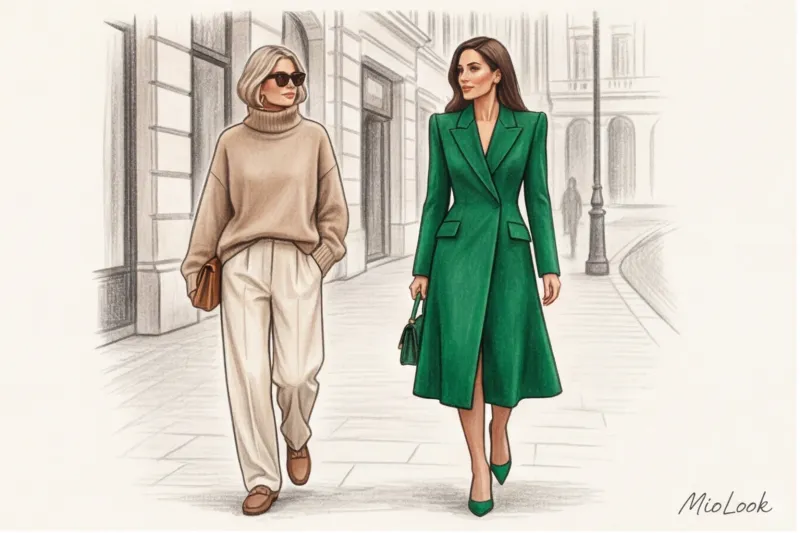
Every week I see the same scene: an ambitious woman comes to me for a consultation asking for a look that's "expensive and classy," showing me Pinterest boards of relaxed beige cardigans and linen palazzo pants. She's convinced it's the perfect choice for her new top management position. And every time, I have to shatter that illusion.
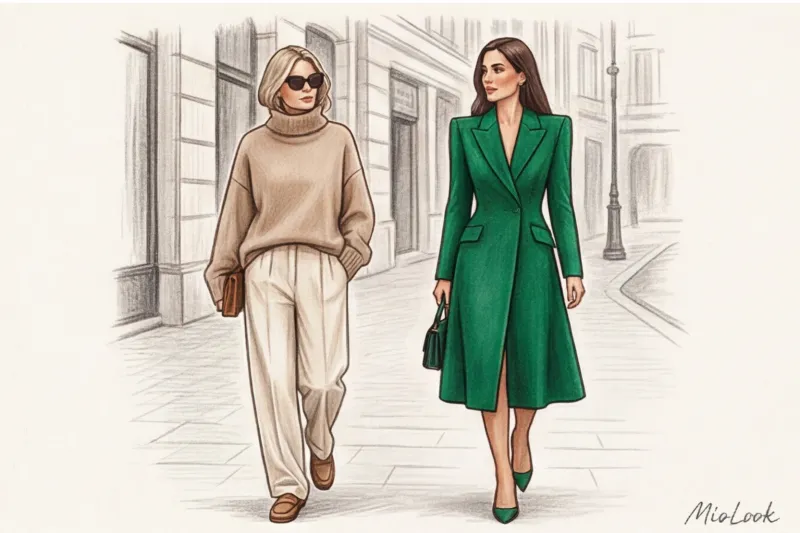
On the internet, the concepts of "quiet luxury," "old-fashioned style for women," and the wardrobe of royals have long been fused into a single, murky cocktail. We discussed the origins of this misconception in more detail in our the complete guide to royal style But as a practicing stylist, I can tell you straight: these are two completely different tools. And if you misuse them, the consequences for your image will be disastrous.
Old Mane Style for Women vs. Royal Wardrobe: The Main Illusion
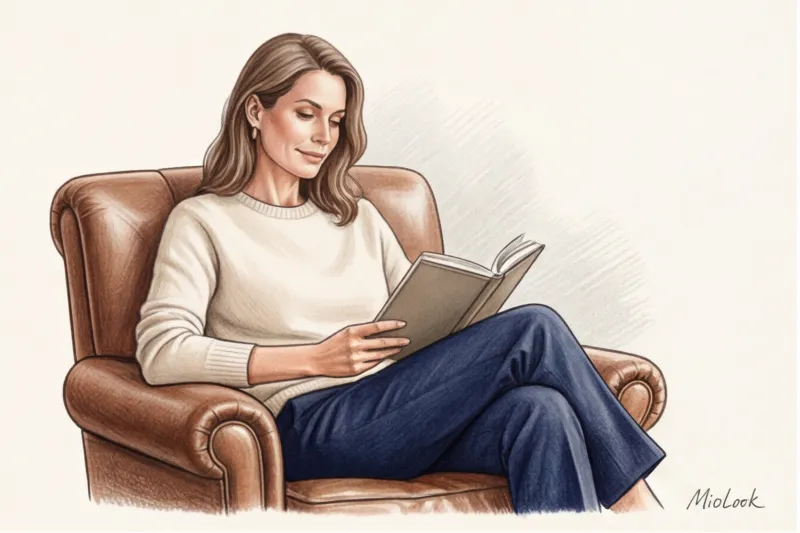
The fundamental difference between these aesthetics lies in their goals. Old Money is the wardrobe of the hereditary aristocracy for rest This is clothing for country clubs, yachts, and weekends on Lake Como. Its main message is: "I don't have anything to prove to anyone, my status is unshakable, so I choose absolute comfort."
Royal style, on the other hand, is a strict power dressing. It's a uniform for public relations, diplomacy, and mass media attention. Royals don't wear relaxed cashmere to formal receptions not because they don't have it, but because it doesn't convey power.
"Clothing is an invisible language. By choosing a soft silhouette where rigidity is needed, you voluntarily surrender your authority to your interlocutor," says one of the golden rules of visual positioning.
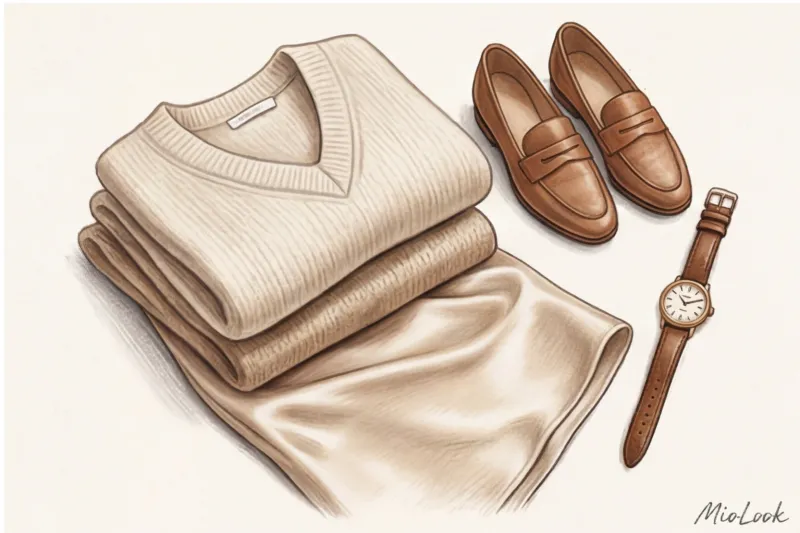
One of my clients, Anna, a CFO, decided to put together what she considered the perfect look for her first board meeting at her new job: a soft ecru cashmere three-piece suit, suede loafers, and a perfectly coiffed hairstyle. Compared to her male colleagues in crisp, structured navy suits, she looked luxurious, but... like someone who'd dropped by for tea, not to defend a €10 million budget. The soft lines deprived her of visual weight. This is a true limitation of the "old money" aesthetic—it doesn't work where you need to assert your dominance from the very first moment.
The Anatomy of Old Money Style: Relaxed Luxury
The DNA of this style is built on three pillars: invisibility, impeccable tactility, and a complete absence of logos. Wealth is felt on the body, not displayed. The visual language of Old Money is characterized by sloping shoulders, the absence of rigid lining in jackets, and a relaxed fit (there's always air between the body and the garment).
Fabrics and palette: where to invest
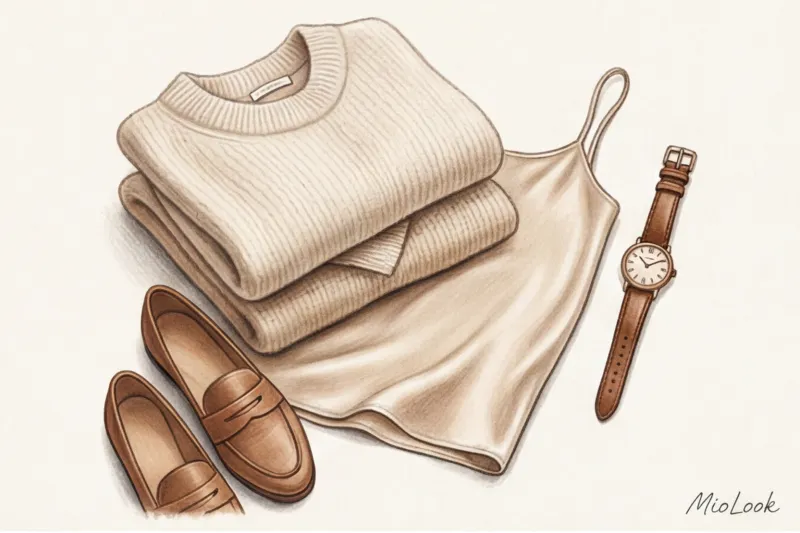
If you're putting together a capsule collection like this, your focus should be solely on the ingredients. Synthetics kill the very essence of style.
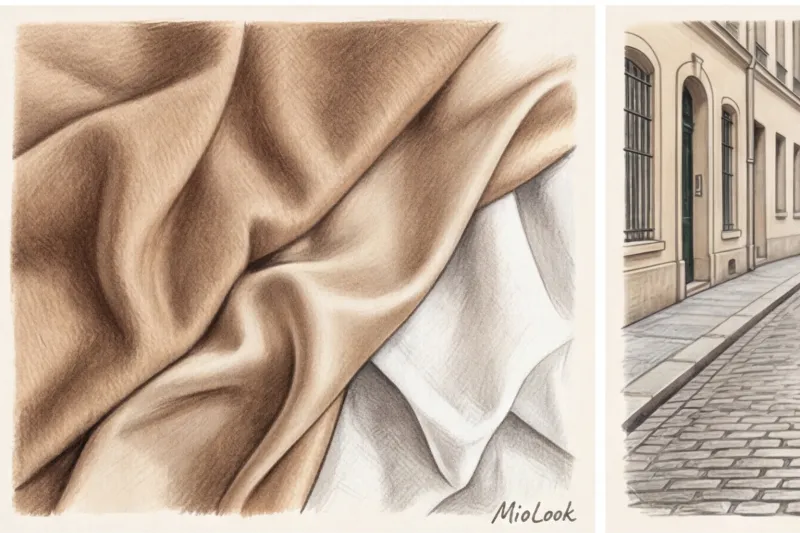
- Materials: Thick cashmere, silk (matte, not shiny satin), cotton with a weight of 180 g/m² and more, and linen. And here's the important thing: the right, expensive linen. must Wrinkling. Elegant creases are a sign of naturalness. If your linen suit looks like a pressed sheet of paper by the end of the day, it contains a critical percentage of polyester.
- Palette: Natural, muted shades. Oatmeal, ecru, camel, deep navy, sage, and olive.
- Shoes: Exceptionally comfortable. Suede loafers, leather topsiders, classic flat jockey boots without unnecessary fittings.
Your perfect wardrobe starts here.
Join thousands of users who look flawless every day by skillfully combining styles with our app.
Get access — €0.99 onceThe DNA of Royal Style: The Architecture of Power
If Old Money is a cozy blanket, then Royal Style is elegant armor. The British etiquette guide Debrett's (the leading authority on protocol) clearly defines dress code: clothing should be formal, whether you're sitting, standing, or getting out of a car.
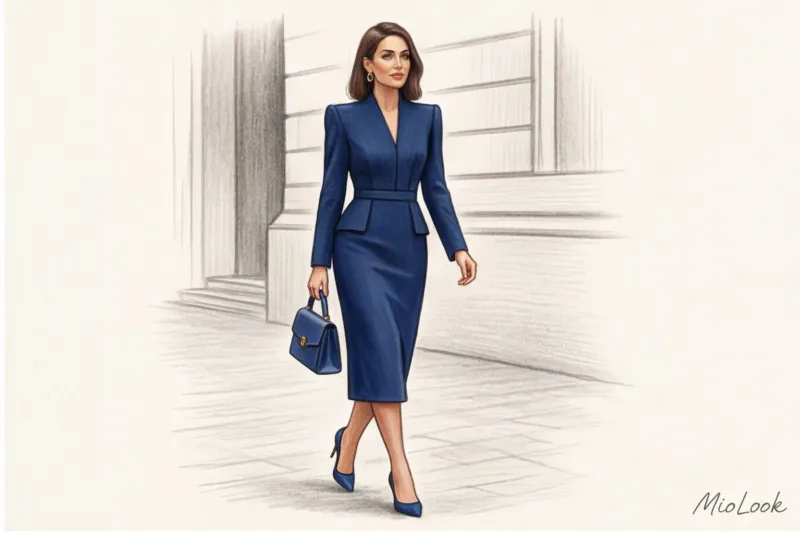
The key here is a structured cut. A clear shoulder line, often reinforced with shoulder pads, darts that accentuate the figure (but not cling to it!), and a complete absence of sloppy oversize. Just look at the outfits of Kate Middleton or Queen Letizia: their jackets and coat dresses always have a strict architecture.
Secrets of royal cut and color
The royal dress code uses visual tricks that work well in the corporate world:
- Midi length: The ideal proportion, considered the gold standard, is a hand's breadth below the knee. It elongates the silhouette and always looks flattering.
- Color blocking and bright colors: In contrast to the beige madness of quiet luxury, monarchs often wear rich fuchsia, emerald, and royal blue. Why? As the late Queen Elizabeth II said, "I must be seen to be believed." If you want to be the center of attention at a conference, choose a bold monochrome suit.
- Shoes: Classic closed-toe pumps with a stable heel (usually 7-8 cm). No exposed toes or heels are allowed in formal settings.
Texture Battle: How Fabrics Change the Perception of Your Status
According to the theory of visual weight and the psychology of line perception (which we study in detail in European styling schools), the human brain interprets right angles and rigid shapes as signs of logic, dominance, and expertise. Soft, draping lines are subconsciously associated with compliance, creativity, and relaxation.
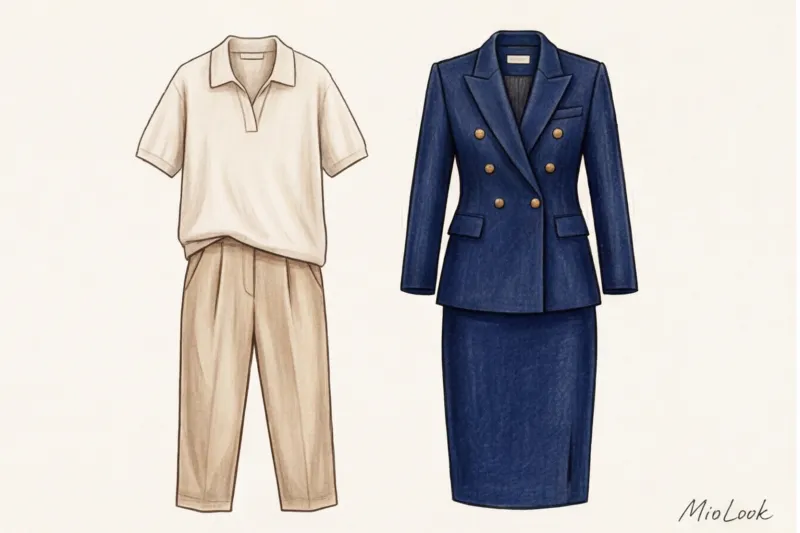
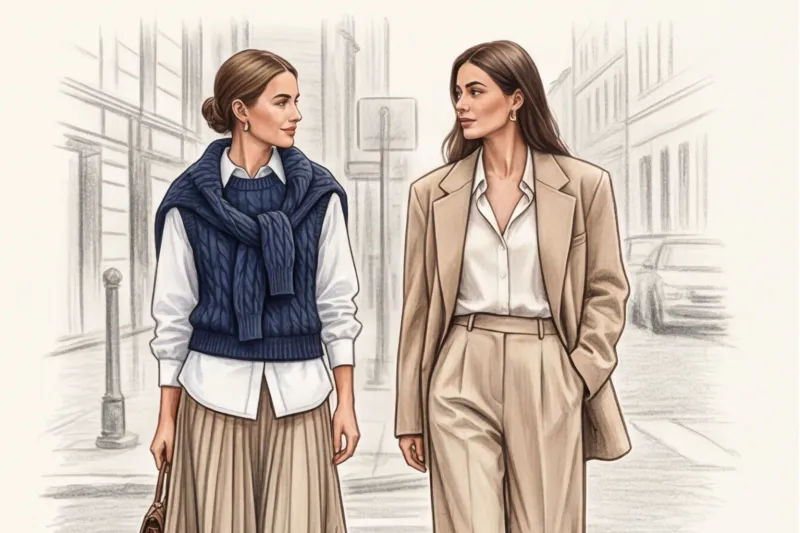
Let's compare head-on. By wearing a soft, chunky knit cardigan over a silk top (typical Old Money), you're communicating, "I'm open to conversation, I'm comfortable, I'm not in a rush." By wearing a bouclé tweed jacket or a thick wool jacket that holds its corners (Royal Style), you're communicating, "I set the rules, I have boundaries, I'm here for business."
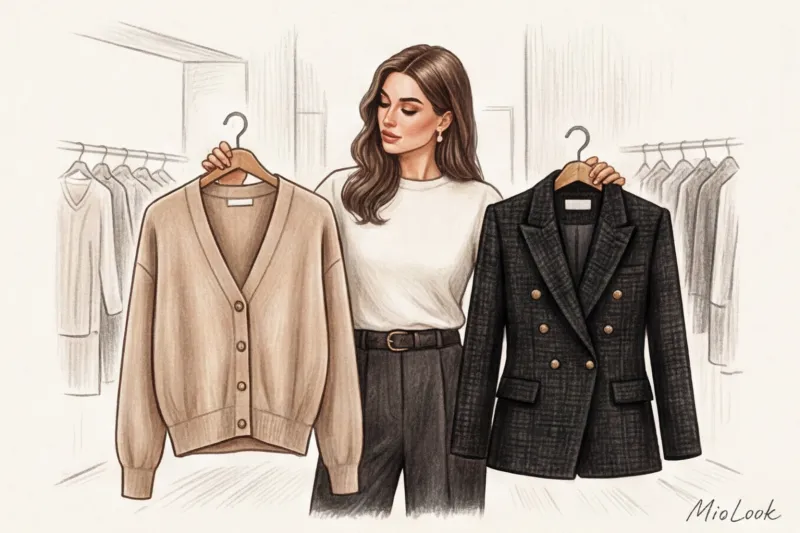
In real life, I recommend to my clients 70/30 rule If you're going to a complex negotiation, your outfit should be 70% tailored (a heavyweight pantsuit) and 30% soft (a silk blouse underneath to avoid looking too aggressive). For a casual Friday or a creative meeting, you can switch up the proportions.
Stylist Workshop: Combining Both Styles at Massimo Dutti and COS
Many glossy magazine articles like to claim that old-fashioned style for women is impossible without brands like Loro Piana, Brunello Cucinelli, or The Row. This is snobbery and marketing. After 12 years of reviewing wardrobes, I can confidently say: a prestigious capsule collection can be assembled in the European mid-range segment, if you know where to look.
Where to find the right Old Money:
- COS: An ideal place for heavyweight architectural knitwear. A merino wool or heavy cotton sweater will cost around €90–€130. They hold their shape well and don't pill after the first wash.
- Massimo Dutti: We go here for linen suits for summer (around €150-€200 per set) and excellent basic shoes – their suede loafers (from €90) are visually almost indistinguishable from their luxury counterparts.
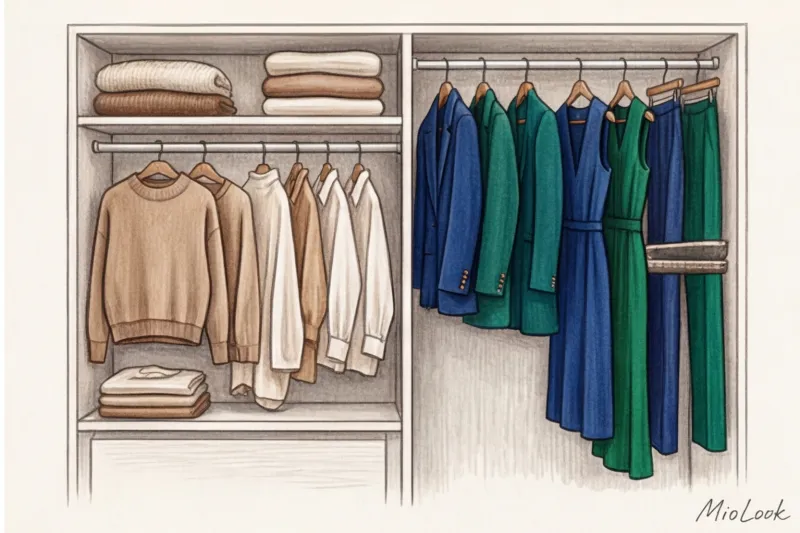
Where to collect Royal Style:
- Zara (Studio line or wool capsules): Here you can find gorgeous double-breasted jackets with accentuated shoulders (in the €100–€140 range). Just avoid the ultra-trendy cropped versions and look for a classic mid-thigh length.
- &Other Stories: They work great with sheath dresses and structured midi skirts at the right length.
Stylist checklist (save before shopping):
Always read the sewn-in tag (the one in the side seam, not the cardboard one). For suits, look for at least 70% natural fiber (wool, cotton, viscose). If the wool content is less than 50%, the garment will quickly lose its shape. Pay special attention to the lining! A jacket may have a beautiful 100% wool exterior, but if the lining is 100% polyester, you'll get a greenhouse effect. Look for a lining made of viscose, cupro, or acetate.
Access to MioLook for €0.99 — one-time payment
A smart AI stylist will analyze your items and help you create stylish looks in just a few clicks.
Get access — €0.99 onceWhat's Right for You? Lifestyle Recommendations
Style shouldn't be a Halloween costume, it should serve your daily tasks.
- Old Money is ideal for you if: Are you a freelancer, a creative type, working in IT with a relaxed dress code (where three-piece suits are out of place), or looking for the perfect capsule for weekends, travel, and maternity leave?
- You need Royal style if: You're a top manager, lawyer, or politician, often performing on stage, or conducting complex negotiations in conservative male-dominated workplaces. Your wardrobe should project a sense of poise.
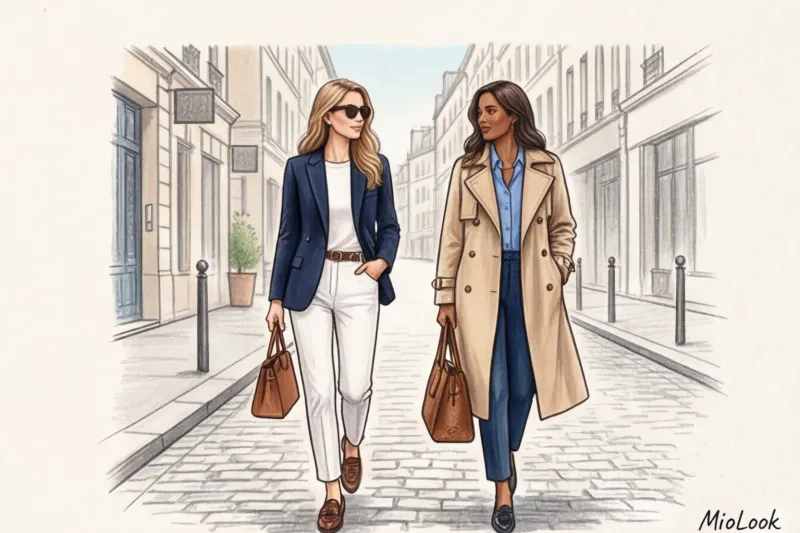
- Smart compromise: Hybrid smart casual. For example, a structured blazer (Royal Style) + a thin cashmere jumper instead of a stiff shirt (Old Money) + straight-leg, unworn jeans and loafers.
3 Fatal Mistakes That Cheapen Any Look
Even if you choose the perfect direction, these details will ruin all your efforts:
- Fakes and flashy logos. Nothing betrays insecurity about one's status more than a huge buckle with a brand logo or a bag covered in monograms. True aristocrats conceal their brands. The anonymity of an item is the main sign of its exclusivity.
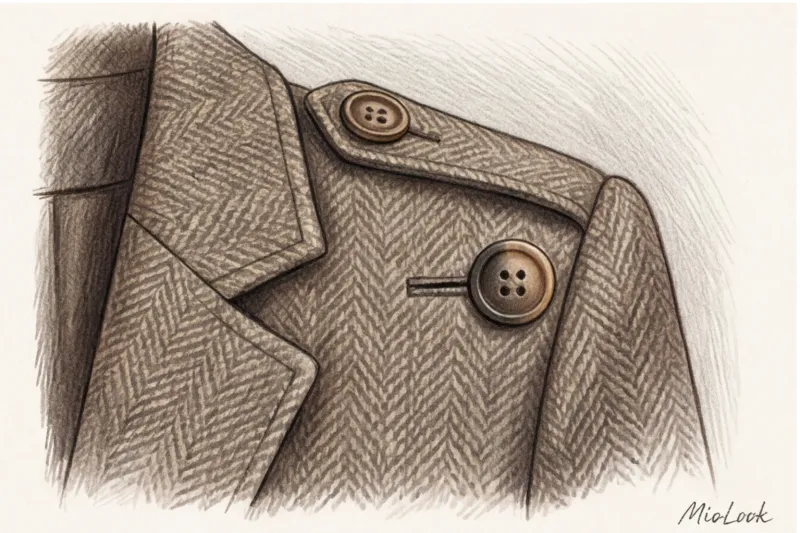
- Poor fittings on jackets. This is my favorite life hack, but it's often overlooked. You can buy a great basic jacket at a mass-market store for €70-€90, but its cheap, jingling plastic buttons that imitate gold will give it away. Take it to a tailor and replace the buttons with genuine horn, tortoiseshell, or matte metal (this will cost around €15-€20). The jacket will instantly look like it costs €300+.
- Incorrect landing. The most expensive cashmere from a premium brand will look cheap if it's too tight in the shoulders or bunches up around the chest. A high-status wardrobe always tailors a garment to fit your figure, not the other way around.
Choosing between relaxed aristocracy and strict protocol isn't a question of what's trending. It's a question of impression management. Before you buy anything, ask yourself one question: "Who do I want to be today—someone enjoying a relaxing vacation on her yacht, or someone confidently commanding an entire flotilla?"