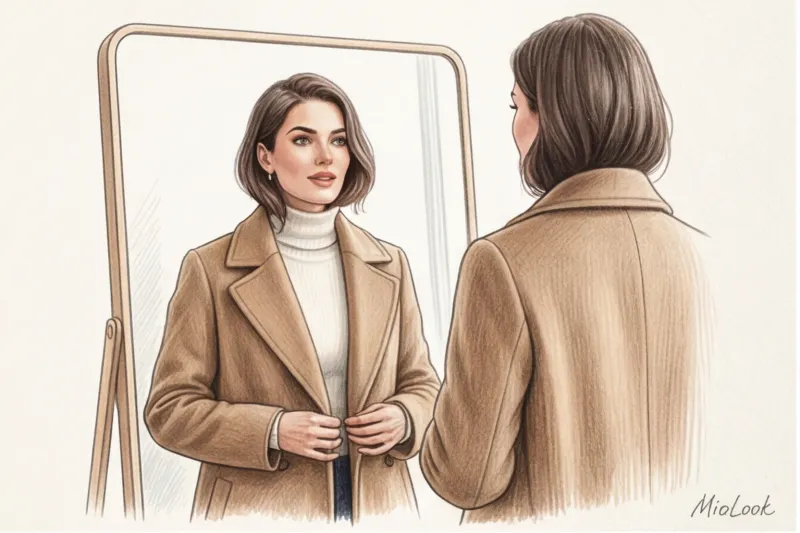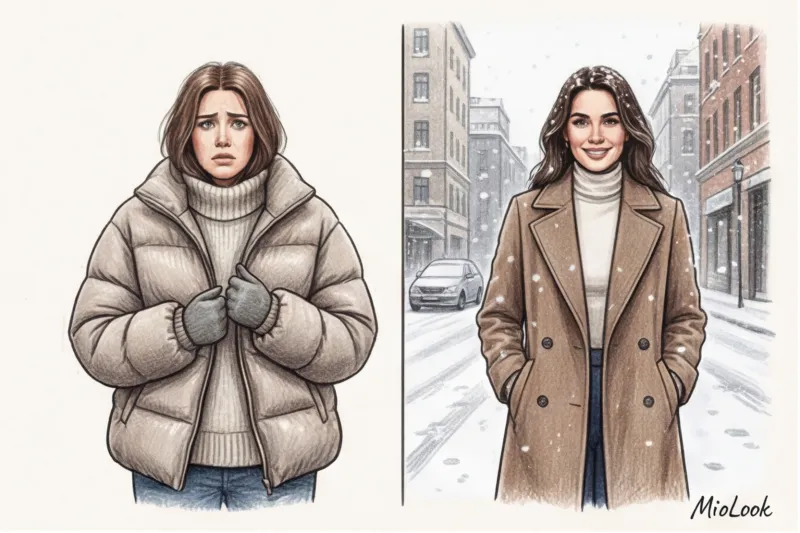
I remember the panic of one of my clients after receiving an invitation to the World Economic Forum in Davos. Her eyes were filled with absolute terror: "Julia, I have a choice: either freeze in an elegant, thin coat or look like a sleeping bag in a huge down jacket." It's a false dichotomy I encounter every winter. Most women sincerely believe that warmth and sophistication are mutually exclusive.
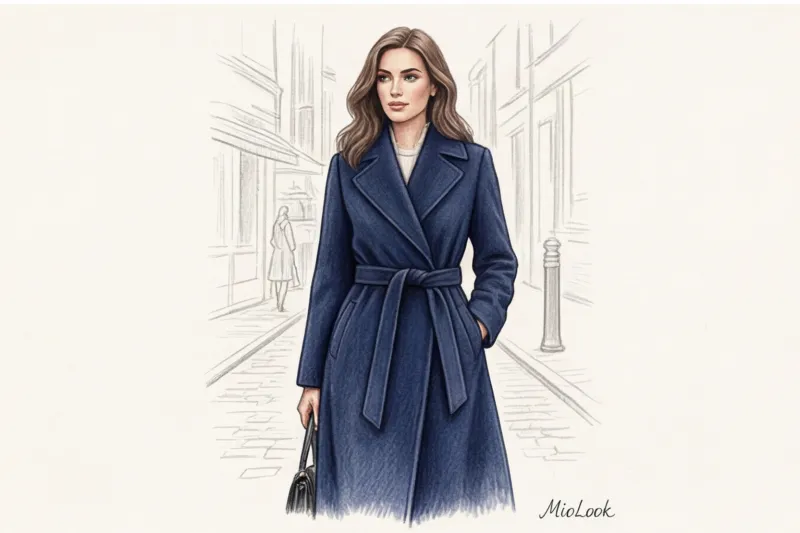
But the real one winter wardrobe in royal style is built according to completely different principles. Instead of relying on one giant layer of thick fabric, the aristocratic approach uses "invisible architecture." We discussed the basics in more detail in our guide. Royal Style in Clothing: Secrets of Elegance Today, I want to explore the winter formula specifically. As a stylist specializing in investment wardrobes, I'll show you how proper cost-per-wear calculations and knowledge of textile engineering allow you to look flawless even in subzero temperatures.
A Winter Wardrobe in Royal Style: The Physics of Elegance and the Rule of Silhouette
Winter is the ultimate test of your personal style. It's one thing to look luxurious in a flowing silk dress on a warm May evening, but quite another to maintain your poise in a piercing wind. The key principle followed by royals is that warmth shouldn't compromise the geometric shape of your silhouette.
According to strict unspoken protocol, members of the royal family are not allowed to bundle up, shiver, or shift from foot to foot at public events. Their secret is the concept of "invisible warmth." Thermal insulation is provided not by visual bulk (as in mass-market oversized down jackets), but by the astonishing density of the weave and high-tech micro-layers. According to the Textile Institute (2023), a thin turtleneck made of 100% merino wool retains body heat 40% more effectively than a heavy acrylic sweater three times thicker.
"Winter elegance doesn't start with a beautiful scarf, but with the right lining. If you're cold, your posture changes: your shoulders rise toward your ears, your back slouches. In this state, it's impossible to look classy, even if you're wearing a fortune."—I repeat this rule to every client.
Access to MioLook for €0.99 — one-time payment
A smart AI stylist will select the perfect look for any weather, taking into account your figure and wardrobe.
Get access — €0.99 onceThe Architecture of the Perfect Coat: A Decade-Long Investment
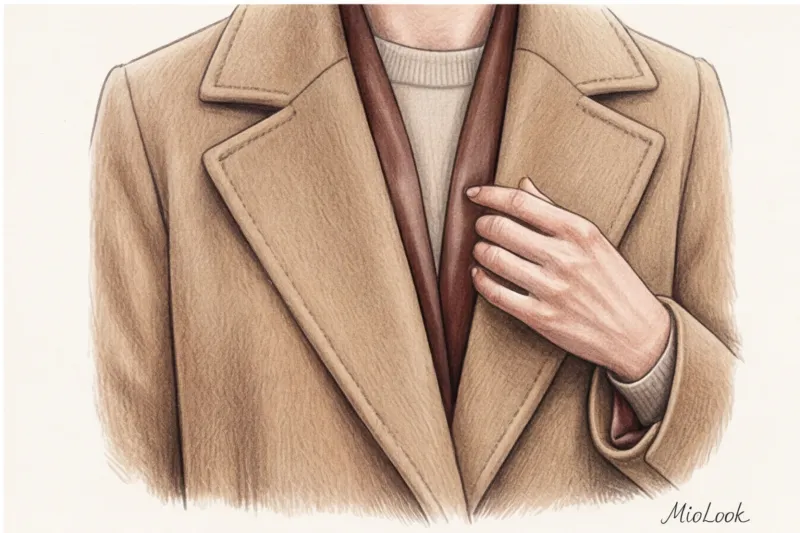
Let's be honest: a mass-market coat will never fit like a king. It's not about snobbery, but about the patterns. Premium and luxury coats are constructed according to the Savile Row tailoring rules. The key difference lies in the high armholes and anatomical sleeve cut, which allow for free arm movement without the entire hem being pulled up.
Length matters, too. Cropped, knee-length styles visually cut off the figure and let in cold air. A midi length (to mid-calf) acts as a reliable windbreaker and creates that vertical line that elongates the silhouette. And here's an insider secret: the British royal family's stylists often sew tiny lead weights into the hem of Kate Middleton's coats. This ensures the fabric hangs gracefully and doesn't fly apart even in a strong gust of wind.
Now about the mathematics of investments, or the rule Cost-per-wear (cost per wear). Let's say you buy the legendary Max Mara 101801 coat. It costs around €2,500–3,000. You'll wear it for at least 10 years, wearing it about 60 times per season. The cost per wear will be around €4–5. Alternatively, consider a trendy fast-fashion polyester coat for €200. It will pill in two months and lose its shape after the first dry cleaning. You'll wear it 20 times. The cost per wear will be €10. Paradoxically, luxury is cheaper. In the appendix MioLook The smart wardrobe feature helps you clearly see which basic items are worth 200% of their cost.
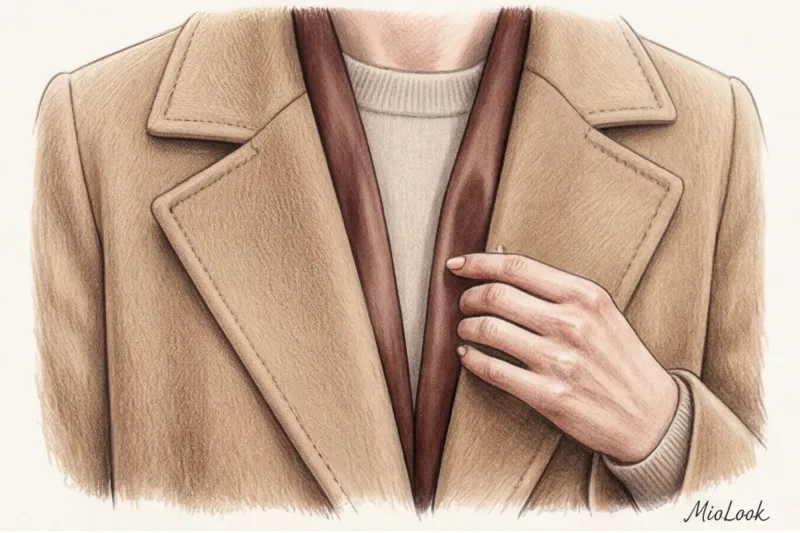
Regarding composition: look for fabrics that are at least 70% wool, cashmere, or alpaca. And don't be alarmed by the presence of 10-20% polyamide—this is a technological necessity that protects the expensive fibers from rapid abrasion in areas of friction (such as a bag strap).
Hidden Layers: How to Stay Warm in a Thin Wool Coat
Thick sweaters worn under coats are the enemy of elegance. They create folds and pull the fabric tightly at your back. The solution? High-tech thermal underwear. I always recommend blends of natural silk and merino wool. Silk provides tactile comfort and moisture wicking, while merino retains warmth thanks to the microscopic air pockets in its fibers.
The lining of your outerwear plays a huge role. If a €1,000 coat has a 100% polyester lining (unfortunately, some brands cut corners this way), you'll sweat indoors and instantly freeze outdoors due to the greenhouse effect. Look for linings made of cupro or 100% viscose. And for extra warmth, opt for ultra-thin cashmere vests—they keep your chest warm but leave your arms free of excess fabric.
Your perfect look starts here
Join thousands of users who look flawless every day with MioLook.
Get access — €0.99 onceHigh-quality knitwear: how to spot luxury with your eyes closed
A few years ago, I visited the Loro Piana factory in Piedmont, Italy. What I saw there forever changed my view of knitwear. True, premium cashmere isn't just softness. It's a precise measurement: the fiber thickness should be 14–15.5 microns. This is precisely the yarn that produces a weightless fabric that's warmer than sheep's wool.
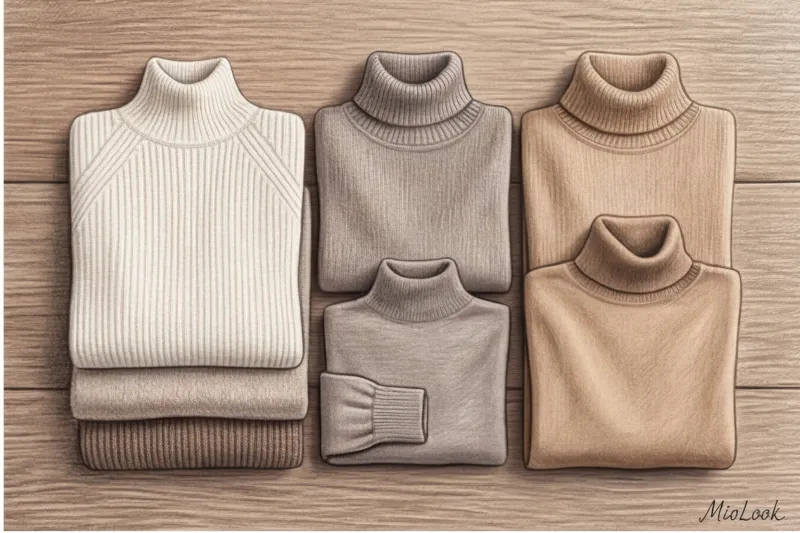
Customers often ask, "Julia, why is my €50 cashmere sweater on sale covered in pilling after just a week?" The answer lies in the length of the lint. Cheap knitwear uses short fibers, which, when rubbed, become dislodged and pill. Luxury brands use long-staple lint and double or triple twist (2-ply, 3-ply). When purchasing, gently rub the fabric between your fingers—high-quality cashmere should not leave lint on your hands.
The foundation of the royal capsule collection is turtlenecks and crewneck sweaters. A deep V-neck looks out of place in winter and visually clashes with outerwear. A refined palette is key: camel, taupe, navy, and ivory shades always look more luxurious than black, which quickly collects dust and loses its depth. Helpful tips on combining these materials can be found in the article. Silk and wool: how to wear textures stylishly.
Busting the myth: Why down jackets can be regal and elegant too
There's a pernicious stereotype that a woman of status should wear only coats or furs in winter. This isn't true. Just think of the iconic images of Princess Diana at ski resorts or modern-day duchesses at their Balmoral estate.
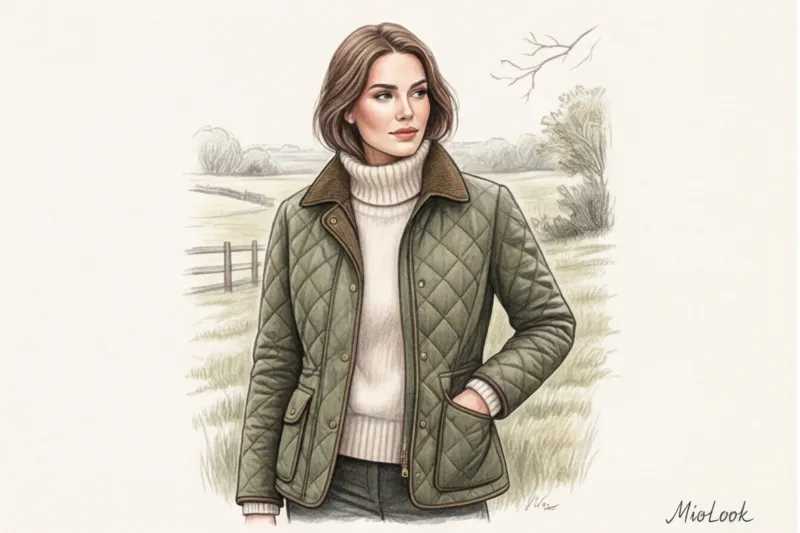
Royals wear down jackets, but they do so in keeping with the aesthetics of après-ski and English country style. The secret to the jacket's status is its completely matte fabric (no glossy sheen), a complete absence of shiny hardware, rhinestones, fur pom-poms, and, most importantly, the absence of garish logos emblazoned across the back (the so-called "quiet luxury" trend, which, according to Lyst's 2024 report, is only gaining ground).
Instead of shapeless puffer jackets, consider traditional quilted jackets in the style of British brand Barbour. They're slightly fitted, feature a corduroy collar, and pair perfectly with cashmere turtlenecks and leather boots. Learn more about... What shoes to wear with a down jacket To avoid slipping into a sporty style, you can read our separate article.
I must make an important disclaimer (honesty is my rule): A thin cashmere coat with hidden layers and a quilted jacket won't protect you at -30°C if you're planning a two-hour walk through the forest. For extreme weather, you need expedition parkas with a membrane. But for the typical urban "car-office-restaurant-taxi" cycle, the approach I've described is flawless.
Ready to get started?
Try the MioLook free plan—no commitments required. Upload your items and get ready-made looks for every day.
Get access — €0.99 onceStatus Accessories: When Functionality Meets Etiquette
Mistakes in winter accessories can make even a €3,000 coat look cheaper. The key is to work with visual weight.
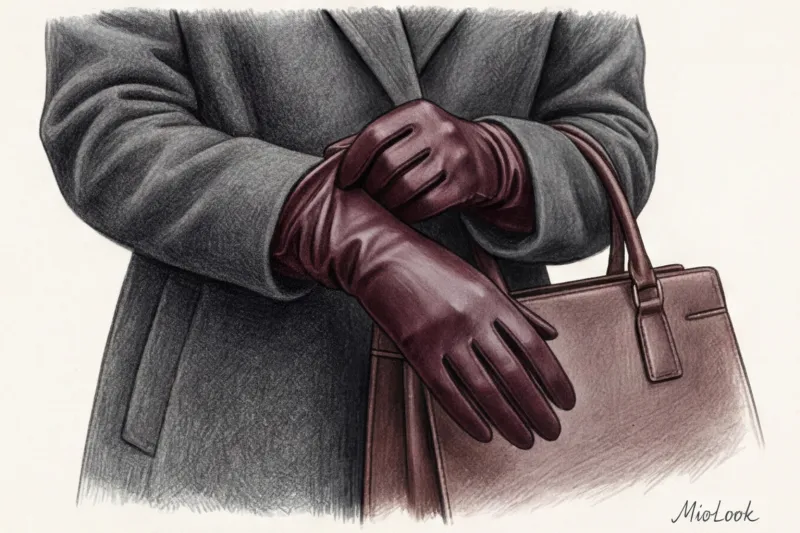
Let's start with gloves. Short leather gloves with a fur trim, revealing a telltale strip of bare skin (or a sweater sleeve), are a no-no. The royal choice is long (mid-forearm) gloves made of thin, smooth leather. Important detail: they should be lined with silk or the finest cashmere, not thick faux fur. They tuck elegantly under the coat sleeve, creating a seamless line.
Chunky knit scarves (especially snoods) "eat" your neck. You visually lose 5-7 centimeters of height, and your silhouette becomes bulky. Replace them with wide stoles made of fine cashmere or pashmina. They should be folded in a structured, flat knot under the coat collar, rather than draped over it like a huge bun.
Headwear is a constant pain. A structured felt beret, a rabbit fur fedora, or (if you want to maintain your hairstyle) an elegant cashmere turban will help replace the boring sports beanie. If you're interested in delving deeper into this topic, I recommend this guide: How to match a hat to a coat: combination rules.
Cold Weather Footwear: Balancing Style and Safety
Winter footwear is always a compromise between style and the harsh realities of icy roads and chemicals. Let's avoid suede right away: no matter how beautiful it looks in the shop window, the first slush will leave permanent salt stains. Smooth, dense leather is the only choice.
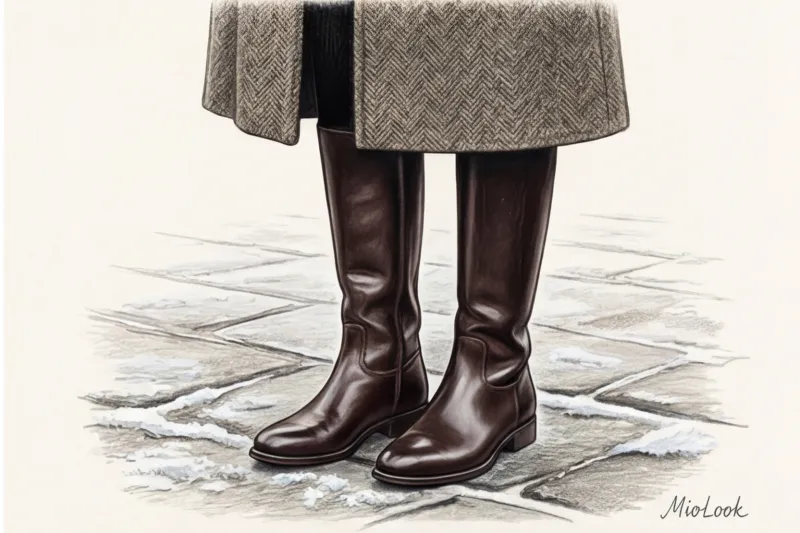
Riding boots with a flat sole or minimal heel are a timeless classic of the aristocratic wardrobe. They have a straight shaft that doesn't cling to the calf, making them perfect for pairing with thick tights. By the way, to find the right base layer for warmer clothing, I recommend reading our guide. The Perfect Underwear for White Clothes: Stylist Tips (there are many intersecting principles of working with textures).
My personal secret as a stylist: to prevent clients from falling on ice in expensive leather-soled shoes, we take them to a reputable shoe repair shop immediately after purchase. They install invisible yet highly reliable rubber pads (for example, from the Italian company Vibram). This doesn't compromise the aesthetics of the shoe last, but guarantees safety.
And remember about gap rule If you're wearing a midi skirt and boots, the skirt hem should overlap the boot shaft by at least 2-3 centimeters. A strip of tights between the skirt and the boots will horizontally cut through the silhouette and simplify the look. I also mentioned this principle in the article. What to wear with a long coat.
Your Checklist: 5 Steps to Creating the Perfect Winter Capsule
Theory is dead without practice. If you're looking to put this approach into practice this weekend, here's my tried-and-true checklist for conducting seasonal audits with clients:
- Outerwear audit: Check the tags on your coats. If they contain more than 30% polyester and the lining is prone to static, it's a candidate for long-term replacement.
- Investment in the base: Buy at least one set of thin thermal underwear (silk + merino) in black or nude. You'll be surprised how much easier it will be to put together outfits.
- Coat Strategy: It's better to save up and buy one perfect camel or navy coat for €600-€1000 than to buy three mediocre models for €200 each season.
- Accessories revision: Put away those acrylic scarves and replace them with a high-quality cashmere stole.
- Shoe service: Take your winter shoes to a professional: re-soled them, apply winter treatments, and buy professional wax for smooth leather.
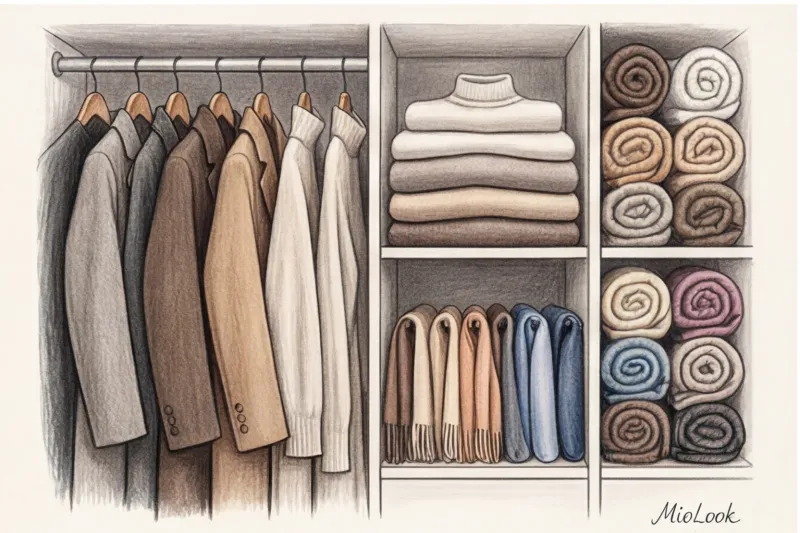
A regal winter wardrobe isn't about an abundance of items or suffering in the name of beauty. It's about a deep understanding of materials and a sensible approach to investing in yourself. When your clothes are perfectly tailored and the fabrics act as intelligent climate control, you have more energy for more important things. After all, true elegance is when you're completely comfortable while still looking your best.