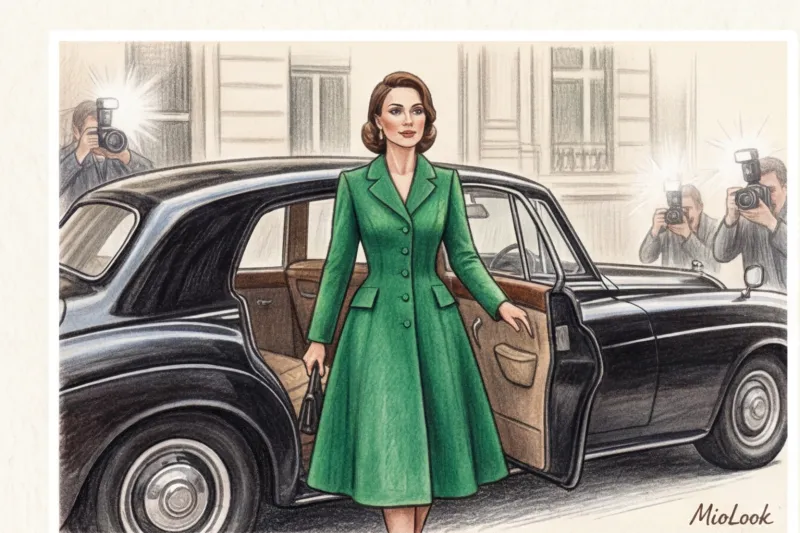
In 2011, a gust of wind at Calgary Airport lifted the hem of Kate Middleton's flowing yellow dress, giving the paparazzi a Marilyn Monroe-esque shot. Journalists were delighted, but the Kensington Palace protocol department was horrified. A single photograph of the "flying" hem overshadowed the media coverage of a multi-million-dollar charity tour. It's in moments like these that it becomes crystal clear: royal dress code rules These aren't fairy tales about princesses or the dusty traditions of the last century. This is a strict system of risk management and total control over the visual message.
Over 12 years as a fashion journalist and stylist, shuttling between shows in Paris and private presentations in London, I've seen hundreds of attempts to create a "status" look. Most of them failed due to a lack of understanding of the basic laws of optics and the psychology of perception. We discussed the historical context in more detail in our a complete guide to the secrets of royal elegance , but today I want to look at the strict prohibitions.
We'll look at the Windsor taboos not as a list of boring restrictions, but as an arsenal of power tools that the modern woman can use to create an impeccable personal brand.
The Myth of Conservatism: Why Royal Dress Code Rules Are a Tool of Power
Female top managers often approach me with the question, "I want to look authoritative yet feminine." They intuitively try to find the balance that members of the royal family have honed for decades. In politics and big business, clothing is visual diplomacy. Every appearance is scrutinized, and any misstep becomes a meme.
Modesty-based restrictions are for the monasteries. Royal restrictions exist to prevent PR disasters. The absence of plunging necklines and miniskirts is dictated not by puritanism, but by attention-management theory. If you're wearing a provocative dress, the audience will discuss your legs, not your speech about global warming. The goal of power dressing is to make your interlocutor look you in the eye and listen to your arguments.
Taboo on textures and cuts: what the royal will never wear
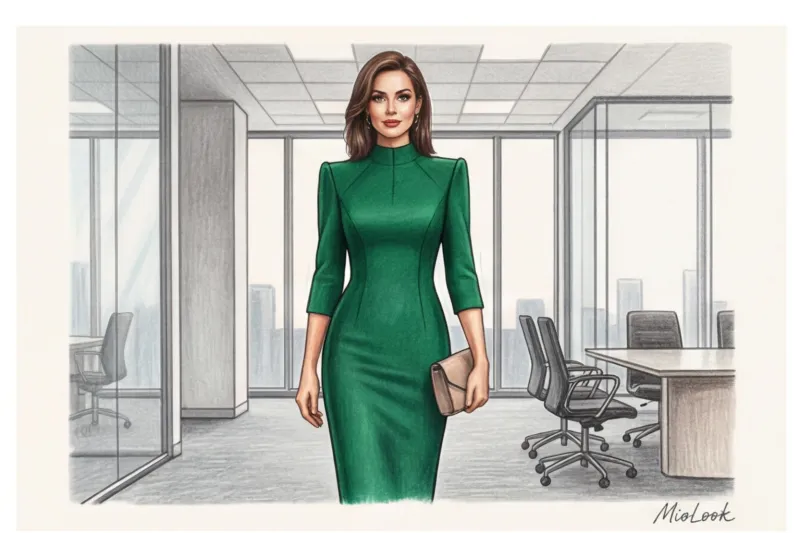
You'll never see the Queen or Princess of Wales in flowy, shapeless, or translucent fabrics at a formal daytime event. The cut must be rigid. This principle dates back to 1947, when Christian Dior introduced his revolutionary New Look silhouette. A rigid, sculpted cut works like armor: it holds its shape no matter how you sit, stand, or get tired.
Flying Hems and the Secret of Lead Weights
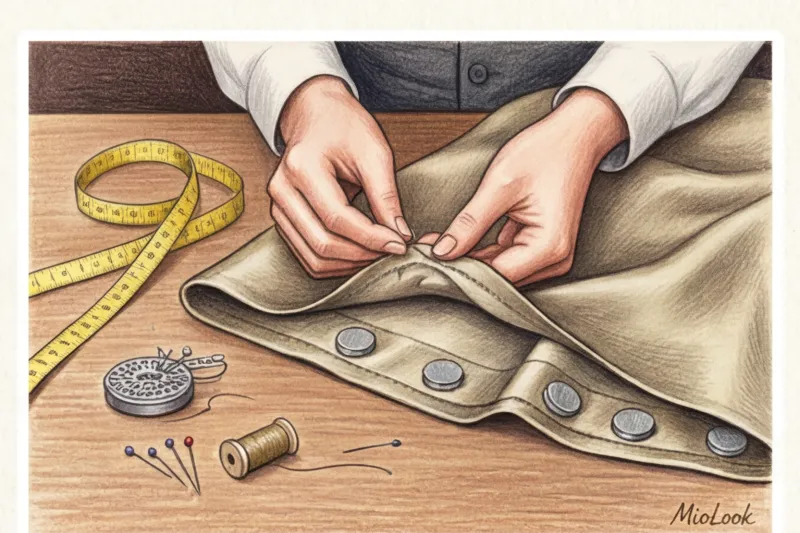
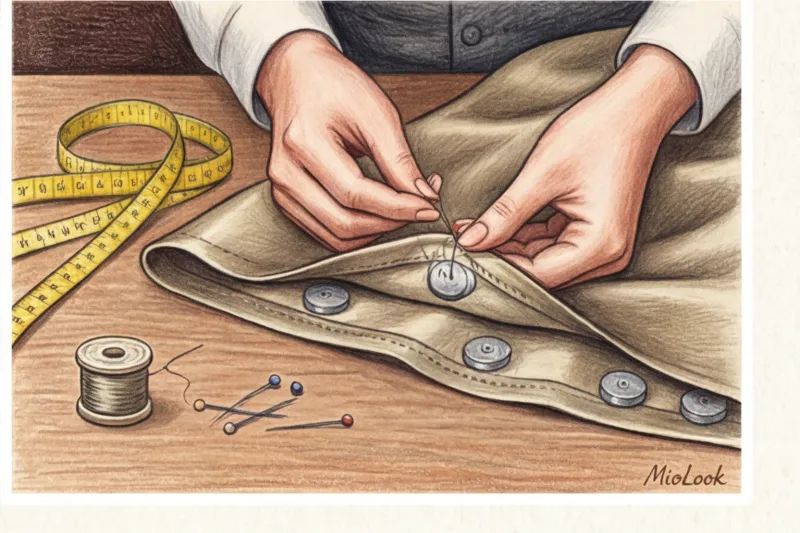
How to avoid embarrassment on the perpetually windy runway? The royal tailors have a secret, yet ingeniously simple, weapon. Stuart Parvin, personal couturier to the late Elizabeth II, revealed this technique in a rare interview. Round lead weights—the same kind used to make heavy curtains—are sewn into the hem of every A-line coat and dress. These penny-pinching weights, costing a couple of euros, ensure the fabric hangs perfectly straight and resists gusts of wind.
Access to MioLook for €0.99 — one-time payment
A smart AI stylist will select the perfect look for any situation and help you organize your wardrobe.
Get access — €0.99 onceWrinkle-Free Fabrics Ban: Why Linen Is Outlawed at Official Receptions
Linen, fine viscose, and lightweight silk are absolutely prohibited by the protocol for business travel. The reason is simple: after half an hour of sitting in a car or on a flight, these fabrics begin to crease in the groin area and behind the knees. Under camera flashes, these creases look incredibly untidy.
The alternative? Heavyweight crepe wool, double-face wool, and thick jersey. They're springy and instantly regain their shape.
Of course, this principle has its limitations. If you work at an IT startup with a relaxed dress code, showing up in a heavy wool crepe on a hot summer day would be out of place. It's better to opt for high-quality, dense cotton (at least 180 g/m²) that holds its shape but still suits the context.
The "Bare Legs" Illusion and the Tights Protocol: Strict Rules That Surprise
Perhaps the most discussed rule of the royal dress code is the mandatory wearing of tights, even in 30-degree weather. Meghan Markle has frequently violated this rule, causing a storm of indignation in the British press. But why is the protocol so strict?
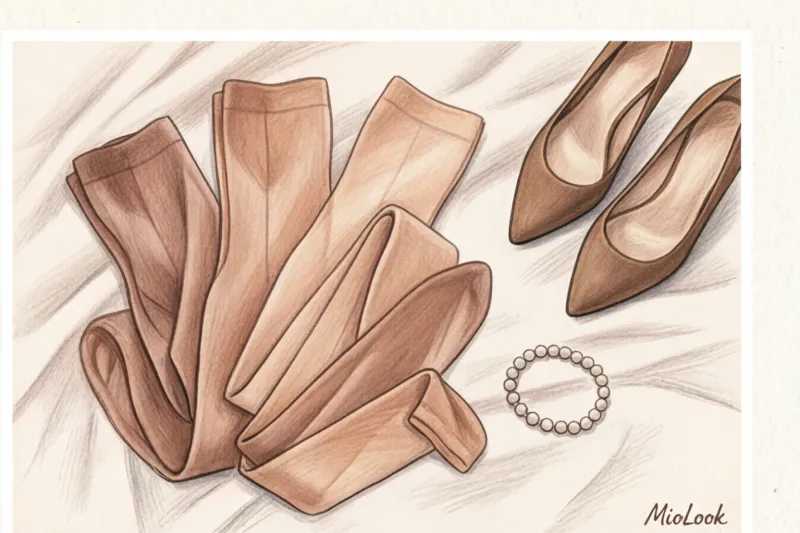
The problem is the unpredictability of bare legs under the camera's flashbulbs. The camera instantly captures uneven skin tone, bruises, spider veins, and the shine from moisturizing lotion. Tights act like foundation: they blur the skin and create a smooth, matte canvas.
As a stylist working on television shoots, I can confirm: matte tights in 7-15 denier that perfectly match your skin tone (no tanning or lurex) are a lifesaver. In the premium segment (around €25-€40), consider Wolford (model Nude 8), while in the more affordable segment (€15-€20), the ultra-thin Falke lines are excellent. There should be no glossy sheen.
Color diplomacy and the veto on total black
There's a common myth that royals are forbidden from wearing black because it's the "color of mourning." This is only half the truth. In fact, the ban has to do with optics.
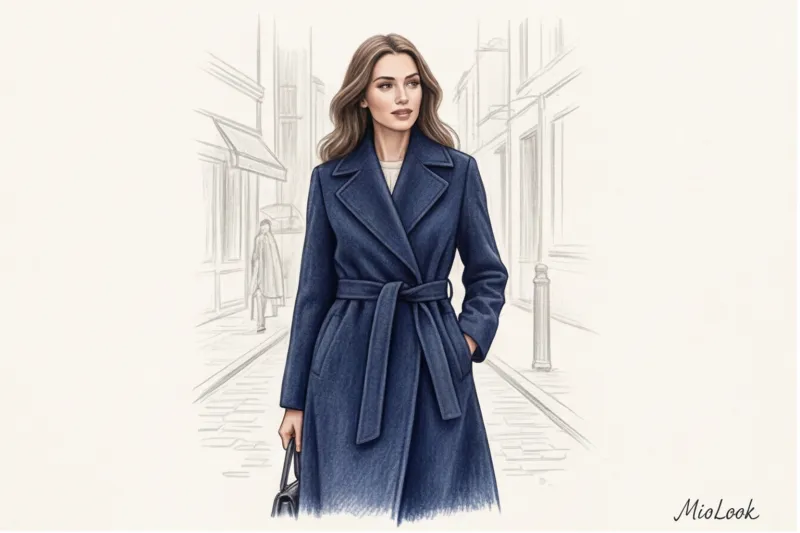
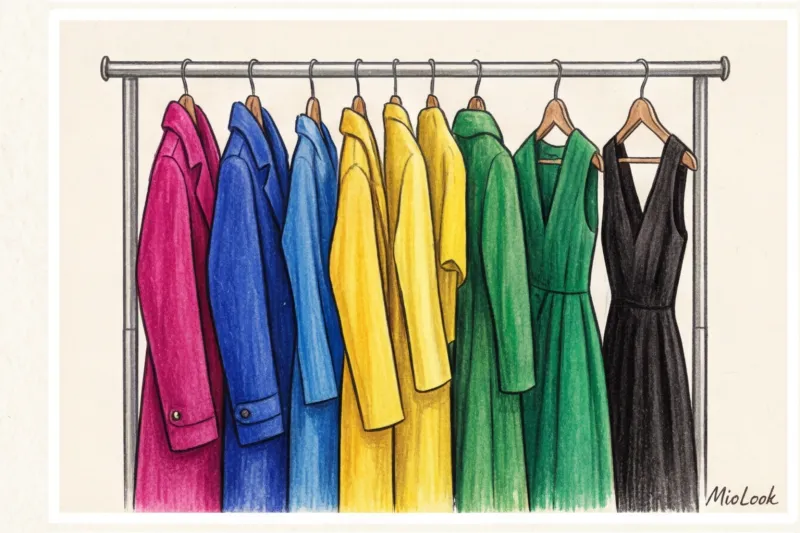
Black absorbs light. A person in a black coat instantly blends into the crowd, their silhouette becoming flat in the background of photographs. This directly contradicts the cardinal rule of monarchs. As Elizabeth II once said: "I have to be seen to be believed" (I must be seen to be believed in).
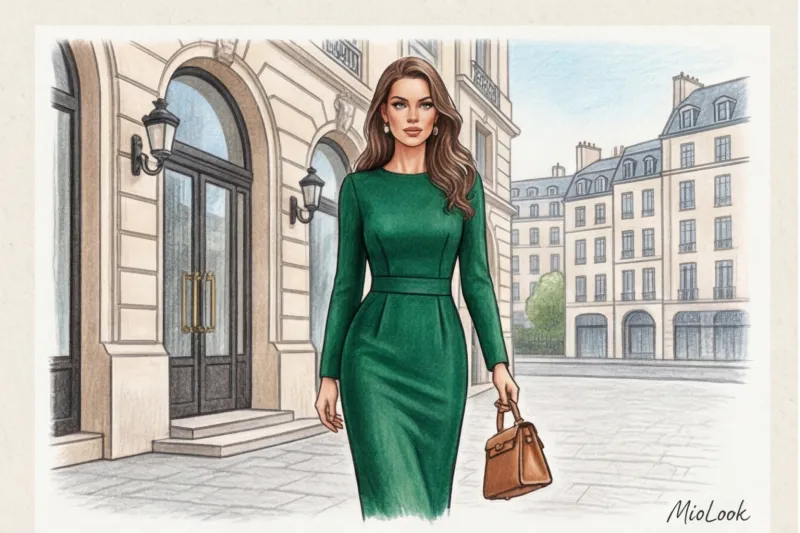
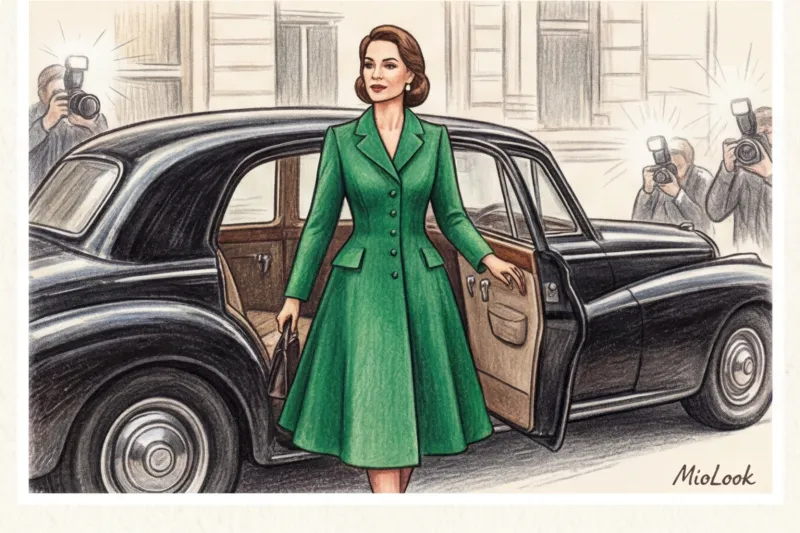
In its 2023–2024 reports, the Pantone Color Institute regularly notes a trend toward "high-visibility" colors in politics. Fuchsia, cobalt, emerald, and canary yellow form the visual center. When the Queen, dressed in a vibrant monochrome, steps out of her car, the gaze of security, the press, and spectators automatically focuses on her.
Black is only permitted in two circumstances: national mourning and official audiences with the Pope at the Vatican.
Your perfect look starts here
Join thousands of users who look flawless every day with MioLook. Upload your items and create smart capsules.
Get access — €0.99 onceProhibited shoes and accessories: from wedges to oversized bags
Royal footwear must meet two criteria: be closed (no peep-toes) and provide perfect balance. Wedge shoes are unofficially prohibited—Elizabeth II detested this shape, believing it visually weighed down her gait.
From a biomechanical standpoint, the ideal height for a royal stiletto heel is 8-9 cm. This is the height that maintains a beautiful curve in the calf, but allows a woman to stand for 5-6 hours during receptions without visible facial pain.
Why a clutch is a shield, not just a handbag
You'll never see the Princess of Wales with a crossbody bag at an official event. The strap distorts the line of the coat and creates an undesirable asymmetry. But the monarch's main weapon is a rigid rectangular clutch.
Why hold it in both hands in front of you? It's a brilliant protocol trick. Keeping your hands occupied elegantly obviates the need to shake hands with those whose status precludes it. The clutch creates a physical boundary, a barrier between the monarch and the crowd.
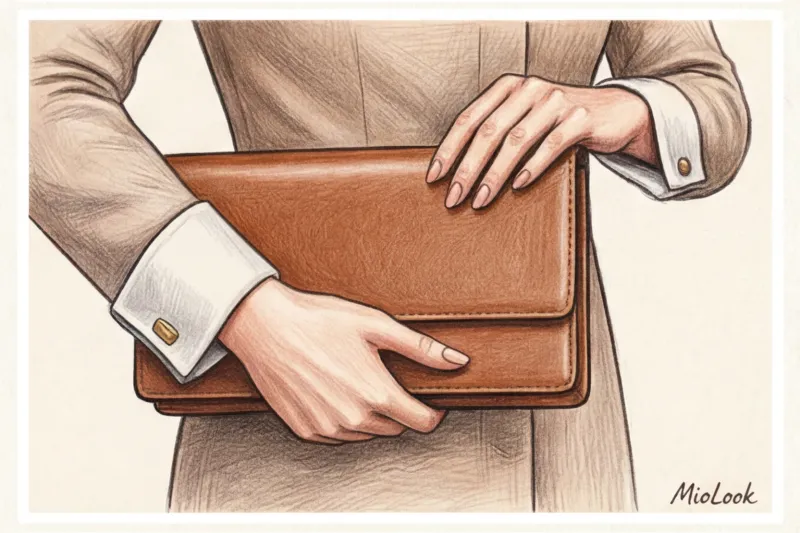
I often incorporate the "clutch rule" with my entrepreneurial clients before major networking events. If you're standing there with a glass of water in one hand and a stiff clutch in the other, it's impossible to approach you with a familiar pat on the shoulder.
And Princess Diana used her small Anya Hindmarch clutches as cover: when getting out of a car in low-cut dresses, she always clutched the bag to her chest to prevent paparazzi from taking incriminating shots from above.
Beauty Taboo: Why Bright Manicures and Red Lipstick Are Strictly Prohibited
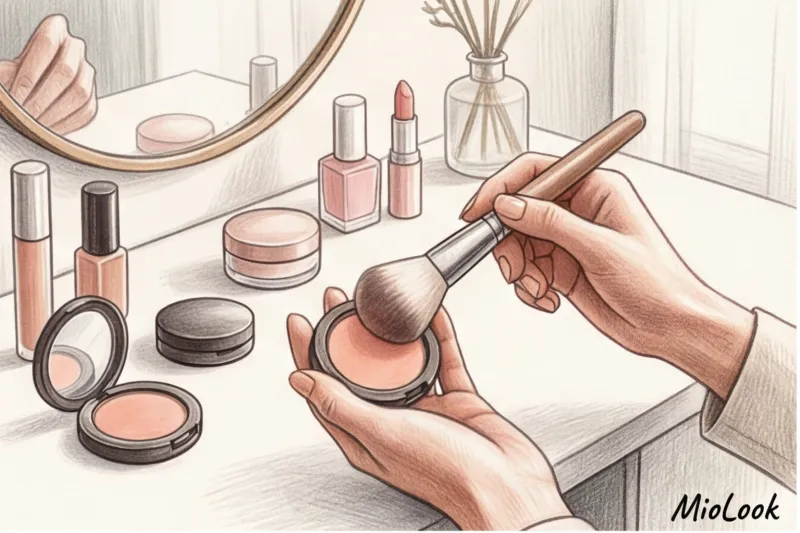
Makeup and hair must not detract from the essence of the monarch's work. Therefore, smoky eyes, Kardashian-style sculpting, and false eyelashes are absolutely prohibited. The face must be fresh, open, and inviting.
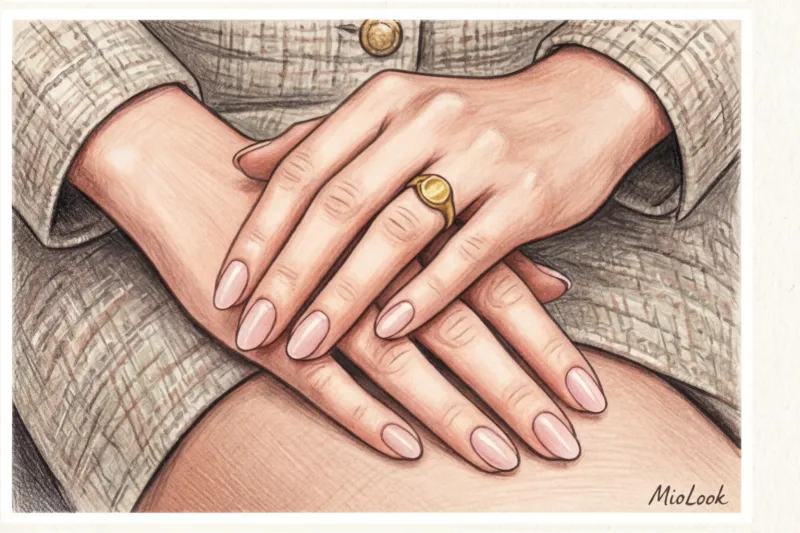
When it comes to manicures, an iconic shade reigns supreme. Since 1989, translucent pink has been the official nail color of Queen Elizabeth II (and later Kate Middleton at her wedding). Essie in shade Ballet Slippers (Its price in Europe is around €10-12). Nail length is only short or medium, shape is a soft oval.
Hair is also subject to control. You won't see tousled beach curls or messy buns. If your hair is pulled back, it's secured with an invisible hairnet to prevent any stray hairs from falling out in the wind. A perfectly smooth, controlled hairstyle subconsciously conveys to others that you're in control of the situation around you.
How to adapt royal dress code rules for a high-status business wardrobe
The limitations of royal style aren't a loss of individuality, but rather the acquisition of a powerful tool of influence. If you're facing a difficult presentation, a court hearing, or important negotiations, try implementing these principles.
I had a striking case in my practice: a lawyer client often complained that her male opponents in court didn't take her seriously. Her wardrobe consisted of soft cashmere cardigans, silk blouses with bows, and pleated skirts. We eliminated all this "fluidity." We replaced the knitwear with stiff, double-breasted jackets made of shape-resistant wool (similar ones can be found at Massimo Dutti or COS for €150-€250), added rigid geometric bags and closed-toe shoes. A month later, she admitted that the new "armor" forced her to straighten her back, and her opponents stopped interrupting her.
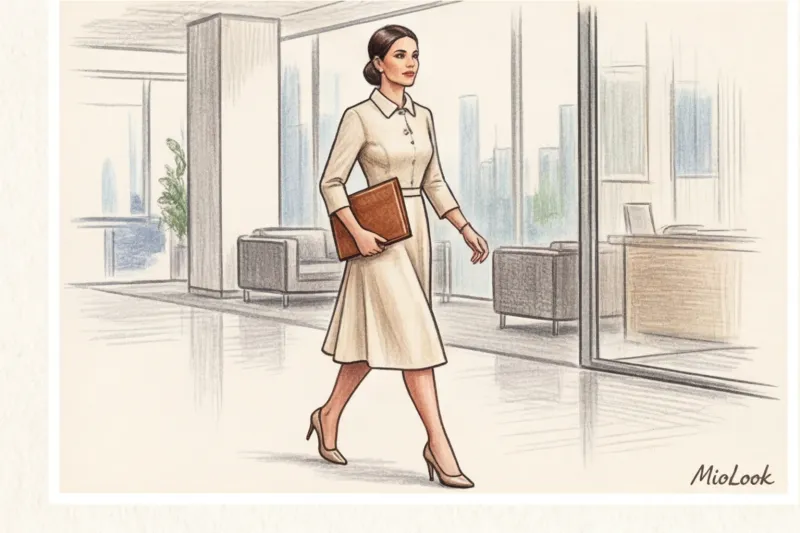
A checklist for integrating royal protocol into your wardrobe:
- Choose dense textures: The fabric should hold its shape, not cling to every fold of the body. Avoid thin knits in situations that require authority.
- Use color blocking: A monochrome look (a suit and top in one rich, yet deep shade) visually elongates your silhouette and makes you stand out.
- Pay attention to the geometry of accessories: Ditch the hobo bags in favor of structured totes or rigid clutches that create a physical boundary.
- Optimize your tights: For important meetings, always have a pair of ultra-thin matte tights in a skin tone on hand—they make your legs look flawless.
If you want to take a systematic approach to developing your business image, I recommend using the "smart wardrobe" feature in MioLook The app will help you digitize your most treasured items, and artificial intelligence will assemble them into flawless outfits, taking into account the laws of color and proportion.
Ultimately, the most important lesson we can learn from the Windsor wardrobe is that true elegance isn't about the number of logos or the height of a slit. It's about the ability to command attention without saying a word.