The Psychology of Style: What is the Enclothed Cognition Effect?
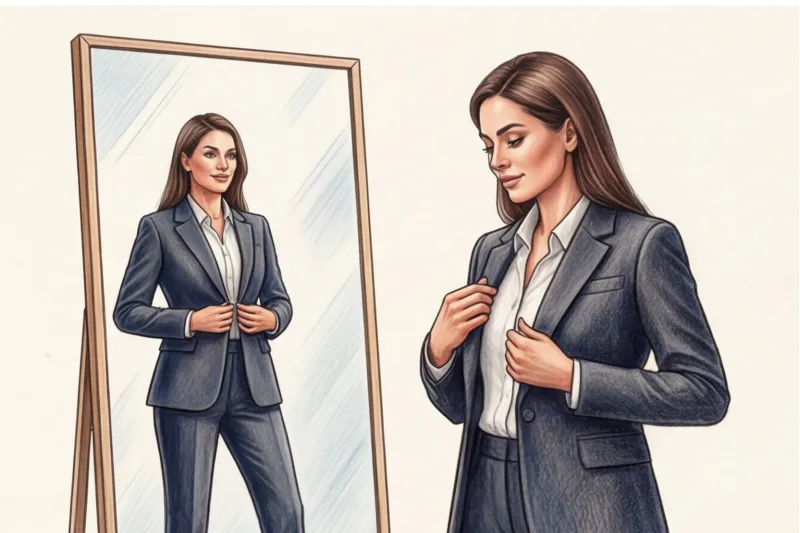
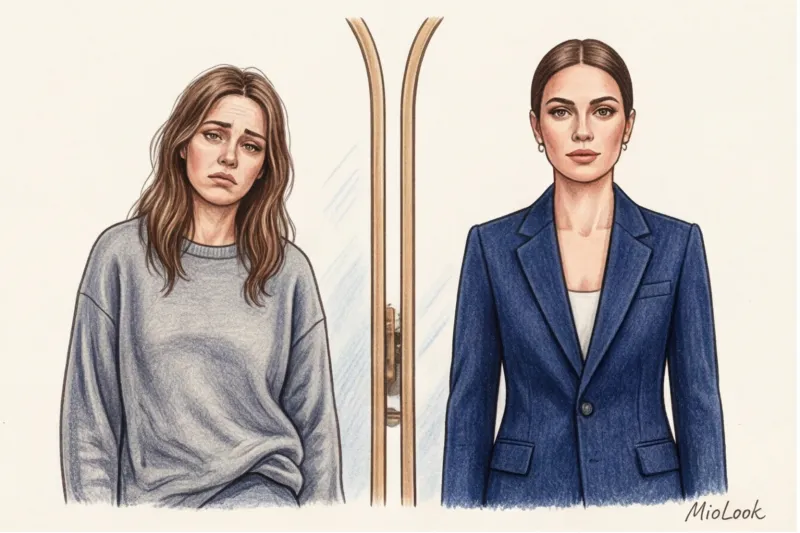
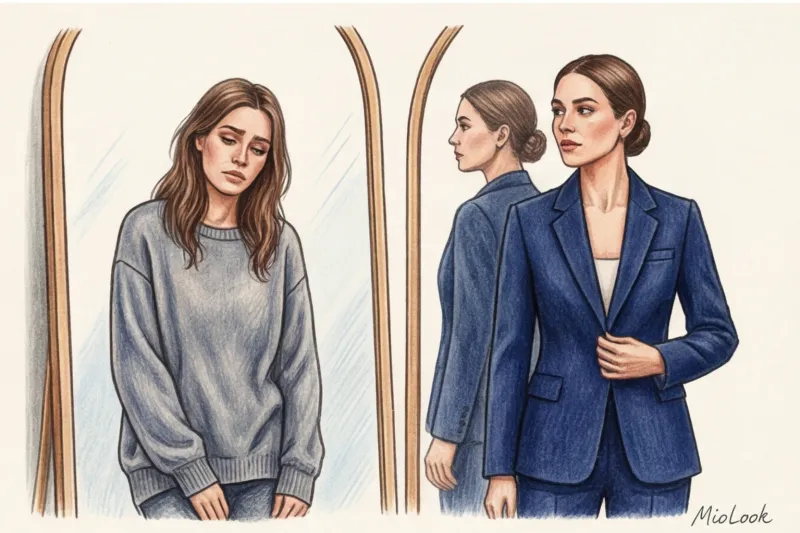
Have you ever noticed how your back automatically straightens as soon as you swap your cozy sweatshirt for a well-tailored jacket? Or how difficult it is to get yourself in the mood to write a complex report while sitting in front of your laptop in soft pajama pants? It's not just a matter of personal discipline. Behind these micro-changes lies a profound psychology of style — the science of how textiles and cuts literally rewire our cognitive processes and body biochemistry.
To set our conversation on a rigorous scientific, rather than esoteric, tone, let's turn to a fundamental study from Northwestern University (USA). In 2012, professors Hajo Adam and Adam Galinsky introduced the term into academic use. Enclothed Cognition (the "clothed cognition" effect). Scientists were interested in how the brain interprets the symbolic meaning of clothing and integrates it into our behavior.
Their methodology was ingeniously simple. The students were divided into two groups and given identical white cotton coats. However, the first group was told they were doctors' uniforms, while the second group was told they were artists' work blouses.
The participants were then given a challenging concentration test: they had to spot the smallest differences in a series of very similar images. The results stunned the scientific community. Those who believed they were wearing doctor's coats demonstrated phenomenal focus and made half as many errors as the control group. Those who "donned" the artist's coats demonstrated a powerful surge in creative thinking in other tasks but failed the meticulous detail test.
"The garment was identical down to the last seam. Only the symbolic meaning the brain associated with the fabric had changed. The physical experience of wearing the garment, combined with its meaning, triggers completely different neural connections."
This experiment proved that clothing functions as a powerful two-way interface. On the one hand, it communicates to society who we are (or who we want to be perceived as), managing impressions. On the other hand—and this is far more important—it sends a continuous signal inward, to our own subconscious. Physically donning a garment triggers an instantaneous switch in psychological roles. By donning a certain silhouette, you seem to download a package of behavioral patterns to it.
That's why, in my practice, I always ask my clients not to simply mindlessly buy trends, but to create functional capsule wardrobes for specific life goals. You can audit your wardrobe through MioLook smart algorithm and create formulas for images in advance that will work like a toggle switch for the desired emotion. For example, put together a set where strict accessories for office style will automatically turn on a state of composure before difficult negotiations.
The Success Trap: Why the "Dress for the Role" Rule Can Be Harmful
Popular career development literature often features the categorical mantra: "Dress for the job you want, not the one you have." It sounds like a great motivational slogan, but in practice, this approach regularly backfires. Over the years as a stylist, I've learned that rigid, uncompromising power dressing, coupled with underlying self-doubt, acts like a ticking time bomb.
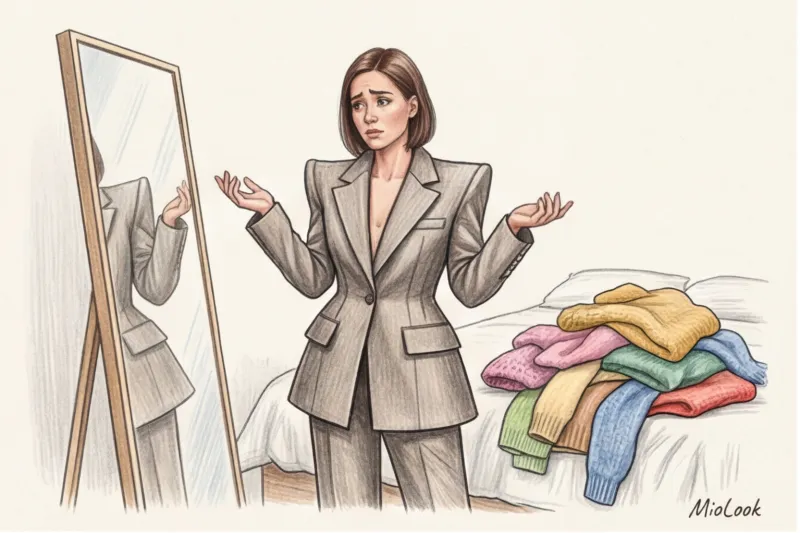
One of my clients, having received a long-awaited promotion to department director, decided to radically change her image. She bought a $1,400, tailored three-piece architectural suit to "look like a real boss." At her first major presentation in her new position, she bombed. She later confessed to me: "Sofia, I felt like a little girl who'd sneaked into my mother's closet. The outfit was perfect, but it paralyzed me." This is classic impostor syndrome, artificially induced by an overly radical change in visual code.
In the psychology of style there is a key concept - congruence (consistency between the outer and inner). Your clothes should be half a step ahead of your current state, gently pulling you along. But if they're a mile ahead, you'll start to suffocate trying to fit into an alien form. That's when the painful sensation of "being on someone else's shoulder" arises.
How to avoid this trap and introduce new roles without stress?
- Reduce formality through eclecticism. If a classic business suit makes you feel panicked and awkward, incorporate elements of your usual comfort zone into it. A great trick is to add business style sneakers Athletic shoes ground you in your overly strict attitude and give you back control of the situation.
- Use the status micro-dosing method. Let your new position be conveyed not by your entire outfit, but by one carefully chosen detail. This could be a high-quality watch, a prestigious bag, or bright accents in a strict look It's much easier for the brain to adapt to one new detail than to a completely alien uniform.
- Test the "armor" in a safe environment. Never wear an unusually high-status or complex item of clothing straight to a critical event. Wear your new suit around the house, or wear it for coffee on a weekend. Your nervous system needs time to synchronize the physical sensations of the new fabric and cut with your identity.
Clothing is your personal exoskeleton. It should protect and support you, not restrict your movement and make you doubt your right to occupy your place in the world.
Tactile Psychology: How Fabrics Change Body Chemistry and Mood
Our skin isn't just a protective shell, but a gigantic sensory interface covering approximately two square meters, laced with millions of nerve endings. Every millimeter of tissue in contact with your body continuously sends packets of data to your brain. That's why psychology of style It's not just about visual perception in the mirror. The way clothes physically feel directly influences our biochemistry. The data from neuroergonomics research (in particular, testing by the Hohenstein Institute) is relentless: constant tactile discomfort can reduce cognitive abilities and concentration by 20-30%. Your brain literally wastes energy processing irritating signals instead of solving work or creative tasks.
Let's talk about the "invisible enemy" of productivity—cheap synthetics. When you put on a 100% low-quality polyester blouse or a thick acrylic sweater, a greenhouse effect occurs on the surface of your skin. The fabric is impermeable and doesn't wick away natural moisture. The brain instantly interprets the localized increase in temperature and disruption of heat exchange as a physiological threat. In response, a micro-release of cortisol (the stress hormone) and adrenaline occurs. You may think you're feeling anxious about a difficult report or an upcoming meeting, but in reality, your nervous system is simply panicking, trying to survive in a kind of plastic bag.
As a textile specialist, I regularly see this pattern in practice. One of my clients, a top manager at an IT company, complained of crippling anxiety and tachycardia during public speaking. We analyzed her stage personas—the perfectly tailored but all-synthetic suits from mass-market brands that literally made her swelter under the spotlight. I suggested she invest $450 in a basic suit made of fine merino wool (super 120s) with added silk. At the next conference, she performed brilliantly. "For the first time, I didn't feel suffocated, my pulse was more regular, and my thoughts were clearer," she later said. The change in fabric normalized her thermoregulation, her brain stopped receiving panic signals from an overheated body, and the notorious impostor syndrome subsided.
Not only the composition but also the internal architecture of a garment is of great importance. Seam finish and the quality of the hardware are those hidden elements that can unknowingly ruin the most important negotiations. A scratchy nylon tag on the collar, a stiff overlock seam on the armhole, or a belt that digs into the waist are like Chinese water torture. It's no coincidence that premium garments use closed (French) seams or bias binding—a smooth backing conveys a safety signal to the brain. Unconsciously, you expend a colossal amount of energy ignoring the itch of poor finish. I always teach my readers: if an item scratches you in the fitting room, don't expect it to "break in" or become softer after washing. Leave it in the store; your mental health is worth more.
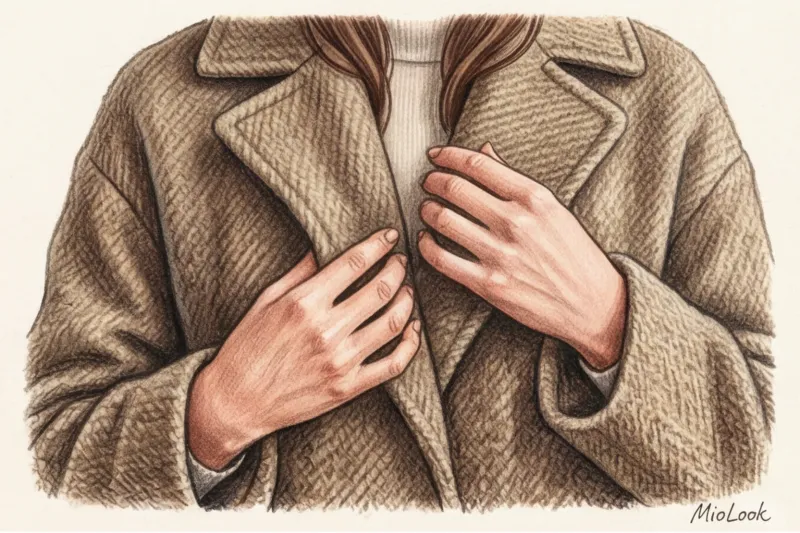
Unlike synthetics, high-quality natural fibers act as powerful sensory "soothes." The smooth protein structure of natural silk, long-staple premium cotton (pima or mako), and soft cashmere are highly biocompatible with human skin. They maintain an ideal microclimate, allowing the body to maintain a state of relaxed homeostasis. On days when background stress levels are off the charts, I recommend wearing a silk top or camisole as a base layer under any outfit, even the most formal. This hidden layer acts like an invisible sensory armor vest, providing a feeling of enveloping comfort and reducing anxiety.
Access to MioLook for €0.99 — one-time payment
Not sure which fabrics and silhouettes will help you feel more confident? MioLook's smart wardrobe will analyze your preferences and create a capsule wardrobe that perfectly matches visual aesthetics with physical comfort.
Get access — €0.99 onceThe effect of a weighted blanket in a wardrobe
You've probably heard of therapeutic weighted blankets, which sleep specialists and psychiatrists recommend for insomnia, ADHD, and anxiety. They work using deep pressure stimulation (DPS). The amazing news is that this same therapeutic principle works wonders in your closet. The density and weight of the fabric can radically alter how we feel throughout the day.
When we wear heavy, textured materials—structured English tweed, genuine raw denim (14 ounces and above), thick matte leather, or heavy, flowing silk—we create a clear physical boundary around our bodies. The weight of the fabric exerts a uniform proprioceptive pressure on the muscles, which the parasympathetic nervous system instantly interprets as a safe embrace. This stimulates the production of serotonin and dopamine, naturally mitigating inner turmoil and feelings of vulnerability.
I often use this styling tool for special occasions. If you're facing a day when you're feeling emotionally exposed (a difficult conversation with management, a project defense, an important presentation, or simply a period of burnout), avoid thin knits, flowy viscose, or shapeless soft cardigans. Soft, shapeless fabrics on such days can only exacerbate feelings of vulnerability. Opt for a thick cotton trench coat, jeans made of stiff denim, or a structured jacket made of heavy, shape-resistant wool. These garments will act as a protective exoskeleton. They will literally ground you, make you move a little slower, more dignified, and create a reliable psychological barrier between your inner world and external stimuli.
Color and Emotion: Going Beyond Banal Associations
Open any glossy magazine, and you'll almost certainly come across the blanket advice: "To exude confidence, wear red." As a practicing stylist, I strongly disagree with this one-size-fits-all recipe. Let's look at the situation through the lens of neurophysiology. Red has the longest wavelength in the visible spectrum; it physiologically causes pupils to dilate, drawing attention to you. If you're an introvert under intense stress before an important presentation, this extra attention will act not as armor but as a powerful anxiety trigger. Instead of the promised confidence, you'll only get a sharp spike in cortisol from the sensation of an imaginary spotlight. Imagine: you bought a striking scarlet jacket for $300, hoping to make a splash, but at the event itself, you unconsciously slouch and hide in a corner with a glass of water. The color has worked against you.
Similarly, dissonance arises when there's a conflict between a generally accepted cultural code and your personal history. Take all-black, for example. Historically, the fashion industry has imbued it with the status of impeccable elegance and intellectual power—recall the complex deconstructivist aesthetics of Rei Kawakubo or Yohji Yamamoto. On the pages of Vogue, black conveys status and unattainability. But what if, in your neural network, this color is inexorably linked to bereavement, funerals, or prolonged periods of apathy? Our brains are wired so that our personal emotional anchor always outweighs any cultural stereotypes. By putting on a "status" black suit, you unconsciously plunge yourself into a state of grief, wondering why you suddenly feel a loss of energy right in the middle of the workday.
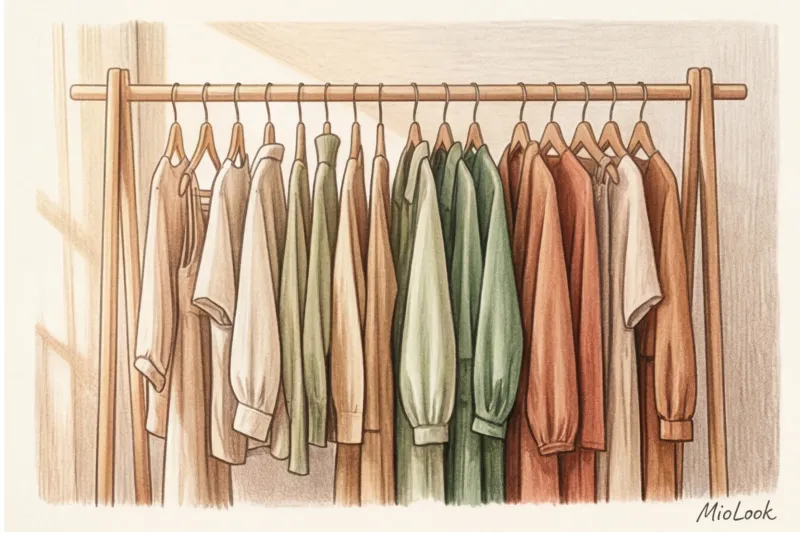
That's why, in my sustainable styling practice, I emphasize the therapeutic properties of eco-friendly shades. The fast fashion industry has accustomed us to oversaturated, hyperbolic colors created using harsh azo dyes. Such acidic garments not only harm the environment but also create a high level of visual noise, quietly draining the nervous system. Replace them with natural shades of undyed fibers: the color of raw linen, warm oatmeal, natural alpaca wool, or soft sage tones achieved with plant extracts (such as crappie or indigo). According to research by the Pantone Color Institute, such muted, earthy palettes mimic the natural environment. They physiologically lower the heart rate, calm the receptors, and help ground the body. I call this process a wardrobe detox.
Another powerful, yet often overlooked, tool is color temperature, which directly controls our perception of personal boundaries. Warm shades (terracotta, caramel, and baked milk) psychologically reduce distance. They act as a nonverbal invitation to dialogue, making you appear warmer and more approachable. They're an ideal choice for networking or a difficult conversation with a loved one. Cool tones, on the other hand, act like architectural glass. Icy blue, steel gray, or crisp white create a clear, almost tangible psychological barrier. If you're facing tough negotiations with contractors or simply want to avoid colleagues pestering you over trivial matters on a deadline, don't hesitate to wear a cool palette.
"Color is not just an optical illusion, it is an electromagnetic wave that interacts with our body long before we have time to comprehend it."
To stop blindly following other people's color rules, start monitoring your own bodily reactions. I always suggest my clients use the "smart wardrobe" feature in MioLook For a little experiment. For a couple of weeks, take photos of your outfits and add short notes about your emotional state. Which shades made you feel protected, and which ones left you exhausted by the end of the day? These personal statistics will give you keys to managing your mood, and they will be far more valuable than any trendy horoscope.
The Geometry of Confidence: How Silhouette and Fit Shape Self-Esteem
In architecture, straight lines convey stability and monumentality, while soft, fluid forms convey adaptability and vulnerability. According to the Institute of Color and Form (2023), our brain reads the geometric proportions of an object in just 150 milliseconds. The same laws of physics apply to our wardrobe: the silhouette of a garment is the first nonverbal message we send to the world and, more importantly, to ourselves.
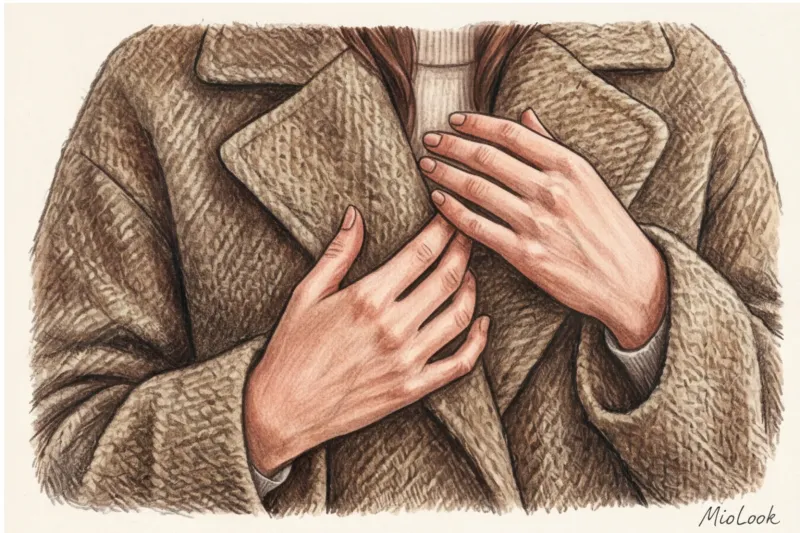
Take, for example, total oversize. Hoodies three sizes too big and wide joggers are often presented by mass-market brands as a manifestation of freedom and relaxation. However, the applied psychology of style reveals a more complex picture. Over the years of clearing out my closets, I've identified a clear pattern: periods of intense need to wrap myself in shapeless garments almost always coincide with a desire to become invisible. Baggy clothes act as a safe cocoon, a reliable physical barrier between a vulnerable person and a hostile environment. It's an excellent therapeutic tool for days when emotional resources are completely absent. But if such a silhouette becomes your sole base 24/7, you risk getting stuck in energy-saving mode, losing social expression and contact with your own body.
Structured pieces create contrast. Jackets with defined shoulders (especially with thick shoulder pads), crisp poplin shirts, and trousers with crisp, pressed creases create a true psychological exoskeleton. Form literally "holds" you up when you can't hold yourself up. When one of my clients, a brilliant IT analyst, was preparing for difficult negotiations with the board of directors, we ditched her usual soft cardigan for a tailored double-breasted blazer made of thick worsted wool. This architectural armor didn't just make her stand up straight. The sharp angles of the cut helped her physically and psychologically occupy more space in the meeting room, which her opponents unconsciously interpreted as unshakable confidence.
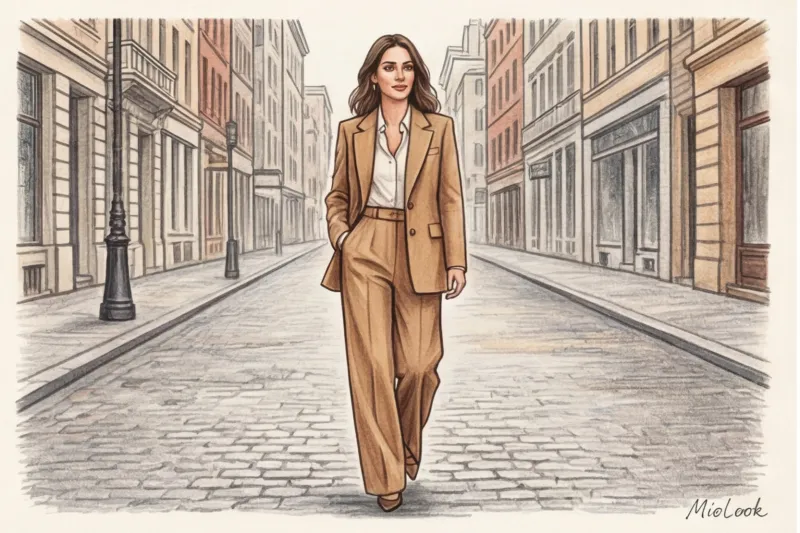
But even the most ingenious design is shattered by the wrong size. My personal styling philosophy has an ironclad rule: never buy something in the hopes of losing weight. Keeping "motivational" jeans or dresses two sizes too small for your current size on display isn't a motivator. It's a daily psychological microtrauma. Every time you open your closet door, you receive a painful, unconscious reproach. Your own clothes are telling you, "You're not good enough right now; you need to be fixed." This background visual stress destroys self-esteem far more effectively than any external critic, triggering cortisol surges right from the morning.
Here we come to the main secret of visual luxury. What truly looks "expensive" isn't a loud, heavyweight luxury logo, but a flawless fit. A pair of basic, mass-market trousers for €50, professionally tailored to your individual proportions (which will cost another €15-20), will always look more prestigious than an €800 designer item that's treacherously bunched at the crotch or tight at the shoulders. Shortening the sleeves just to the wristbone or trimming the waist—these small adjustments can work wonders. A perfectly tailored garment is an act of profound self-respect. It sends a powerful, constructive message to the brain: "I am worthy of care right now, at this weight and in this shape."
Access to MioLook for €0.99 — one-time payment
Start creating perfect images with the help of artificial intelligence
Get access — €0.99 onceThe Psychology of Conscious Consumption (Sustainability): A Guilt-Free Wardrobe
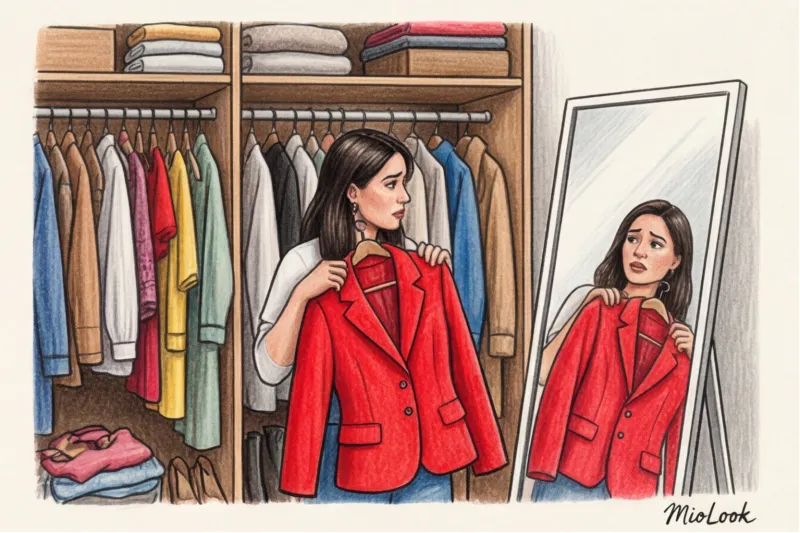
Are you familiar with the situation: you're standing in front of a closet literally spilling out clothes, but the thought pulsating in your head is, "I have absolutely nothing to wear"? This isn't just a woman's whim, as is commonly joked in popular culture. In consumer psychology, this state is closely linked to the phenomenon fast fashion guilt - a hidden, often unconscious feeling of guilt for purchasing disposable, impulsive things.
Every time your eye catches a $15 top that lost its shape after the first wash, or a skirt with crooked seams bought in a shopping frenzy on sale, your brain registers a micro-defeat. It's a shame to throw it away—the money's already been spent, and wearing it is physically unpleasant. This invisible emotional baggage accumulates on hangers for years, generating constant background anxiety and underlying self-dissatisfaction.
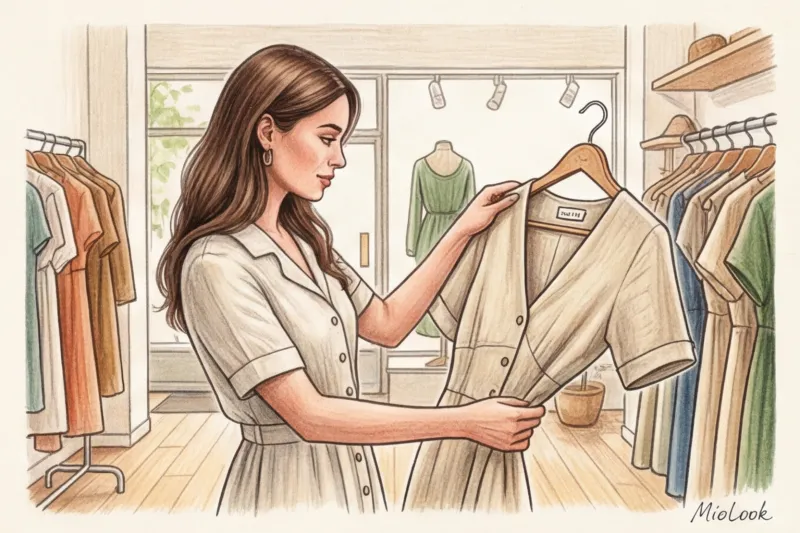
The shift to sustainable fashion is perhaps my most important professional manifesto. Over the years, I've become convinced that the quality of your wardrobe directly reflects your level of self-worth. When we consciously ditch five questionable polyester sweaters in favor of a single, impeccably tailored and ethically produced organic wool sweater for $180, we send a powerful message to our psyche: "I am worth wearing the best. My body deserves respect and comfort, not itchy, disposable synthetics."
Investing in quality items created with care for artisans and the planet transforms us from passive, perpetually hesitant consumers into confident curators of our own lives. You begin to wear clothes with dignity, because every detail of your look has every right to be there.
Surprisingly, even the process of caring for such clothing has a pronounced therapeutic effect. While throwing away a cheap, torn T-shirt costs nothing (except another dose of guilt), gently hand-washing a silk blouse with a special eco-friendly shampoo, removing pilling from a favorite cashmere cardigan, or having expensive leather shoes repaired by a skilled tailor become metaphors for deep self-care. By mending a small, torn seam on a perfectly fitting garment, you literally "patch" your inner state, slow down, and practice mindfulness in the moment. You learn to appreciate what you have and protect your personal boundaries, instead of chasing the neurotic illusion of novelty to the nearest mass-market store.
But let's get back to the overflowing closet. A cluttered wardrobe isn't just an aesthetic or spatial issue; it's a major hidden trigger for your morning burnout.
According to the seminal research of social psychologist Roy Baumeister, our cognitive reserve and ability to make adequate decisions are severely limited. This phenomenon is called decision fatigue (decision fatigue).
When your morning starts with sifting through dozens of ill-fitting, itchy, tight, or guilt-inducing items (the classic "paradox of choice"), you deplete your mental reserves before you even brew your first cup of coffee. That's why I always insist on digitalization and a ruthless closet audit.
Leaving only those things that truly make you happy and support you, and transferring them to the "smart wardrobe" feature in MioLook , you delegate your visual routine to algorithms. The app allows you to create capsules and plan your looks for the week ahead, preserving your precious cognitive resources for truly important career or creative tasks, rather than a grueling battle with your clothes at 7:30 a.m.
Archetypes and Roles: How Clothing Helps You Adapt
Carl Gustav Jung likely didn't think about styling when he developed his theory of archetypes in the early 20th century. However, today his concept has become one of the most precise tools for managing personal image. When building a functional wardrobe, the 12 classic Jungian behavior patterns serve not as rigid templates, but as a flexible framework.
My main goal as a stylist is to help clients "unpack" their multifaceted personality through fabric texture, cut lines, and micro-details. For example, we can express the "Aesthete" archetype not through banal lace, but through flowing 19-mommie silk that drapes over the figure, conveying sensuality on a deep tactile level. We discussed the mechanics of this process in more detail in our The Complete Guide to Archetypes and Personal Branding.
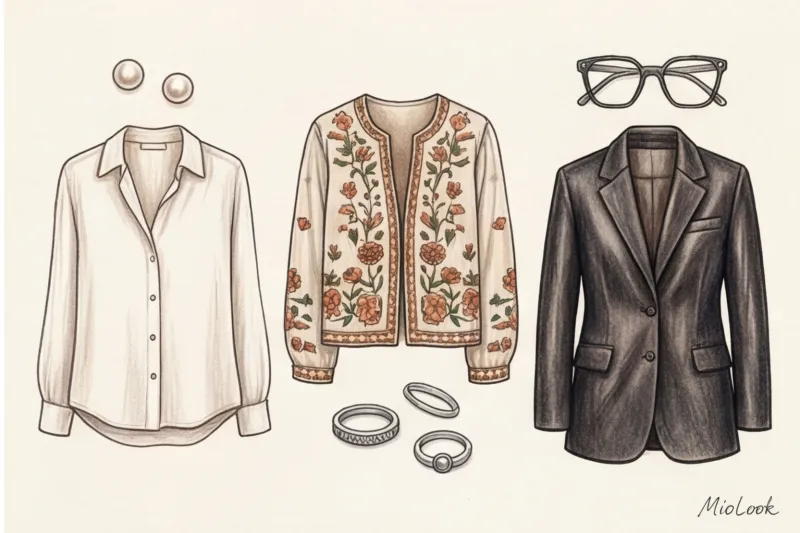
Perhaps the most exciting part of my work is the stylistic integration of Jung's "Shadow." This is the essence of applied style psychology: clothing helps us to repress our inner selves in a sustainable and safe way. A classic case from my practice: the head of the legal department, locked for years in the "good girl" image and the "Caregiver" archetype. During a consultation, she admitted to a severe lack of inner freedom and spontaneity. We didn't disrupt her business dress code, but delicately introduced elements of grunge. A formal cashmere suit was complemented with chunky Dr. Martens-style boots for €220, and a faux-distressed T-shirt was layered under a perfectly tailored blazer. This hidden "Rebel" aesthetic became her personal release valve for corporate tension.
It's these kinds of things that turn into things over time. wardrobe anchors These are garments that, through their weight, shape, or cultural code, instantly shift you into the desired state. A stiff, starched poplin shirt collar acts as a trigger for extreme focus for the "Ruler." A voluminous, chunky knit cardigan is an anchor for total relaxation and security. And the complex, asymmetrical cut of conceptual Japanese brands like Yohji Yamamoto physically forces you to move differently, igniting the creative process in the "Creator."
Neuroscience confirms this phenomenon: if you wear a specific jacket only before successful presentations, after 5-7 repetitions, your brain will inexorably associate the thickness of that jacket with a dopamine release and self-confidence. To manage these states consciously, I recommend my readers digitize their "anchors." Create them in the app. MioLook separate capsules for psychological tasks: from a set "for protecting personal boundaries" to a selection "for generating ideas."
Your ideal image
it begins Here
Join thousands of users who look flawless every day with MioLook.
Get access — €0.99 onceWardrobe Therapy: A Practical Checklist for Auditing Your Emotions
Let's get this straight: the ideal closet isn't one where your clothes are arranged in a rainbow of colors, like those Photoshopped Pinterest boards. From a neuroscience perspective, your closet is a closed ecosystem that should function like a personal psychological first aid kit. According to research Journal of Consumer Psychology (2022), people who consciously manage the semantics of their belongings experience 40% less background morning anxiety associated with fear of social judgment.
To transform the chaos of fabrics and silhouettes into a resourceful space, we need a deep review. Below is the algorithm I use in individual sessions. It's a step-by-step plan for analyzing your closet through the lens of psychology, temporarily ignoring rational arguments about cost or trendiness.
Exercise "Joy and Comfort Index"
Forget about coloristics rules and color types. Right now, we're solely interested in your physical and emotional response. Take out all your belongings and run each one through a double filter, which I call the "Joy and Comfort Index" exercise. Rate each item from 1 to 10 on two independent scales:
- Joy (Emotional charge): What memories does this piece evoke? Does it make you feel competent, seductive, or free? Does it make you smile?
- Comfort (Tactile safety): Is the waistband tight? Is the collar itchy? How comfortable is the fabric against your skin at the end of a long, stressful day?
The rule here is unwavering: if an item scores less than 15 points overall, it has no place in your active arsenal. Even if it's an iconic, basic trench coat from Burberry for €1,800, if you feel constrained in it, it will sap your energy every day.
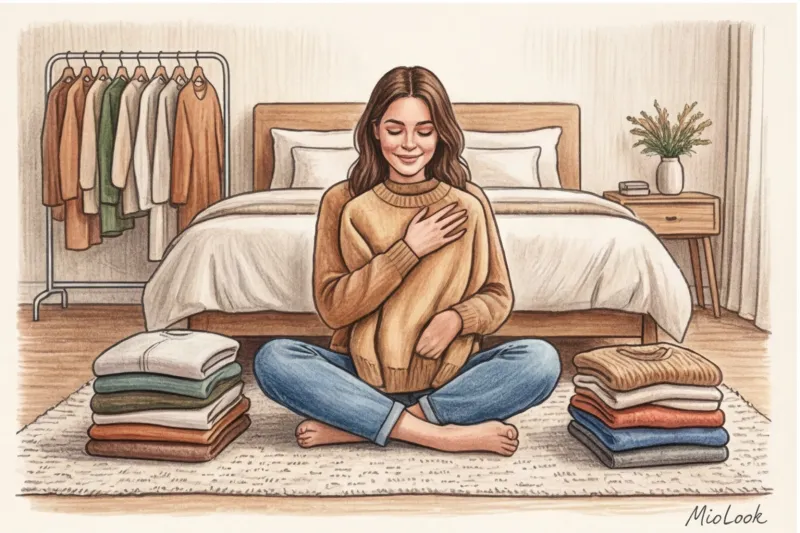
A ruthless breakup with a "toxic" wardrobe
In cognitive behavioral therapy, there's a concept called "negative anchoring." Your closet probably contains such time bombs. Complete and unconditional rejection of “toxic” things is the most painful, but also the most effective stage of the audit.
"Clothing has a phenomenal memory. Fabric absorbs not only perfume but also the biochemistry of our stress, cementing traumatic experiences into neural pathways."
While working with one of our clients, we discovered a luxurious wool coat she'd never worn but couldn't bear to throw away. It turned out she'd bought it the day she was laid off. It hung in plain sight for two years, and every time she accidentally brushed against it, she'd experience a mini-attack of apathy. What needs to be immediately discarded (or donated to charity):
- Clothes given to you by people with whom you had a painful breakup (that scarf from your controlling ex).
- Things purchased during periods of severe crisis, burnout or prolonged illness.
- "Reproach dresses" are clothes that are two sizes too small and serve only to remind you daily that you don't live up to your ideal.
Emotional capsules and digitalization
Once you've cleared the space of negative anchors, the remaining clothes need to be reassembled. I strongly recommend abandoning the banal "work/weekend/home" division. Instead, start thinking in terms of personal states.
To avoid having to remember these complex combinations, you need to visualize them. You can use the app MioLook To create emotionally comforting capsules. Photograph items that have passed your rigorous audit, upload them to the system, and create collections based on specific psychological needs. For example, create a capsule called "Armor for Tough Negotiations" (jackets with a clear shoulder line, thick silk) or a tag called "Protective Cocoon" (heavy cashmere, enveloping silhouettes for days when you feel vulnerable).
Clothes are your closest interface with reality; they cling to your skin more closely than any other object in the world. By stopping treating your wardrobe as a warehouse of random purchases and starting to perceive it as a control panel for your state of mind, you regain a tremendous amount of resource. After all, true style doesn't begin on the catwalk, but at the moment when your inner sense of self completely aligns with what you wear on your body.
Guide Chapters
The Psychology of Oversized Clothing: Why We Wear Baggy Clothes
Oversized clothing is no longer just a trend. We explore how a love of oversized clothing helps us establish personal boundaries and protect ourselves from stress.
The Impact of Loungewear on Remote Work Productivity
Constant fatigue while working remotely can be directly related to your pajamas. We explore how your home wardrobe blurs personal boundaries and sabotages your career.
The Psychology of Decluttering Your Wardrobe: Why It's Hard to Say Goodbye
Why is the popular rule "if you haven't worn it for a year, throw it away" hopelessly outdated? We explore the true reasons behind our attachment to old clothes.