You're standing in front of an open suitcase, packing for Rome, Paris, or Barcelona. Your hand instinctively reaches for your favorite pair of heavy jeans and trusty running shoes. Stop. As a personal stylist, I see this mistake every spring and summer. We're used to thinking that comfortable clothes for excursions — is a synonym for old, stain-resistant items that "you don't mind getting rid of." But let's be honest: you don't fly thousands of kilometers to look like you're about to dig potatoes at your dacha against the backdrop of the Louvre or the Colosseum.
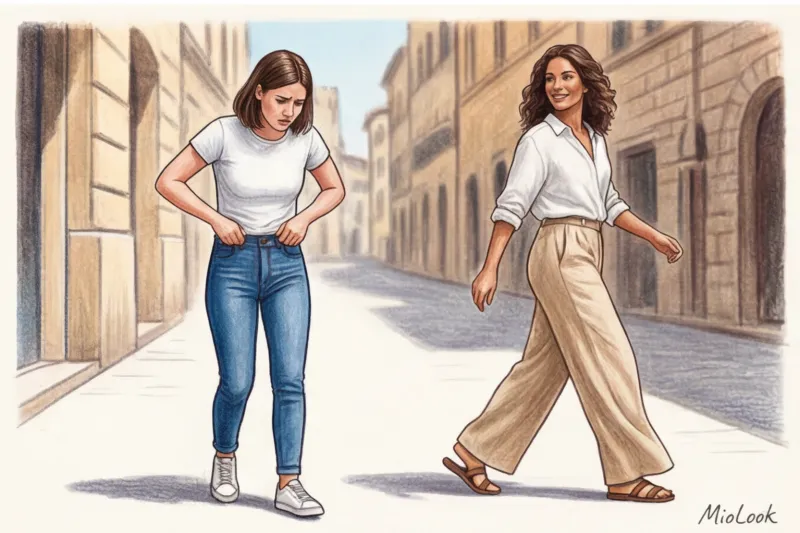
Over 12 years of work, I've developed the perfect formula for "tourist chic" (or Mediterranean flair). It's the art of looking like a million bucks while walking 20,000 steps a day and feeling as comfortable as in your favorite pajamas. The secret lies not in tracksuits, but in clever silhouettes and the right fabrics.
Why comfortable clothing for excursions doesn't mean old jeans and a tracksuit
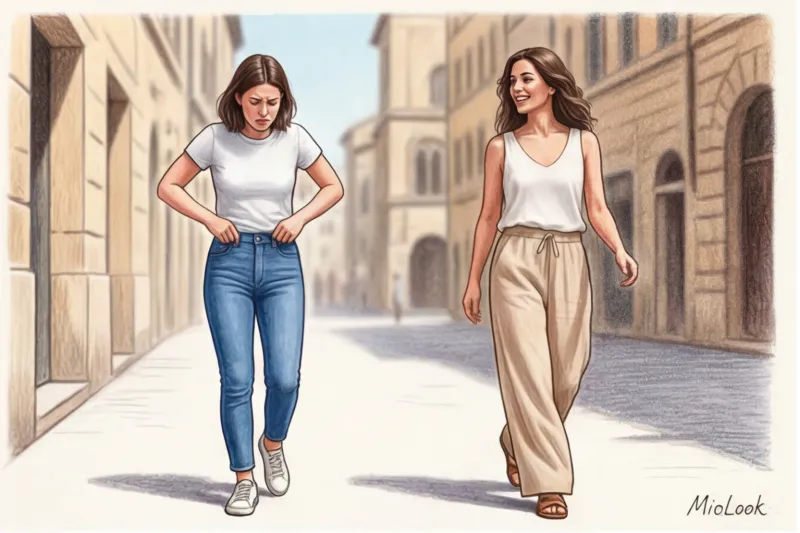
Let's start by debunking the biggest hiking myth. Jeans are the worst clothing for long walks. Contrary to popular belief, stiff denim becomes your enemy after just five kilometers.
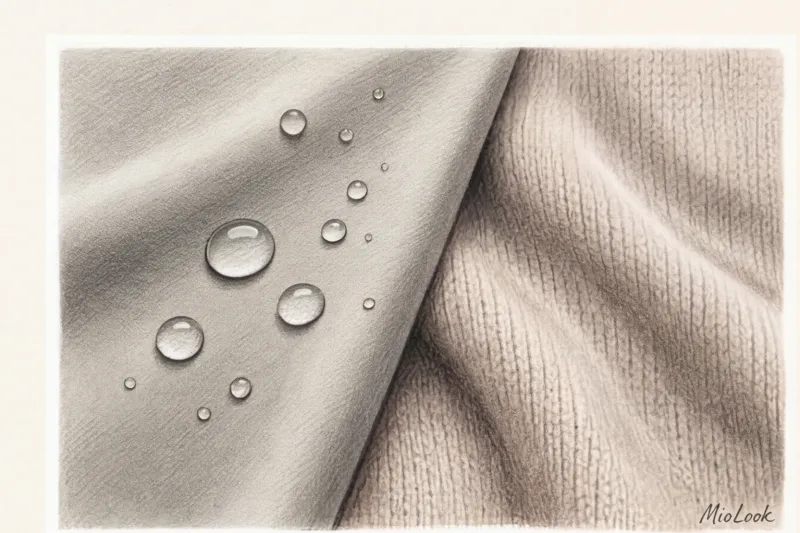
Classic jeans weigh around 700–800 grams. By comparison, loose-fitting trousers made of Tencel or linen blend weigh only 200–250 grams. That half-kilo weight difference translates into a leaden weight on your legs by the end of the day. Furthermore, the tight seams of denim inevitably chafe your skin during long walks, the fabric is completely breathable in hot weather, and if you're caught in a sudden European downpour, your jeans will take hours to dry, turning into a heavy, icy shell.
Sportswear (leggings, hoodies, running windbreakers) is the other extreme. It's technical, but it completely ruins the aesthetics of a city trip. A tracksuit is appropriate in the mountains or on a run, but it looks out of place in the interiors of an old palazzo or at a table in a Parisian bistro.
"True elegance requires no sacrifice. Walking 15,000 steps around the city is a full-fledged cardio workout, but you need to do it with dignity, choosing clothes that work for you, not against you," says Isabella Garcia.
Access to MioLook for €0.99 — one-time payment
A smart AI stylist will help you find the perfect look for your next trip.
Get access — €0.99 onceThe Three-Layer Rule: How to Adapt to Weather and Air Conditioning
I'll never forget my first "professional" mistake in Rome. It was 35°C outside, and I was wearing what I thought was the perfect low-cut silk dress with thin straps. That is, until we reached the Vatican. The cathedrals' strict dress code requires covering the shoulders and knees. I had to buy a synthetic scarf from street vendors to cover my shoulders, and inside the powerful air-conditioned museums, I was frozen to the bone.
Since then I have been implementing it for all my clients. three-layer rule The secret of Italian fashionistas is their preparedness for sudden temperature changes.
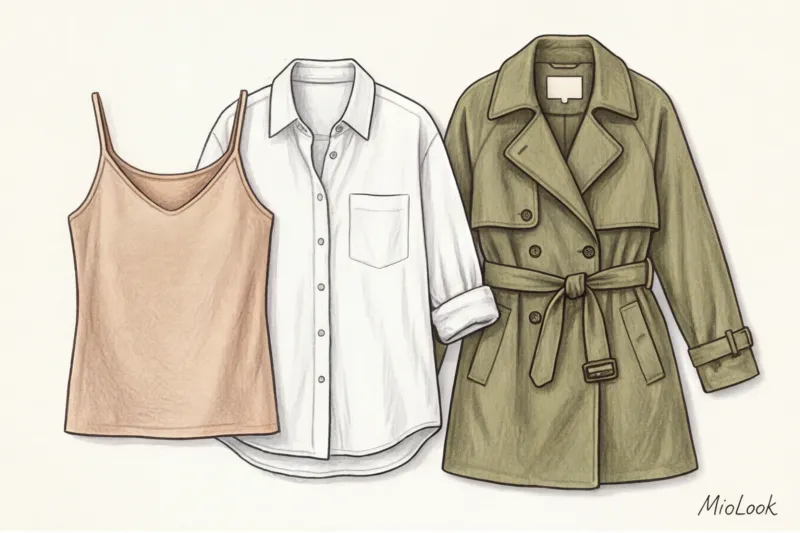
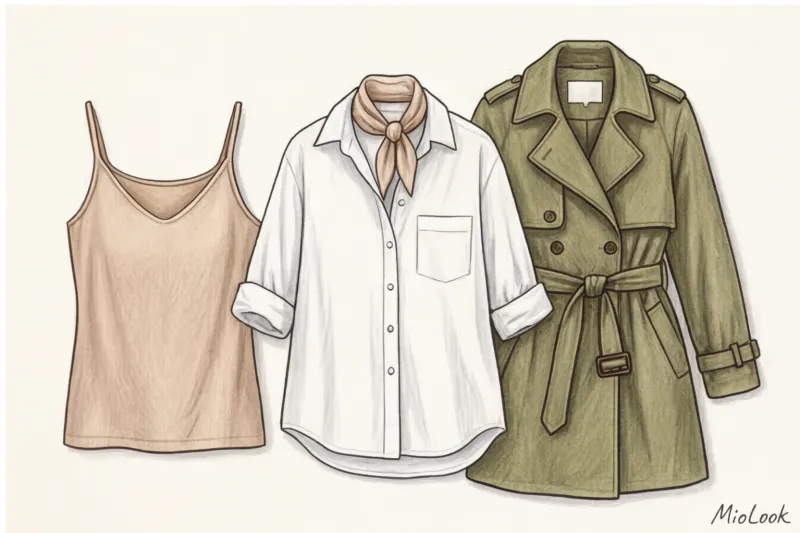
- Base layer: Top or tank top. Avoid 100% cotton! According to research by textile institutes, cotton absorbs moisture but dries extremely slowly. After sweating outside, you'll instantly freeze in a wet tank top in an air-conditioned museum. Choose silk, viscose, or micromodal—they wick away moisture and keep your skin cool.
- Middle layer: A loose shirt. My favorite is a linen-blend shirt (linen and viscose). It protects your shoulders from the scorching sun, keeps out drafts, and fits any church dress code.
- Top layer: A lightweight trench coat made from wrinkle-resistant fabric or a safari jacket that can be rolled up compactly and stowed in a bag without worrying about creasing.
Long-distance walking shoes: 20,000 steps without blisters or compromises on style
Shoes are the foundation of your excursion. And herein lies the most dangerous pitfall. Many girls, eschewing heels, go to the opposite extreme: wearing completely flat ballet flats, sneakers with thin rubber soles, or beach flip-flops.
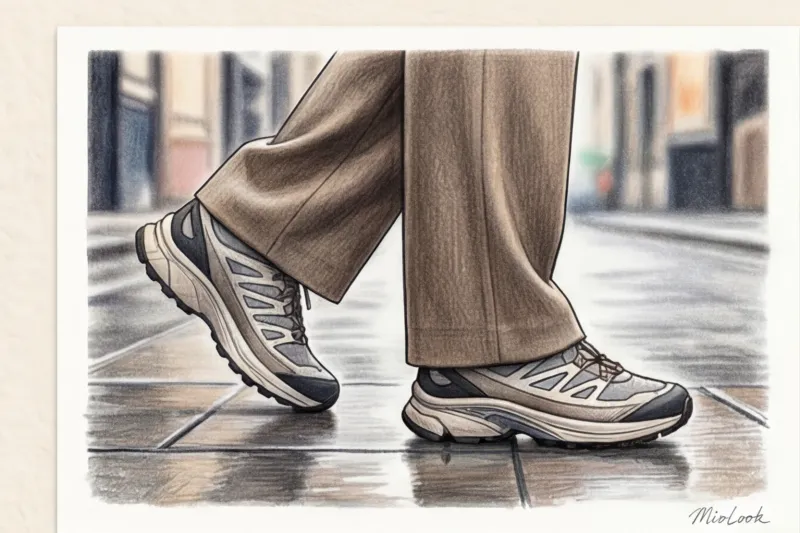
According to the Institute of Orthopedics and Sports Medicine, prolonged walking on hard surfaces (especially historic cobblestones) in flat shoes leads to microtrauma to the joints and inflammation of the plantar fascia. Your foot requires a 2-3 centimeter heel-to-toe drop and good cushioning.
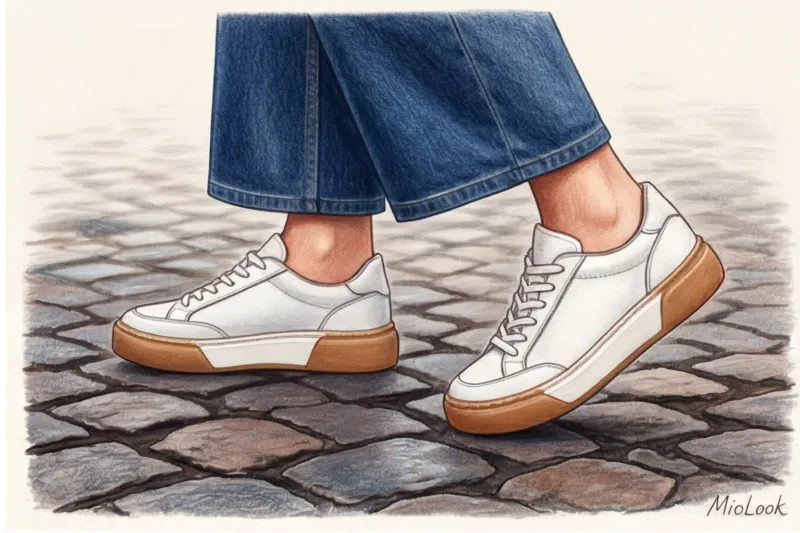
One of my clients, Elena, complained that after two days in Florence, her feet were literally "falling off" in her expensive running shoes. The problem was that running shoes were springy when running, but didn't stabilize the foot when walking slowly over uneven rocks. We replaced them with orthopedic leather loafers with a thick EVA foam sole. The result? 20,000 steps the next day and not a single complaint.
The golden rule of a stylist: Never, under any circumstances, wear brand-new shoes on a trip. Every pair should be tested at home for at least three days.
Your perfect look starts here
Join thousands of users who look flawless every day with MioLook. Put together a vacation capsule in 5 minutes.
Get access — €0.99 onceReady-made image formulas for different types of excursions
Comfortable clothing for sightseeing should be context-appropriate. What works perfectly in the ruins of the Acropolis will look odd in the center of autumnal London. Here are my tried-and-true formulas: "item + item = result."
Hot countries and ancient ruins (Greece, Italy, Spain)
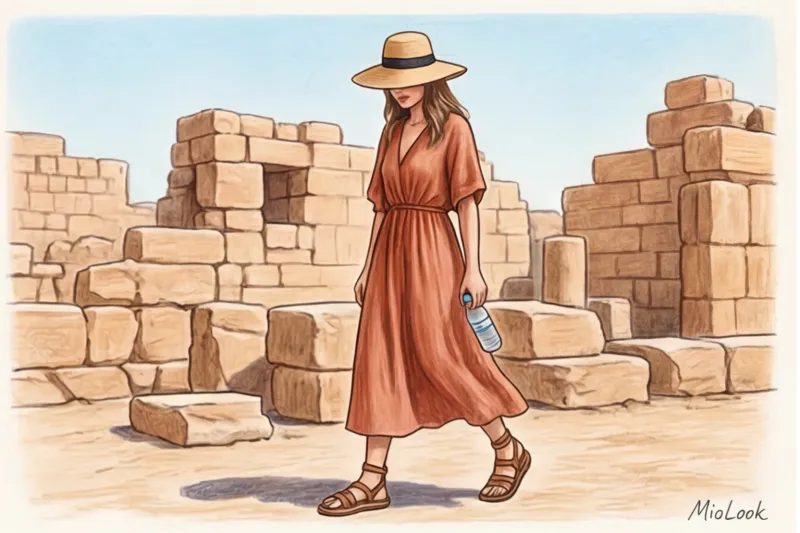
Formula: Linen blend midi dress + sandals with thick anatomical soles + wide-brimmed straw hat.
Why it works: 100% linen wrinkles easily, but the addition of 20-30% viscose maintains breathability while allowing the dress to flow. The midi length protects the hips from the sun and dust (and allows you to sit comfortably on stone parapets), and the hat protects your face from photoaging. This is the perfect occasion when you look like a heroine from an Italian movie but feel completely relaxed.
European capitals and cobblestones (Paris, Prague, London)
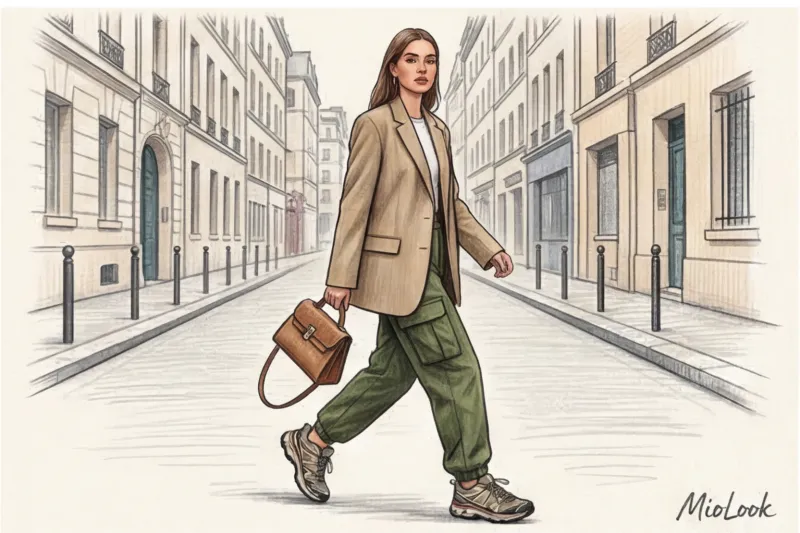
Formula: Wide palazzo trousers made of a wrinkle-resistant fabric (for example, thick jersey or Tencel) + a basic T-shirt made of thick cotton (from 180 g/m²) + a loose-fitting city jacket + loafers.
In such cities, the tour flows seamlessly into dinner. This formula allows you to look appropriate in a fine restaurant immediately after a four-hour walking tour. A jacket instantly ties the look together, adding a touch of class, while wide trousers allow for unrestricted movement when boarding the tour bus.
Boat trips and the windy coast
Formula: A thick cotton sailor shirt + loose chinos + windproof anorak or light parka + sailor shoes (topsiders) or leather sneakers.
The main enemy here is the piercing sea breeze and spray. Layering saves the day: if the sun comes out, the anorak can be easily rolled up, leaving you with a classic nautical look that never goes out of style.
Bags and Backpacks: How to Free Your Hands and Protect Your Items from Pickpockets
Even the most comfortable hiking clothes won't save you if your shoulder is sagging from a heavy bag. Large, open shoppers and heavy, one-shouldered totes guarantee asymmetrical strain on your spine. By evening, your neck will ache and your mood will be ruined.
Moreover, in cities like Barcelona or Rome, an open shopping bag is an invitation to pickpockets. I once had a client lose her wallet on Las Ramblas simply because her tote bag was dangling from her back while she was taking photos of Gaudí.
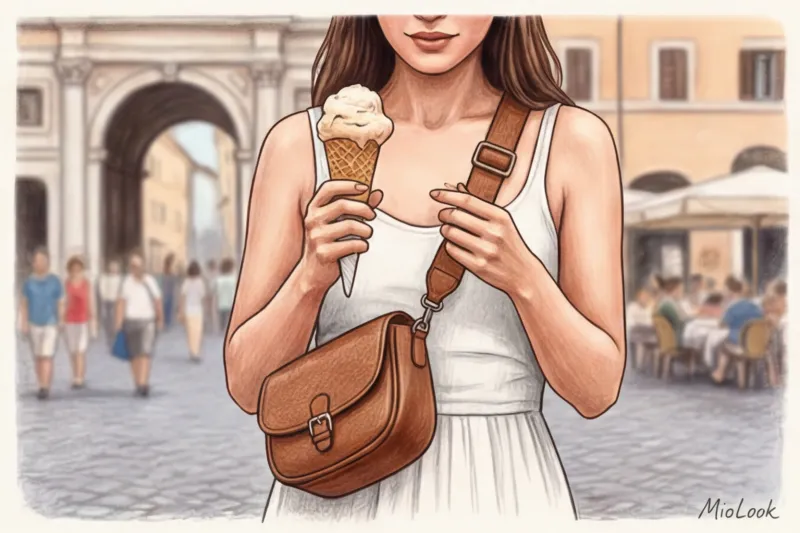
What to choose:
- Crossbody bag: The perfect choice. It hangs in front, always in your line of sight, frees up both hands (one for gelato, one for your phone), and distributes the weight evenly.
- City backpack: Choose models made of nylon (they weigh nothing on their own) or soft leather, with a secret pocket on the back for a passport and cards.
Bring only the bare essentials: your phone, power bank, hand sanitizer, lipstick, sunglasses, and a small bottle of water. Leave everything else in the hotel safe.
Ready to get started?
Try the MioLook free plan—no commitments required. Digitize your wardrobe and plan your looks in just a few clicks.
Get access — €0.99 onceStylist checklist: what you absolutely shouldn't wear on a tour
Experience comes with mistakes, but it's better to learn from others' mistakes. Here's a list of items that don't belong in your excursion wardrobe:
- Clothes made of 100% polyester. Cheap synthetics create a greenhouse effect. You'll sweat, the fabric will stick to your skin, and the smell will develop within a couple of hours. Save polyester for evening outings for a couple of hours, but not for a full day in the sun.
- Light-colored floor-length trousers. They look luxurious on Pinterest, but in reality, they'll collect all the dust, dirt, and puddles from city streets. By lunchtime, the hem of the trousers will be an untidy gray fringe.
- Complex jumpsuits (rompers). Imagine a tiny public restroom stall in an old European cafe. Now imagine having to strip almost completely naked to use it. Overalls are cute, but completely impractical.
- Massive jingling jewelry. Large metal necklaces or heavy earrings can be tiring. The metal heats up in the sun and pulls at your earlobes. Replace them with stylish yet subtle accents: a silk scarf or quality sunglasses.
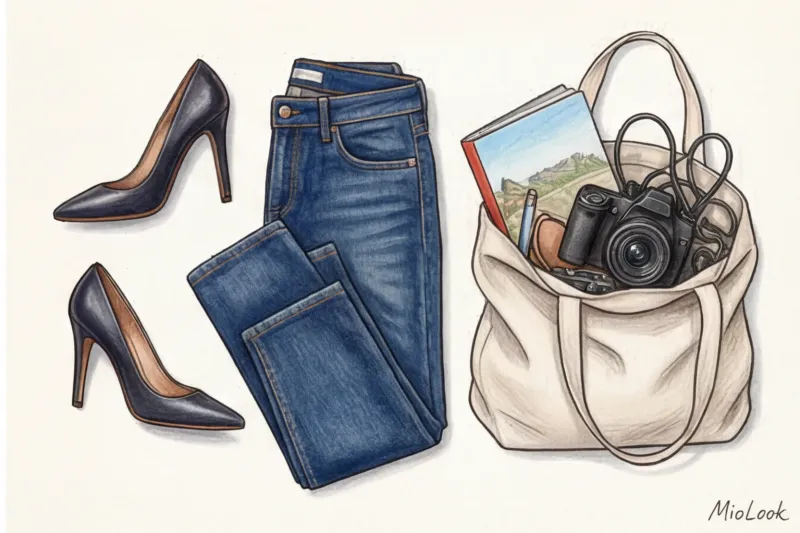
To be fair, I would like to point out: My advice is geared toward urban and easy nature excursions. If you're planning a hardcore 30-kilometer mountain trek, forget about Tencel and loafers—you'll need specialized hiking gear and membrane fabrics from sporting goods stores.
Summary: Creating the perfect excursion capsule in the MioLook app
The secret to a lightweight suitcase and versatile looks lies in the rule of compatibility: 1 bottom = 3 tops When choosing the perfect pair of pants or skirt, make sure they're complemented by at least three different blouses or T-shirts from your luggage. This will allow you to look different in photos every day without weighing down your back with excess baggage.
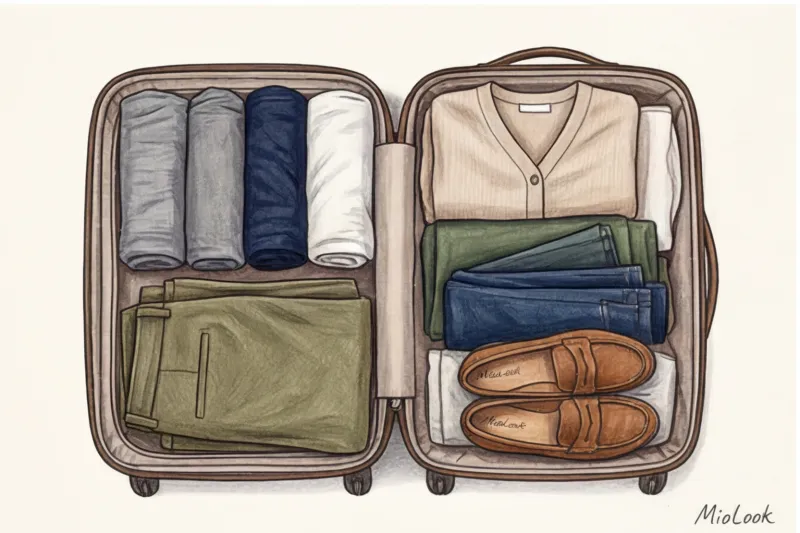
To avoid bringing along "what if" items (which are never needed), I recommend my clients plan their capsule in advance. This is a great help. MioLook app You can take photos of your items, upload them to a virtual wardrobe, and a smart AI stylist will help you put together the perfect outfits, taking into account the weather forecast in your destination city and your itinerary (from morning museums to evening restaurants).
Comfortable clothing for excursions isn't a compromise between beauty and comfort. It's a respect for yourself, your body, and the aesthetics of the places you visit. Leave the heavy jeans at home, opt for breathable fabrics and the right footwear, and let the only fatigue you feel at the end of the day be from the overabundance of wonderful impressions!