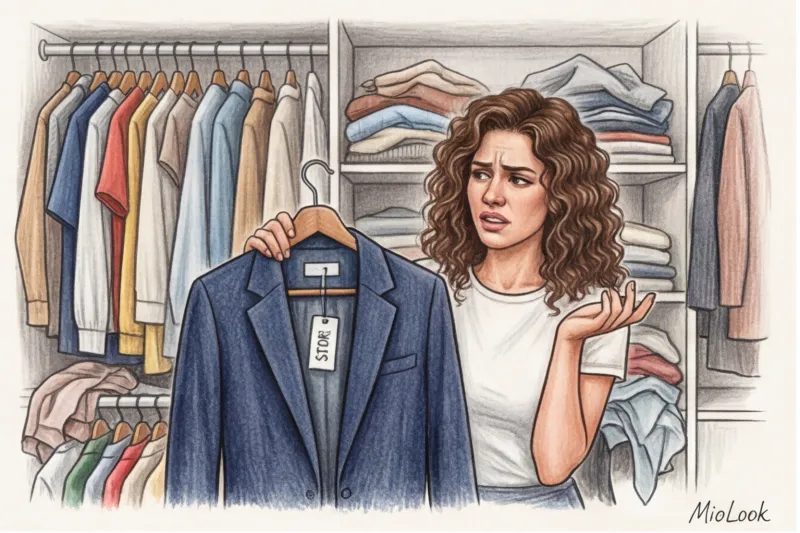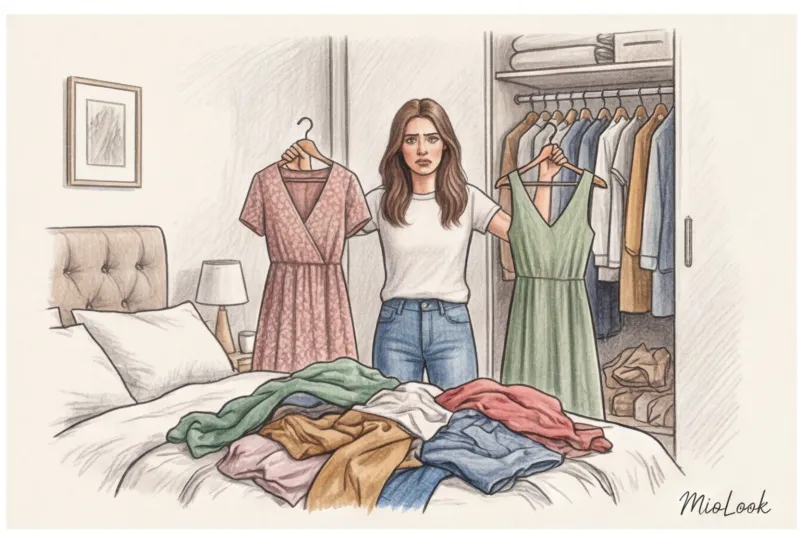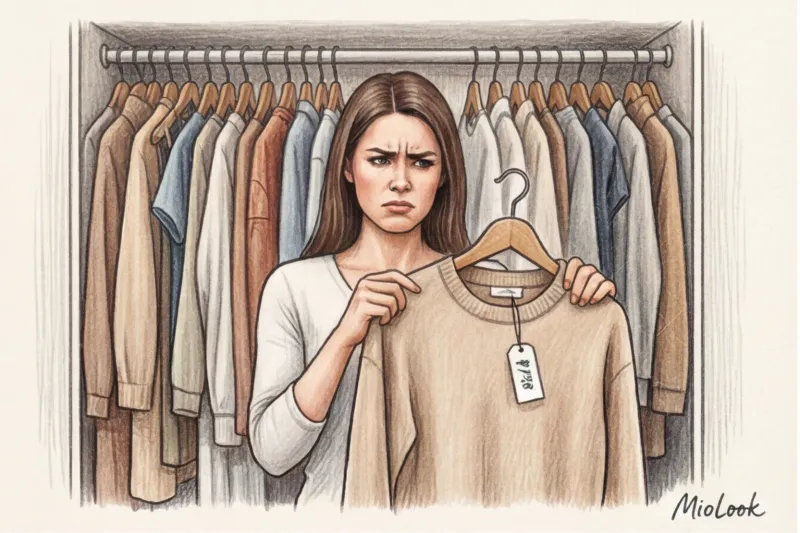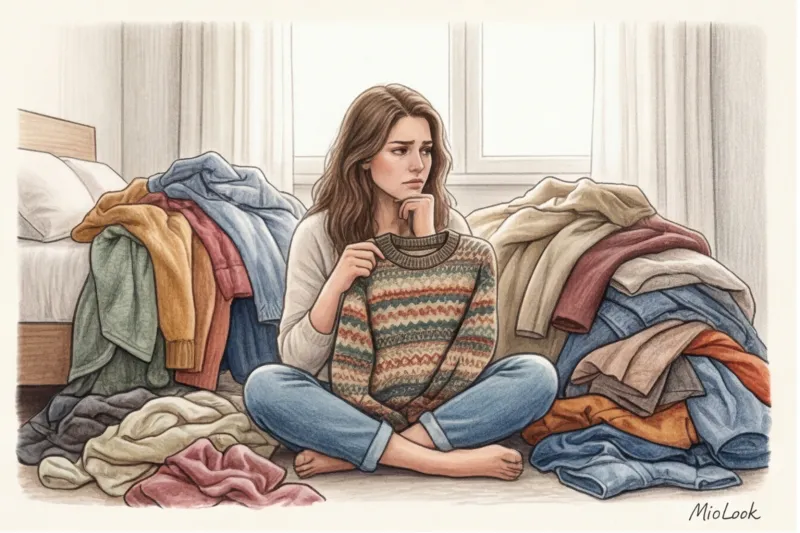
You're standing in front of an open closet, holding a thick plastic bag, and suddenly you feel... an insurmountable resistance. Your hands refuse to put anything in there. Sound familiar? In 12 years of working as a stylist, I've seen this reaction hundreds of times. We're fairly comfortable parting with books we've read or old dishes, but when it comes to sweaters and jeans, our brains go into overdrive.
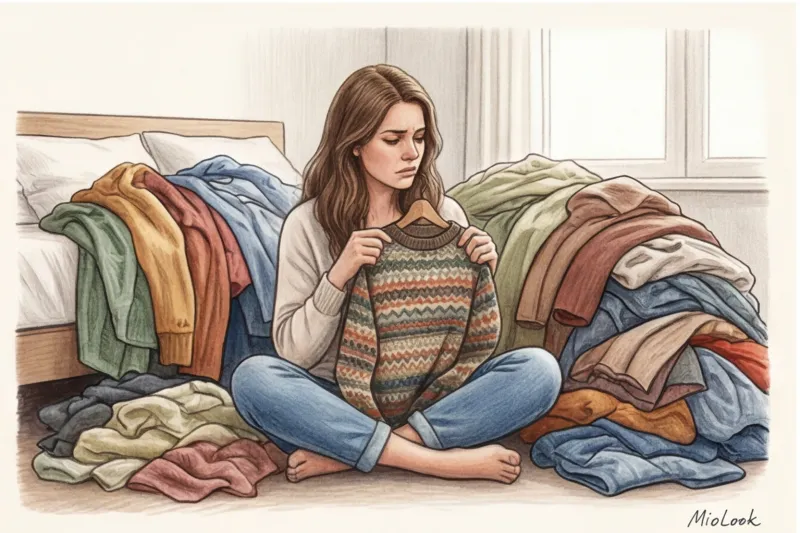
Deep the psychology of decluttering your wardrobe is that the physical action of putting something in a trash bag is perceived by our psyche as an act of aggression against ourselves. In our a complete guide to the psychology of style We've discussed in detail why fabric has such power over us and how it changes our mood. But today I want to talk about the flip side of this process—saying goodbye. And I'll start with a counterintuitive statement: the popular minimalist rule "if you haven't worn it for a year, throw it away" is not only outdated, it's detrimental to a quality wardrobe and the environment.
The Psychology of Decluttering Your Wardrobe: Why Our Brains Cling to Fabric
To understand why we find cleaning out our closets so difficult, we need to delve into behavioral economics. Nobel laureate Daniel Kahneman described the "endowment effect" in detail. The essence of this phenomenon is simple: we value an object significantly more than its actual market value simply because we own it.
In the wardrobe, this effect is multiplied by the "sunk cost fallacy." I had a client, Elena, who kept a pair of bright pink pumps in her closet that cost €500. She hadn't worn them for five years—the last was unbearably narrow. But every time we tried to get rid of them, she remembered the money she'd spent. Her brain refused to acknowledge that €500 was worth it. already lost, and storing the shoes on the shelf will not return that money to your bank account.
"The more expressive their texture, the more strongly we become attached to things. Textiles are a physical medium of memory."
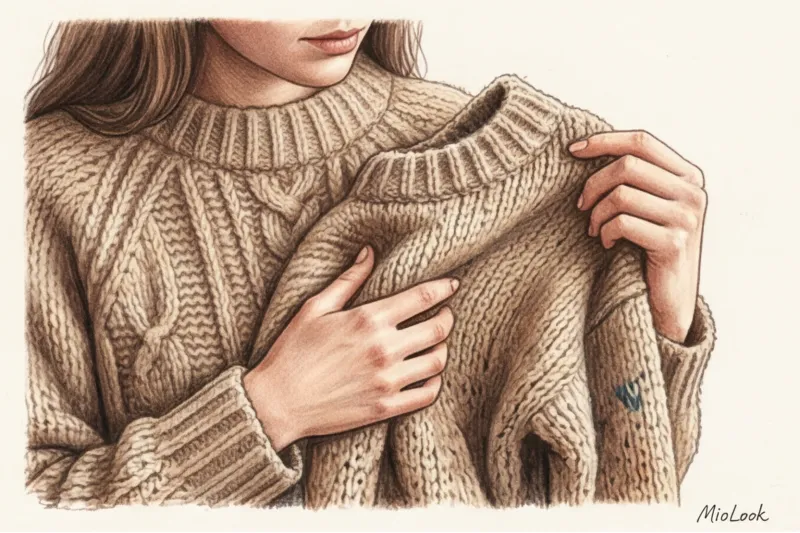
Interestingly, we form different bonds with different materials. The brain easily lets go of cheap, smooth viscose or polyester. But try throwing away a heavy tweed jacket or a thick, chunky merino wool sweater. Textured, tactilely rich fabrics form much stronger neural connections in our memory. We literally "remember" with our fingers that cold November evening when we wrapped ourselves in that sweater.
Ready to get started?
Try the free MioLook plan—a smart AI stylist will help you sort through your wardrobe without stress or commitment.
Get access — €0.99 onceThe connection between clothing and identity: the effect of "clothed cognition" in reverse
In 2012, researchers Hajo Adam and Adam Galinsky coined the brilliant term "Enclothed Cognition." They demonstrated that the clothes we wear right now change our cognitive abilities and behavior. But this phenomenon also has a flip side: the clothes we wear we store , works as a cognitive anchor for our past or failed identities.
When we try to throw away our formal wool three-piece suit after transitioning to remote freelance work, we're physically saying goodbye to a part of our professional ego. We're not holding on to the size 12 dresses we've long outgrown—we're holding on to the hope of once again becoming the version of ourselves who could wear them.
- Anchor of the Past: wedding dresses, uniforms from a prestigious company, a sweater from a former partner.
- Anchor of the unfulfilled future: the sequin minidress you bought for "that perfect party" you never went to.
- Anchor of the False Self: things bought under the influence of momentary trends that do not fit into your real lifestyle at all.
Releasing these "anchors" reduces background stress. By letting go of an item, you officially give yourself permission to be the person you are today—with your current size, current lifestyle, and current needs.
The Myth of the "One Year" Rule: Why Standard Styling Advice Doesn't Work
Open any article on space organization, and you'll see this clichéd advice: "If you haven't worn something in 12 months, throw it in the trash." As a textile expert, I can officially say this rule is a marketing ploy of the fast fashion industry.
It works great for a mass-market acrylic sweater that's pilled after three washes. But applying this approach to quality items is a crime against your budget. Is it really possible to throw out a 100% cashmere coat or a vintage heavy worsted wool jacket just because you spent a year on maternity leave and wore nothing but jeans and a hoodie?
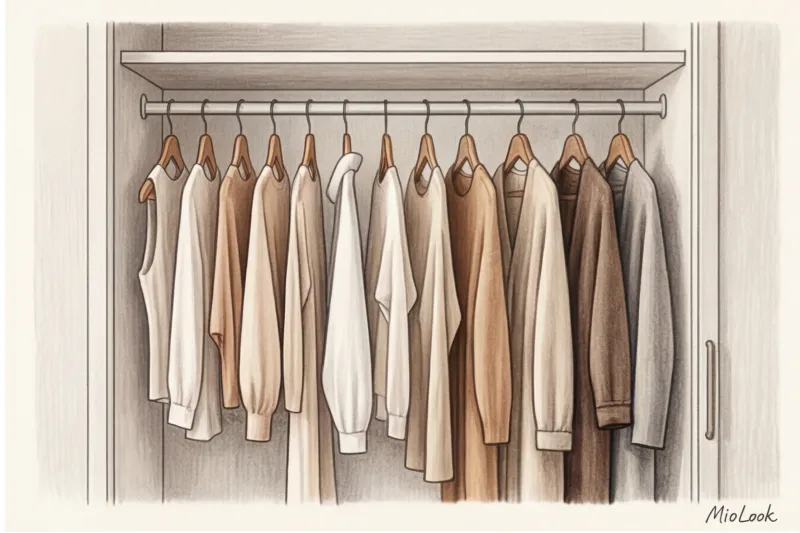
Instead of mindlessly throwing away, I introduce the concept into my clients’ wardrobes Sleeping Wardrobe This is a separate shelf or vacuum bag for high-quality items whose fiber structure is completely intact but that are temporarily out of your life. High-quality, dense silk (19 momme and above) or a well-cut gabardine trench coat can "sleep" for 3-4 years without losing their relevance.
"I'll be honest: the 'sleeping wardrobe' method doesn't work if you live in a studio apartment without a storage room. When space is at a premium, prioritize items for the busy season, otherwise your closet will become a storage unit."
Your perfect look starts here
Join thousands of users who look flawless every day with MioLook. Digitize your closet and discover new combinations.
Get access — €0.99 onceAn eco-friendly farewell: how to reduce anxiety when cleaning out your closet
Another powerful barrier to decluttering is eco-guilt. According to the Textile Exchange's 2023 report, the global textile industry produces approximately 113 million tons of textile waste annually. Knowing that your synthetic polyester blouse will take over 200 years to decompose in a landfill, releasing microplastics, is literally paralyzing.
To reduce cortisol levels while decluttering your closet, you need to shift your paradigm from "I'm throwing this away" to "I'm transferring a resource." Things are compressed energy (water, labor, electricity), and our job is to channel this energy into positive use.
Pay special attention to "toxic" things. This is what I call clothes that are associated with painful memories: the jacket you were wearing when you got fired, or the dress you wore on a date with the person who broke your heart. Research shows that physical contact with such items causes micro-surges in cortisol. These should be the first items to go, even if they're in perfect condition—send them to a resale platform or donate them to charity.
A Mindful Decluttering Checklist: A Textile and Cognitive Audit Method
Forget the one-year rule. I offer you a professional three-step audit algorithm that I use when reviewing my clients' wardrobes.
Step 1: Physical Condition Test
We're getting rid of items that have suffered irreversible fiber degradation. What we're looking for:
1. Destruction of elastane. If your jeans or basic T-shirt have small ripples or blisters at the knees, the elastane threads inside the cotton braid have broken. This can't be repaired.
2. Indelible yellow stains in the armpit area (reaction of antiperspirant with silk or cotton).
3. Strong pilling on synthetics that cannot be removed with a lint remover.
Step 2: Cognitive Dissonance Test
Ask yourself: "Does this item reflect the woman I am today?" If you're a department manager and have 15 childish T-shirts with cartoon prints hanging in your closet that you wear "out of habit," it creates visual dissonance.
Step 3: Integration Test (Atelier)
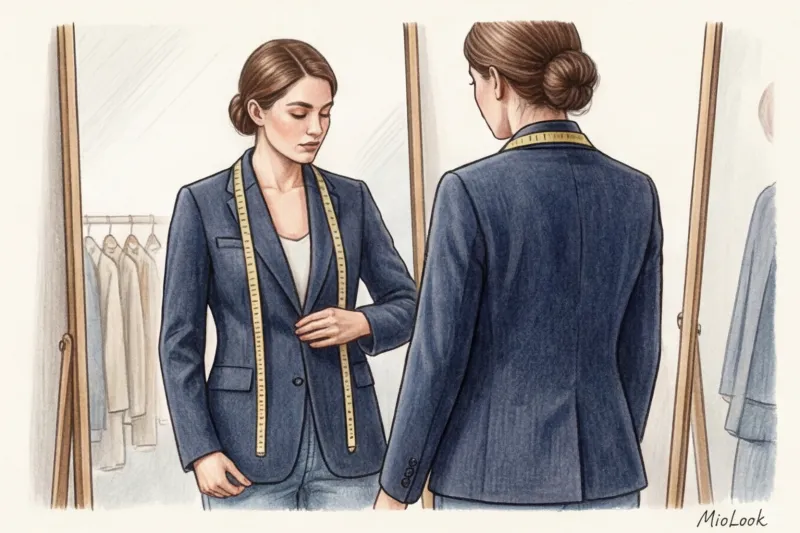
We don't wear many excellent pieces because of minor fit issues. One of my clients wanted to throw out a gorgeous Max Mara coat simply because she thought it was "boring." We simply replaced the plastic buttons with horn ones and replaced the lining with a contrasting wine color—it became her favorite.
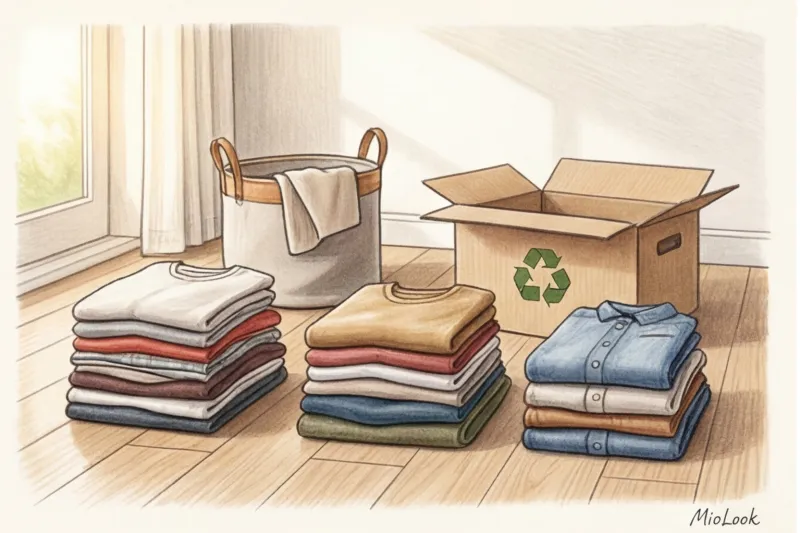
Sort things by system 4 boxes:
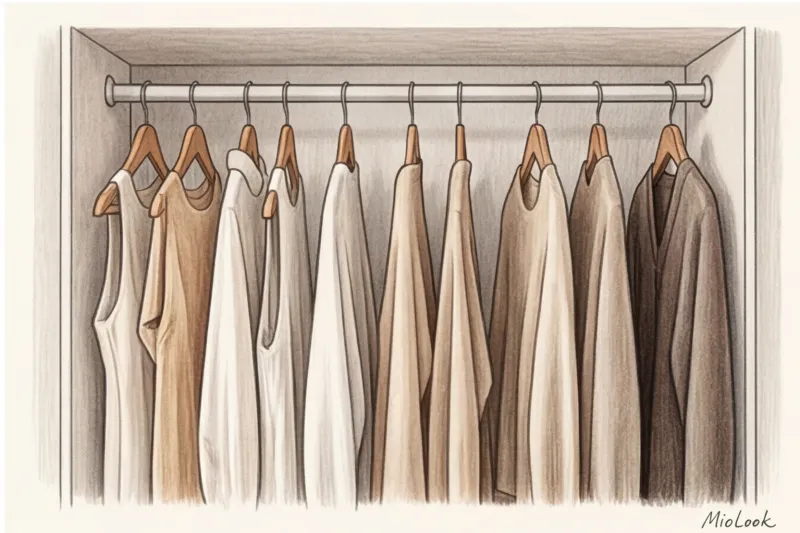
- In the active wardrobe: perfect fit, current condition.
- For repair/studio: shorten the length, replace the fittings, remove the pellets.
- To the resale/swap party: high-quality items that you no longer like (designer bags, high-quality mid-range items like COS or Massimo Dutti).
- For textile processing: rags, hopelessly ruined mixed fabrics.
Life After Decluttering: How to Avoid Filling the Void with Fast Fashion
The biggest danger awaits you the day after a major cleanse. You open your half-empty closet, and your brain gets caught in a dopamine trap: the emptiness is urgently needed to be filled. A nagging urge to go to the mall and buy "new, now-correct basics" appears.
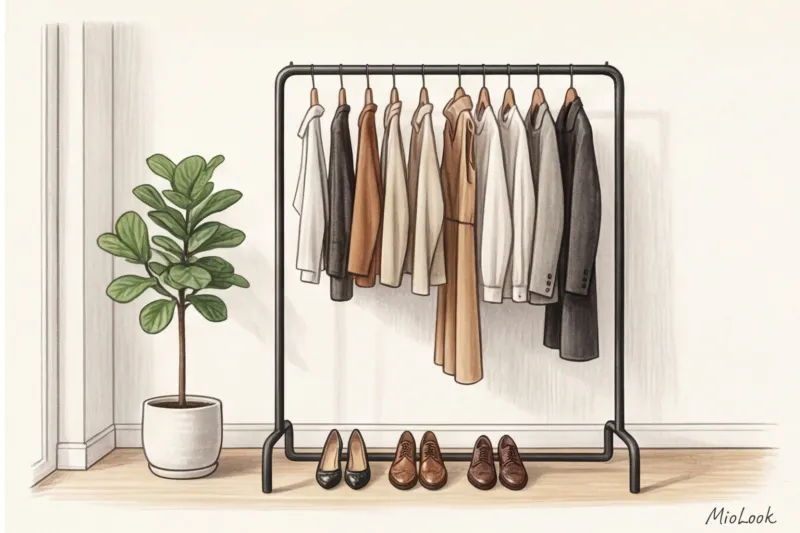
Stop. Give your wardrobe at least two weeks to breathe. This is the perfect time to use AI assistants for styling. After uploading the remaining items to MioLook smart wardrobe feature , you'll be surprised to find that the algorithm will suggest dozens of new combinations from the 30-40 items you have left. It turns out you didn't need a new skirt—you just needed a fresh idea for what to wear with an old one.
The psychology of decluttering teaches us the main thing: we are moving from a philosophy of consumption to a philosophy of slow fashion (slow fashion). It's better to buy one perfectly cut shirt made of dense Egyptian cotton (from 180 g/m²) than five compromise options on sale.
Your closet isn't a storage facility for the textile waste of the past. It's a carefully curated gallery designed to serve the present you. Don't be afraid to make space: by letting go of things that no longer serve you, you're physically clearing space for new life scenarios.