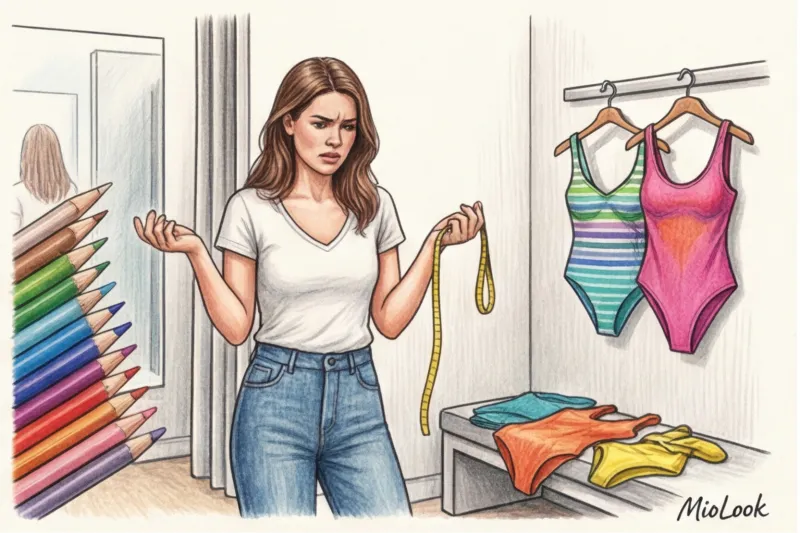
How many times have you bought a black one-piece swimsuit hoping it would hide a few extra inches around your waist? Spoiler: on a sun-drenched beach, solid black acts as a highlighter. Against the light sand and shimmering water, it creates a sharp, contrasting silhouette, mercilessly highlighting every uneven contour.
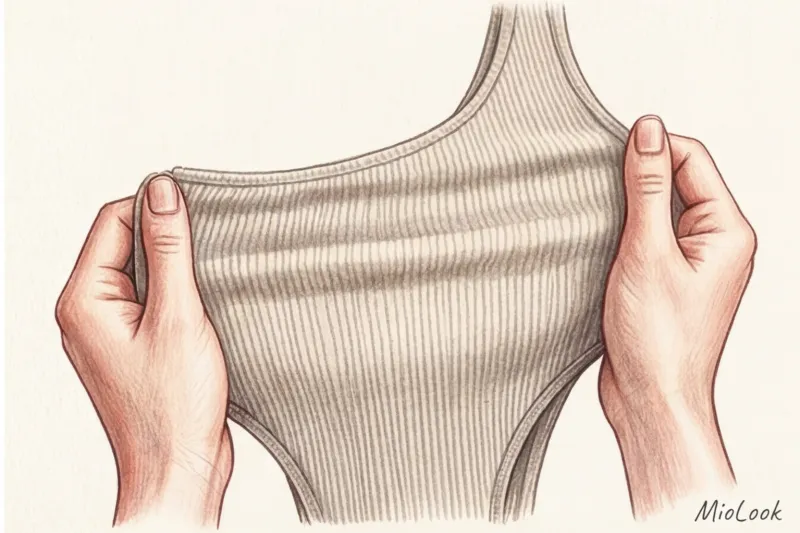
As a textile expert and practicing stylist, I constantly see women trying to shape their figures with endless frills, forgetting the most important thing: the physics of materials. Before choosing a swimsuit based on your body type, we must abandon the glossy stereotypes of the 2000s. Ideal beachwear isn't about concealing imperfections under layers of fabric. It's about clever cut design, coupled with the right fiber density. Let's explore how to make textile engineering work for your silhouette.
The Anatomy of the Perfect Swimsuit: Why Fabric Matters More Than Style
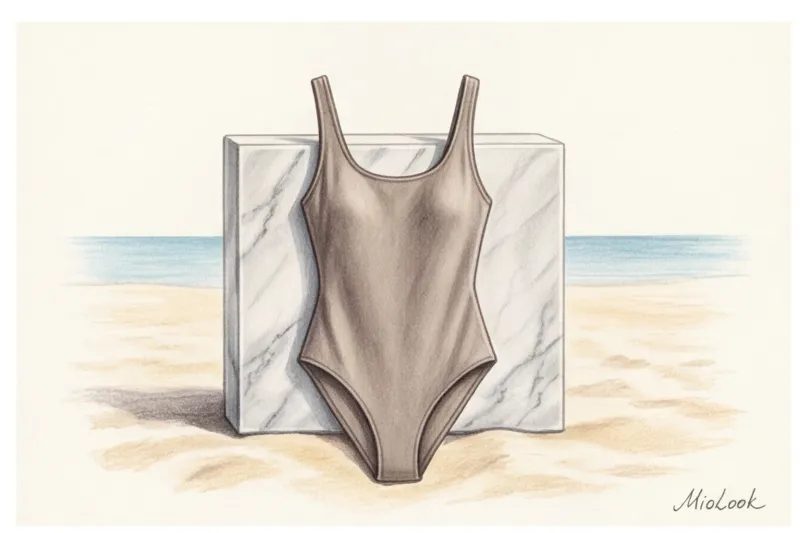
Any design, even the most ingenious, will fall apart if it's made of cheap, loose synthetics. A swimsuit is a functional framework. To ensure it shapes your figure, not just clings to it, you need to read the label carefully.
For effective compression and support, look for a fabric with 18% to 22% elastane (also known as spandex or lycra). If the elastane content is less than 15%, the fabric will quickly stretch and create unsightly ripples on the buttocks. If it's more than 25%, the swimsuit will be too stiff, making it difficult to breathe and restricting movement.
I always pay special attention to innovative materials. According to the Textile Exchange 2023 report, recycled nylon (patented fibers like Econyl or Repreve) outweighs virgin polyester in terms of weave density. These fabrics better withstand the harsh effects of sunscreens and last longer without fading.
The secret to perfect tummy control lies not in a tight elastic band, but in the power mesh—a special compression mesh sewn between the lining and the main fabric. It works like a soft corset, redistributing volume without constricting.
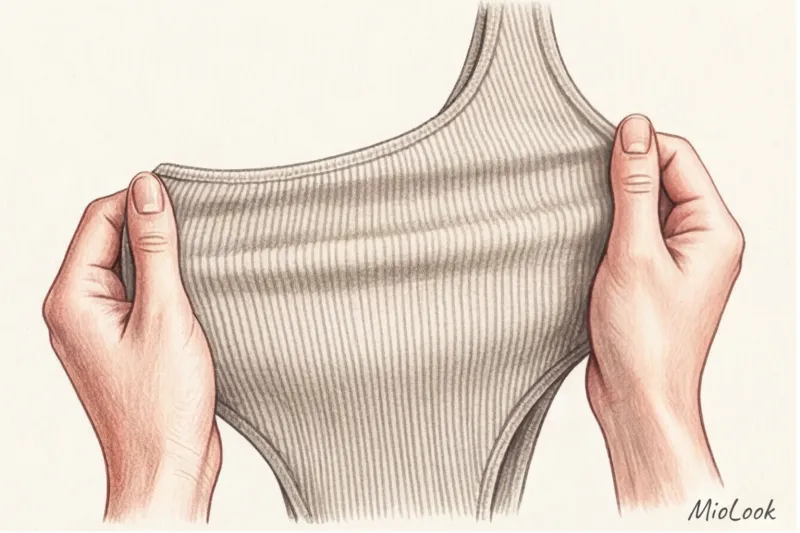
Professional density test: Take the fabric between two fingers and rub it. High-quality biflex for shaping should weigh between 170 and 200 g/m². Anything thinner is only suitable for tanning on a sun lounger, not for shaping.
Your perfect look starts here
Join thousands of users who look flawless every day with MioLook. A smart AI stylist will help you choose the perfect vacation capsule.
Get access — €0.99 onceHow to choose a swimsuit based on your body type: moving away from outdated rules
We're used to thinking in terms of "hiding wide hips" or "adding volume to the bust." But modern styling works differently. When figuring out how to choose a swimsuit for your body type, we focus on the stretch vectors of the fabric and creating the right optical illusions.
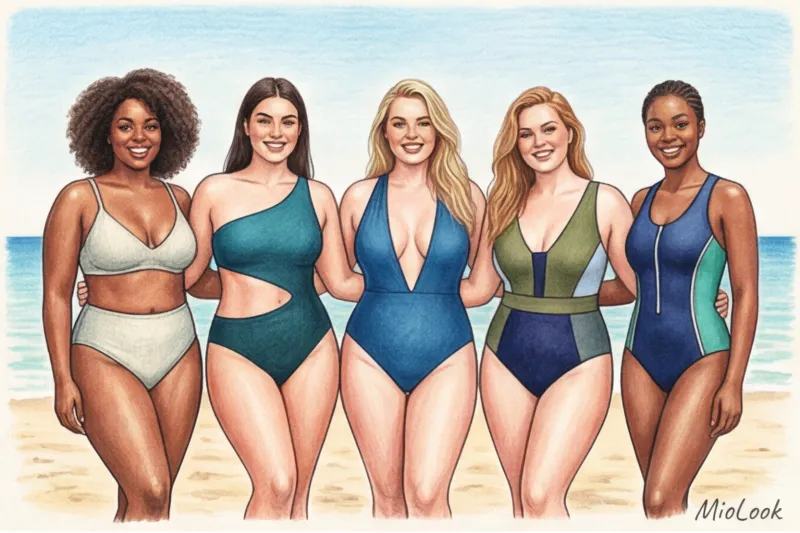
Pear (Triangle): Balance of Volumes and Support
Outdated advice says, "Wear a bra with huge ruffles to balance out your hips." In practice, massive ruffles often look childish and get wet, pulling the bust down. An asymmetrical one-shoulder cut is much more elegant. It creates a powerful diagonal that instantly draws the eye to the collarbones and face.
The second mistake is trying to hide your hips in tight, shorty swimsuits. The horizontal line of the shorts cuts your leg right at its widest point, visually flattening your silhouette. Choose Brazilian-style swimsuits with a mid- or high-waist (V-shaped cutout at the hips). They reveal your leg, making it appear infinitely longer.
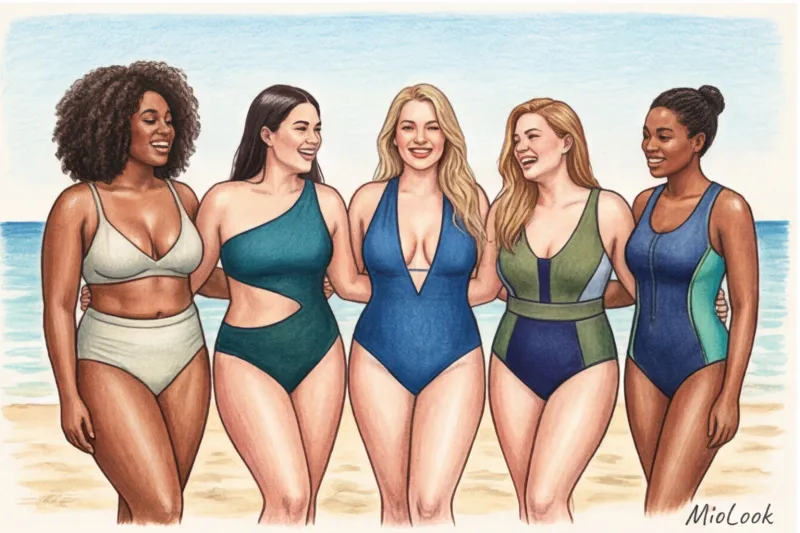
Textile life hack: Use different textures. A ribbed bra and completely smooth, matte bottoms will create the right balance of volume without unnecessary detail.
Apple (Oval): the architecture of the waistband and the illusion of a waist
I had a telling case. A client with an apple-shaped figure had been buying shapeless, one-piece swimsuits for years, hoping to conceal her belly. But the thin fabric (less than 150 g/m²) stretched at the protruding points, creating a "drum effect" that visually increased her waist by another 15-20%.
We completely changed our tactics. I suggested a retro-style two-piece swimsuit: high-waisted bottoms made of a dense matte material with a power-mesh lining and a structured bra. Dividing the silhouette with a strip of skin just above the navel (at its narrowest point) visually eliminated two sizes.
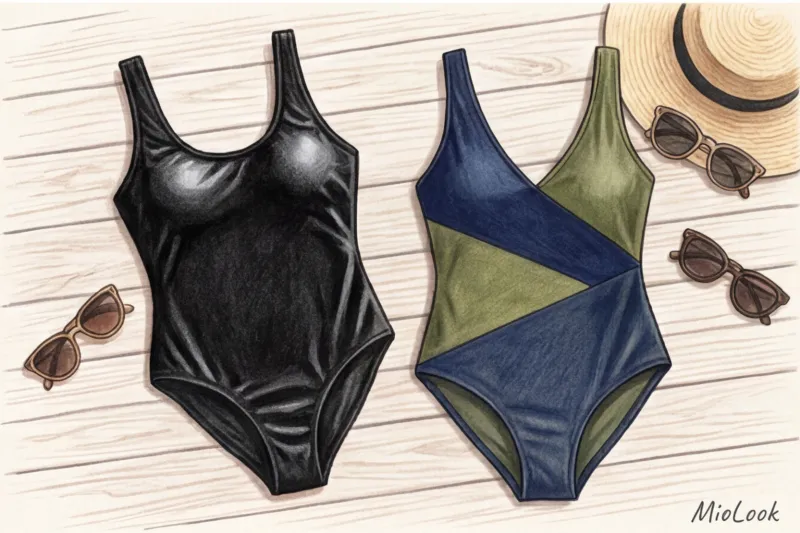
If you prefer one-piece styles, look for wrap-styles. The diagonal draping, converging at one point on the side, physically creates a faux waistline.
Rectangle: Creating Curves with Geometry
When the waist isn't clearly defined, our goal is to accentuate it with color blocking and sculpted cutouts. A monokini with deep, symmetrical side cutouts does this flawlessly.
Let me clarify right away: this monokini tip does NOT work if you have a long torso. In this case, the vertical tension of the fabric will distort your proportions, making you feel simply uncomfortable. Those with a long torso are better off choosing a two-piece with contrasting side panels.
Avoid bras with heavy push-up foam. Water weighs down the foam, causing it to deform. Choose new-generation bandeau bras with a deep V-neckline and a rigid frame (V-wire) – they gather the bust toward the center thanks to the geometric cut, rather than adding excess volume.
Inverted Triangle and Hourglass: Focus on Lines
For women with broad shoulders (inverted triangle), the main rule is to avoid thin spaghetti straps that tie at the neck (halterneck). They create a triangle with the tip pointing upward, making the shoulders appear even more massive. Opt for wide, vertical straps and a deep V-neck. You can add accent details to your bottoms, such as metal rings or side ties.
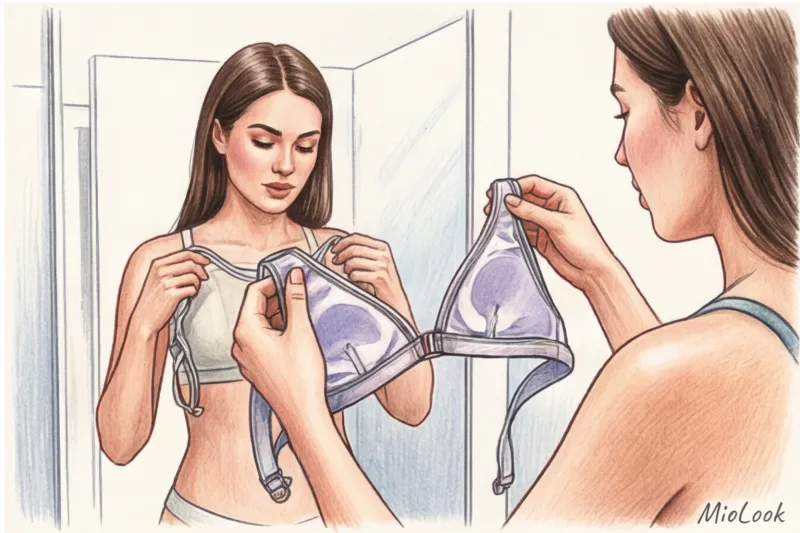
For an hourglass figure, the key is to maintain a natural balance. A classic bikini works great, but remember to provide support. Even with a small bust, this figure type requires hidden support (underwire or a tight band under the bust) to keep the silhouette sculpted.
Access to MioLook for €0.99 — one-time payment
Start creating your perfect looks with the help of artificial intelligence. Upload your items and receive ready-made capsule collections every day.
Get access — €0.99 onceThe "slimming black" myth and other color-choosing mistakes
Let's return to our black swimsuit. Over 12 years as a stylist, I've dressed dozens of women who fervently believed in the magic of black on the beach. One time, we swapped a client's glossy black one-piece for a matte, deep emerald-green one with diagonal color blocking. The difference was dramatic.
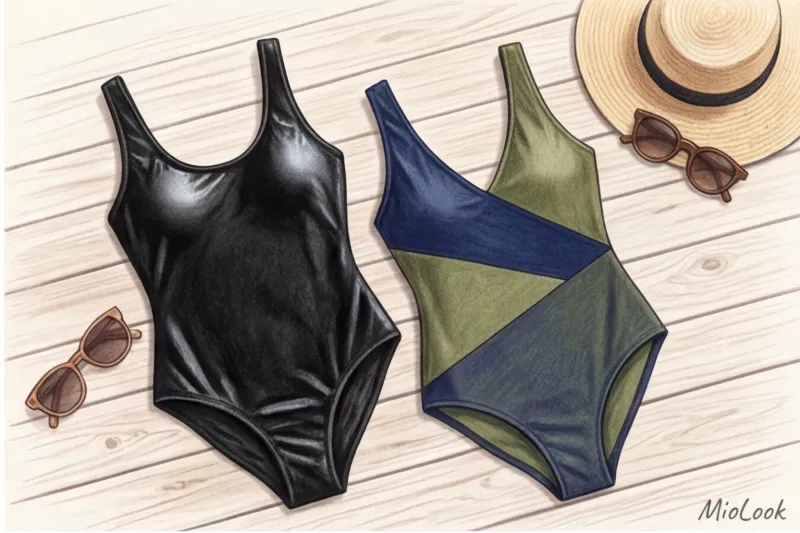
Why did this happen?
- Texture is more important than color. Shiny fabrics (lurex, glossy biflex) reflect light, visually adding volume and highlighting even the slightest unevenness of the skin. Matte fabrics absorb light, concealing the texture.
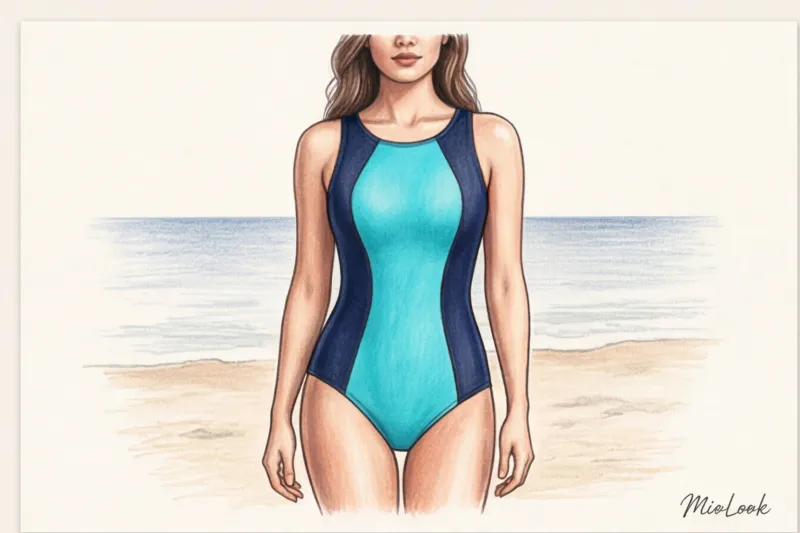
- Color block mechanics. A swimsuit with a light center panel and dark side panels literally trims off extra inches on the sides. The eye only notices the lighter portion of the silhouette.
- Lighting context. Black is a great slimming color in the dim light of a restaurant. But in direct sunlight against the white sand, it creates a stencil effect. If you want a dark shade, choose a complex palette (deep wine, navy blue, pine)—they have a softer effect. Knowing your skin tone will help you choose the right shade. 12 color types of appearance.
Checklist: How to check the quality of a swimsuit in the fitting room
You've found the perfect style and color. Now you need to make sure it'll last more than one vacation. Here's how I test out beachwear before buying:
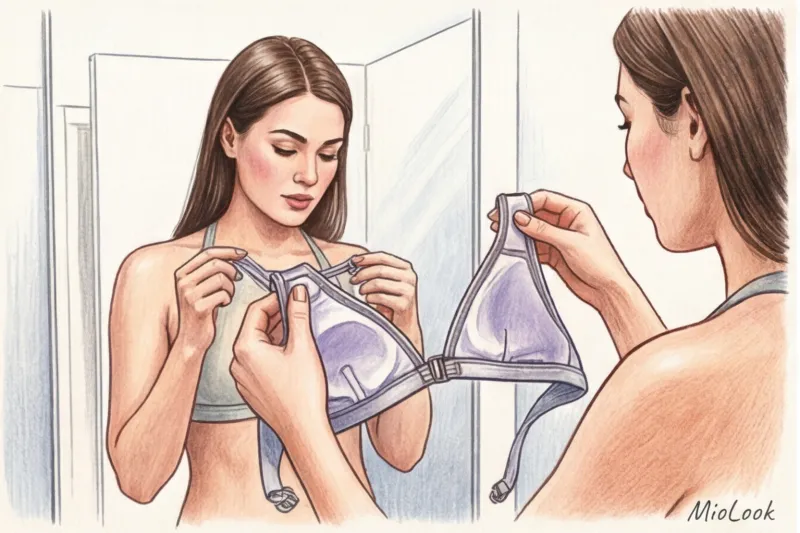
- Tensile test (4-way stretch). Pull the fabric in four directions. It should give in with force and instantly Return to its original state without any residual "waves." If the fabric stretches too easily, it won't hold its shape in water.
- Checking the seams. Look for flatlock seams or hidden seams stitched with special elastic threads. Gently tug on the seam; if you hear the threads snapping, return the garment to its hanger.
- Fittings. Cheap metal will oxidize in salt water within a week, leaving rusty stains on the fabric. High-quality brands use a special zamak alloy with an anti-corrosion coating. Plastic clasps are also a good option, as they don't heat up in the sun, but make sure the plastic is thick and flexible.
- Anatomy of the lining. The lining should be sewn around the entire perimeter of the garment. If it's only secured at the corners, it will balloon or turn inside out in the water. Also check the gusset—it should be sewn in with smooth, hidden seams to prevent chafing.
Ready to get started?
Try the MioLook free plan—no commitments required. Save ideas, explore your style, and save time getting ready.
Get access — €0.99 onceAn eco-friendly approach: how to extend the life of your swimsuit
The fashion industry produces millions of tons of textile waste annually. Buying one expensive, well-designed swimsuit instead of three cheap ones for a single season is not only a way to improve your style but also a step toward conscious consumption.
When I first tested swimsuits made from recycled Econyl nylon in heavily chlorinated pools, I was amazed: after a month of daily swimming, the fabric hadn't lost a single percent of its elasticity, while regular polyester had thinned. But even premium fabric requires proper care.
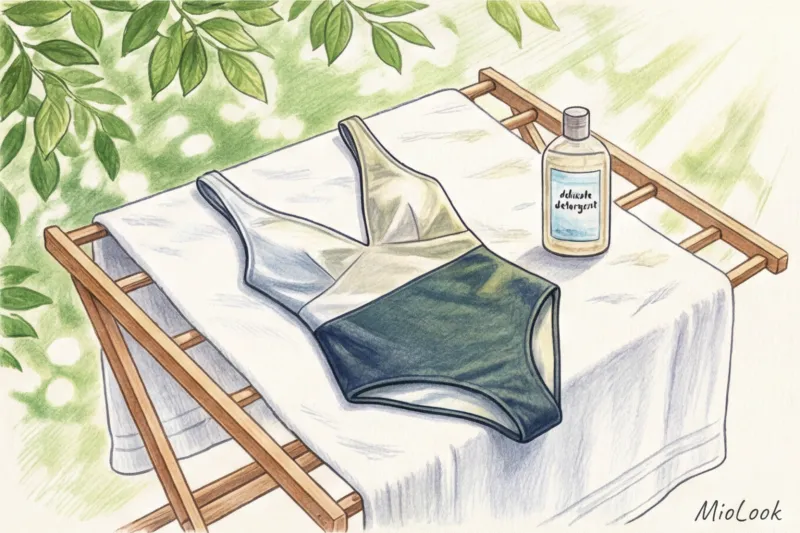
Elastane's main enemies are chlorine, sea salt, chemical filters found in sunscreens, and hot water. Chlorine literally destroys the molecular bonds in the polyurethane yarns of elastane, making them brittle.
- The 15-Minute Rule: Always rinse your swimsuit in cool, fresh water for 15 minutes after leaving the sea or pool. This will remove 80% of damaging salts and chemicals.
- Washing: Never machine wash your swimsuit, even on a delicate cycle. Hand wash only in cool water with a mild shampoo (not detergent!).
- Drying: Do not wring or twist the garment—just blot it with a terry towel. Dry it flat in the shade. Drying it on a radiator or in direct sunlight will melt the elastane immediately.
- Skin and fabric protection: According to dermatological studies (2022), high-quality, dense fabrics in dark shades provide a natural UPF 50+. Put on your swimsuit before applying sunscreen to prevent oils from setting into the fibers.
Choosing a swimsuit is a process that requires time and an understanding of your body's physique. Forget rules that force you to hide. Invest in thick, high-tech materials, find your curves, and remember: the perfect swimsuit is one that makes you think about the sound of the waves, not how you look.