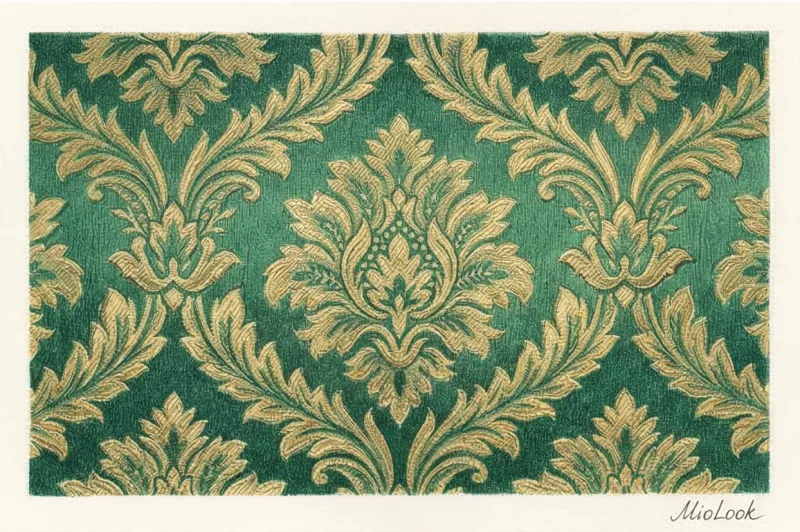
What is a damask pattern?
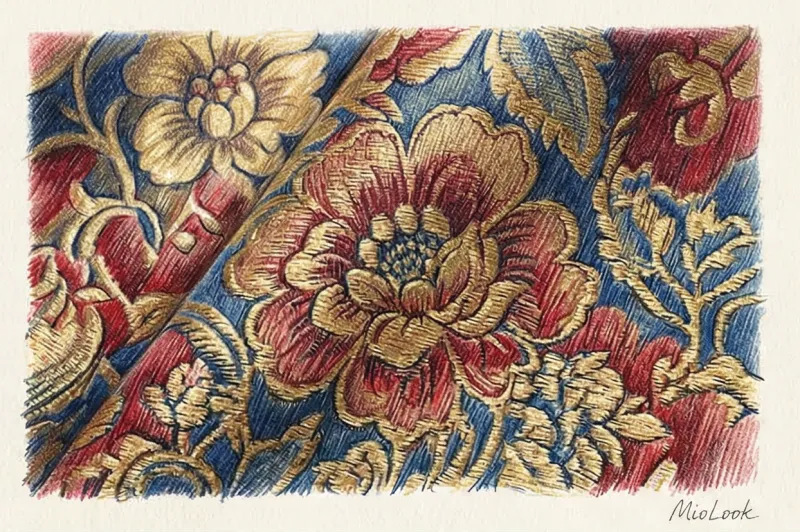
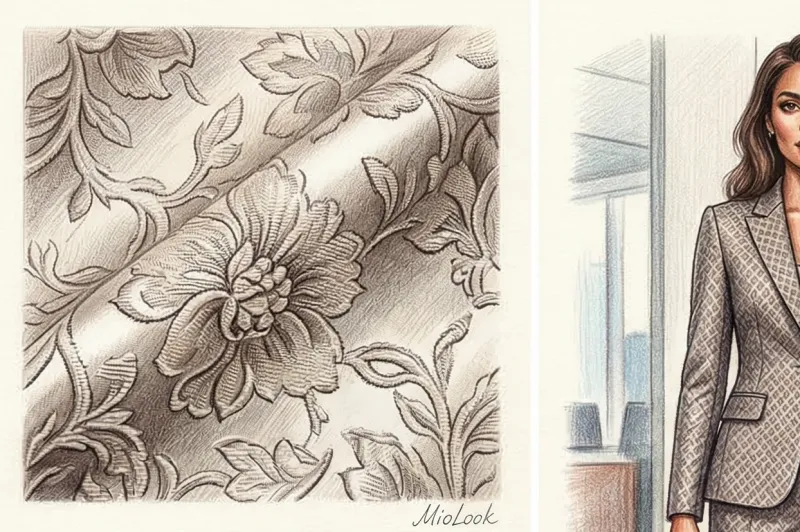
Damascus — is both a jacquard weaving technique and a recognizable symmetrical pattern with plant motifs, forming teardrop-shaped or diamond-shaped medallions.
To understand what a damask pattern is, we need to look back in history: the term originally referred to a dense, double-sided fabric (silk, wool, or cotton) brought to Europe via the Syrian city of Damascus, which was a major weaving center on the Silk Road.
In modern fashion, the term is more often applied to the distinctive print, whether woven on a loom or printed on a smooth material. Traditional damask is created by interweaving warp and weft threads, creating the effect of a matte background and a shiny pattern, or vice versa.
Distinctive features
The main feature of the ornament is its strict symmetry. The design is always constructed around a central vertical axis, and all elements are mirror images.
The pattern is based on stylized acanthus leaves, lotus flowers, peonies, pomegranates, and intertwining vines that form complex rosettes. In classic jacquard fabric, the front and back sides are inverted, working on the principle of positive and negative.
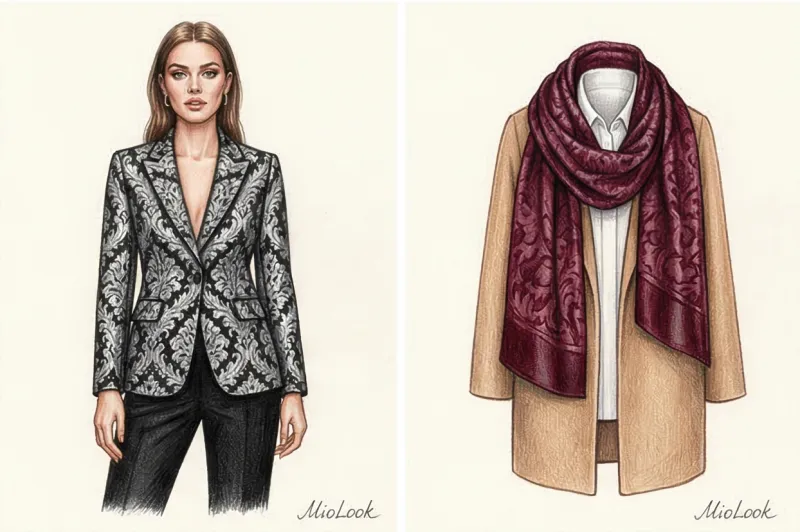
The damask color palette is most often monochrome. It uses a combination of matte and glossy threads of the same shade or a contrasting bicolor, such as a gold pattern on a deep burgundy background. The visual and tactile density of this fabric gives the piece a tapestry-like quality.
What to combine with
Damask-patterned clothing serves as the accent piece of the look and requires a neutral backdrop. Jacquard jackets, midi skirts, or coats are best paired with solid-color turtlenecks, smooth silk blouses, and basic trousers.
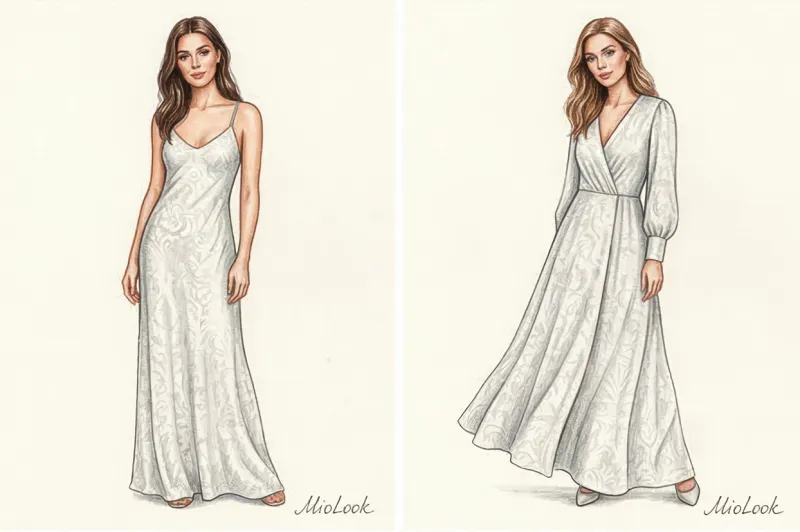
For evening wear, damask dresses and suits in deep shades like emerald, sapphire, or wine are appropriate. These outfits are complemented with minimalist jewelry, avoiding large stones to avoid overpowering the silhouette.
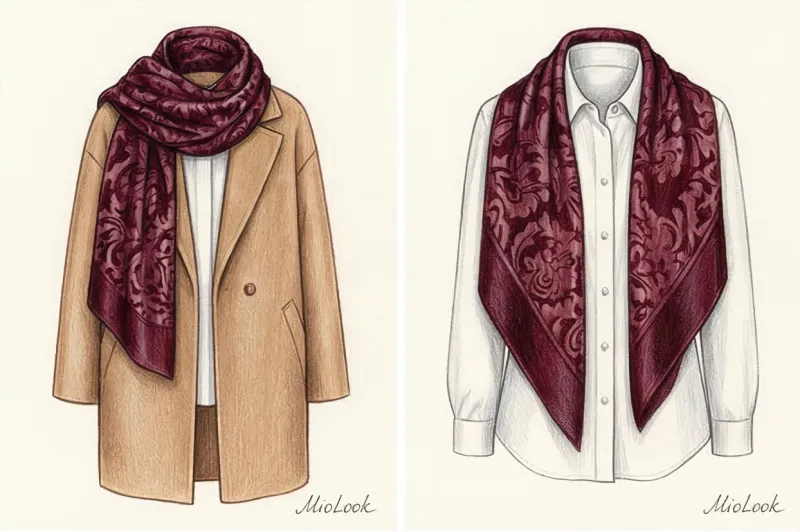
In everyday wardrobes, the pattern is used sparingly, in the form of a silk scarf, an embossed bag, or shoes with fabric inserts. Damask is not paired with other bold prints, such as check, stripes, or leopard. Smooth textures of matte leather, fine wool, or heavy denim are the best complements.