Lingerie Style: Why It's No Longer Taboo, But a Wardrobe Essential
A few years ago, a top manager at a large IT company came to me for a wardrobe review. When I suggested she include a pair of silk tops with thin straps in her fall capsule collection, she laughed: "Emily, I'm not in the bedroom; we have a strict dress code!" I convinced her to experiment. A month later, she admitted that this top had become the most reliable and functional item in her closet. Today lingerie style in clothing has finally shed its boudoir aura and has become a functional essential, without which it's hard to imagine a modern wardrobe.
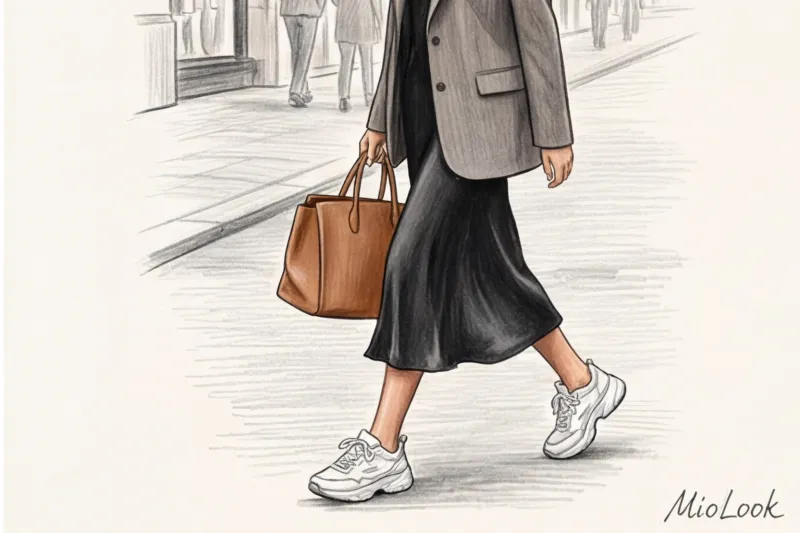
The biggest mistake many women make is equating lingerie style with nudity. In reality, this aesthetic works quite differently. It's not about plunging necklines or sheer fabrics revealing underwear. Intelligent lingerie style is built solely on the texture of the fabric.
The secret to the styling lies in the play of surfaces: smooth, flowing silk, heavy satin, or thick, matte chiffon create the necessary tension in the look when combined with everyday materials.
Lingerie-inspired elements (slip tops, bralettes, silk skirts) dramatically increase the versatility of a capsule wardrobe. The smooth silk texture alone can elevate even the most boring jeans look to the level of elegant smart casual. Because they lack a rigid shape, these pieces work perfectly as an inner layer without adding bulk.
If we talk numbers and calculate the ROI (return on investment) of a wardrobe, the results might surprise you. Let's compare a basic premium cotton T-shirt for €60 and a heavy silk slip top for €150. The T-shirt will withstand about 20-30 washes before losing its original appearance, and you'll wear it primarily solo or under a relaxed cardigan. The silk top will last for years with proper care, and its functionality is much broader: it looks elegant under a tailored jacket at a business meeting, works as a contrasting layer under a chunky knit sweater, or stands alone at an evening event.
I love relying on hard data rather than fashion myths. By analyzing statistics from thousands of wardrobes in our MioLook app I discovered a surprising pattern: users wear a basic silk top three times more often in the fall and winter than in the summer, as you might expect. This is thanks to layering—the top acts as an ideal temperature regulator and a visual accent under thicker fabrics.
Trend evolution and basic wardrobe statistics
To understand how we came to embrace silk in offices, it's worth looking at the evolution of the trend. A brief historical overview: the turning point occurred in 1996, when Princess Diana appeared at the Met Gala in a navy blue Dior slip dress. It was an aesthetic shock—the line between lingerie and evening wear was forever blurred. Today, we see how this look has become a classic: even in the most conservative circles (as we mentioned in the article about Meghan Markle-style status casual ) silk textures are used to soften strict silhouettes.
But fashion has gone even further. The minimalist dresses of the '90s have been replaced by modern, structured corsets. Forget Victorian torture devices that cinched your waist to the point of swooning. The modern corset is an external, architectural element of the wardrobe. Designers (from Mugler to Dion Lee) have stripped it of its lingerie function and transformed it into a sculptural top in its own right.
The adaptation of this trend to the everyday needs of working women has happened phenomenally quickly. Instead of wearing a corset naked, we layer it over a basic white oversized shirt or a thin turtleneck. A slip dress is paired with chunky Chelsea boots and a men's blazer. Lingerie style today is a tool of contrast that allows working women to feel feminine while remaining within the bounds of a professional dress code.
The Rule of Contrast: The Main Secret to Styling Lingerie
Have you ever wondered why a silk top looks like something from a street style blogger at Copenhagen Fashion Week on some women, while on others it looks like they just casually stepped out in their house clothes? The answer lies in a professional technique we stylists call "neutralization." It's a fundamental tool for working with complex, revealing trends, and it's what separates a truly stylish look from a fashion faux pas.
The formula for flawless styling is built on conflict. Uncompromisingly delicate textures—flowing silk, heavy satin, or the finest lace—physically demand juxtaposition with the most alien, rugged materials. Matte wool absorbs light, while glossy silk reflects it—it's this visual clash that draws the eye. Pair silk with dense wool, stiff denim (12 ounces or more), or distressed vintage leather.
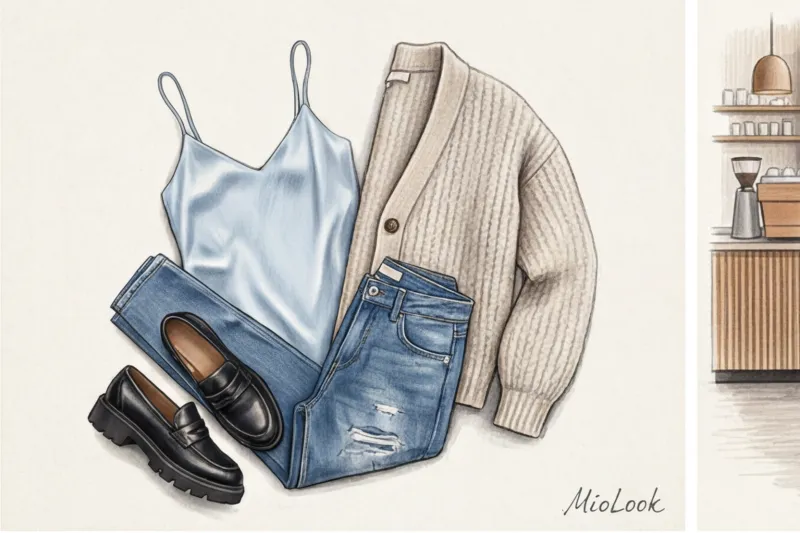
My favorite practical example involves working with a classic slip dress. Pair it with elegant sandals for an evening, almost boudoir-inspired look. But pair it with a chunky, chunky-knit cardigan (preferably with alpaca for a fluffy texture) and chunky boots with chunky soles. The chunky shoes instantly ground the outfit. This technique neutralizes the overly soft silk, making the look sophisticated, urban, and completely safe for daytime.
There's an ironclad rule in style: the more revealing the garment, the more closed and architectural its surroundings should be. Lingerie style abhors a literal interpretation.
The second pillar of successful lingerie integration is a mathematically precise balance of volumes. Lingerie aesthetics often imply a close-fitting silhouette. If you choose a fitted bottom (for example, a bias-cut silk skirt), the top should be voluminous—say, an oversized hoodie or a chunky knit sweater. Conversely, when wearing a structured corset or a tight crop top, be sure to offset it with looser bottoms. Wide-legged palazzo pants with pleats or baggy jeans are excellent choices. This distribution of volume not only corrects the figure's proportions but also creates that perfect effect of casual Parisian chic.
Access to MioLook for €0.99 — one-time payment
A smart AI stylist will analyze your wardrobe and show you how to expertly pair silk tops and dresses with everyday items.
Get access — €0.99 onceFinally, a powerful tool for working with lingerie style is the use of masculine tailoring. When shooting lookbooks, I constantly resort to this trick. A classic men's jacket with exaggerated shoulders (in the style of the iconic oversized jackets from The Frankie Shop) over a thin lace bralette works flawlessly.
The strict cut, dense suit fabric, and angular lines of the masculine silhouette act as a kind of protective armor. They completely absorb the sexuality of the lingerie piece. In this form, paired with basic trousers and classic loafers, an ordinary silk top bought for €80 looks like a premium investment. It's cost-effective: the right combination of textures allows you to wear the item year-round, not just for special occasions.
- Micro-step for today: Get out your dressiest silk slip. Try it on with distressed straight-leg jeans and throw a crisp, mannish shirt over it. Look in the mirror—you'll see how the magic of textured contrasts works in real life.
Slip Dress: 1 Piece, 5 Completely Different Looks
I keep detailed statistics of my images in MioLook app I've been wearing it for over two years now. I recently downloaded my data for the past season and discovered something interesting: the absolute record-holder for frequency of wear (with the best CPW – cost per wear) was a simple black silk slip dress, purchased some time ago for €180. According to the tracker, this single item seamlessly covered my needs for a theater premiere, a series of afternoon business meetings with clients, and countless morning coffee outings with the dog. The secret to such a phenomenal return on investment lies in the right basic cut and expert styling.
The biggest mistake I regularly see when sorting through wardrobes is trying to adapt straight-cut dresses or styles with tight darts for everyday wear. The real magic begins when you choose the bias cut technique. This ingenious construction method, popularized by French fashion designer Madeleine Vionnet back in the 1920s, involves cutting the fabric at a precise 45-degree angle to the grain.
Why is this so crucial in practice? Bias-cut fabric acquires amazing natural elasticity even without elastane (whether pure silk or viscose). This dress doesn't hang like a rectangular bag or dig into your hips as you walk. It fluidly follows the contours of the body, adapting to any figure—from a pronounced hourglass to a rectangular shape—while subtly concealing volume where needed.
When it comes to length, midi is your main stylistic safety net. A hemline that ends just below the knee or mid-calf instantly counteracts the nightgown-like image that mini lengths inevitably evoke. At the same time, midi dresses don't look overly pretentious, like full-length styles. This midi length allows lingerie-inspired clothing to seamlessly integrate into the harsh realities of public transportation and office corridors.
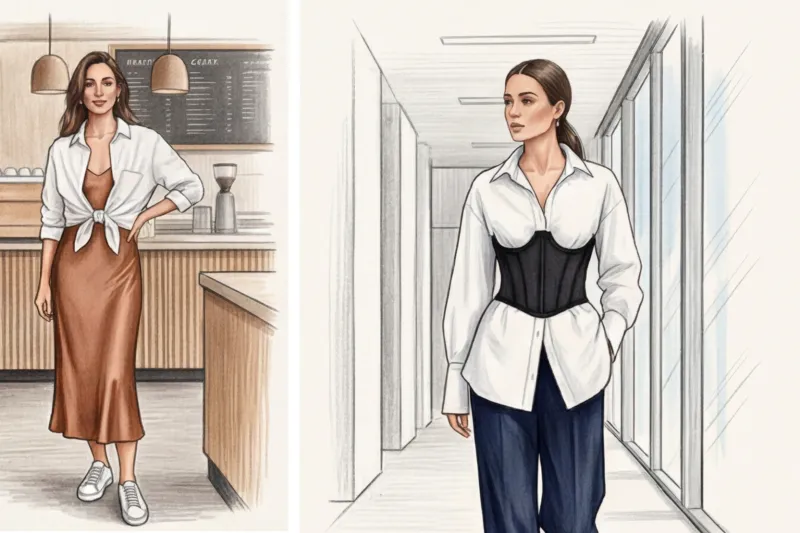
Over the years as a stylist, I've identified 5 formulas for integrating a slip dress that don't require a lot of standing in front of a mirror:
- Scenario 1: Flowing skirt effect. Layer a chunky knit sweater (preferably heavy merino wool or cashmere) over the dress and complete the look with chunky boots with cleat soles. The heavy knit completely conceals the thin-strap bodice, leaving only the silk hem visible. You get a relaxed, grunge-inspired silhouette, where the heavy boots and textured yarn ground the delicate fabric.
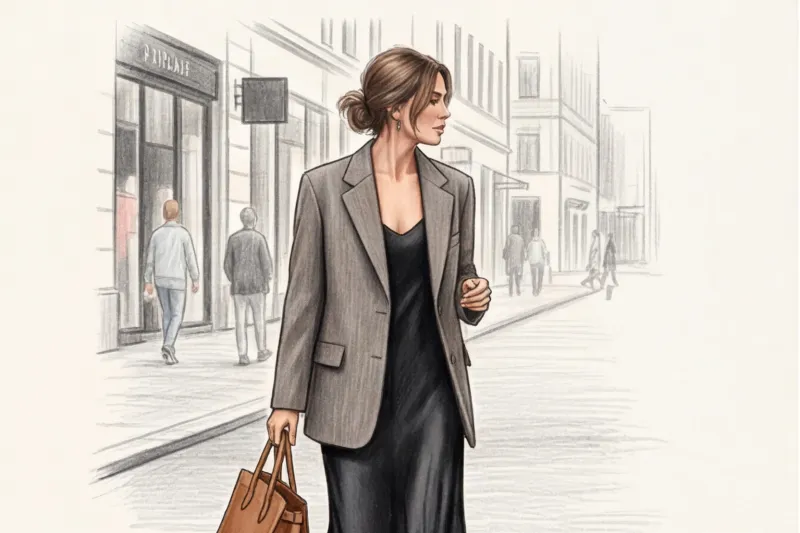
- Scenario 2: Business Contrast. For offices with a more relaxed dress code, I use a different trick. The dress is worn under a structured jacket made of thick wool suiting—ideally one size larger, as if it were a man's suit. Add classic leather flat loafers. The jacket creates a strong, architectural frame, completely concealing the exposed shoulders and décolleté. Those around you get just a hint of evening aesthetics through the elegant sheen of the silk.
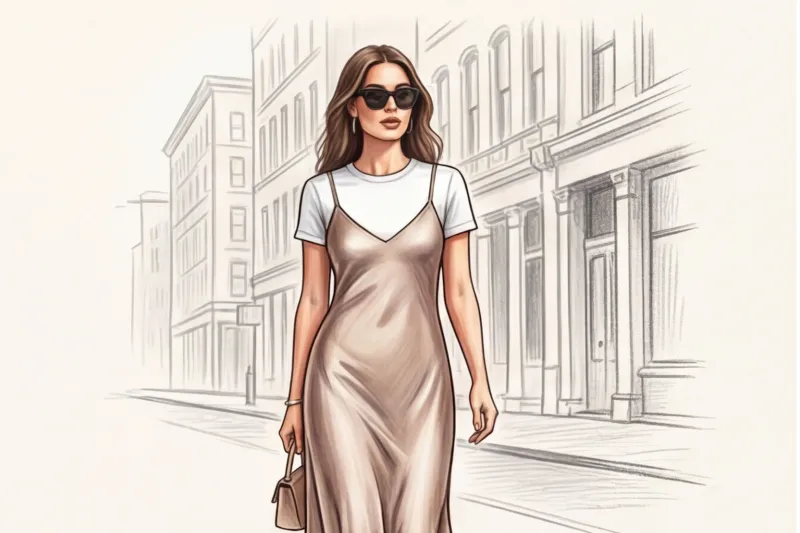
- Scenario 3: 90s Layering. A classic early grunge look is a basic cotton T-shirt worn underneath a slip. The key, often overlooked rule: the T-shirt should be made of a thin enough cotton to avoid bunching under the silk, but still have a tightly ribbed neckline. A white T-shirt with a classic crew neck tone down the dressy feel to a "just out for the bakery" level, adding a touch of irony to the look.
- Scenario 4: With a knot at the waist. During warmer weather, layer a loose linen shirt over the top. The trick is to leave the buttons unbuttoned and tie a loose knot just at the waist. This not only shields your shoulders from the sun but also creates the right proportions, visually lengthening your legs.
- Scenario 5: Winter vertical. A thin cashmere turtleneck is layered underneath, and the hem of the dress falls loosely, covering the tops of tall leather tube boots. The absence of visual breaks (exposed skin between the hem of the dress and the boots) creates a continuous vertical line of color, making the silhouette appear slimmer and more composed.
Corsets in Everyday Life: How to Wear Them and Avoid Vulgarity
In 2024, we finally said goodbye to the idea that a corset should be hidden under clothing or serve solely as a means of compression. A major paradigm shift has occurred: today, this wardrobe staple functions as an external architectural framework. According to a WGSN analytical report, sales of tightly fitted corsets have exceeded demand for traditional lingerie-style corsets by more than three times. And this makes perfect sense: a modern corset is about structure and posture, not the discomfort of the Victorian era.
A modern corset is the exoskeleton of your look. It should hold its shape independently, even when hanging on a hanger, and not simply stretch to fit your figure.
I vividly remember working with Anna, the communications director. She had a strict but boring office wardrobe: endless identical white shirts and gray trousers. We decided to experiment with layering. I picked out a graphite corset in a thick suiting fabric (an excellent basic from a premium mass market for €89) and suggested she wear it directly over a voluminous oversized cotton shirt. The result was phenomenal. The corset gathered the excess fabric, accentuated the waist, but the covered shoulders and collar completely neutralized the revealing look. This technique created a unique business smart-casual look and became her signature look at conferences.
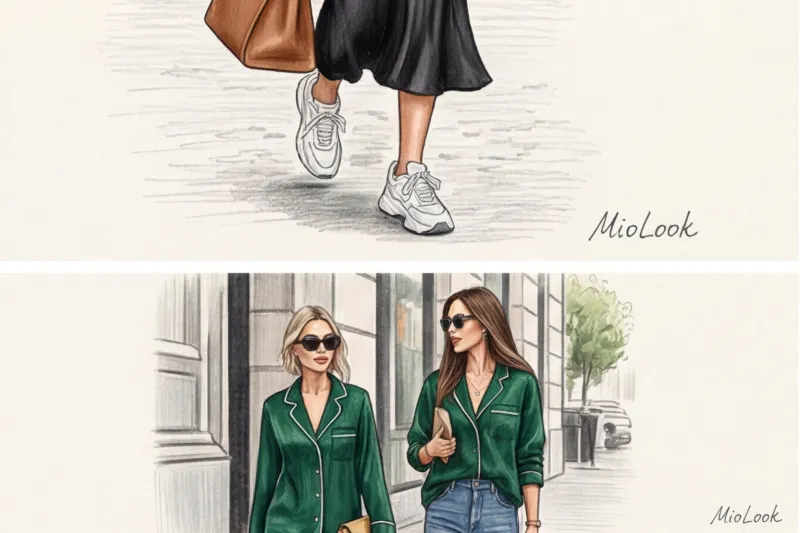
When wearing a structured corset solo or over a sleek basic T-shirt, the rule of volume balance comes into play. A rigid, form-fitting top requires a relaxed bottom. Wide palazzo pants with pleats at the waist are the perfect companion. The tight waistline flows smoothly into the flowing waves of the trousers' fabric. It's this contrast in form that gives lingerie-inspired clothing a noble and prestigious feel.
However, to prevent your look from slipping into the aesthetics of the 2000s or a stage costume, it's important to know the typical mistakes when choosing a corset for everyday wear:
- Linen materials: Forget thin satin with lace and flimsy plastic boning. A good urban corset is made of denim, matte leather, tapestry, or thick suiting wool. Invest in quality: a basic architectural model will cost around €70–€120 and will last you for years.
- Excessive push-up: Avoid styles that overly lift the bust. For everyday wear, choose straight cuts at the top (in the spirit of '90s minimalism) or clean, geometric cup shapes.
- Incorrect length: A well-tailored corset should either end exactly at the waistline of high-waisted trousers or extend slightly beyond it. A wide strip of exposed midriff instantly ruins the integrity of a mature look.
To avoid making mistakes with proportions when creating complex multi-layered looks, before leaving the house I always advise taking a photo of the look and uploading it to MioLook smart wardrobe — from the outside, any distortions in volumes and lengths are read in a second.
Access to MioLook for €0.99 — one-time payment
Start creating perfect images with the help of artificial intelligence
Get access — €0.99 onceSilk tops, bralettes, and crop tops: the architecture of layering
According to an analytical report from the Lyst platform at the end of last year, searches for crop tops and bralettes increased by 47%. But the paradox is that today, people aren't buying them to show off their entire bodies. The aggressive openness of the 2000s has given way to a smart layering architecture, where lingerie styles serve as a subtle accent rather than a statement piece.
Take a bralette, for example. The latest styling calls for intrigue: a silk or lace edge barely visible beneath a deliberately oversized cardigan, unbuttoned a couple of buttons. In my practice, I call this the "chance shot theory." You wear a thick, chunky-knit alpaca or merino cardigan (good basic models typically cost between €100 and €250), and underneath, a lightweight bralette. The coarse wool absorbs light, while the silk reflects it. It's this contrast in texture that creates visual depth and adds complexity to the look.
A similar mathematical principle applies to classic two-piece suits. A silk top worn with a tailored men's suit is the perfect balance of exposed body. The deep V-neck of the top with thin straps softens the harsh, angular shoulder line of the jacket, adding just the right amount of airiness to the otherwise heavy look. The main rule: between the lapels of an oversized jacket, only the smooth, flowing texture of the fabric and collarbone should be visible, without push-ups or excess volume in the décolleté area. When tucking such a top into trousers, use the "French tuck" technique—fasten only the front of the fabric behind the belt. This will define the waist while maintaining the necessary airiness.
When it comes to lingerie-inspired crop tops (especially those styled like vintage bustiers), their only legitimate partner outside of eveningwear is ultra-high-waisted bottoms. Wide, pleated palazzo pants or flowing maxi skirts should completely cover the navel, revealing only a strip of skin no more than 2-3 centimeters wide at the level of the lower ribs. This micro-detail creates the perfect horizontal line, visually lengthening the legs and instantly eliminating any unnecessary beachy slackness from the look.
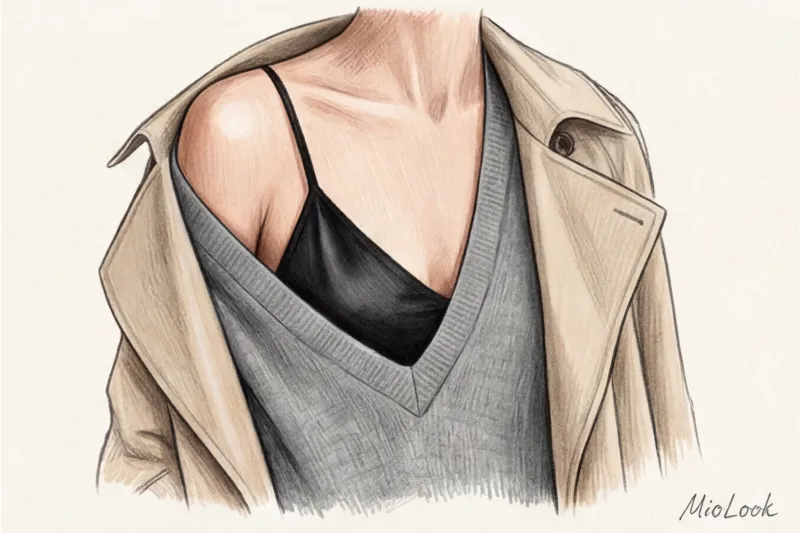
Here we come to a critical aspect that "breaks" nine out of ten looks. This is the rule of concealing underwear under lingerie-style tops. Thin silk, viscose, and satin act as a merciless magnifying glass for any unevenness.
Even the most expensive silk garment will look cheap if the texture of your bra shows through. In lingerie, the base is everything.
Here's my strict guide to choosing underwear for delicate fabrics to avoid the washboard effect:
- No lace or seams. Under the smooth top, only seamless laser-cut microfiber models are allowed, the so-called T-shirt bras.
- Skin tone rule. The color of your base layers should match your skin tone, not your top. A white bra will show through like a neon spot under white silk—choose caramel, beige, or coffee shades.
- Refusal of silicone. If your crop top has a complex neckline or halter neckline, avoid clear silicone straps (they're a total anti-trend). Use special kinesiology tape for your breasts or choose tops with built-in cups.
Integration into smart-casual and business wardrobes
How can you bring these techniques to the office without risking dress code violations? The secret lies in the physical properties of the fabric and the right color scheme.
As a stylist, I always recommend checking the density of silk before purchasing. In the textile industry, it's measured in momme. For evening wear or layering under a sweater, a thin fabric (12-14 momme) is acceptable. But how do you choose the right silk density for the office, where the top is a stand-alone piece under an unbuttoned jacket? Look for a minimum of 19-22 momme (high-quality items in this range start at €90). Test it against a light: the fabric shouldn't show through your body contours when placed against a window. Furthermore, thick silk creates heavy, sculpted folds and, crucial for the workday, is virtually wrinkle-free.
The second filter for smart casual is a color palette for tops that looks expensive. A categorical rejection of neon and overtly loud colors is a basic rule of a business wardrobe. Bright fuchsia on thin fabric often creates an unnecessary nod to disco aesthetics. Your best bet is deep tones: dark chocolate, rich emerald, deep wine (Marsala), or dusty navy. They act as a neutral base, absorbing light more elegantly, but at the same time look far more sophisticated and prestigious than plain black.
To avoid wasting time in the morning assessing how well an emerald top pairs with your gray wool jacket, I recommend digitizing these outfits in advance. Save successful layering combinations in MioLook The smart wardrobe feature will suggest ready-made, proven outfits from your existing items, eliminating morning panic in front of the mirror and the fear of looking out of place at an important meeting.
Pajama suits and kimonos on city streets
Remember when street style influencers started wearing silk two-piece suits for their morning coffee? The line between bedroom and street wear seems alarmingly thin, but in reality, it's measured in millimeters of fabric. To distinguish an expensive urban pajama-style suit from sleepwear, pay attention to the cut. A true urban two-piece suit has a thick piping (often contrasting), a stiff collar that holds its shape well, and full, deep pockets. If you choose high-quality silk with a 19-m/m weight (good basic options will cost between €150 and €250), the fabric will flow softly, not hang like a shapeless rag. No cheap elastic bands with gathered waistbands—just a smooth waistband in front and, perhaps, a hidden elastic band in the back.
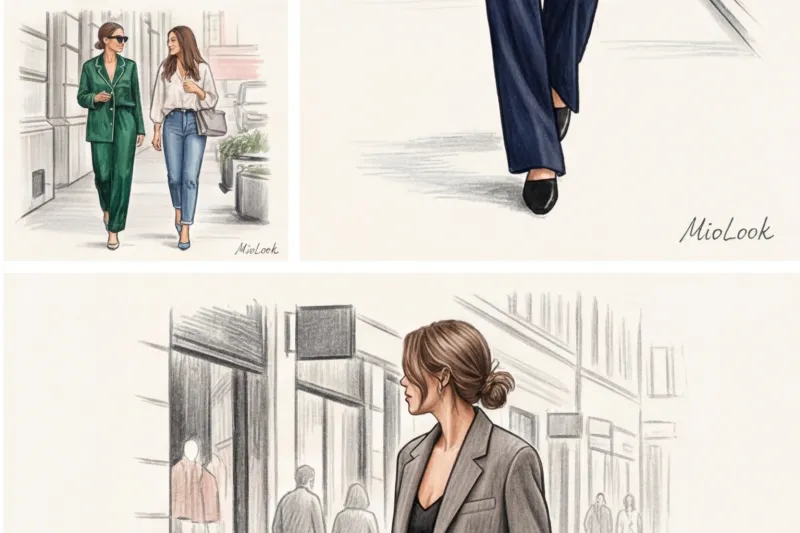
The main rule I repeat to every client: pajama style doesn't tolerate relaxed accessories. To avoid the "just woke up and forgot to change" look, we need geometric, crisp accents. Forget shapeless shoppers and canvas sneakers. Only classic pointed-toe pumps, tailored leather loafers, and a rigid, structured bag (such as a satchel or baguette) can salvage the relaxed silk texture. This visual contrast sends a clear message: you intentionally wore pajamas outside; it's a conscious fashion statement, not just plain laziness.
If a full silk two-piece seems too radical, start with deconstruction. Pajama pants work beautifully as a standalone smart-casual piece. My favorite styling trick is to pair flowy, wide-leg pants with a basic ribbed cotton tank top and a men's jacket with pronounced shoulders thrown over it. The result is a complex, multidimensional look, where the masculine formality of the jacket completely neutralizes the boudoir-like quality of the silk. If you're unsure about proportions, take a photo of your outfit and upload it to MioLook — the virtual wardrobe preview immediately shows whether the bedroom aesthetic is overpowering.
Another underrated hero of this trend is the silk kimono. A recent study by WGSN (2024) showed a 32% increase in interest in long capes as outerwear. A kimono easily replaces the usual summer trench coat or boring knit cardigan. Wear it over straight blue denim jeans and a white T-shirt, and you instantly transform even the most basic outfit into a bohemian one. Choose midi or maxi lengths and wear them unbuttoned, creating that perfect vertical color that visually elongates the silhouette by a couple of centimeters.
Your ideal image
it begins Here
Join thousands of users who look flawless every day with MioLook.
Get access — €0.99 onceCommon Mistakes: Myths About Lace and Fine Knitwear
Let's be honest: when we hear the term "lingerie style," most of us automatically picture miles of black synthetic lace. And this is the main stylistic trap that even seasoned fashionistas fall into. Observing the evolution of trends, I've come up with a counterintuitive yet absolutely ironclad rule: lace is the main enemy of expensive lingerie style.
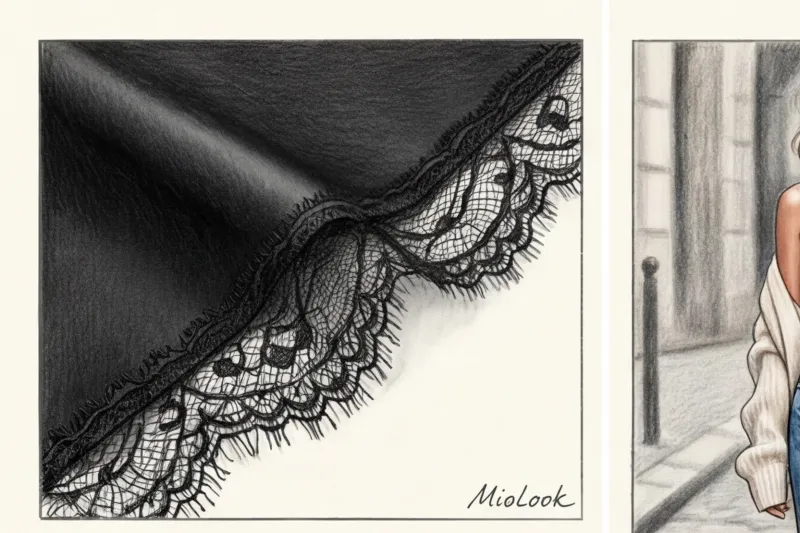
Why is this happening? Historically, the production of high-quality corded Chantilly or Alençon lace is a complex technological process. Genuine lace with a beautiful texture costs from €150 per meter. What we see on mass-market tops for €30–40 is flat polyester appliqué ("eyelashes") that doesn't hold its shape, quickly deforms, and literally screams its utilitarian, boudoir origins. The latest collections by Khaite and Jil Sander (2024) clearly demonstrate why minimalism always wins: clean cuts, architectural darts, and a complete lack of decorative elements create a truly prestigious piece that can easily be integrated into a daytime wardrobe.
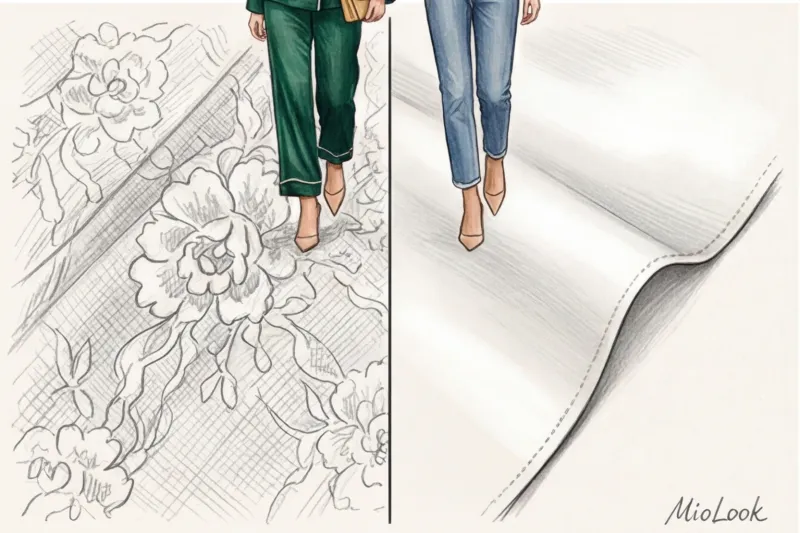
The second hidden danger is buying thin knitwear styled as lingerie. Viscose microknit tops with lace trim at the neckline are often passed off as "basic lingerie tops." In practice, such material stretches out after the first wash, becomes covered in pilling, and turns into a washed-out camisole. True lingerie style requires refined, shape-resistant textures: heavy silk crepe, dense satin, or high-tech cupro.
Particular attention should be paid to the fit. It's a grave mistake to assume that the aesthetics of lingerie style lie in a completely tight fit.
Glossy textures act like a magnifying glass. If satin is stretched too tightly across your figure, it will work against you, highlighting even the slightest imperfections in your underwear and body.
A silk slip or top should fit properly, allowing for airflow. It shouldn't cling to you like a second skin or a wetsuit. The optimal amount of ease is 2–4 centimeters away from the body. Only then will the fabric (especially if it's cut on the bias) flow beautifully as you walk, creating that dynamic, casual chic effect.
And finally, a critical mistake when putting together ready-to-wear outfits is ignoring the balance of matte and shiny finishes. Lingerie fabrics are highly reflective. If you're wearing a shiny satin top, the rest of your outfit is bound to absorb the light. Pairing glossy silk with patent leather or satin pants will transform you into a disco ball. To balance the look, always keep the bottom or second layer matte: choose dry denim, thick suiting wool, or textured suede.
If you have any doubts about whether the purchased item works in complex combinations, I recommend digitizing it and uploading it to MioLook A visual comparison of a lace top and its minimalist, smooth counterpart on a virtual canvas will instantly reveal: basic, unadorned silk offers 300% more smart-casual combinations with your current wardrobe.
MioLook Checklist: How to Choose the Perfect Lingerie-Inspired Item
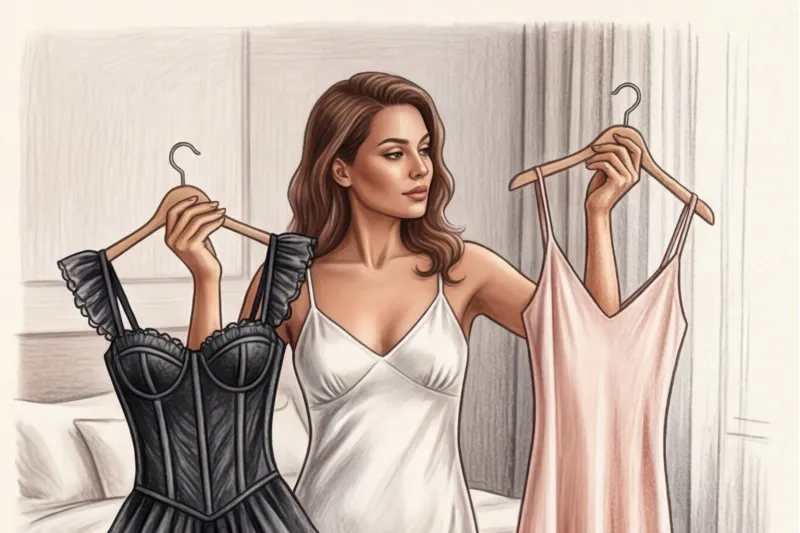
Last season, I held a closed workshop for aspiring buyers at a European multi-brand boutique. My main point, which was unconditionally agreed with by the production technologists present, was this: delicate fabrics don't forgive skimping on construction. What looks good on heavy cotton immediately betrays low quality on satin or silk, turning a noble garment into a sham. lingerie style in clothing into a cheap parody.
To ensure your shopping is mindful and your tops and slips don't end up dead weight in your closet, I've created a rigorous four-step filter. This is the algorithm I use to check every item before approving it for my clients.
1. Fabric density: light and wrinkle test
The first rule of working with flowing materials is that they must have their own weight. Take the hem of a dress or the edge of a top and look through it at a bright fitting room light. If you can clearly see the outline of your fingers and the tone of your skin, this item is not suitable for urban wear. It will be treacherously see-through in the sun and reveal even the slightest nuances of your underwear.
The second essential step is the wrinkle test. Squeeze the fabric tightly in your fist for 10 seconds and release. High-quality, dense silk, cupro, or good viscose satin will quickly straighten out, leaving only a slight, natural wave. If the material has become like wrinkled paper (a common culprit of cheap polyester blends in the mass-market segment under €40), you will look unkempt by the end of the workday.
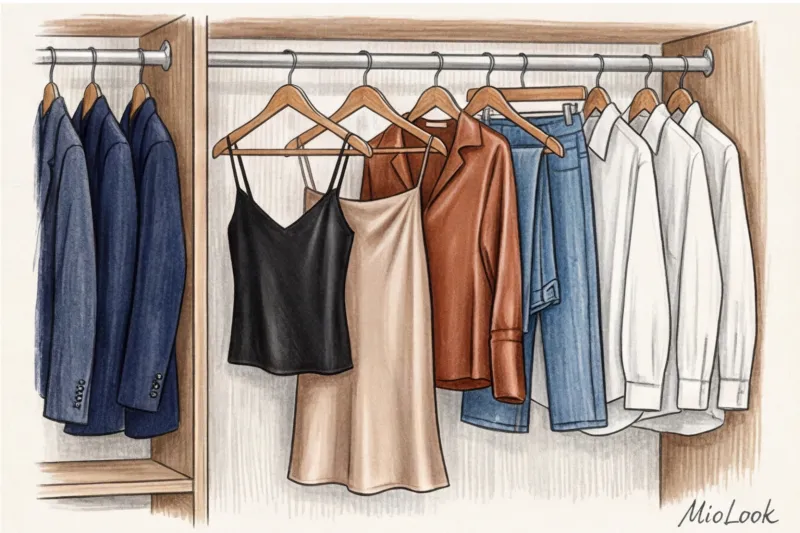
2. Quality of seams: look for a French seam
Turn the garment inside out. If you see a standard overlock with threads sticking out, feel free to return it to the hanger. Premium tailoring and respectable mid-market brands (in the €100–€250 range) exclusively use a French (also known as a lingerie) seam for delicate fabrics. This technique hides the edge of the fabric inside the seam itself, creating a neat, closed rib. This isn't just an aesthetically pleasing reverse side; it's a technical guarantee that the silk won't "run" along the seams or fall apart after the first hand wash.
3. Fittings: why plastic is unacceptable
The plastic length adjusters on the straps are an aggressive marker that instantly moves the item from the category of "elegant city wear" to the category of "sleepwear."
For everyday wear, both outdoors and in the office, only high-quality metal hardware is acceptable. Miniature metal rings and sliders (matched precisely to the fabric or finished in matte gold or silver) add weight to a thin strap. This ensures it lies flat, doesn't twist, or deform under the tension of the fabric. Consider this subtle nuance: it's these details that create the visual value of your look.
4. Assessing potential: the rule of three images before the checkout
Never buy an accent piece unless you know exactly what you'll wear it with tomorrow. Right in the fitting room, take out your smartphone and open your digital wardrobe in MioLook and mentally (or better yet, directly on the mood board in the app) put together at least three completely different sets of the things you have with a potential purchase already exists.
Test viability under three scenarios:
- With a voluminous wool cardigan and thick jeans (relaxed weekend look).
- Under a structured double-breasted jacket of a masculine cut (formal office).
- With a leather midi skirt and graphic heels (evening dinner).
If the puzzle doesn't fit together in at least two situations, the item is guaranteed to end up in the impulse buy graveyard.
Incorporating lingerie aesthetics into your everyday life does require a certain amount of perceptiveness and a willingness to experiment. But once you master the rule of contrasting textures and learn to distinguish a cheap glossy sheen from a refined matte finish, your wardrobe will truly shine. You'll stop dividing your clothes into strict categories of "evening" and "daytime," achieving that phenomenal capsule wardrobe versatility we all strive for. Treat silk, corsets, and lace not as a challenge to a conservative society, but as elegant architectural tools for creating truly profound and intelligent looks.
Guide Chapters
How to Wear a Slip Dress and T-Shirt Stylishly
Stylists' tips on how to avoid excess bulk when pairing silk and cotton. Learn how to skillfully incorporate lingerie style into your everyday wardrobe.
Lingerie Style for Plus Size Women: A Plus-Size Guide
A slip dress can look luxurious on a plus-size figure if you know the secrets of choosing fabric. We'll explore the key rules of lingerie style for plus-size figures.
Lingerie Style After 40: How to Wear It Elegantly
A silk top or slip dress can become your ultimate style statement. We'll explore how to wear lingerie after 40 to look classy and classy.
Lingerie-style top: what to wear with this basic item
Learn how to transform a lace top from a bedroom staple into a powerful architectural tool for your everyday wardrobe. Secrets to creating high-status looks from a stylist.
Pajama Style for Women: How to Wear It in the City
Silk pajamas have long since transcended the bedroom, becoming a legitimate urban uniform. We'll explain how to find the balance between effortless chic and casual sloppiness.
Slip dresses for fall and winter: secrets to warm looks
A silk slip dress can be the most valuable investment in your wardrobe. Learn how to layer it even in cold weather.
How to Wear a Bralette Under a Jacket: Stylish and Appropriate
A lingerie top isn't always provocative. We'll show you how to transform a bralette into an elegant micro-layer for formal suits and evening outfits.
How to Wear a Corset in Everyday Wear: Stylish Looks
Forget the stereotypes of the 2000s! We'll show you how to use a corset as a stylish structural layer to create elegant everyday looks.
What to Wear with a Slip Dress: 15+ Stylish Ideas
A silk lingerie-style dress is the most profitable investment in your wardrobe. We explore the formulas for stylish looks for every day and special occasions.
Silk midi skirt: what to wear it with in different seasons
Thin silk is a common mistake when choosing a summer wardrobe. A stylist explains how to find the perfect thick silk skirt and wear it effectively year-round.