An investment that works all year round: a slip dress for fall and winter
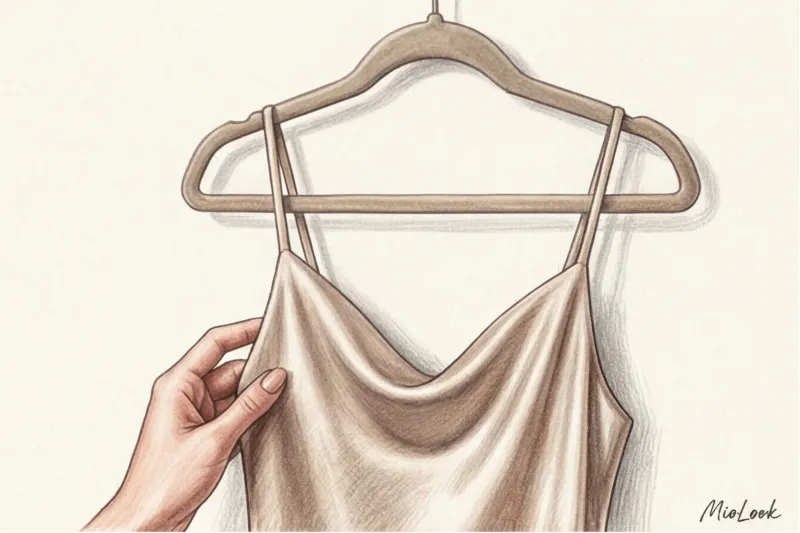
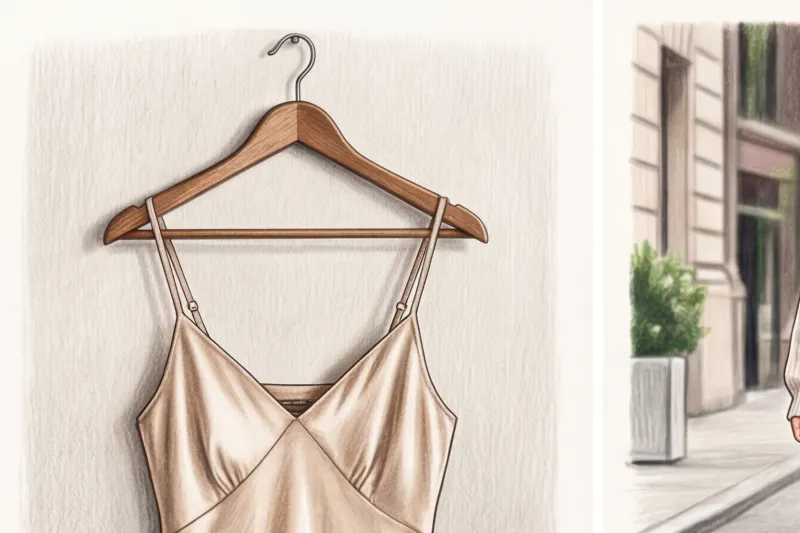
Let's start with some simple math. My client Anna bought a luxurious silk midi dress for €180. After wearing it just twice in August, she carefully packed it away in a bag until next summer. The Cost Per Wear (CPOW) was €90. When we reviewed her closet in November, I suggested integrating the same dress into a warm capsule wardrobe. By March, she'd worn it 35 times—to the office, to brunch, and to the theater. The CPO dropped to €5. That's why the right slip dress in autumn - this is not a fashion whim, but the most profitable asset of your wardrobe.
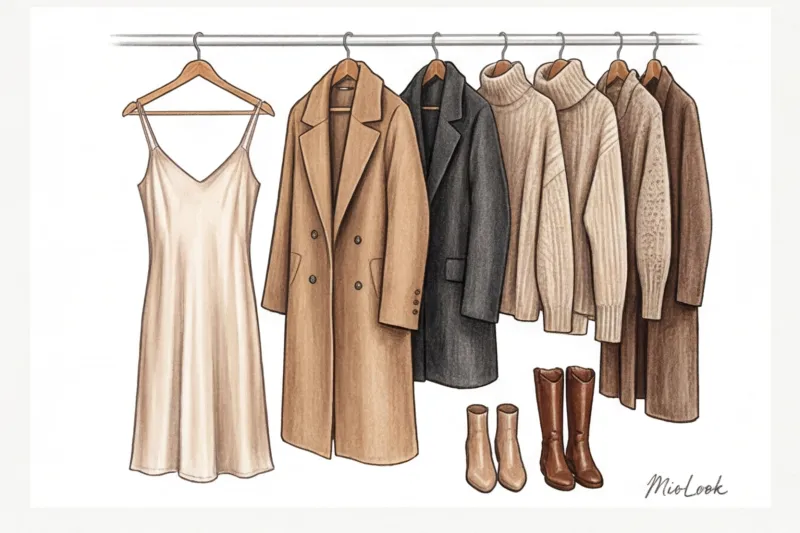
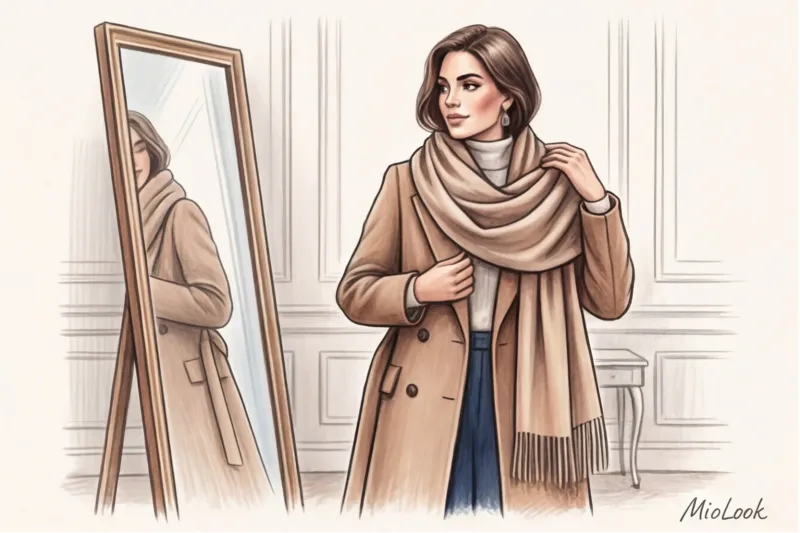
The transition from the lightweight feel of summer to the weight of winter clothing often creates a psychological barrier. It seems that thin, flowing fabric is completely incompatible with the harsh cold. However, carefully managing temperature conditions and textures is a complete game-changer. We've covered in detail how to make these pieces the foundation of your personal style in our comprehensive guide. Lingerie Style: How to Wear It Every Day.
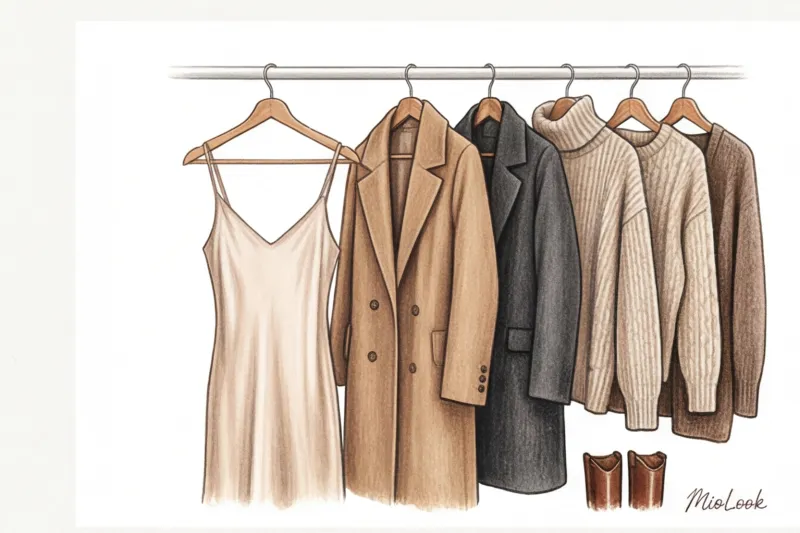
The secret to an all-season wardrobe lies not in the quantity of warm items, but in their clever combination. Before you head out shopping for another heavy sundress that you'll wear for exactly three months a year, break out your summer silk base layer. You'll be surprised how flexibly it adapts to knitwear, leather, and wool, if you know a few expert tricks.
Access to MioLook for €0.99 — one-time payment
A smart AI stylist will select the perfect look from your items.
Get access — €0.99 onceThe main secret of layering: the rule of textures and temperatures
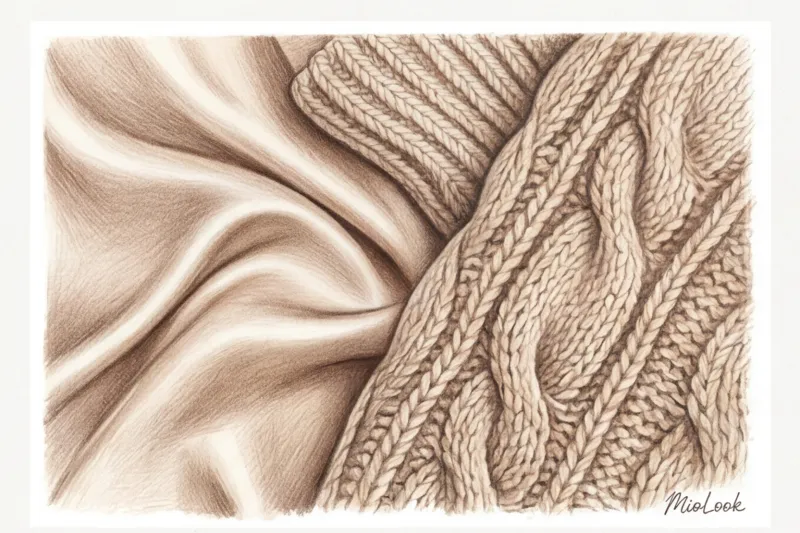
A successful fall look is built on radical contrast. According to Lyst's 2024 analytical report, tactile dressing has become the primary styling tool in the premium segment. Smooth, cool, and shiny silk should clash with rough, matte, and voluminous textures: shaggy mohair, rough leather, or dense suiting wool.
But there's a physical trap here. Many people try to insulate a cheap 100% polyester dress with a bulky acrylic sweater. The result? A greenhouse effect, zero thermoregulation, and a complete lack of comfort. Natural or blended silk (priced between €120 and €250) works completely differently. As a protein fiber, it adapts to body temperature. Under a dense wool layer, the thin silk thread acts as a lightweight thermal insulator, retaining heat while allowing the skin to breathe.
How to avoid the "cabbage" effect
Layering can easily detract from your figure and turn you into a shapeless cocoon. Over 14 years of working as a stylist, I've developed a strict three-layer rule for lingerie styling. The first layer is an invisible base layer (thermal underwear or a sleek top), the second is the dress itself, and the third is a voluminous top (a sweater, jacket, or cardigan). If the top layer is noticeably oversized, the bottom should flow and hug the hips, otherwise the proportions will be distorted.
Also, pay attention to your waistline. If you're wearing a long, voluminous cardigan over a midi dress, unbutton it from the bottom to the waist as you walk to create a vertical line and visually elongate your height.
What to Wear DOWN: Invisible Base Layers and Dangerous Turtlenecks
It's time to bust one of the most persistent myths of the 2010s fashion magazines. The popular advice to "just wear a turtleneck under a slip" is 90% unflattering. Thin silk or viscose lingerie works like a magnifying glass: they will treacherously highlight every ribbing in the knitwear, the seams on the shoulders, the folds at the waist, and even the contours of your bra under the turtleneck.
What to use instead? The industry has come a long way. The ideal modern alternative is the thinnest seamless thermal underwear with a deep neckline (for example, from brands like Intimissimi or Uniqlo, which range from €30-€50). They blend seamlessly with the skin and don't create any additional contours.
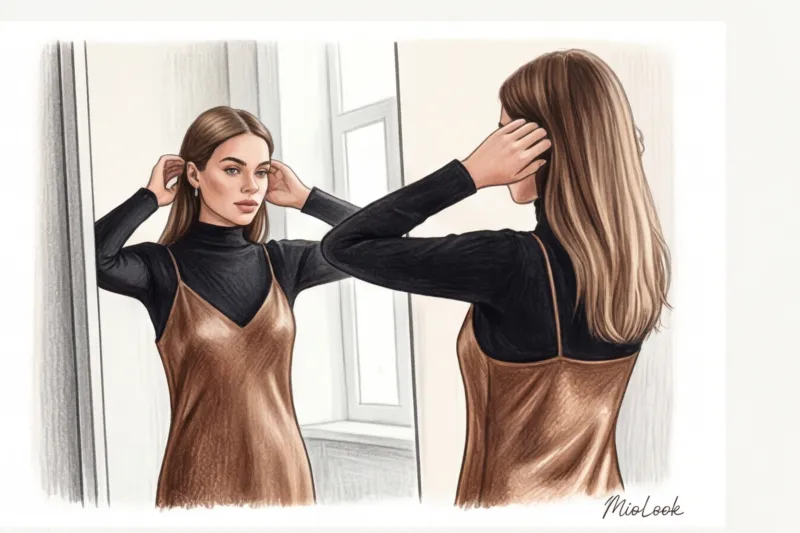
If you absolutely must show off your underlayer, choose micromodal or cashmere-silk in a completely smooth knit, without textured cables or ribs. Important: the turtleneck should fit like a second skin. Any excess fabric fold under the arms that shows through the dress will instantly cheapen your look.
Your perfect look starts here
Join thousands of users who look flawless every day with MioLook.
Get access — €0.99 onceWhat to wear ON TOP: sweaters, jackets, and cardigans
My favorite trick, which I use on every other client, is turning a dress into a silk skirt with a chunky sweater. But if you simply pull a long sweater over your slip, it will "swallow" your legs and lower your center of gravity. You need a slouchy fit.
Here's a pro life hack: place a thin, smooth belt over your dress (at or just above your waist). Then put on a sweater and carefully tuck the hem under the belt, creating a beautiful drape. This will crop the sweater, accentuate your waist, and prevent the delicate fabric of the dress from being damaged by any snags. A disclaimer: this trick will NOT work if your dress has a complex bias cut with draping—the belt will inevitably distort the natural folds of the hem.

The tailored jacket: the perfect balance for smart-casual style
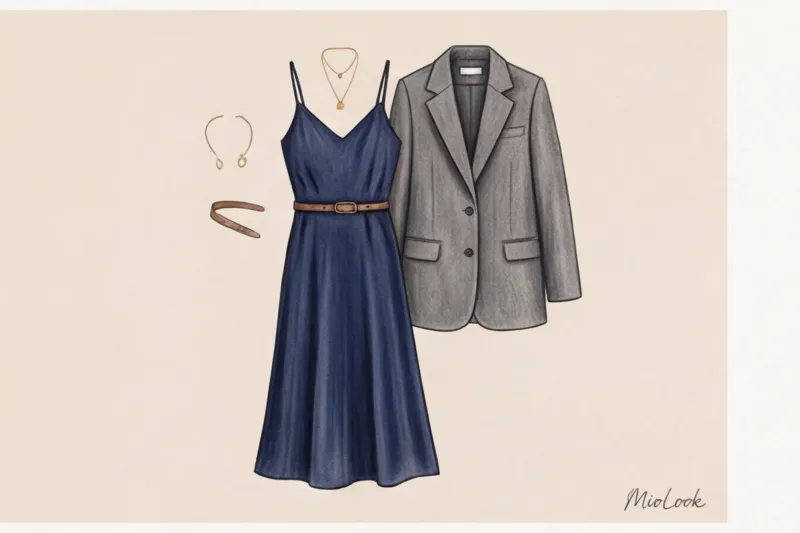
For a business environment where strict dress codes have given way to smart casual, there's no better combination than a linen dress and a tailored jacket. According to tailoring standards, choose a jacket made of heavy suiting wool (at least 350 g/m²) to ensure its shape remains intact.
Deep jewel tones—emerald, sapphire, dark chocolate—in a monochrome version create an incredibly classy look. Silk will create a reflective effect, while the matte wool of the jacket will absorb the light, creating visual depth.
Tights and shoes: how to combine lightweight silk with winter reality
The most common question I get from my clients is, "What kind of tights should I wear with these?" Thin 20-denier tights look out of place with a heavy coat in winter, while thick 100-denier tights make your legs look wooden. The golden rule for silk hem density is 50-70 denier with a completely matte, velour-like texture (3D microfiber). They're thick enough to prevent skin from showing through, but they don't look like sweatpants.
Now, about the main problem: static electricity. When silk meets polyamide tights, the dress inevitably starts to stick to your legs and ride up. Here are three proven stylist tips on how to avoid this:
- Emergency method: Apply a small amount of rich, moisturizing body lotion directly to your tights (on your inner thighs) before going out. The moisture instantly eliminates static.
- Metal anchor: Place a tiny safety pin on the inside seam of the dress hem (where it's not visible). The metal will absorb the electrical charge.
- Special spray: Use professional, unscented anti-static sprays, but spray them ONLY on the tights, not on the dress itself, to avoid oil stains on the silk.
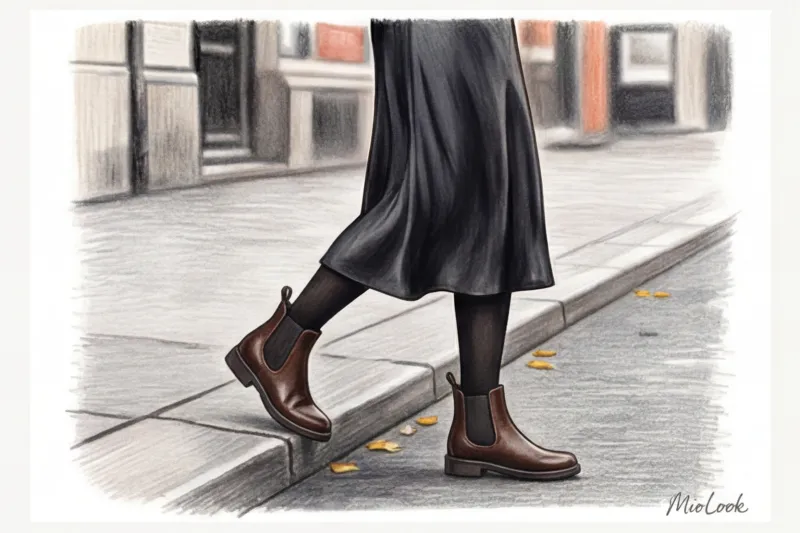
When it comes to footwear, tone down the dressiness. Save the dainty stilettos for a corporate event. During the day, a slip dress looks chic with chunky Chelsea boots with a tractor sole (excellent options can be found in the €150-€250 range) or tall suede boots with a wide shaft that extends right up to the hem of the dress.
Ready to get started?
Try a free plan—no commitments. Digitize your wardrobe with MioLook.
Get access — €0.99 onceChecklist: 5 Common Mistakes When Styling a Slip Dress in Cold Weather
After poring over street style reports, it's easy to make a styling mistake that can ruin the entire aesthetic of your look. Test yourself with this short checklist, compiled from real-life wardrobe analyses of my clients:
- Fine knit cardigans with small buttons. They hopelessly cheapen the look and make it look like you're just throwing on a sweater to keep out the cold. Opt for chunky, oversized cardigans in a thick knit.
- Sheer lace lingerie. Under a thick sweater or jacket, the delicate fabric of a dress will press against the body. The textured lace of a bra will bulge under the silk. Use only smooth base layers.
- Nude shiny tights. Absolutely taboo. They create a "plastic legs" effect, which is especially noticeable against the elegant matte sheen of silk. Either thick black or colored ones, or nothing at all (if the climate permits).
- The length of the outerwear does not match. Ideally, the coat should completely cover the hem of the dress, or the dress should protrude from underneath the coat in a solid block (15-20 cm). If the hem sticks out 2-3 cm, it looks untidy.
- Cheap fittings on warm clothes. Shiny plastic buttons on a cardigan or poor-quality zippers clash sharply with the flowing shine of a slip. If the item is on a budget, replace the buttons with horn or metal ones—it costs about €10, but will visually increase the cost of the outfit several times over.
Summary: From the office to the theater in one dress
The modern pace of life demands adaptability from our wardrobe. Imagine the classic top manager scenario: a morning meeting, a daily routine, and a corporate dinner in the evening. One silk dress can cover all these tasks without even needing to leave the house.
In the morning, you wear it with opaque tights, a heavy wool men's-style jacket, and ankle boots. For evening, simply remove the jacket, replacing it with a stole draped over your shoulders or leaving your arms bare, swap the roomy tote for a sturdy clutch, and add statement earrings. The entire transformation takes exactly three minutes.

The main point I want to convey is this: don't divide your wardrobe into strict seasonal blocks. The slip dress is your trump card and a canvas for creating dozens of looks. Before you head out to buy new winter pieces, open your closet and take a fresh look at your summer dresses. Your perfect fall capsule wardrobe might already be hanging there, waiting for the perfect sweater.
And to avoid racking your brains over texture combinations in the morning, upload photos of your things to MioLook Smart algorithms will automatically suggest dozens of stylish ways to style your summer dress for cold weather, saving you time and stress every day.