Physics of fabric, not a test of courage
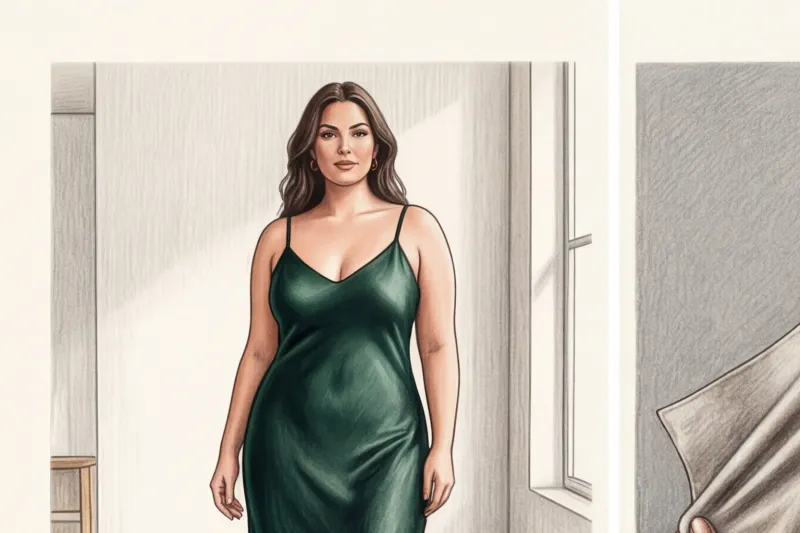
I had a client in my practice, a size 52, who, with tears in her eyes, refused to leave the fitting room. She was wearing a slip dress from a popular high-street brand. The thin, shiny polyester clung treacherously to her legs, accentuating every crease in her underwear, and turning this otherwise gorgeous woman into a taut, self-conscious mess. I asked her to remove this "mishap" and change into a different dress—one made of thick, 22-mommie silk, cut just right. Stepping into the mirror, she froze: the heavy fabric flowed over her figure like liquid metal, gently hugging her curves and not catching on any unevenness. Her silhouette elongated, and not a trace of insecurity remained.
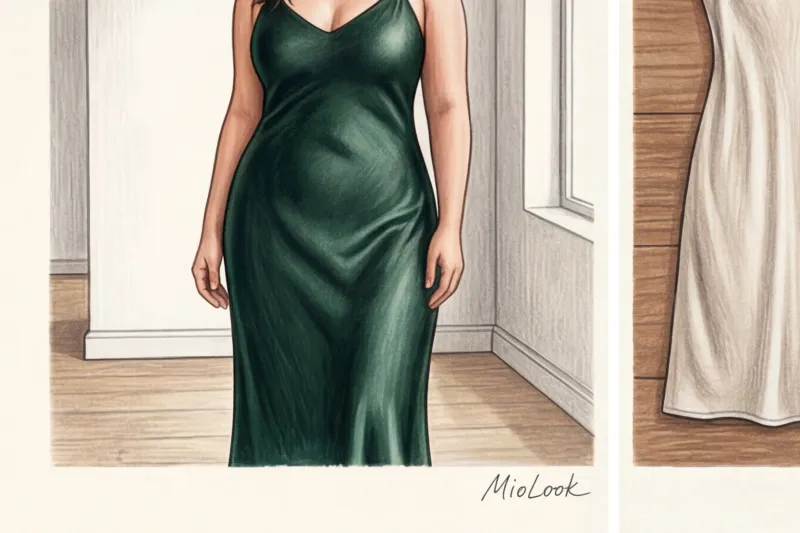
Lingerie style for plus-size women isn't about the courage to "undress" or flaunt your curves. It's about the pure physics and geometry of fabrics. We discussed the basic principles of incorporating such pieces in more detail in our complete guide to everyday lingerie style.
The main reason plus-size women are afraid of slip dresses is the traumatic experience with cheap fabrics. Mass-market items are made from the thinnest synthetics, which become magnetic to the body. Heavy, flowing materials work completely differently: under their own weight, they sink downward, creating vertical folds that act as a perfect visual sculptor.
The main secret of the perfect fit: bias cut and darts
Do you know why vintage silk dresses fit so perfectly on any figure? The answer lies in a technique perfected in the 1920s by French fashion designer Madeleine Vionnet, the inventor of the bias cut.
Bias cutting means laying the patterns on the fabric at a precise 45-degree angle to the grain. The mathematics of this process is ingenious: non-stretch fabric cut this way acquires natural stretch and elasticity. It adapts to the differences in waist, hips, and bust without a single gram of elastane.
"Bias cutting is the only way to make fabric respect the natural lines of a woman's body, rather than confining it to a sheath," said Madeleine Vionnet, and for a plus-size figure, this rule works without fail.
Another critical design element is bust darts. Many budget brands remove them to save on production costs, offering simply two sewn rectangles. For women with fuller busts, a dress without darts is a death sentence. It will either flatten the bust or bulge unattractively at the armholes.
The correct density of silk and viscose
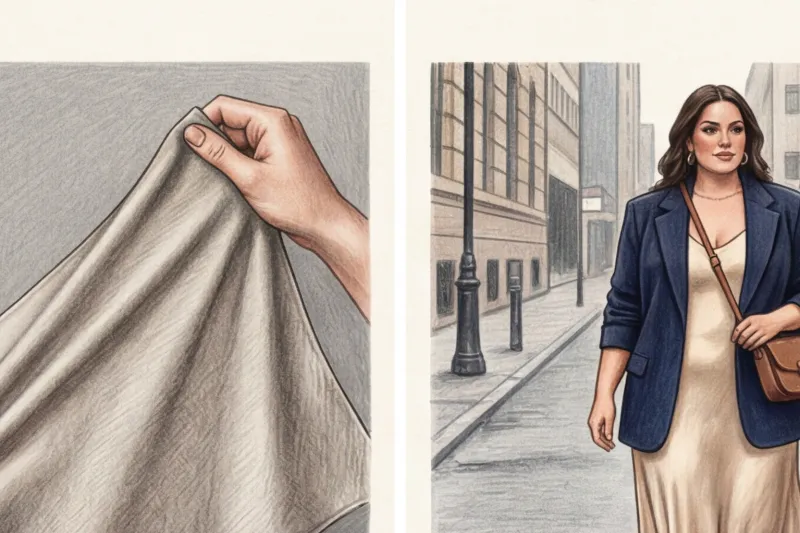
In the textile industry, silk density is measured in momme (mm). What we see in budget stores is typically 12–14 mm (a translucent material suitable only for pajamas). The ideal slip dress for a fuller figure should have a density of at least 19 mm, and ideally 22 mm.
What if natural silk of this density is beyond your budget? Look for high-quality alternatives. Cupro (a "vegan silk" made from cotton linters), heavy viscose (from 180 g/m²), or Tencel (lyocell) have similar properties for beautiful, heavy drape.
Why Polyester Is a Slip Dress's Worst Enemy
Cheap polyester ruins the very essence of underwear style. Firstly, it creates static electricity. The fabric clings to your tights and legs, bunching up between your thighs as you walk. Secondly, it creates a greenhouse effect: in the summer, the skin underneath the synthetic material suffocates, and in the winter, you freeze due to condensation.
Let's calculate Cost Per Wear (Cost Per Wear). Let's say you bought a trendy polyester dress for €40. You wore it twice, sweated, experienced static cling, and hung it up. CPW = €20. If you invest €150 in a heavy cupro dress that you wear year-round with jackets and sweaters (at least 30 times a year), your CWP would be only €5. That's what a smart wardrobe is all about.
Access to MioLook for €0.99 — one-time payment
A smart AI stylist will select the perfect look based on your proportions and favorite fabrics.
Get access — €0.99 oncePlus-size slip dress: how to choose and what to wear
Length is everything. For a fuller figure, a midi (just below the knee, at the narrowest point under the calf) or maxi is ideal. If the hem ends at the widest part of the shin, it visually "cuts" the leg and adds bulk. As a stylist, I always ask my clients to do a simple test in the fitting room: the dress should slide across the hips, not feel tight. If horizontal creases form in the fabric, feel free to go up a size. Oversized, in a lingerie style, looks luxurious, while tight-fitting, in a slouchy style, looks shabby.
Many people are intimidated by thin spaghetti straps. If a dress is cut correctly and has the right amount of bust, thin straps won't dig into the shoulders because they don't bear the bulk of the dress's weight. However, if this is uncomfortable, choose styles with medium-width straps (about 2-3 cm)—they do a great job of hiding the straps of a basic bra.
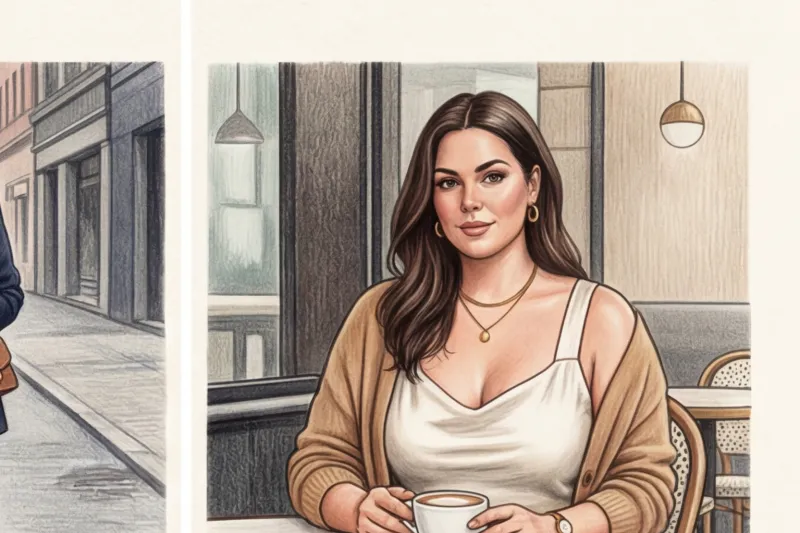
Image formulas without the "I just woke up" effect
To prevent lingerie style from looking like pajamas, it needs to be grounded with textures from a different opera:
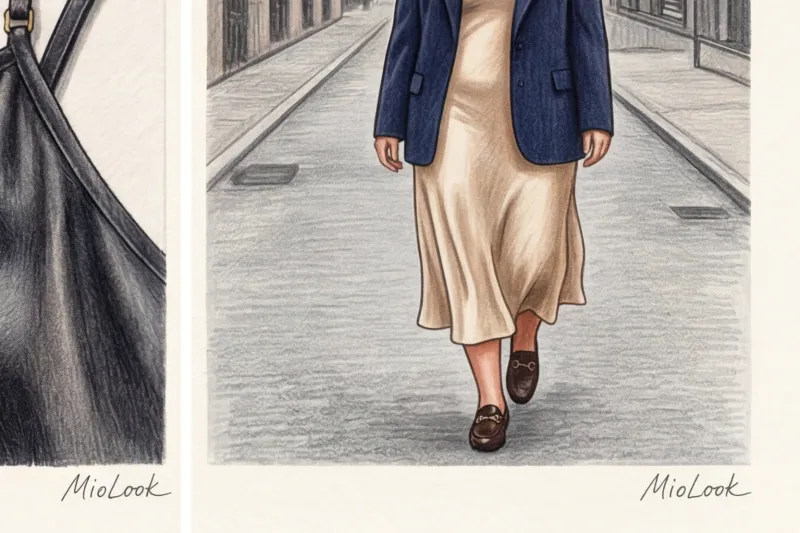
- Play of contrasts (office chic): Slip dress + structured, oversized wool jacket + chunky loafers. The stiff shoulder of the jacket brings together the relaxed feel of the silk. This is a great look if you're putting together a office wardrobe for plus size women.
- Cozy casual: A combination of a chunky, textured knit sweater (cashmere or merino wool) and chunky Chelsea boots. The contrast between the smooth and fluffy textures looks expensive (according to the PANTONE Color Institute, this texture combination remains a key trend for 2025).
- Dress as a skirt: Layer a thick, basic T-shirt (200 g/m² cotton or higher) or a minimalist hoodie over the top. You can define your waist by tucking the hem of the T-shirt into an invisible strap under your chest.
Silk Cami Tops: Wardrobe Integration
A thick silk top is the invisible hero of layering. Unlike cotton camisoles, silk doesn't create friction. Jackets and cardigans slide over it without bunching up your back or sleeves.
When choosing a top for a plus-size figure, pay attention to the armholes. They shouldn't dig into the armpits, creating unnecessary bulges. A V-neck is your best friend; it visually elongates the neck and highlights the collarbones. If you're not ready to give up a standard, thick bra, look for tops with wide straps. They fit even the most formal business attire while remaining an elegant staple.
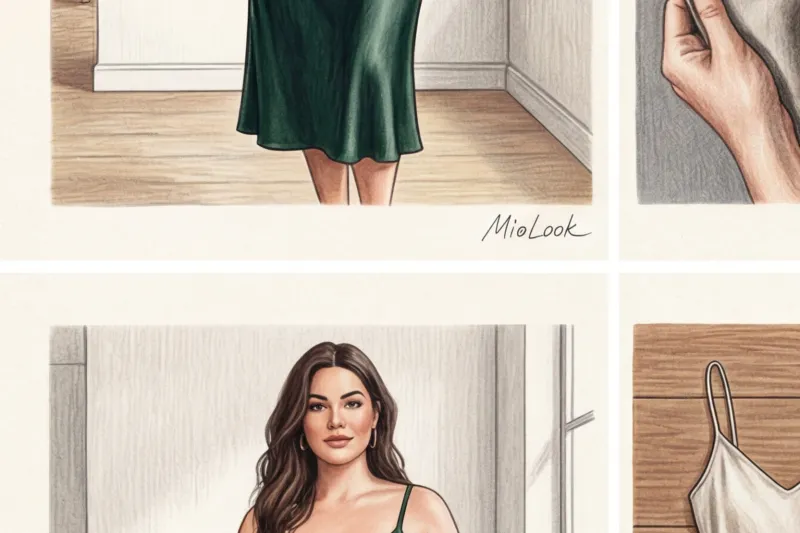
Integrating such basic pieces requires a system. If you're having trouble figuring out what to wear with a silk top, try the virtual wardrobe feature in MioLook The app will help you create dozens of combinations with items already hanging in your closet.
Debunking the myths: shapewear and shiny textures
There is a harmful myth that plus-size women must wear rigid shapewear (corsets, tight, highly shaping panties) under a slip dress. This is the main mistake.
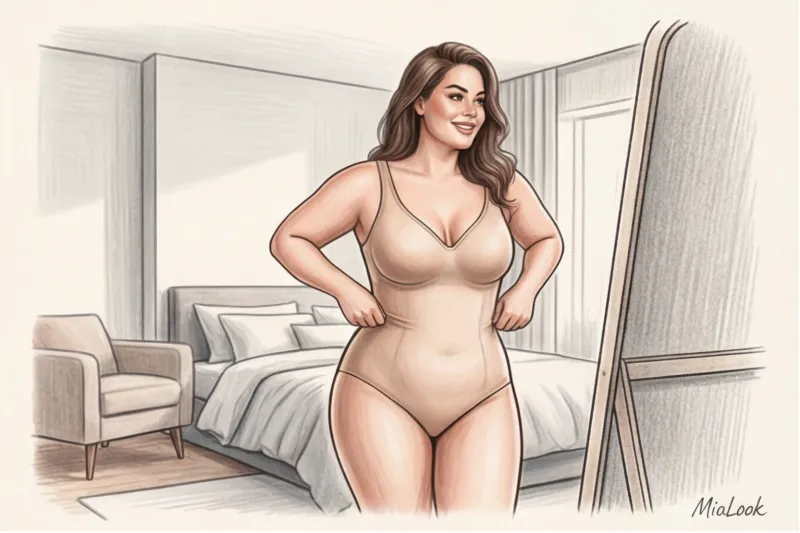
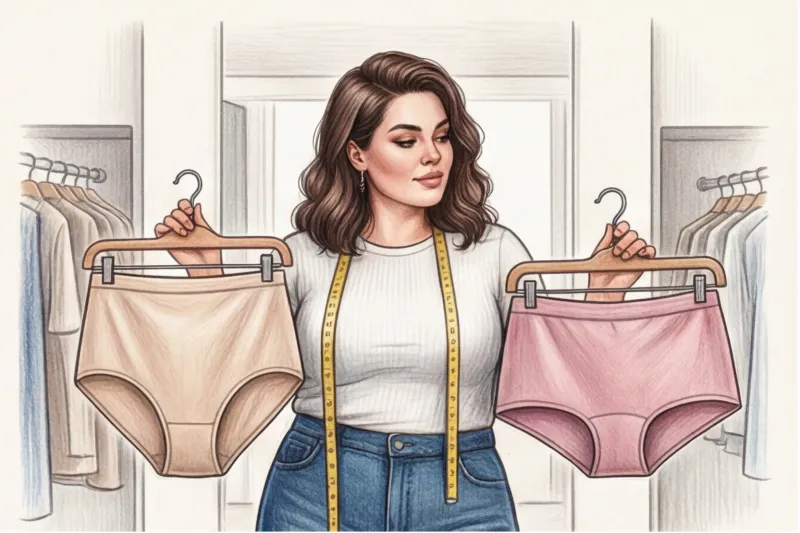
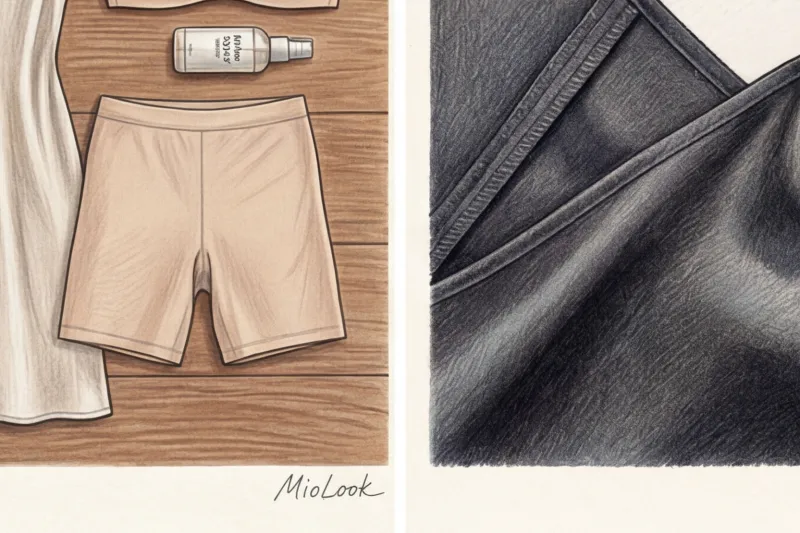
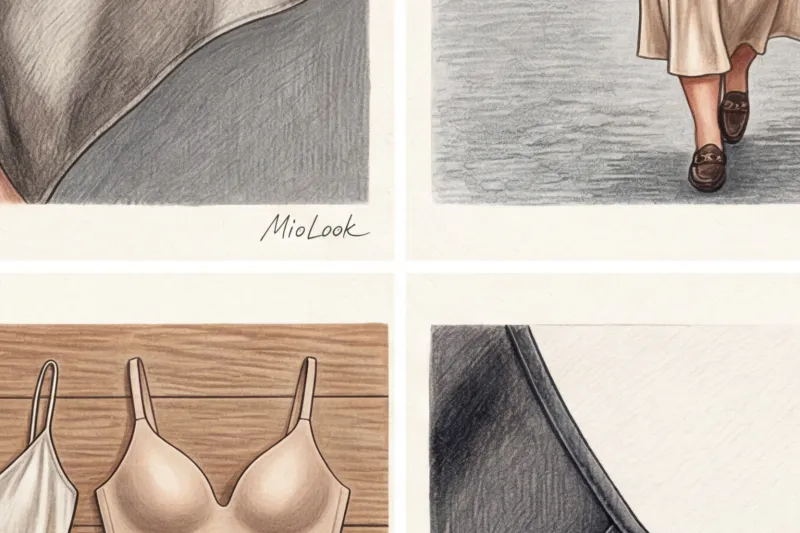
Rigid compression distorts the natural flow of fabric. Bias-cuts are meant to flow, but shapewear creates sharp lines on the skin—the so-called "overstretched sausage effect," which shiny fabric instantly highlights. The solution? Forgo shaping in favor of comfort. Your best bet is ultra-thin, seamless bandalette shorts to prevent chafing on your inner thighs. No compression, just a smooth silhouette and freedom of movement.
The second myth is that plus-size women shouldn't wear shiny clothes. This is partly true if we're talking about cheap synthetic satin, which produces a harsh sheen that visually adds volume. But the matte sheen of high-quality sandwashed silk or cupro works differently. It diffuses the light, creating a soft highlighter effect on the figure.
Your perfect look starts here
Join thousands of users who look flawless every day with MioLook, without spending hours getting ready.
Get access — €0.99 onceAn eco-friendly approach and a checklist: how to check the quality of an item before buying
As a fabric expert, I always teach my clients to turn garments inside out. The quality of a garment is determined by how it looks on the inside. Here's my fitting room checklist:
- Static test: Rub the hem of your dress against your tights or hair. If the fabric is cracked and stuck, leave it in the store. It will save you some stress.
- French (lingerie) seam: Look at the side seams from the inside. The fabric edges should be hidden inside the seam itself (closed edge), not simply finished with an overlock. A French seam ensures that a bias-cut dress won't unravel at the hips on the first night.
- Fittings: A quality top or dress should have metal strap adjusters. Plastic ones break easily, and the lack of adjustment will prevent the darts from being centered precisely in the bust.
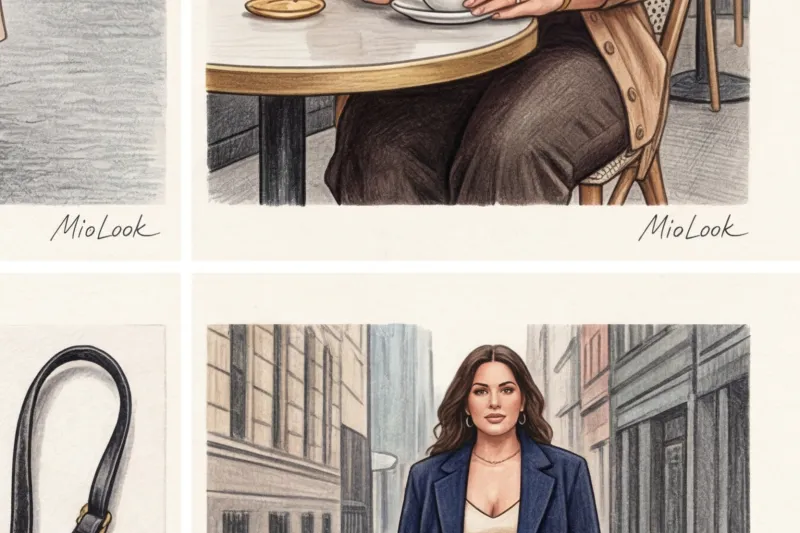
This approach helps to form capsule wardrobe consciously. You buy less often, but things last for years.
Conclusion: Invest in invoices
Lingerie style is no longer a passing trend, but a foundation of a modern wardrobe staple. Lyst's 2024 consumer preference study confirms that demand for high-quality, basic slip dresses is only growing across all sizes.
It's time to stop hiding your body behind shapeless, thick knitwear. The right silk, cupro, or viscose will give you a whole new sense of self—light, dynamic, and incredibly elegant. Invest in the right fabric density and a precise cut, and you'll see how your clothes begin to boost your confidence.