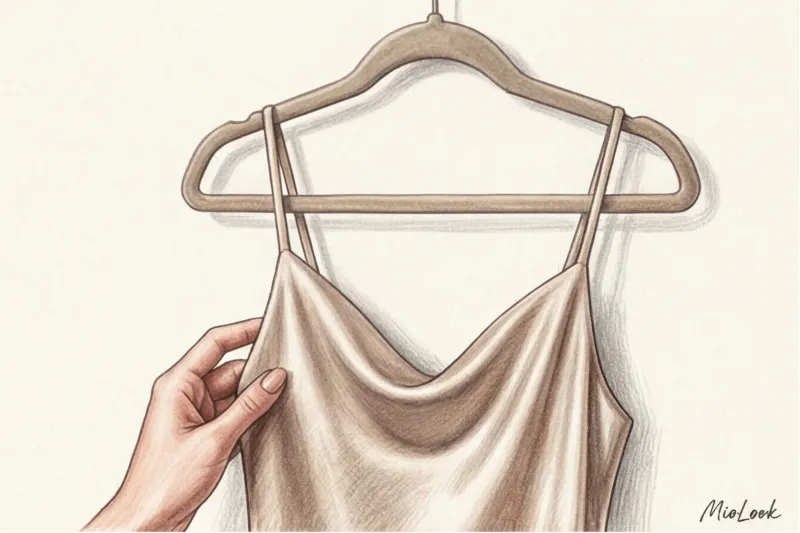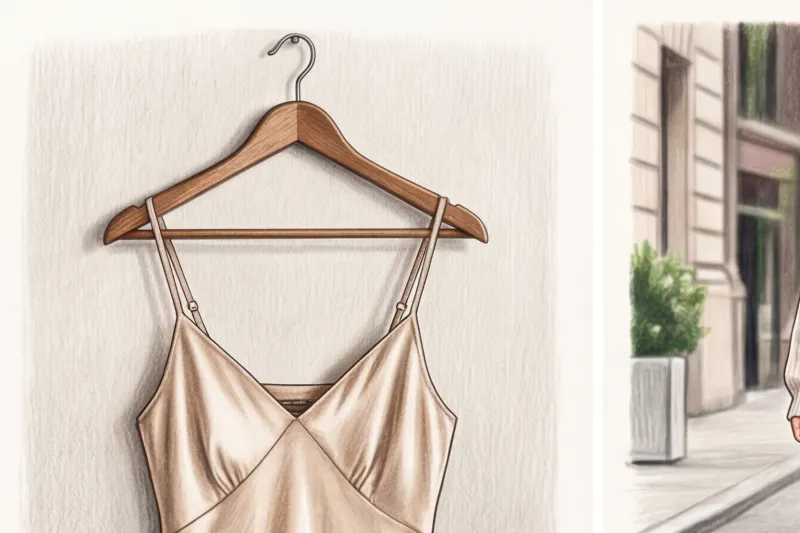
Do you know what item in my wardrobe has the lowest cost per wear? No, it's not basic straight-leg jeans or even a classic trench coat. After twelve years as a personal stylist, I've come to a surprising conclusion: silk is the most cost-effective fabric. My favorite dark chocolate dress, at €150, pays for itself faster than a €60 cotton T-shirt because I wear it year-round. And if you're still Googling "what to wear with a slip dress" and wondering whether it's worth adding one to your wardrobe, this article will forever change your approach to lingerie styling.
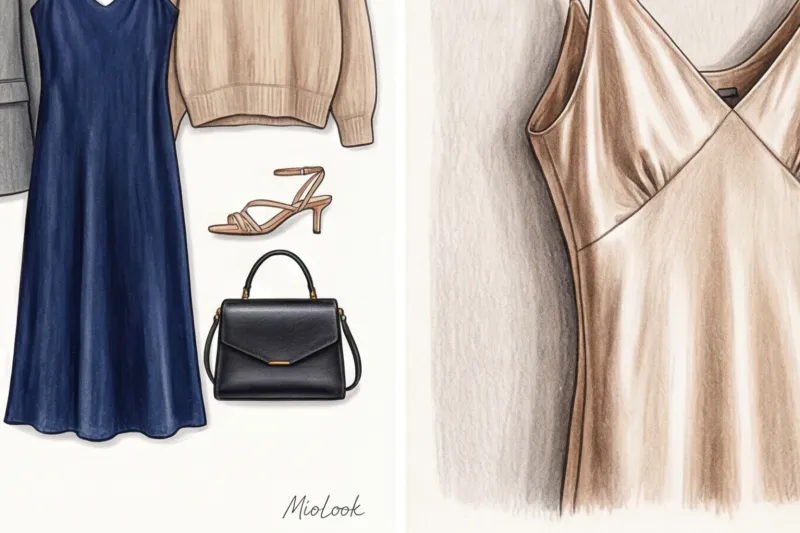
We talked in more detail about the origins of this phenomenon and how silk became the foundation of modern smart casual in our a complete guide to everyday lingerie style Today we'll explore the mathematics of ideal proportions and formulas that work without fail.
The Anatomy of the Perfect Basic: Why a Slip Dress Isn't a Trend, It's an Investment
To understand why some dresses fit like a second skin, while others gather in untidy folds, we need to remember the 1920s. It was then that the great Madeleine Vionnet revolutionized clothing design with the invention of the bias cut. Fabric is cut at a 45-degree angle to the grain, giving the stiff material phenomenal elasticity. A bias-cut dress flows smoothly across the body, hugging curves rather than digging into them.
But the bias cut is only half the battle. The second most important detail is the density of the fabric. As a stylist, I categorically forbid my clients from buying thin, flimsy polyester.
- Density rule: If you choose natural silk, look for a density rating of 19 to 22 momme on the label or in the description.
- Anything under 16 momme is considered sleepwear. It will be treacherously see-through and will even highlight the contours of your underwear.
- The dense material (around 22 momme) has enough weight to pull the hem down, elongating the silhouette and creating that architectural vertical.
Let's do the math. A high-quality basic dress in the mid-range segment will cost you around €120-€200. You'll wear it in the summer with sandals (30 times), in the fall with a sweater and Cossack boots (20 times), and in the winter with a cardigan for a New Year's corporate party and get-together with friends (15 times). That's 65 times a year. The cost per wear (CPW) is about €2. This is pure investment math.
Your perfect wardrobe in your pocket
Want to know which of your sweaters and jackets would pair best with a slip dress? Upload them to MioLook, and the algorithm will create ready-made looks.
Get access — €0.99 onceHow to Wear a Slip Dress Every Day: 5 Styles for the City
My favorite stylistic technique, which I call "Mediterranean casualness," is a play on stark contrasts of textures. Smooth, shiny, flowing silk looks too dressy and boudoir-like when left alone. Our goal is to "calm" it with rough, matte, heavy neighbors. The weight contrast rule, taught at the Istituto Marangoni, is the foundation of the most stylish urban looks.
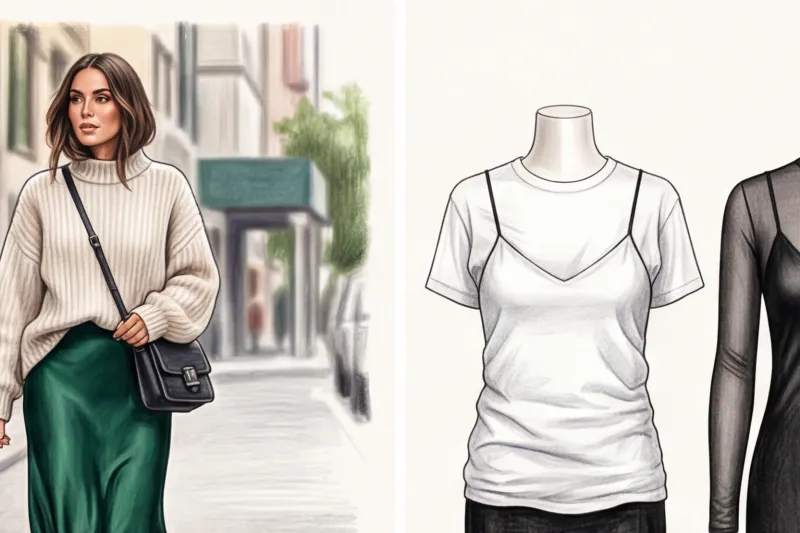
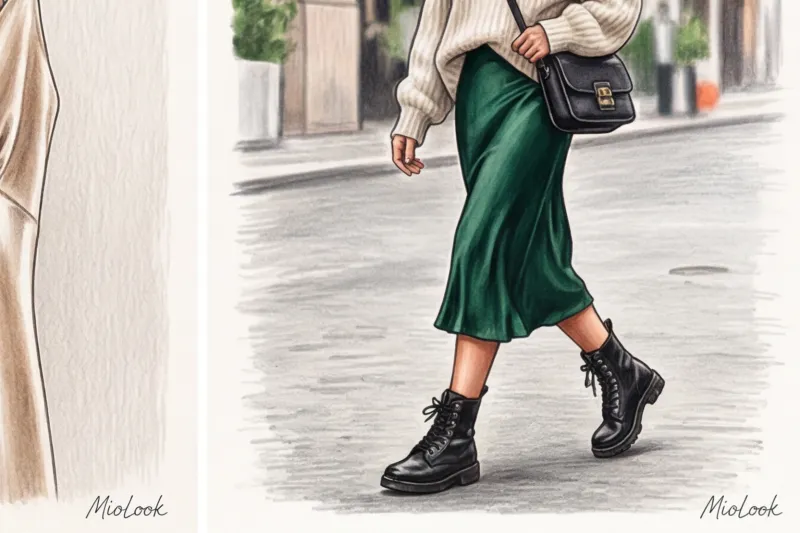
Formula 1: Oversized sweater + silk + Cossack boots or rough boots
In this formula, the dress functions solely as a midi skirt. Take a heavy, chunky knit sweater (ideally, one containing alpaca or mohair—they create a fluffy, matte texture) and wear it over the dress.
Stylist life hack: Avoid wearing a sweater that's pulled all the way to your mid-thigh—this will throw off your proportions and make your legs look short. Place a thin leather belt around your waist, just over the dress, and then tuck the edge of the sweater into the belt, creating a slight drape. This will shorten the sweater, create a waistline, and make the belt completely invisible.
Complete the look with chunky boots with a tractor sole or suede Cossack boots. Heavy footwear grounds the look, making it suitable for long walks or brunch.
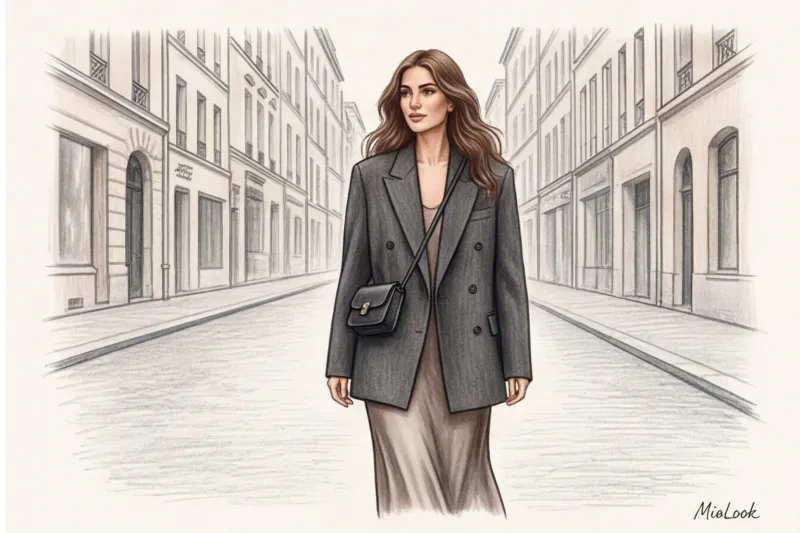
Formula 2: Men's oversized jacket + loafers
An ideal solution for business casual dress codes in companies where a formal suit isn't required, but a put-together look is essential. Read more about these looks in the article about business casual for women.
The secret here lies in the length of the jacket. It should be truly voluminous (as if taken from a man's shoulder) and Necessarily Cover the widest part of the hips. This cut creates a safe zone, concealing the body's contours and completely removing the lingerie-inspired feel from the look. Add some tailored leather loafers with a sturdy fit and a structured, crisp bag, and you've got yourself a Friday-ready office look.
Formula 3: Unbuttoned Shirt + Basic Sneakers
A summer urban staple adored by French women. We use a shirt made of heavy cotton (180 g/m² and above) or coarse linen not as a standalone piece, but as a lightweight summer jacket.
Throw a shirt over the dress, leaving the buttons unbuttoned. Be sure to roll the sleeves up to the elbows—exposed, slender wrists always add elegance and make you look slimmer. Shoes should be as simple as possible: classic white sneakers made of smooth leather without any active, sporty embellishments (no running shoes with mesh!).
Create capsules in a couple of clicks
Integrate the slip dress into your seasonal wardrobe with a smart planner.
Get access — €0.99 onceThe Mistake Almost Everyone Makes: Why Wearing a T-Shirt Under a Dress No Longer Works
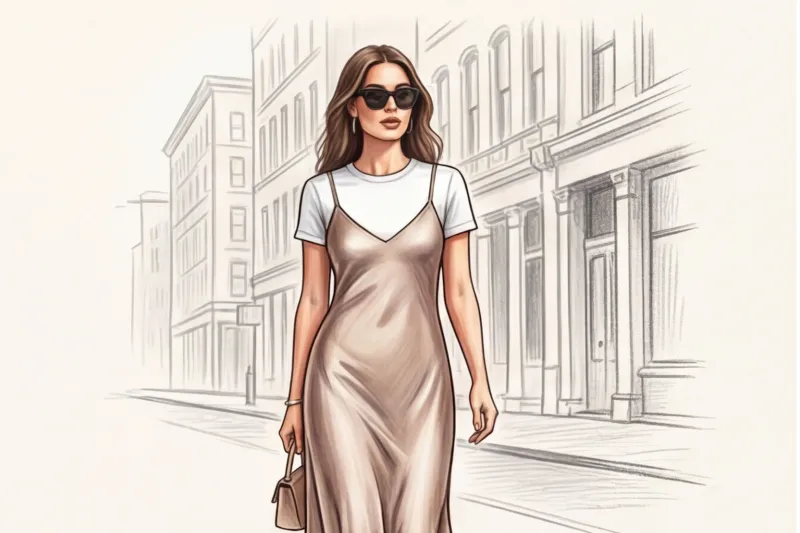
If you were following fashion in 2015 (the heyday of Tumblr), you'll likely remember a popular trend: a white cotton T-shirt paired with a black slip dress with thin straps. I still see this style on the streets, and as an expert, I have to say it bluntly: it looks sloppy and cheapens the look these days.

Why did this technique stop working? It's all about the physics of fabric. The dense cotton of a basic T-shirt has its own volume and stiffness. When you layer a thin, bias-cut silk shirt over it (which is supposed to slide over the body), the design architecture collapses. The cotton bunches up at the waist and back, creating lumps that visually add 3-5 extra pounds.
Fair Exception: This advice won't work if your dress is made of stiff denim, heavy corduroy, or leather. Heavy sundresses pair perfectly with T-shirts, as their material is stiffer than cotton and can hide the creases of the layer underneath.
What will replace it in 2024-2025?
If you want to cover your shoulders and décolleté, consider the "second skin" concept. A sheer, translucent mesh turtleneck or a fitted, long-sleeved viscose top with added elastane are ideal. They fit snugly, without adding bulk, and add a sophisticated, modern layering to your look.
Evening Out: How to Style a Slip Dress for a Special Occasion
I had a telling case in my practice. My client, a successful architect, often faced a problem: she had to be on-site in the morning (where there was dust and construction), and in the evening she had to shine at the opening of a fashionable gallery, and there was absolutely no time to change at home.
We solved this problem with a single deep emerald dress. In the morning, she wore it with thick matte tights, a sweater, and chunky Chelsea boots. And in the trunk of the car, an evening outfit awaited her. The secret to the transformation lay in the monochrome styling and the right accessories.
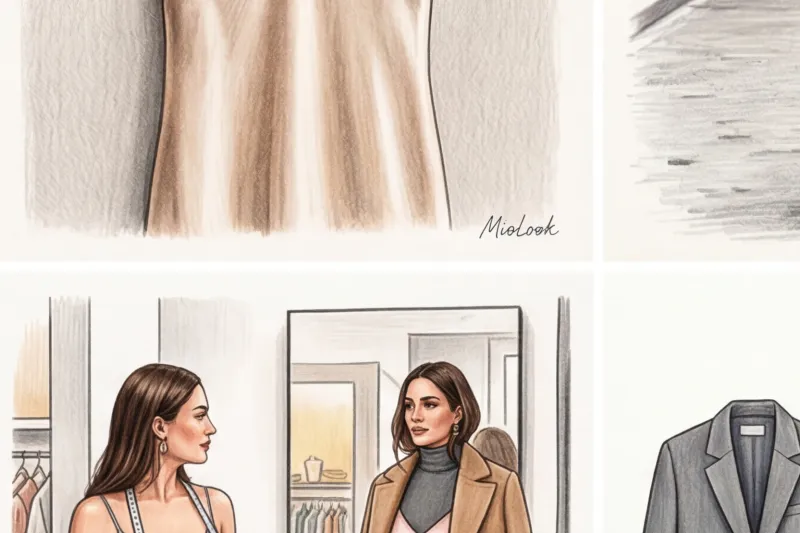
To create an expensive (old-money) look for an evening look, use the same color but in diametrically opposed textures. We paired an emerald silk dress with a black velvet jacket. Smooth, light-reflecting satin and deep, light-absorbing matte velvet create an incredibly elegant duo.
Next comes the Mediterranean approach to accessories. The silk slip itself conveys an air of intimacy. To elevate it, we need large, even slightly aggressive jewelry: chunky gold earrings in a vintage design, a stiff cuff on the wrist. The metal draws attention and brings the look together. Elegant strappy sandals or classic pumps complete the look.
Seasonal adaptations: from summer heat to winter frosts
Slip dresses aren't just for summer. When layered properly, they can withstand temperatures from 30°C to -15°C.
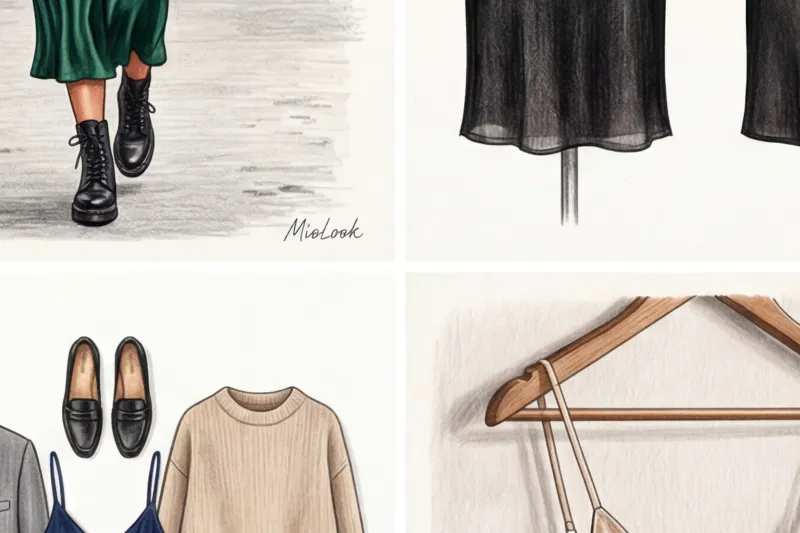
- Summer: Wear it solo with minimalist sandals. A great addition would be statement sunglasses and a straw basket bag, which, again, will provide the desired contrast of textures (smooth versus woven). Find ideas for hot days in the review. summer casual for women.
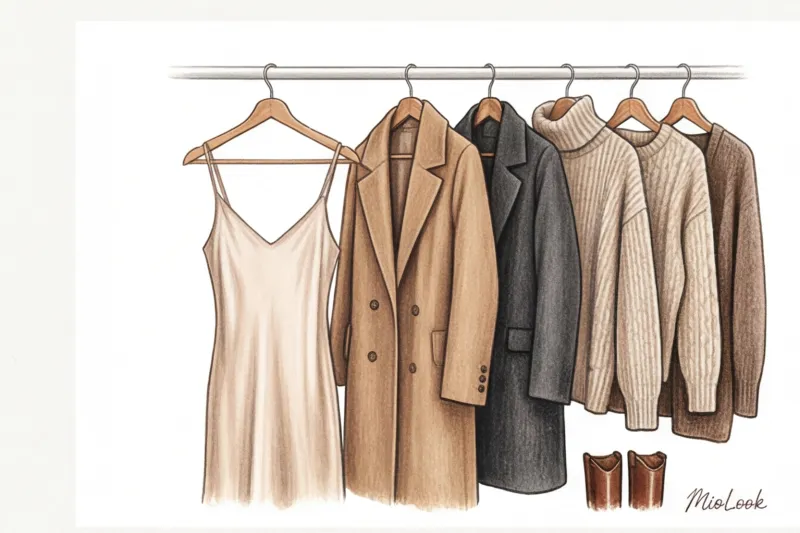
- Autumn: It's time for maxi trench coats (the outerwear should completely cover the dress or be flush with it, so the look doesn't become striped). For the feet, wear tall leather tube boots, the shafts of which extend under the hem of the dress. We've covered more fall styles. Here.
- Winter: We wear thermal underwear with a deep U-neck under the dress (modern merino-silk blends are completely invisible). Over it, we wear a thick cashmere sweater and a warm coat.
Insight from the fields: Wearing tights under a silk dress is a real pain. The fabric instantly becomes staticky and sticks to your legs. Using a regular anti-static spray often leaves stains on the delicate silk. My personal professional trick: apply moisturizing body lotion directly to the nylon tights (just a couple of drops, rub them in your palms and run them over your legs) before putting on the dress. The static will disappear instantly, and the fabric will flow perfectly.
A stylist's checklist: how to choose "your" slip dress
If you're just planning a purchase, don't just grab the first model you see. Check it against these four criteria to prevent it from becoming dead weight on the shelf.
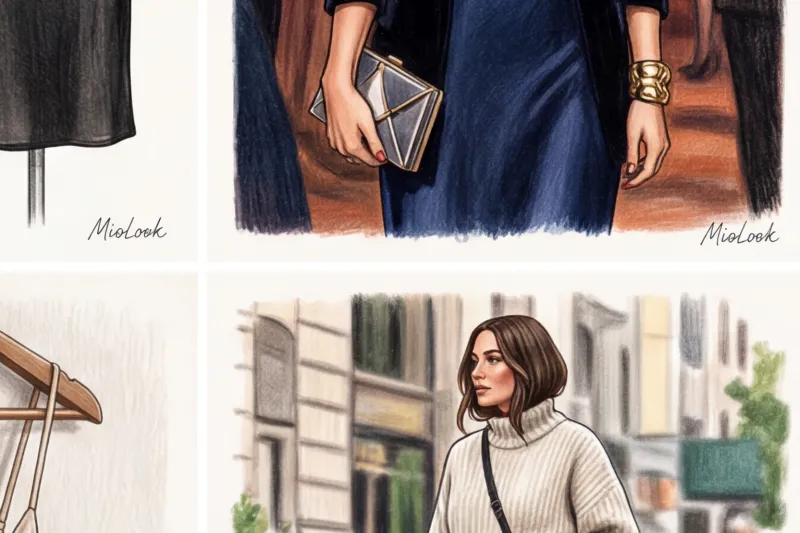
- Length: The most versatile investment is a midi (length just below the knee or mid-calf). Mini slips are difficult to incorporate into a daytime wardrobe (they look too provocative), and maxi ones will constantly get dirty in the city.
- Straps: The straps must have metal hardware for adjusting their length. The neckline should be where you feel most comfortable, not where the manufacturer intended.
- Landing (air): This is crucial. There should be some air between you and the dress. If you can pull the fabric at your waist and hips less than 2-3 cm, the dress is too small. It should flow, not create a bandage-like effect.
- Color: Paradoxically, a black slip dress is a bad idea as a first purchase. During the day, black silk is often associated with a nightgown. Instead, consider refined, deep shades: bitter chocolate, dark sapphire, emerald, or olive khaki. They look much more sophisticated and expensive.
Summary: Your Personal Image Builder
A slip dress isn't just a piece; it's a blank canvas, a chameleon that adapts to the rhythm of your life. One well-chosen purchase can replace a dozen outfits: from a work-ready set with a jacket to a relaxed outfit with sneakers and a shirt.
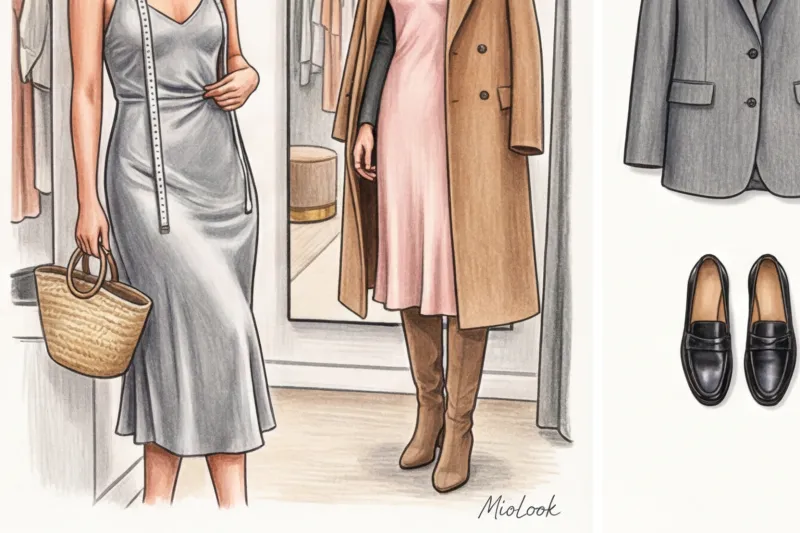
Stop saving beautiful things for "special occasions." Get out your silk dress tomorrow, throw on your favorite cozy sweater, tuck the hem into the belt at your waist, and go conquer the world. I'm sure you'll garner more than a few compliments.
Ready to get started?
Try the MioLook free plan—no commitments required. Upload photos of your items, and our AI stylist will find the perfect combinations for every day.
Get access — €0.99 once