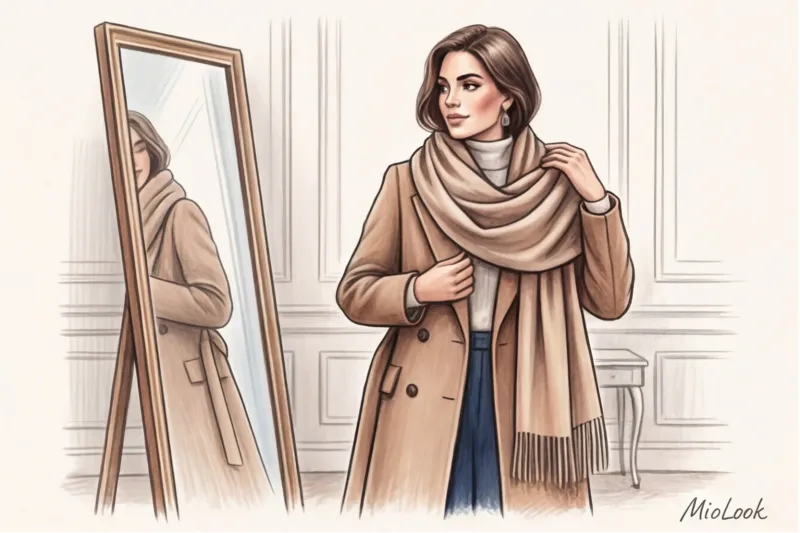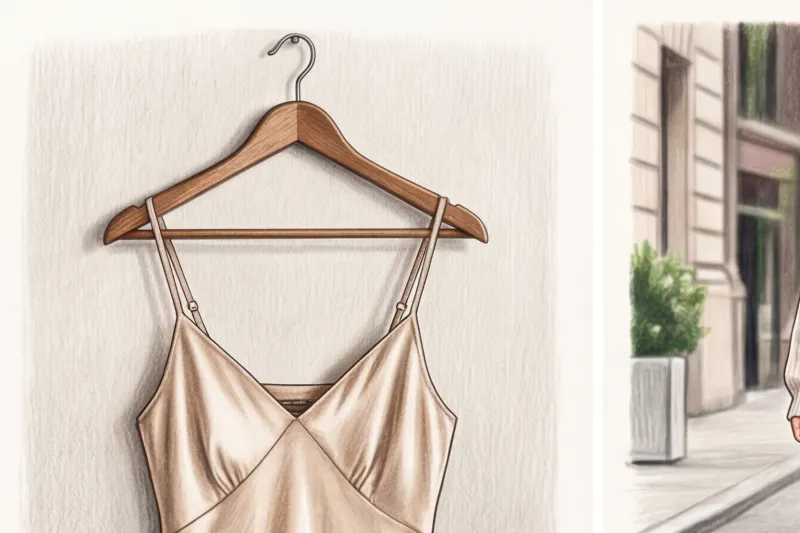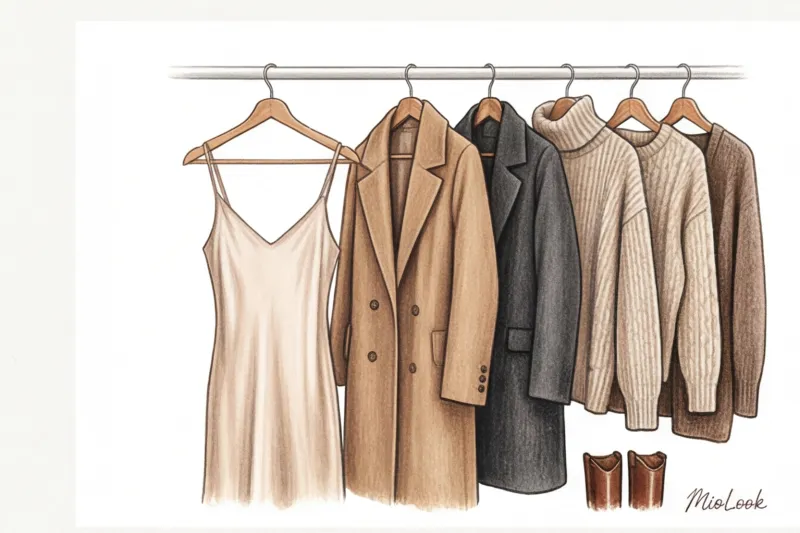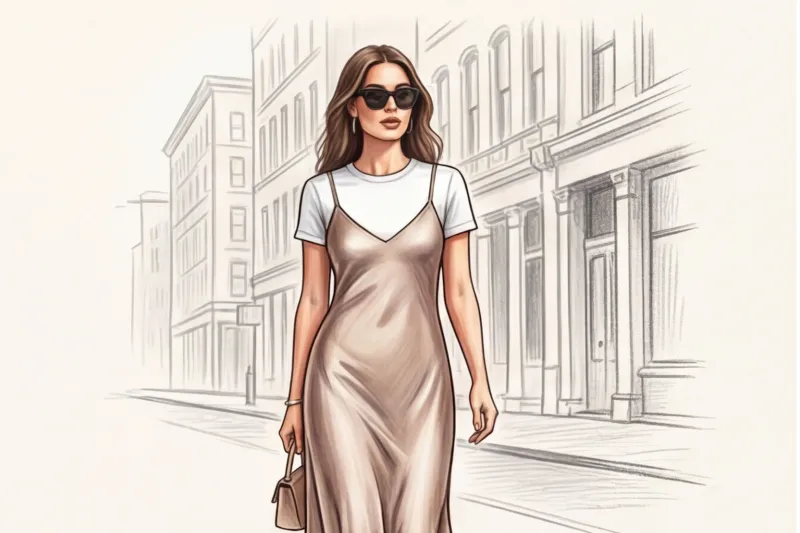
"I feel like I'm 15 again, playing dress-up to Nirvana tapes," my client, a 35-year-old marketing director, sighed with disappointment as she looked in the mirror. She was wearing a stunning emerald silk dress pulled over an expensive, stiff white T-shirt. The look, which had looked so flawless in street style photos, had become oddly lumpy in real life, bunched up at the waist, and visually added a few extra pounds.
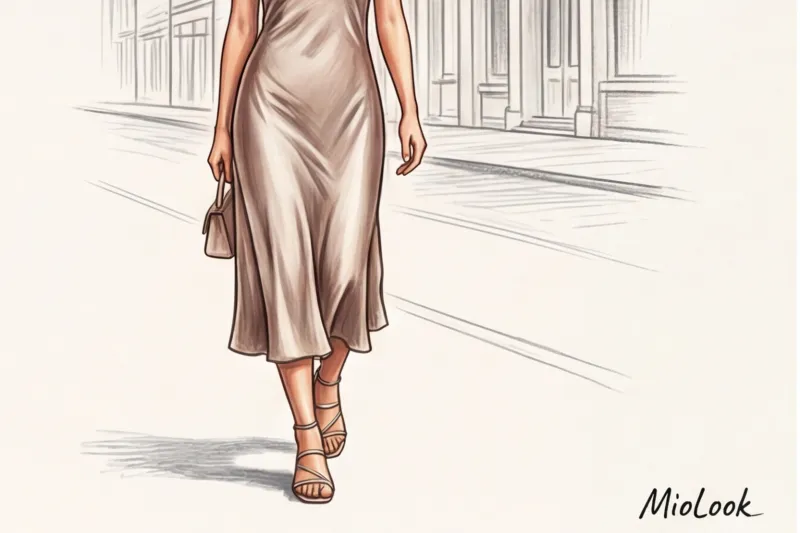
As a stylist with 14 years of experience, I see this mistake every spring. Girls buy great things, but don't take into account the simple physics of fabrics. Properly styled slip dress with a T-shirt — this is a brilliant way to take the dressiness out of open silk and wear it even to the office. We've already discussed how to skillfully incorporate such pieces into everyday wear in our a complete guide to everyday lingerie style.
Today, we'll move away from abstract "inspiration" and explore the stark anatomy of this trend: why heavy cotton is your worst enemy, how the density of silk affects fit, and what you need to do to ensure your look looks expensive, not sloppy.
The Slip Dress and T-Shirt: Why This Trend Has Become a Wardrobe Essential
According to Lyst's 2024 data, the popularity of layered looks featuring lingerie dresses isn't just staying at the top; it's even become a "modern essential." And this isn't just due to the '90s minimalist aesthetic that designers so often cite.
The main reason is wardrobe math and ROI (Return on Investment). Let's do the math. If you buy a high-quality silk slip dress for €150-€250, how many times a year will you wear it solo? Only in the heat of summer or for evening events—20-30 times at most. The cost per wear (CPOW) is quite high.
But add the right base layer, and this strictly summer, almost boudoir-inspired piece transforms into an all-season capsule. You start wearing it with sneakers in the spring, to the office in cool summer, and under a voluminous cardigan in the fall. This dress works for you more than 200 days a year.
It's also a matter of psychological comfort. Not every woman is comfortable exposing her shoulders and décolletage during the day, especially in a work environment. A T-shirt acts as a stylistic buffer, keeping the look covered while maintaining the feminine flow of the fabric.
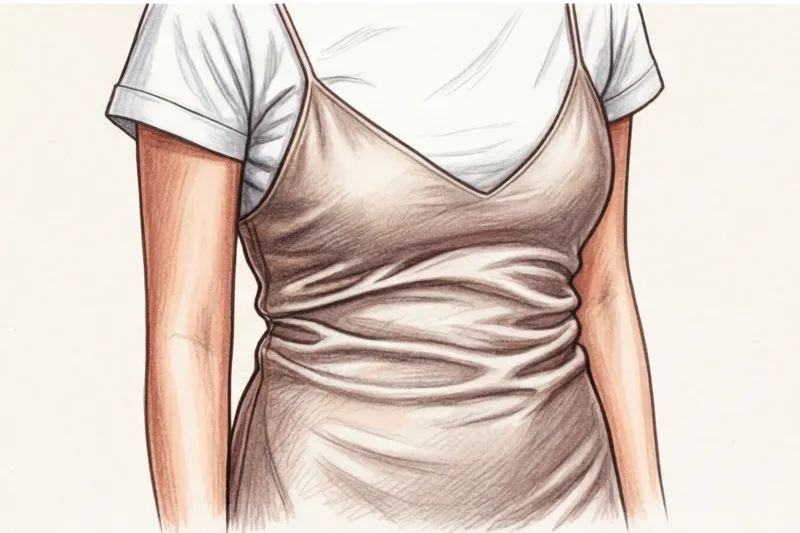
The biggest styling mistake: why your look ends up looking wrinkled
Herein lies the most counterintuitive paradox I always talk about during wardrobe reviews. You know what item is guaranteed to ruin a slip-on look? The perfect basic tee.
Yes, that's the one: 100% premium, dense cotton, straight cut, and holds its shape well. For jeans, it's the Holy Grail. For a silk dress, it's a disaster.
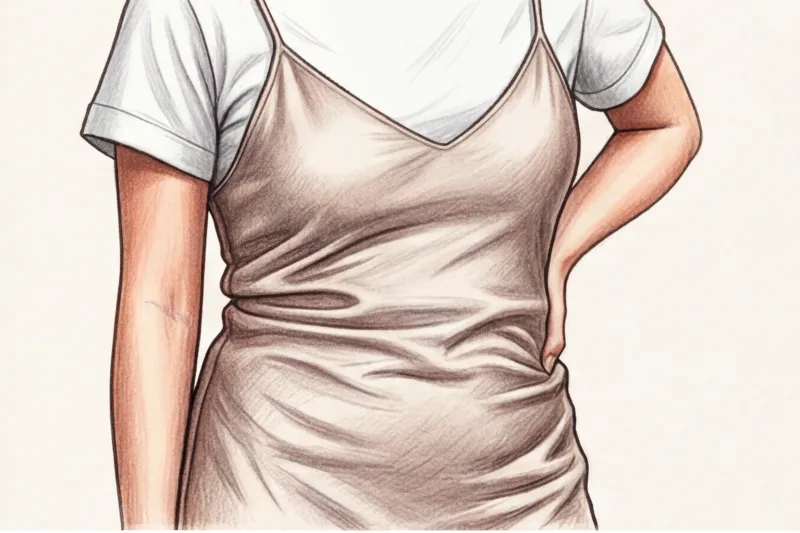
From a textile physics perspective, stiff cotton (180 g/m² and above) has a high coefficient of friction. When you layer delicate silk or polyester over it, the fabrics begin to clash. The dress catches on the cotton texture with every step. This creates a "caterpillar" effect: every seam, sleeve hems, and the slightest fold in the shirt reveals itself. Instead of a beautiful, flowing silhouette, you get undefined bulges at the waist and hips.
Your perfect look starts here
Tired of wondering if your clothes go together? Trust artificial intelligence. Upload a photo of your clothes, and MioLook will create flawless outfits in seconds.
Get access — €0.99 onceThe Anatomy of the Perfect Layer: How to Choose the Right T-Shirt
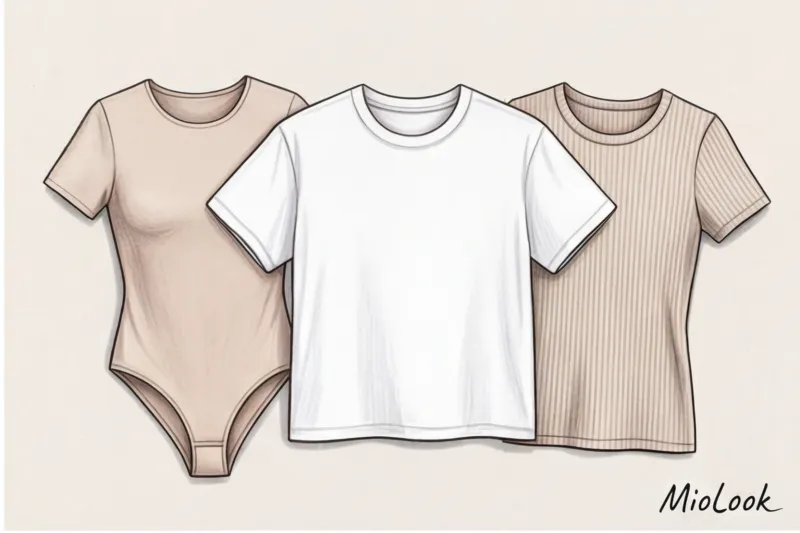
For layering to work, the base layer must act as a "second skin." It must be smooth, flexible, and not create additional bulk.
Fabric and texture: forget about stiff cotton
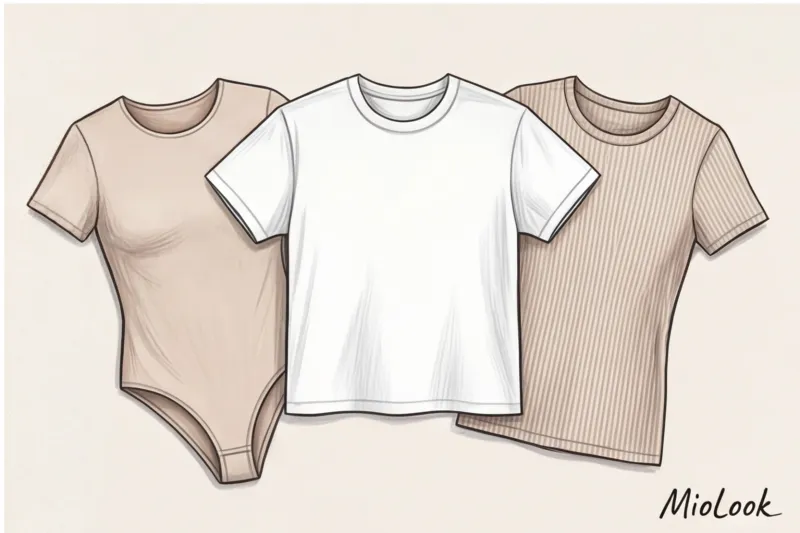
Look for blended fabrics on labels. A minimum of 5% elastane (spandex) combined with cotton is a good choice. Viscose, Tencel, and modal work even better. These materials have a smooth, silky surface (low friction), making your top literally glide over it.
Secret stylist trick: Eight out of 10 times, when a client complains about the fit of a T-shirt under a dress, I replace it with a seamless short-sleeved microfiber or modal bodysuit. The bodysuit always stays taut, never peeks out from under the dress at the waist, and creates a perfectly flat base for the fine silk.
Neckline and sleeve length: geometry of lines
Pay attention to how the lines of the T-shirt interact with the lines of the dress:
- Neck: If the dress has a classic V-neck, pair it with a crew neck. This geometric contrast adds a modern touch. Deep U-necks on a T-shirt worn under a dress look like you've chosen the wrong underwear.
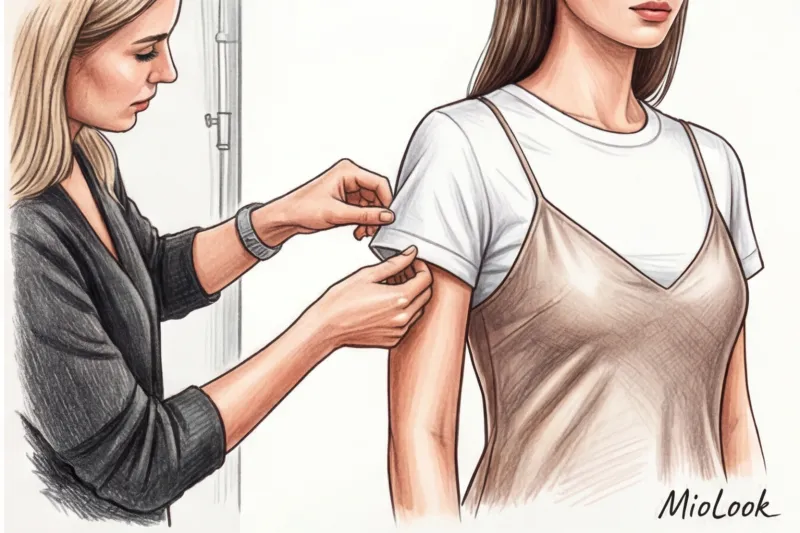
- Sleeve: Avoid wide, stand-up cap sleeves. They will puff out under thin straps. The sleeve should fit snugly over the shoulder and end mid-bicep.
Which slip dress works best together?
Not every dress will tolerate neighbors underneath it. Remember the main rule: the dress must be cut on the bias This tailoring technique, invented by Madeleine Vionnet in the 1920s, causes the fabric to stretch diagonally, gently hugging the figure, rather than hanging in a straight sack.
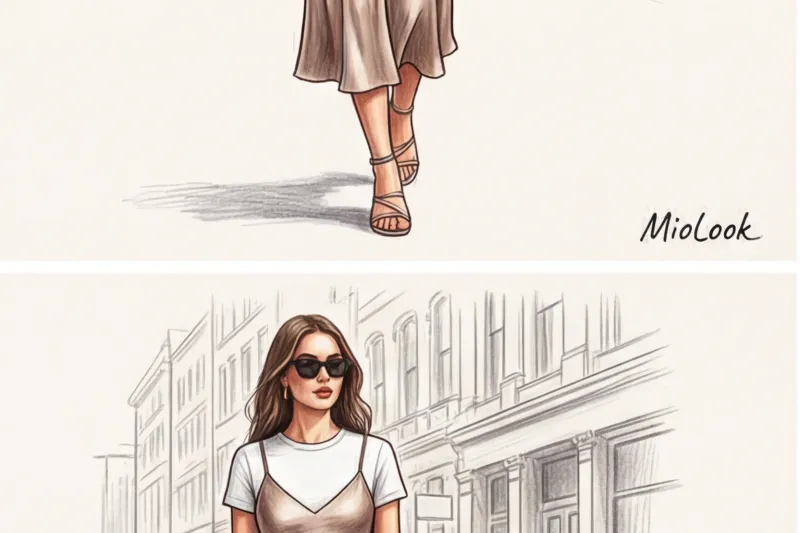
The second critical factor is the density of the dress itself. In the world of silk, this is measured in momme. Most mass-market slips (especially those made from silk-like polyester) are too thin—equivalent to 10–12 momme. Everything will be visible underneath, right down to the lace on your bra. For layering, look for silk with a density of 16–19 momme (or a thick, heavy viscose satin). This will protect you from cheap glitter and dangerous textures , which ruin any outfit.
When this technique does NOT work:
Be careful if your dress is straight-cut (not bias-cut) and fits tightly through the hips. If there's no air space between your body and the dress (at least 2-3 centimeters of space), adding a T-shirt will make you look like a constricted sausage. Save this kind of dress for solo outings.
Ready to get started?
Organize your smart wardrobe with the MioLook app. Save your favorite outfit formulas and save time in the morning. Free plan – no commitment.
Get access — €0.99 once5 Stylish Formulas: Where and How to Wear This Duo
Working with clients across a range of professions—from IT project managers to creative agency owners—I've adapted this trend to suit different life scenarios.
1. Smart Casual for the Office (Friday Dress Code)
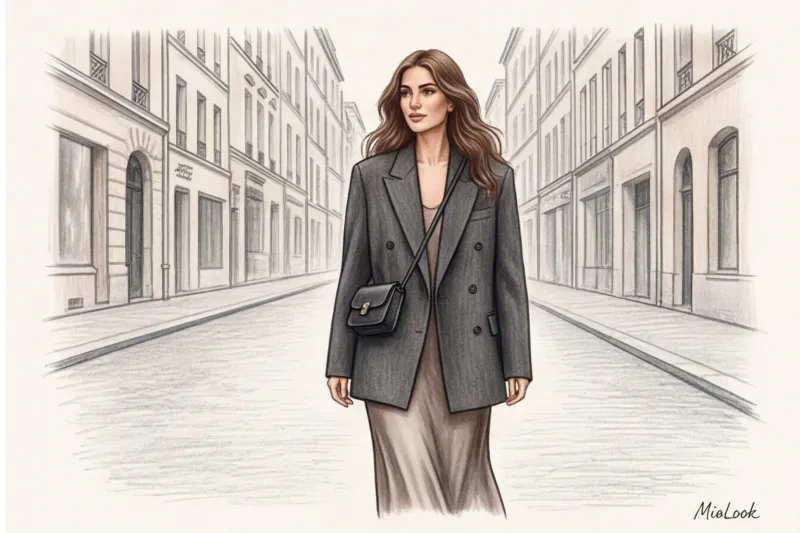
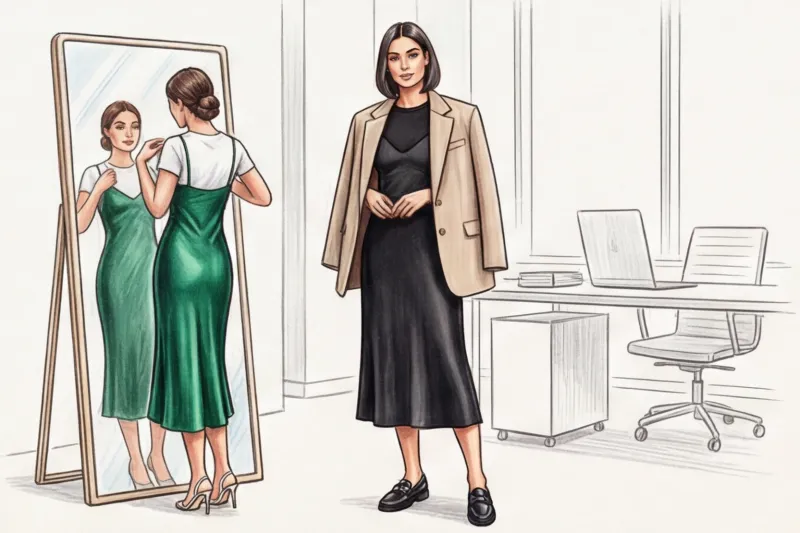
Perfect for relaxed company settings, but you're tired of jeans. Choose a midi slip in a muted shade (dark chocolate, olive) and wear it over a crisp white T-shirt. Layer a voluminous, structured jacket over the top. On your feet, pair with classic leather loafers. This is a great example. smart casual , which looks professional but not boring.
2. Weekend street style
Let's take the seriousness out of it. A light dress (champagne or silver), a basic white tee with elastane, chunky sneakers (like the New Balance 530), and a voluminous vintage denim jacket draped over the waist. These would fit perfectly here. everyday crossbody bags.
3. Monochrome elegance (The Row vibes)
My favorite outfit for evenings out when I don't want to look too dressed up: a black sheer slip dress and a black bodysuit with sleeves. The matching colors make the layers blend together, creating the illusion of a complex, architectural dress with an interesting neckline. Add minimalist sandals with thin straps and a sleek bun.
4. Grunge aesthetics
A play on contrasts: delicate silk and rough street style. Wear a T-shirt with a faded vintage print (a rock band logo or retro graphics) under a black or dark gray dress, allowing the print to peek out at the neckline. Complete the look with chunky Chelsea boots with a tractor sole.
5. Formula for the transition season
When it gets too cold for a T-shirt (October-November), simply swap it for a thin 100% merino wool turtleneck or a smooth cotton long-sleeve. The main rule remains the same: the base layer should be thin and fit snugly against the body.
Stylist checklist: check your look before you go out
Before you walk out the door in your assembled outfit, take a minute to test drive it. Here are the four steps I make every client take during a fitting:
- Test in motion: Raise your arms up as if you were reaching for a book from a high shelf, then lower them. The dress should slide down smoothly. If it's stuck at your waist or hips, the bottom layer is too rough or the dress is too tight.
- Double antistatic: 90% of women make the mistake of spraying antistatic only on their dress. Spray a light mist of the product onto the T-shirt itself before putting on the slip. This will remove static between the layers.
- The right underwear: Forget lace bras. Under a thin knit T-shirt (which will be under the pressure of silk), you need a completely smooth, seamless, laser-cut bra in a nude (not white!) color.
- Shoulder seam area: Check the place where the spaghetti strap of the dress crosses the shoulder seam of the T-shirt. The strap shouldn't fall into the seam or pull it down unattractively.
Style isn't just about being inspired by pretty pictures; it's about understanding how things work in real life. A slip dress paired with the right t-shirt gives you that coveted versatility every modern woman dreams of. The key is to remember that this pairing has no place in stiff, basic cotton.
Access to MioLook for €0.99 — one-time payment
A smart AI stylist will create the perfect look for you. Analyze your wardrobe and create stylish combinations without the stress.
Get access — €0.99 once