What is the Larson Type System and why doesn't Kibbe's work for everyone?
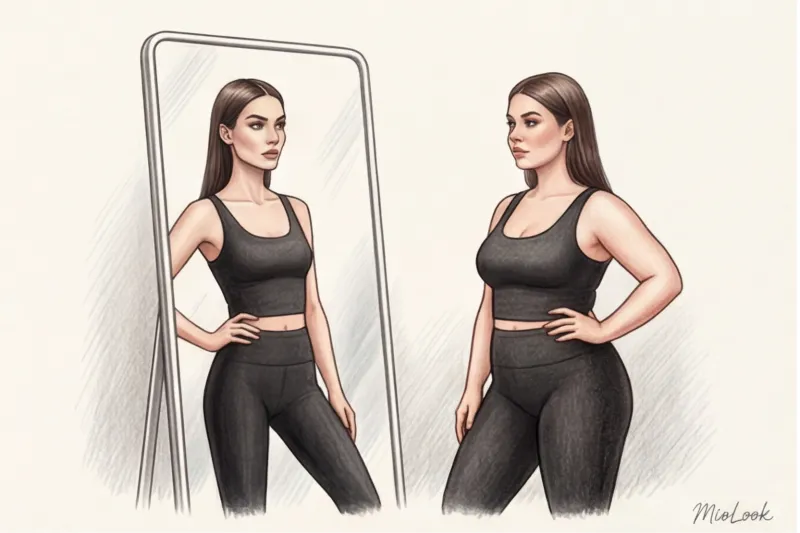
I remember how, at the beginning of my career as a stylist, I sat on the floor in front of a mirror, surrounded by dozens of clothes, trying to squeeze my appearance into the strict framework of David Kibby's system. According to all the body tests, I came out as a pure Dramatic: tall, elongated limbs, sharp angles. But the moment I put on the recommended tailored suit with sharp lapels, my face, with its soft cheeks and rounded eyes, literally disappeared into the background. I looked not stylish, but as if I was wearing the last of my boss's jacket.
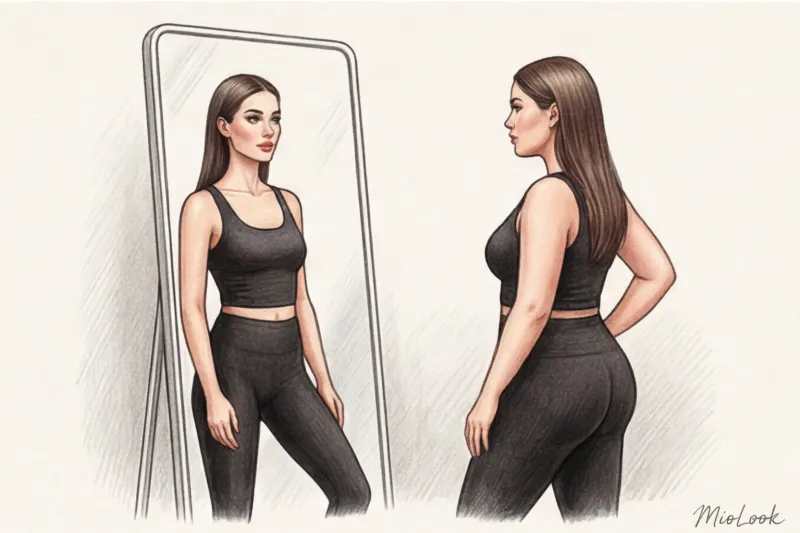
Everything changed when I immersed myself in the works of artist and stylist Dwyn Larson. It turned out there was nothing wrong with me; I just didn't fit into the linear mold. According to statistics (and my experience regularly confirming this from my wardrobe review), about 85% of women have mixed facial and body features. And it's precisely Larson types provide a mathematically precise, personalized answer on how to work with this without breaking your own nature.
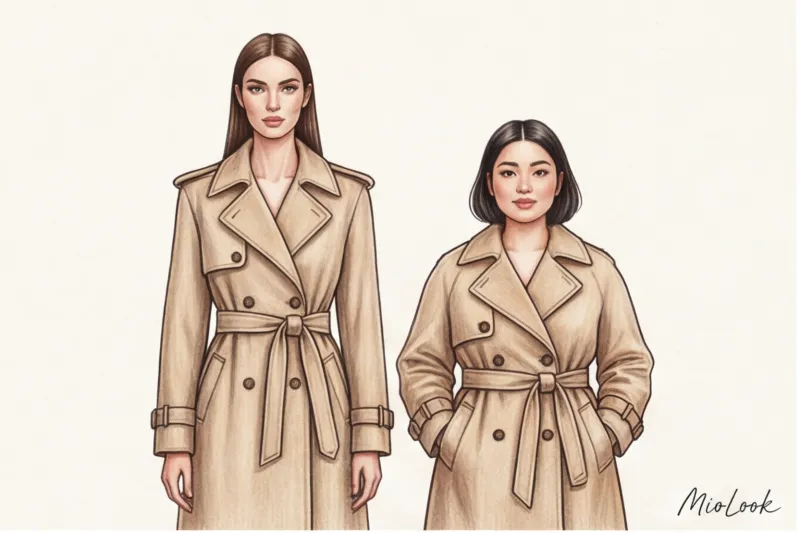
Let's start with the main conflict in modern styling: classic "body types"—all those notorious apples, pears, and inverted triangles—are hopelessly outdated. This approach reduces a woman to a two-dimensional geometric figure based on waist and hip measurements, completely ignoring the scale of her personality and bone structure. Imagine two "pears": one might have the delicate, sharp shoulders of a Gamine, while the other has the broad, substantial chest of a Natural. Trying to dress them in identical A-line silhouettes simply because they both have ample hips is a stylistic crime that will visually add 5-7 kilograms to both.
In the 1980s, David Kibbee revolutionized body image by abandoning the "fruit" approach in favor of 13 body types based on the balance of Yin (softness) and Yang (hardness). But his system eventually became too dogmatic. If you were a "Soft Classic," you were prescribed a specific set of fabrics and prints once and for all. Dwyn Larson took this foundation and radically improved it. She realized that human appearance is not a fixed mix, but a fractal mosaic.
Larson's interpretation of Yin and Yang mathematics is based on three specific variables that can be literally measured:
- Scale (dimensions): It can be large or small. It determines the size of all wardrobe items—from the width of a coat's lapels to the dimensions of an everyday bag.
- Carbon (Yang): dictates the stiffness of fabrics and the geometry of cuts. In Larson's system, this isn't an abstract "masculine principle," but rather physical parameters: elongated lines, prominent collarbones, sharp cheekbones, and straight shoulders.
- Roundness (Yin): flesh lines that require soft, flowing textures that can follow the smooth curves of the body without tension.
"The biggest mistake traditional body typing makes is trying to equate people to the average person. If you have sharp shoulders and soft hips, classic systems will suggest a semi-fitted silhouette. Larson, however, says: give your shoulders a firm line and your hips a soft drape."
Over 12 years of practice, I've seen dozens of clients who fell into complete despair after Kibbe typing. One of them, Anna, spent about €400 on a new capsule for the "Bright Natural" model. She faithfully wore these relaxed, oversized silhouettes, but in the mirror she saw a tired woman in baggy clothes. The reason was that Kibbe didn't take into account the dominant feature of Anna's face, which was petite and sharp (a pure Gamine). The huge collars of the natural type simply "devoured" her features. She only found salvation in the Larson system, when we learned to separate the rules for the body from the rules for the portrait zone.
Fundamental difference: face separately, body separately
Dvin Larson's major conceptual breakthrough is the legitimization of the "torn" type. The idea is that your face can operate according to one set of geometric laws, while your body architecture follows completely different ones.
Imagine a classic case: a girl has a Dramatic body (tall, over 175 cm, narrow hips, straight shoulders, long limbs), but a Romantic face (full lips, round cheeks, a soft jawline, and a complete absence of sharp angles). This explains a phenomenon almost everyone has encountered: why seemingly perfect clothes seem to contradict your appearance.
Let's say you buy expensive, straight-leg, heavy-duty jeans for €120—they fit your Yang figure perfectly. But when you add a romantic, softly wavy hairstyle and radiant makeup, the look falls apart. The body looks bulky in the stiff denim, and the face looks isolated. The point is, the face in this case requires lightness, airiness, and soft highlights, while the body requires a rigid cut.
How does this approach change the rules of creating a capsule wardrobe? Radically. We stop looking for a mythical compromise piece. Instead, we begin to intelligently zone the silhouette. We discussed how to build such a structural foundation in more detail in the article. The Pareto Rule in Wardrobe: How to Create a Smart Closet.
According to Larson's rules, you select the cut of shoulder garments and trousers to match the geometry of your body, and everything around your face (neckline shape, collars, scarves, fabric texture at the collar, earrings) should match the dominant features of your face. To master this design tool and avoid buying unnecessary items, I recommend digitizing your clothes. the "smart wardrobe" feature in MioLook , you can see during the virtual fitting stage how a stiff, flattering jacket pairs with a soft, face-framing blouse, and find the perfect balance without endless in-store fittings.
Larson's 4 Pure Types: Geometry and Scale
Have you ever noticed how the same basic size 11 jacket fits like a glove on one woman, but bunches up in the armholes and bulges in the back on another? It's not a matter of a "bad" figure, but rather the basic geometry of your bone structure. In my practice, I constantly see women criticize themselves for gaining a few pounds, when the real problem lies in the mismatch between the factory cut and their natural curves.
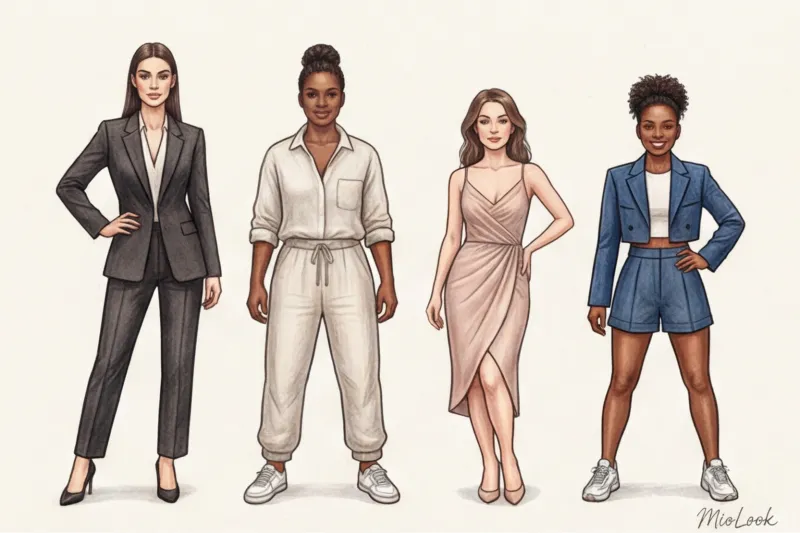
Dvin Larson identified four basic (pure) body types. Let's examine Larson's body types not through abstract "energy" or outdated metaphors, but through the rigorous language of clothing design: darts, seams, draping, and fit.
How to recognize a pure type by bone structure (without taking into account weight and age)
The main rule of style architecture: we look only at the skeleton. Age-related loss of skin turgor or weight fluctuations do not change your basic geometry. As noted by experts at the Institute of Fashion Design (in a 2023 anthropometry study), the slope of the clavicles, the width of the ribcage, and the shape of the pelvic bones remain static even after gaining 15 kg. To determine the baseline, you need to test the width of the shoulders relative to the hips, the length of the limbs, and the shape of the joints. Do your clavicles form a sharp, straight line or do they gently slope? Are your wrists wide and thick or thin and fragile? These answers determine the direction for choosing clothing.
Dramatic: large scale, sharp angles, elongated lines
Imagine a perfect, elongated rectangle with clear edges. A Dramatic figure is always characterized by a large frame, tall stature, elongated limbs, and extremely sharp angles (pronounced cheekbones, straight, sharp shoulders). In terms of clothing design, Dramatic figures are tailored using patterns with long, continuous, raised seams.
They absolutely require strong, deep darts that create a sculptural, almost architectural silhouette. No soft raglans—only set-in sleeves with a defined shoulder line. If a Dramatica jacket costs around €150, its cut should look as if it were hewn from stone, and the fabric should hold its shape on its own.
Natural: large scale, blunt angles, width and solidity
Here, the square with slightly rounded corners rules the world. Natural is also large in scale, but the corners are blunted. The main characteristics of this type are width and visual solidity: a broad chest, a straighter waistline, and strong joints.
As a stylist, I always guide my Natural clients toward patterns with dropped shoulders and loose fits. Their clothes are constructed with virtually no rigid waist darts, otherwise the garment will feel treacherously tight in the chest. The fabric should fall freely, creating wide, relaxed folds. The ideal cut for a Natural is loose-fitting shirts and trousers with wide facings.
Romantic: small/medium scale, rounded lines, no hard edges
The Romantic geometry is the circle and oval. They are small to medium in scale, and their bone structure lacks sharp edges: sloping shoulders, rounded hips, a soft jawline. In tailoring, Romantic patterns are considered the most complex.
Straight, rigid seams are strictly prohibited here. To ensure a perfect fit, we use a bias cut, which delicately hugs the figure without rigidity, and we use complex draping instead of classic darts. A formal office jacket will always look stiff on a Romantika and visually add 5 kilograms.
Gamine: small scale, sharp angles, compactness and dynamics
The Gamine is a compact triangle. It's small in scale and has sharp angles, but unlike the Dramatic, its lines are short and sharp. They have a delicate yet angular bone structure. One of my Gamine clients constantly complained that she was "drowning" in standard mass-market items.
We solved the problem with a simple tailoring trick: we started choosing items with high armholes, cropped silhouettes, and small details (narrow lapels no wider than 4 cm, small collars). Gaminov's patterns require a fractional cut—an abundance of horizontal seams, yokes, and contrasting color blocking.
"Clothing is just fabric stretched over the frame of your body. If that frame is made up of sharp angles, trying to force patterns designed for smooth curves onto it will inevitably result in creases and a loss of style."
Today, to accurately determine your body geometry, you don't need to measure every centimeter of your body yourself. I recommend delegating this task to computer vision algorithms. You can upload your photo to MioLook — the app will automatically analyze your figure's control points, determine your scale and dominant body lines, eliminating subjectivity when assessing your own appearance.
Access to MioLook for €0.99 — one-time payment
A smart AI stylist will analyze your geometry and select the perfect look based on scale and lines.
Get access — €0.99 onceLarson's Mixed Types: How to Reconcile Appearance Contrasts
If we all consisted of pure body types, the job of a personal stylist would be drearily simple. But my personal statistics, accumulated over years of wardrobe analysis, are inexorable: only about 15% of women have a completely uniform bone structure. The remaining 85% are complex, captivating cocktails of various geometric shapes that don't fit into standard brand templates.
Dwyn Larson revolutionized the way the basic energies mix mathematically. The four pure types combine to form 16 additional mixed types Imagine an artist's palette: when you take the charcoal sharpness of the Dramatic and add the diminutive dynamism of the Gamin, you get the Dramatic Gamin—a type who looks incredibly good in cropped jackets with exaggeratedly sharp shoulders.
Or another example: if you combine the solidity of the Natural with the softness of the Romantic, you get the Natural-Romantic—a type for whom a flowing textured-knit midi dress or a crisp suede wrap skirt is the perfect base. The Gamine-Natural, on the other hand, embodies the energy of a relaxed tomboy, where the compact stature of the Gamine meets the broad bones of the Natural, calling for cropped yet voluminous silhouettes.
Herein lies the answer to the most frequently asked question about Classics. Modern mass-market clothing is tailored to a certain average "classic" standard, hoping to please everyone. But Larson's types see it differently: A classic is not a separate genetic code This is a rare case of a perfect, symmetrical 50/50 balance between the other two body types, with neither side dominating. This is why basic clothes (those notorious straight-cut white shirts and pencil skirts) actually look flawless on only a few people.
Dominance of the face and figure: who dictates the rules?
The most powerful aspect of Larson's theory is the concept of dominants. You might have a dominant facial trait from one type, and a dominant body shape from another. Which comes first when choosing clothes?
The golden rule of style architecture: the body always dictates the silhouette, length, and cut, while the face determines the portrait area, the scale of prints, the texture of fabrics near the face, and the shape of accessories.
Let me illustrate this with the case of my client Elena, a top manager at a large company. Her facial features were pure Gamin: huge eyes, a sharp, petite chin, a dynamic overall expression, and an "eternal youth" in her gaze. Her body, however, belonged to a Natural: an athletic chest, a straight waist, and blunt shoulder angles.
Elena came to me in utter despair. In the formal business suits dictated by her corporate status, she looked, in her own words, like "a child in her mother's suit." Her broad, rigid, natural-cut shoulders literally "devoured" her delicate face, creating a comical effect.
How did we fix this? We kept the Natural silhouette for the body, choosing relaxed palazzo pants and slightly deconstructed blazers in heavy linen (we found excellent basic options in the €150–€200 range). But we completely redesigned the portrait area. We added playful details: contrasting collars, cropped narrow lapels, geometric stud earrings, and an asymmetrical haircut. The dissonance instantly disappeared.
Dramatic-Romantic: taming obstinate contrast
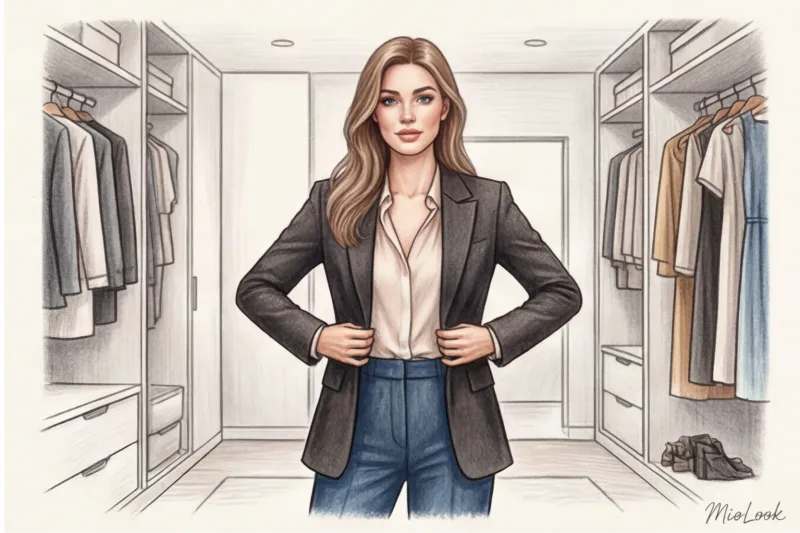
The most difficult challenge for a stylist is typing and packaging a look that juxtaposes absolute opposites. A striking example is the combination of Dramatic (large scale, sharp angles) and Romantic (small/medium scale, rounded features). These are incredibly striking women who, for example, may have sharp, high cheekbones and sharp shoulders, but also a full bust, rounded hips, and soft lips.
Dressing such a figure in a stiff men's suit would kill all romantic femininity and make the figure look bulky. Dressing it in a flowing dress with sweeping ruffles would transform the dramatic frame into a ridiculous parody.
For such cases I use the technique frame and drapery Here are three working techniques that save polar contrasts:
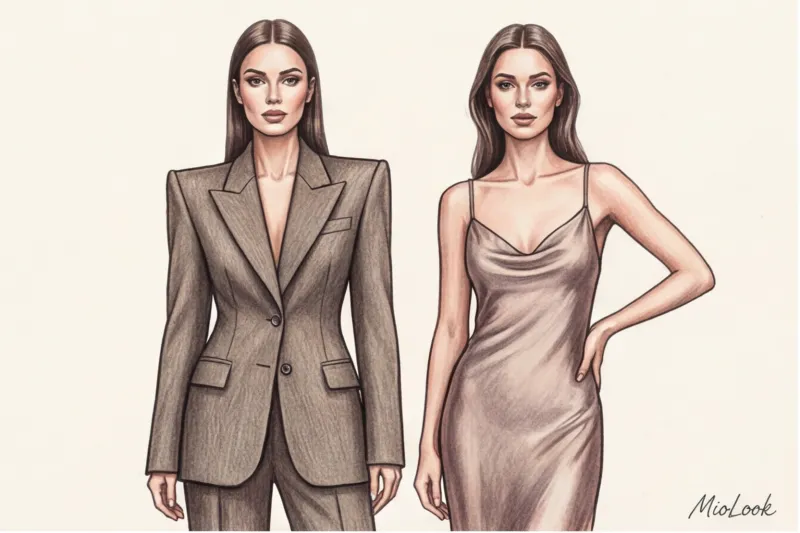
- Rigid fabric + soft cut. We take a thick, shape-holding silk or gabardine (a nod to Dramatic), but we cut it on the bias so that the garment delicately envelops the curves of the body (supporting Romantic).
- Deep V-necklines. They create that same sharp, dramatic geometry, but at the same time perfectly frame the romantic fullness of the chest without weighing down the upper block of the figure.
- Color monochrome with soft accents. A single vertical line of color elongates the silhouette, maintaining the scale of the Dramatic, and a soft belt of the same fabric (never a hard, contrasting belt!) defines the romantic proportions of the waist.
Putting together such complex puzzles in your head while standing in front of an open closet can be tiring. To avoid buying things that will end up hanging with tags, I encourage my clients to use digital planning. You can upload photos of your items to MioLook and use the look builder feature. The app will help you visualize how a sharp shirt collar will look with a soft cardigan, allowing you to balance the contrasts before you even get dressed.
Tired of wondering if something will fit you?
Digitize your wardrobe with MioLook. Create perfect looks tailored to your individual body shape and proportions right on your phone, saving time every morning.
Get access — €0.99 onceStep-by-step algorithm: how to determine your Larson type
Nine out of ten independent attempts to determine your type fail even during the preparation stage. Do you know the main reason? A regular selfie. In 12 years of working as a stylist, I've learned an ironclad rule: the front-facing camera lens of a smartphone is your main enemy in face typing. Due to its short focal length, a selfie distorts facial geometry by an average of 30%. It visually enlarges the nose, narrows the lower jaw, and rounds out the features. As a result, every other girl in a selfie looks like a compact, gamine with huge eyes, while in reality, we're looking at a stately, dramatic type. Let's digitize your appearance accurately and without distortion.
Step 1. Preparation: Mathematical precision of the frame
For a proper analysis, you'll need a camera on a tripod (or a sturdy shelf), a timer, and natural, direct light from a window. Avoid dramatic shadows cast from the side—they create unrealistic angles on the face.
- Cloth: Extremely form-fitting and contrasting with the background. A basic sports bra and leggings or a tight swimsuit would be ideal. We want to see your actual bone structure, not how a trendy €150 oversized hoodie fits.
- Body angle: The camera should be positioned exactly at chest level. The distance from you to the lens should be at least 2.5 meters. This is the only way to capture your body proportions without optical distortion.
- Face angle: The camera is strictly at eye level, the hair is slicked back and pulled into a ponytail, and there is no makeup at all (even clear lip gloss and mascara change the perception of lines).
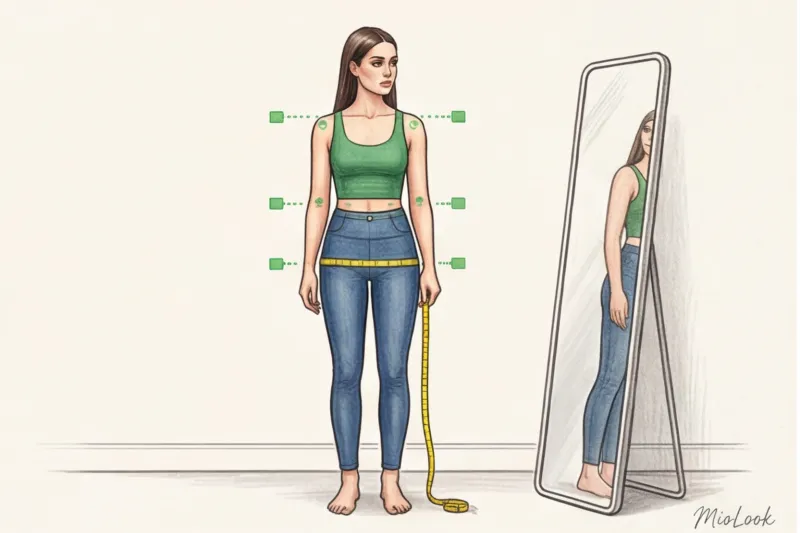
Step 2. Body Proportion Analysis: The Control Point Method
Forget fruit metaphors like "pears" and "apples." In the Larson system, we scan the skeleton using the control point method. Print out your full-length photo or open it in a graphics editor and draw horizontal lines:
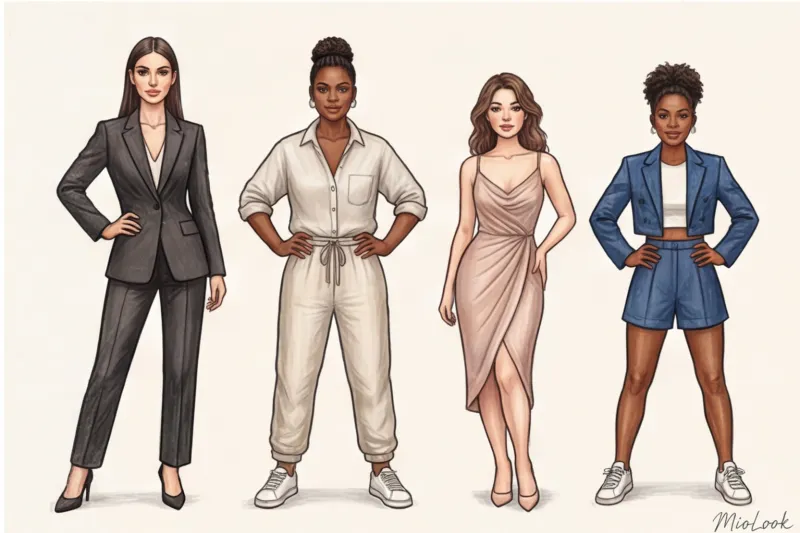
- Shoulder girdle: Pay attention to the extreme point of the shoulder. Is it sharp (Dramatic/Gamine) or blunt and substantial (Natural)? Are the shoulders sloping, like the Romantic?
- Chest and waist: Assess the length of your torso relative to your legs. An elongated ribcage often indicates a Natural influence. The waist can be short and defined, or it can be long and straight.
- Hips: Do they form a steep arc starting almost at the waist (Romantic), or do they go in a straight, elongated line (Dramatic)?
- Limb length: Where are your wrists when your arms hang at your sides? If they're below mid-thigh, this indicates elongated (dramatic or natural) limbs. Compare the size of your hands and feet to your overall height: large hands with a medium height indicate a masculine (yang) dominant.
Step 3: Reading the Face: Portrait Geometry
In the Larson system, the face is your style passport, dictating your choice of necklines, collars, prints, and embellishments. Here, we seek a balance between scale (large or small features) and shape (angles or curves).
Examine the shape of the jaw: is it strong and square (Natural), narrow and pointed (Gamine), or softly rounded (Romantic)? How do the cheekbones protrude: do they form sharp edges or soft "apples"? The nose can be thin and long, or wide at the base. The shape of the eyes and lips is also critical: thin, straight lips and almond-shaped eyes add sharpness to the portrait, while full, bow-shaped lips and round eyes call for soft, flowing lines around the face.
Try MioLook
for free
Start creating perfect images with the help of artificial intelligence
Get access — €0.99 onceWhy online Larson personality tests often lie and how to avoid confirmation bias
If you search for "Larson personality type test" right now, the algorithm will return dozens of questionnaires. But in my experience, the accuracy of self-administering such tests is no more than 15-20%. The problem lies in a cognitive bias called "confirmation bias." We are physically incapable of evaluating ourselves objectively.
"A woman with a little extra weight often mistakes the fullness of her arms for the "broad bones" of a Natural, while the prominent collarbones of a naturally thin Romantic are mistakenly interpreted as the "sharp angles" of a Dramatic. Subjectivity ruins geometry."
When answering the test question, "What kind of lips are you?", you're comparing them not to a standard, but to your own idealized ideas or complexes. To break this vicious circle of subjectivity, I recommend delegating the initial analysis to technology. After uploading your correctly taken photos to MioLook , you get an unbiased perspective. Artificial intelligence is impervious to emotion: it reads real millimeters, pixels, and angles, helping to objectify your frame and select silhouettes based on dry mathematics, not your morning mood.
Larson's Body Types in a Modern Wardrobe: From Theory to Practice
According to 2023 return statistics from major European fashion retailers, approximately 68% of items purchased online are returned to warehouses. In 9 out of 10 cases, the reason isn't a manufacturing defect, but rather the disappointing "item doesn't fit." You know what that usually looks like? You order a stunning slip dress for €120 that looked gorgeous on the studio model, only to see a shapeless nightgown in the mirror at home. The problem isn't your figure—it's a severe mismatch between the garment's geometry and your bone structure.
This is where Larson's type system transforms from an abstract stylist theory into a precise mathematical tool. When you know your natural features, online shopping stops being a lottery. You simply stop looking at the 80% of the selection that doesn't suit you structurally, saving hours of time. Let's explore how to translate your natural features into filters for online stores.
Fabrics: How Weight and Texture Affect Your Body Type
Fabric is the building block of your silhouette. Its weight, density, and shape-holding ability directly depend on your body architecture. If your frame is built on sharp angles (like a pure Dramatic or Gamine), you absolutely need fabrics that hold a rigid shape. These include dense gabardine, starched poplin, taffeta, heavy structured wool, or dense tweed. Try layering a thin, flowing viscose over a Dramatic, and your look will instantly look tired and sloppy.
Romantics, whose geometric shapes consist of smooth curves and curves, on the other hand, need flowing, soft textures: crepe de chine, natural silk, and fine, flexible knits. Natural types demand solidity and a pronounced texture on the surface of the fabric—thick linen (for example, classic tight-knit shirts in the €40–€60 range), textured suede, bouclé, and corduroy with a large ribbed pattern are ideal for them.
Silhouettes: fitted vs. oversized, rigid vs. draped
The cut of your clothes should follow the curves of your figure. Dramatic types look best in elongated, sculpted silhouettes—long, straight maxi coats, floor-length palazzo pants with pleats. Gamines need compactness, a rigid shape, and a broken silhouette (cropped spencer jackets, contrasting belts at the waist).
Naturals are practically the only ones who can wear a truly relaxed oversized look and make it look expensive, classy, and appropriate. But for Romantics, the popular oversized style is strictly contraindicated: its soft lines require a delicate fit, bias cuts, and light draping that accentuate curves without constricting them with a rigid corset.
Details: collars, lapels and necklines
In Larson's system, the portrait zone is always shaped strictly according to the facial dominant feature. This is a critical rule for mixed types. Imagine: you have the body type of a large Natural, but the face of a Gamin (sharp, small, compact features). If you wear a sweater with a huge, relaxed turtleneck, it will visually "eat up" your face. You need crisp, angular details: sharp shirt collars, neat V-necks, narrow, peaked jacket lapels.
Conversely, the Romantic face needs soft boat necklines, deep sweetheart necklines, rounded Peter Pan collars, or delicate ruffles in the portrait area.
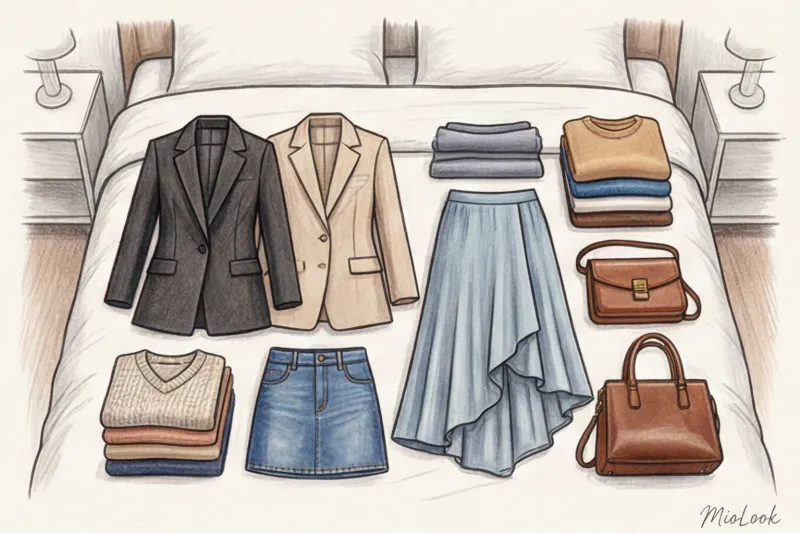
Prints: the scale of the design and its geometry
A print is a visual extension of your facial features. Research from the Faculty of Design at FIT (Fashion Institute of Technology) proves that the human eye always seeks harmony between the pattern on clothing and the wearer's facial features. Larson's rule works flawlessly: the scale and character of the pattern should mirror your facial features.
- Gaminam Small, contrasting geometric patterns are ideal - classic houndstooth (pied de poulet), narrow Breton stripes, small polka dots.
- For the dramatics You need a large, asymmetrical abstraction, wide contrasting color block stripes, or large, aggressive animalistic designs.
- For romantics Medium-sized watercolor flowers with soft color transitions are suitable (we will level out any sharp contours).
- Straight people They look organic in large ethnic patterns, paisley and plant motifs with low contrast.
Knowing these parameters—fabrics, silhouettes, details, and prints—allows you to digitalize the style creation process. I often recommend that clients record their most successful pieces in MioLook The app's smart algorithm not only helps you take inventory but also visualize new capsules, based on textures and silhouettes that mathematically precisely match your geometry.
Adapting trends to your personality type
"No global fashion trend is a monopoly for a specific type. It's just a question of what texture, scale, and cut you use to incorporate it into your wardrobe."
One of my clients' most common fears is the belief that after being typed, they'll have to give up on runway trends forever. This is a dangerous myth. Fashion trends aren't tied to Dwyn Larson's types. Absolutely any aesthetic can and should be adapted to suit your appearance.
Take, for example, the long-running trend towards “quiet luxury” (old money). In the mass market, it's associated with soft cashmere jumpers and relaxed wide-leg trousers—the perfect uniform for Naturals. But how does the dynamic Gamine wear this "quiet luxury"? We simply switch up the texture: instead of soft cashmere, we opt for structured, dense cotton, choose a cropped tweed jacket with a sharp shoulder line, and complete the look with a compact, geometric bag (for example, for under €250, you can find excellent structured options from local brands). The old-money aesthetic is preserved, but the lines are adapted to the sharp scale of the Gamine.
Or consider the grunge trend, traditionally built on rough, distressed textures and deliberate casualness. How can we incorporate its romanticism with soft, feminine curves? Instead of a stiff, stiff oversized denim jacket, we're choosing a jacket made of very thin, boiled denim that drapes softly. Instead of a rough men's flannel shirt in a contrasting check, we're using a silk slip dress in muted dark shades, layered over a soft, loose-knit cardigan.
In practical stylistics this approach is called the 80/20 rule in adapting other people's silhouettes Your final look should consist of 80% lines, textures, and scales dictated by your Larson type. The remaining 20% of the look should be freely given over to trendy details, micro-accessories, or styling tricks that may be technically "out of the ordinary," but serve as the perfect accent. This is how intelligent, vibrant wardrobes are created, embracing both individuality and current fashion.
The main typing errors that age and ruin your figure
The worst thing that can happen to a wardrobe after defining a type is for recommendations to become theatrical props. Paradoxically, trying to strictly adhere to "one's own" style often results in a woman looking out of date and losing her individuality.
This brings us to the main myth of style: attempts to dress in historical costumes. I regularly see Gamins who, at 35, continue to wear cropped overalls, funny hats, and T-shirts with cartoon prints, playing the role of the "eternal teenager." Or Romantics who envelop themselves in tiered ruffles, abundant lace, and full skirts, like Turgenev's 19th-century young ladies. In the reality of 2025, such literal cosplay not only looks inappropriate—it instantly ages. The modern Romantic isn't about bows; it's about a softly draped silk top in a basic cut from a conventional COS, and the modern Gamin is about a structured, color-blocked sweater with precise geometry, not childish appliqué.
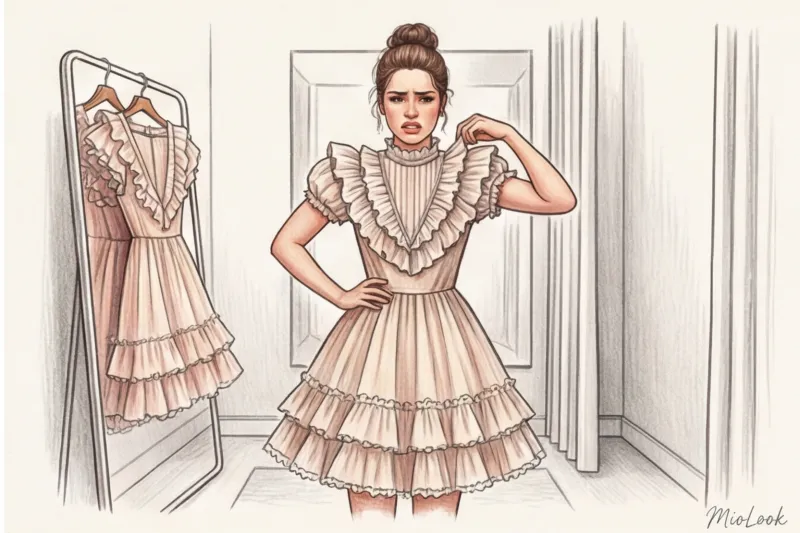
Let's break down one of the most harmful rules of classical typing once and for all: "Romantics are absolutely forbidden from wearing formal business suits." This is absolute stylistic heresy. It's the very reason why women with soft facial features have felt insecure in corporate settings for decades. The secret isn't in abandoning business attire, but in micro-adapting the cut. A stiff, rigid blazer with exaggerated, sharp shoulders, a la the '80s, is truly contraindicated for a romantic. But if you choose a suit made of flexible, flowing suit wool (for example, super 120s merino, high-quality basic options start at €150, and premium options range from €300–500) and replace peak lapels with a rounded shawl collar, you'll achieve a flawless, classy look that respects your natural curves.
The second critical mistake is completely ignoring age-related changes. Your skeletal architecture does indeed remain unchanged throughout your life. However, as researchers at the London Institute of Color and Style (2024) point out, soft tissues lose density and their tension changes over time. What worked brilliantly at 25 can work against you at 45. For example, a pure Dramatic complexion often loses subcutaneous fat in the portrait area with age, causing facial features to become even sharper. Continuing to wear extremely stiff, "crisp" fabrics like dense taffeta or starched cotton near the face will only accentuate shadows and wrinkles. In this case, we simply soften the textures slightly with scarves or cutouts, maintaining the overall elongated silhouette of the body.
Equally damaging to an image is the "overweight" mistake—when clothes perfectly tailored to a figure completely overwhelm the face. Imagine a woman with a Natural body type (statuary figure, broad chest) and the delicate, compact face of a Gamin. If you dress her in a gigantic, chunky hand-knit cardigan—as the body scale demands—the face will simply disappear. The clothes will visually "eat" the person. Remember: the face always comes first. We must design the portrait area to support the dominant feature of the face with a small, contrasting print or a neat stand-up collar, even if we use more relaxed and generous shapes for the body itself.
Ultimately, Larson's system was intended as a navigation tool, not a prison cell. Obsessing over rules instead of seeking harmony inevitably leads to neurotic shopping. I constantly see clients reject perfectly fitting basic trousers simply because "the chart says I need pleats, but they don't have them." Building a smart wardrobe is always about contextual analysis. Learn to break rules consciously.
Your ideal image begins Here
Join thousands of users who look flawless every day with MioLook. Stop buying things that don't flatter you and start managing your style wisely.
Get access — €0.99 onceChecklist: How to incorporate Larson's body type knowledge with a smart wardrobe
The Global Fashion Agenda 2023 study provides a telling statistic: the average woman regularly wears only 18% of her closet. The rest hangs on hangers for years, awaiting a mythical "special occasion" or weight loss. But the real reason for this problem lies not in extra inches, but in physics. These 82% of idle clothes simply clash with the body's natural geometry. That's why Larson's body types are not just a theoretical concept, but a rigorous mathematical model for creating a working capsule wardrobe. Let's put this theory into practice.
Step 1: Take inventory of your current wardrobe (line matching test)
Stop sorting clothes by color or season. The first thing you need to do is conduct a line matching test, separating items by texture and geometry.
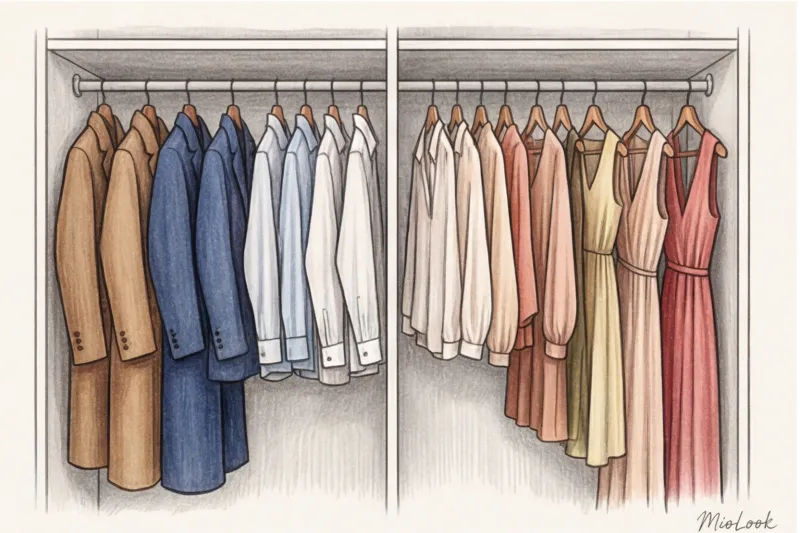
Take five items that get you the most compliments, and five "orphaned" items, bought in a fit of rage but never worn. Compare their cuts. You'll immediately notice a pattern: for example, your favorites are made of thick cotton and gabardine that hold their shape perfectly, while the ones you ignore are made of thin, slippery viscose that hangs limply on your shoulders. Get rid of anything that clashes with your frame.
Step 2: Forming the capsule core based on the “native” silhouettes
The core of your wardrobe—trousers, jackets, coats, and basic shoes—is always built around the dominant features of your body. If your figure calls for scale and blunt angles (Natural Body), invest in relaxed silhouettes: wide-leg palazzo pants, robe coats, and oversized chunky knit sweaters.
Don't be afraid to invest in basics. High-quality trousers that fit your body type well can cost between €150 and €300, but their cost per wear will be close to zero, as they'll be the perfect foundation for dozens of everyday looks.
Step 3: Adjust the portrait area (accessories, cutouts, makeup) to the dominant feature of the face
While the body dictates a global cut, the face demands a finely tuned look. The portrait zone includes collars, lapels, jewelry, eyeglasses, and a beauty routine.
- For individuals with Gamine dominant (fine detailing, sharp features): swap out chunky hoop earrings for a set of thin geometric studs, and shaded smoky eyes for graphic winged eyeliner. A sharp V-neckline will instantly bring your portrait together.
- For people with a dominant Romance (Roundness, softness): use a swing neckline, the delicate shine of pearls, and smooth lines in your hairstyle. Avoid stiff stand-up collars—they'll visually "cut off" your head.
A properly designed portrait area can save even an item that doesn't quite fit your body size.
Step 4: Using AI applications for virtual fitting based on geometry
Blindly implementing theory into practice is expensive and takes up too much of your morning resources. Today, the process of connecting facial and body lines can be easily automated. After taking inventory, digitize the remaining correct base.
I highly recommend uploading your selected items to MioLook A digital wardrobe allows you to tag items not only by category but also by structural characteristics ("stiff," "draped," "peak lapel"). By compiling looks on your smartphone screen, you can clearly see how Larson's contrasts work. You can try on wide, relaxed trousers (for a Natural body) with a structured top with a small print (for a Gamin face) in advance, ensuring the proportions are right.
Summary: The Larson System is an optimization tool, not a cage.
The biggest misconception in modern styling is to view any typology as a set of rigid restrictions. Dwyn Larson's concept doesn't prohibit you from wearing trendy textures, grunge, sequins, or a strict office dress code. She simply provides precise instructions for how to manage your appearance.
Knowing your natural curves isn't a constraint, but absolute stylistic freedom. You stop trying to squeeze yourself into patterns tailored for a completely different bone structure.
You begin to consciously manage your proportions. And if tomorrow you want to break all the rules and wear a decidedly "foreign" silhouette, you'll do it masterfully, simply by compensating for it with the right makeup and geometric shapes in your portrait area.
Guide Chapters
Makeup by Larson's Types: How to Highlight Your Lines
Standard contouring schemes don't suit everyone and can add years to your appearance. Learn how to tailor your makeup to your natural features using the Larson system.
Prints by Larson Type: Choosing Wardrobe Details
Tired of the rigid framework of classic typography systems? Learn how to choose prints and accessories to suit your unique appearance using the Larson system.
Larson's Classic: Style Rules for Perfect Proportions
Ideal natural proportions abhor cheap fabrics. We explore how Larson's balanced body types dress and why their choice is "quiet luxury."
Hairstyles by Larson Type: How to Choose the Perfect Haircut
Choosing a haircut based on your face shape is an outdated myth. Discover how the Larson Method helps you find the perfect style based on your facial architecture.
Larson's Romantic Natural: A Style and Clothing Guide
Floral dresses and trendy oversized pieces aren't working for you? Let's explore the anatomy and wardrobe guidelines for the Romantic-Natural personality type.
Larson's Capsule Wardrobe: How to Build a Base
A universal basic wardrobe suits only 15% of women. Learn how to create the perfect capsule wardrobe using the Larson system, which will highlight your beauty.
Larson's Romantic Dramatic: A Complete Style Guide
We're breaking down the most luxurious and complex body type using the Larson system. Learn how to highlight contrasting features and find the perfect silhouette.
Larson's body types when overweight: how to choose clothes
More than 80% of women hide their changing figures behind bland, oversized clothing, visually adding pounds. Learn how understanding body structure can help you look elegant at any weight.
Gamine romantic by Larson: modern style
Let's explore the Gamine-Romantic personality type: how to adapt a delicate appearance to a modern style. Forget the "retro doll" look and create a wardrobe that exudes status.
Larson's Dramatic Natural: Status and Scale in Style
The Dramatic-Natural personality type is a unique combination of grandeur and commanding energy. Learn how to choose clothes to look prestigious and harmonious.
Larson's Gamin Dramatik: Style and Wardrobe Secrets
The Gamin-Dramatic type doesn't forgive shapelessness and soft fabrics. We explore wardrobe formulas based on mathematical proportions, bold geometry, and contrasts.
How to choose clothes based on your body type: MioLook neural network
Why do we see ourselves distorted in the mirror and how AI helps us find our ideal style? Learn how the MioLook neural network styles looks based on Larson's personality types.
Larson's Natural Gamine: The Perfect Wardrobe and Style Guide
The Gamine-Natural type requires a special approach to volume and proportions. Learn how to highlight your natural beauty and avoid common style mistakes.
Larson's Dominant Face and Figure: How to Find Your Style
Do your clothes flatter your figure but make you look older? Learn how the concept of dominance helps you choose pieces that complement your face.
Kibbie and Larson Differences: Choosing a Typing System
The "apples and pears" theory no longer applies. We explore the differences between the Kibbe and Larson systems and how line typing can help you create the perfect wardrobe.
How to determine your Larson personality type: a step-by-step guide
Tired of ill-fitting clothes? Let's explore how Larson's bone structure analysis can help you find your perfect style.