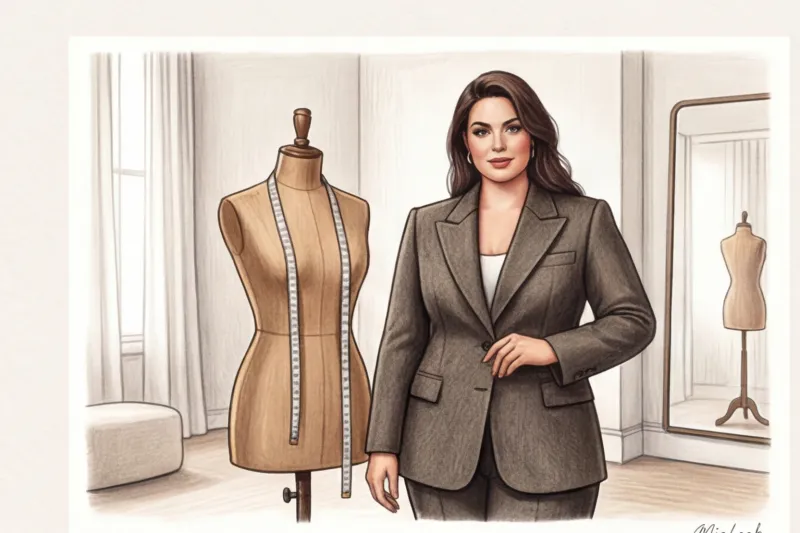
Did you know that over 80% of women make the same catastrophic mistake when gaining weight? According to the analytical agency WGSN (2024), when faced with changes in their figure, women instinctively choose clothes one or two sizes larger than they actually are. In an attempt to "hide," they visually add another 5-7 kilograms. My name is Giulia Rossi, and after 12 years of working as a fashion consultant in the premium segment, I've learned the most important thing: status and elegance don't depend on the number on the tag. They depend on the architecture of your body.
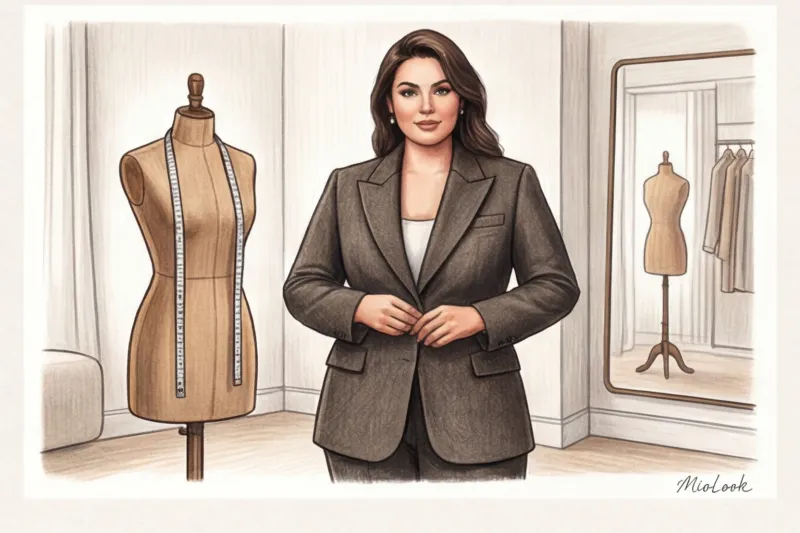
When we start to disassemble Larson types with excess weight , real magic is happening. Women are stopping putting off life until the mythical "summer weight loss" and are starting to dress luxuriously right now. We've already covered the basics of this concept in more detail in our a complete guide to the Larson system Today, I'll show you how a premium approach to tailoring and an understanding of your dominant features can change the rules of the game for changing proportions.
Anatomy of Style: Why Larson's Body Types Work More Accurately Than Other Systems When You're Overweight
Classic magazine "body types"—apple, pear, or inverted triangle—are hopelessly outdated. They describe only a flat outline, ignoring the individual's scale and bone structure. Dwin Larson's system works differently: it distinguishes between the unchanging architecture of the skeleton and the soft tissues, which can change volume.
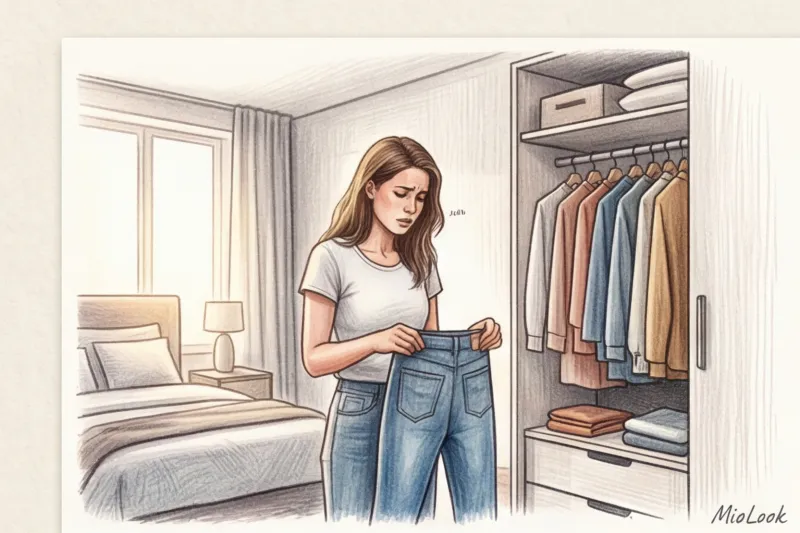
I had a telling case in my practice. A top manager at a large IT company contacted me after going from a size M to an XL after a year of stress. She came in panicked: "Julia, my style is broken. Only shapeless cases suit me now." She tried to apply the rules for the "apple" shape, but it looked awkward. Her bone structure remained dramatic: sharp shoulders, long limbs, sculpted cheekbones. The extra weight is just a temporary "façade" layered on top of the foundation. Once we reintroduced the strong shoulder line and elongated silhouettes to her wardrobe, she once again looked like a senior executive, not a tired woman in a sack.
If you feel like your old wardrobe isn't working anymore, don't rush into buying random items. Sometimes it's helpful to know How to decide on a change of image and not regret it , starting with an analysis of its natural architecture.
The Biggest Plus-Size Myth: Why Oversized and All-Black Won't Save You
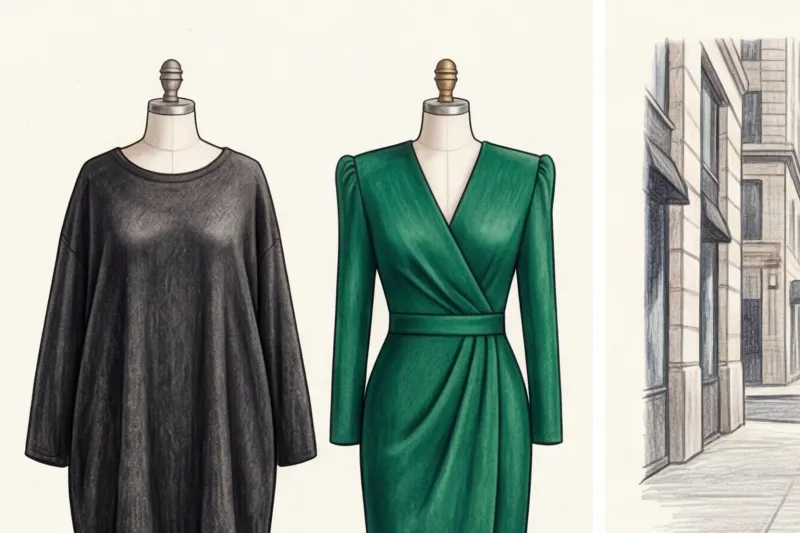
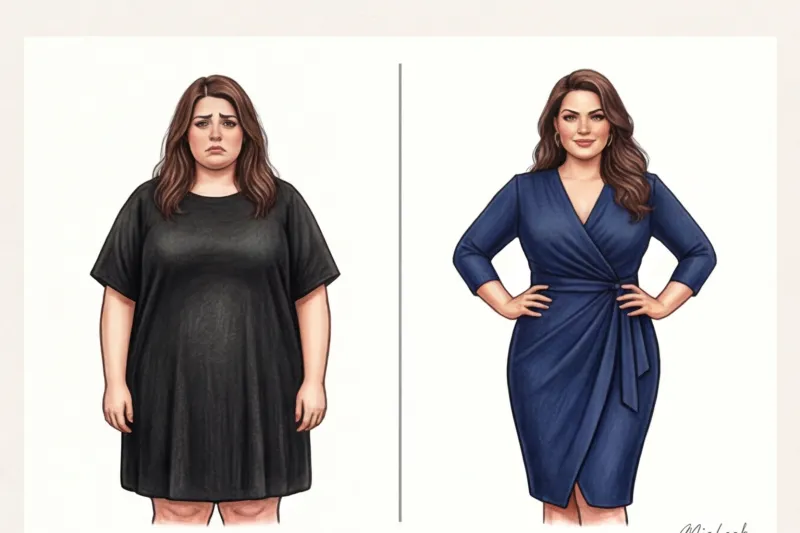
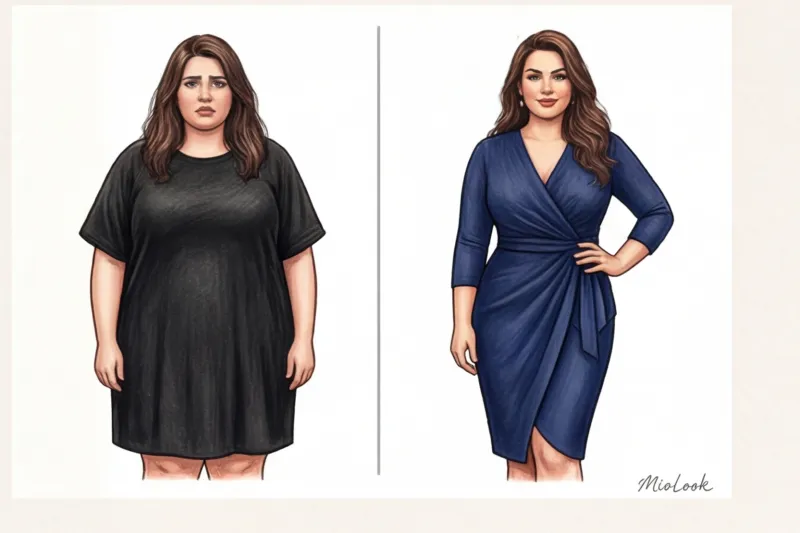
The most harmful advice still peddled by dubious stylists is: "Getting fat? Wear an oversized black hoodie." It's counterintuitive, but such things make you look bulkier.
"The oversize erases Larson's lines. While it hides folds, it simultaneously obliterates your waist, wrists, and collarbones, turning a complex, beautiful figure into a monolithic square."
Total matte black also poses a danger. Against a contrasting background (a light office wall, a sunlit street), black acts as a marker: it doesn't make you look slimmer, it merely emphasizes your silhouette.
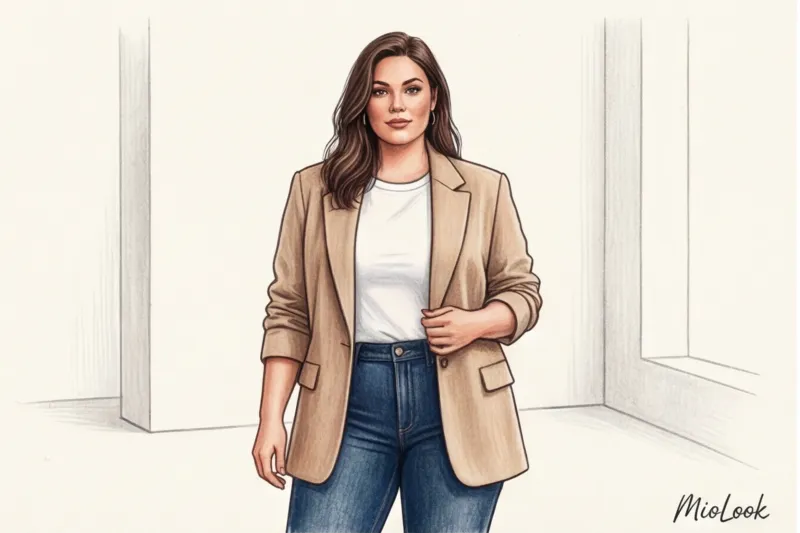
The Italian approach to tailoring that I profess is based on Sartorial architecture (tailor's architecture). Clothing should have its own framework. A garment that fits properly, even if it's slightly clingy in the right places, is always more slimming than a loose robe. A jacket that holds the shoulders and defines a vertical line will pull the silhouette together, unlike a shapeless cardigan.
Access to MioLook for €0.99 — one-time payment
A smart AI stylist will select the perfect look based on your proportions.
Get access — €0.99 onceHow Larson's dominants change with weight gain: distribution patterns
Each body type gains weight differently. Dwyn Larson's original work describes in detail how soft tissue follows bone width. Understanding these patterns is key to choosing the right body shapes.
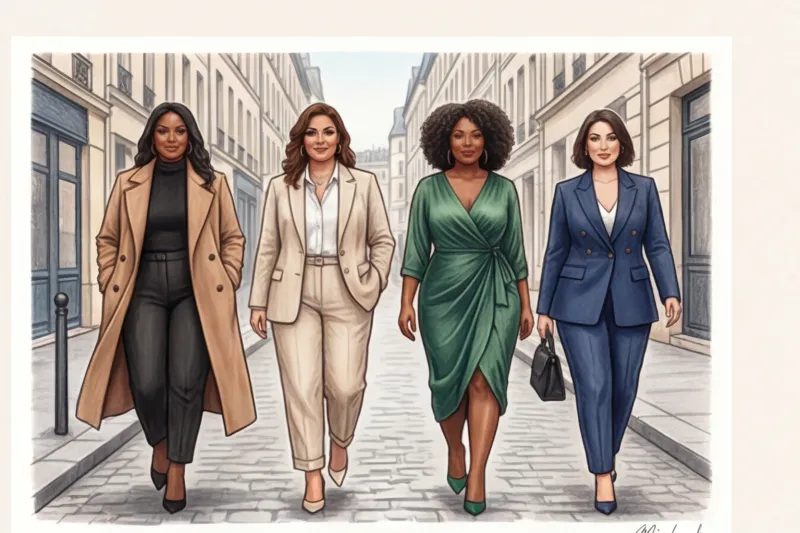
Dramatic: heavy bottom and maintaining sharp features
Pure Dramatics almost always carry excess weight in the lower body: the hips and upper legs (the breeches area). However, the face, collarbones, wrists, and ankles can remain strikingly sculpted even with an extra 15 kilograms.
Strategy: Your goal is to emphasize the preserved vertical line. Use thick suiting fabrics for trousers and skirts (they will smooth out the hips) and always maintain a strong, accentuated shoulder line. This will visually balance out the heavy bottom.
Natural: massive torso and loss of waist
In my observations, about 70% of women with a Natural dominant gain weight in the upper body: their ribcage expands, and their stomach, back, and forearms gain volume. However, their legs typically remain slender and long.
Strategy: Avoid stiff belts that will dig into your waist. Your best bet is on long, straight-cut or slightly loose-fitting jackets, deep V-necklines that elongate the neck and showcase slender legs. Thick linen and smooth wool are ideal.
Romantic: Total rounding and curvaceous forms
Romantics gain weight evenly, maintaining an hourglass figure. Their breasts and hips become fuller, their face gains extra softness, and their arms and legs become rounder.
Strategy: Avoid stiff, masculine fabrics—they'll make you look wooden. Use flowing but heavy fabrics (heavy silk, crepe georgette). A waist accent (through a tailored fit, not a tight belt) and delicate draping are essential.
Gamin: The "square" effect and loss of fragility
Gamines have the hardest time with weight gain. Due to their short stature and delicate bone structure, extra pounds quickly rob them of their natural fragility. Their bodies become stocky, with weight accumulating around the waist.
Strategy: Avoid long, monolithic silhouettes—they'll turn you into a rectangle. Keep the silhouette broken up (different colors on the top and bottom), use asymmetry, contrasting details, and cropped, crisp jackets.
Wardrobe Investment: Fabrics That Work Like a Corset
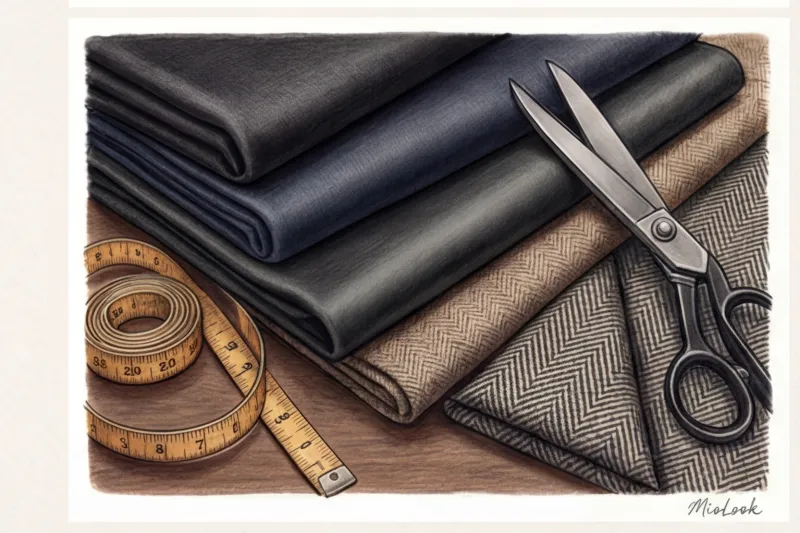
Do you know what instantly gives away cheap clothes on a curvy figure? Thin knits and low-density viscose (less than 150 g/m²). These materials will cling to every fold, every lace, highlighting what you'd rather hide. This is the exception to the rule: even the perfect cut won't work if the fabric is flimsy.
The secret to high-status women lies in materials science. Heavy fabrics act as an exoskeleton, creating a subtle corset effect. Look for wool crepe (from 300 g/m²), heavy matte silk (from 22 momme), dense twill cotton, and structured tweed. Yes, they cost more. But let's do the math. Cost-per-wear (cost of one output).
You'll wear one impeccable Italian wool jacket for €350 for three years, 50 times a year (about €2 per occasion). Five shapeless acrylic cardigans from the mass market for €40 each will pill and lose their shape within a month. A prestigious wardrobe is built on the principle of "less is more"—that's the foundation. Pareto rules in a smart closet.
Your perfect look starts here
Join thousands of users who look flawless every day with the MioLook AI assistant.
Get access — €0.99 onceMixed Body Types: A Checklist for Adapting Your Silhouette to Your Size
Pure personality types are rare. According to statistics from fashion institutes, about 85% of women have mixed dominants: Dramatic-Natural, Gamine-Romantic, and so on. What should they do?
I had a client, a Romantic Gamin. While gaining 12 kg, her face retained her Gamin-like sharpness (sharp nose, expressive eyes), and her body acquired romantic fullness in her hips. We structured her wardrobe like this: the portrait section was decorated with crisp, slightly contrasting collars (for the face), and her skirts were cut on the bias from heavy silk (for the hips).
Step-by-step selection checklist:
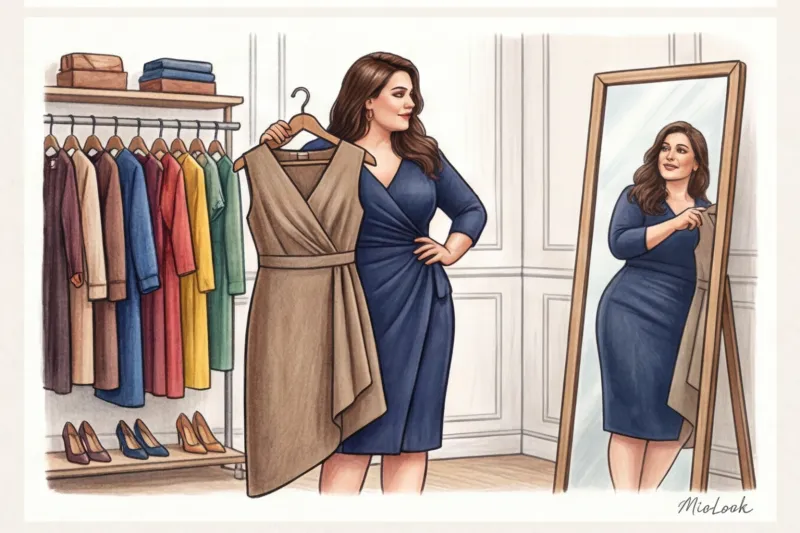
- Determine the leading dominant: Look in the mirror. What's changed the least? If your face still has angles, keep the peak lapels. If your wrists and ankles are still thin, be sure to highlight them with shortened 3/4 sleeves and 7/8 pants.
- Check the shoulder seam: It should be positioned exactly at the anatomical point of the shoulder. A dropped shoulder on a fuller figure visually lowers the chest and makes the back appear hunched.
- Make sure the fit is loose: There should be 2-3 centimeters of air between your body and the fabric. This creates the illusion that you're slimmer than you thought, but the clothes are simply looser.
- Hem length: The skirt should end at the narrowest part of the leg (below the knee or at the narrowest part of the calf). Never cut the silhouette at the widest part of the calf.
Capsule approach: creating a status image without looking at the scale
Building a plus-size wardrobe foundation using Larson's system doesn't require purchasing dozens of items. A status-conscious look is built on focal points.
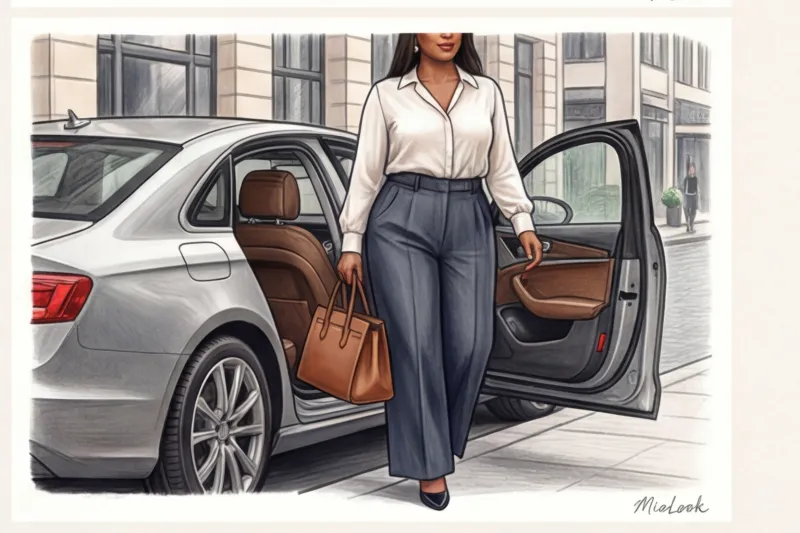
Accessories are your main tool for commanding attention. Invest in bags with crisp, geometric shapes made of smooth leather. A shapeless hobo bag or a soft shopper will add a relaxed, almost sloppy touch. A quality watch with a metal bracelet and statement shoes with a sturdy yet elegant heel will instantly elevate your style and draw the eye.
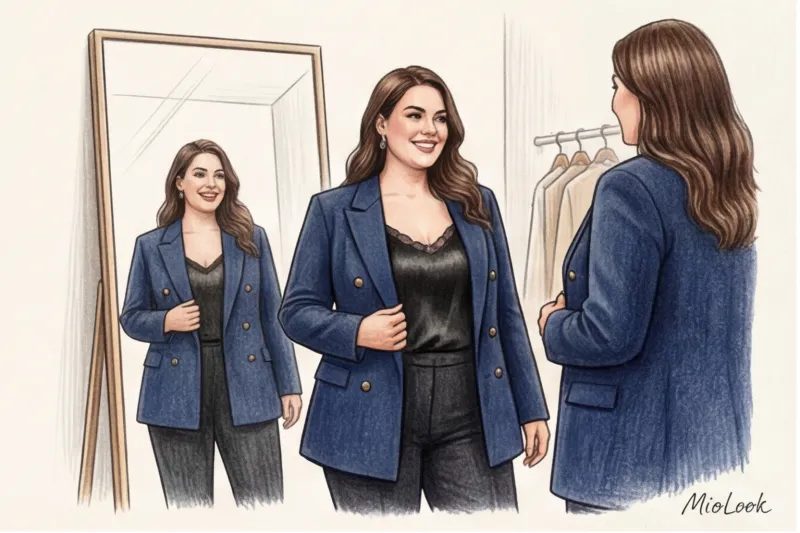
Don't be afraid of layering. My clients' biggest fear is, "A second layer will make me look fat." That's true if you wear a chunky knit sweater over a flannel shirt. But if you wear a silk top, a structured wool suit vest over that, and a straight coat on top, you'll create two vertical lapels, which will visually "cut" 5 centimeters off each side.
A Stylist's Summary: Your New Rules of the Game
Let's get this straight: weight is only a temporary indicator of soft tissue volume. Your bone structure, according to Larson, is a permanent structure. Stop punishing yourself by denying yourself beautiful clothes until you lose weight. Start dressing the body you have right now, with respect and a love for quality.
If you find it difficult to independently analyze how your proportions have changed, use technology. Upload your measurements and photos to the "smart wardrobe" feature in MioLook AI algorithms will help you create looks that take into account both your Larson architecture and your current volumes, saving you time and money on shopping.
Invest in sturdy fabrics, embrace your bone structure, and remember: luxury isn't about size XS. Luxury is about a total match between form and function.