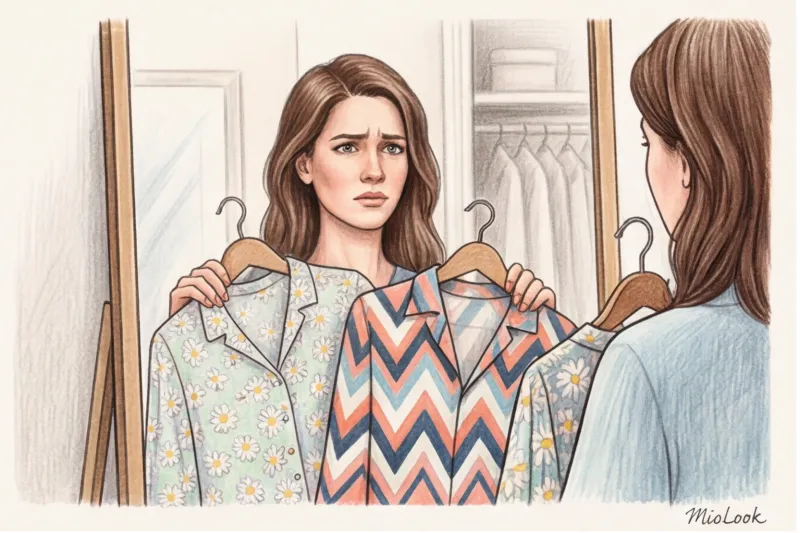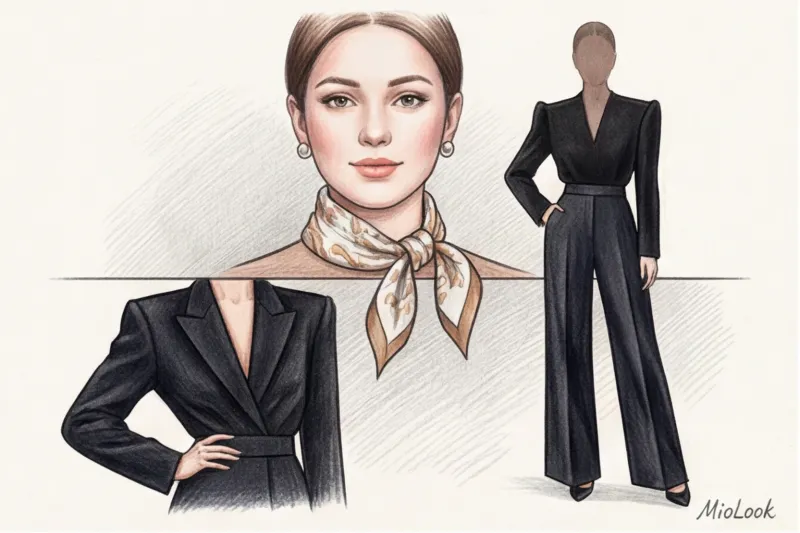
Have you ever bought something that fits perfectly, but in the mirror you see a tired woman five years older than her passport size? The pantsuit accentuates the waist, the length is perfect, the hips are just right. But her face looks dull, and her gaze heavy. In 12 years of working as a personal stylist, I've seen this scene hundreds of times in fitting rooms. Women blame their age, lack of sleep, or poor lighting in the store. But the truth is something entirely different.
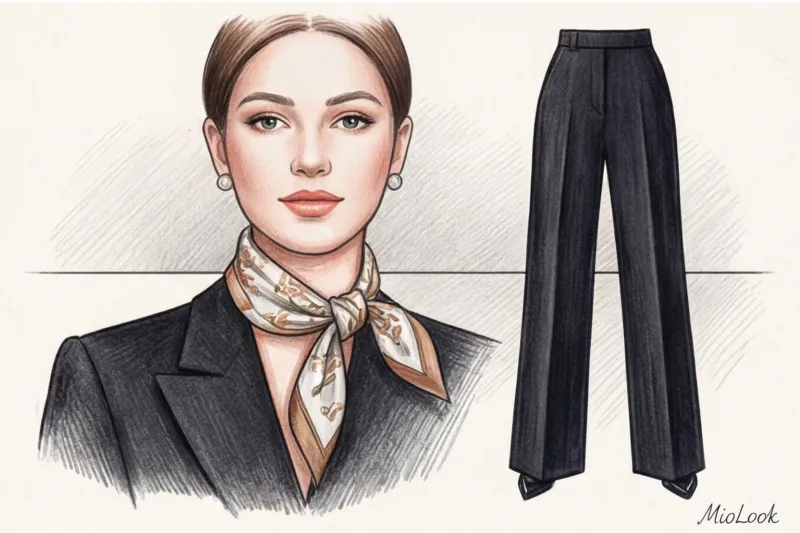
The thing is, the cut suited your body, but the collar and texture of the fabric clashed with your face. This explains Larson's dominant face and figure — a concept that will forever change your approach to shopping. We covered the basic theory in more detail in our complete guide: Larson Types: How to Find Your Style Based on Your Face and Body Type Today, we'll talk purely about practical matters: how to stop buying things that make you look older and start dressing so your face and body work together.
Larson's Dominant Face and Figure: The End of the "Apple" and "Pear" Era
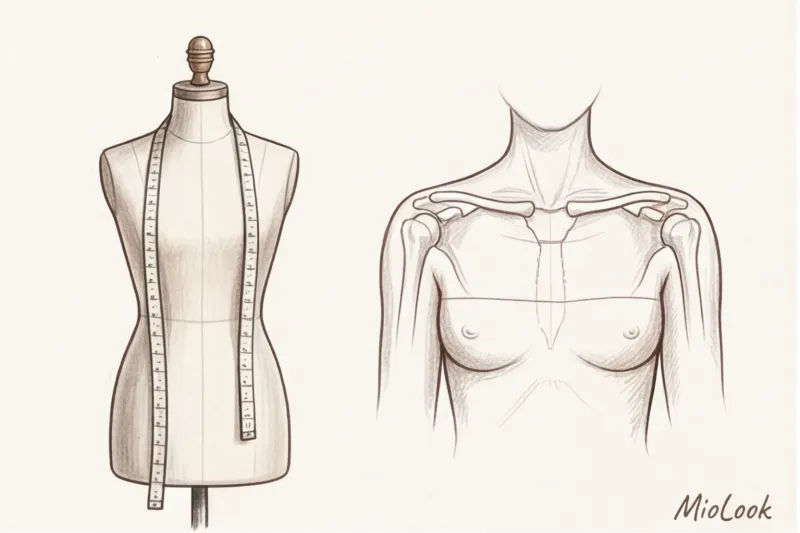
Let's be honest. The classic theory of body types ("apple," "pear," "hourglass") is hopelessly outdated. It teaches us to conceal our bellies or visually broaden our shoulders, reducing women to a set of geometric problems that need to be "corrected." David Kibbee's system went further, but led us into another trap: it demanded that we dress in the same style from head to toe.
Dwyn Larson's revolution with her 20-type system was about differentiation. She statistically demonstrated that 85% of women have mixed features. That is, you can have one type of face and a completely different body type.
Dominance is the energy (geometry, scale, texture) that predominates in a particular area. The main principle of a smart wardrobe that I instill in every client is: We dress the body according to the dominant features of the figure, and we design the portrait area according to the dominant features of the face. If your broad shoulders call for a masculine cut, and your pretty face with full lips calls for soft ruffles, you no longer have to choose just one.
Face or body: who really dictates the wardrobe rules?
A common myth is that "clothes should be chosen according to your body type." I strongly disagree. The face is always more important.
According to a WGSN (2024) study on changing consumer habits in the era of remote work, sales of statement tops and jewelry have increased by 40% compared to pre-COVID levels. We live in the era of Zoom, video calls, and selfies. Around 70% of first impressions at business meetings are formed by the head area (from the chest up). No one notices how perfectly your trousers fit under the table if your stiff shirt collar casts harsh shadows on your soft cheeks.
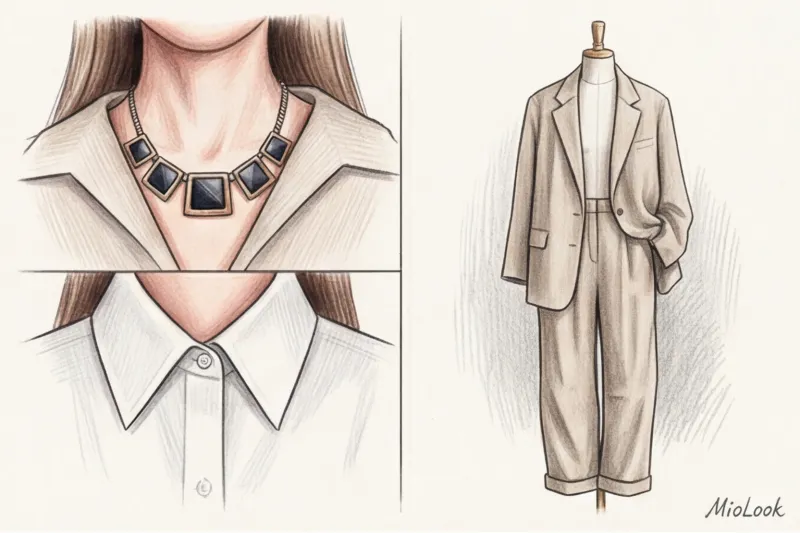
The hierarchy of decision-making when buying should be like this: first you look at the color, texture, and neckline (face area), and only if they refresh you, you begin to evaluate the cut and fit (body area).
When the face dominates (portrait zone)
Your face dictates everything above the bustline. If you get it wrong here, no amount of perfect waist adjustment will save your look. The dominant features of your face are:
- Neckline shape: V-shaped, soft boat neck, blind stand-up collar.
- Texture of the fabric near the face: It could be shiny silk, matte cotton, or coarse wool. I recommend checking it out. fabrics that look expensive to understand how the texture reflects light onto your face.
- Print scale: small flower versus large geometry.
- Accessories: earrings, necklaces, and also eyeglass frames (for example, in the office siren style).
A stiff, alien collar worn under a Romantic's soft face will act like a bad Instagram filter—it will highlight every wrinkle and add 5-7 years.
When the figure (body silhouette) dominates
Your body is responsible for the overall architecture of your appearance. Bone structure, limb length, and muscle mass determine:
- General silhouette: whether you need a fitted cut, a tight oversized fit, or a relaxed straight silhouette.
- Lengths: where the skirt should end so as not to cut into the leg, and how long the jacket should be.
- Fabric density at the bottom: fabrics should hold your shape. It's also important to choose the right base, for example, seamless underwear so that the silhouette is clearly visible, without unnecessary reliefs.
- Shoes and bags: their scale should match the size of your bones.
Access to MioLook for €0.99 — one-time payment
A smart AI stylist will select the perfect look based on your individual features.
Get access — €0.99 onceThe main mistake of stylization: trying to dress the face in "pants"
Let me tell you the story of my client Anna. She's tall (178 cm), with broad shoulders and long legs. She has a typical Dramatic body with a touch of Natural—long palazzo pants, thick fabrics, and a slightly casual look look phenomenal on her. At the same time, Anna has the doll-like face of a Gamine-Romantic: large eyes, full lips, and delicate features.
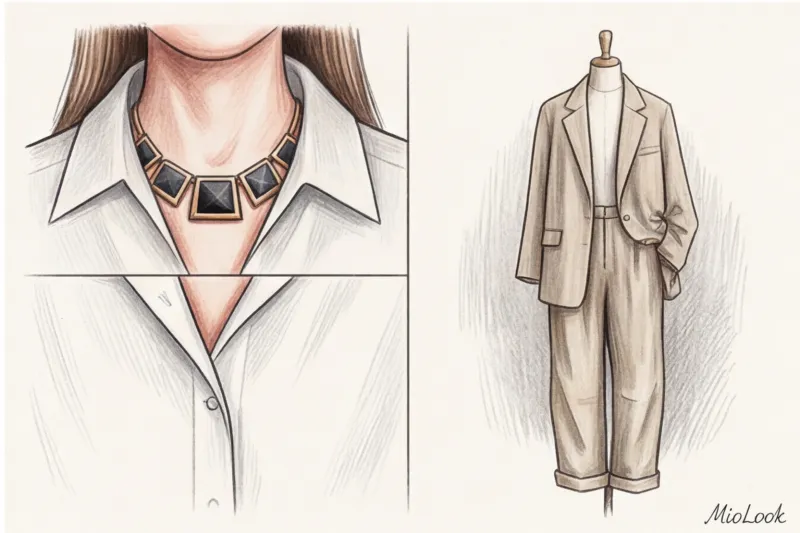
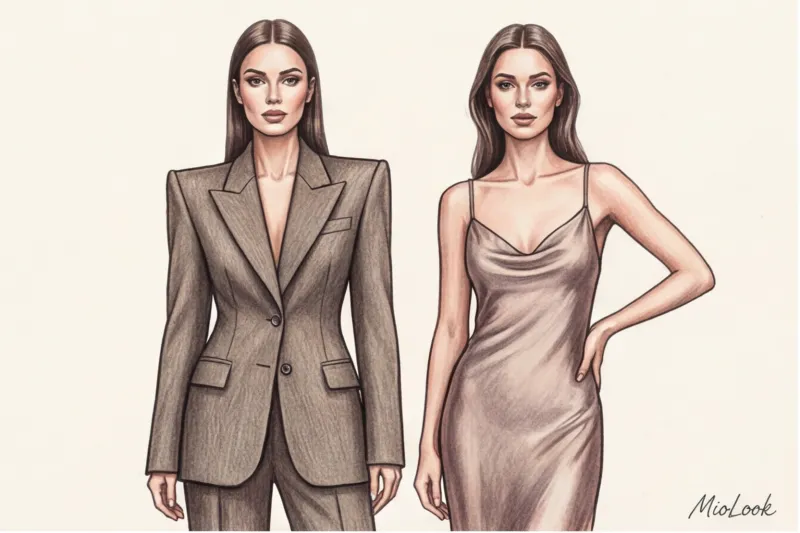
For years, Anna tried to look "serious" in her management position and bought stiff, men's-style suits. In them, she looked less like a boss than like a little girl who'd secretly donned her dad's jacket. The stiff lapels killed the softness of her face, and the oversized shoulder pads made her head appear tiny.
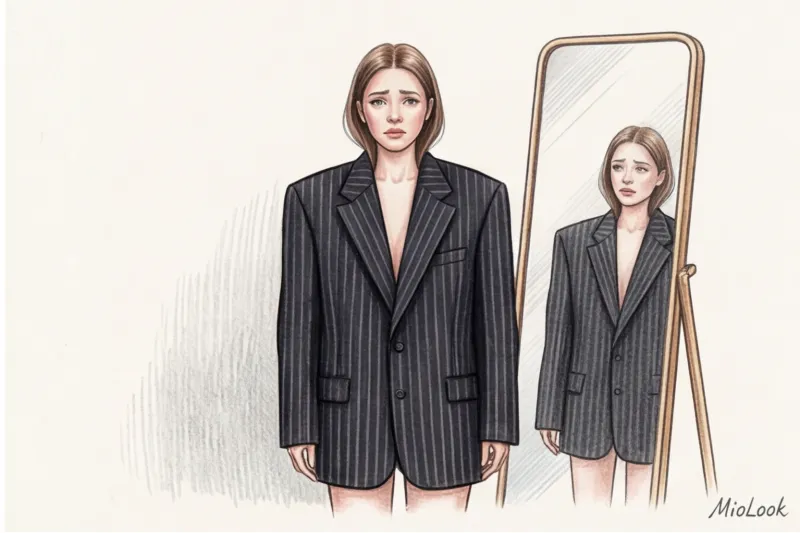
How did we fix this in one trip to Massimo Dutti? We kept the tailored, pleated trousers in thick wool (around €120)—they perfectly accentuated the dominant features of our figure. But instead of a jacket, we chose a silk blouse with a soft bow and a subtle sheen (€60). Our faces instantly brightened, and our eyes sparkled. The formality remained, but it no longer conflicted with nature.
Remember: strict, all-out business looks don't suit everyone. If your face calls for a softer look, you'll always look unhealthy.
Larson's 4 Basic Personality Types: How to Recognize Your Dominants
To understand how to mix styles, you first need to recognize the "pure" energies in your appearance. Larson identifies four basic types. Take a closer look at yourself—what do you see in the mirror?
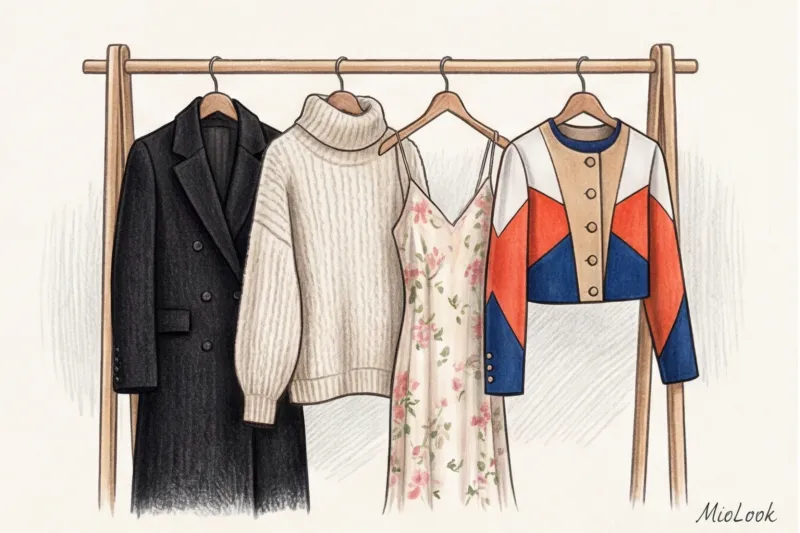
- Dramatic (Angularity and Scale): Tall, sharp cheekbones, straight nose. Energy of strength and distance. Fabrics: stiff, smooth, shape-holding (heavy cotton, taffeta, smooth leather). Brand reference: COS , where there is a lot of architectural cutting and clean lines.
- Natural (Width and Solidity): Rounded corners, broad shoulders, expressive jawline, open gaze. The energy of freedom and nature. Fabrics: matte, textured, loose ( a combination of linen, suede, and chunky knit ). Brand reference: Massimo Dutti.
- Romantic (Softness and Roundness): Sloping shoulders, full lips, cheeks, a soft hip line. Sensual energy. Fabrics: flowing, lightweight, with a delicate sheen (silk, chiffon, velvet). Brand focus: & Other Stories or limited collections Zara.
- Gamin (Dynamics and Small Scale): Compact figure, expressive eyes, teenage boldness, fine charcoal. Playful energy. Fabrics: dense yet lightweight, contrasting prints, small checks. Brand focus: youth lines. Mango.
Your task is to determine which type your face is closer to and which your figure is closer to.
A stylist's checklist: how to identify your dominant features in front of a mirror
I often see girls trying to determine their type using online tests by uploading selfies. This doesn't work. A smartphone lens with a focal length of 24-50mm distorts facial proportions by up to 30%, making the nose appear larger and the oval of the face narrower. A person's facial type can only be determined in person, in a fitting room, through the reaction of one's appearance to different fabrics.
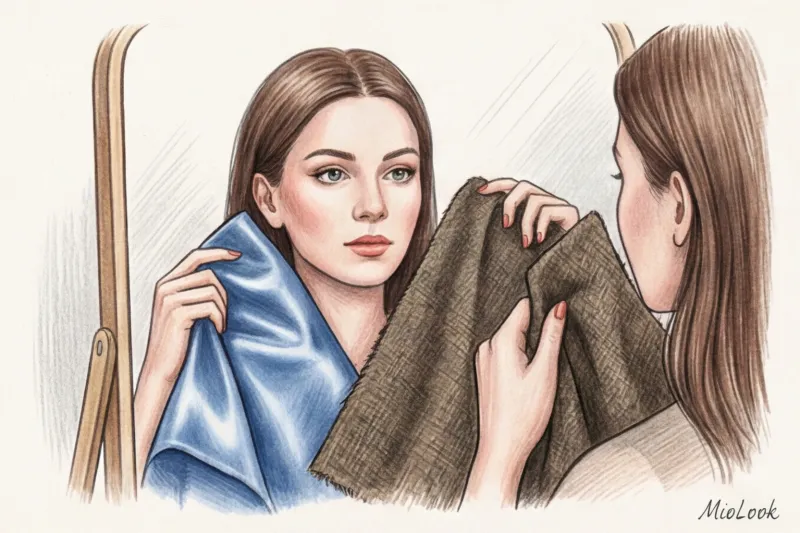
Here's a checklist you can use at any Zara or H&M store today:
- Texture test (for face). Take two items: one made of smooth, shiny satin (like a shirt), and the other made of a coarse, loose knit. Hold them to your face, one after the other, in good light. Which fabric makes your skin look smoother? If the satin makes your skin look smoother, you're either Romantic or Dramatic. If the loose sweater makes your skin look smoother, you're Natural.
- Scale test (for face). Try large, chunky hoop earrings, followed by small studs. Do the large pieces accentuate your facial features, or do they "disappear" against them? If so, you're on the small side (Gamine or Romantic).
- Silhouette test (for the body). Put on a thick, straight, oversized jacket (Natural/Dramatic), followed by a soft, fitted cardigan (Romantic). Which makes your figure look slimmer and more put-together? Does the jacket make you look "closet-like"? So, your body needs softness and a snug fit.
Your perfect look starts here
Join thousands of users who look flawless every day with MioLook. A convenient wardrobe manager in your pocket.
Get access — €0.99 onceBuilding a Wardrobe According to Larson: A Formula for Mixed Body Types
When you know your dominant features, shopping turns from a lottery into simple math. The formula for the perfect look is: Silhouette and Lengths (for the body) + Details and Cutouts (for the face).
Let's look at some specific examples.
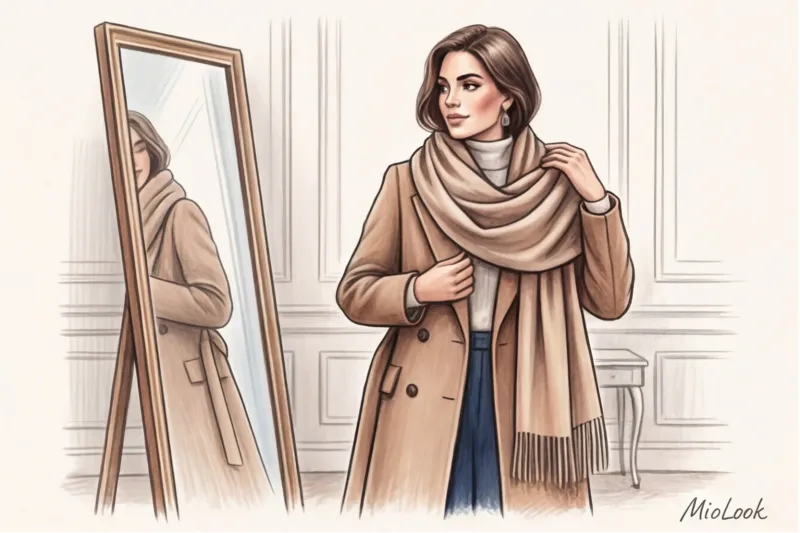
"Wardrobe compromise is when you use accessories as a bridge between your face and body. A heavy boot supports a heavy pelvis, while a delicate silk scarf over your face protects your delicate skin from the harshness of a coat."
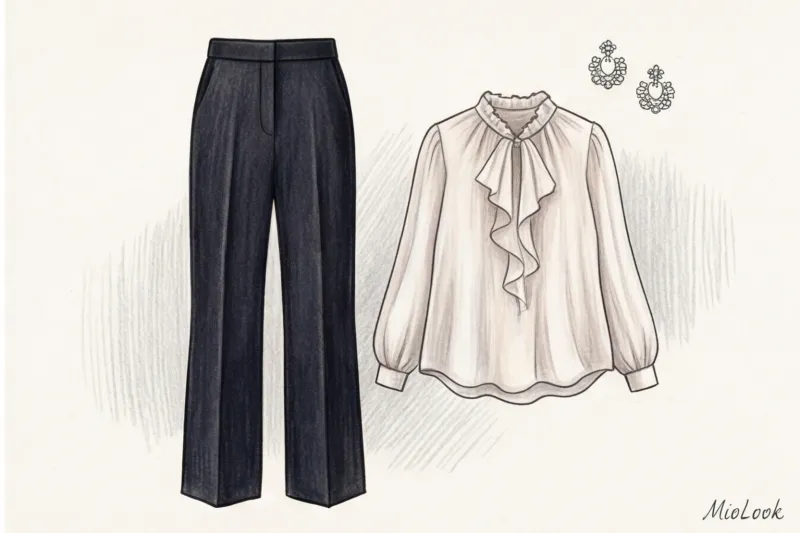
Example 1: Dramatic Body + Romantic Face
Your body needs verticality, length, and density. Your face needs shine, softness, and roundness.
Solution: Long, straight trousers in suiting fabric (from €80) will create the desired silhouette. Top it off with a viscose or silk blouse with a softly draped V-neck (around €50-70). In the portrait area, add smooth, rounded gold-tone earrings. The body is supported by a frame, and the face glows in a soft frame.
Example 2: Straight Body + Gamine Face
The body needs freedom, slight oversize, and matte textures (denim, linen, wool). The face needs geometric shapes, silhouette breakdown, and fine detail.
Solution: Relaxed straight-leg jeans in the right shade of blue (around €40-60). Top with a cropped jacket made of heavy cotton or tweed with a small, contrasting check. Underneath, a T-shirt with a small, graphic print. The body is given freedom, and the face is given movement and contrast.
To avoid having to keep all these formulas in your head, you can upload your things to MioLook and visualize combinations before you put them on. The app will help you evaluate how the texture of the top clashes with or complements the bottom on your smartphone screen.
Summary: Stop bending yourself to fit standards
Your appearance isn't flawed—it's the linear system that tries to measure you with a standard meter. If a garment sits perfectly on your hips, but the collar makes you look pale, and the print "eats out" your features, just leave it at the store. The face always wins.
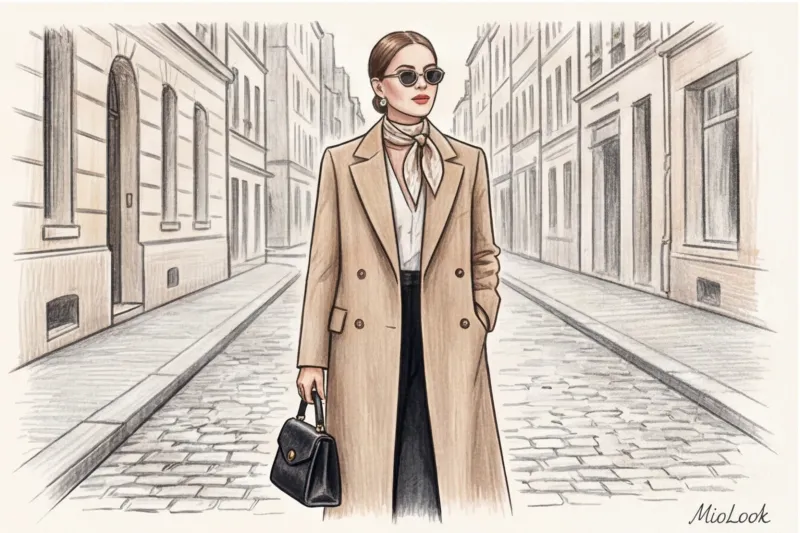
I suggest you open your closet today and do a quick inventory. Take out those items you bought for the perfect fit but for some reason never wear. Hold them up to your face in a mirror in daylight. Chances are, you'll immediately see a clash of textures or scales. Donate these items, sell them, or adapt them with the right "portrait" accessories (scarves, necklaces, the right base layer). Your clothes should serve you, not the other way around.