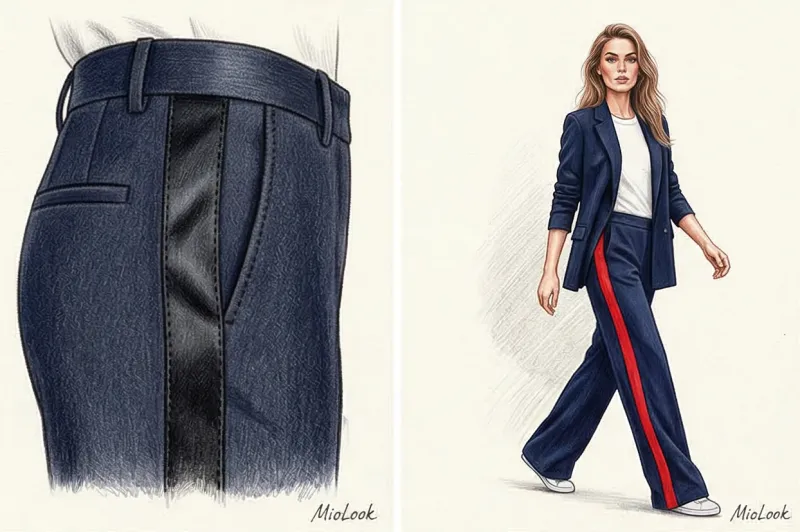
What are stripes?
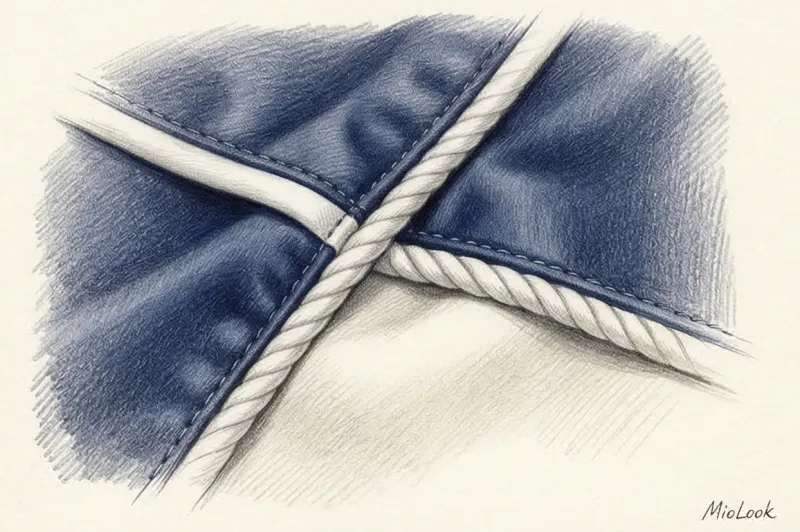
In the fashion dictionary these are stripes — longitudinal inserts, stripes or stripes of fabric of a contrasting color, located along the outer side seam of trousers or shorts.
Historically, this element appeared in military uniforms. It served to visually distinguish command personnel and indicated their affiliation with a particular branch of the armed forces.
In the 20th century, stripes became an essential part of sportswear. With the rise of the sport-chic style, they became a staple of women's everyday and evening wear. The main visual function of this detail is to create a clear vertical line, visually lengthening the legs and elongating the silhouette.
Main types
In a modern wardrobe, side panels are divided into several categories depending on the style and materials used:
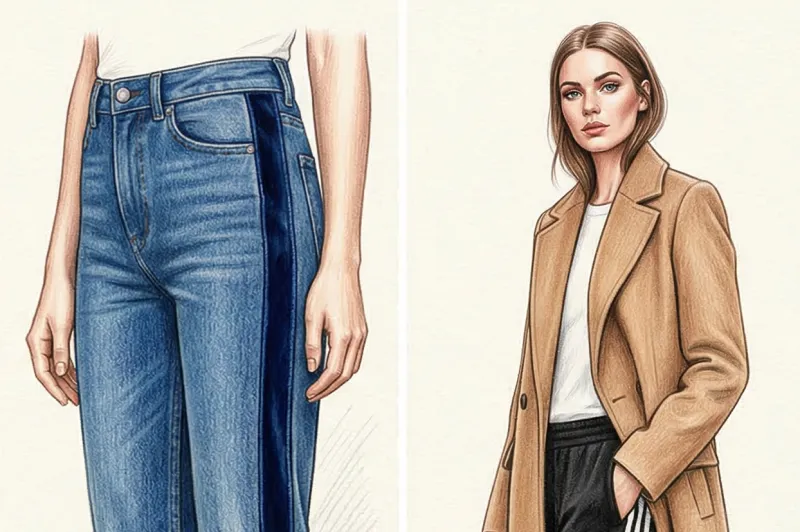
- Sports: classic contrast stripes (one, two or three) on knit joggers or nylon track pants.
- Suits (tuxedos): Single inserts of silk, satin, or velvet on tailored trousers made of matte wool. This is a traditional element of the evening dress code.
- Logomania: wide textile bands with a printed or embroidered brand name, typical of streetwear.
- Decorative and textured: Stripes on jeans or trousers made of leather, lace, sequins or contrasting denim.
What to combine with
Side stripe trousers are easily adaptable to a variety of styles. For a sporty-chic look, pair them with a basic white T-shirt, a long, structured jacket, and pumps.
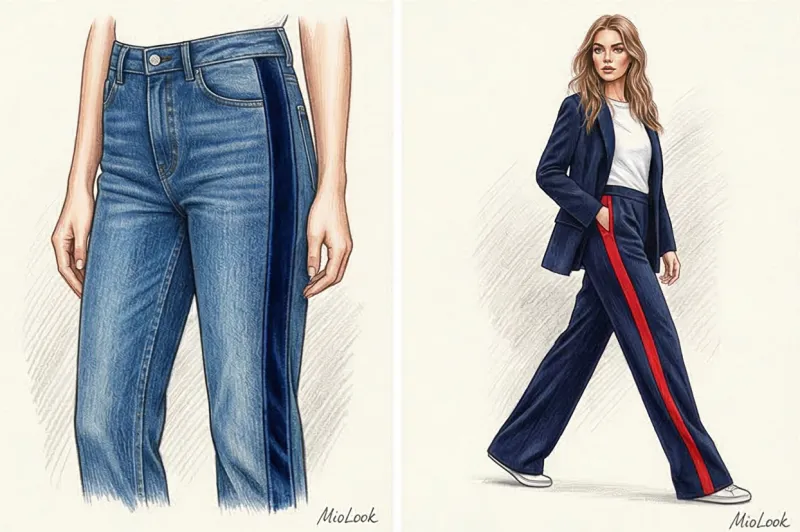
For a casual everyday look, straight-leg jeans with a contrasting stripe are paired with a chunky knit sweater and chunky-heeled ankle boots. For an evening look, wide-leg palazzo pants with satin stripes pair beautifully with a silk blouse or lingerie-style top.
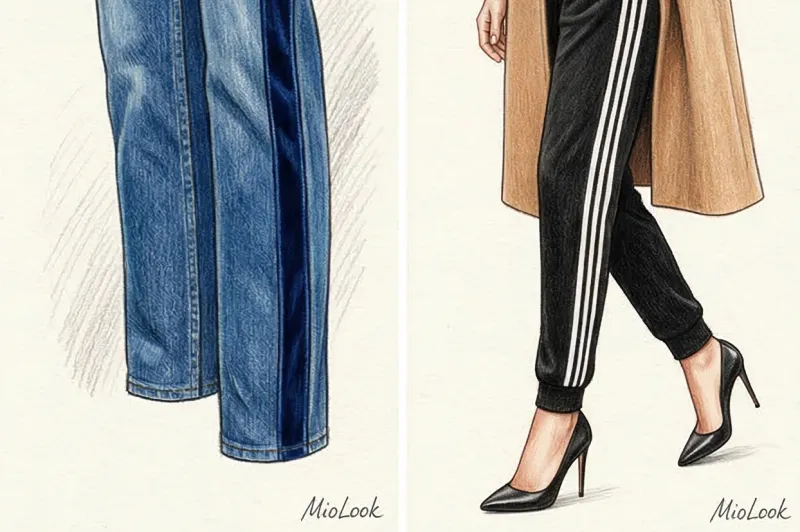
To maximize the leg-lengthening effect, it's recommended to wear striped trousers with shoes that match the stripe or the trousers themselves. Contrasting ankle straps should be avoided, as they can visually disrupt the vertical line.