Forget everything the glossy magazines of the 2000s taught you. Wide vertical stripes won't make you look like a stick, and a horizontal striped shirt won't transform your figure into a vast rectangle. I know this sounds like heresy to many, but we're not going to rely on outdated stereotypes, but on physics and the laws of optics.
Back in 1867, German scientist Hermann von Helmholtz published a study that revolutionized our understanding of human perception, but unfortunately, it still struggles to break through the marketing myths of mass marketing. Today, we'll explore line architecture. If you want to know, How to wear stripes and to convey status, and not look like a barcode at the checkout, we will have to look at the inside of things.
We discussed the basic principles of pattern mixing in more detail in Our complete guide: how to combine prints in clothes , and in this article we will focus exclusively on linear geometry – the most strict, insidious and aristocratic pattern in the wardrobe.
Line architecture: why one stripe looks expensive and another cheap
About two years ago, a client of mine in Milan fell in love with a silk blouse from a well-known premium brand. The price was around €800. The color was stunning: a deep emerald with the finest gold thread. But when she left the fitting room, I politely but firmly asked her to remove it and leave it in the store. The reason? The pattern repeat on the right side seam was off by exactly 3 millimeters.
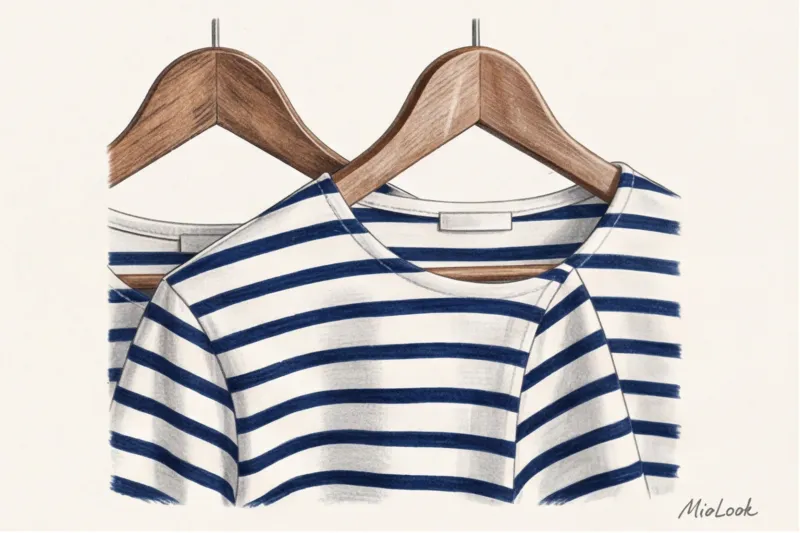
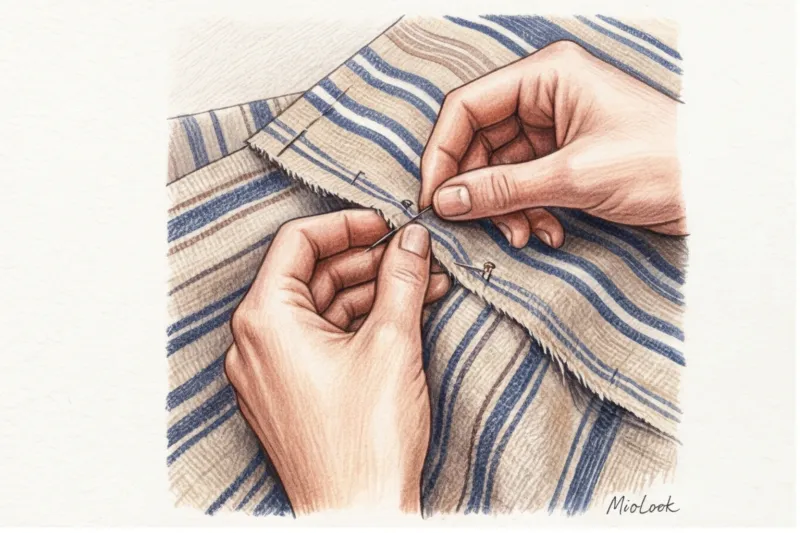
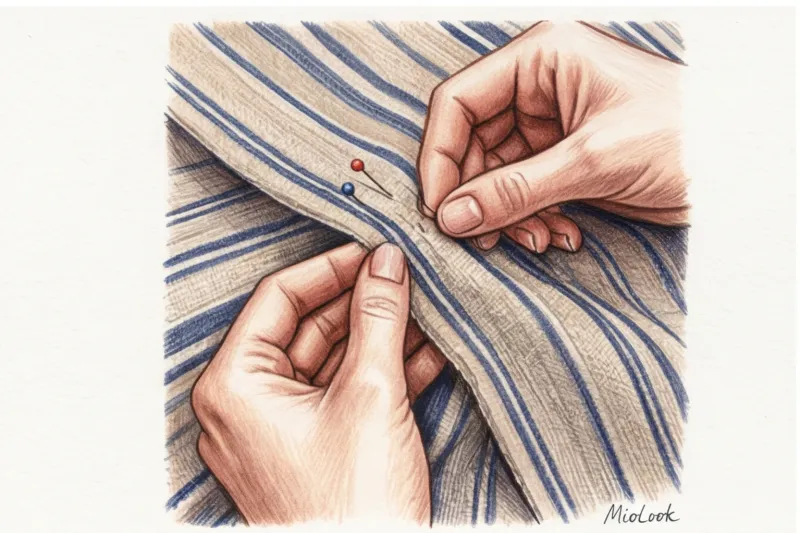
Geometry doesn't forgive carelessness. Perfectly aligned stripes on side seams, darts, sleeves, and patch pockets are an absolute hallmark of quality and the first sign of expensive manufacturing. If the seam lines are broken or form a chaotic herringbone pattern, the garment instantly appears cheaper, no matter how many zeros are on the price tag.
The second secret lies in the pattern-making technique. Over 12 years of working as a stylist, I've developed the "blind touch" rule for myself and my clients. Close your eyes and run your fingertips across the fabric. Do you feel a slight texture along the border of the colors? If so, you're looking at a high-quality woven stripe (yarn-dyed), created from pre-dyed threads.
A cheap alternative is surface printing on finished fabric. This looks especially terrible on polyester: the printed layer of ink makes the fabric stiff, gives it a cheap, glassy sheen, and creates a greenhouse effect on the body. True luxury is always structured; it's ingrained in the fabric's DNA.
Debunking the myth: How to wear stripes without fear of adding volume
Let's return to physics. The aforementioned Helmholtz illusion demonstrated a striking fact. The scientist drew two identical squares: one filled with vertical lines, the other with horizontal ones. Absolutely every subject claimed that the square with horizontal stripes appeared taller and narrower.
"The human eye glides along frequent horizontal lines like the steps of a staircase, moving upward and visually elongating the object. Vertical lines, on the other hand, force the gaze to move from left to right, assessing width."
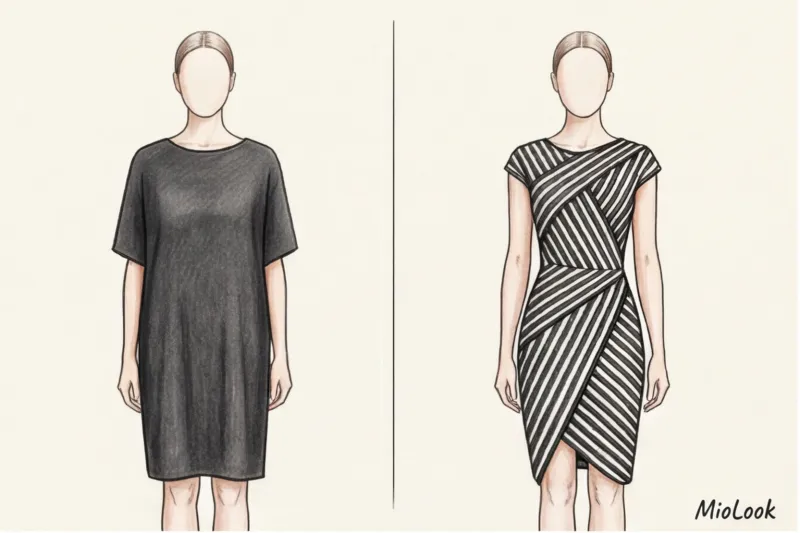
How does this work on the human body? A thin, dense horizontal stripe (no more than 0.5–1 cm wide) merges into a single rhythm. It elongates the silhouette and flatters the figure. But with vertical stripes, things are much more complicated.
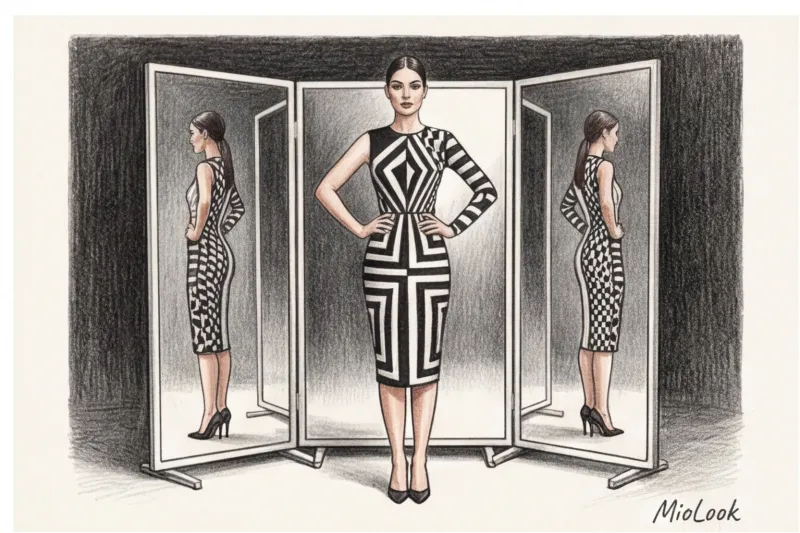
I call this the "circus tent" effect. Wide vertical stripes, especially high-contrast ones (for example, black and white stripes 4-5 cm wide), inevitably distort along the curves of a woman's body—on the chest, hips, and buttocks. The line, which should be perfectly straight, curves, creating a magnifying glass effect on areas you might want to minimize. The only exception is very dense suiting fabrics, which maintain a rigid frame regardless of body shape.
The Anatomy of a Perfect Breton Top: From Sailor Uniform to Parisian Chic
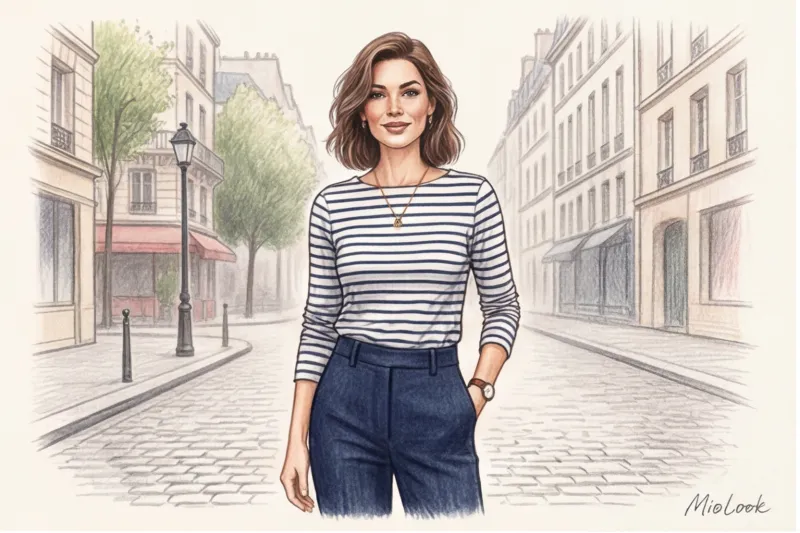
The Breton stripe (marinière) is more than just a print; it's a historical artifact. In 1858, France passed an official law strictly regulating sailor uniforms. A true sailor's stripe had to have exactly 21 stripes on the chest—representing the number of Napoleon's major victories. Later, in 1917, Coco Chanel, inspired by the fishermen of Deauville, introduced this garment into women's wardrobes, forever changing the course of fashion history.
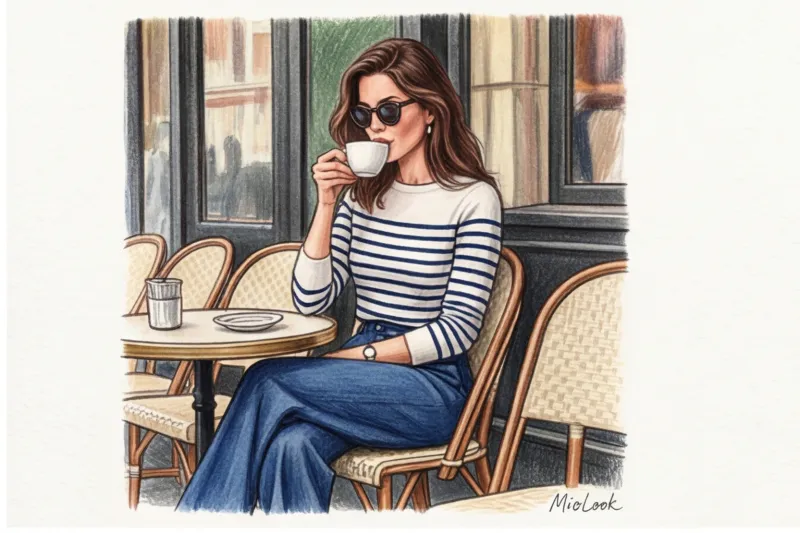
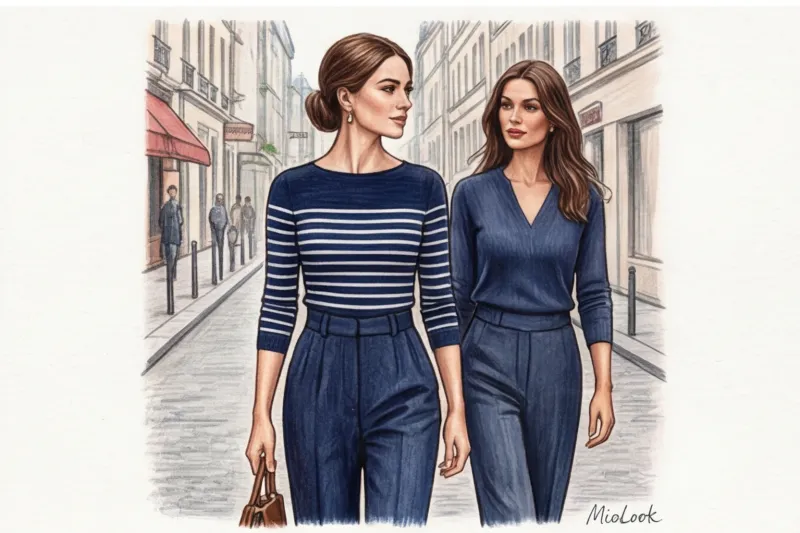
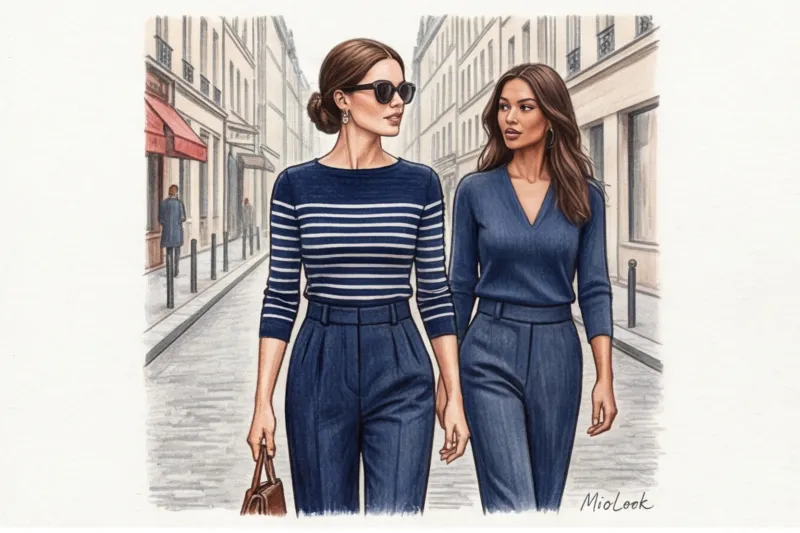
Why do some women in Breton shirts look like icons of French style, while others look like they're heading to the dacha? The secret lies in the density of the cotton. The right Breton shirt should act as an architectural framework. It shouldn't hang like a soft, shapeless rag.
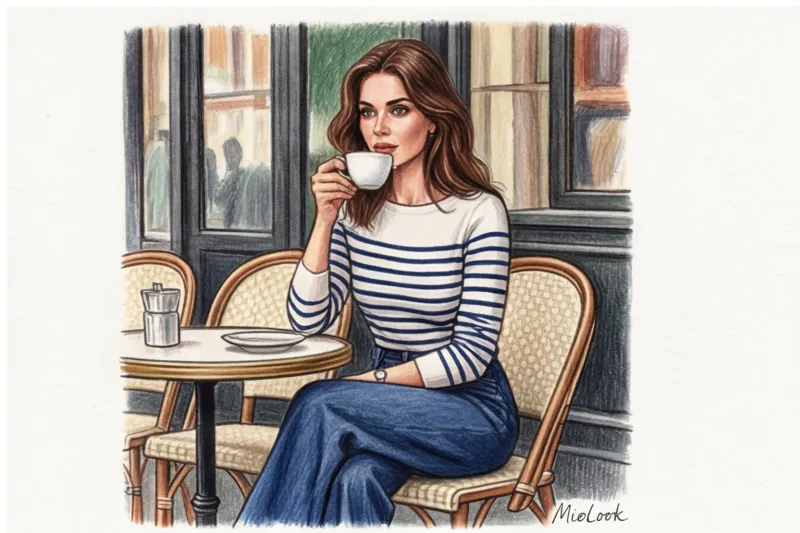
Look for items made of dense cotton weighing at least 200 g/m². This material maintains the sleeve's shape, doesn't stretch at the elbows, and creates a beautiful shoulder line. A bateau neckline elegantly reveals the collarbone—the most delicate part of a woman's body—while balancing the geometric pattern.
Access to MioLook for €0.99 — one-time payment
A smart AI stylist will select the perfect striped look for your body type and appearance.
Get access — €0.99 onceToday, the classic Breton jacket is best integrated into smart casual. A fail-safe formula: a Breton top, a loose-fitting double-breasted blazer with gold buttons, wide-legged palazzo trousers with pleats, and loafers. It's the perfect balance between relaxed and put-together.
The Vertical of Power: A Thin Chalk Stripe in a Business Wardrobe
When we talk about office wear and status, suit stripes come into play. It's important to distinguish between two types: pinstripes (made up of tiny dots) and chalk stripes (a chalky, slightly more diffuse line, reminiscent of tailor's chalk on wool).
This geometric pattern originates from London's Savile Row, the mecca of men's bespoke tailoring. Traditionally, these suits are made from premium twisted wool (marked Super 120s and above). The psychology of this pattern is crystal clear: it conveys authority, structure, logic, and establishes an invisible distance between you and your interlocutor.
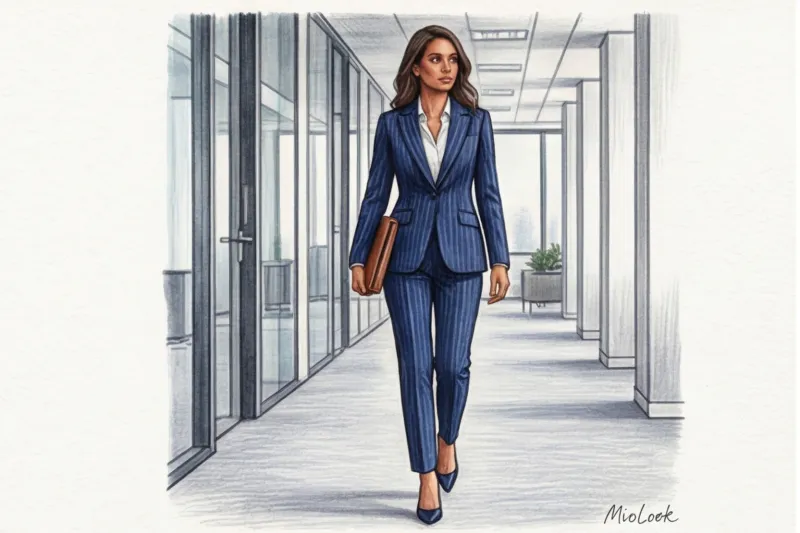
How can a woman wear such a suit without looking like a 1930s Chicago gangster? The secret is to soften the context. If you choose a tailored chalk-striped jacket with accent shoulders, avoid wearing a stiff men's shirt underneath. Replace it with a silk top, a flowing blouse, or a thin cashmere crewneck. The mix of masculine textured wool and feminine flowing silk creates the most luxurious visual contrast.
Mixing Prints: The Ultimate in Geometry
Stripes have a remarkable quality: in the styling world, they often act as a "neutral" backdrop. They're the perfect bridge for creating complex, layered looks with bold patterns.
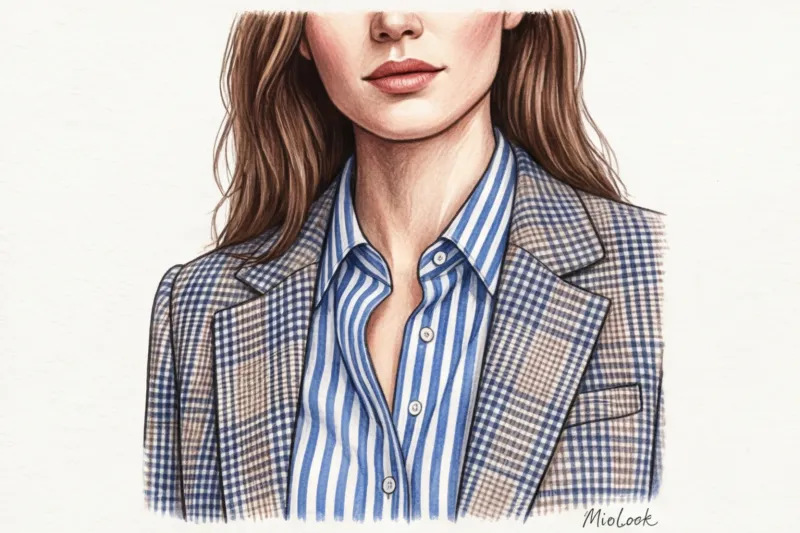
The main rule of mixing is difference in scale. If you're wearing a blouse with a thin, barely noticeable vertical stripe (up to 3 mm), you can confidently layer a jacket in a large British Prince of Wales check over it. The patterns won't clash because they're in different weight classes.
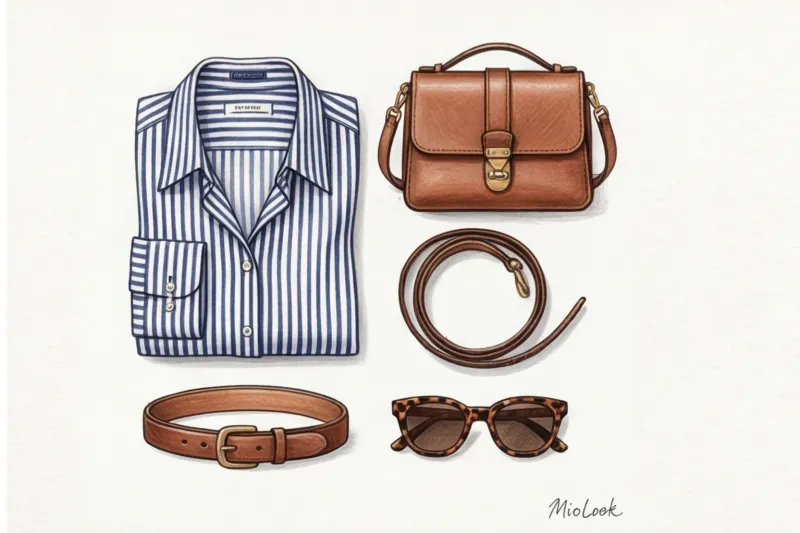
My favorite outfit for fashion-forward girls: a thin blue and white striped shirt paired with a midi skirt adorned with a large, sweeping floral print. The geometric lines reinforce the romanticism of the flowers, preventing the look from becoming too simple. And remember to use guidelines: you can mix and match stripes in a single outfit. For example, a basic vertical striped shirt looks great with a silk scarf with diagonal stripes.
Ready to digitize your wardrobe?
Upload your items to MioLook and let artificial intelligence create dozens of new stylish combinations from what you already have.
Try MioLookJulia's Checklist: 5 Steps to Buying a Striped Item
To ensure your wardrobe is stocked with investment pieces, I suggest using this algorithm every time you go shopping. Run each item through these five steps:
- Backside Rating: Is the fabric dyed through and through, or is the design simply printed on top? This prestigious piece is equally aesthetically pleasing on both sides.
- Seam geometry: Check the fit at the shoulders, side seams, and pockets. If the lines are out of alignment, leave the garment on the hanger. (The only exception is deconstructed conceptual brands like Maison Margiela, where asymmetry is built into the design code.)
- Dynamic optical test: Put the garment on and walk in front of a mirror. Does the pattern "float" as you move? Is the vertical line distorted on your hips or chest?
- Scale: Is the width of the stripe proportionate to your facial features? Women with delicate, small features should avoid large, contrasting lines of 5 cm, which will draw all the attention to themselves.
- Contrast: The stark black and white contrast doesn't suit everyone and often looks too harsh. Consider softer, more luxurious combinations: deep navy and ecru (the color of unbleached linen), or chocolate and milky.
Stripes are a litmus test for a brand's quality and your sense of proportion. They don't tolerate fussiness or cheap materials. Choose dense fabrics that maintain the cut's structure, ensure impeccable seam alignment, and don't be afraid to use this pattern as a canvas for more complex stylistic solutions. And if you're unsure whether your chosen prints will work together, you can always upload photos of your outfits to MioLook smart wardrobe and get an objective analysis from an AI stylist.