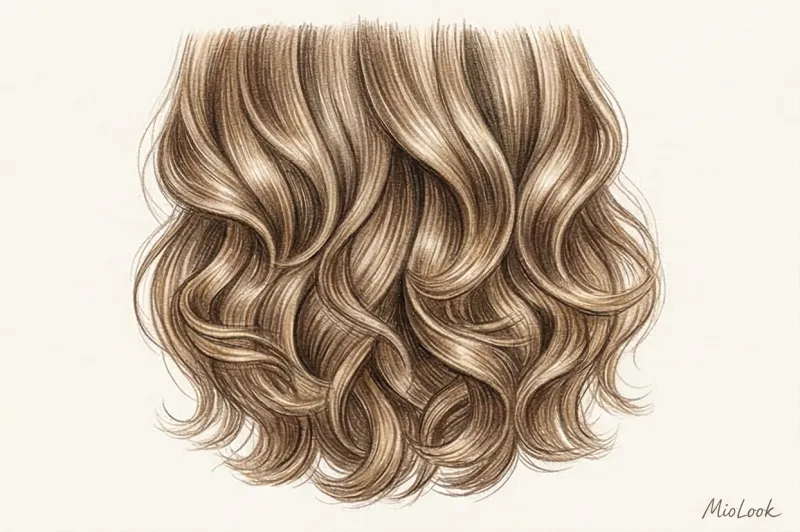
Hair carving is a long-term styling procedure using gentle chemical compounds to create soft waves or root volume. The formula works exclusively on the surface layer without damaging the internal structure, lasting up to eight weeks. It is applied in salons as a safe perm alternative.
What Is Carving in Haircutting and Styling?
When clients ask about this term, they usually refer to one of two distinct salon services. The primary definition relates to a chemical texture service. Originally developed by Schwarzkopf, this method was introduced as a safe, modern alternative to the traditional perm. Unlike harsh perms that break and restructure the inner core of the hair shaft, this gentle formula only alters the outer layer, providing a temporary but long-lasting shift in texture.
However, if you are searching for a carving hair cutting technique, the meaning shifts entirely. In haircutting, carving is a texturizing method where a stylist uses regular or texturizing shears, slightly open, and slides them down the hair shaft. This removes excess bulk, creates movement, and helps the hair lay smoothly without altering its fundamental length. While the cutting technique is popular for thick hair, the chemical texture service remains the go-to solution for fine, limp strands.
The Meaning Behind the Chemical Hair Carve
Understanding the carve hair meaning requires looking at how the chemical solution interacts with your natural texture. Traditional perms use strong alkaline solutions that permanently change the hair bonds, often resulting in dry, brittle ends and a harsh line of demarcation as straight roots grow in.
The carving of hair takes a much softer approach. The specialized fixative gently molds the strands around curlers or rollers. The most significant advantage of this styling method is the gradual fading of the chemical fixative. Over the course of four to eight weeks, the waves slowly relax and return to their natural state. This gradual transition completely eliminates the appearance of a sharp line between the grown-out straight roots and the curled length, keeping your hairstyle looking neat and intentional throughout its entire lifespan.
Main Types of Hair Carving Procedures
Depending on your desired result and the specific areas where the composition is applied, stylists utilize several different techniques to achieve the perfect look.
Classic Texture CarvingIn this standard approach, the hair is curled along its entire length using specialized carver rollers. This creates the highly sought-after effect of light, natural beach waves. It provides an effortless, lived-in look that requires minimal daily styling.
Root CarvingIf you struggle with flat hair but do not want curls, root carving is the ideal solution. The product is applied exclusively to the root area to create long-lasting lift and volume. The main length of the hair remains completely straight, making it perfect for those who want a bouncy blowout look without the daily effort.
Local CarvingThis technique involves a partial perm of specific areas. A stylist may choose to treat only the ends of the hair, the bangs, or the face-framing layers. Local application is an excellent way to correct the shape of a haircut, add subtle movement, or make stubborn cowlicks behave.
Vertical CarvingFor those who want more definition, the vertical method utilizes spiral curlers. The hair is wrapped vertically from root to tip, resulting in more elastic, bouncy, and defined curls rather than loose waves.
| Technique | Application Area | Best Hair Type | Expected Result |
|---|---|---|---|
| Classic | Entire length | Medium to fine | Soft, natural beach waves |
| Root | Roots only | Heavy, flat, or oily | Lift and volume at the base |
| Local | Specific sections (bangs, ends) | Uneven textures | Targeted movement and shape correction |
| Vertical | Entire length | Long, straight hair | Defined, elastic spiral curls |
Should I Carve My Hair? Pros and Considerations
Deciding to carve your hair is a great choice for many, but it is not suitable for absolutely everyone. The procedure is highly recommended for individuals with fine, thin hair that struggles to hold a curl. It is also surprisingly beneficial for those with oily scalps; the gentle chemical solution slightly dries the root area, which can extend the time between washes and keep the hair looking fresh longer.
On the other hand, you should avoid this procedure if your hair is heavily bleached, severely damaged, or recently treated with henna. Even though the formula is gentle, it is still a chemical process that requires a healthy foundation. Very thick, heavy, or coarse hair might also not respond well, as the gentle formula may not be strong enough to hold the wave against the natural weight of the hair.
Essential Aftercare for Carved Hair
To maintain the beautiful texture of your new waves and prolong the life of the style, a proper home care routine is mandatory.
Washing and HydrationAlways use gentle, sulfate-free shampoos. Harsh detergents strip the hair and accelerate the leaching of the hold, causing your waves to fall flat prematurely. Because the procedure affects the outer layer of the cuticle, your hair will require intensive hydration. Incorporate nourishing masks and leave-in conditioners into your regular routine to prevent dryness, frizz, and brittleness.
Styling TechniquesTo enhance the texture of your curls, invest in specialized styling products such as lightweight foams, mousses, or sea salt texturizing sprays. When drying, always use a hair dryer equipped with a diffuser attachment. Keep the heat setting on low or medium, and use your hands to gently scrunch and shape the curl as it dries. Avoid brushing your hair when it is completely dry, as this will break up the waves and create a frizzy, undefined mess.
Coloring RulesIf you plan to change your hair color, timing is crucial. Hair coloring should be performed no earlier than 72 hours after the carving procedure. This mandatory interval allows the chemical processes within the hair structure to fully stabilize and complete. Applying dye too soon can ruin the wave pattern and cause unnecessary damage to the cuticle.