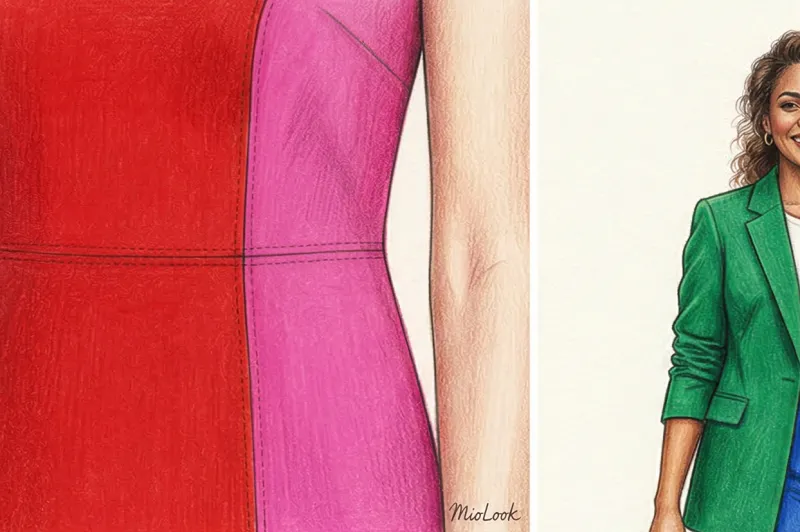
What is color blocking?
Color block — is a stylistic technique in clothing design that combines several large, contrasting color blocks in a single look or garment. The main idea behind this style is to create a vibrant, graphic silhouette by juxtaposing pure, localized shades without the use of prints, embroidery, or gradients.
Historically, this technique was inspired by neoplasticism and the paintings of Piet Mondrian, composed of colored rectangles. Color blocking was introduced into high fashion by Yves Saint Laurent in 1965. The designer created the famous straight-cut "Mondrian" dress with geometric inserts of primary colors, which became the benchmark for this stylistic movement.
Distinctive features
The basis of color blocking is strict geometricity. The boundaries between colors are always clear, sharp, and straight, diagonal, or rectangular. The classic version completely avoids patterns such as checks, polka dots, or floral motifs. The fabric texture remains smooth, placing the emphasis solely on color.
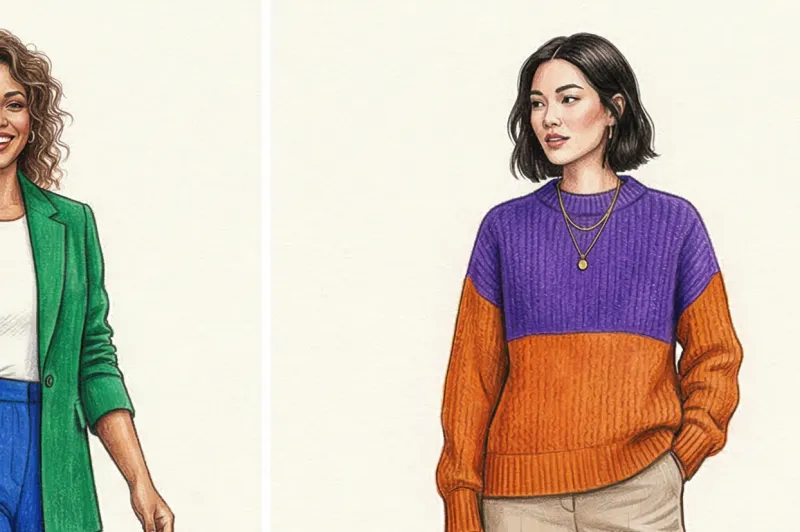
Pops of color are large-scale and occupy a significant area of a garment or an entire look. This could be an entire sleeve, half a bodice, or a single piece within a set. In color blocking, color is not a small detail like piping, stitching, or buttons.
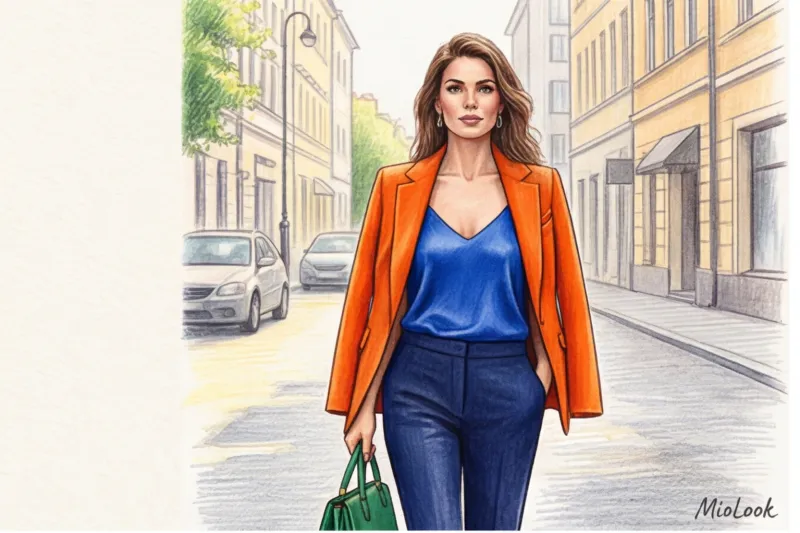
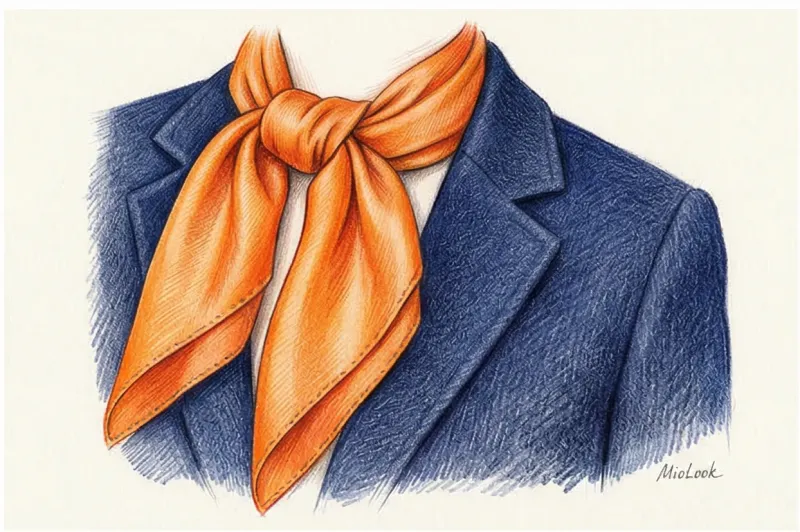
When creating such pieces, designers rely on the rules of Itten's color wheel. Most often, complementary (opposite, such as blue and orange), triadic, or analogous (adjacent, such as red and fuchsia) color combinations are used.
How to wear
There are two main approaches to creating a look in this aesthetic. The first is to use a ready-made color-blocked item, such as a two-tone dress or a shirt with contrasting sleeves.
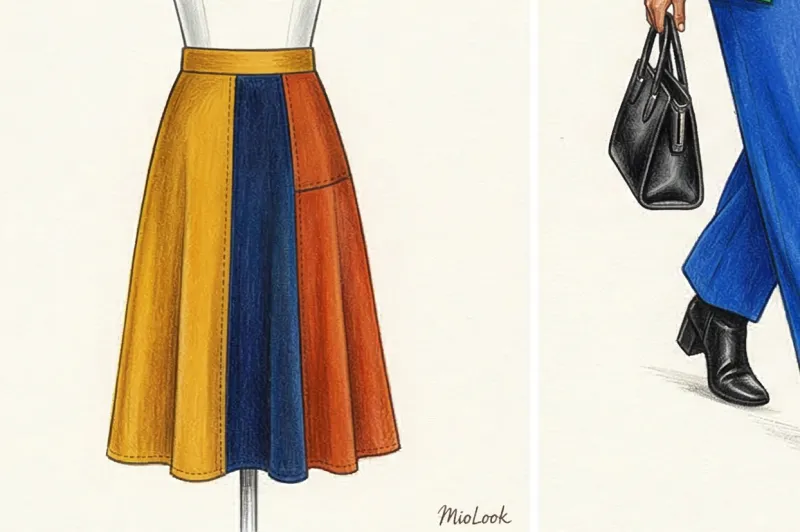
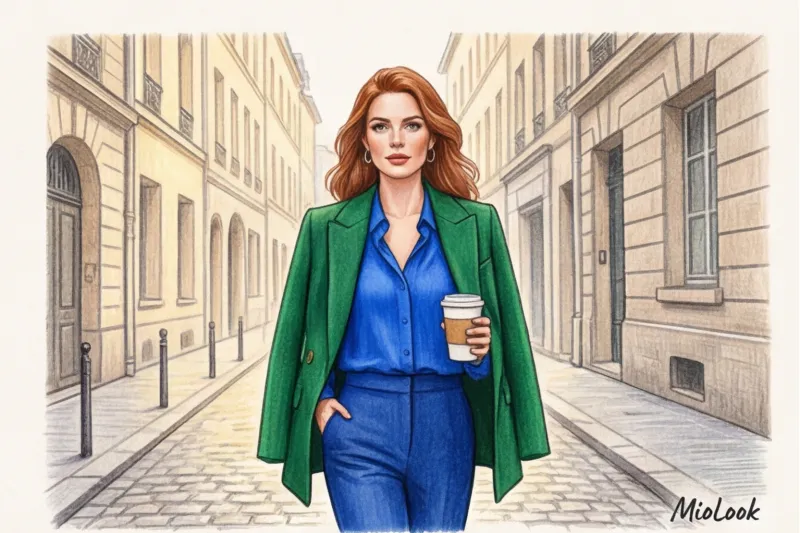
The second approach involves creating an outfit from separate, solid-color pieces in different colors. For example, a voluminous yellow sweater can be paired with a purple skirt or wide-leg green pants. To maintain harmony, stylists recommend using the three-color rule: no more than three or four vibrant shades in a single outfit to avoid visual overload.
Color blocking is also used for visual figure correction. Dark color blocks (black, navy blue) placed on the sides of a dress or top visually narrow the waist and elongate the silhouette. Light or bright blocks in the center, on the other hand, draw attention to the desired areas.
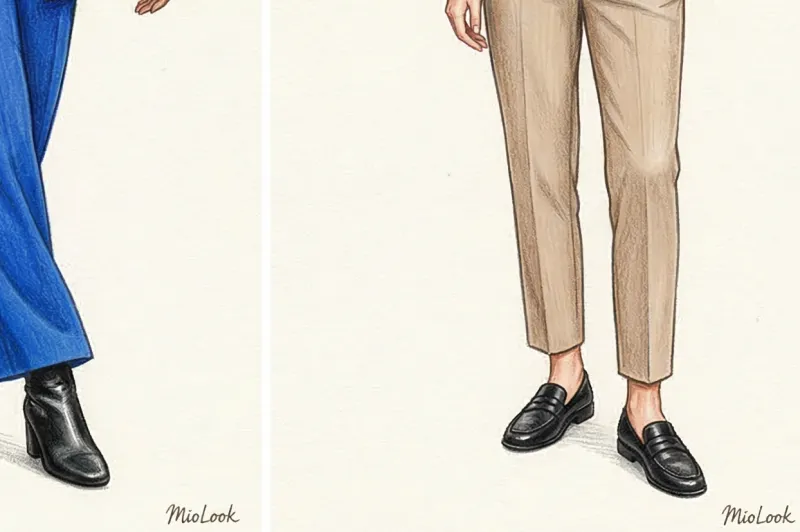
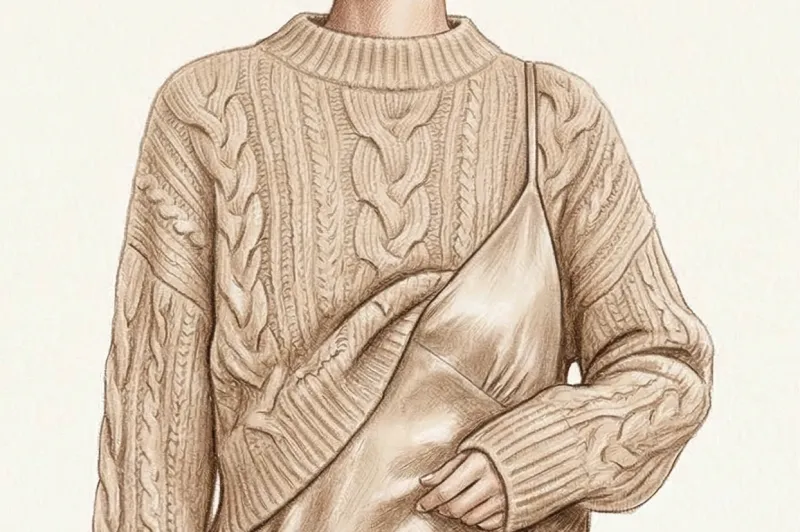
To tone down the intensity of the outfit, bold color blocks are balanced with basic pieces. Contrasting tops or bottoms are complemented with neutral accessories and shoes in black, white, beige, or gray.